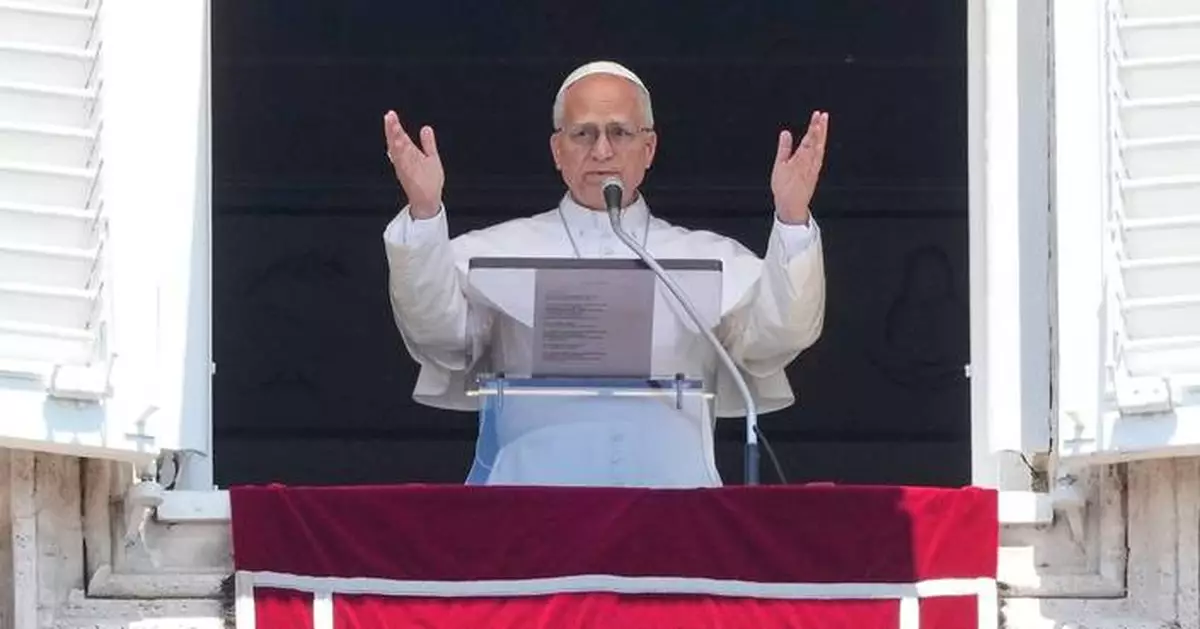
ROME (AP) — Pope Leo XIV took a step Tuesday toward overhauling the Vatican’s communications operations by naming the Mexican-American president of the Catholic U.S. media conglomerate EWTN News as its new head.
Maria Montserrat Alvarado replaces Paolo Ruffini as prefect of the Dicastery of Communications, the office that controls the Vatican’s television, radio, online, publishing and newspaper operations. It enjoys one of the biggest budgets of any Vatican department.
By naming a layperson and a woman to head a major Vatican department, Leo is following in the footsteps of Pope Francis who promoted several women to leadership positions in the Holy See governing hierarchy, which remains dominated by male clergy.
The Chicago-born Leo has indicated he wants to reform the way the Catholic Church at large, and the Vatican in particular, communicates its message to the world. Toward that end, he has summoned cardinals to the Vatican later this month for a meeting to “reassess the effectiveness of ecclesial communication, including at the level of the Holy See, from a more explicitly missionary perspective,” among other topics.
Alvarado is currently president and chief operating officer of EWTN News, which says it is the largest Catholic media organization in the world. Its Washington, D.C.,-based operations include television, radio, online and publishing operations in seven languages. The EWTN family, which generally skews conservative, includes the Catholic News Agency, National Catholic Register and ACI Group news agencies, among other branches.
Born in Mexico City, Alvarado joined EWTN as a news anchor after holding leadership positions in the Becket Fund for Religious Liberty, which has waged church-state legal battles in the U.S. to protect religious freedom.
During Pope Francis’ pontificate, EWTN’s programming often featured English-speaking critics of the Argentine pope. In 2021, Francis blasted such media criticism as “the work of the devil” in comments widely interpreted as being directed at EWTN.
Associated Press religion coverage receives support through the AP’s collaboration with The Conversation US, with funding from Lilly Endowment Inc. The AP is solely responsible for this content.
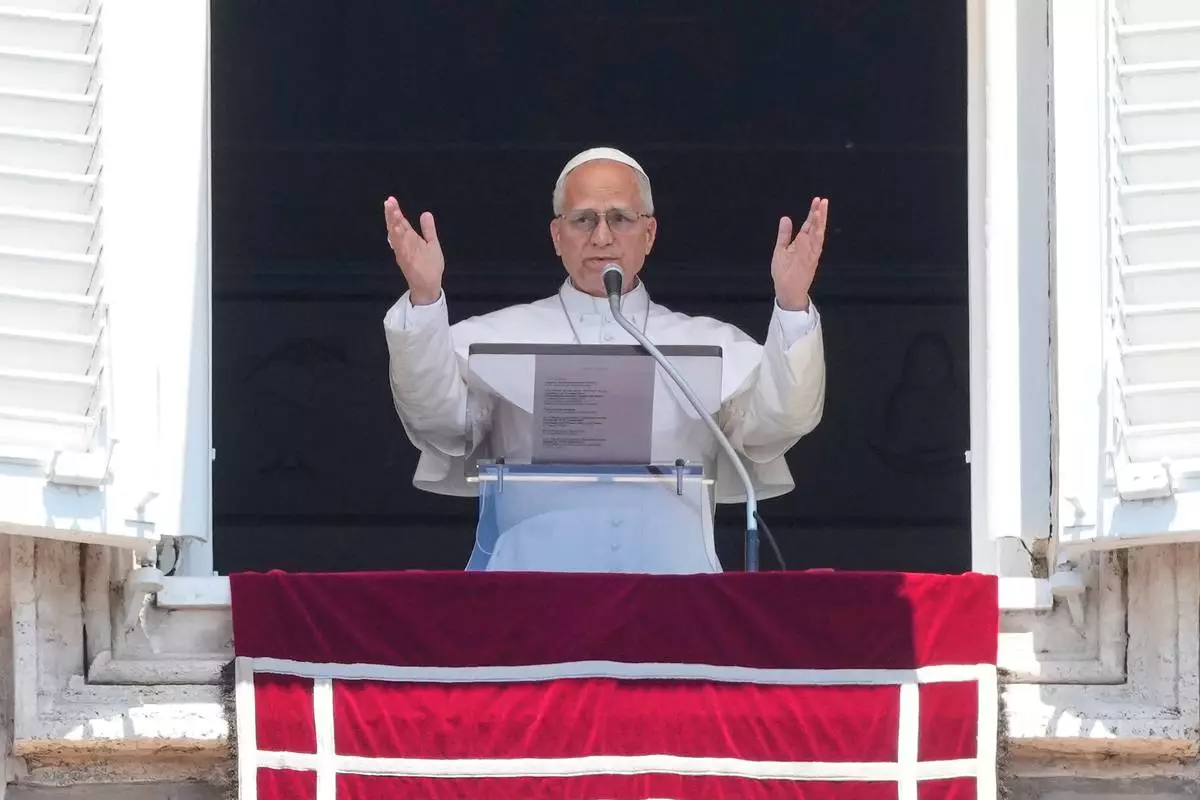
Pope Leo XIV delivers the Angelus noon prayer in St. Peter's Square, at the Vatican, Sunday, May 31, 2026. (AP Photo/Gregorio Borgia)
BRUSSELS (AP) — The European Union has moved forward with a vast overhaul of its migration policy, aiming to ramp up deportations and ink controversial deals to build detention centers abroad, in what rights groups compare to the Trump administration's aggressive immigration policies.
“The new regulation will speed up the return process and increase returns of persons who have no legal right to stay in the EU,” said Nicholas Ioannides, deputy migration minister for Cyprus, which holds the rotating presidency of the 27-nation bloc.
The deal was struck between the EU's three main institutions — the European Commission, the European Council and European Parliament — during a so-called “trilogue” Monday evening.
“Europe cannot afford another period of standstill,” said Dutch lawmaker Malik Azmani, who shepherded the regulation through the European Parliament.
“There is an urgent need for an effective return policy with higher return rates," he said, adding that only 28% of rejected asylum seekers return to their country of origin, with the majority staying put in the EU. “This situation is deeply concerning. It undermines public confidence in our common migration policies.”
Critics compared the regulation to the immigration policies of the Trump administration, which has struck a series of secretive agreements with nations around the world to deport thousands of people to countries that are not their own. The United Kingdom also planned to deport migrants to Rwanda, but the plan was bogged down in legal red tape and was dropped when a new government came to power in July 2024.
“Across the Atlantic, we see the violence and fear created by ICE’s brutal immigration enforcement," said Silvia Carter, spokesperson for the Brussels-based Platform for International Cooperation on Undocumented Migrants, referring to U.S. Immigration and Customs Enforcement. “Europe should be learning from the harms of that model, not building its own version of it.”
Law enforcement officers across the bloc no longer need warrants from judges to raid private residences or public institutions like hospitals, she said. “The regulation is going to create a draconian detention and deportation machine."
The provisional agreement will now head to the EU lawmakers and governments, where approval will likely be swift.
“These new rules will ensure swifter, simpler, and more effective procedures across the European Union for returning non-EU nationals who have no right to stay, in full respect of international law and fundamental rights,” said Henna Virkkunen, EU commissioner for technology.
EU member nations will soon be able to set up bilateral deals with countries outside the bloc to build deportation centers. At least five EU nations — Germany, Austria, the Netherlands, Denmark and Greece — are already in talks with third countries, mostly in Africa, to host “return hubs” on the model of Italy's detention deal with Albania.
“We are delivering the member states tools in their hands to make those agreements and arrangements with third countries,” Azmani said.
Mélissa Camara, a lawmaker from the French Green party, said the deal was “a historic setback” for human rights in the bloc.
“The legalization of return hubs outside the European Union, the green light for the detention of minors, home visits inspired by ICE practices: the legal arsenal serving a xenophobic ideology is now complete,” she said.
The EU has continually tightened migration policies after right-wing parties secured the majority of votes in some countries in the 2024 elections to the European Parliament. European Commission President Ursula von der Leyen, from the center-right European People’s Party coalition, has said that the new measures will prevent a repeat of the 2015 crisis caused by Syria’s civil war, when about 1 million people arrived to seek asylum.
Fueled by people fleeing conflict and poverty across Africa and the Middle East, the 2015 refugee crisis and successive years of irregular migration to Europe drove a rightward shift in the bloc's politics not unlike the anti-immigrant sentiment that buoyed a “ red wave ” in the 2024 election in the United States.
After successfully campaigning on tougher migration policies, the winners of that election, the European People’s Party, the largest political group in the EU, began negotiating migration reform with centrist and left parties only to eventually sidestep them by allying instead with the far right, said Carter, the asylum rights activist. “There was quite an unprecedented shift in the European Parliament."
Advocacy groups warned the regulation would cut deep into the protections granted by the EU fundamental charter on human rights and expose people to risks outside the bloc.
“This deal will give governments much broader powers to detain and deport people," said Marta Welander, a spokesperson for the International Rescue Committee, a humanitarian organization. "It looks set to normalize immigration raids, expand the use of detention in prison-like facilities outside EU territory that are essentially legal black holes, and increase the risk of people being deported to countries where they could face persecution, torture or worse.”
——
Follow AP’s coverage of migration issues at https://apnews.com/hub/migration

Police conduct a search operation at a makeshift camp of migrants who want to cross the English Channel to Britain near Dunkirk, northern France, Wednesday, May 27, 2026. (AP Photo/Jean-Francois Badias)