Skip to Content Facebook Feature Image

Why soccer fandom in Latin America feels almost sacred

Sport

Why soccer fandom in Latin America feels almost sacred
Sport

Sport

Why soccer fandom in Latin America feels almost sacred

2026-06-02 19:49 Last Updated At:23:11

MEXICO CITY (AP) — The chain that hung from Santiago García’s neck carried no crosses or saint medals, yet it felt sacred nonetheless.

When García’s grandmother fell sick years ago and he visited her in intensive care, the Argentine soccer fan took off his beloved Boca Juniors necklace and placed it around her neck.

More Images
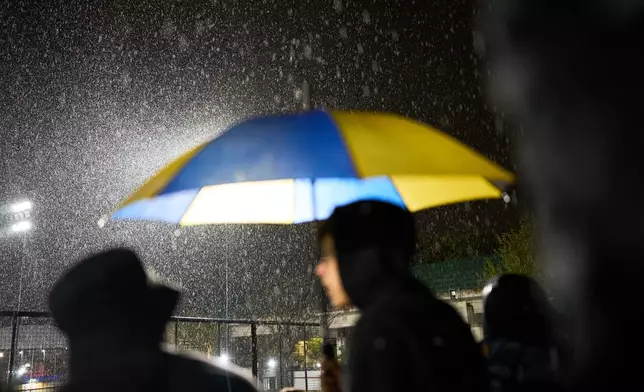
Atlanta fans stand under the rain during an Argentine second-division soccer match against Chacarita Juniors, in Buenos Aires, Argentina, Monday, April 20, 2026. (AP Photo/Rodrigo Abd)
Atlanta fans stand under the rain during an Argentine second-division soccer match against Chacarita Juniors, in Buenos Aires, Argentina, Monday, April 20, 2026. (AP Photo/Rodrigo Abd)

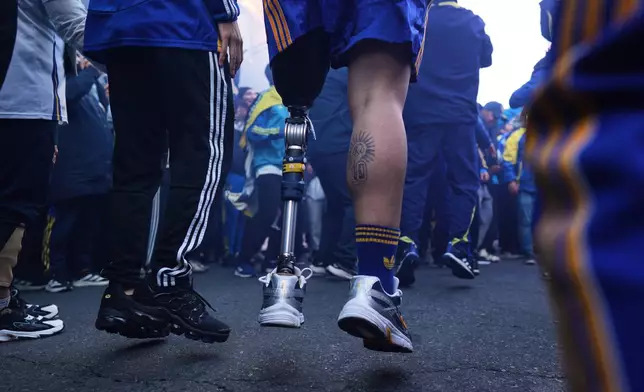
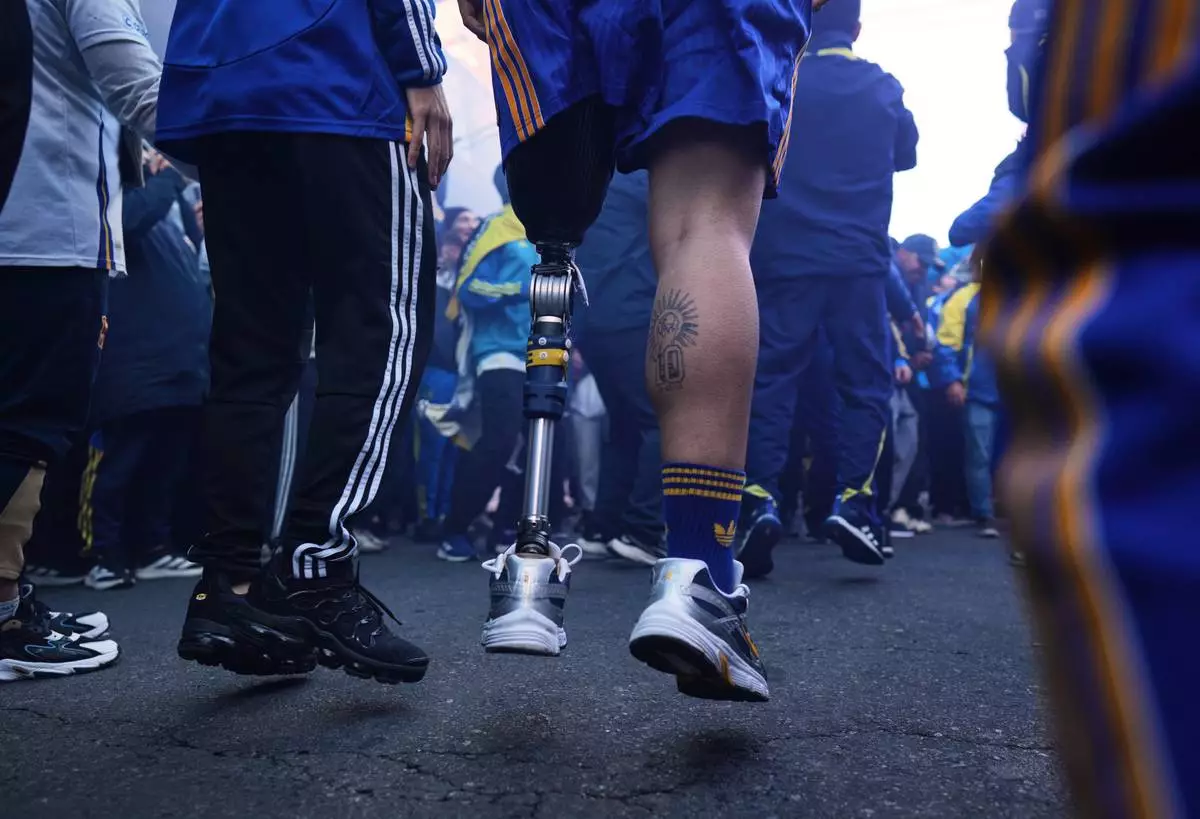
Ignacio Calle jumps with his prosthetic leg while singing Boca Juniors chants before entering the stadium for an Argentina league soccer match in Buenos Aires, Argentina, Saturday, May 9, 2026. (AP Photo/Rodrigo Abd)
Ignacio Calle jumps with his prosthetic leg while singing Boca Juniors chants before entering the stadium for an Argentina league soccer match in Buenos Aires, Argentina, Saturday, May 9, 2026. (AP Photo/Rodrigo Abd)

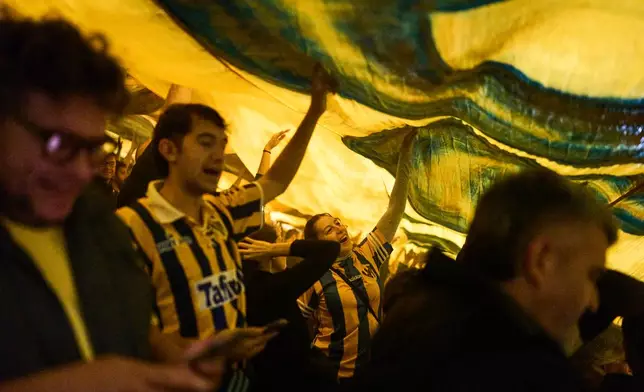
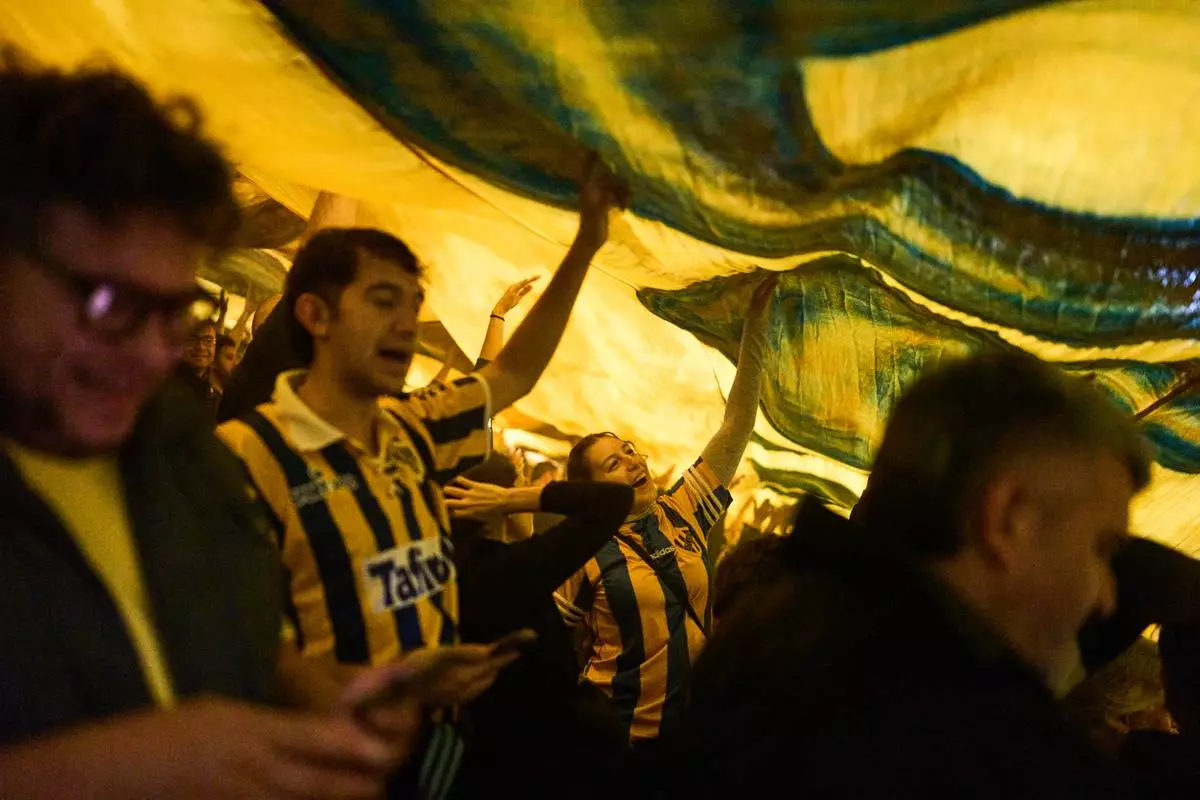
Atlanta fans chant slogans under a flag during an Argentine second-division soccer match against Chacarita Juniors, in Buenos Aires, Argentina, Monday, April 20, 2026. (AP Photo/Rodrigo Abd)
Atlanta fans chant slogans under a flag during an Argentine second-division soccer match against Chacarita Juniors, in Buenos Aires, Argentina, Monday, April 20, 2026. (AP Photo/Rodrigo Abd)

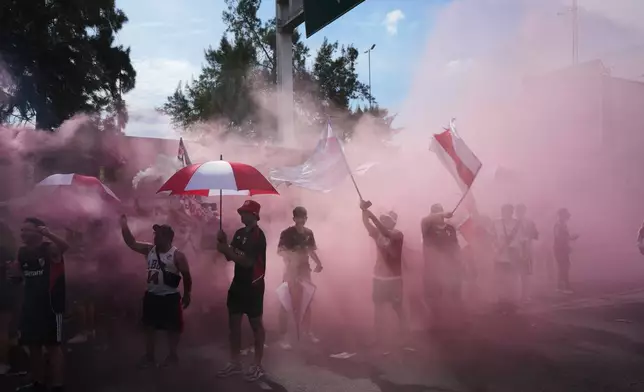
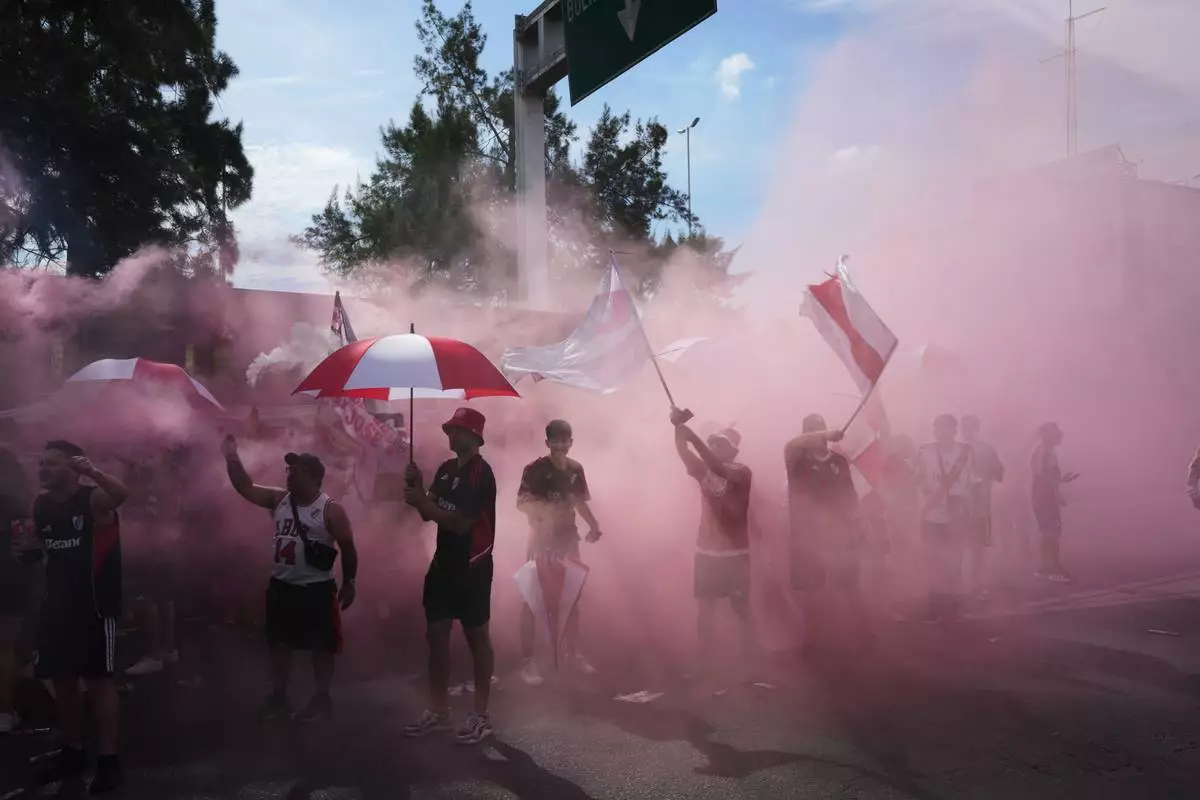
River Plate fans gather on a highway prior to an Argentine league match against Boca Juniors in Buenos Aires, Argentina, Sunday, April 19, 2026. (AP Photo/Rodrigo Abd)
River Plate fans gather on a highway prior to an Argentine league match against Boca Juniors in Buenos Aires, Argentina, Sunday, April 19, 2026. (AP Photo/Rodrigo Abd)

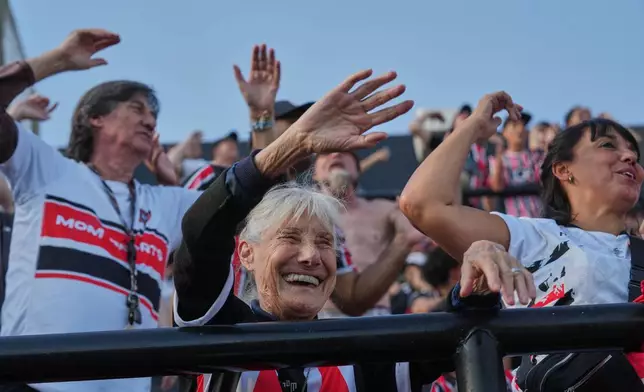
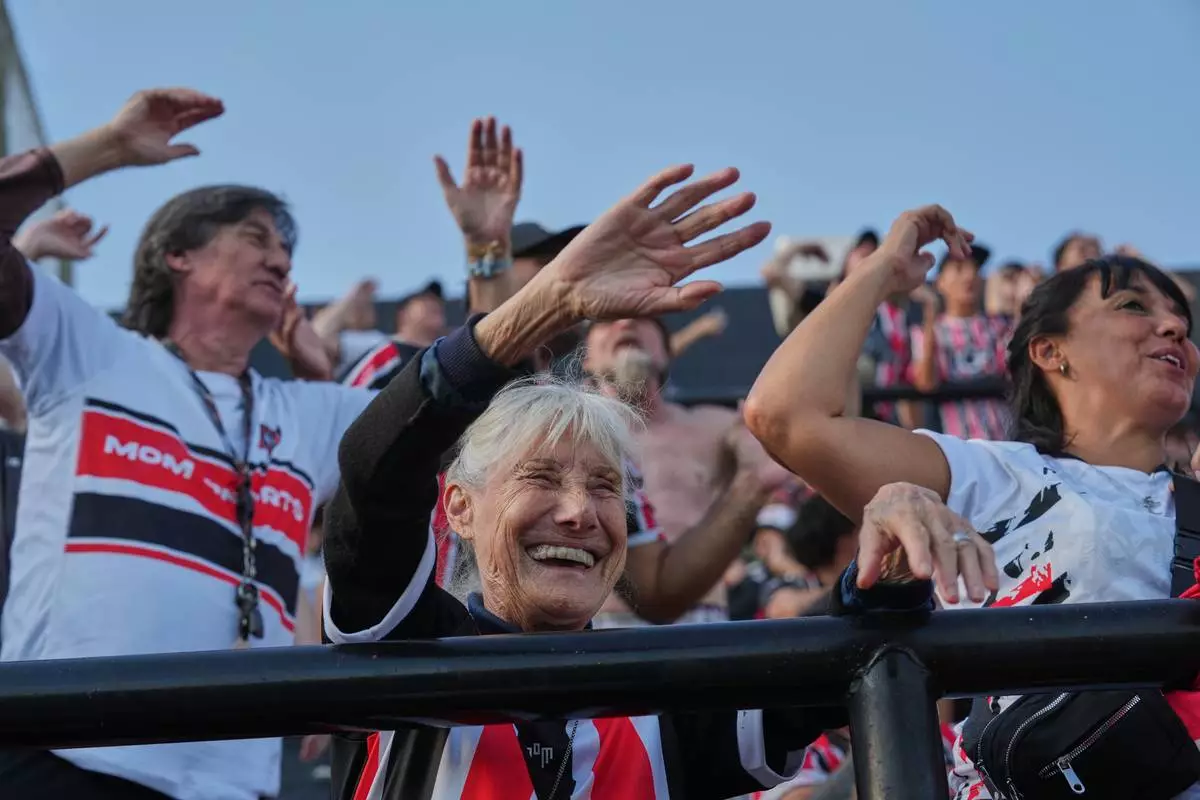
Chacarita Juniors fans cheer during an Argentine league against Gimnasia y Tiro in Buenos Aires, Argentina, Sunday, April 12, 2026. (AP Photo/Rodrigo Abd)
Chacarita Juniors fans cheer during an Argentine league against Gimnasia y Tiro in Buenos Aires, Argentina, Sunday, April 12, 2026. (AP Photo/Rodrigo Abd)

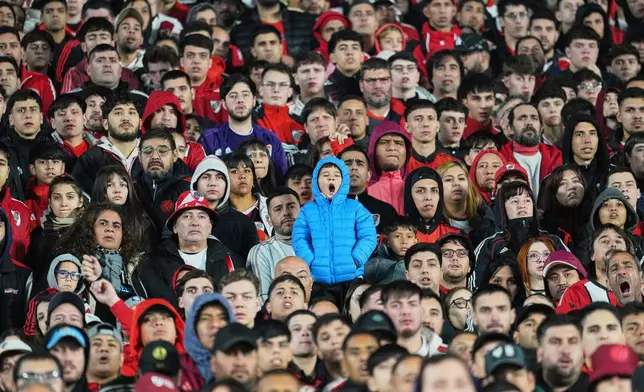
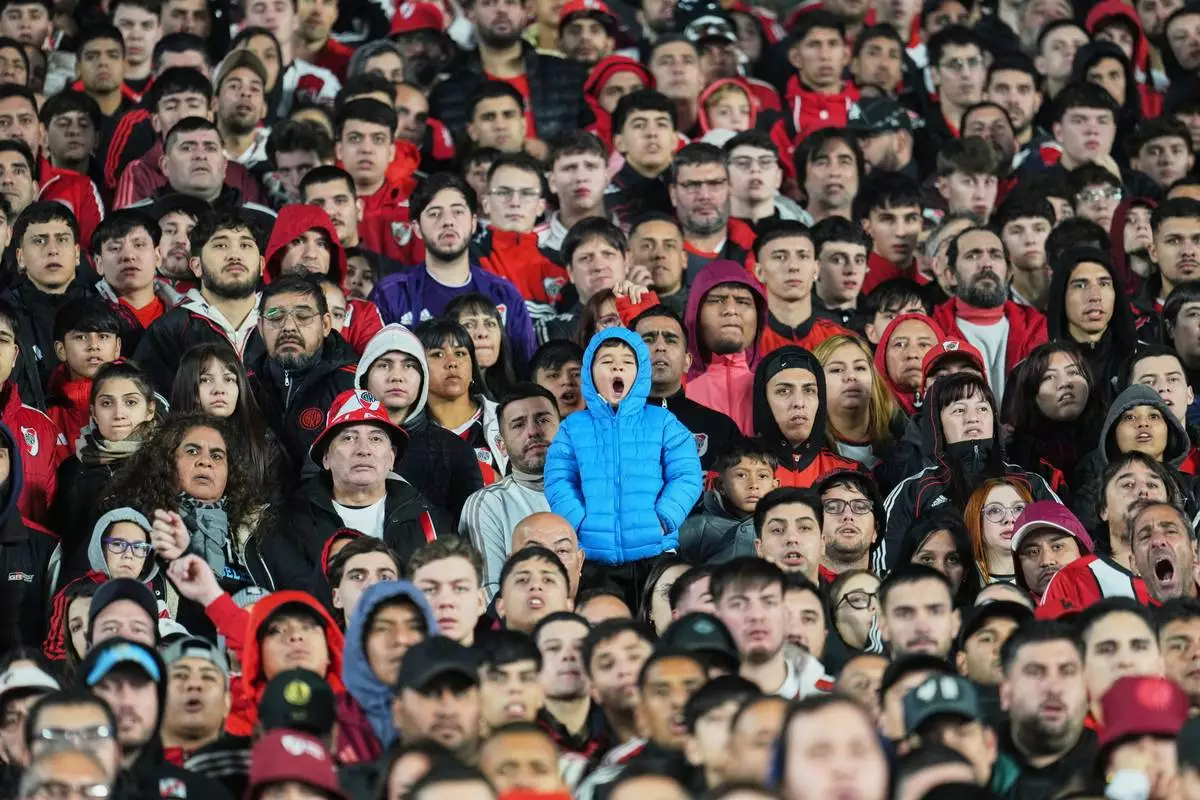
River Plate fans watch an Argentine soccer league match against San Lorenzo in Buenos Aires, Argentina, Sunday, May 10, 2026. (AP Photo/Rodrigo Abd)
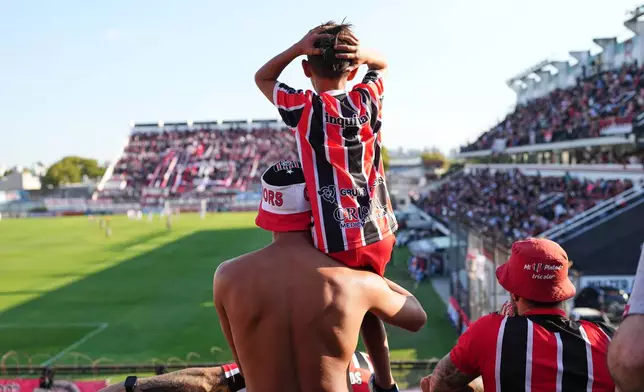
River Plate fans watch an Argentine soccer league match against San Lorenzo in Buenos Aires, Argentina, Sunday, May 10, 2026. (AP Photo/Rodrigo Abd)

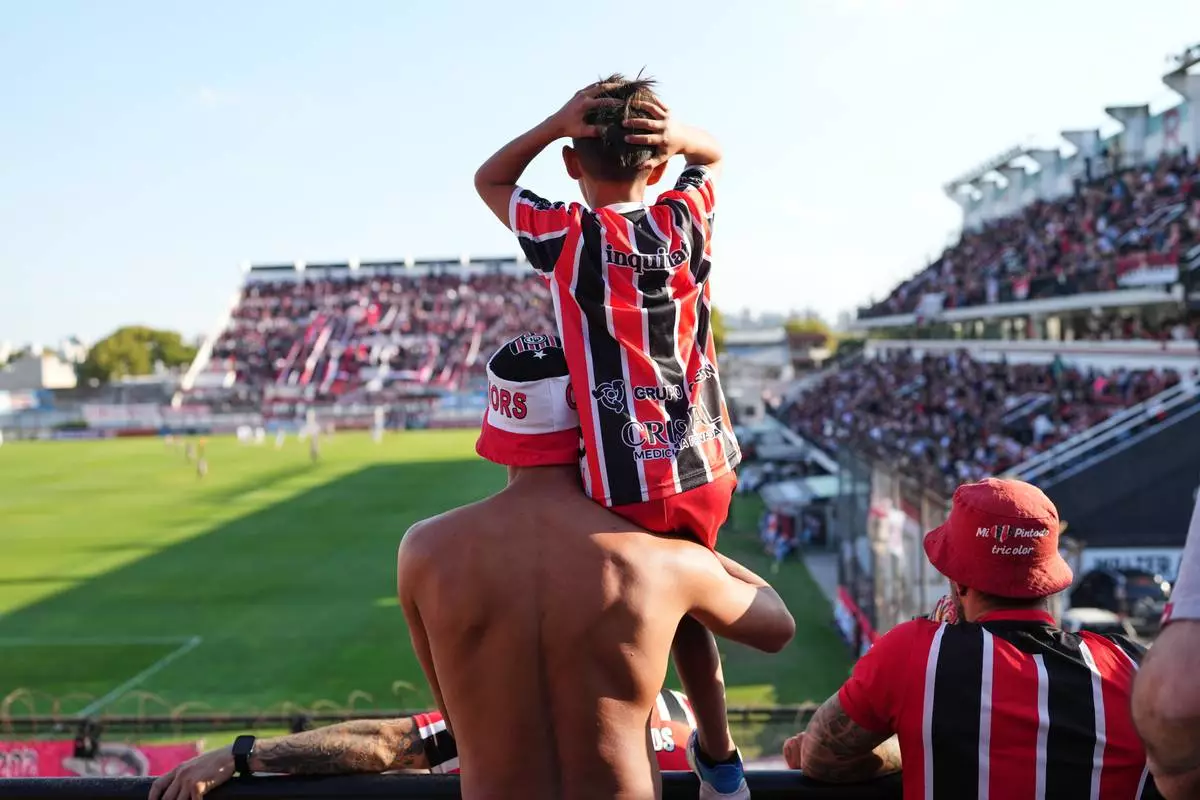
Chacarita Juniors fans react during an Argentine league against Gimnasia y Tiro in Buenos Aires, Argentina, Sunday, April 12, 2026. (AP Photo/Rodrigo Abd)
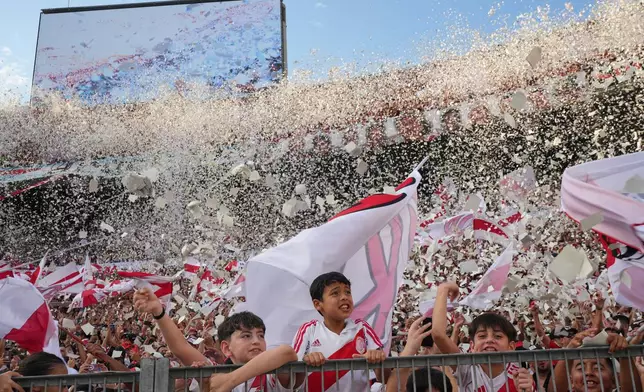
Chacarita Juniors fans react during an Argentine league against Gimnasia y Tiro in Buenos Aires, Argentina, Sunday, April 12, 2026. (AP Photo/Rodrigo Abd)

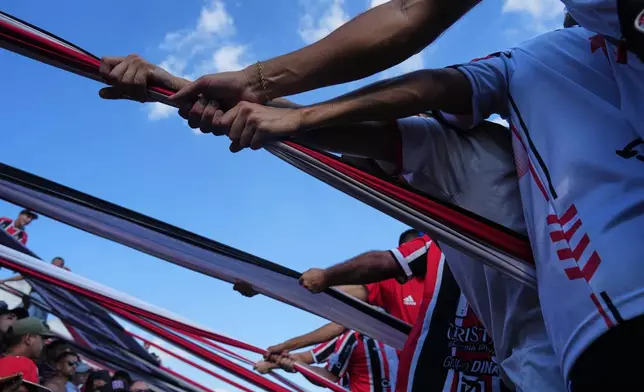
River Plate fans cheer during an Argentine league match against Boca Juniors in Buenos Aires, Argentina, Sunday, April 19, 2026. (AP Photo/Rodrigo Abd)
River Plate fans cheer during an Argentine league match against Boca Juniors in Buenos Aires, Argentina, Sunday, April 19, 2026. (AP Photo/Rodrigo Abd)

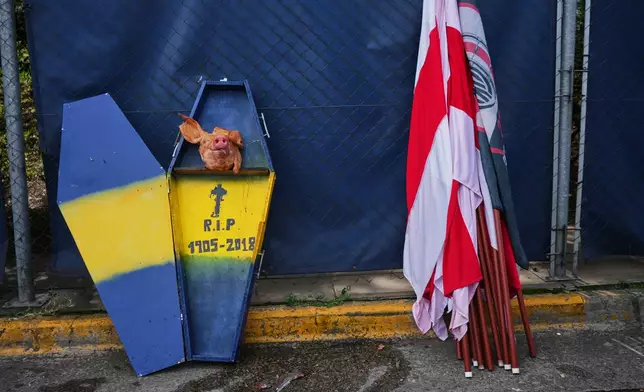
A cardboard coffin decorated with Boca Juniors' colors sits next to River Plate flags next to a highway prior to an Argentine league soccer match in Buenos Aires, Argentina, Sunday, April 19, 2026. (AP Photo/Rodrigo Abd)
A cardboard coffin decorated with Boca Juniors' colors sits next to River Plate flags next to a highway prior to an Argentine league soccer match in Buenos Aires, Argentina, Sunday, April 19, 2026. (AP Photo/Rodrigo Abd)

Chacarita Juniors fans hoist a flag from the stands during an Argentine soccer league match against Gimnasia y Tiro in Buenos Aires, Argentina, Sunday, April 12, 2026. (AP Photo/Rodrigo Abd)
Chacarita Juniors fans hoist a flag from the stands during an Argentine soccer league match against Gimnasia y Tiro in Buenos Aires, Argentina, Sunday, April 12, 2026. (AP Photo/Rodrigo Abd)

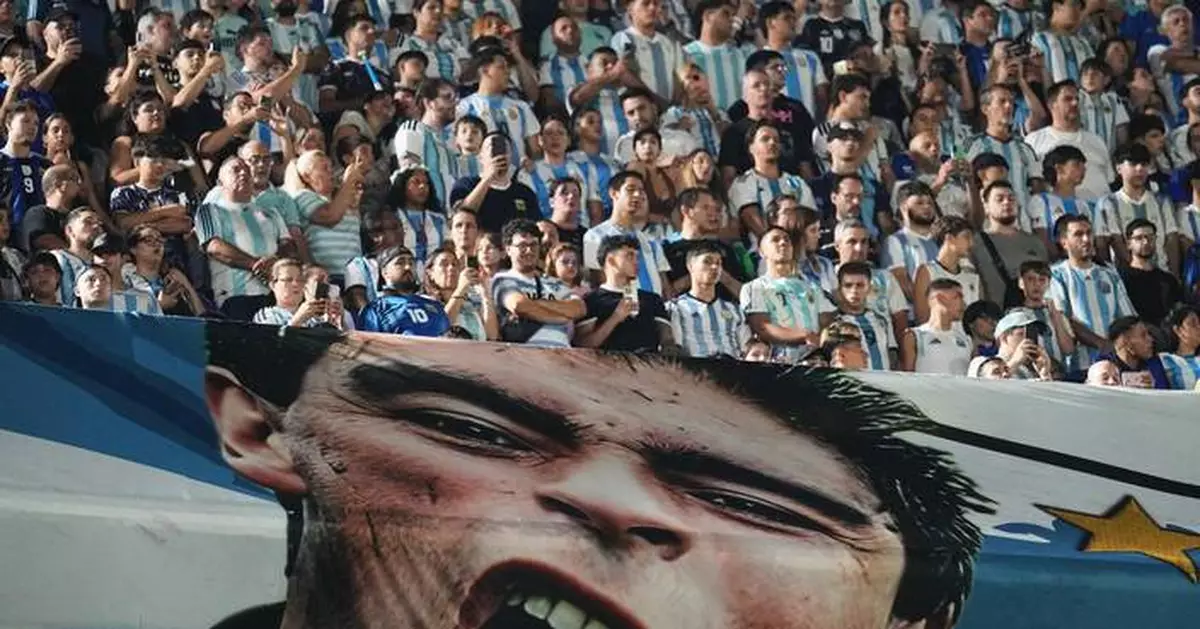
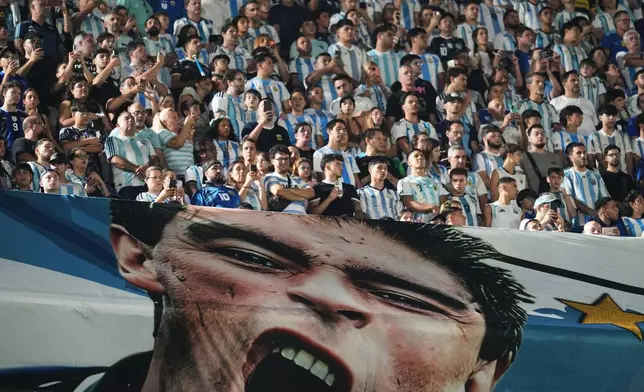
Fans wait for the start of a friendly soccer match between Argentina and Zambia next to a banner of Argentine soccer legend Diego Maradona in Buenos Aires, Argentina, Tuesday, March 31, 2026. (AP Photo/Rodrigo Abd)

Fans wait for the start of a friendly soccer match between Argentina and Zambia next to a banner of Argentine soccer legend Diego Maradona in Buenos Aires, Argentina, Tuesday, March 31, 2026. (AP Photo/Rodrigo Abd)

“Boca will save you,” García murmured to his grandmother. “And it did. So now it’s hers.”

García’s faith in his club mirrors that of millions across Latin America as the region prepares for the 2026 World Cup. From Argentina to Mexico, devotion to the game often spills into everyday life, inspiring rituals and beliefs tied to the sport.

“There has been an emotional connection between the public and their soccer teams for a long time,” said Mexican analyst Erick Fernández. “It fosters identity and bonds that make us feel part of a sporting process that represents us.”

In Argentina, the home country of Lionel Messi, sports passion is often inherited within families and loyalty to clubs strengthens over time. Pope Francis himself — born in Argentina and lifelong supporter of club San Lorenzo — said he agreed with those describing soccer as the world's most beautiful game.

García’s love for Boca Juniors came from his father. He said his mother used to support another team, but after the couple met, she became a Boca fan too.

“You usually support your mother’s or father’s club,” García said. “Soccer is the backbone of it all, but you develop a sense of belonging to a team and carry it with you everywhere.”

He may have let go of his Boca necklace and the energy he believed it carried, but the club’s imprint was already etched into his skin.

At age 17, García tattooed a phrase from the club’s anthem on his torso. Fourteen years later, those words remain as meaningful as they were when the ink was fresh.

“It belongs to a song that is like a chant of war for us,” he said. “It’s like saying: ‘No matter the storm, no matter what happens, we will always be there for you.’”

Pope Francis once told a crowd that soccer is a team sport whose beauty comes from its collective spirit.

Among fans, too, passion is nurtured through a sense of community. The singing of anthems, tears shed after victories or defeats, and the embrace of strangers inside a stadium are experiences that can mirror forms of collective devotion.

“Each person can support a team, but the sense of togetherness that generates ‘communitas’ — a word associated with religion — is only possible when people gather,” said Argentine anthropologist Eloísa Martín.

Both negative and positive reactions can emerge from that sense of collective identity. A fan who feels a member of his sporting community has been attacked by a rival may react violently in ways he otherwise never would. But the same dynamic can strengthen solidarity, leading fans to help strangers because they support the same club.

“Soccer creates a community even for those who lack one,” Martín said.

On a recent night, among a sea of fans heading towards Maracanã stadium in Rio de Janeiro was Adilvania Santos. Dressed in the maroon and green colors of Fluminense, the 27-year-old said that supporting the club had helped her through a difficult time in her life.

“I get emotional talking about Fluminense,” said Santos, who described the passion for her club as the most important aspect of her life, apart from her family. “Some people come together to go to church. For us, accompanying Fluminense is also sacred.”

Santos tries to attend every game despite living nearly 100 kilometers (about 60 miles) from Rio. When she follows matches from home, she stays alone in her bedroom to avoid interruptions from family members who may not support her team.

“Soccer deeply moves Brazilians because it creates a sense of belonging, identity and hope,” said Jeferson Mengali, a Catholic priest in the Bragança Paulista diocese and a lifelong fan of Corinthians. “People suffer, work hard and face difficulties, and soccer becomes a space for collective joy.”

Mengali supported Corinthians as a chaplain for years. He celebrated Masses with the team and was present during training sessions and matches.

“I have always liked praying before important games,” he said. “Asking more for serenity than victory.”

While not all soccer fans pray, many cling to rituals they believe can influence the outcome of a game. In Argentina these practices are known as “cábalas.” According to Martín, they became widespread during the 1990s.

Cábalas vary widely. Fans may drink from the same cup, sit in the exact same spot or wear the same underwear during every match. Others insist on watching games with certain people, while some avoid watching altogether after concluding they bring bad luck to their team.

Rituals are repeated if the team wins and abandoned if it loses. For some supporters, avoiding a match can even feel like a sacrifice made in hopes of securing victory.

At García’s home, his father sits in a specific chair whenever Boca is playing well. If the rival team scores, he changes seats. His mother cleans the house instead of watching the game, stopping every so often to ask about the score.

García’s current cábala includes wearing the same jersey throughout the season and carrying a small image of Diego Maradona everywhere he goes.

“After he died, he was rapidly sanctified by the people,” García said. “He became a figure bigger than sports.”

Argentines rarely call him Maradona. He’s simply “El Diego,” as one would refer to a family member or an old friend from the neighborhood.

“Maradona is the player, while ‘El Diego’ is the one people turn to like a family member when they need help,” Martín said. “Sacredness only works when there’s a community behind it.”

Legends like “El Diego” or Brazil’s “The King” Pelé are recognized across the world. But other soccer fans in Latin America revere personal idols of their own.

In Chile, Héctor Hermosilla keeps a black-and-white portrait of Colo Colo club founder David Arellano at his home.

“He founded Colo Colo in 1925 and before every match I always say goodbye to him and ask him to watch over us,” Hermosilla said.

He still remembers attending his first match in 1986 and falling under the spell of the atmosphere inside the arena. From then on, he faithfully began to follow his team, traveling from Chile’s far north to Puerto Montt, considered the gateway to Patagonia.

To finance his trips, he and his wife typed out the iconic anthems of Colo Colo and sold photocopies to fans, earning him the nickname “Nano Fotocopia.”

“There were around 20 songs and I would make photocopies and sell them for 100 pesos,” he said.

Typewriters and photocopies became obsolete over time. Hermosilla now sells necklaces, bracelets and other accessories to finance the trips he now does with his wife and teenage son.

When in Chile, Hermosilla still attends matches every Sunday and performs a ritual he has followed since the 1980s. Beneath Arellano’s portrait, he asks for the club founder’s blessing, packs his products for sale and heads to a roast chicken restaurant where fans gather.

“He is like our God,” Hermosilla said. “He is the one who guides us.”

Batschke reported from Santiago, Chile, and Hughes from Rio de Janeiro.

Associated Press religion coverage receives support through the AP’s collaboration with The Conversation US, with funding from Lilly Endowment Inc. The AP is solely responsible for this content.
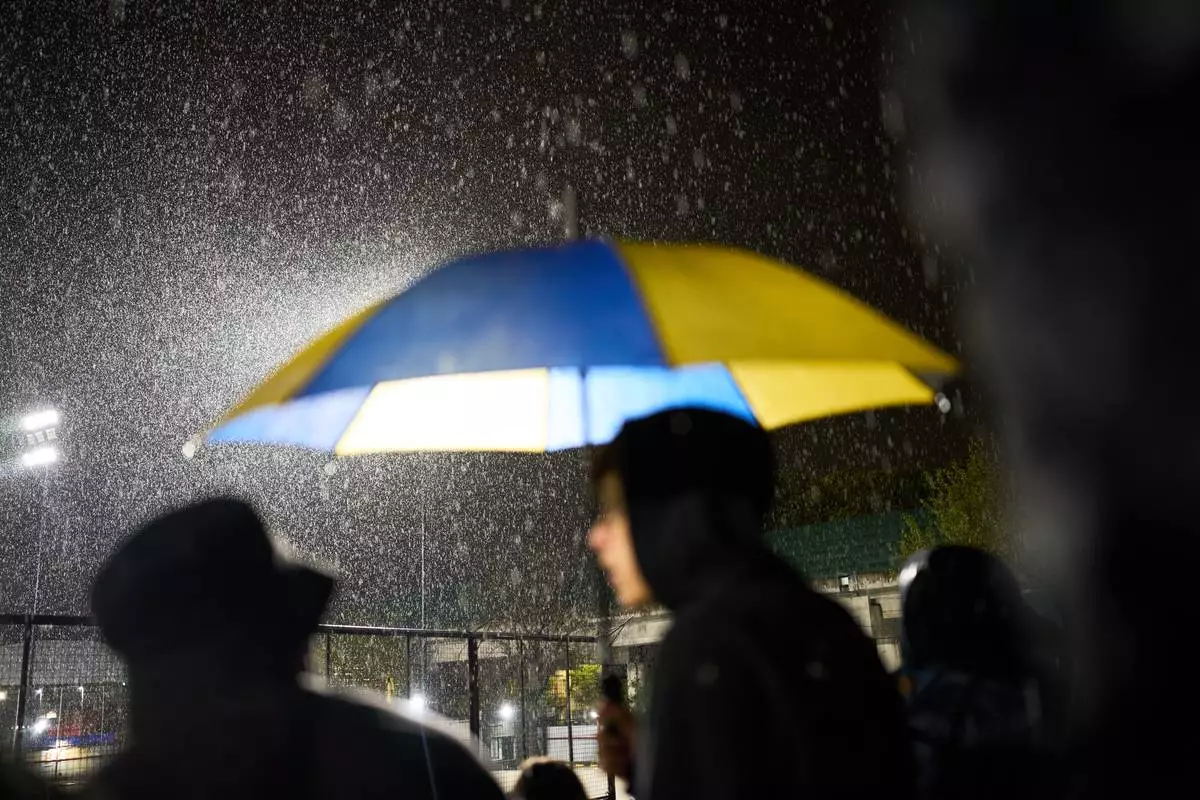
Atlanta fans stand under the rain during an Argentine second-division soccer match against Chacarita Juniors, in Buenos Aires, Argentina, Monday, April 20, 2026. (AP Photo/Rodrigo Abd)
Atlanta fans stand under the rain during an Argentine second-division soccer match against Chacarita Juniors, in Buenos Aires, Argentina, Monday, April 20, 2026. (AP Photo/Rodrigo Abd)

Ignacio Calle jumps with his prosthetic leg while singing Boca Juniors chants before entering the stadium for an Argentina league soccer match in Buenos Aires, Argentina, Saturday, May 9, 2026. (AP Photo/Rodrigo Abd)
Ignacio Calle jumps with his prosthetic leg while singing Boca Juniors chants before entering the stadium for an Argentina league soccer match in Buenos Aires, Argentina, Saturday, May 9, 2026. (AP Photo/Rodrigo Abd)

Atlanta fans chant slogans under a flag during an Argentine second-division soccer match against Chacarita Juniors, in Buenos Aires, Argentina, Monday, April 20, 2026. (AP Photo/Rodrigo Abd)
Atlanta fans chant slogans under a flag during an Argentine second-division soccer match against Chacarita Juniors, in Buenos Aires, Argentina, Monday, April 20, 2026. (AP Photo/Rodrigo Abd)

River Plate fans gather on a highway prior to an Argentine league match against Boca Juniors in Buenos Aires, Argentina, Sunday, April 19, 2026. (AP Photo/Rodrigo Abd)
River Plate fans gather on a highway prior to an Argentine league match against Boca Juniors in Buenos Aires, Argentina, Sunday, April 19, 2026. (AP Photo/Rodrigo Abd)

Chacarita Juniors fans cheer during an Argentine league against Gimnasia y Tiro in Buenos Aires, Argentina, Sunday, April 12, 2026. (AP Photo/Rodrigo Abd)
Chacarita Juniors fans cheer during an Argentine league against Gimnasia y Tiro in Buenos Aires, Argentina, Sunday, April 12, 2026. (AP Photo/Rodrigo Abd)

River Plate fans watch an Argentine soccer league match against San Lorenzo in Buenos Aires, Argentina, Sunday, May 10, 2026. (AP Photo/Rodrigo Abd)
River Plate fans watch an Argentine soccer league match against San Lorenzo in Buenos Aires, Argentina, Sunday, May 10, 2026. (AP Photo/Rodrigo Abd)

Chacarita Juniors fans react during an Argentine league against Gimnasia y Tiro in Buenos Aires, Argentina, Sunday, April 12, 2026. (AP Photo/Rodrigo Abd)
Chacarita Juniors fans react during an Argentine league against Gimnasia y Tiro in Buenos Aires, Argentina, Sunday, April 12, 2026. (AP Photo/Rodrigo Abd)

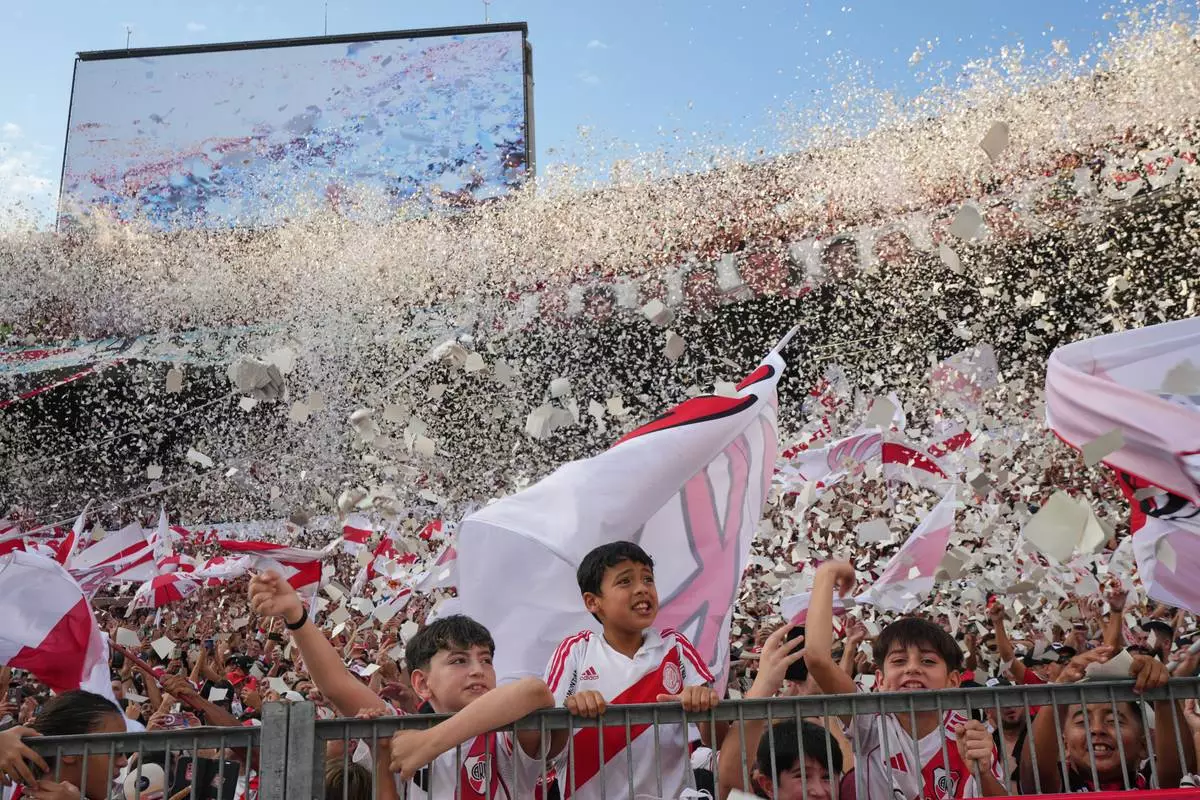
River Plate fans cheer during an Argentine league match against Boca Juniors in Buenos Aires, Argentina, Sunday, April 19, 2026. (AP Photo/Rodrigo Abd)
River Plate fans cheer during an Argentine league match against Boca Juniors in Buenos Aires, Argentina, Sunday, April 19, 2026. (AP Photo/Rodrigo Abd)

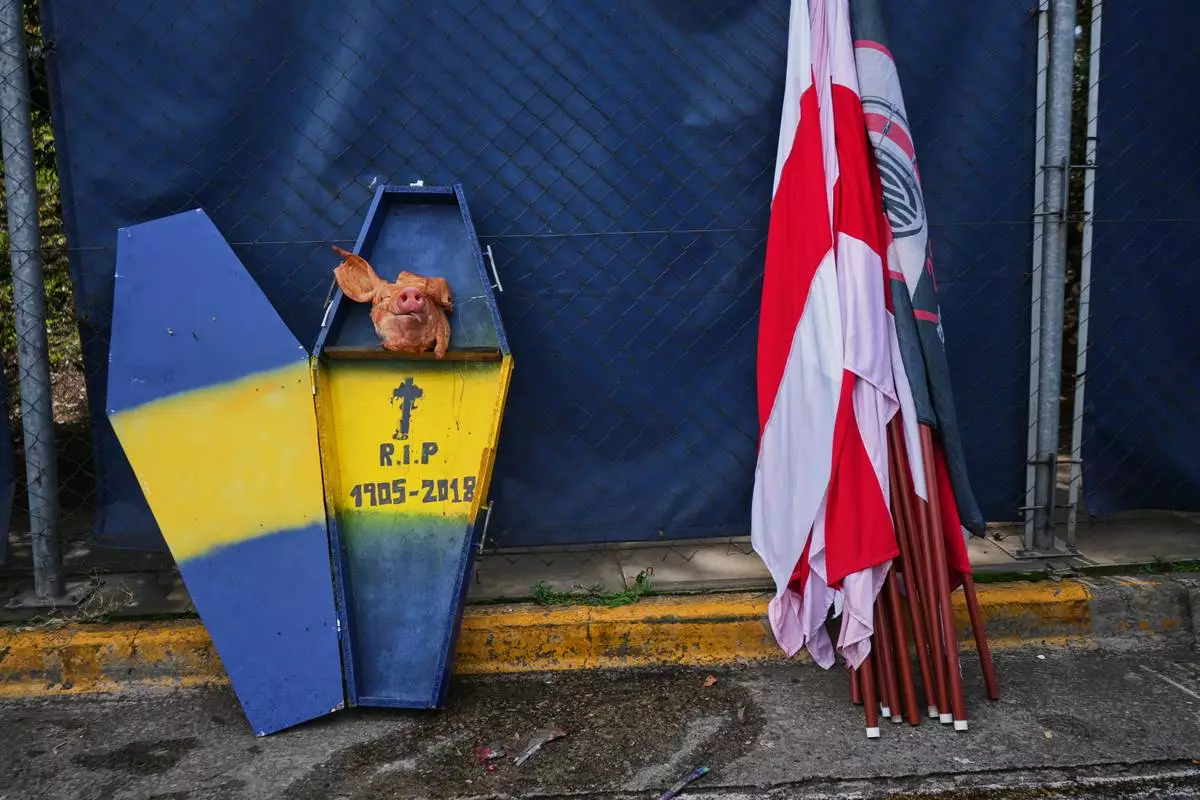
A cardboard coffin decorated with Boca Juniors' colors sits next to River Plate flags next to a highway prior to an Argentine league soccer match in Buenos Aires, Argentina, Sunday, April 19, 2026. (AP Photo/Rodrigo Abd)
A cardboard coffin decorated with Boca Juniors' colors sits next to River Plate flags next to a highway prior to an Argentine league soccer match in Buenos Aires, Argentina, Sunday, April 19, 2026. (AP Photo/Rodrigo Abd)

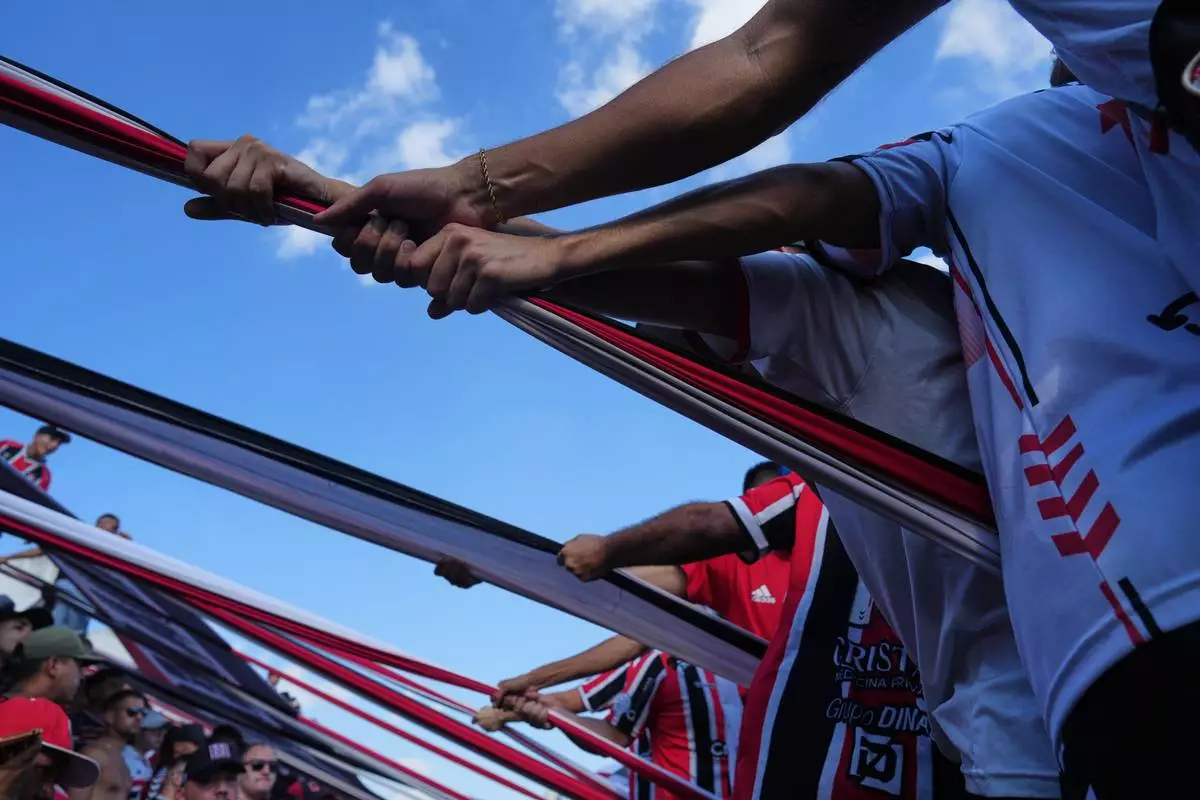
Chacarita Juniors fans hoist a flag from the stands during an Argentine soccer league match against Gimnasia y Tiro in Buenos Aires, Argentina, Sunday, April 12, 2026. (AP Photo/Rodrigo Abd)
Chacarita Juniors fans hoist a flag from the stands during an Argentine soccer league match against Gimnasia y Tiro in Buenos Aires, Argentina, Sunday, April 12, 2026. (AP Photo/Rodrigo Abd)

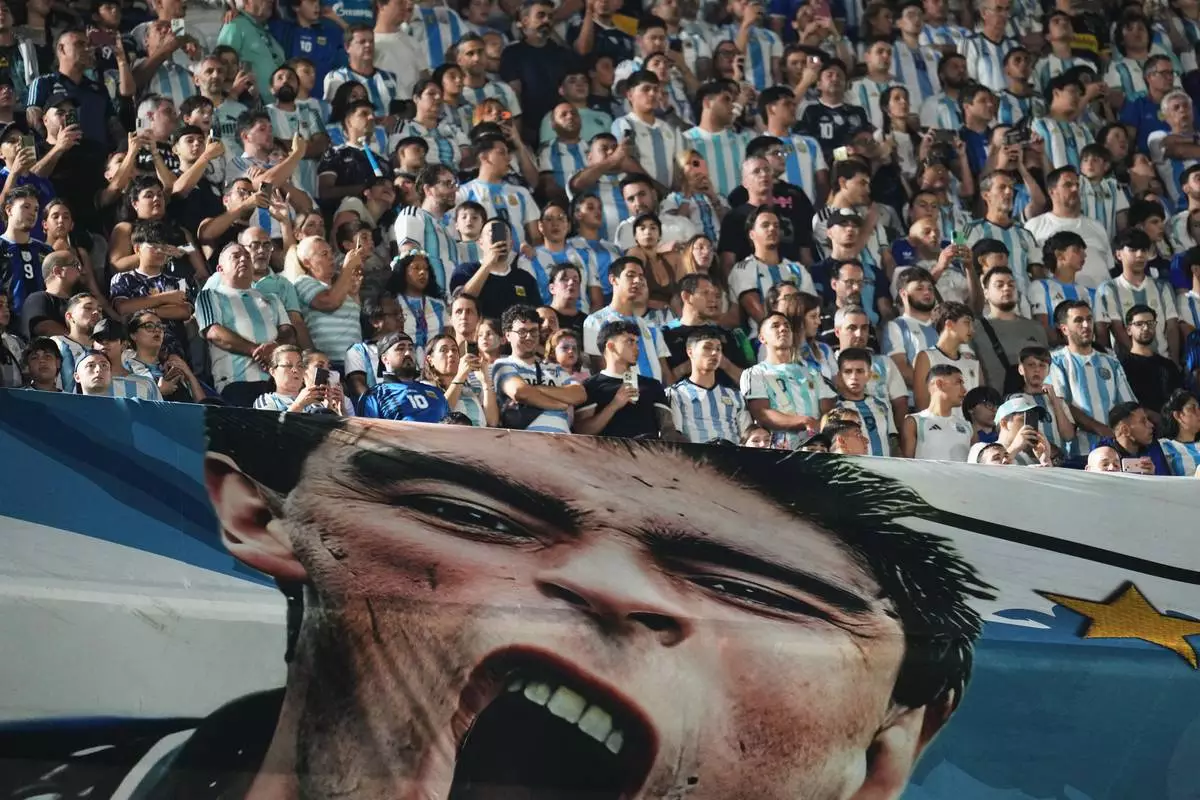
Fans wait for the start of a friendly soccer match between Argentina and Zambia next to a banner of Argentine soccer legend Diego Maradona in Buenos Aires, Argentina, Tuesday, March 31, 2026. (AP Photo/Rodrigo Abd)

Fans wait for the start of a friendly soccer match between Argentina and Zambia next to a banner of Argentine soccer legend Diego Maradona in Buenos Aires, Argentina, Tuesday, March 31, 2026. (AP Photo/Rodrigo Abd)
BEIRUT (AP) — Hezbollah on Thursday rejected the latest ceasefire agreement between Israel and the Lebanese government, and the militant group demanded a complete Israeli withdrawal from Lebanon as more fighting there hampered efforts to end the Iran war.

The Hezbollah announcement came as Israeli strikes killed at least four people, according to local authorities, and a U.N. peacekeeper was killed in the crossfire.

Hezbollah leader Naim Kassem, in a written statement read on TV, called the negotiations “absurd, humiliating and insulting.” He said the agreement’s demand that Hezbollah fighters leave southern Lebanon under fire would mean “surrender, defeat and achieving the enemy’s goals.”

“What we are concerned about is an end to the aggression, ceasefire and Israel’s withdrawal,” he said, underscoring that Hezbollah has not made any commitment to stop fighting. “So long as our villages are not safe and are being bombed and destroyed and our people are killed," he said, northern Israel “will not be safe.”

Following Kassem’s statement, drone alert sirens sounded in several border communities in northern Israel, including Shlomi, a town where Prime Minister Benjamin Netanyahu and several ministers had been meeting with local officials, his office said. Israeli media reported that Netanyahu left a short time before the alerts sounded.

The Israeli military later said the sirens were triggered by attempts to intercept several drones that hit near soldiers in southern Lebanon. No injuries were reported.

Lt. Gen. Eyal Zamir, the Israeli military’s chief of staff, acknowledged Thursday that the ongoing war was straining northern Israeli towns living under the threat of Hezbollah fire. He said Israel’s operations in Iran and Lebanon had “created a new security reality,” by weakening Iran and Hezbollah “to an unprecedented degree.”

Lebanese troops began moving Thursday afternoon into the southern village of Dibbine, in coordination with U.N. peacekeepers, after Israeli forces left the area, which saw intense clashes in recent days, state-run media reported. It was the first time Israeli troops withdrew from an area in southern Lebanon since the latest Israel-Hezbollah war began about three months ago.

The fighting in Lebanon, where Israeli forces have seized large swaths of the south, threatens efforts to end the Iran war and reopen the Strait of Hormuz, a key transit point for oil and gas. Its closure has jolted the world economy.

Iran has demanded that any lasting truce extend to Lebanon. Israeli Prime Minister Benjamin Netanyahu, who faces elections later this year, wants to press ahead with Israel’s offensive until Hezbollah no longer poses a threat.

U.S. President Donald Trump, who faced a rare rebuke from Congress on Wednesday, has sought to downplay the diplomatic deadlock and the failure of declared ceasefires to end the fighting. He told reporters that in the Middle East, "a ceasefire is when you’re shooting in a more moderate manner.”

A Serbian peacekeeper was killed and two others were wounded when a mortar struck their location near Marjayoun, a Christian-majority town that has seen intense fighting, according to the U.N. mission in southern Lebanon, known as UNIFIL, and the Serbian Defense Ministry.

Israel later blamed Hezbollah for the firing that killed the U.N. peacekeeper, without offering evidence. Hezbollah and the U.N. did not immediately comment on who launched the shells.

Lebanon’s state-run National News Agency said a drone strike killed a motorcyclist and wounded four people in the village of Maaroub. It said airstrikes on the village of Sohmor in the Bekaa Valley, in eastern Lebanon, killed three people and wounded others. It also reported airstrikes elsewhere in the south.

There was no immediate comment from the Israeli military, which has warned people not to go into parts of southern Lebanon where it says it is striking Hezbollah facilities.

Hezbollah resumed rocket fire days after Israel and the United States launched their surprise Feb. 28 attack on Iran, which backs Hezbollah. Before then, Israel had regularly carried out strikes in Lebanon against what it said were militant targets, often killing civilians, despite an earlier truce reached in 2024.

After Hezbollah's rocket and drone attacks resumed, Israeli troops seized around a fifth of Lebanon, pushing further into the country's south than at any time since the end of Israel’s 1982-2000 occupation.

In the southern city of Sidon, residents reacted to Wednesday's ceasefire announcement with skepticism, saying previous agreements had failed to stop the violence.

“Every few days a ceasefire is announced, but people keep getting killed,” said Mayada Hijazi.

“It’s all talk and no action,” said Salah Nassab. “We keep going back to our homes, and then we get displaced again, back and forth. We’re very tired."

More than 3,500 people have been killed in Lebanon, and over 1.2 million have been displaced. The fighting has killed 27 Israeli soldiers and three civilians.

The latest declared ceasefire came about through U.S.-brokered talks between Israel and Lebanon's government, which accuses Hezbollah of dragging the country into war and had made efforts to disarm it before the latest hostilities.

The ceasefire agreement calls for Lebanon's armed forces to take control of security zones in Lebanon from which the militants would be banned.

Lebanese President Joseph Aoun on Thursday called the new agreement "the last chance to enter a final and comprehensive ceasefire.” He said Lebanon was ready to implement the deal once he receives responses from relevant factions in Lebanon, including Hezbollah. The United States — and Trump himself — would determine how and when the deal is implemented, Aoun told journalists.

The agreement terms Hezbollah “an enemy" of Israel, the U.S. and Lebanon and calls for dismantling it. The government has promised to do so in the past but does not have the capabilities to disarm Hezbollah by force.

The latest agreement did not say when Israel would withdraw from southern Lebanon but said the U.S. would support the Lebanese army as it works to assert control in areas where Hezbollah has long wielded power.

A top Iranian general on Thursday reiterated Tehran's demand for a full ceasefire in Lebanon and called for Israel to pull troops back to where they were when the wider war began. At that time, Israel held five strategic points along the border.

“Supporting the resistance in Lebanon is the duty of all of us, and eliminating Israel from the region is an achievable goal for Muslims,” Esmail Qaani, the head of the paramilitary Revolutionary Guard’s elite Quds Force, was quoted as saying by the semiofficial Fars and Tasnim news agencies.

As diplomatic efforts have repeatedly faltered, Iran and the U.S. have traded fire in and around the Strait of Hormuz, which remains effectively closed. Before the war, around a fifth of the world's oil and gas, as well as large shipments of fertilizer and other goods, passed through the narrow waterway.

The U.S. has targeted what it says are Iranian threats to commercial shipping and its own forces, while Iran has launched missile and drone attacks on Gulf states hosting U.S. troops.

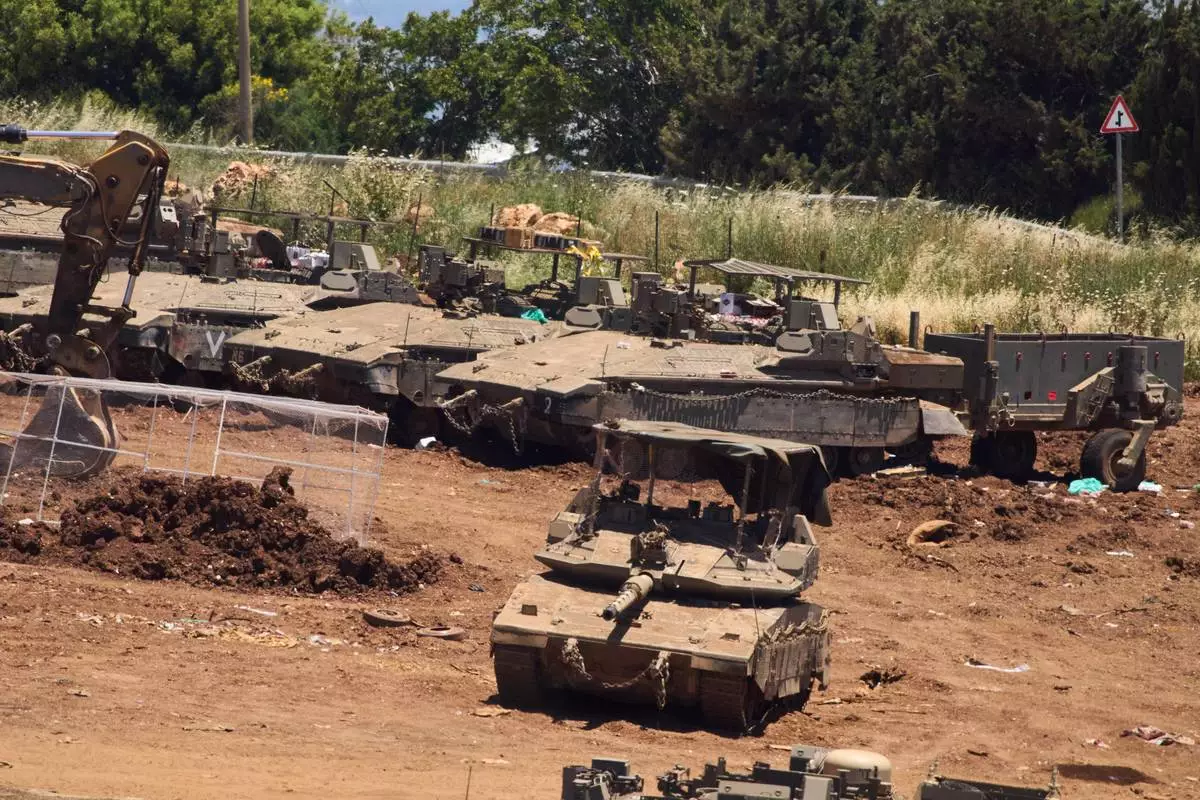
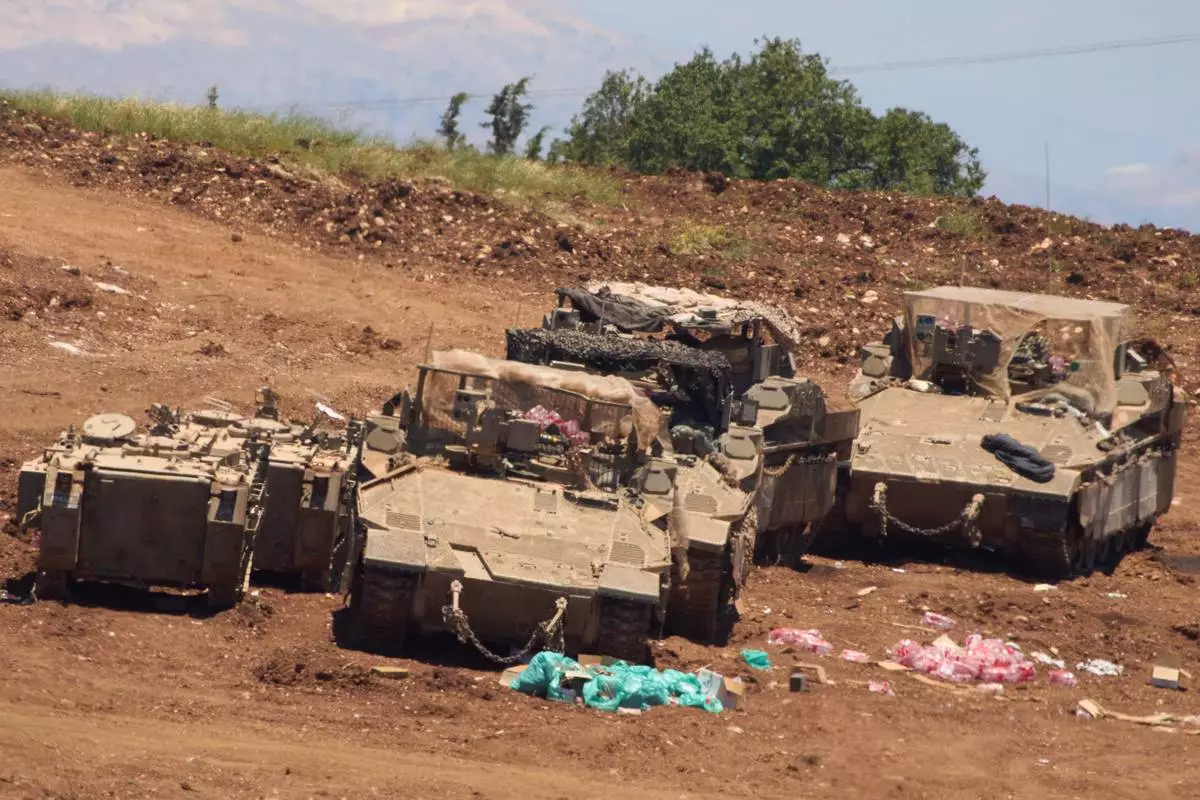
Israeli troops gather on the border with Lebanon in northern Israel, Thursday June 4, 2026. (AP Photo/Ariel Schalit)

Israeli troops gather on the border with Lebanon in northern Israel, Thursday June 4, 2026. (AP Photo/Ariel Schalit)

Israeli troops gather on the border with Lebanon in northern Israel, Thursday June 4, 2026. (AP Photo/Ariel Schalit)

Israeli troops gather on the border with Lebanon in northern Israel, Thursday June 4, 2026. (AP Photo/Ariel Schalit)

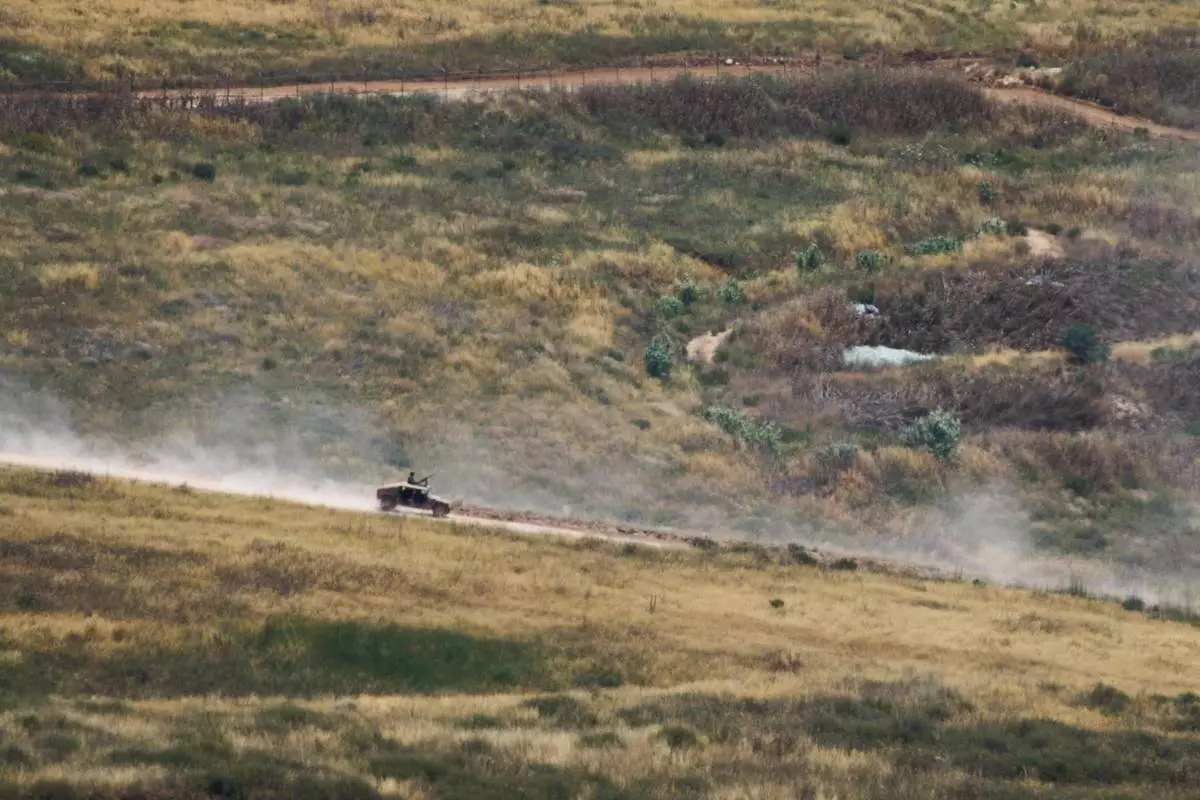
Israeli soldiers drive in southern Lebanon as seen from northern Israel, Thursday June 4, 2026. (AP Photo/Ariel Schalit)

Israeli soldiers drive in southern Lebanon as seen from northern Israel, Thursday June 4, 2026. (AP Photo/Ariel Schalit)

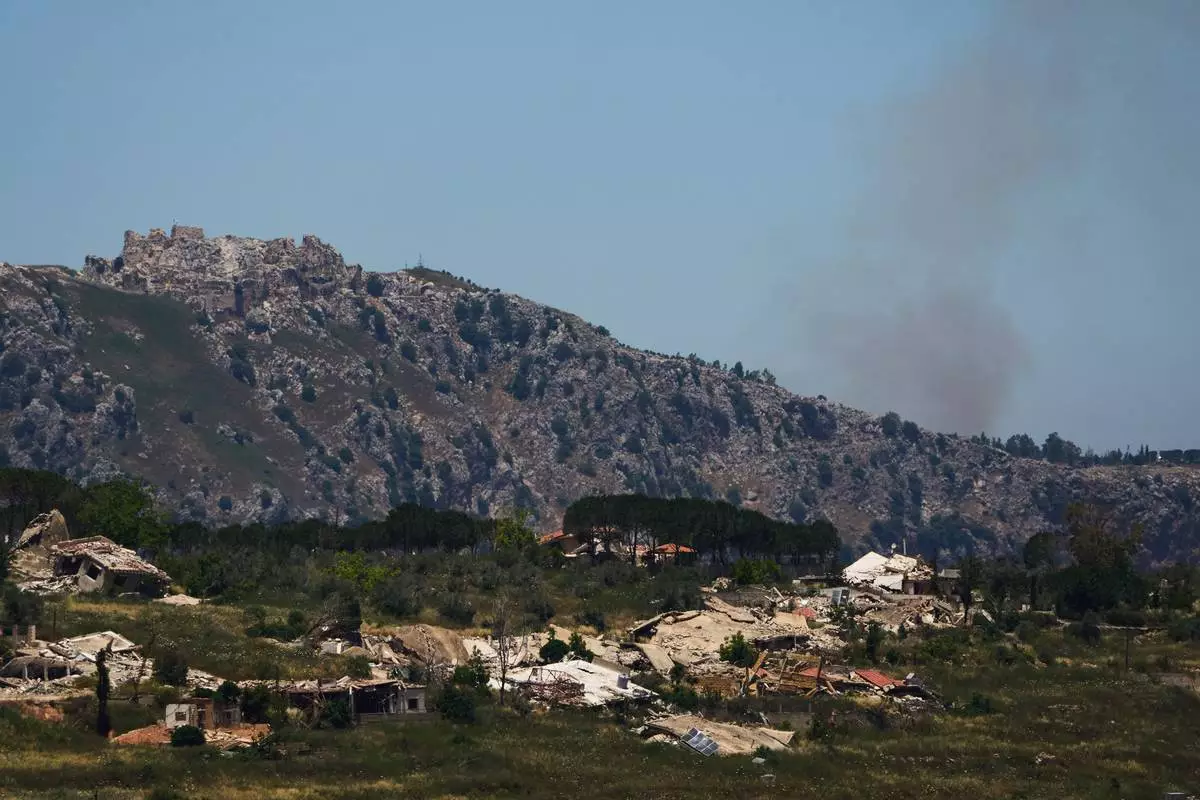
Smoke rises near the Beaufort Castle in southern Lebanon as seen from northern Israel, Thursday June 4, 2026. (AP Photo/Ariel Schalit)

Smoke rises near the Beaufort Castle in southern Lebanon as seen from northern Israel, Thursday June 4, 2026. (AP Photo/Ariel Schalit)

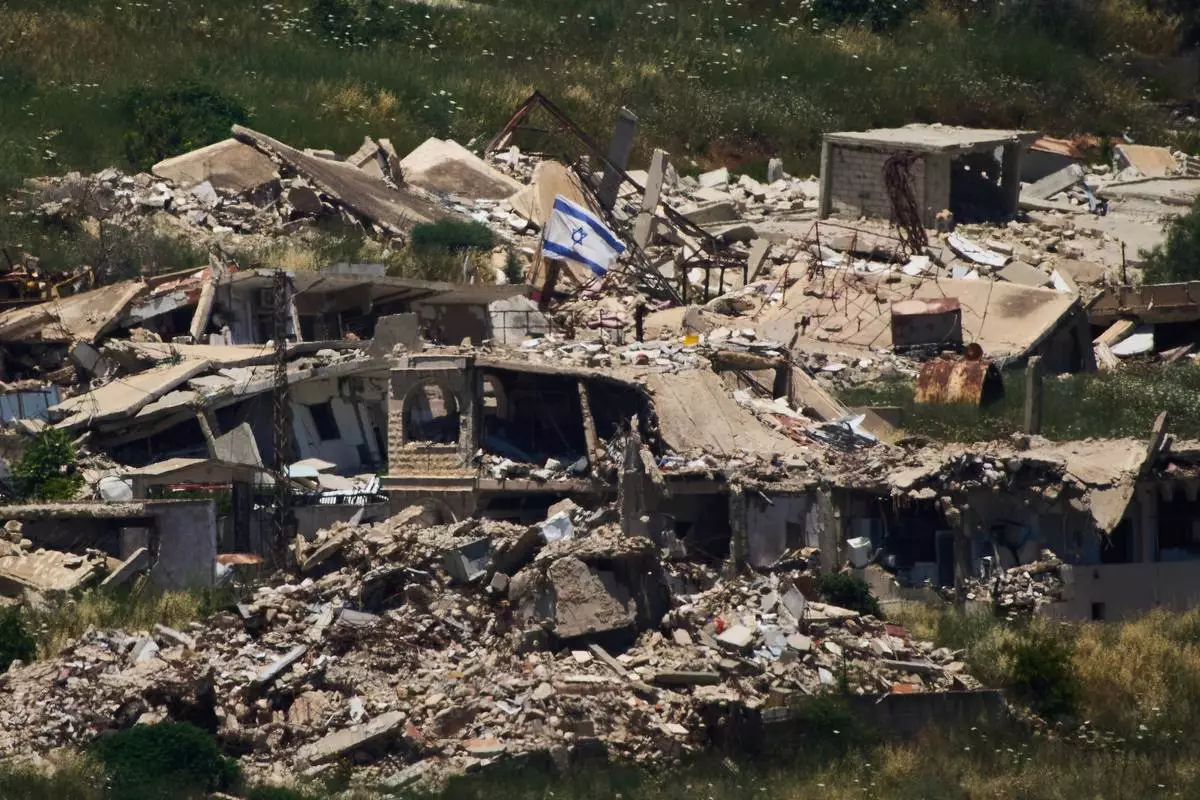
An Israeli flag hangs on a destroyed building in southern Lebanon as seen from northern Israel, Thursday June 4, 2026. (AP Photo/Ariel Schalit)

An Israeli flag hangs on a destroyed building in southern Lebanon as seen from northern Israel, Thursday June 4, 2026. (AP Photo/Ariel Schalit)

Recommended Articles