New York Democrats are wading into the national redistricting wars — just don't expect a victory before this year's midterm elections.
Democrats in the state Legislature are taking the first steps toward a plan to give themselves more control over redistricting, introducing a proposal Monday that could open the door to a new set of aggressively gerrymandered congressional lines for the 2028 elections.
The measure came as Democrats in New York vowed to counter Republican redistricting efforts elsewhere but were barred from redrawing the state's map without a constitutional amendment, which requires two legislative approvals over two years before it can go to voters as a ballot referendum.
Democrats are instead moving forward with a proposal to change the state constitution's redistricting rules, potentially allowing themselves to more easily draw new districts while also removing a ban on lines that favor political parties.
Though it wouldn’t help Democrats pick up any seats in this year’s midterms, the amendment could prove potent in the years to come after the U.S. Supreme Court gutted a key provision of the Voting Rights Act, kicking off a new, untamed front in the nation’s redistricting battles.
Elsewhere, Maryland's Democratic-led statehouse could consider a constitutional amendment this summer, paving the way for congressional redistricting ahead of the 2028 elections. In Georgia, Republican lawmakers are expected to revise congressional and state legislative districts in response to the Supreme Court's ruling.
Mississippi’s Republican governor also has said he expects lawmakers to redraw districts for the U.S. House, state legislature and state Supreme Court by 2027.
The redistricting flurry began after President Donald Trump urged Republicans to use whatever tools at their disposal to craft lines that could help the GOP hold on to its narrow House majority in November's midterm elections. Democrats moved to counter with their own efforts in different states, but were at times hamstrung by rules meant to prevent partisan gerrymandering.
In New York, Democratic Gov. Kathy Hochul said her state's proposal “will give New Yorkers the power to fight back against attempts by Donald Trump and his allies to rig our elections.”
“As Republicans across the country redraw maps to shield themselves from accountability, it’s more important than ever that New Yorkers have a voice in the process,” she said.
The proposed amendment leaves the state's bipartisan independent redistricting commission in place but places tighter deadlines on its redistricting plans. It also allows maps to be passed by a simple majority in the legislature.
The proposal is expected to pass this week, but it will need another legislative approval next year before it can go to voters in 2027. If passed by voters, Democrats could begin tweaking districts for the 2028 elections.
Republicans in New York have accused Democrats of moving to corrupt the state's redistricting process.
“New York Democrats, who proclaim to want to protect democracy, they only protect it when it's convenient, when it suits their purpose, when it helps them gain power,” said U.S. Rep. Mike Lawler, a Republican who represents a purple district in New York's Hudson Valley.
“They don't care one iota about our elections, they don't care one iota about the integrity of our elections when it doesn't serve their purpose,” he said.
The U.S. Supreme Court earlier this year rejected an effort from Democrats to throw out the lines of the only congressional seat in New York City controlled by a Republican.
Democrats in the state Legislature redrew the congressional map in 2024 to give their party a modest boost in a few battleground districts, helping the party pick up a handful of seats. Democrats currently control a majority of the state’s congressional districts.
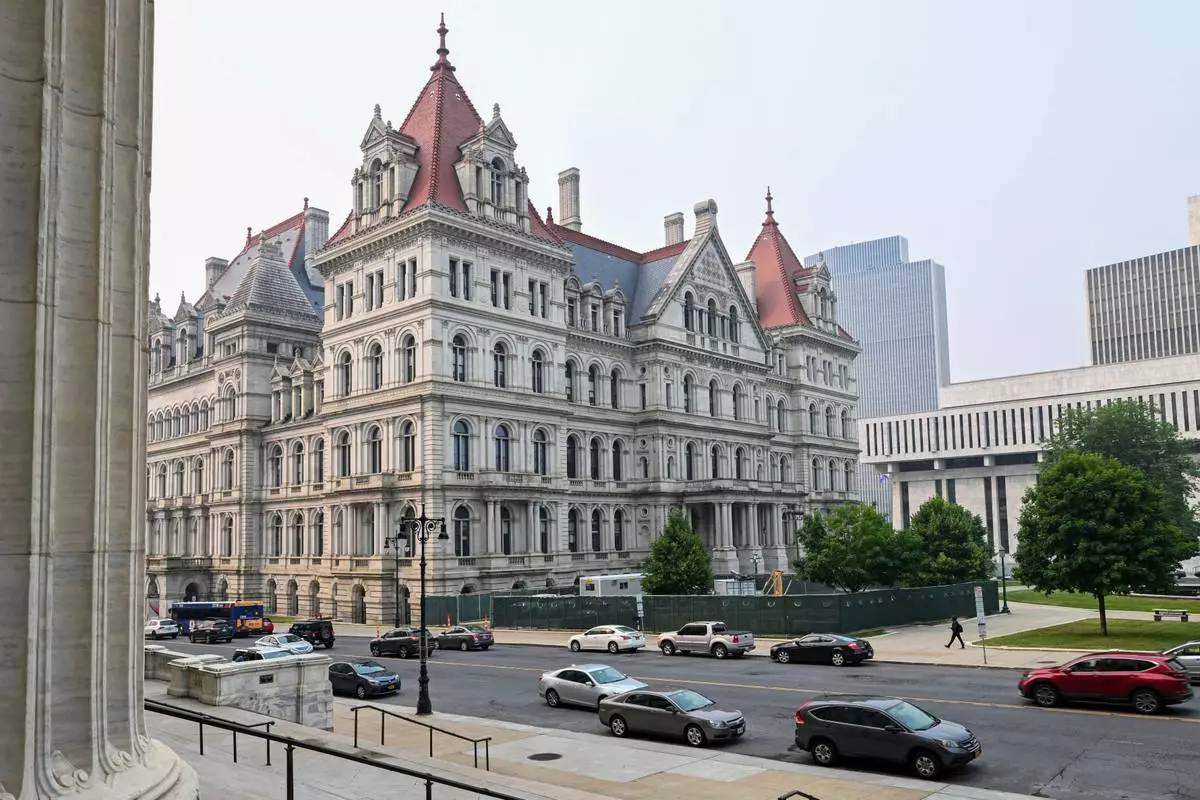
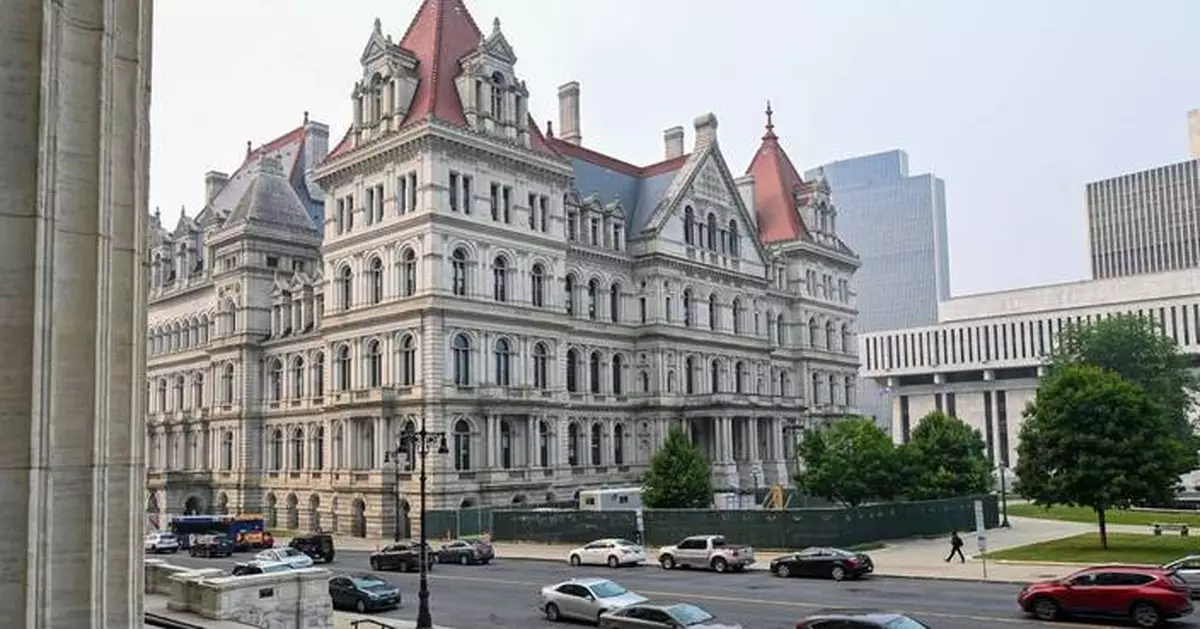
FILE - The New York state Capitol is seen from the steps of the State Education Building in Albany, N.Y., June 7, 2023. (AP Photo/Hans Pennink, File)
WASHINGTON (AP) — Senate Republicans say they are seeking reassurances from acting Attorney General Todd Blanche about the future of a new $1.776 billion settlement fund before they will move forward with legislation funding President Donald Trump's immigration enforcement agencies.
Senate Majority Leader John Thune, R-S.D., pointed to Blanche's expected testimony in a House committee Tuesday afternoon. He told reporters that Blanche “previewed what he was going to say" about the settlement, which is designed to compensate Trump’s political allies and has met with strong pushback from Senate Republicans.
“The conversation I had with him was very definitive," Thune said.
Asked if it was his understanding that the settlement fund was off the table, Thune said “that is correct."
Still, neither Blanche nor Trump have said anything publicly about the future of the fund.
GOP senators who revolted against the settlement before leaving for a Memorial Day recess two weeks ago have said they want more information from the administration about the future of the fund, which could potentially go to Trump supporters who beat police and attacked the Capitol on Jan. 6, 2021. The Justice Department said Monday it would comply with a court order pausing its implementation.
Meanwhile, Trump has been reconsidering whether to move forward with it at all, according to a person familiar with his thinking.
Caught in the middle is legislation that would fund Trump’s immigration enforcement agencies for three years. Republicans abruptly left town May 21 without passing it after Democrats said they would offer amendments to scrap or scale back the judgment fund, forcing Republicans to go on the record for or against it and endangering the money for Immigration and Customs Enforcement and Border Patrol.
“The only way to ensure Trump’s $2 billion, taxpayer-funded giveaway to Trump’s MAGA allies never sees the light of day is to abolish it by law,” said Senate Democratic Leader Chuck Schumer.
Returning to Washington on Monday evening, Thune said he wasn’t sure if the immigration spending bill would move this week. “To be determined,” he told reporters.
Republican senators leaving a lunch meeting on Tuesday also said it was still unclear if it would move.
“We'll just have to wait and see,” Sen. John Kennedy, R-La., told reporters. If senators are satisfied with Blanche's testimony, “we'll probably proceed quickly,” he said.
The extraordinary standoff comes after Trump announced the fund with no heads up to lawmakers as part of a settlement to resolve his lawsuit against the IRS over the leak of his tax returns. When word of the settlement broke, the Senate was already navigating tricky passage of the immigration legislation with an added $1 billion in White House security costs — including for Trump’s ballroom project.
Furious, Senate Republicans jettisoned the White House security money from the bill and made clear they would not pass the legislation at all unless the White House made major changes to the settlement.
“I do think the best way to handle it is if the administration decides to shut it down themselves,” Thune told reporters Monday, referring to the fund.
The Justice Department said it would comply with a ruling Friday from U.S. District Judge Leonie Brinkema, who temporarily halted the fund for two weeks. The judge scheduled a June 12 hearing for arguments on whether to extend her order.
The department said in a statement that it strongly disagrees with the ruling but would comply.
Republican senators weren't satisfied. They have said that they need more detail from the administration on what happens after that deadline before deciding next steps.
“It’s pretty clear that the president has to say very explicitly that there’s not going to be a weaponization fund,” said Senate Judiciary Committee Chairman Chuck Grassley, R-Iowa.
Oklahoma Sen. Jim Lankford said Trump administration officials “need to say what they actually mean.”
“They need to say, we’re setting this whole thing aside,” Lankford said.
Alaska Sen. Lisa Murkowski said that if the settlement is “completely pulled, then I’m satisfied. But I haven’t heard anybody say that.”
Kennedy said the administration already has to abide by the court decision, “that’s in the Constitution. I have to know more about their position.”
“Right now, the reconciliation bill looks like a broken arm with the bones sticking out,” Kennedy said. “It won’t move this week, in my opinion, unless we have some resolution on the weaponization account.”
The outrage over the fund came to a head last month at a closed-door meeting between senators and Blanche that Republican Sen. Ted Cruz of Texas described on a recent episode of his podcast as “one of the roughest meetings I’ve seen in my entire time in the Senate.”
GOP senators had been discussing several ways that they could curb the fund, including limiting who can receive payouts, changing the makeup of the commission in charge of settlement decisions, adding some sort of judicial review for applicants or scrapping the fund altogether.
Amid the backlash, a person familiar with the matter, who insisted on anonymity to discuss the president’s thinking, said Monday that Trump was reconsidering whether to move forward with the fund. But the president has not said publicly what he intends to do.
Also complicating matters is Trump’s campaign-year push to defeat GOP lawmakers whom he sees as disloyal, including some of Thune’s most reliable Republican votes in the narrow 53-47 Senate. Sens. Bill Cassidy of Louisiana and John Cornyn of Texas both lost reelection bids in May after Trump endorsed their primary opponents, and it’s unclear how supportive they’ll be of the president’s agenda going forward.
“I think it’s hard to divorce anything that happens here from what’s happening in the political atmosphere around us,” Thune said before the Senate left town.
Associated Press writers Joey Cappelletti and Eric Tucker contributed to this report.
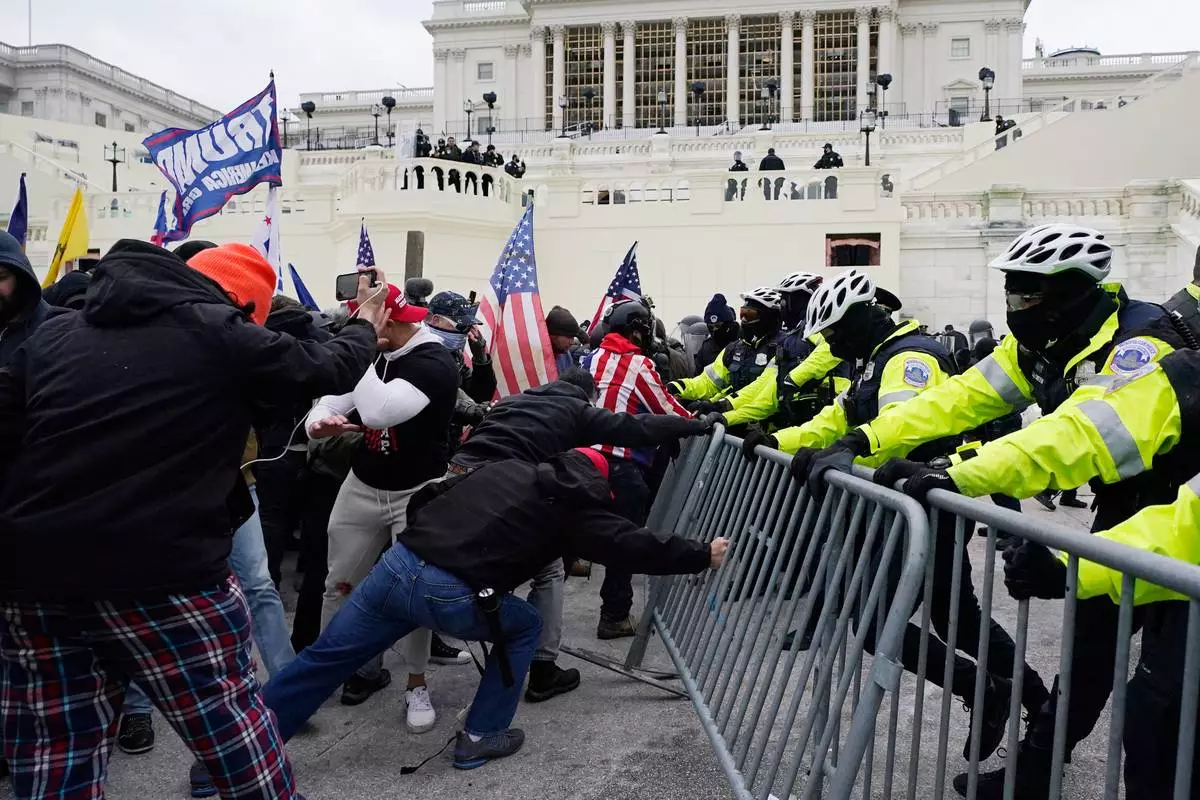
FILE - Supporters of President Donald Trump try to break through a police barrier at the Capitol in Washington, Jan. 6, 2021. (AP Photo/Julio Cortez, File)
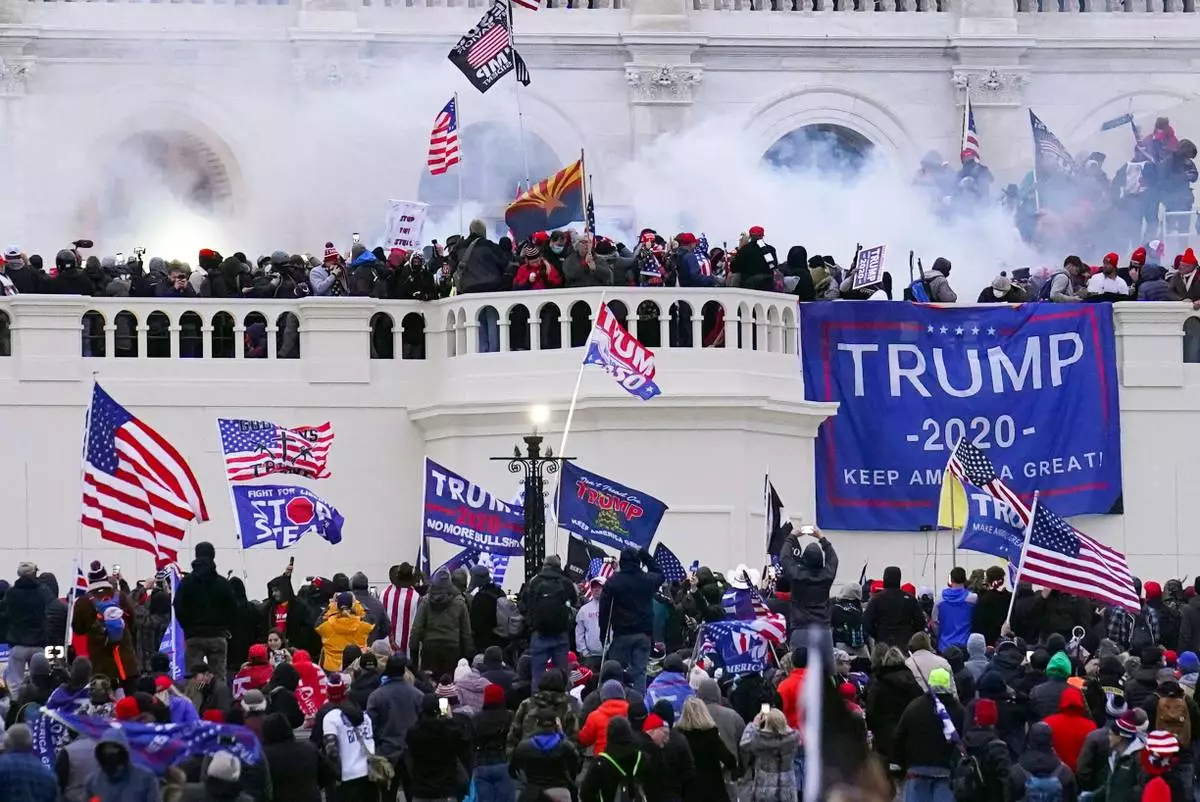
FILE - Rioters storm the West Front of the U.S. Capitol Jan. 6, 2021, in Washington. (AP Photo/John Minchillo, File)