Skip to Content Facebook Feature Image

Wallbox Deploys Its First Supernova PowerRing Fast-Charging System in Europe

Business

Wallbox Deploys Its First Supernova PowerRing Fast-Charging System in Europe
Business

Business

Wallbox Deploys Its First Supernova PowerRing Fast-Charging System in Europe

2026-06-03 18:50 Last Updated At:19:00

BARCELONA, Spain--(BUSINESS WIRE)--Jun 3, 2026--

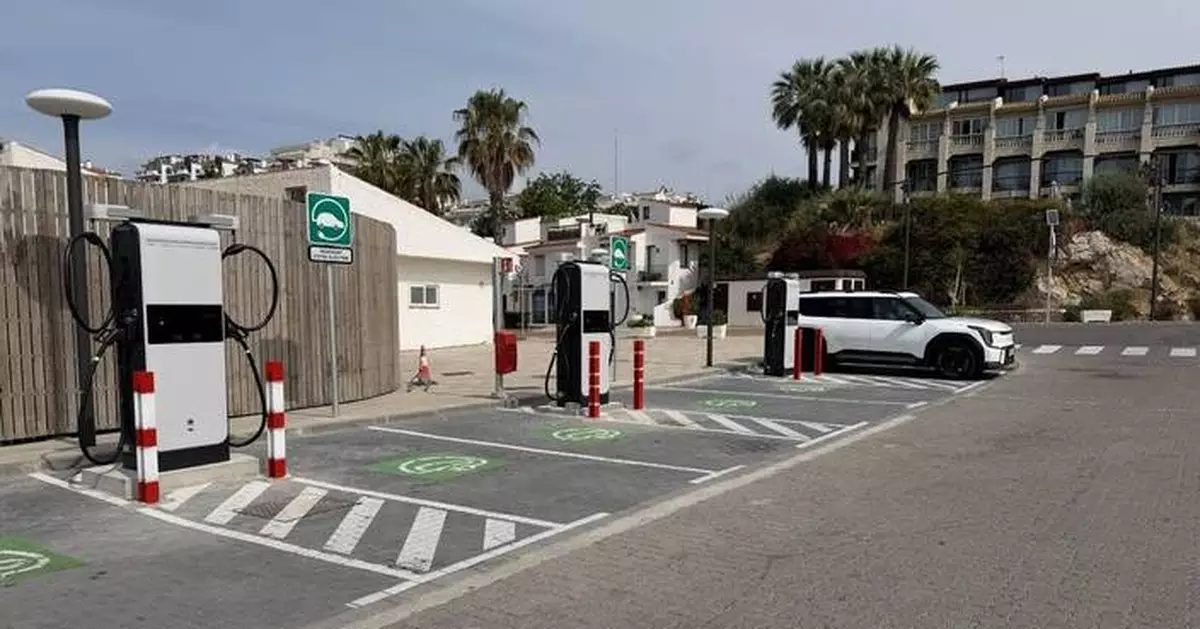
Wallbox (NYSE: WBX), a global provider of electric vehicle charging and energy management solutions, today announced the first real-world deployment of its Supernova PowerRing fast-charging system at Port de Sitges, a high-traffic destination on the Mediterranean coast near Barcelona.

This press release features multimedia. View the full release here: https://www.businesswire.com/news/home/20260603579499/en/

The installation marks the first operational deployment of Supernova PowerRing, Wallbox’s new intelligent fast-charging architecture introduced in late 2025. Designed to optimize power distribution across multiple chargers, PowerRing enables operators to scale fast-charging infrastructure more efficiently while making better use of available grid capacity.

The system installed at Port de Sitges includes three Supernova chargers designed to support a shared dynamic capacity of up to 240 kW once fully enabled. The PowerRing architecture is designed to automatically allocate available power across the chargers depending on the number of vehicles charging simultaneously, allowing each vehicle to receive between 80 kW and 240 kW based on demand, vehicle compatibility and available capacity.

Supernova PowerRing is designed to deliver high-power charging in a more flexible and efficient way. The system can provide up to 400 kW to a single vehicle, provided the vehicle is compatible and sufficient power is available within the system’s shared capacity, which can reach up to 720 kW. This dynamic approach allows operators to maximize charging performance while reducing the space, cost and infrastructure complexity typically associated with high-power charging sites.

“This first deployment is an important milestone for Supernova PowerRing and demonstrates how this technology can help operators deploy fast-charging infrastructure in a more efficient and flexible way,” said Eduard Castañeda, Chief Product & Technology Officer and Co-founder of Wallbox. “PowerRing has been designed to help operators optimize available power, scale their charging networks and maintain a high-quality charging experience for users.”

Thanks to its modular and compact design, Supernova PowerRing is suitable for a wide range of locations, including retail destinations, parking facilities, service stations, marinas, urban charging hubs and other high-traffic environments where space and power availability are key constraints.

The deployment at Port de Sitges forms part of Wallbox’s progressive rollout of Supernova PowerRing across European markets, as the company continues to expand its fast-charging portfolio for public and semi-public charging applications.

About Wallbox

Wallbox is a global technology company, dedicated to changing the way the world uses energy. Wallbox creates advanced electric vehicle charging and energy management systems that redefine the relationship between users and the network. Wallbox goes beyond charging electric vehicles to give users the power to control their consumption, save money and live more sustainably. Wallbox offers a complete portfolio of charging and energy management solutions for residential, semi-public, and public use in more than 100 countries around the world. Founded in 2015 in Barcelona, where the company’s headquarters are located, Wallbox currently has offices across Europe, Asia, and America. For more information, visit www.wallbox.com.

Forward-Looking Statements

This press release contains forward-looking statements within the meaning of the Private Securities Litigation Reform Act of 1995. We intend such forward-looking statements to be covered by the safe harbor provisions for forward-looking statements contained in Section 27A of the Securities Act of 1933, as amended, and Section 21E of the Securities Exchange Act of 1934, as amended. All statements contained in this press release other than statements of historical fact should be considered forward-looking statements, including, without limitation, statements regarding the expected timing and completion of Wallbox’s planned restructuring, including the effectiveness of the restructuring plan; the negotiation and execution of definitive agreements contemplated under the restructuring plan on the terms previously described; the expected completion of the capital increase; the anticipated repayment of the bridge loan by set-off against subscription obligations; the Group’s projected cash generation and debt service capacity; and the Group’s ability to implement its business plan following completion of the restructuring.

The words “anticipate,” “believe,” “can,” “continue,” “could,” “estimate,” “expect,” “focus,” “forecast,” “intend,” “likely,” “may,” “might,” “plan,” “possible,” “potential,” “predict,” “project,” “should,” “target,” “will,” “would” and similar expressions are intended to identify forward-looking statements, though not all forward-looking statements use these words or expressions. These statements are neither promises nor guarantees, but involve known and unknown risks, uncertainties and other important factors that may cause our actual results, performance or achievements to be materially different from any future results, performance or achievements expressed or implied by the forward-looking statements, including, but not limited to: the risk that the restructuring plan may not become effective on the anticipated timeline or at all; that the terms of the restructuring may be modified in the course of implementation; as well as Wallbox’s history of operating losses; its ability to obtain adequate capital funding or improve its financial performance, as well as the other important factors discussed under the caption “Risk Factors” in Wallbox’s Annual Report on Form 20-F for the fiscal year ended December 31, 2025, as such factors may be updated from time to time in its other filings with the Securities and Exchange Commission (the “SEC”), accessible on the SEC’s website at www.sec.gov and the Investor Relations section of Wallbox’s website at investors.wallbox.com. Any such forward-looking statements represent management’s estimates as of the date of this press release. Any forward-looking statement that Wallbox makes in this press release speaks only as of the date of such statement. Except as required by law, Wallbox disclaims any obligation to update or revise, or to publicly announce any update or revision to, any of the forward-looking statements, whether as a result of new information, future events or otherwise.
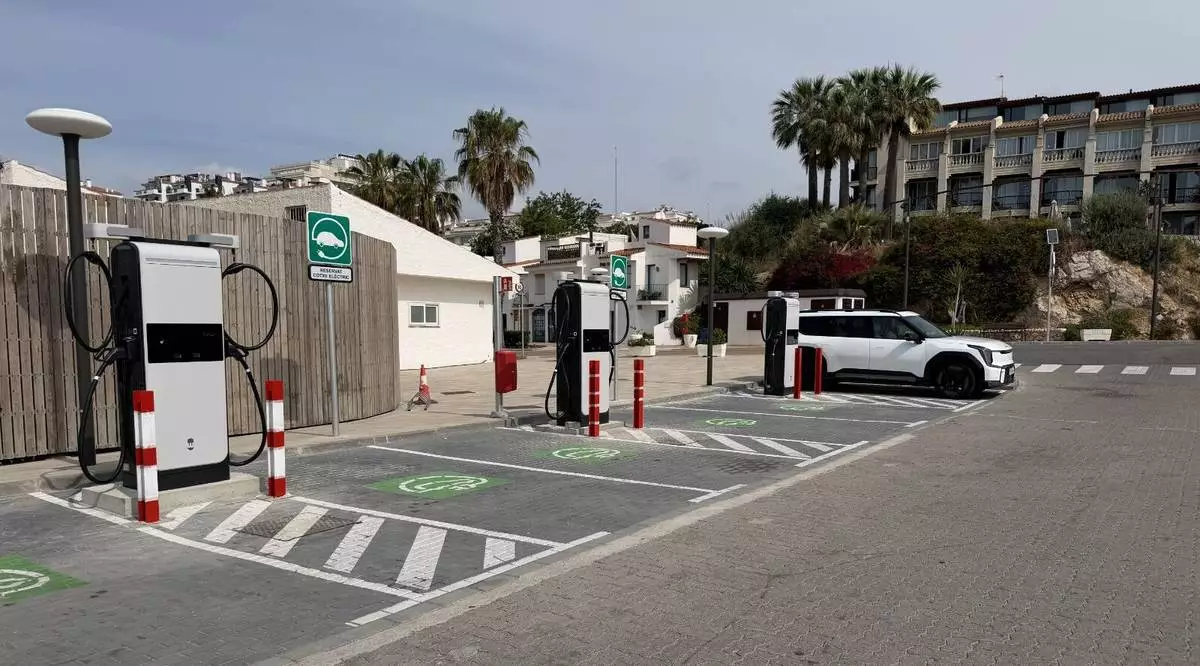
Wallbox deploys its first Supernova PowerRing fast-charging system in Europe

Wallbox deploys its first Supernova PowerRing fast-charging system in Europe
DUBAI, United Arab Emirates (AP) — Kuwait briefly shut the country's main airport Wednesday after Iranian drones heavily damaged a terminal building and killed one person — the latest salvo in a series of back-and-forth attacks by Tehran and Washington that have tested a fragile ceasefire.

The strikes came as semiofficial Iranian news agencies said the country had stopped communicating with mediators about extending a ceasefire in the war with the U.S. and Israel. A regional official said Tehran wanted the truce in Lebanon enforced before returning to talks. U.S. President Donald Trump said negotiations were continuing.

Those talks have dragged on for weeks, and repeated exchanges of strikes in the Gulf region and Israel’s broadening war in Lebanon are further straining the efforts.

All the while, Iran has maintained its stranglehold on the Strait of Hormuz — a crucial artery for the world’s oil and natural gas — and the U.S. has continued its blockade of Iranian ports, ensuring that global fuel prices remain high and the effects of the conflict are felt well beyond the region.

Kuwait’s Foreign Ministry said at least one person was killed and others wounded in the strike on the airport. It said Kuwait reserves the right to respond to Iran and that it will “neither accept nor tolerate” the attacks.

Earlier, Defense Ministry spokesperson Brig. Gen. Saud Abdulaziz Al-Otaibi had said that “a number of hostile drones” had targeted a passenger building at Kuwait International Airport.

Civil aviation authorities said the airport partially reopened later in the day, with Kuwait Airways flights resuming from a different terminal than the one that was hit. No other flights would be operating, they said. The airport only reopened Monday after closing early in the war.

The U.S. military said Iran fired two missiles at Kuwait that fell apart en route, and that it “downed multiple drones” targeting American forces in the country.

The military also said U.S. and Bahraini forces intercepted missiles aimed at the Gulf kingdom, which is home to the U.S. Navy’s 5th fleet. Bahrain’s Defense Ministry said its military intercepted and destroyed three missiles and a number of drones fired by Iran.

The U.S. military said it launched strikes on an Iranian military ground control station on Qeshm Island in the Strait of Hormuz.

Iran’s paramilitary Revolutionary Guard acknowledged that it targeted the headquarters of the 5th Fleet and U.S. military facilities in another country, but did not name Kuwait.

Both the U.S. and Iran said they were retaliating for earlier attacks or attaempted attacks.

Iran's Foreign Ministry condemned the U.S. strikes on Qeshm Island, where it said a telecommunications tower was struck, and other previous strikes. It called them “acts of aggression” that it said violated the ceasefire.

A senior Emirati diplomat called on Wednesday for “a firm, unified, and cohesive Gulf position” against Iran following the attacks.

“This aggression does not target a specific state, but rather all of us,” Anwar Gargash wrote on the X platform.

Iran’s Fars and Tasnim news agencies, both believed to be close to the Guard, reported that Iran’s negotiators have stopped communicating with ceasefire mediators as tensions flared in Israel’s separate but related fight against the Iranian-backed Hezbollah militant group in Lebanon.

A regional official involved in the mediation, speaking on condition of anonymity to discuss the talks, told The Associated Press that Iran had not communicated at all on Tuesday after saying that a ceasefire needed to be enforced in Lebanon for negotiations to continue.

Trump called reports of a cessation in talks “false and erroneous.”

“The conversations between us have been going on continuously, including four days ago, three days ago, two days ago, one day ago and today,” Trump said in a social media post. “Where they lead, one never knows, but as I told Iran, ’It’s time, one way or another, for you to make a Deal.”

Despite repeated outbreaks of violence, the declared ceasefire in Lebanon is officially in place. No side has formally withdrawn or declared the ceasefire over, but attacks continue. Israeli forces have moved deeper into Lebanon than at any time in over a quarter of a century while Hezbollah has launched rocket and drone attacks.

As the attacks continue, Lebanon has emerged as a key sticking point in Trump’s efforts to sign a ceasefire deal with Iran.

Tehran insists that any larger potential truce in the war there must also quell the fighting in Lebanon. Israeli Prime Minister Benjamin Netanyahu wants to keep the issues separate and is under heavy domestic pressure to strike Hezbollah as he prepares for new elections this fall.

The fighting has exposed a rift between close allies Israel and the U.S., with the U.S. pushing for restraint and Israel seeking to step up the military pressure on Hezbollah.

A person familiar with the situation said Netanyahu and Trump had a “tense” conversation earlier this week. The person spoke on condition of anonymity because they weren’t authorized to speak to the media. The person didn’t elaborate on the details of the call.

Magdy reported from Cairo. Associated Press writers Elena Becatoros in Athens, Greece, Sam Mednick in Jerusalem, and Aamer Madhani and Konstantin Toropin in Washington contributed to this report.

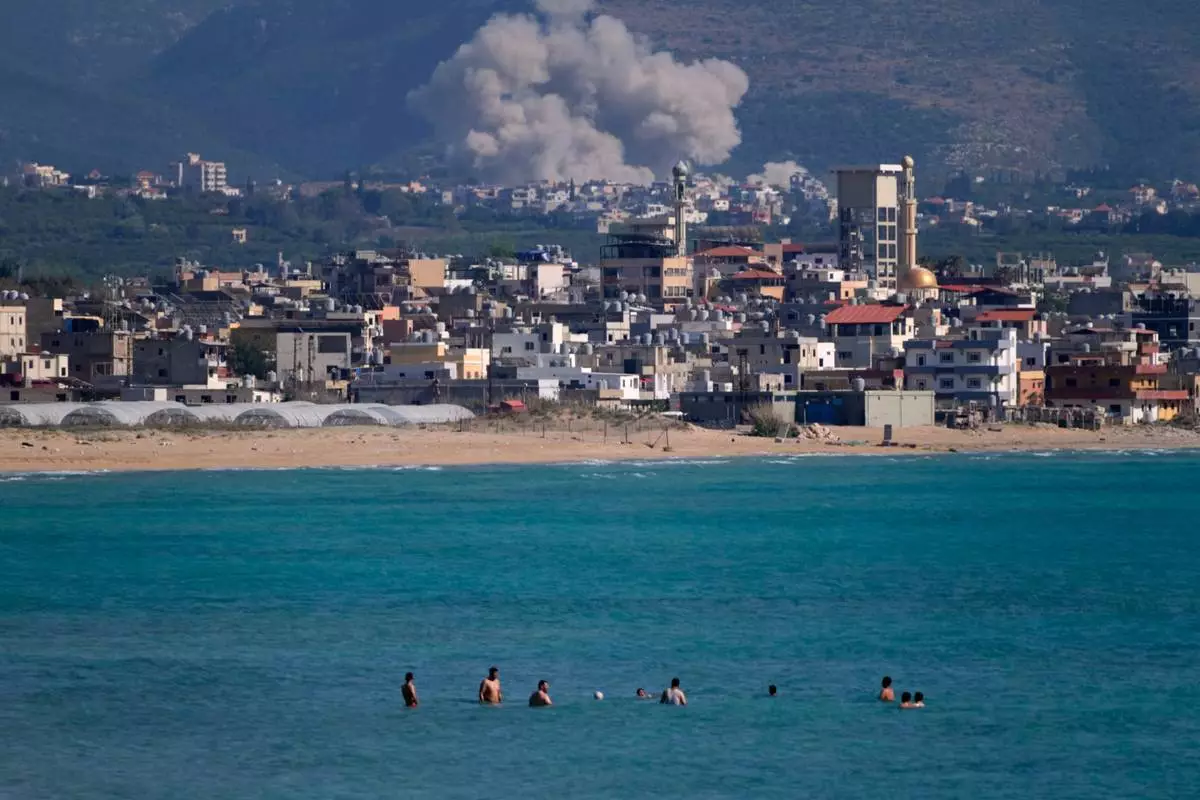
People swim on a public beach as smoke, background, rises from an Israeli airstrike that hit the Qlaileh village, seen from the southern port city of Tyre, Lebanon, Tuesday, June 2, 2026. (AP Photo/Mohammed Zaatari)

People swim on a public beach as smoke, background, rises from an Israeli airstrike that hit the Qlaileh village, seen from the southern port city of Tyre, Lebanon, Tuesday, June 2, 2026. (AP Photo/Mohammed Zaatari)

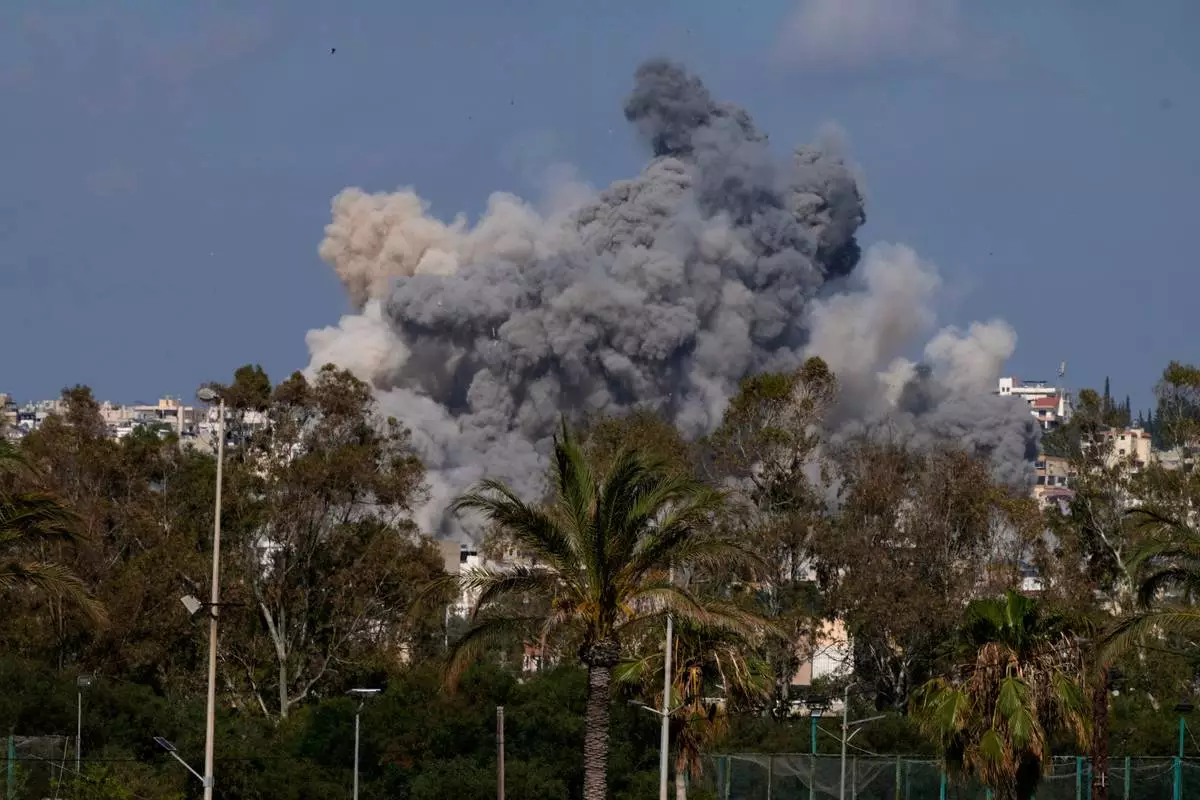
Smoke rises from an Israeli airstrike that hit Burj al-Shamali village near the southern port city of Tyre, Lebanon, Tuesday, June 2, 2026. (AP Photo/Mohammed Zaatari)

Smoke rises from an Israeli airstrike that hit Burj al-Shamali village near the southern port city of Tyre, Lebanon, Tuesday, June 2, 2026. (AP Photo/Mohammed Zaatari)

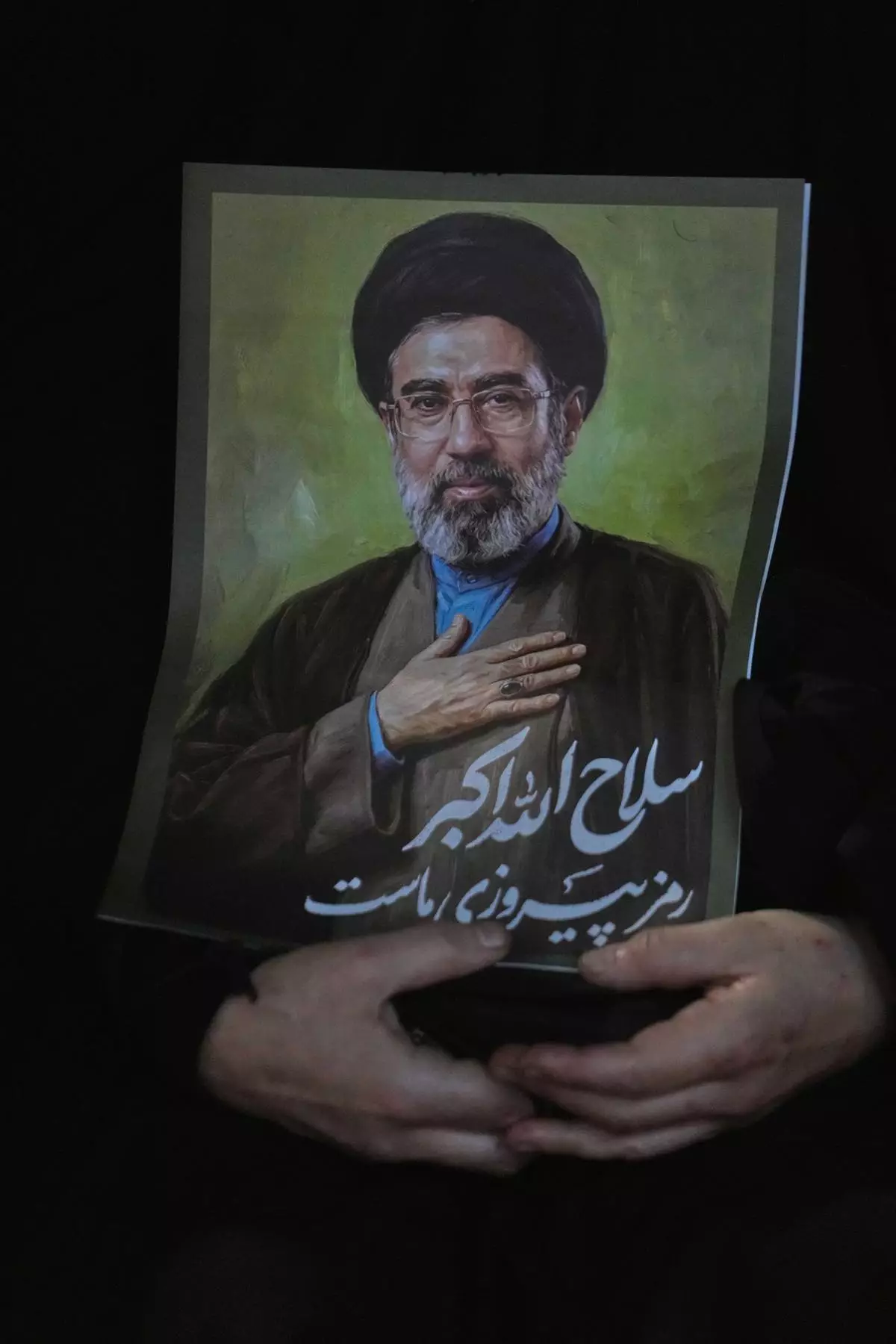
A woman holds a poster of the Iranian Supreme Leader Ayatollah Mojtaba Khamenei during a pro-government gathering at Islamic Revolution Square in Tehran, Iran, Saturday, May 30, 2026. (AP Photo/Vahid Salemi)

A woman holds a poster of the Iranian Supreme Leader Ayatollah Mojtaba Khamenei during a pro-government gathering at Islamic Revolution Square in Tehran, Iran, Saturday, May 30, 2026. (AP Photo/Vahid Salemi)

People gather on paddleboards in shallow water as cargo and service vessels are anchored in the Strait of Hormuz off Bandar Abbas, Iran, Monday, June 1, 2026. (Amirhosein Khorgooi/ISNA via AP)

People gather on paddleboards in shallow water as cargo and service vessels are anchored in the Strait of Hormuz off Bandar Abbas, Iran, Monday, June 1, 2026. (Amirhosein Khorgooi/ISNA via AP)

Recommended Articles