China has successfully achieved a key technological breakthrough in wet-process T1000-grade high-performance carbon fiber and realized mass production in Shanghai, according to China Petroleum and Chemical Corporation (Sinopec) on Tuesday.
The breakthrough, completed by Sinopec Shanghai Petrochemical Co., Ltd. and Sinopec Shanghai Research Institute of Petrochemical Technology Co., Ltd., will provide core materials support for high-end fields and future industries, including aerospace, embodied intelligence, and the low-altitude economy.
The high-performance carbon fiber is a 12K small-tow product, meaning that each bundle contains 12,000 individual filaments. Each filament has a diameter of only about seven micrometers, about one-tenth that of a human hair, according to Sinopec.
"This time, we have achieved mass production of small tow T1000 carbon fiber. Small-tow carbon fiber and large-tow carbon fiber now form a strategic complementary advantage. At present, we have the production capacity for nearly 20 models of carbon fiber products, which can fully cover various application scenarios such as aerospace, high-end manufacturing, wind power, transportation, and sports and leisure," said Du Yongqian, manager of a carbon fiber plant of the Sinopec Shanghai Petrochemical Co., Ltd.
Carbon fiber has a density of less than one-fourth that of steel, yet its strength is seven to nine times that of steel, while also offering excellent properties such as corrosion resistance and fatigue resistance. It is an indispensable core basic material supporting the development of high-end manufacturing and strategic equipment.
It is projected that by 2030, China's carbon fiber market will exceed 60 billion yuan (about 8.87 billion U.S. dollars).
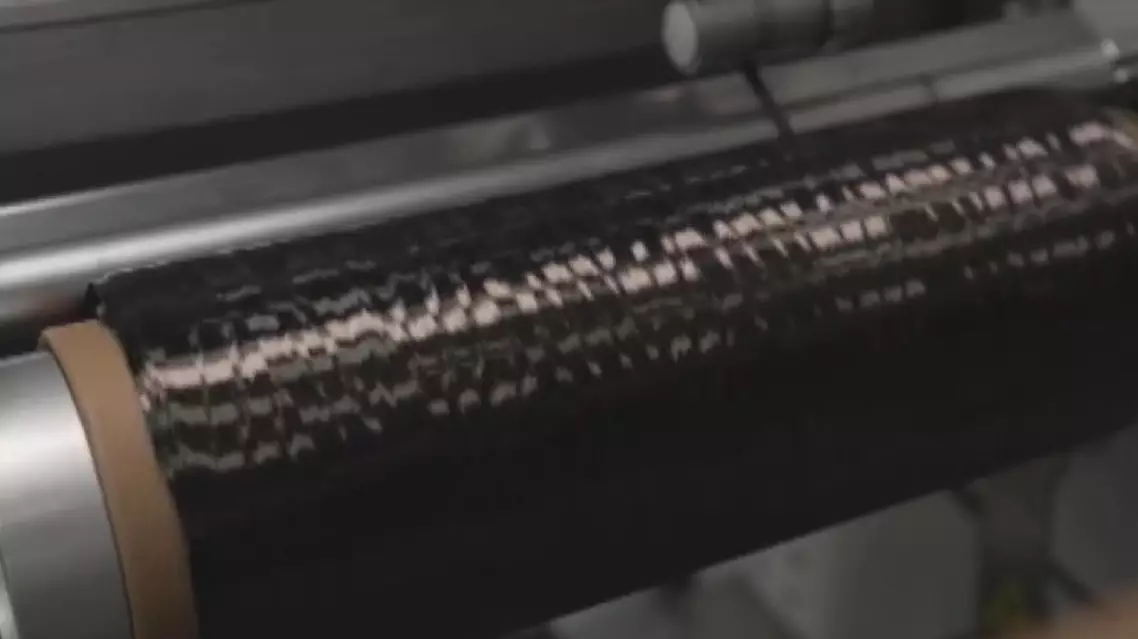
China achieves mass production of T1000-grade high-performance carbon fiber
China's manufacturing sector has continued to accelerate its transformation and upgrading this year, moving faster toward high-end, intelligent and green development.
The country's consumer electronics industry has recently rolled out a steady stream of new models. A smartphone now features multiple advances in high-end manufacturing, such as a domestically developed memory chip used commercially in a flagship phone for the first time, offering lower power consumption and faster data transfer, or a flexible screen capable of withstanding millions of folds without breaking.
"Ultra-thin glass, only one-third the thickness of a human hair, is supported by more than 10 core technologies, and the entire chain is independently controllable," said Qi Yanjie, deputy director of the research and development center of a high-tech enterprise in east China's Wuhu City, while introducing a smartphone screen.
China's advanced manufacturing industry has continued to expand this year. In August, the added value of high-tech manufacturing and digital product manufacturing by industrial firms above the designated size increased 16.7 percent and 15.7 percent year on year, respectively. New growth drivers contributed more than 60 percent to growth in industrial output above the designated size, becoming a key engine driving the industrial economy.
Production methods have also been upgraded. At an intelligent manufacturing base in south China's Shenzhen City, nearly 30,000 orders pour in every day, with about 90 percent involving personalized customizations.
The base handles these orders using an intelligent system that increases efficiency and reduces costs. "Our intelligent production scheduling system can coordinate the overall scheduling of 300 million materials, and can basically complete the process from order intake to product shipping within 24 hours," said Liu Chuchun, head of the intelligent manufacturing base.
To date, China has built more than 56,000 basic-level smart factories, and artificial intelligence technologies have been adopted by over 30 percent of industrial enterprises above the designated size.
China's rising high-end manufacturing momentum not only strengthens the foundations of the domestic industrial economy, but also provides strong impetus for exports.
In August, the exports value of industrial enterprises above the designated size increased 11.1 percent year on year, maintaining double-digit growth for five consecutive months, with high-end equipment products serving as the main engine of foreign trade growth. "High-tech products such as photovoltaic modules, wind power equipment, high-end machine tools and industrial robots have become new calling cards for Chinese manufacturing going global, effectively contributing to technological progress, industrial upgrading and green transformation in other countries," said Ji Jianjun, a research fellow with the Institute for International Economic Research under the National Development and Reform Commission.
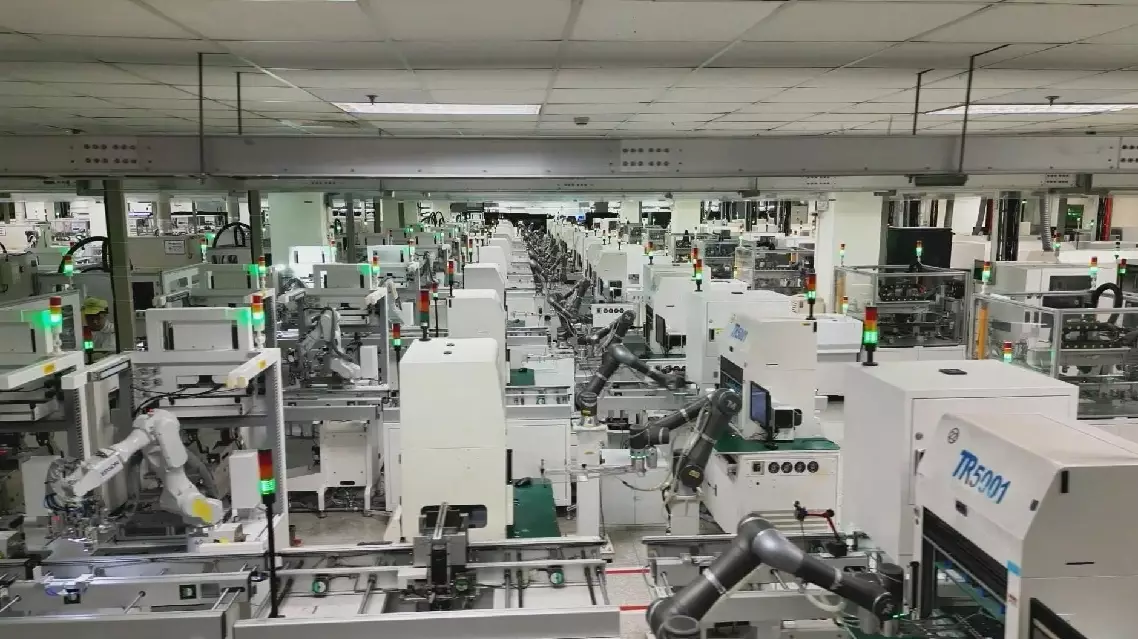
China's manufacturing sector moves further up value chain