Skip to Content Facebook Feature Image

Whither ‘60 Minutes’? As turmoil unspools in public, CBS News show’s ultimate health is debated

ENT

Whither ‘60 Minutes’? As turmoil unspools in public, CBS News show’s ultimate health is debated
ENT

ENT

Whither ‘60 Minutes’? As turmoil unspools in public, CBS News show’s ultimate health is debated

2026-06-04 07:19 Last Updated At:12:00

NEW YORK (AP) — “This is ‘60 Minutes,’” Harry Reasoner announced on Sept. 24, 1968, introducing his new CBS News show alongside fellow correspondent Mike Wallace. “It’s kind of a magazine for television.”

He added: “We do think this is sort of a new approach.”

More Images
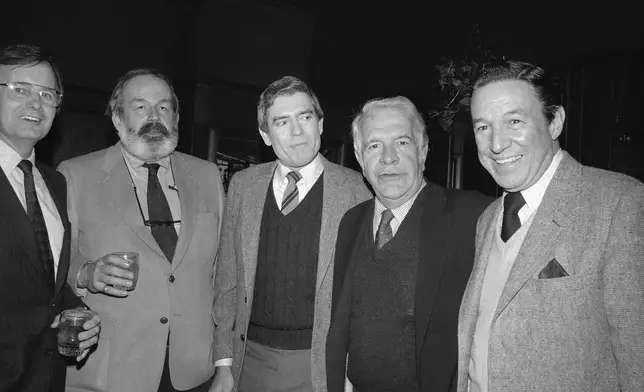
FILE - Dan Rather, center, joined by Harry Reasoner, second from right, and Mike Wallace, right, celebrates his first anniversary as anchorman and managing editor of the CBS Evening News, at a restaurant in New York, March 9, 1982. (AP Photo/Nancy Kaye, File)
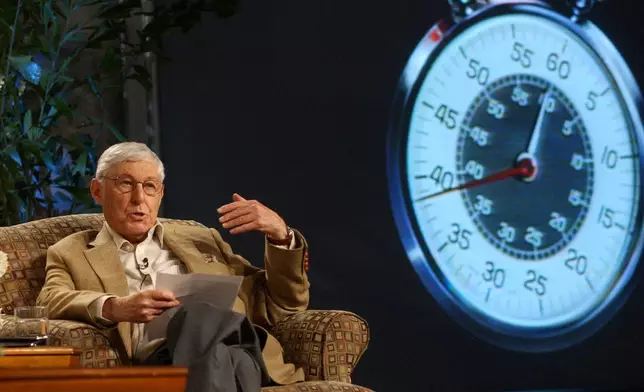
FILE - Dan Rather, center, joined by Harry Reasoner, second from right, and Mike Wallace, right, celebrates his first anniversary as anchorman and managing editor of the CBS Evening News, at a restaurant in New York, March 9, 1982. (AP Photo/Nancy Kaye, File)

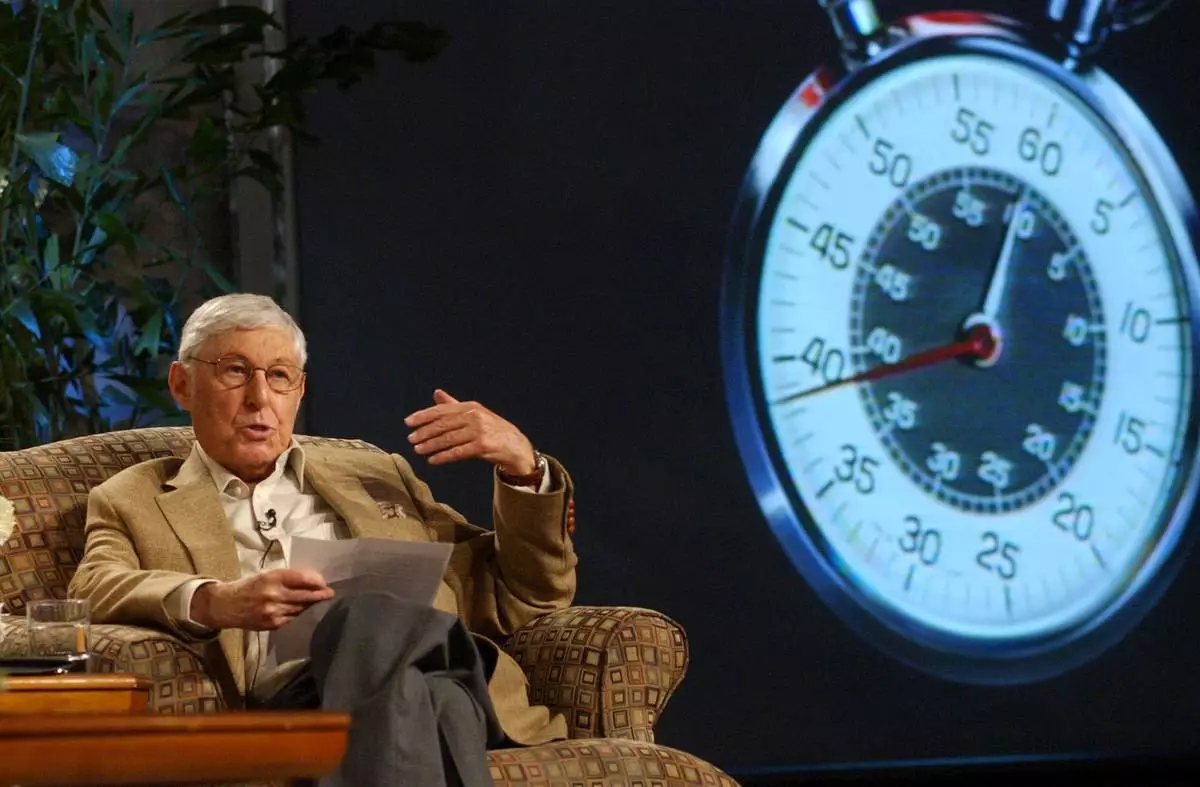
FILE - Against a backdrop of the famous "60 Minutes" stop watch, Don Hewitt, the program's creator and executive producer, reads prepared remarks to reporters during a session on "60 Minutes" during CBS' Winter Press Tour in the Hollywood section of Los Angeles, Jan. 17, 2004. (AP Photo/Rene Macura, File)
FILE - Against a backdrop of the famous "60 Minutes" stop watch, Don Hewitt, the program's creator and executive producer, reads prepared remarks to reporters during a session on "60 Minutes" during CBS' Winter Press Tour in the Hollywood section of Los Angeles, Jan. 17, 2004. (AP Photo/Rene Macura, File)

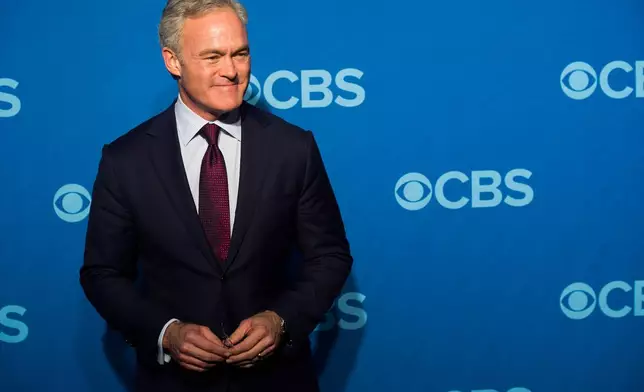
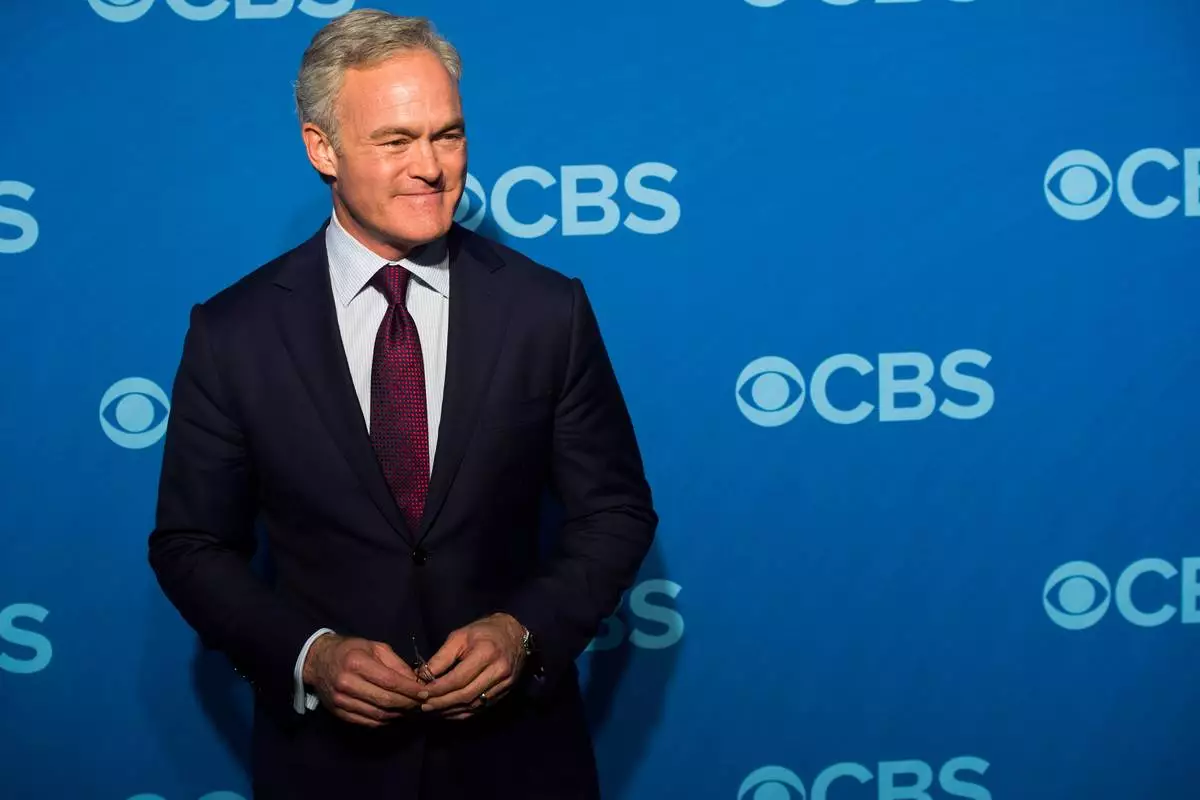
FILE - Scott Pelley, anchor of "CBS Evening News," at the CBS Upfront in New York, May 15, 2013. (Photo by Charles Sykes/Invision/AP, File)
FILE - Scott Pelley, anchor of "CBS Evening News," at the CBS Upfront in New York, May 15, 2013. (Photo by Charles Sykes/Invision/AP, File)

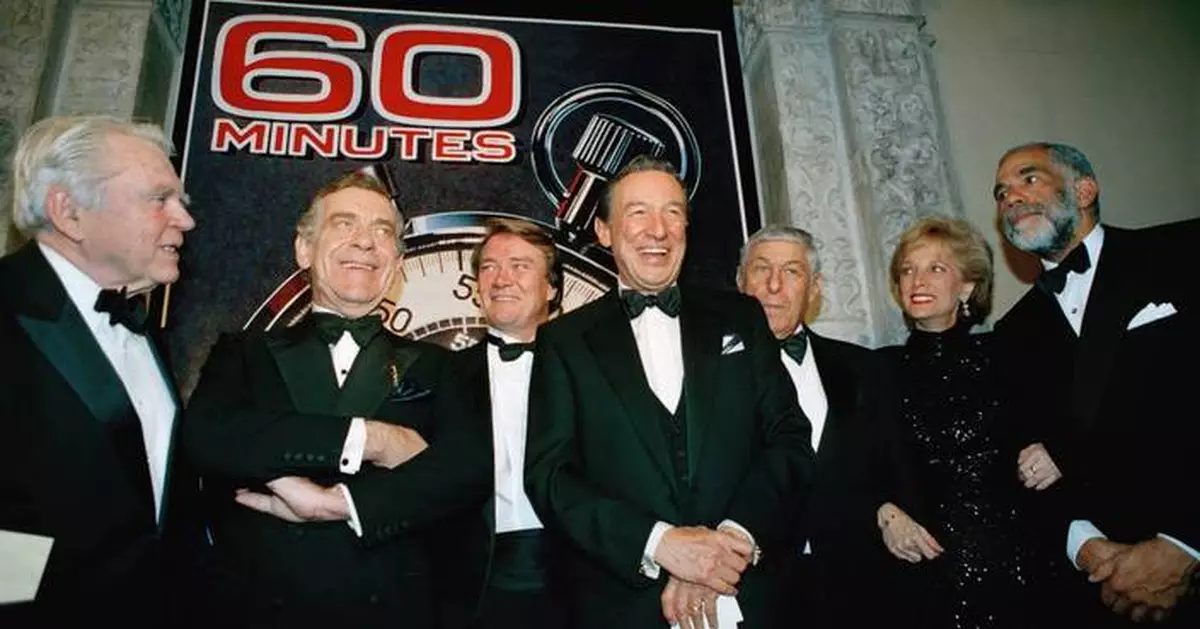
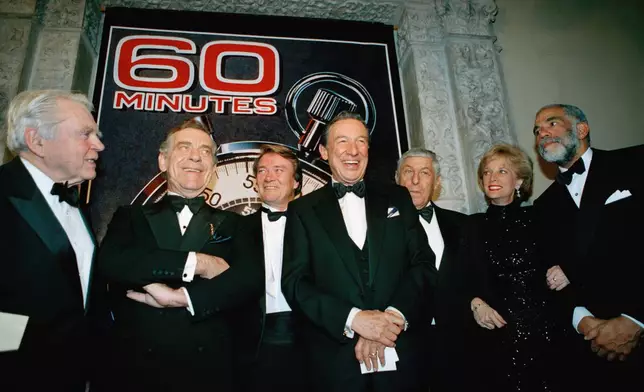
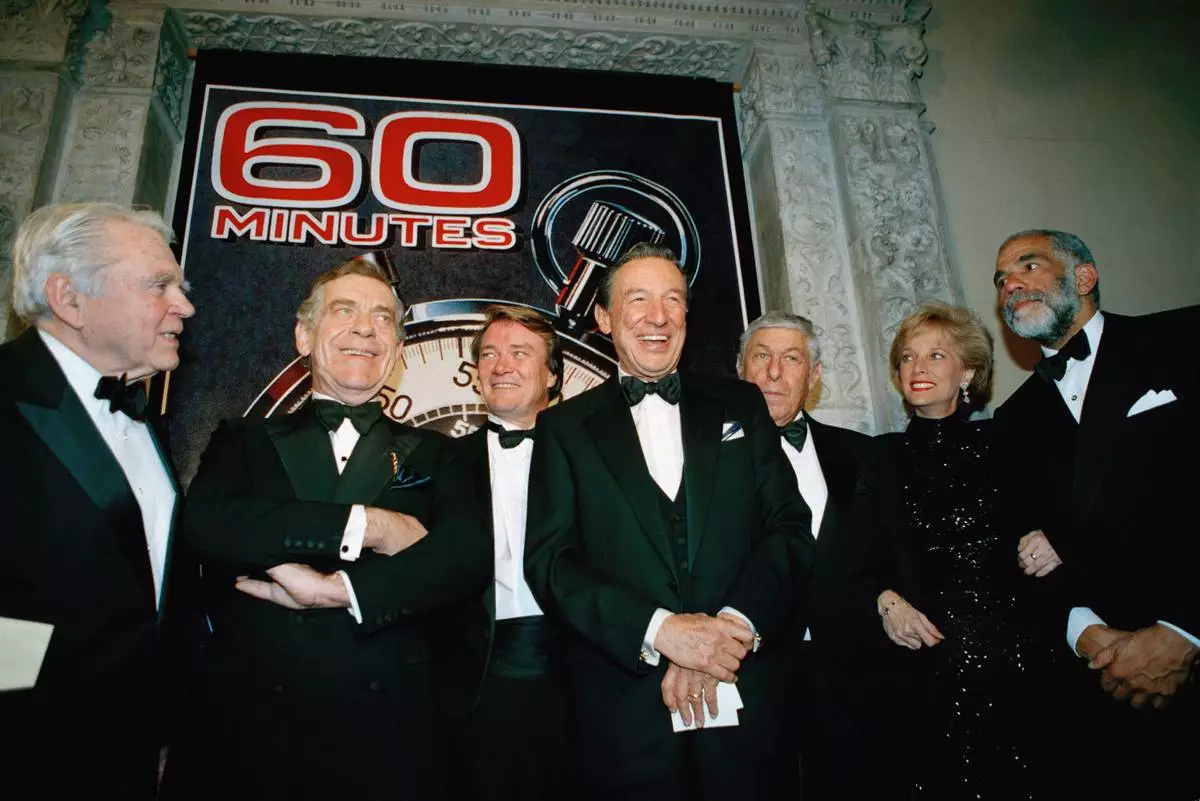
FILE - The "60 Minutes" team, from left, Andy Rooney, Morley Safer, Steve Kroft, Mike Wallace, executive producer Don Hewitt, Lesley Stahl, and Ed Bradley pose at the Metropolitan Museum of Art in New York celebrating their 25th anniversary, on Nov. 10, 1993. (AP Photo/Mark Lennihan, File)

FILE - The "60 Minutes" team, from left, Andy Rooney, Morley Safer, Steve Kroft, Mike Wallace, executive producer Don Hewitt, Lesley Stahl, and Ed Bradley pose at the Metropolitan Museum of Art in New York celebrating their 25th anniversary, on Nov. 10, 1993. (AP Photo/Mark Lennihan, File)

More than a half-century and 58 seasons later, that same term — “new approach” — is being deployed by CBS News leader Bari Weiss to explain her sweeping changes at the most renowned news program in TV history: firing the top producer and two correspondents, among others, and installing a new chief with no TV broadcast experience. Now, one of the show’s most famous faces, Scott Pelley, is gone too — fired after a tense confrontation with bosses.

“We realize, of course, that new approaches are not always instantly accepted,” Reasoner said on that night in 1968. And Weiss’ “new approach” has been greeted with biting criticism from some corners. Moreover, the turmoil has become a top news story in itself, with competing narratives flying — none of them flattering to CBS News.

The essential question percolating on Wednesday: Where does “60 Minutes” go from here? Can it stop being the story, get back to work and retain its reputation for probing journalism and its legendary success atop the news food chain? Or is its famous ticking timer, as some fear, literally running out?

To one prominent analyst of TV news, it seemed Wednesday that something had already evaporated — if only, perhaps, a long-held perception that “60 Minutes,” which manages to be both old-school and pugnacious, was something essentially untouchable.

“My first response is, it started in 1968 — not a bad run,” said Robert Thompson, director of Syracuse University’s Bleier Center for Television and Popular Culture. “Because it really does look like this is systematically deconstructing what (the show) was."

But, he quickly added: “I don’t think we’re writing the obituary of ‘60 Minutes.' I think there’s just too much value and voltage built into that brand.”

He felt, though, that there were concerning signs. The show is suddenly down four correspondents. Three have been dismissed, including Pelley, and Anderson Cooper is leaving of his own accord. There have also been unsettling accusations launched by Pelley. “New management has instructed me to inject falsehoods and bias into a politically sensitive story,” the correspondent and former evening news anchor contended in a statement Tuesday. “I’ve been told to include assertions that are unverified.”

CBS News denied the charge. “There is no political interference at CBS News, not from ownership, not from Bari Weiss," said a statement from a spokesperson Wednesday night. "The only ‘interference’ is the normal back and forth between editor and correspondent that happens in every newsroom.”

To Jeff Fager, former executive producer of “60 Minutes” and author of a book on the show, a major deficit will be the loss of Pelley himself.

“I can’t imagine running ‘60 Minutes’ without Scott,” said Fager, author of “Fifty Years of 60 Minutes: The Inside Story of Television’s Most Influential News Broadcast.”

“His is the most remarkable body of work in the history of the broadcast,” Fager said. “It’s hobbled without him.”

A dizzying week of public airing of dirty laundry continued Wednesday with remarks from Weiss to staff about Pelley’s firing — and Pelley's response to those remarks. In a transcript seen by The Associated Press, Weiss began a morning editorial call by saying she was “only interested in working in a newsroom that is built on trust and mutual respect."

“That foundation was broken on Monday, and despite our attempts to engage with Scott Pelley and to find a way back, unfortunately we weren’t able to do so, and so we had to part ways," Weiss said on the call. "We did not want that to happen, but that’s the path that he chose."

In short order, Pelley countered with his own lengthy description of their meeting. “Bari Weiss knows what she said is not true,” he said in a statement posted by New York Times media reporter Ben Mullin. “In the meeting on Tuesday, in which I was effectively fired, there was no effort to ‘find a way back.’”

Turmoil had been evident at “60 Minutes” for more than a year, after President Donald Trump sued the show over its editing of a 2024 interview with then-Democratic presidential candidate Kamala Harris. It became part of a broader upheaval at CBS News after Weiss was named to the new role of editor-in-chief by parent company Paramount late last year following David Ellison's arrival as the network's corporate leader.

Ellison's company, Skydance, merged with CBS parent company Paramount, which later settled the Trump lawsuit for $16 million, angering some at “60 Minutes" — and indirectly leading to the departure last month of popular CBS late-night host Stephen Colbert, who had called the settlement “a big fat bribe.”

Discord at the show burst into public view last Thursday, when Weiss and CBS News President Tom Cibrowski announced their changes aimed at “building a show that thrives in the 21st century.”

They installed Nick Bilton, a former technology columnist and documentarian, as executive producer, replacing Tanya Simon, a 30-year veteran of the show who’d been in the top job about a year. Also let go were correspondents Sharyn Alfonsi, whose segment about Trump administration deportees in a Salvadoran prison had been abruptly pulled by Weiss before running a month later, and Cecilia Vega.

Four days later, a Monday morning staff meeting exploded into acrimony when Pelley confronted Bilton, saying he had little relevant experience for the job. When Bilton told the meeting that “Bari loves this institution,” Pelley countered, according to accounts of recordings: “She’s murdering ‘60 Minutes.’ She does not love this place. She was brought in to kill it and she’s doing exactly that.”

That led to Weiss, Bilton and others calling Pelley in for the Tuesday meeting, after which he was fired. Weiss and Bilton did not answer interview requests Wednesday.

Reaction, though, pinballed across the media industry. “This is David Ellison's ‘60 Minutes’ now,” CNN media critic Brian Stelter wrote in his newsletter Wednesday.

So what does the future look like for the show? In her staff call Wednesday, Weiss praised some of Pelley’s work on recent “unforgettable stories” and promised Bilton would be delivering that kind of work “in season 59 with the amazing team that’s still there and hopefully from some new people that are going to be joining us.”

There was no word on those additions. A much larger question was whether the disarray at “60 Minutes” would prove, over time, to be more political in nature — Pelley and others have accused the new leaders of trying to gain favor with the Trump administration — or more of a generational debate. Weiss and Bilton have presented the changes as necessary to evolve with the times.

Fager, among others, worries about that narrative. The show, he said, has done a good job adapting.

“It hasn’t been running in place — that's such a misunderstanding of the broadcast,” he said. “We adapted on a regular basis. Every time there’s been a new leader, there has been significant evolution."

He acknowledged that some change and evolution is always necessary. But watching the past week's "new approach" unfold, he remains concerned about the show’s overall future.

”I worry about it,” he said. “I’ve always thought it’s fragile, and I don’t take it for granted.”

Jocelyn Noveck covers the intersection of media and entertainment for The Associated Press.
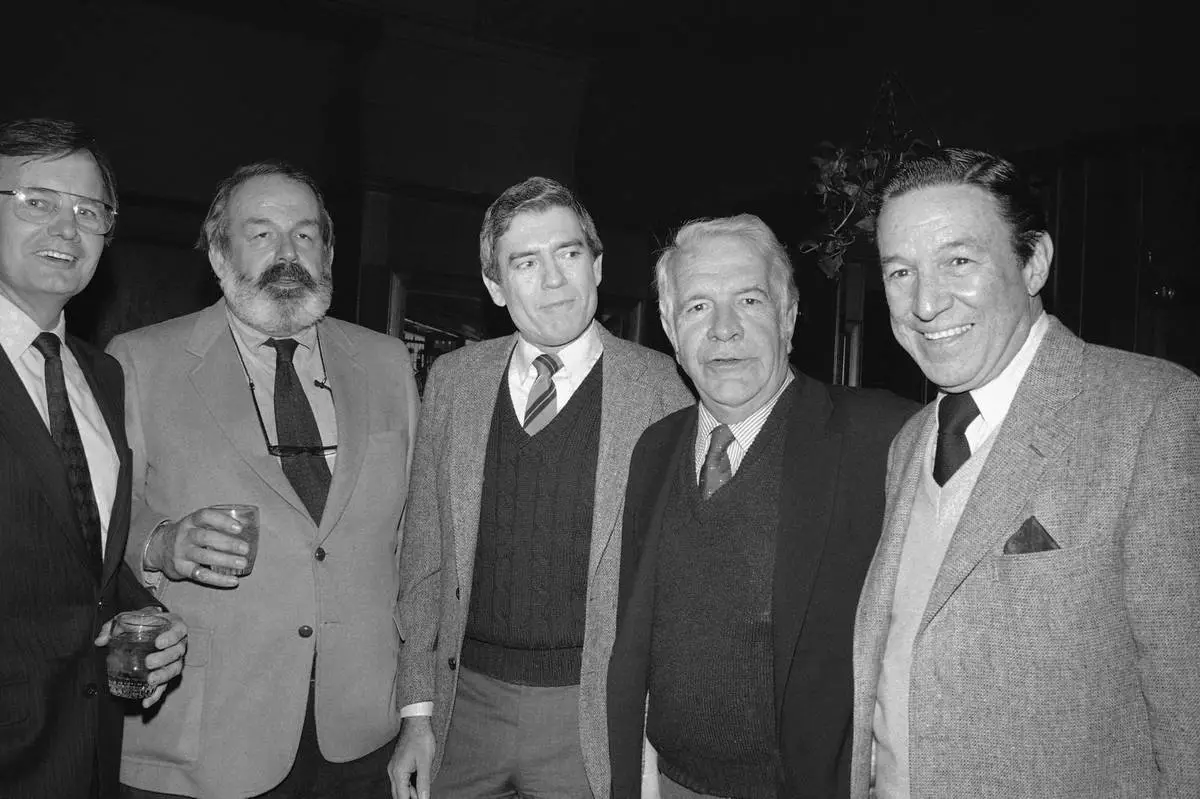
FILE - Dan Rather, center, joined by Harry Reasoner, second from right, and Mike Wallace, right, celebrates his first anniversary as anchorman and managing editor of the CBS Evening News, at a restaurant in New York, March 9, 1982. (AP Photo/Nancy Kaye, File)
FILE - Dan Rather, center, joined by Harry Reasoner, second from right, and Mike Wallace, right, celebrates his first anniversary as anchorman and managing editor of the CBS Evening News, at a restaurant in New York, March 9, 1982. (AP Photo/Nancy Kaye, File)

FILE - Against a backdrop of the famous "60 Minutes" stop watch, Don Hewitt, the program's creator and executive producer, reads prepared remarks to reporters during a session on "60 Minutes" during CBS' Winter Press Tour in the Hollywood section of Los Angeles, Jan. 17, 2004. (AP Photo/Rene Macura, File)
FILE - Against a backdrop of the famous "60 Minutes" stop watch, Don Hewitt, the program's creator and executive producer, reads prepared remarks to reporters during a session on "60 Minutes" during CBS' Winter Press Tour in the Hollywood section of Los Angeles, Jan. 17, 2004. (AP Photo/Rene Macura, File)

FILE - Scott Pelley, anchor of "CBS Evening News," at the CBS Upfront in New York, May 15, 2013. (Photo by Charles Sykes/Invision/AP, File)
FILE - Scott Pelley, anchor of "CBS Evening News," at the CBS Upfront in New York, May 15, 2013. (Photo by Charles Sykes/Invision/AP, File)

FILE - The "60 Minutes" team, from left, Andy Rooney, Morley Safer, Steve Kroft, Mike Wallace, executive producer Don Hewitt, Lesley Stahl, and Ed Bradley pose at the Metropolitan Museum of Art in New York celebrating their 25th anniversary, on Nov. 10, 1993. (AP Photo/Mark Lennihan, File)
FILE - The "60 Minutes" team, from left, Andy Rooney, Morley Safer, Steve Kroft, Mike Wallace, executive producer Don Hewitt, Lesley Stahl, and Ed Bradley pose at the Metropolitan Museum of Art in New York celebrating their 25th anniversary, on Nov. 10, 1993. (AP Photo/Mark Lennihan, File)
ST. PETERSBURG, Russia (AP) — Russian President Vladimir Putin on Friday rejected a proposal by Ukrainian President Volodymyr Zelenskyy for a face-to-face negotiation on the conflict, saying he sees “no point” in it.

Thursday's letter, the first public message Zelenskyy has written directly to Putin since Russia sent troops into Ukraine in 2022, was a sweeping critique of the Russian leader’s 26 years in power.

Speaking at the St. Petersburg International Economic Forum, Putin described Zelenskyy’s open letter proposing the meeting as “boorish,” particularly after a May 22 drone attack on a college dormitory in the Russian-controlled Luhansk region that Moscow said killed 21 and wounded scores of others.

“Is it a way to create conditions for personal meetings and talks, or create an environment which makes any personal meetings impossible?” Putin said. “I think it’s the second.”

He said that he sees “no point” in the meeting.

Zelenskyy acknowledged shifting U.S. priorities, saying it would be wrong to simply wait for the Trump administration to return its attention to ending the fighting in Ukraine while it remains heavily focused on the Iran war.

In Washington, U.S. President Donald Trump had said it “would be great” if Putin and Zelenskyy meet.

Putin has previously offered for Zelenskyy to come to Moscow for talks, an offer that the Ukrainian leader pointedly rejected. Putin said last month he doesn’t exclude a meeting in a third country, but only when there is a deal to sign.

On Thursday, Putin again rejected Zelenskyy’s push for an immediate ceasefire, arguing that Moscow wants a comprehensive settlement, not a temporary truce.

Putin said Russia is open for a compromise on Ukraine in line with understandings reached at his last year’s summit with Trump in Anchorage, Alaska, adding that Ukraine needs to accept them to make a deal to end the conflict, now in its fifth year.

“Naturally, the Ukrainian side would like us to suspend the advances made by Russian troops,” he said. “But it would be better to end the war by agreeing to the compromises that were discussed in Anchorage.”

In a speech earlier Friday at the forum, Putin said developing countries have gained an increasingly important role in the global economy, while the share of output by Western countries has shrunk.

He accused the West of undermining the global economy and finances with unilateral sanctions. By freezing Russian assets abroad through sanctions, Western nations eroded trust in their own currencies, he said.

“The sanctions and blocking of Russia’s sovereign reserves have irreversibly impacted the standing of international currencies, the dollar and the euro,” he said. “Just like Russia, any other country could lose access to their legitimate assets in dollars or euros, as well as Western financial and payment systems.”

He alleged that high state debt had helped undermine global trust in Western institutions.

“The roots of the current global turbulence lie in the transition from a vertical, hierarchical model, which served the interests of a small number of states, to a more complex, distributed and multipolar one,” Putin said. “Russia views global changes not only as a threat but also as immense opportunities. And to capitalize on them, we aim to act swiftly and pragmatically.”

The Russian leader said the world needed a “modern, flexible and responsible financial architecture — free from risks, bans and barriers.”

Putin played down Russia’s economic slowdown and sought to emphasize its macroeconomic stability. He noted that Russia’s state debt is a fraction of that in Western countries and its budget deficit is considerably smaller, compared with the West.

The forum comes at a time when Russia’s economic outlook has clouded amid the conflict in Ukraine. The government raised taxes and increased domestic borrowing to keep its budget deficit under control.

On Thursday, Putin told heads of international media at a question-and-answer session that it was an exaggeration to say Russia's economy was struggling. He noted that his government had taken deliberate steps to cool the economy to keep inflation under control.

Putin has used the St. Petersburg forum, likened to the World Economic Forum in Davos, Switzerland, to showcase his country’s economic advances and encourage foreign investment. While Western officials and business leaders have stayed away after Putin sent troops into Ukraine in 2022, Russia has sought guests from elsewhere to underline its declared goal of promoting a “multipolar world.”

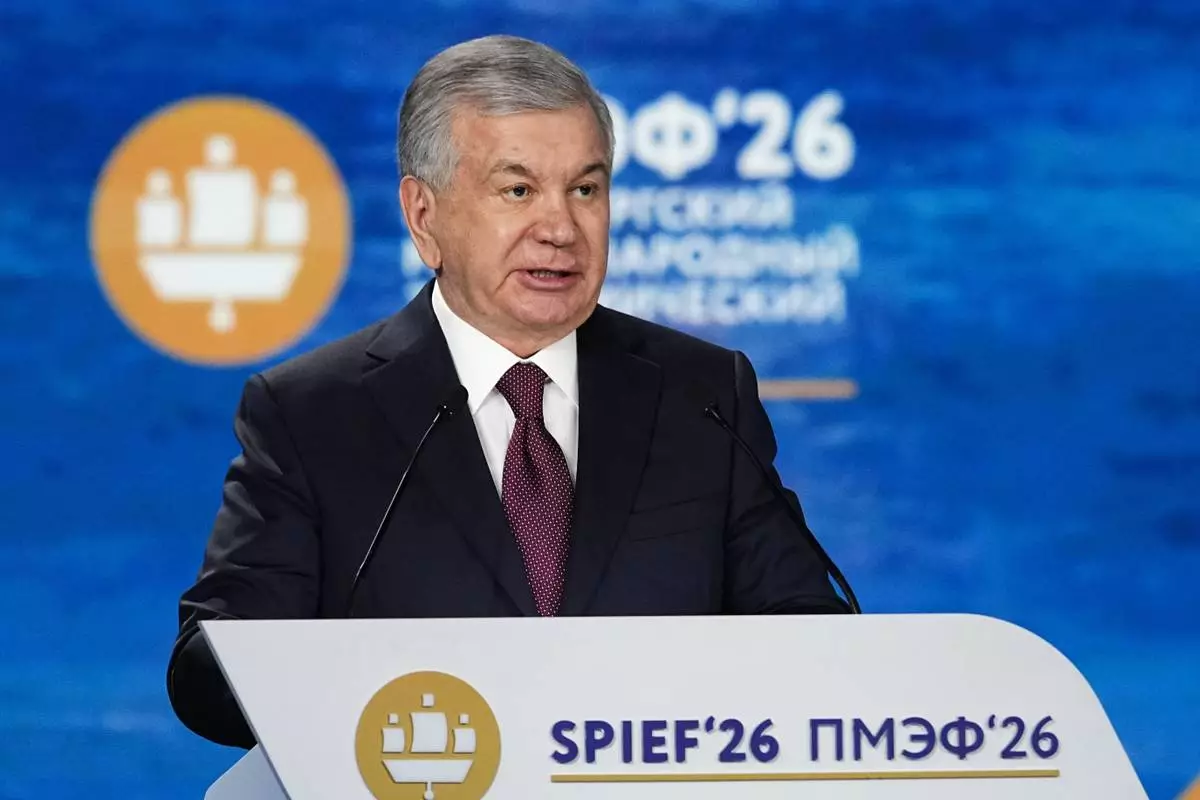
Saudi Arabia sent a large delegation this year, and the presidents of Uzbekistan and Tanzania and vice president of China also gave speeches Friday. A U.S. official, Rodney Mims Cook Jr., head of the U.S. Commission of Fine Arts, is attending for the first time in years.

Putin on Thursday acknowledged damaging Ukrainian drone attacks inside Russia and pledged to bolster its defenses.

“To our regret, some of them break through,” Putin told the media session in talking about the drone strikes. “Russia has an air defense system, we need to improve it, strengthen it, and we will do that.”

Hours before the forum opened on Wednesday, a Ukrainian drone attack set ablaze an oil terminal in the city and also hit a nearby naval base.

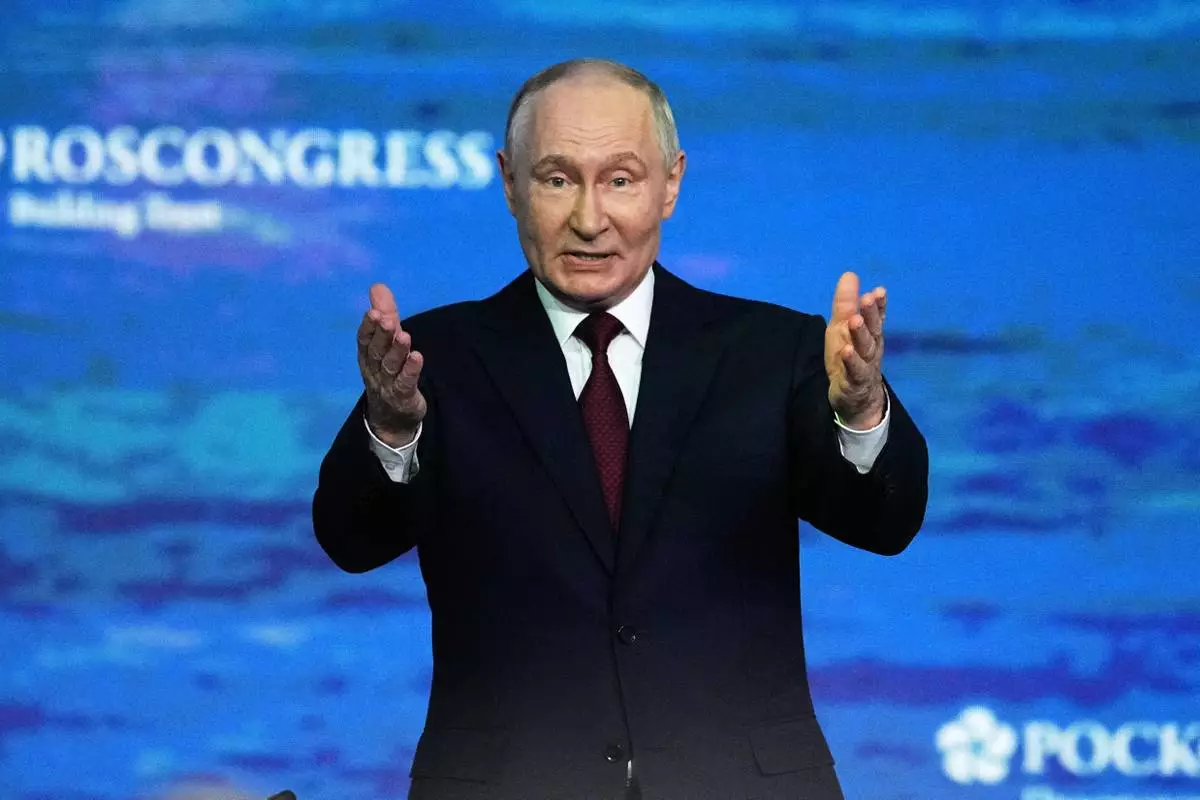
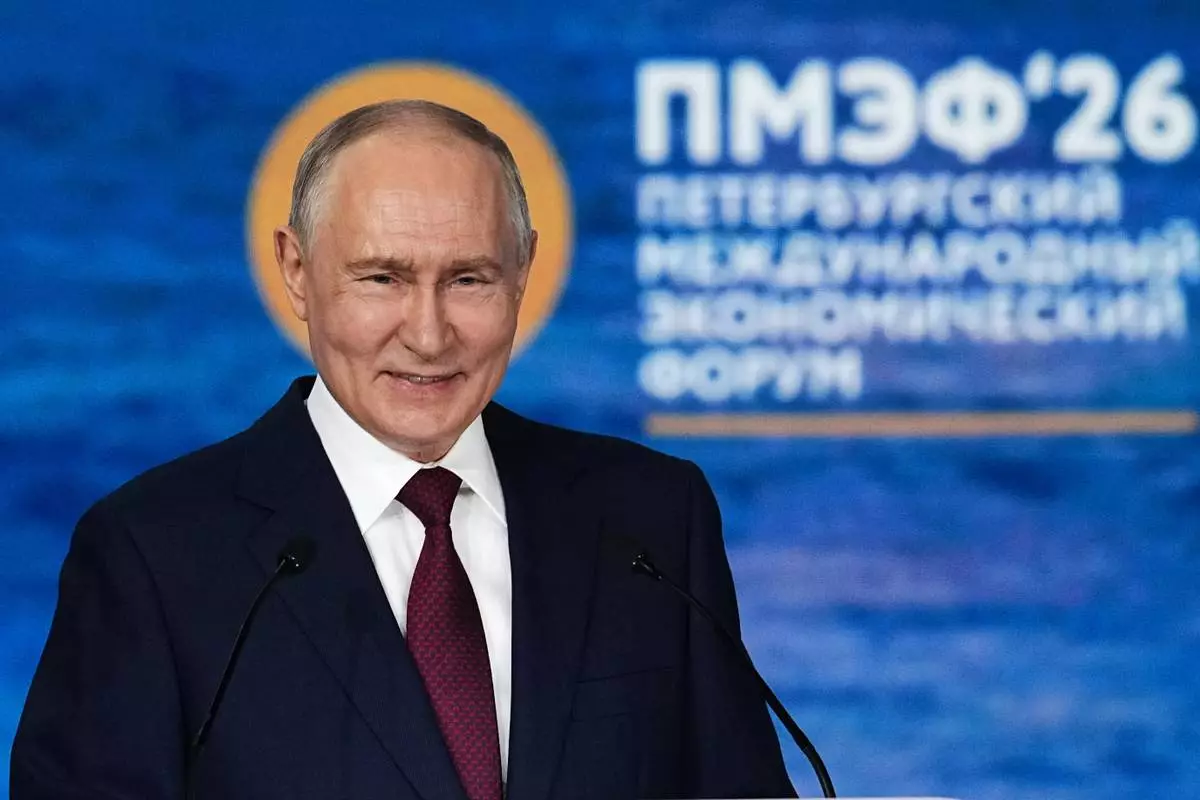
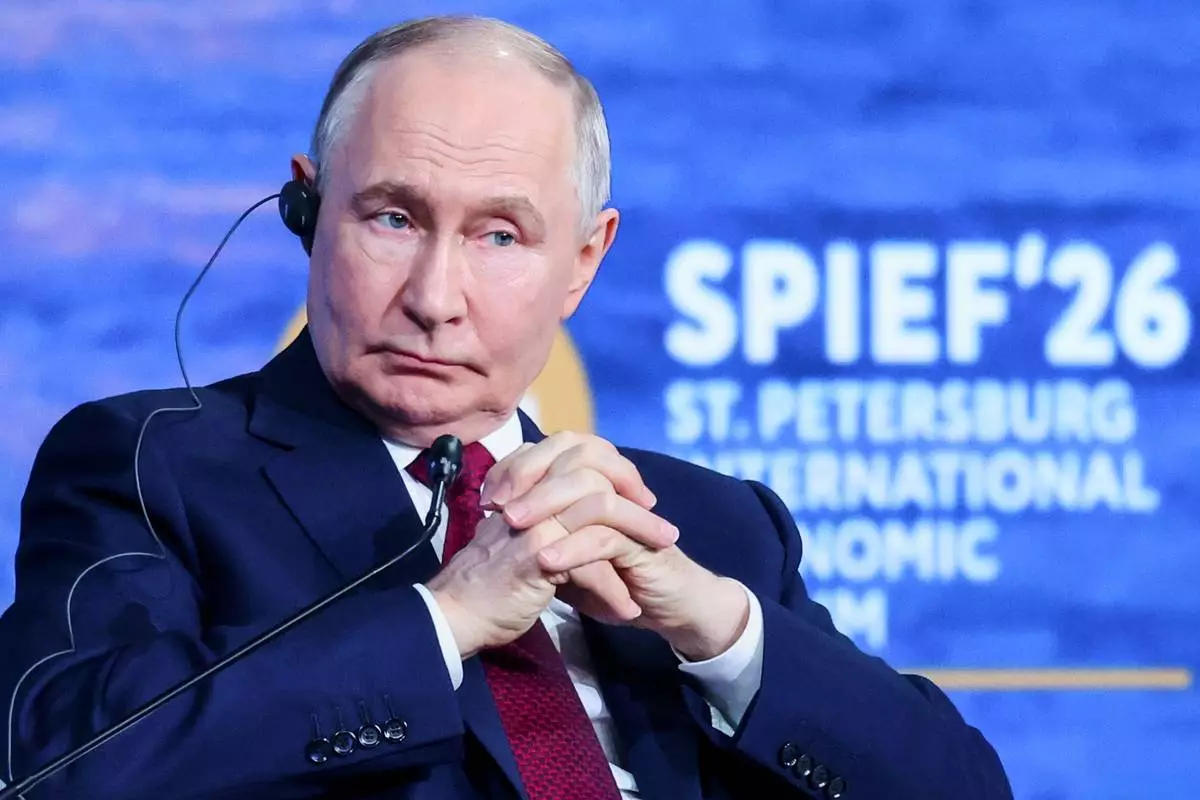
Russian President Vladimir Putin addresses a plenary session at the St. Petersburg International Economic Forum in St. Petersburg, Russia, on Friday, June 5, 2026. (AP Photo/Dmitri Lovetsky)

Russian President Vladimir Putin addresses a plenary session at the St. Petersburg International Economic Forum in St. Petersburg, Russia, on Friday, June 5, 2026. (AP Photo/Dmitri Lovetsky)

In this photo released by the Roscongress Foundation, Russian President Vladimir Putin attends a plenary session at the St. Petersburg International Economic Forum in St. Petersburg, Russia, on Friday, June 5, 2026. (Kirill Kazachkov/Roscongress Foundation via AP)

In this photo released by the Roscongress Foundation, Russian President Vladimir Putin attends a plenary session at the St. Petersburg International Economic Forum in St. Petersburg, Russia, on Friday, June 5, 2026. (Kirill Kazachkov/Roscongress Foundation via AP)

Uzbekistan's President Shavkat Mirziyoyev addresses a plenary session at the St. Petersburg International Economic Forum in St. Petersburg, Russia, on Friday, June 5, 2026. (AP Photo/Dmitri Lovetsky)

Uzbekistan's President Shavkat Mirziyoyev addresses a plenary session at the St. Petersburg International Economic Forum in St. Petersburg, Russia, on Friday, June 5, 2026. (AP Photo/Dmitri Lovetsky)

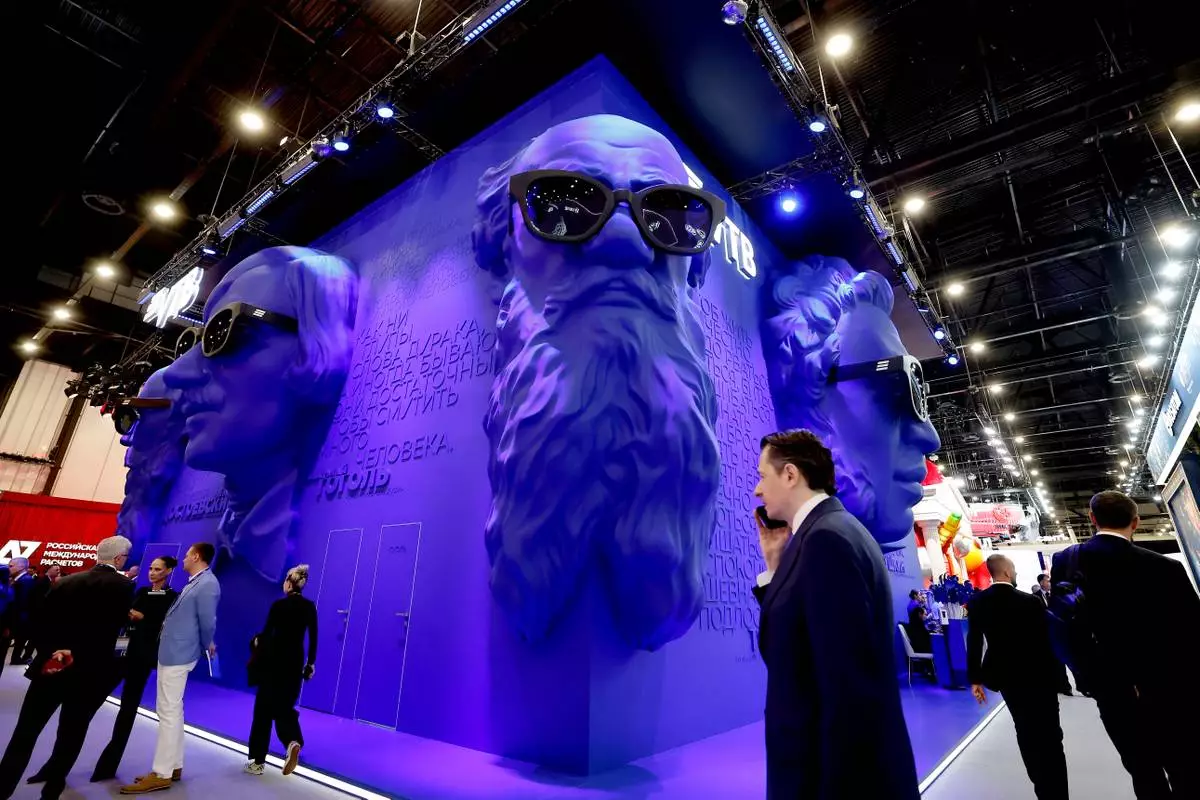
People visit an exhibition at the St. Petersburg International Economic Forum in St.Petersburg, Russia, on Thursday, June 4, 2026. (Anatoly Maltsev/Pool Photo via AP)

People visit an exhibition at the St. Petersburg International Economic Forum in St.Petersburg, Russia, on Thursday, June 4, 2026. (Anatoly Maltsev/Pool Photo via AP)

People visit an exhibition at the St. Petersburg International Economic Forum in St.Petersburg, Russia, on Thursday, June 4, 2026. (Anatoly Maltsev/Pool Photo via AP)

People visit an exhibition at the St. Petersburg International Economic Forum in St.Petersburg, Russia, on Thursday, June 4, 2026. (Anatoly Maltsev/Pool Photo via AP)

Russian President Vladimir Putin gestures as he arrives to attend a plenary session at the St. Petersburg International Economic Forum in St. Petersburg, Russia, on Friday, June 5, 2026. (AP Photo/Dmitri Lovetsky)

Russian President Vladimir Putin gestures as he arrives to attend a plenary session at the St. Petersburg International Economic Forum in St. Petersburg, Russia, on Friday, June 5, 2026. (AP Photo/Dmitri Lovetsky)

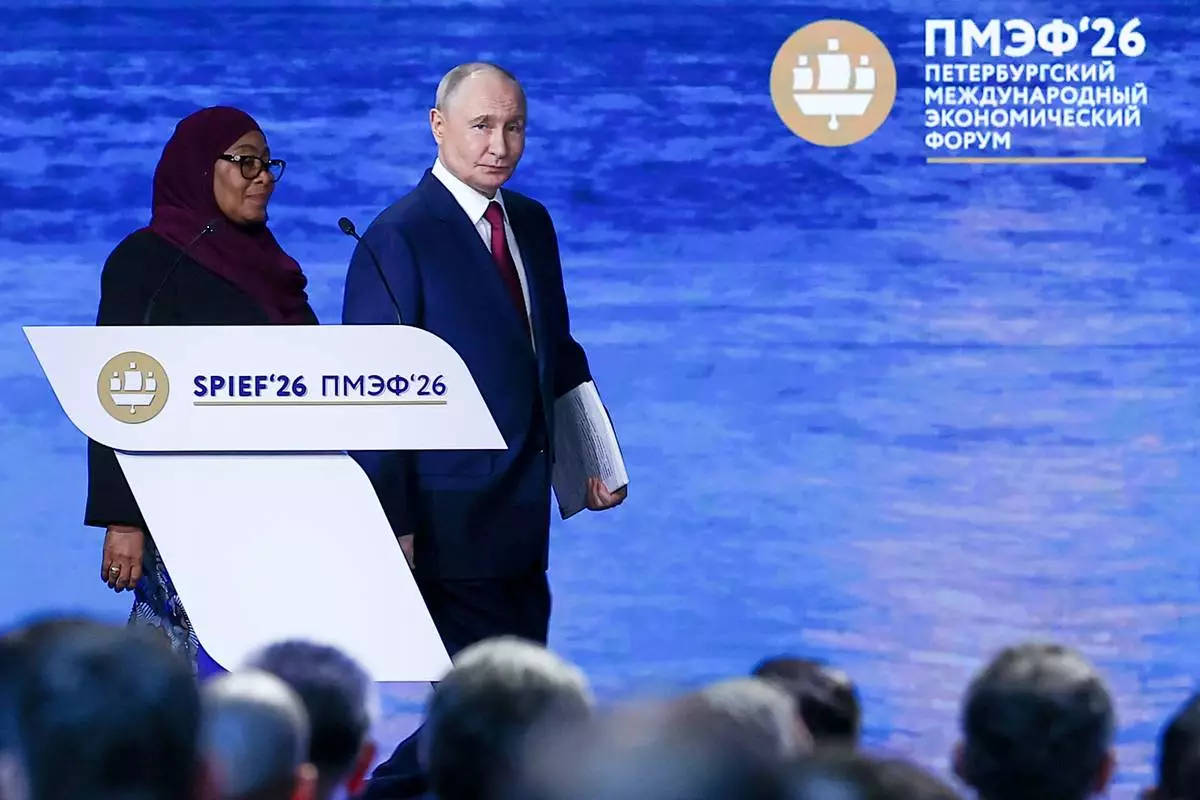
In this photo released by the Roscongress Foundation, Russian President Vladimir Putin, center, and Tanzanian President Samia Suluhu Hassan arrive to attend a plenary session at the St. Petersburg International Economic Forum in St. Petersburg, Russia, on Friday, June 5, 2026. (Vyacheslav Viktorov/Roscongress Foundation via AP)

In this photo released by the Roscongress Foundation, Russian President Vladimir Putin, center, and Tanzanian President Samia Suluhu Hassan arrive to attend a plenary session at the St. Petersburg International Economic Forum in St. Petersburg, Russia, on Friday, June 5, 2026. (Vyacheslav Viktorov/Roscongress Foundation via AP)

Recommended Articles