NEW YORK (AP) — American Airlines is temporarily suspending some of its routes this summer, as steep jet fuel costs continue to strain carriers' budgets amid the war with Iran.
In a statement, American said it had adjusted service for “select routes” in August and September — and that impacted travelers would be offered alternative arrangements or refunds. The Texas-based airline cited elevated fuel costs, and maintained that these changes were in line with wider industry trends.
American also said that it was not cutting any of its routes indefinitely and that it was proud to “offer an industry-leading network with more flights than any other U.S. airline.”
Still, the summer suspensions could cause more headaches for travelers already facing fewer flights options and higher price tags across their budgets. Airlines around the world have canceled numerous flights or similarly trimmed schedules through the coming months — and many have are also hiking fees or cutting other perks in efforts to save money.
That's because the cost of jet fuel — which can account for about 30% of airlines' total expenses — has soared during the war. A barrel averaged at nearly $142 last week, according to the International Air Transport Association. That's down from an April peak, but still far higher than the $99 jet fuel was going for per barrel before the U.S. and Israel launched the war with attacks on Iran in late February.
Most traffic in the Strait of Hormuz, a key waterway for the world's flow of oil, has remained at an effective halt over the last three months. Prices have cooled some recently as markets hope for an eventual reopening the passage, but the U.S. and Iran have yet to actually reach a concrete agreement. And the longer traffic stays stalled, the worse the energy crisis could get.
Consumers aren't only feeling the squeeze in air travel. Gasoline, food and other everyday essentials are also being hit by these supply shocks.
American Airlines did not immediately respond to The Associated Press' requests for further information about which flights would be suspended in August and September. But other outlets reported six routes would be affected — largely from Los Angeles, among other destinations in North America.
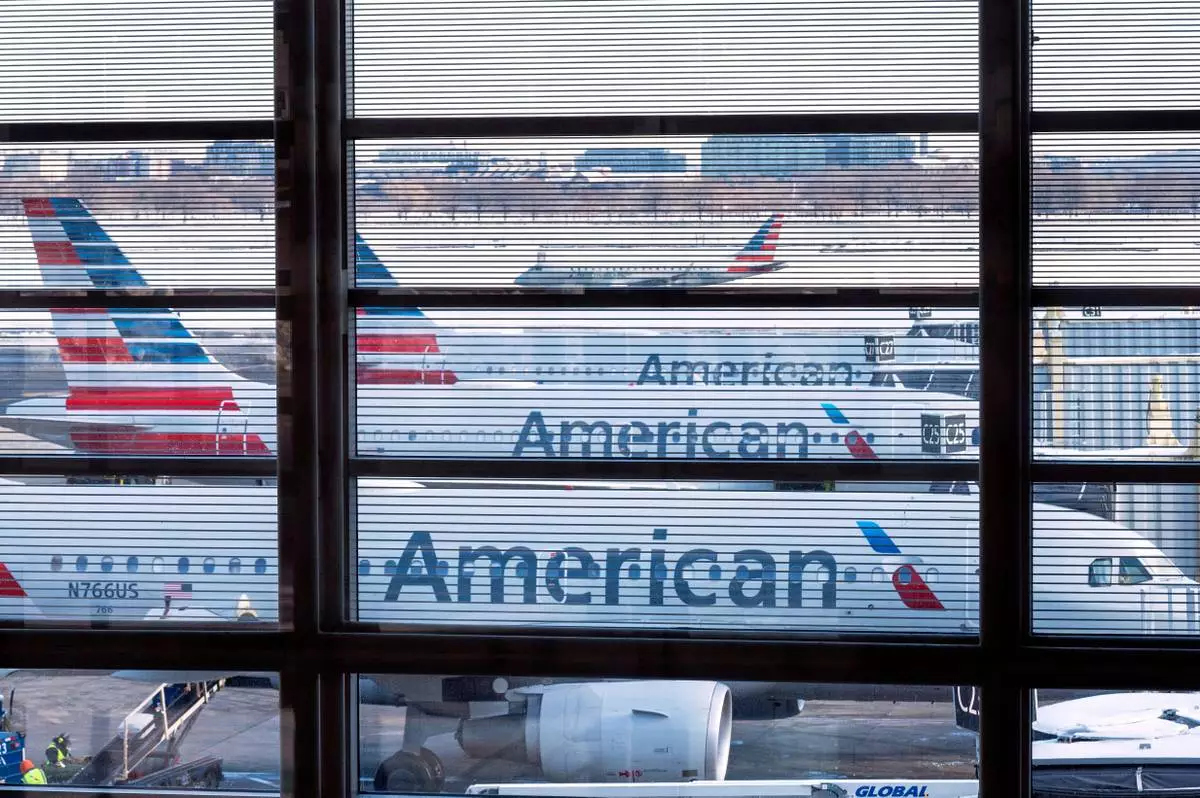
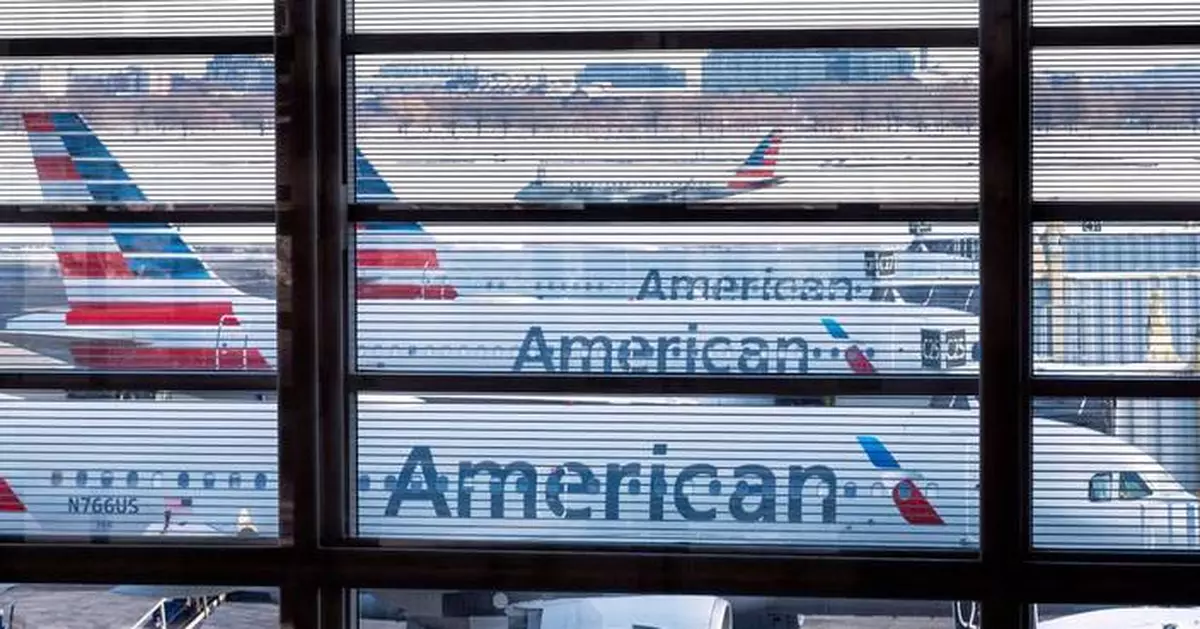
FILE - American Airlines passenger planes are seen at gates at Ronald Reagan Washington National Airport, Jan. 29, 2026 in Arlington, Va. (AP Photo/Cliff Owen, File)
WASHINGTON (AP) — For more than a decade, the United States dramatically reduced its national smog levels, but since 2015 smoke from increasingly larger wildfires is reversing that clean-up trend and making the air dirtier and deadlier, a new study finds.
Scientists say climate change deserves much, but not all, of the blame.
The national smog level dropped by 11% from 2003 to 2015 as strict federal regulations on power plants, cars and diesel engines kicked in. But since then, as wildfires have grown, the nation's average ground level ozone — which is smog — increased by 4%. That means if smoke increases at the current rate, smog will go back up to 2003 levels in 20 years, said study lead author Weizhi Deng, an atmospheric scientist at the University of Iowa.
Thursday's study in the journal Science also estimated an increase in deaths from ozone attacking lungs, using previously established epidemiology studies that compared death rates in clean and dirty air. They calculated an increase of 318 American deaths per year since 2013.
“For the last 20 years, by regulations, we keep decreasing the emissions" for human-caused smog-inducing chemicals, said study co-author Meng Zhou, a University of Iowa wildfire researcher. “However, because of wildfires, that is actually from natural hazards, all those kinds of effort were wiped out.”
The study was novel in the way it estimated the national smog level, compensating for how the U.S. Environmental Protection Agency has a limited number of smog monitors. Those cover only 2% of the nation, mostly in urban areas. So Deng and his colleagues used those observations — along with satellite, pollution and weather data and models — then used artificial intelligence to create a nationwide data set of ozone levels showing smog count at a resolution slightly higher than half a mile (1 kilometer).
EPA figures show the national ozone level since 2015 has vacillated around the same mark, going up and down a few percentage points, but Deng said, “by considering everywhere in the U.S., we actually found an increase in ozone starting from 2015.”
The method using artificial intelligence is solid because it starts with “massive and reliable datasets,” then uses computer models to fill in the gaps in a sensible way to make an “exceptional” high-resolution picture, said University of Delaware environment professor Cristina Archer, who wasn’t part of the study.
Megafire Action's research director and senior policy advisor Teresa Feo said “experts have long called for expanding the air pollution monitoring network to improve research on wildfire smoke exposure and provide the data needed to better protect public health.”
For decades, the U.S. tracked six traditional air pollutants, including smog and soot, which are tiny particles. This new study looked only at ozone, while a 2023 study by many of the same team looked at small particle pollution. They found the downward trend in soot levels had similarly reversed. Wildfire smoke increased particle pollution deaths by about 670 per year, the 2023 study found.
Fires don't produce ozone itself, but they release precursor chemicals that become smog when they interact with sunlight, scientists said.
“Higher daily ozone concentrations can increase asthma attacks, hospital admissions, and mortality,” said University of Washington public health and climate scientist Kristie Ebi. It's not quite as deadly as tiny particles, she said, but it's “still a very important pollutant, which is why it's regulated.”
During the heavy wildfire smoke seasons of 2022, 2023 and 2024, much of the fires were in Canada, but the smoke came south. In the U.S., 43 million people were exposed to smog levels that exceeded the current EPA safety standard, the study found.
And that standard isn't stringent enough, said Dr. Lynn Goldman, former dean of the George Washington University School of Public Health and a former EPA assistant administrator. In 2023, the Biden administration delayed plans to tighten those standards and then the Trump administration changed regulations that consider deaths and health impacts in smog and soot rules.
The biggest increase in ozone levels were in the Northern Rockies, which were near many of the fires, and in the Midwest, where the smoke travelled next, Deng said.
The average amount of U.S. land that wildfires burn each year is now 9% higher than it was from 2003 to 2014, according to the National Interagency Fire Center. But the wildfires in Canada have been particularly bad since 2022, scientists said. They pointed to 2023 when the skies were orange and people in the East were wearing face masks because of the Canadian smoke.
The amount of land burned in 2023 in Canada was not only a record but two times higher than the old record, said atmospheric scientist Brendan Rogers of the Woodwell Climate Research Center. Smoke from that year's Canadian fires killed 82,100 people globally — 33,000 in the United States — because of the particle pollution, a study in 2025 calculated.
Climate change, from the burning of coal, oil and gas, increased the intensity of Canada's 2023 fire season by at least 50% and doubled the chances of the drier, hotter weather conditions that were needed for the fire, a 2023 study found.
“Human-caused climate change is an important contributor, because it increases hot, dry fire-weather conditions in many regions,” said Lixu Jin, an atmospheric scientist at Rutgers who wasn't part of the study. “But wildfire emissions also depend on fuels, land management, ignitions, suppression, and year-to-year meteorology.”
Former EPA Administrator Gina McCarthy, who served in the Obama administration, said it was discouraging to see smog improvements being eroded.
Wildfires cause death and destruction, but the greatest danger may come from smoke and extreme heat increasing the ozone that harms people’s health, she argued,
“So the big question is," she said, “when are we going to stop the nonsense from this administration to burn more and more ‘beautiful’ fossil fuels?”
The Associated Press’ climate and environmental coverage receives financial support from multiple private foundations. AP is solely responsible for all content. Find AP’s standards for working with philanthropies, a list of supporters and funded coverage areas at AP.org.
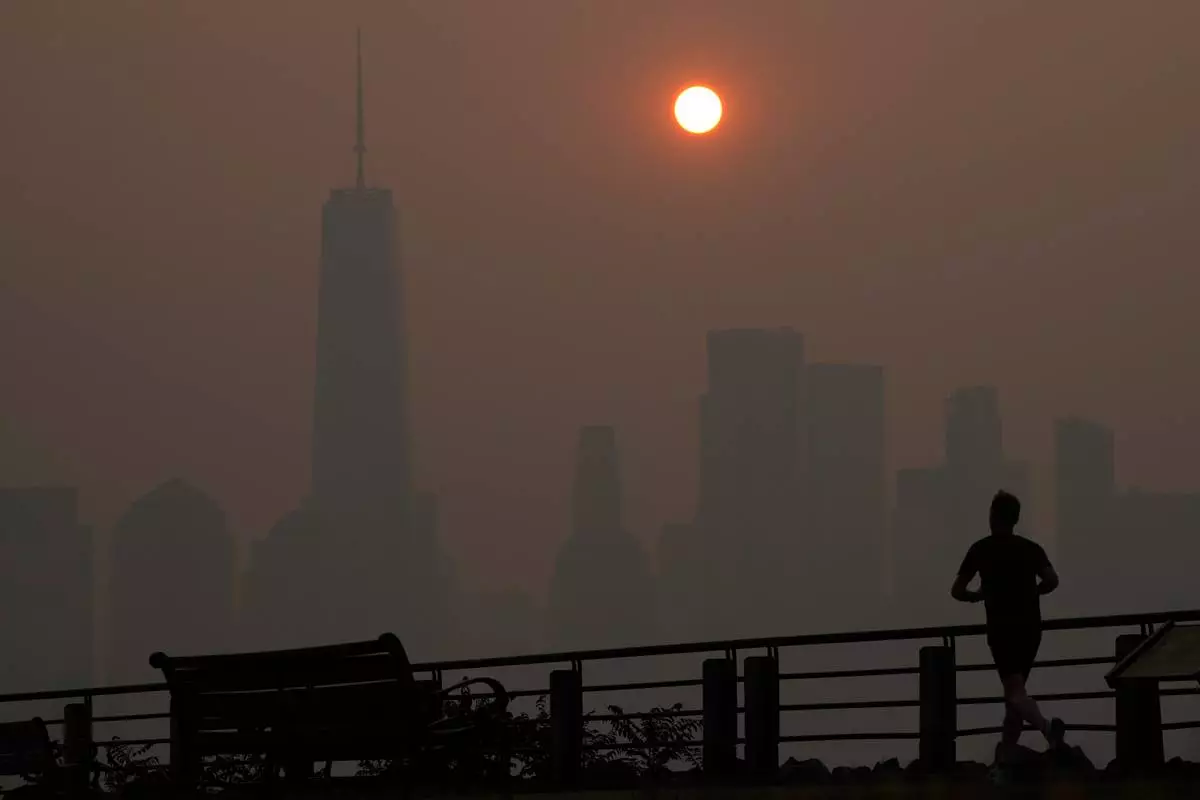
FILE - A man runs in front of the sun rising over the lower Manhattan skyline in Jersey City, N.J., June 8, 2023. (AP Photo/Seth Wenig, File)
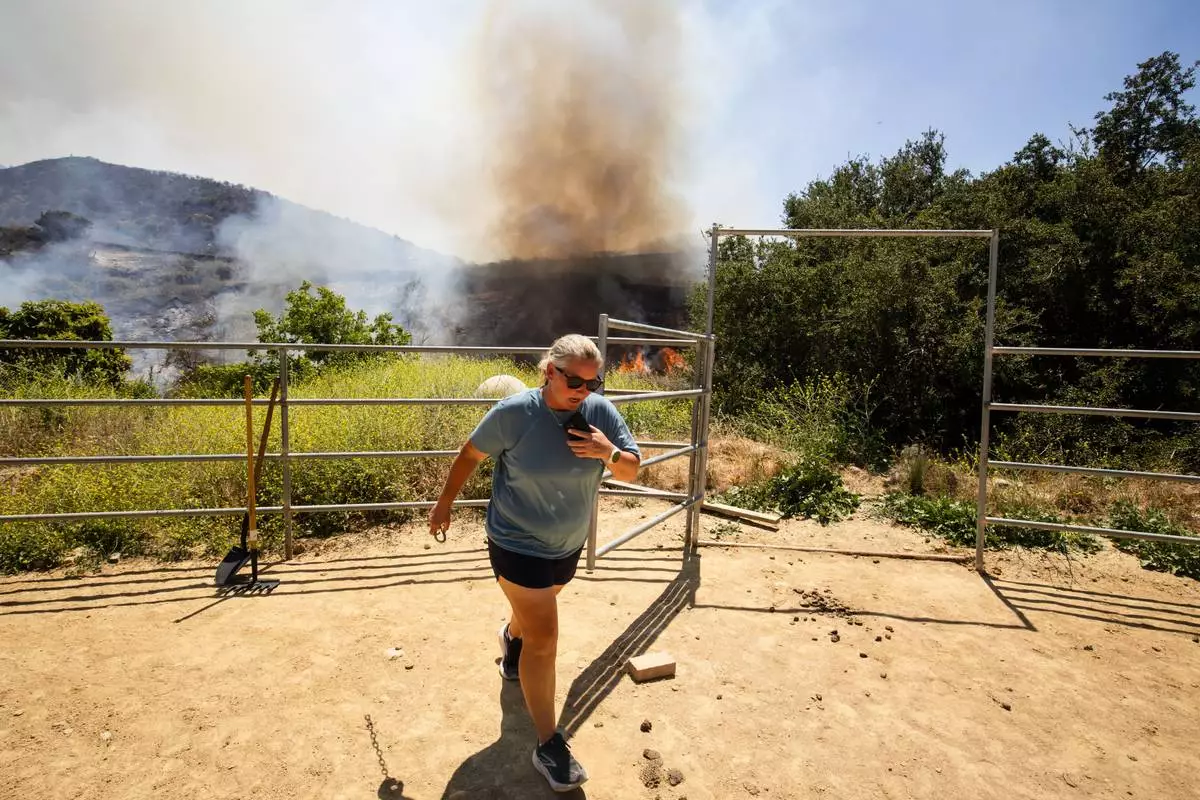
FILE - A woman steps away as the Sandy Fire approaches a neighborhood May 18, 2026, in Simi Valley, Calif. (AP Photo/Ethan Swope, File)
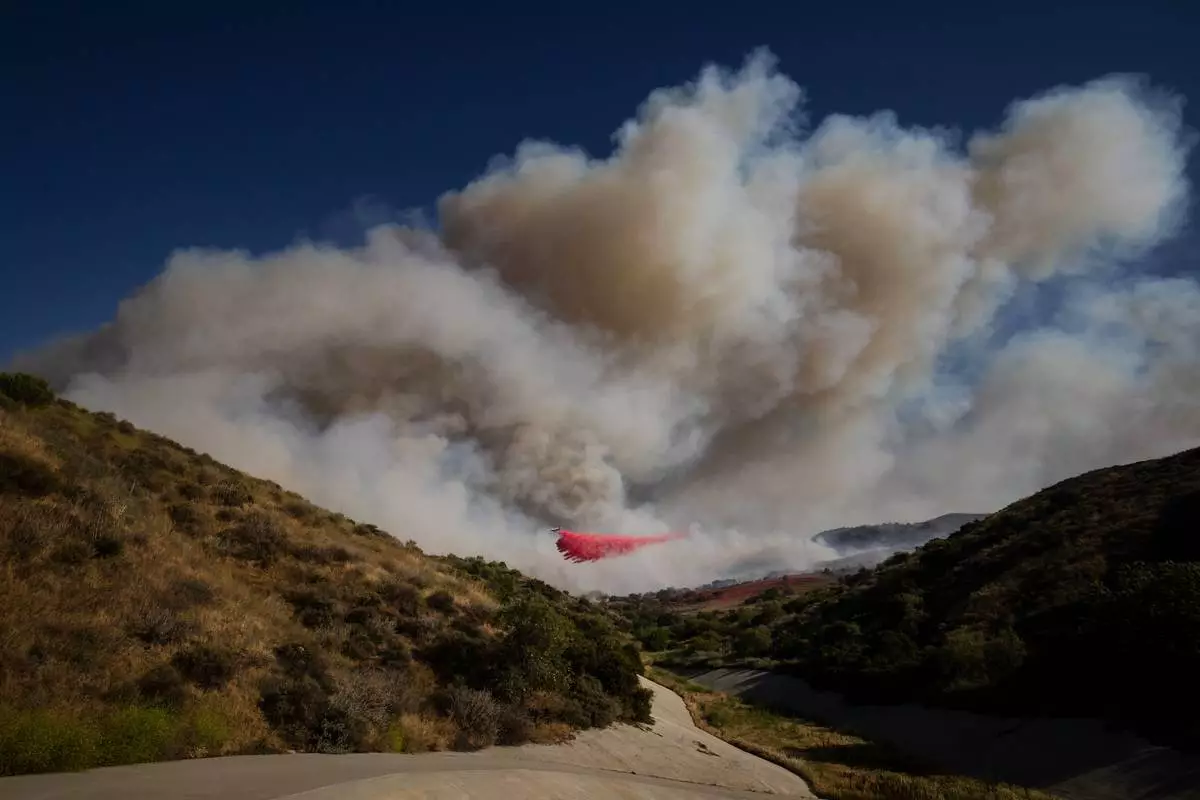
FILE - An air tanker drops fire retardant on the Sandy Fire on May 18, 2026, in Simi Valley, Calif. (AP Photo/Ethan Swope, File)
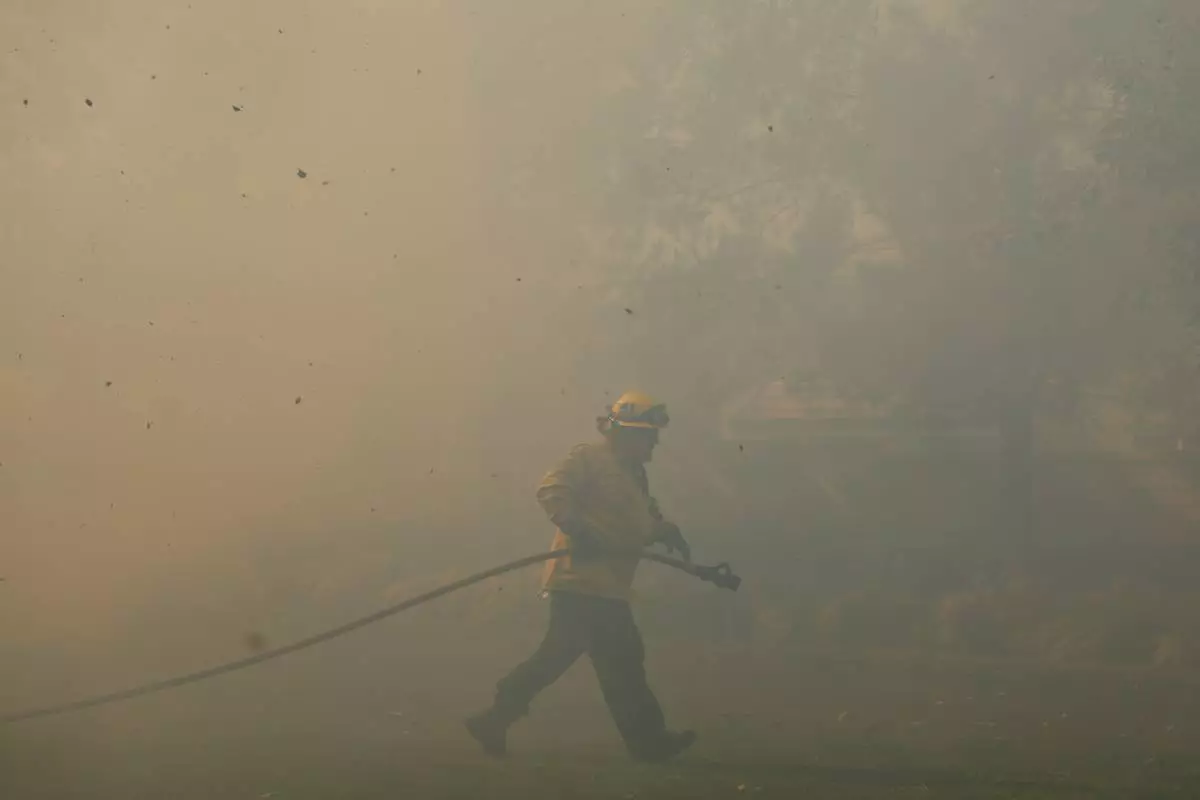
FILE - A firefighter works as the Sandy Fire approaches May 19, 2026, in Simi Valley, Calif. (AP Photo/Caroline Brehman, File)
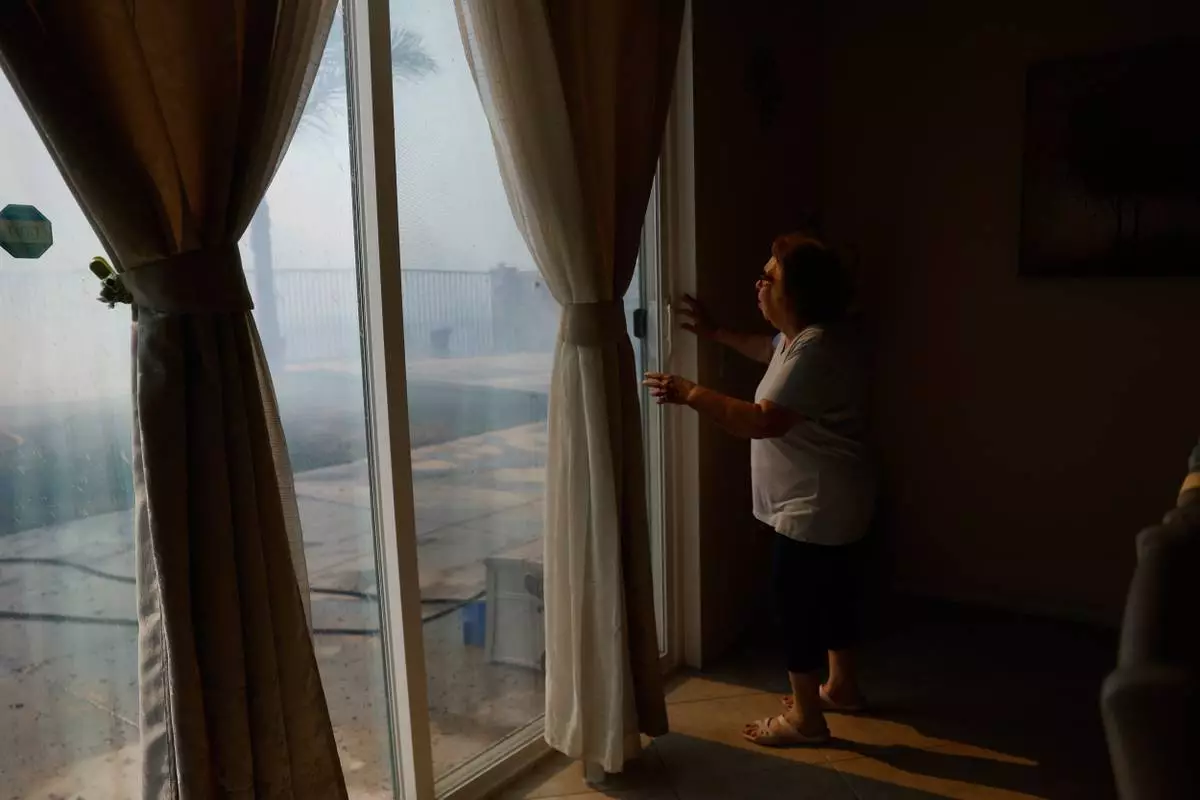
FILE - Mayra Long looks from inside her home as the Sandy Fire approaches May 19, 2026, in Simi Valley, Calif. (AP Photo/Caroline Brehman, File)
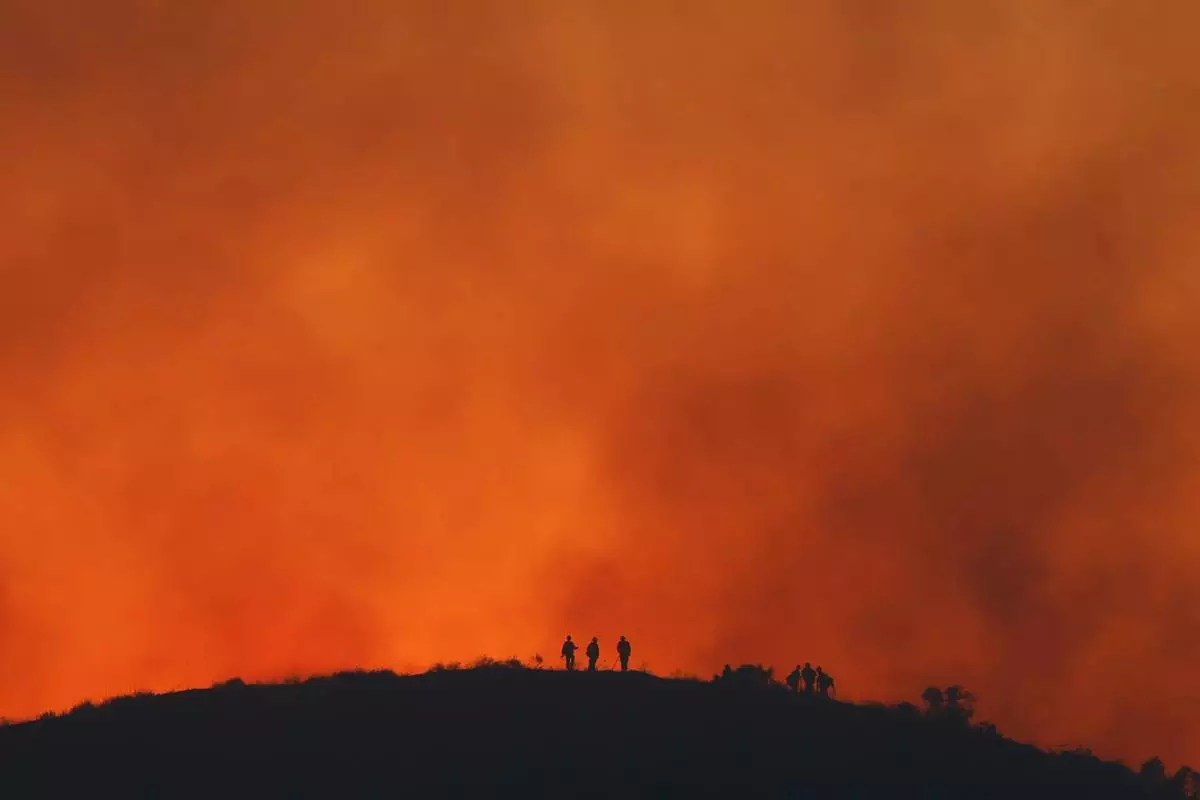
FILE - Firefighters are silhouetted amid an operation to control the Sandy Fire, May 19, 2026, in Simi Valley, Calif. (AP Photo/Caroline Brehman, File)