GREEN BAY, Wis.--(BUSINESS WIRE)--Jun 4, 2026--
For decades, the seating industry has approached discomfort as something to manage. Chairs became more complex, adding levers, controls, and adjustments intended to help people tolerate long hours of sitting. Yet even as ergonomics evolved, one assumption largely remained unchanged: that sitting itself should still be relatively static.
This press release features multimedia. View the full release here: https://www.businesswire.com/news/home/20260604813115/en/
Designed and invented by Aaron DeJule, the Kiaura Collection™ built with Cognetic Technology™, challenges that assumption entirely.
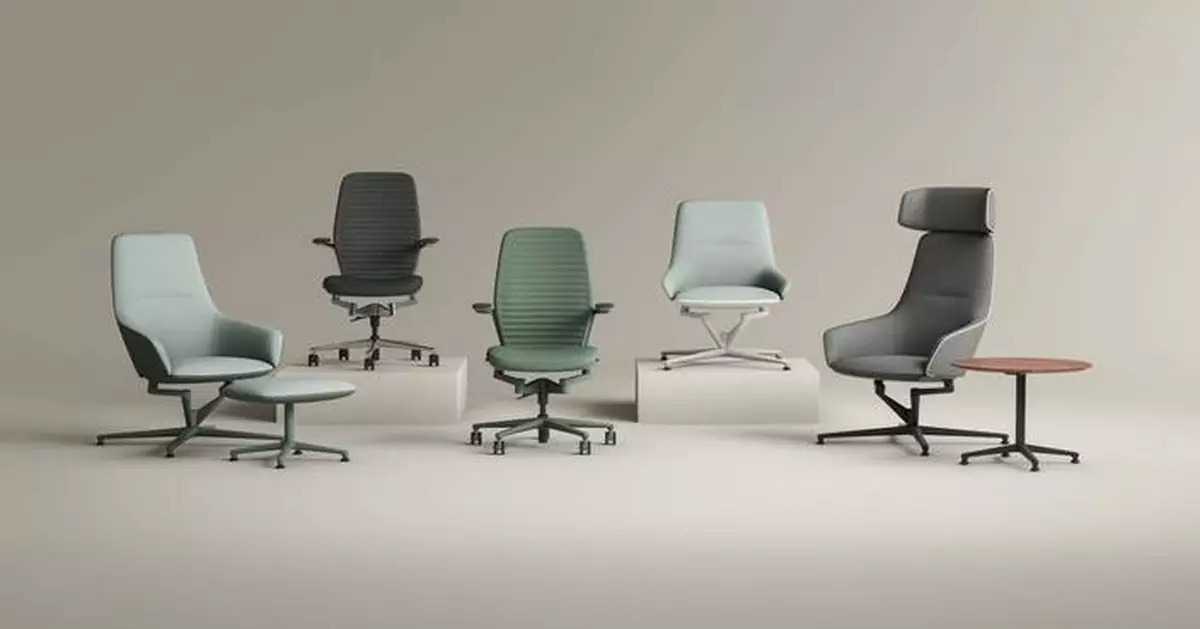
Debuting at the KI Inspiration Center during Design Days in Chicago, the Kiaura Collection built with Cognetic Technology represents contract furniture manufacturer KI’s most significant seating innovation to date and introduces what the company defines as a new category: Human Performance Seating.
Cognetic Technology, invented by Aaron DeJule, is a gravity-responsive, multi-axis motion system that continuously responds to subtle shifts in the body, creating a seated experience that feels fluid, intuitive, and restorative. The technology makes its first full commercial application within the Kiaura Collection, a coordinated family of task, conference, and lounge seating alongside complementary tables and ottomans.
Rather than focusing solely on posture and support, the Kiaura Collection is designed around how people naturally move and work throughout the day.
“The moment people experience a Kiaura Collection chair, the reaction is immediate and visceral,” said Tony Besasie, chief sales and marketing officer at KI. “What they recognize right away is that the chair moves naturally with them instead of asking them to adapt to it. That shift changes the entire experience of sitting during work.”
The foundation for Cognetic Technology stems from DeJule’s personal experience after a serious car accident made sitting for extended periods of time painful and difficult. Frustrated by the limitations of traditional seating, he began exploring how chairs could work more naturally with the body instead of restricting movement.
Through years of prototyping and observation, DeJule sought to better understand how movement impacts the way people feel and function throughout the day. The result was a seating experience centered on continuous balance, natural motion, and a new state of flow. After seeing overwhelmingly positive response to the technology, KI expanded its research to further explore its benefits and the connection between movement, comfort, focus, and overall well-being. Drawing from insights across neuroscience, ergonomics, physical therapy, sports performance, and human factors design, the research reinforced a shared understanding: people benefit from continuous, varied movement throughout the day rather than remaining sedentary for extended periods of time. Humans were never meant to stop moving; our brains and bodies benefit from movement.
Cognetic Technology applies those principles directly into the seated experience, creating continuous motion that works naturally with the body throughout the workday rather than requiring users to constantly adjust or manage the chair.
“When I invented Cognetic Technology, I sought to create a chair that ‘disappears,’” said DeJule. “That vision is realized in the Kiaura Collection, which effortlessly micro-adjusts to your movements in real time. By working in harmony with gravity and the body’s natural mechanics, it provides continuous support without ever having to think about it.”
It’s the kind of innovation people understand through experience first, said Besasie.
“The reaction is instinctive. People sit down and immediately recognize that it feels fundamentally different from traditional seating.”
The Kiaura Collection built with Cognetic Technology translates that movement-based innovation into a complete workplace seating platform designed to support focused work, conference spaces and lounge environments through a cohesive visual and user experience.
Its refined architectural aesthetic, broad material palette, advanced knit textiles, and extensive specification flexibility allow designers to create environments that feel unified while supporting a wide range of work modes and user experiences.
More than a product launch, the Kiaura Collection signals a broader shift in how seating can support human performance over time.
With this introduction, KI is formally defining Human Performance Seating as a category that expands beyond traditional ergonomics to consider the relationship between movement, cognitive engagement, physical comfort, and physiological well-being.
Early controlled studies associated with Cognetic Technology demonstrated measurable outcomes across multiple areas of seated performance and wellness. In a four-hour seated study, participants experienced reductions in anxiety, improvements in visual and auditory cognitive processing, and reduced lower back and pelvic discomfort during extended seated work sessions.
The movement enabled through Cognetic Technology is also designed to help counteract common effects associated with prolonged sitting, including stiffness, discomfort, and physical fatigue.
“This is more than a new seating collection,” Besasie said. “It’s a platform that introduces a different expectation for what seating can do for the body over the course of a workday. People feel that difference almost immediately.”
The Kiaura Collection built with Cognetic Technology will officially debut at the KI Inspiration Center during Design Days, June 8–10, where visitors will be able to experience the collection firsthand.
For KI, this represents more than the introduction of a new product family. It marks the beginning of a broader shift toward designing workplace experiences centered on movement, well-being, and human performance.
For more information about KI and its presence during Design Days, visit ki.com/designdays.
INVENTOR & DESIGN ATTRIBUTION
Cognetic Technology™ is a patented seating innovation invented by Aaron DeJule, founder of DeJule LLC. The Kiaura Collection™, designed by Aaron DeJule, is the first seating collection built with Cognetic Technology and is exclusively manufactured by KI.
ABOUT KI
KI manufactures innovative furniture for education, healthcare, government, and corporate markets. The employee-owned company is headquartered in Green Bay, Wisconsin, with sales and manufacturing facilities worldwide. KI tailors products and service solutions to the specific needs of each customer through its unique design and manufacturing philosophy. For more information, visit ki.com.
ABOUT AARON DEJULE
Aaron DeJule is an industrial designer and founder of DeJule LLC, with a career spanning more than two decades focused on advancing the experience of seating. A graduate of the Institute of Design in Chicago, he has partnered with leading manufacturers to develop award-winning furniture and lighting solutions recognized with honors including IDSA Gold and NeoCon Gold and Silver. DeJule is the inventor of Cognetic Technology and designer of the Kiaura Collection, a new approach to seating that rethinks the relationship between movement, comfort, and performance.
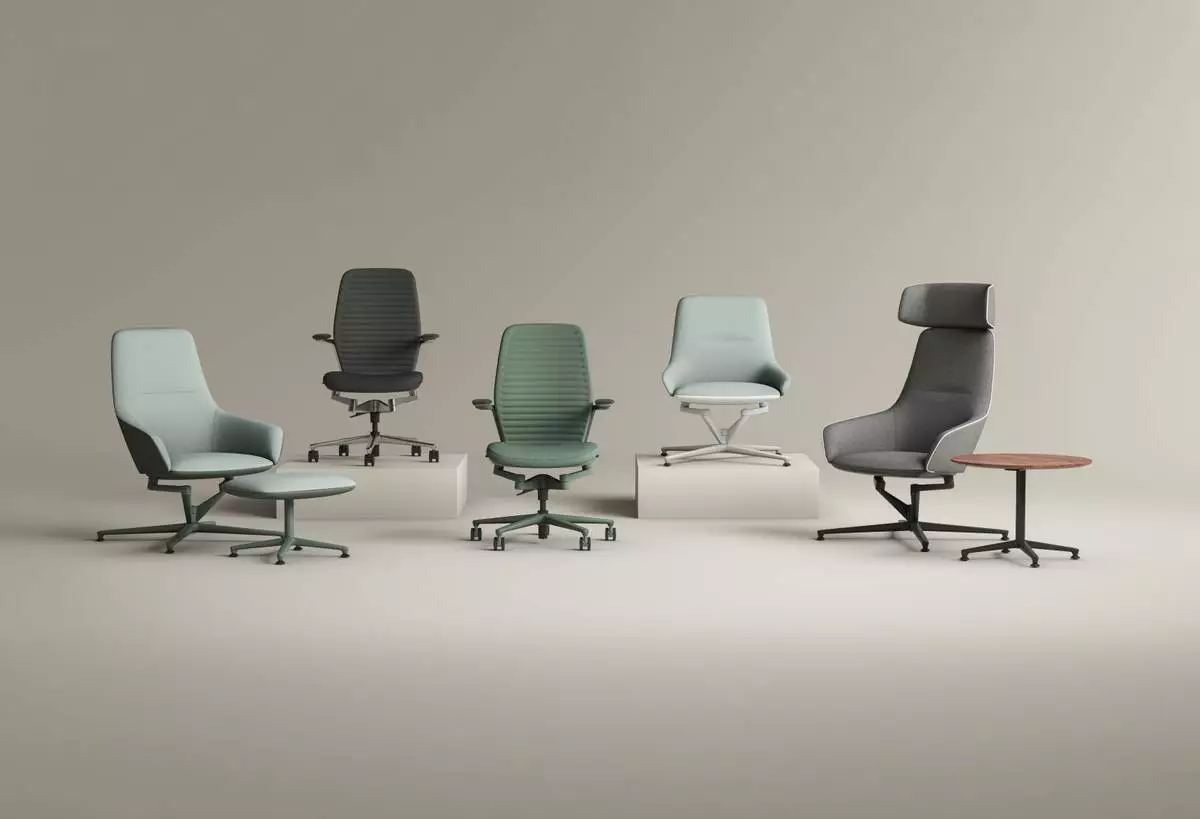
The Kiaura Collection built with Cognetic Technology represents KI’s most significant seating innovation to date and introduces what the company defines as a new category: Human Performance Seating.