ST. LOUIS (AP) — Far from its European homeland, Bosnia and Herzegovina has zealous fans in the American Midwest as it prepares for its second World Cup.
An estimated 60,000-70,000 Bosnians live in St. Louis, with many arriving in the early 1990s during the Bosnian War and the breakup of Yugoslavia.
Bosnia faces Panama on Saturday in an international friendly at St. Louis' Energizer Park and plays World Cup group matches in Toronto (vs. Canada), Los Angeles ( vs. Switzerland) and Seattle (vs. Qatar).
“We should be able to create an atmosphere like a home match,” said Elvir Kafedžić, a Bosnia-born St. Louisan and an assistant coach for the city’s MLS team, St. Louis City SC.
He was only 9 1-2 when he fled Bosnia in 1992 with his mother and brothers to escape the war.
“Unfortunately, I remember a lot of it,” said Kafedžić, whose story mirrors many who rebuilt in St. Louis after meandering across Europe.
“We kind of tumbled through some different countries like Montenegro, the Czech Republic, Sweden and wound up in Germany," Kafedžić explained.
That ended when Germany stopped granting temporary protection to Bosnians in the late 1990s.
“We didn’t have anywhere to go back to in Bosnia. And we already had some relatives living in St. Louis. So in 1999 we made the move with my mom and two older brothers."
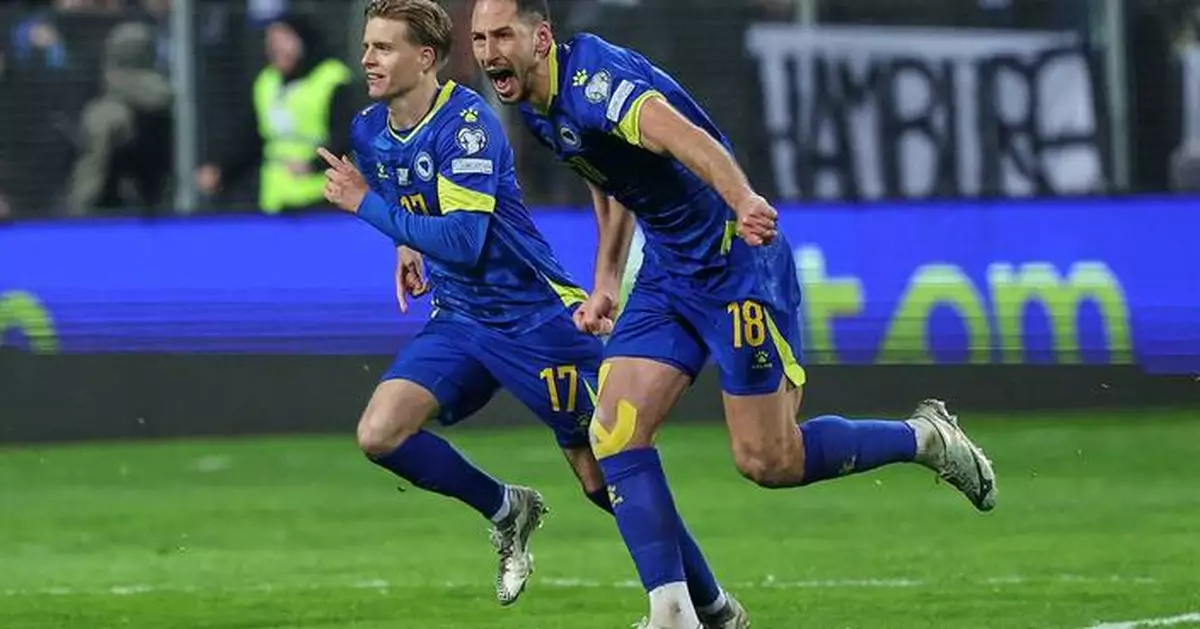
Bosnia qualified for the World Cup two months ago, defeating four-time World Cup champion Italy 4-1 on penalties after a 1-1 draw. The deciding penalty was converted by Esmir Bajraktarević, a Bosnian-American from Appleton, Wisconsin.
“That day you could see cars flying Bosnian flags in the streets,” Kafedžić said of the St. Louis scene. “All the restaurants, all the coffee shops were packed wall-to-wall with strangers hugging each other. For me, this goes beyond soccer. This shows who we are, the pride, where we come from and how deeply we’re connected to our roots.”
Bosnia's World Cup team is led by 40-year-old captain Edin Džeko and 18-year-old winger Kerim Alajbegović. Džeko has scored at least 50 goals playing in the English Premier League, Italy’s Serie A, and the German Bundesliga.
Bosnia’s only other World Cup appearance was at Brazil in 2014, where it was narrowly eliminated in the group stage. The team’s first World Cup goal was scored by Vedad Ibišević in a 2-1 loss to Argentina.
Ibišević played high school soccer in St. Louis, starred at Saint Louis University and followed up with a successful professional career, primarily in the Bundesliga.
St. Louis surfaced as a destination for Bosnian refugees because it offered jobs, reasonable housing prices and had a small community in place.
“We all came looking for a better life because everything was taken away from us at home,” Kafedžić said. “You can’t put in words how thankful we are.”
A swath of the city’s South Side is known as “Little Bosnia,” anchored by rows of tidy red-brick houses, bars, cafes and bakeries and a replica wood fountain that mimics one in the capital Sarajevo, known as the Sebilj.
“It represents Sarajevo in the heart,” said Jasmina Silić, working across the street from the monument at the Skala Bar on Gravois Avenue, the fulcrum of the community.
Skala is located just a few doors away from the “Association of Survivors of the Srebrenica Genocide,” a constant reminder of the war and the ethnic cleansing committed by Bosnian Serb forces.
More than 8,000 Bosnian Muslims died in Srebrenica, which was declared a genocide by the United Nations, the International Court of Justice and others. It’s estimated that 104,000 died from the war, 2 million were displaced, and 83% of the civilian deaths were Bosnian Muslims.
Bosnia's influence is all over St. Louis, a metropolitan area of almost 3 million on the banks of the Mississippi River.
The best-selling food at St. Louis’ MLS stadium is Bosnian fare from a restaurant called the “Balkan Treat Box.” Saint Louis University houses the Center for Bosnian Studies, and several books document the diaspora including “Bosnian St. Louis: Between Two Worlds” by Patrick McCarthy and Akif Cogo.
It tells of tragedy, resilience and the community’s ties to Europe.
“One woman in St. Louis still carries the keys to her house in Bosnia,” they wrote. “Another man describes his feelings toward Bosnia as a divorce he did not want from a woman he still loves.”
Bosnia was a multi-ethnic and multi-religious nation before the war, predominantly Muslim but with a large number of Croatian Roman Catholics and Serbian Orthodox Christians.
The mix binds the World Cup team, a symbol of pride and reconciliation.
“A lot of people from here go to Bosnia every year to see families,” said Silić, speaking at the Skala Bar. ”The team represents unity because it’s all three religions and everybody is one like it used to be when it was still Yugoslavia.”
AP World Cup: https://apnews.com/hub/fifa-world-cup

FILE - Bosnia's Esmir Bajraktarevic celebrates after winning a penalty shootout during the World Cup qualifying playoff final soccer match between Bosnia and Italy in Zenica, Bosnia, on March 31, 2026. (AP Photo/Armin Durgut, File)
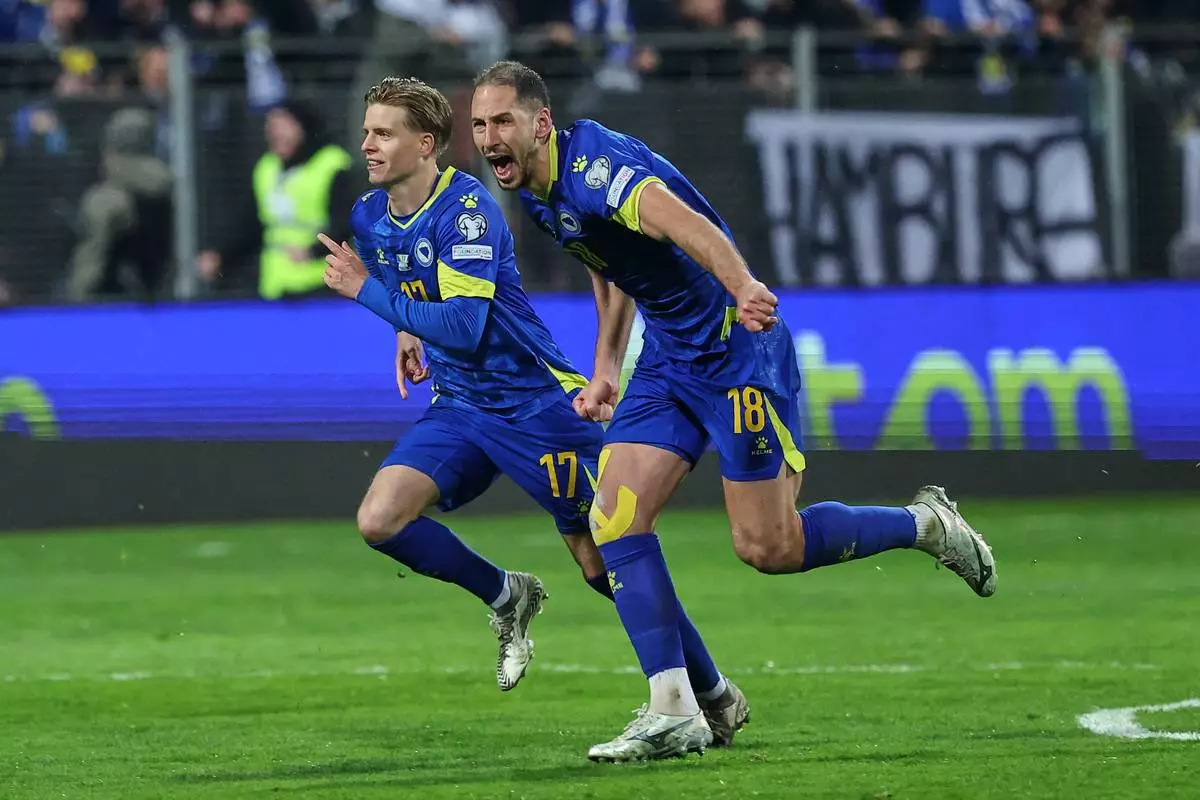
FILE - Bosnia's Nikola Katic, right, and Bosnia's Dzenis Burnic celebrate after winning a penalty shootout during the World Cup qualifying playoff final soccer match between Bosnia and Italy in Zenica, Bosnia, on March 31, 2026. (AP Photo/Armin Durgut, File)
BUNIA, Congo (AP) — The rare Bundibugyo type of Ebola that Congo is battling took locals by surprise after weeks of spreading unnoticed. Hundreds of cases were suspected when the outbreak was declared in May, but many dismissed the news as a “Western conspiracy.”
Congolese authorities announced the new Ebola outbreak on May 15. As of Wednesday, at least 62 people had died from 363 confirmed cases. Yet the outbreak has been challenged by skepticism, attacks on health workers and misinformation.
Vérité Johnson, a journalist and editorial secretary at the Radio Télévision Mont Bleu station in Bunia, the eastern Ituri province capital where the outbreak is concentrated, decided to produce a new program to combat rumors.
The radio show has emerged as a vital tool to win over some residents who have been unaware or skeptical about the facts of Bundibugyo.
The 45-minute program runs daily at 10 a.m., reminding people of the dangers and regularly featuring health specialists providing updates and answering questions. The show's jingles about the virus also play intermittently throughout the day and residents are able to call in with questions.
“So far, there’s still a layer of resistance within the population, and that’s where the media plays an important role,” Johnson said.
Resistance to protocols during public health emergencies is common in Congo, which is battling its 17th Ebola outbreak since the virus was first identified there in 1976. There currently is no approved vaccine or treatment for the Bundibugyo type of Ebola, which has added another layer of fear.
Widespread rumors, often arising from fear and misinformation, discourage residents from adhering to health warnings or seeking medical help during an outbreak, health officials say. People often hear about a disease through the media as authorities and international partners scramble to contain the outbreak.
Some residents allege illnesses like Ebola are elevated by opportunists trying to profit.
“They don’t separate people who have Ebola from those who have the flu at the hospital. Given the manner in which people are treated, we deduce it is about money,” said Samson Gerson, 52-year-old Bunia resident and father of seven children. “I can never take the vaccine, I prefer to die because if the vaccine arrives, it can scare us even more.”
Analysts say some people in Congo have been receptive to disinformation due to mistrust of the healthcare system and because some local officials have not become actively involved in containing the disease.
“What is key is to involve the local actors at all levels. If we try to impose what we think is right to the community, we are running towards failure,” said Basile Rambaud, emergency programs director for Mercy Corps in Congo. “If people do not trust the response, they end up delaying to seek care, rejecting protective measures, or avoiding working with health teams, giving the virus more time to spread.”
Ituri province residents have launched at least three attacks against health centers, demanding the bodies of deceased patients. Some people who are believed to have Ebola left the centers during the attacks and health workers could not account for their whereabouts.
“We don’t even know what the body of a person who died of Ebola looks like, but we just see images and montages on our phone,” said Bunia resident Chantal Francine, who expressed doubts over the reported deaths.
The virus has rapidly spread from an initial three health zones to 24, according to World Health Organization Director-General Tedros Adhanom Ghebreyesus, who said Wednesday that the virus “had a big start.”
Experts and WHO officials have warned the numbers might not reflect the true scale of the epidemic as weeks of testing for the wrong type caused a delay in containing the virus.
The outbreak has been worsened by an ongoing armed conflict between Congo's government and the Rwanda-backed M23 rebel group, as well as attacks by the Islamic State-affiliated group the Allied Democratic Force, which killed 16 people in Beni territory in North Kivu on Tuesday.
The attacks by both groups have caused massive displacement of people living in the conflict areas, officials said.
Despite the growing Bundibugyo outbreak and the conditions that are enabling the disease to spread, Johnson said Radio Télévision Mont Bleu continues providing residents with vital facts.
“Everyone is free to think what they want, but the information remains the same. The epidemic is here,” Johnson said.
Adetayo reported from Lagos, Nigeria.
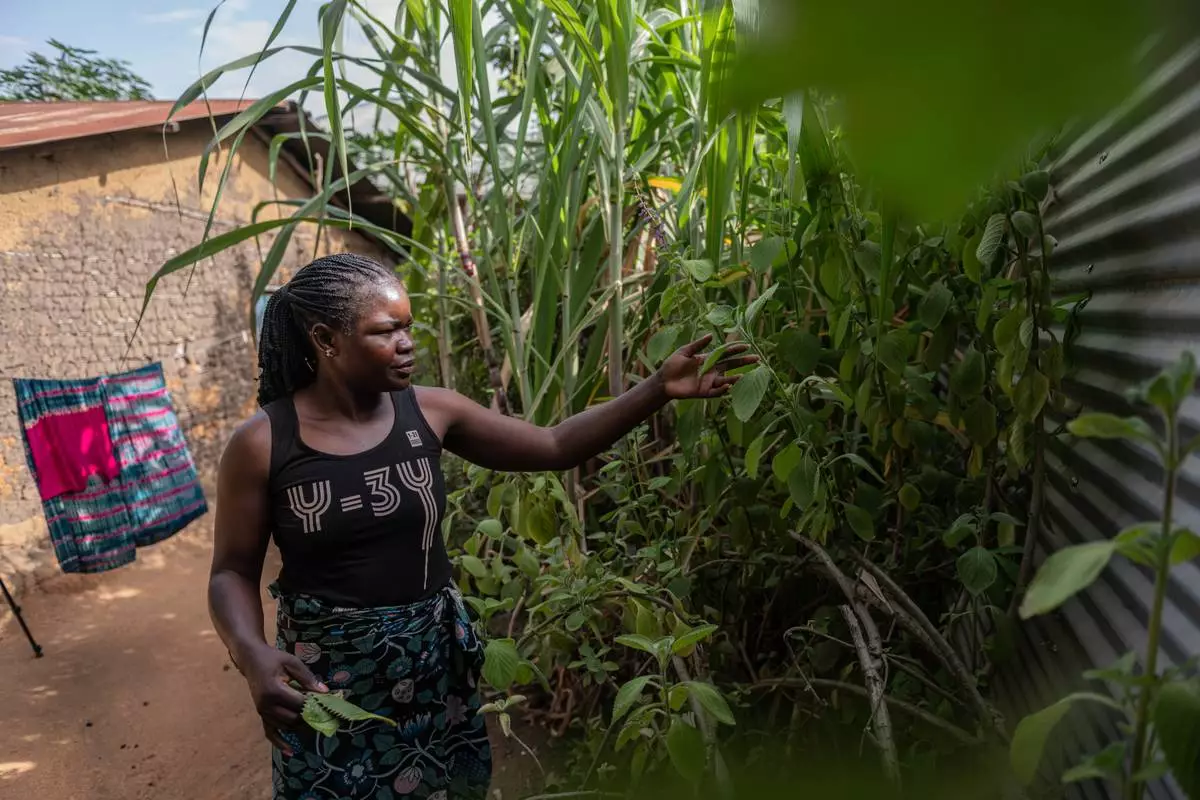
Chantie Joe Kiss, 31, cuts plants to prepare traditional medicines she believes can cure various illnesses in Bunia, Congo, Thursday, June 4, 2026. (AP Photo/Moses Sawasawa)
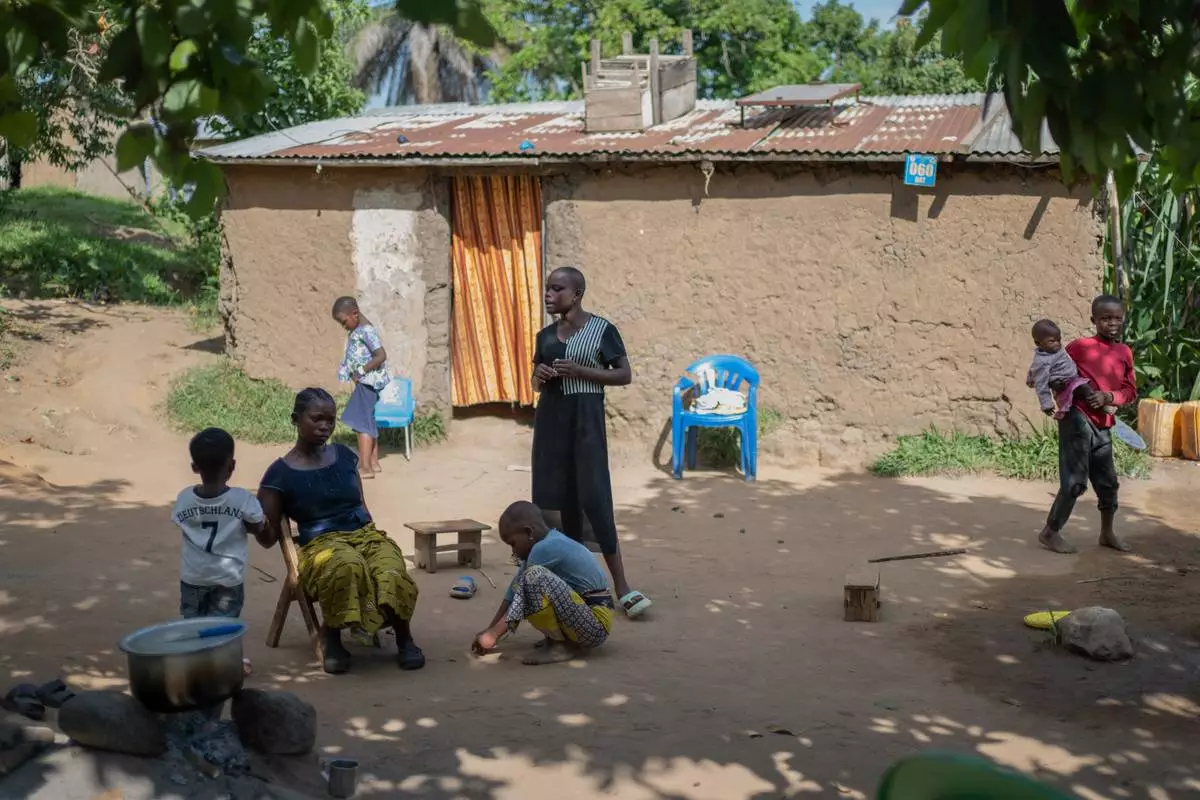
Abigaelle Mbusi, 30, a resident skeptical about Ebola, spends time with her family at their home in Bunia, Congo, Thursday, June 4, 2026. (AP Photo/Moses Sawasawa)
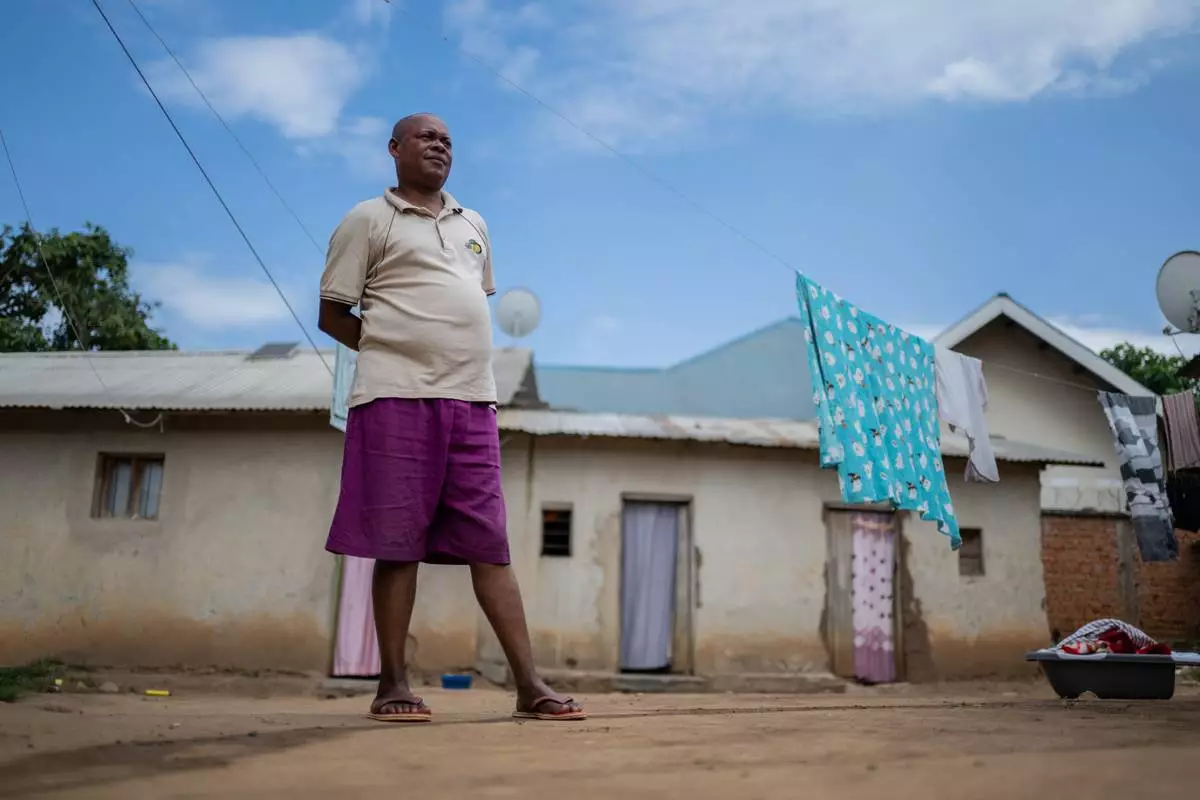
Samson Gerson, 52, a resident skeptical about Ebola, stands outside his home in Bunia, Congo, Thursday, June 4, 2026. (AP Photo/Moses Sawasawa)
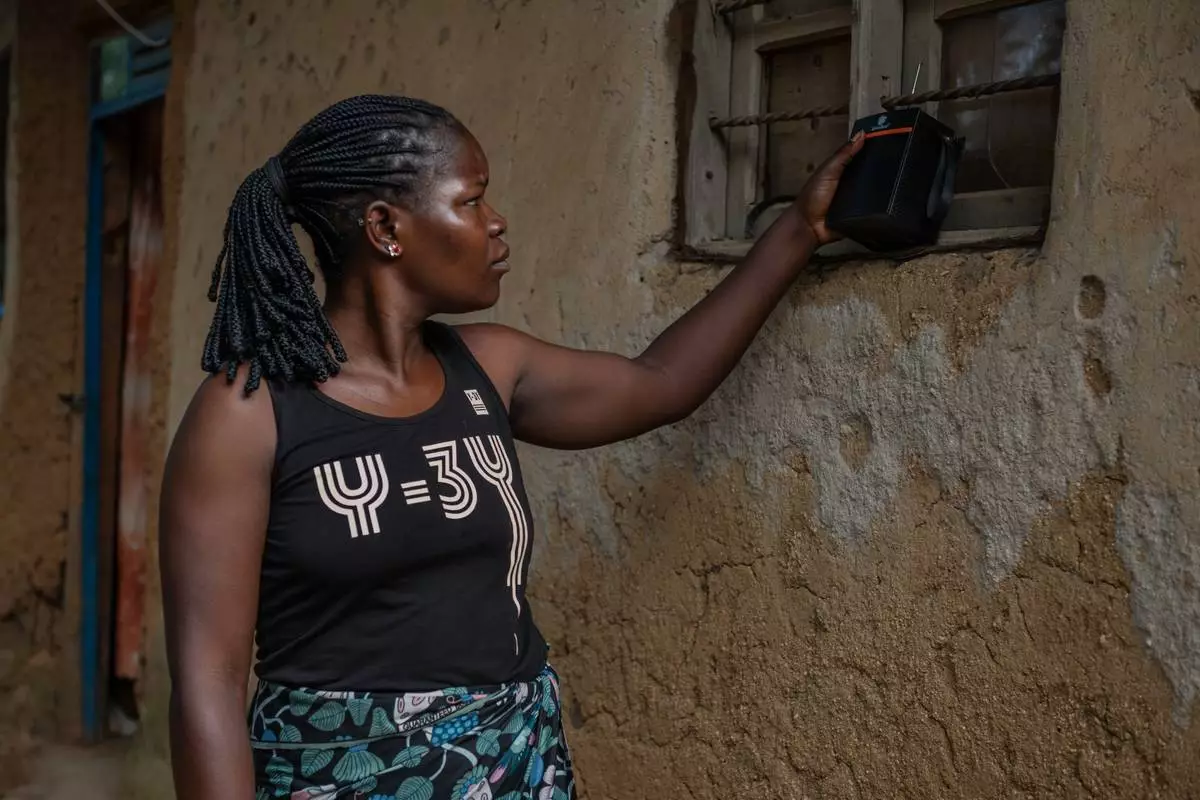
Chantie Joe Kiss, 31, listens to the radio for awareness and updates on Ebola in Bunia, Congo, Thursday, June 4, 2026. (AP Photo/Moses Sawasawa)
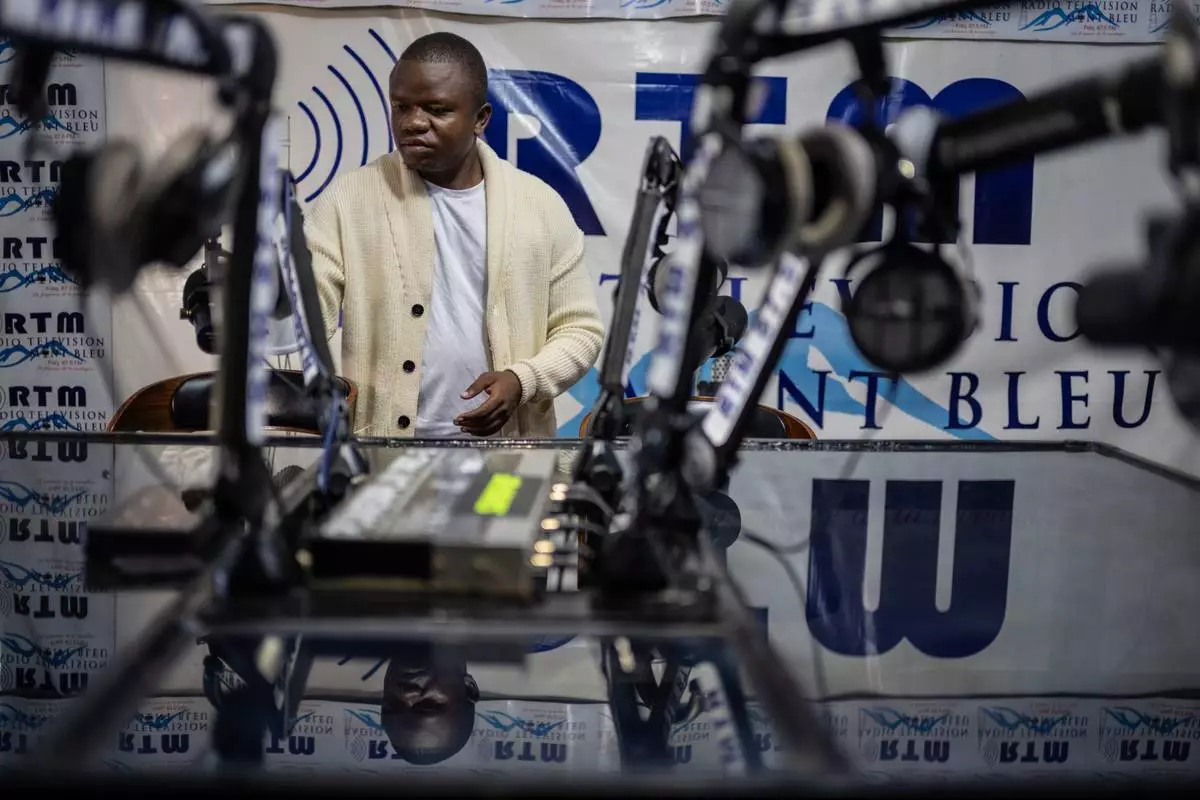
Verité Johnson works at a community radio station, providing daily awareness and updates on Ebola in Bunia, Congo, Thursday, June 4, 2026. (AP Photo/Moses Sawasawa)
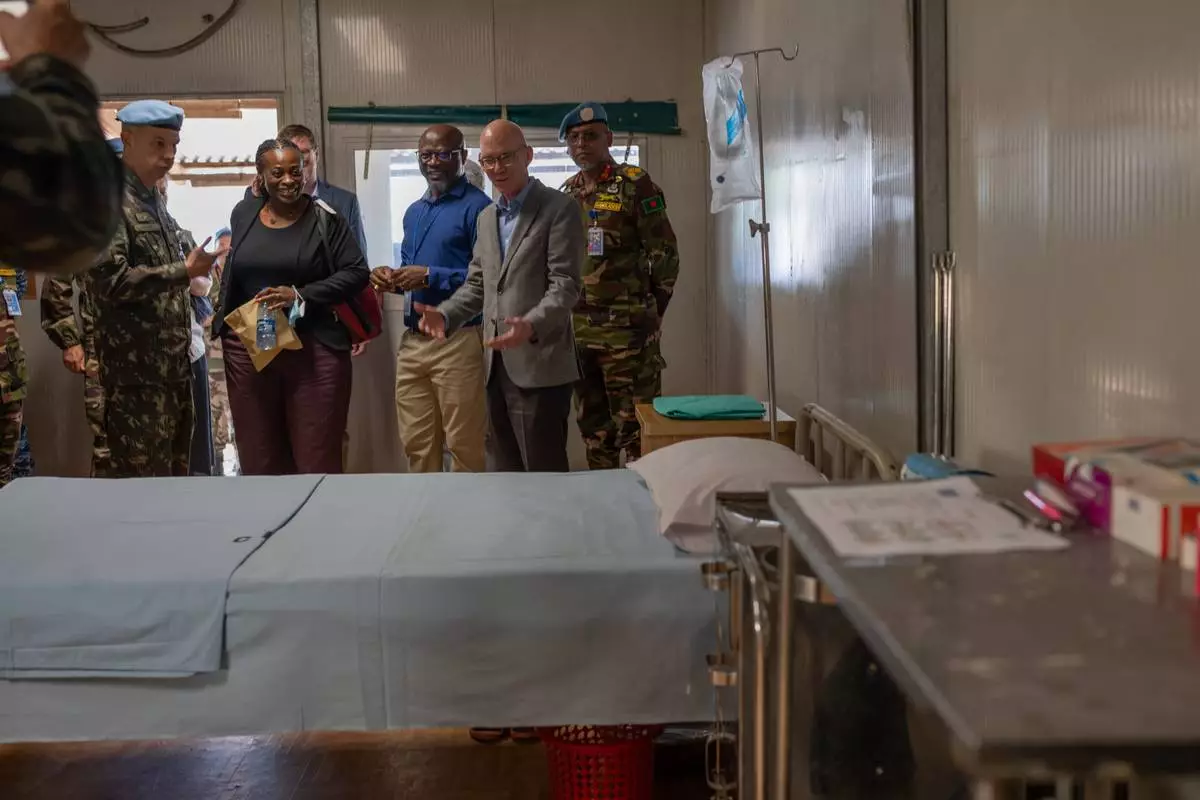
Head of the UN mission in Congo James Swan visits an Ebola treatment center in Bunia, Congo, Thursday, June 4, 2026. (AP Photo/Moses Sawasawa)
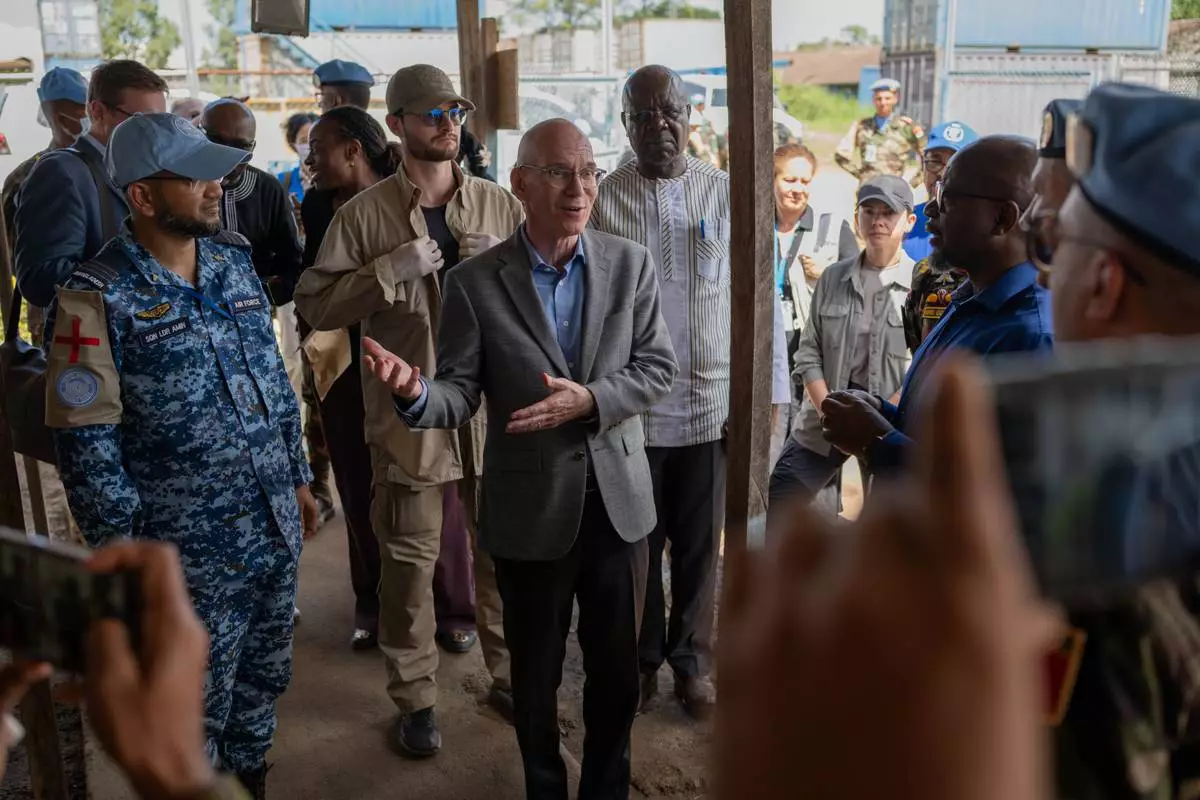
Head of the UN mission in Congo James Swan visits Bunia to assess the response to the Ebola outbreak in Ituri province, Congo, Thursday, June 4, 2026. (AP Photo/Moses Sawasawa)
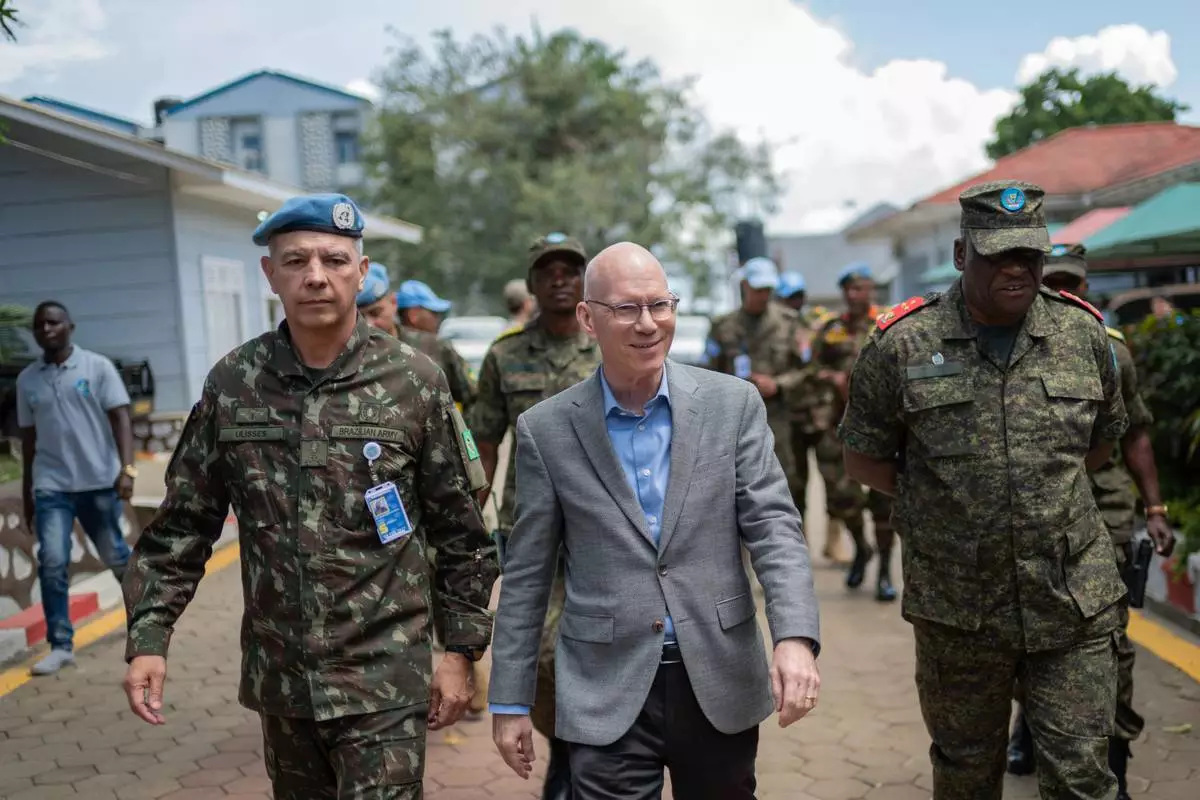
Head of the UN mission in Congo James Swan walks with troops during a visit to assess the response to the Ebola outbreak in Ituri province, Bunia, Congo, Thursday, June 4, 2026. (AP Photo/Moses Sawasawa)
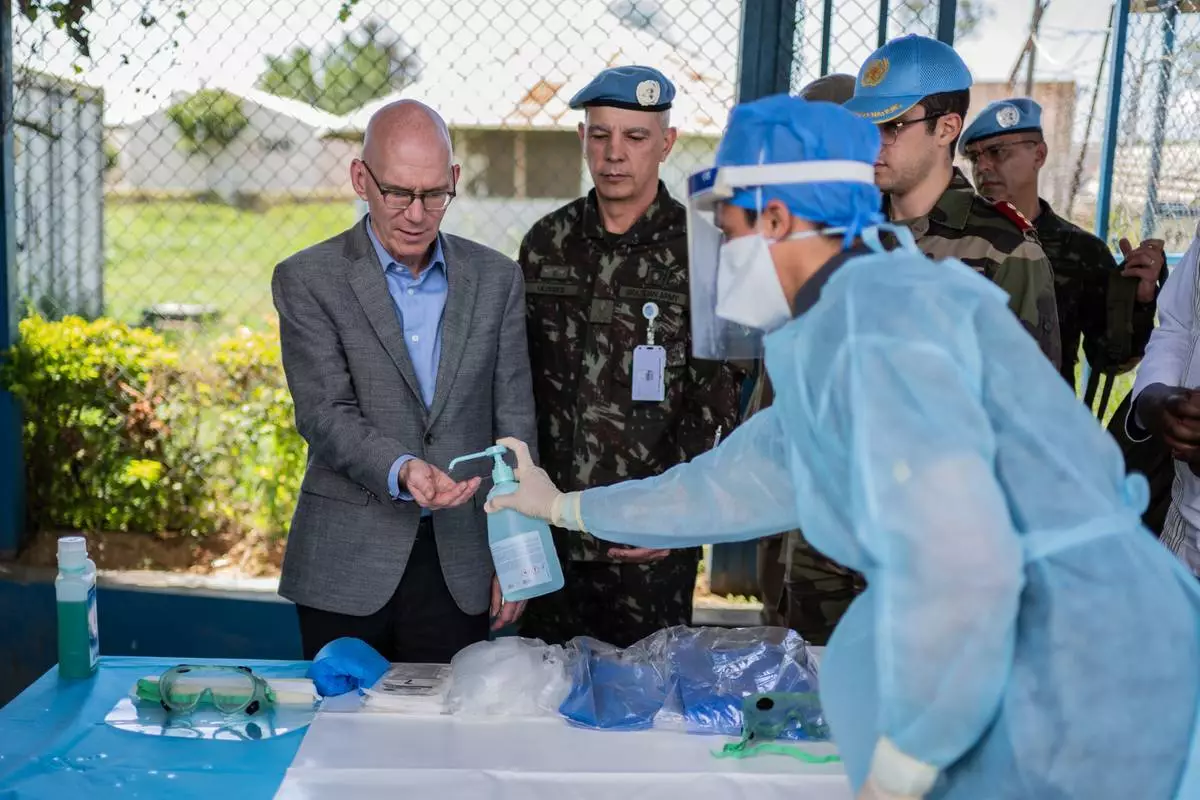
Head of the UN mission in Congo James Swan sanitizes his hands during his visit to Bunia to assess the response to the Ebola outbreak in Ituri province, Congo, Thursday, June 4, 2026. (AP Photo/Moses Sawasawa)