NEW YORK (AP) — A New Jersey police sergeant has been charged with stealing $10,000 worth of cameras and other equipment from a photojournalist who had been injured covering tense protests outside a Newark immigration jail.
Darryl Brown, a sergeant in the Essex County Prosecutor’s Office, was caught with the missing items after the photojournalist used a geo-tracking device to trace her missing gear to his home, the state’s attorney general said Thursday.
The journalist, Angelina Katsanis, was on assignment for The Associated Press at Delaney Hall on Saturday night when she was struck in the knee by a wood beam during a clash between police and demonstrators.
As she hobbled to a medical tent to seek attention, Katsanis left behind her gear bag, which was marked with her name and contact information. When she was eventually allowed to return to the area — now in a wheelchair — the bag was gone.
“I checked my Airtag and the bag was already on a highway pretty far away at that point,” Katsanis recalled. “Right away, I had a feeling it was the police because they were the only ones with access to that area."
As Katsanis sought treatment in a nearby hospital, the Airtag pinged to a home in Sparta, New Jersey, which was listed as belonging to Brown, according to the attorney general's office. The device was later recovered on the side of a road, miles away from the home where it was initially taken.
A subsequent review of Brown’s body camera footage showed him “interacting” with the bag at the protest location, according to the attorney general's office. A search warrant executed at his home Wednesday turned up several of the missing items, some bearing Katsanis’ name and phone number, the complaint said.
Information for Brown's attorney was not immediately available. A message left at a phone number listed for Brown was not immediately returned. He faces charges of third-degree theft. He has been suspended without pay, according to the Essex County Prosecutor’s Office.
Katsanis, who has training in covering hostile environments, said the incident had left her deeply shaken.
“I’ve thought a lot about how the officers are supposed to be there to uphold the law and protect us and protect property — and this is the exact opposite of that,” she said.
The detention center has become a flashpoint for protests against President Donald Trump’s immigration crackdown, with frequent clashes between demonstrators and law enforcement.
Those demonstrations intensified in recent weeks as advocates said detainees inside launched a hunger strike over poor living conditions at the 1,000-bed facility. The federal government has denied allegations of substandard conditions and accused protesters of inflaming tensions.
Katsanis said she suffered swelling and bruising on her leg but did not break any bones.
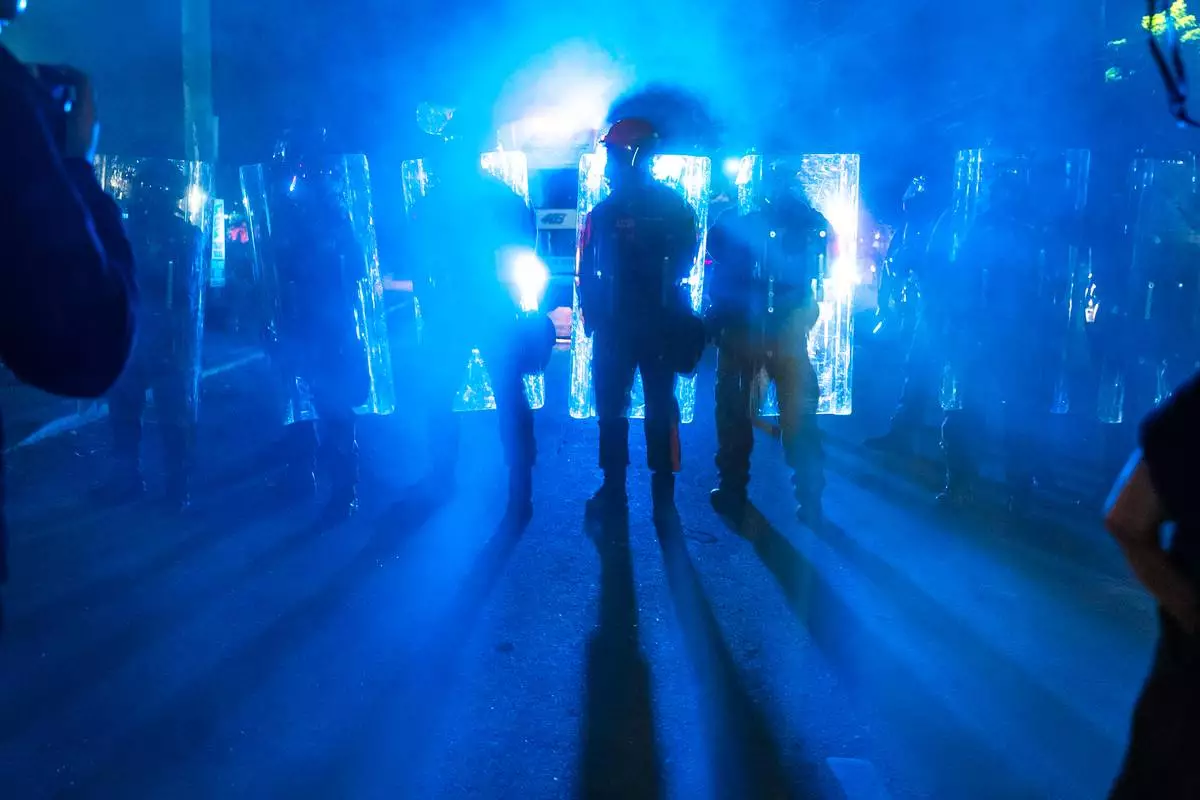
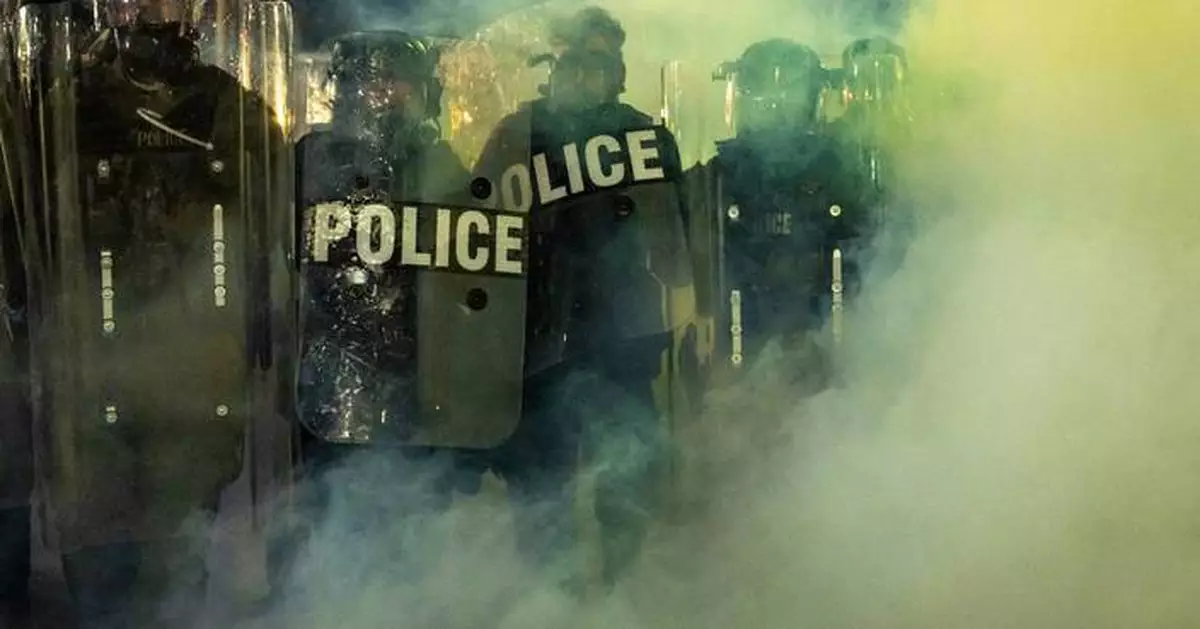
Law enforcement officers in riot gear stand off against anti-ICE protesters outside the Delaney Hall detention center on Saturday, May 30, 2026, in Newark, N.J. (AP Photo/Angelina Katsanis)
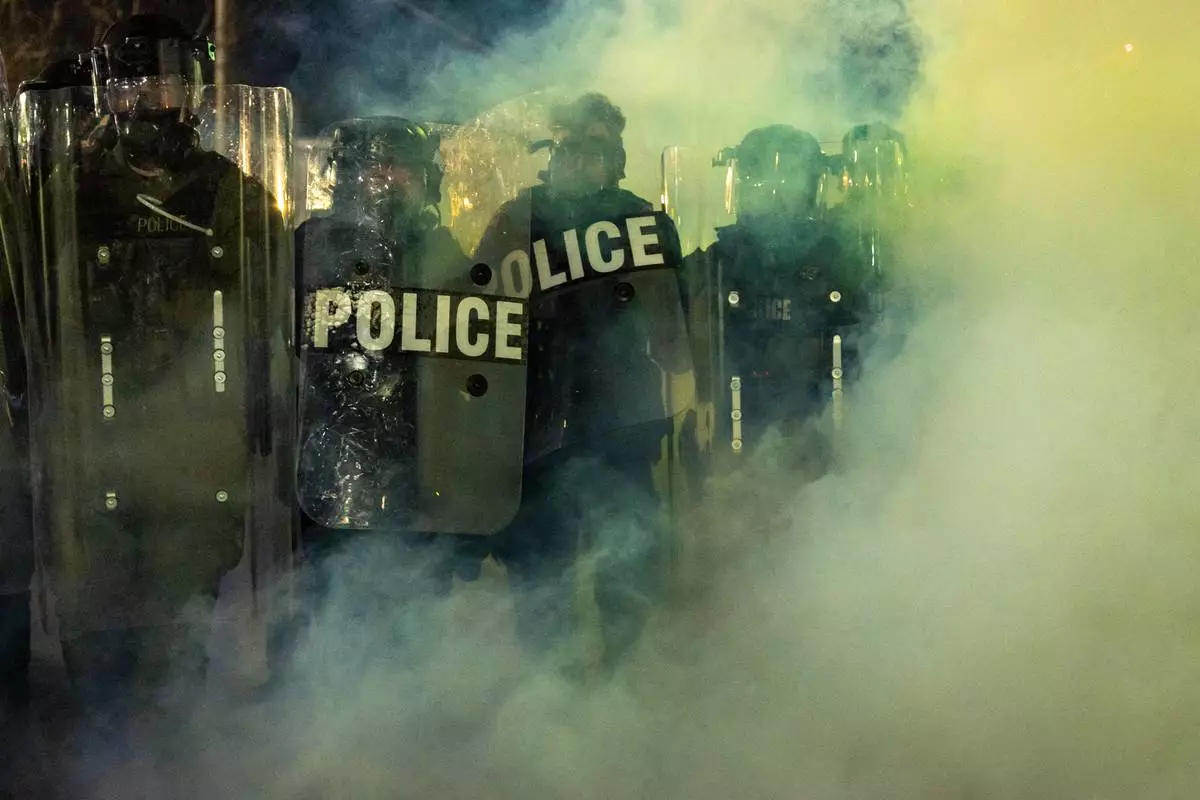
Law Enforcement Officers walk through tear gas chemical irritant during clashes with anti-ICE protesters outside the Delaney Hall detention center on Saturday, May 30, 2026, in Newark, N.J. (AP Photo/Angelina Katsanis)
BRUSSELS (AP) — With underwater drones and ocean-focused satellites, the EU is expanding its monitoring network of Earth’s seas as climate change fuels heat waves and stronger storms and the Trump administration plans severe cuts to a similar system in the United States.
With an investment package of 92 million euros ($107 million) called OceanEye announced on Wednesday, the EU will be able to take the helm of global efforts to explore the depths of the planet's vast oceans, said Ursula von der Leyen, president of the European Commission.
Oceans are vital ecosystems covering about 70% of planet Earth, hosting complex webs of life that generate oxygen and absorb greenhouse gases like carbon dioxide. Temperatures have risen in oceans faster due to climate change, super-charging storms and drought, ravaging coral reefs across the world, and endangering species in tandem with overfishing and industrial pollution.
Scientists estimate climate change will increase the strength of heat waves and severe storms across Europe.
Monitoring the ocean can help protect it by showing damage and threats to ecosystems that help inform regulations aimed at preventing species loss.
“This is about using science and good governance to understand our ocean and secure our future,” von der Leyen said.
In May, officials in the U.S. began signaling plans to gut its Ocean Observatories Initiative — a network of more than 900 ocean sensors built at a cost of $386 million that has continuously collected real-time data for more than a decade.
Funded by the National Science Foundation, the observatories have tracked everything from ocean circulation and marine ecosystems to climate change and extreme weather. Its data has been freely available and has informed more than 500 scientific publications. The project was slated to run for another 15 to 20 years.
The EU investment was already in the pipeline when the U.S. cuts were announced.
International efforts are organized through the Global Ocean Observing System. The U.S. collects more than half of this data while Europe does about a quarter, followed by Japan, Australia, India and China.
“Europe needs to do more,” said Pierre-Yves Le Traon, an oceanographer and scientific director of the Mercator Ocean International based in Toulouse, France.
By 2035, the EU hopes to cover 35% of Earth’s maritime monitoring network and become the globe’s leading provider of “ocean intelligence.”
Robotic sensors in underwater and in orbit feed information to organizations like shipping companies, fisheries, emergency services and research institutions like the Mercator Ocean Institute that is building a virtual-reality mockup of Earth’s oceans to be updated in real time called the Digital Twin Ocean.
That data is crucial to understanding and adapting to climate change and to a vast array of industries on land and at sea like aquaculture, shipping especially through icy waters, coastal tourism, agriculture and even navies, Le Traon said.
“Knowledge is essential if we want to manage the ocean," Le Traon said. "We really have to be very active for the monitoring and protecting of the ocean because the ocean matters to everyone: for life at sea, for life on Earth.”
Odran Corcoran, a policy advisor for Oceana, said that only by collecting data out of the depths of the still relatively unknown ocean can lawmakers use data to regulate the management of fisheries, marine protection and restoration projects.
“Europe does not just need more ocean data; it needs data that closes biodiversity and seabed knowledge gaps," Corcoran said.
The EU funds will go toward private incubators for oceanic technology and beefing up existing institutions like the Global Ocean Observing System.
Out of the 27 EU nations, 22 have coasts along the Baltic Sea, the Atlantic Ocean, the Black Sea and the Mediterranean. France boasts the bloc’s largest ocean-focused scientific institutions as well as huge maritime borders with overseas territories from Reunion in the Indian Ocean to Saint Martin in the Caribbean.
This story corrects a previous version that stated Reunion is in the Pacific Ocean. It is in the Indian Ocean.
The Associated Press receives support from the Walton Family Foundation for coverage of water and environmental policy. The AP is solely responsible for all content. For all of AP’s environmental coverage, visit https://apnews.com/hub/climate-and-environment
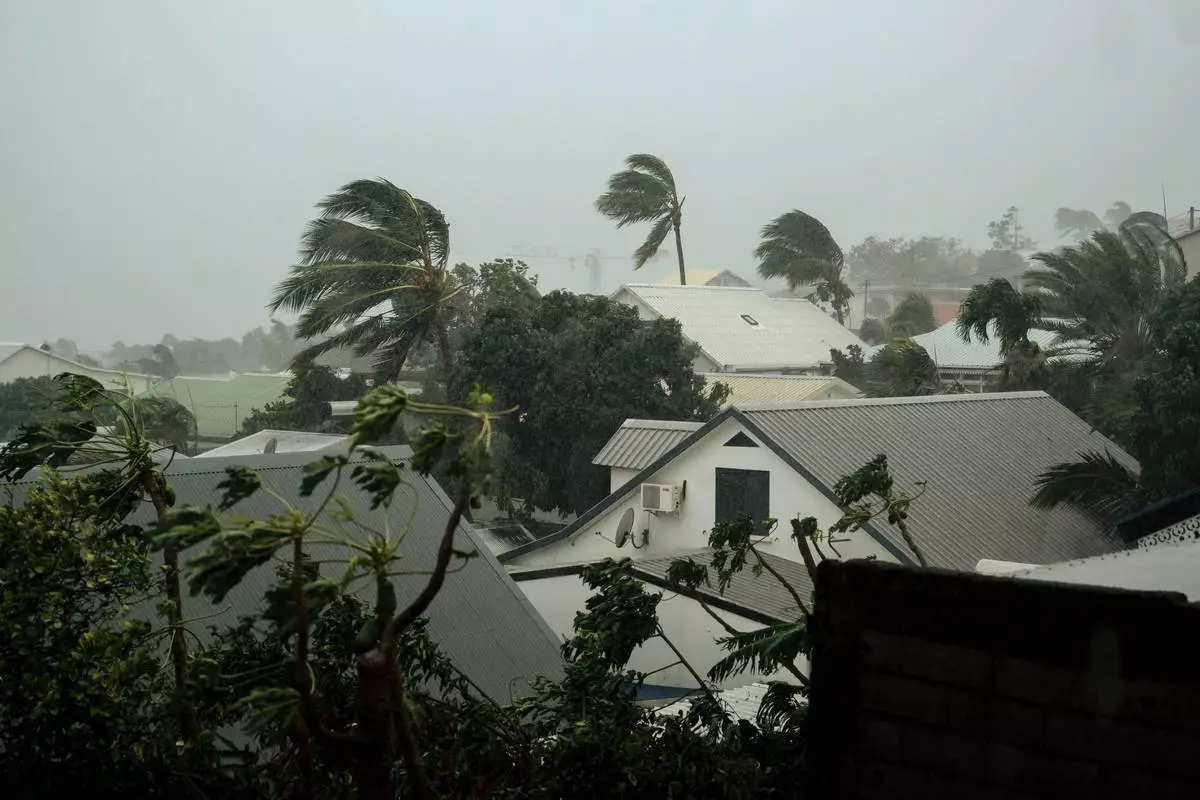
FILE - Strong winds blow in the town of La Plaine Saint-Paul on the French Indian Ocean island of Reunion, Jan. 15, 2024. (AP Photo/Lewis Joly, File)