China and Brazil have significantly deepened their public health partnership since cooperation began five years ago, leading to breakthroughs in biopharmaceutical innovation.
In 2021, Brazil received the first batches of China's CoronaVac COVID-19 vaccine, which was developed with participation from Sao Paulo's Butantan Institute.
What began as an emergency response is now helping Brazil tackle other public health challenges, including chronic problems like dengue fever, a disease that the Latin American country has struggled with for decades.
Brazil was able to develop a dengue vaccine on its own, but to scale up production, Butantan turned to Chinese manufacturer WuXi Biologics.
The institute's director, Esper Kallas, credits the success of this cooperative project to the contacts built during the COVID emergency.
"What we found was a number of companies that had implemented their own capacity, not only for production, but also for process development, innovation and research for radical product development. There were several potential collaborations that we could go ahead with, and the first one was to increase our capacity to produce the dengue vaccine, the Butantan-DV dengue vaccine," he said.
"The next step that we have ahead of us, and it's becoming a reality, is to strengthen the ties between the Butantan Institute and one Chinese company called IASO to make CAR-T cells. This is a very complicated and sophisticated, advanced therapy to treat certain forms of cancer," said Kallas.
Brazil runs one of the largest public immunization programs in the world, with over 20 vaccines available for free.
Meanwhile, the country's partnership with China has expanded beyond prevention and into treatment. A key player in both of these areas is the Bio-Manguinhos laboratory, a cornerstone of Brazil's public vaccine and biopharmaceutical production. Its director, Rosane Cuber, said the partnership has become central to the laboratory's strategy.
"We started this partnership with China during the COVID-19 pandemic time. But after that, we realized that China was very, very developed in this area. By doing these partnerships, we introduce these vaccines and biopharmaceuticals quicker than if we do it by ourselves. We are building in Ceara State a facility to produce the glargine insulin for the SUS, our national health system, using technology that was developed in China," she said.
As joint efforts expand, the two countries are building a reliable supply chain to protect and strengthen the largest public health network in Latin America.
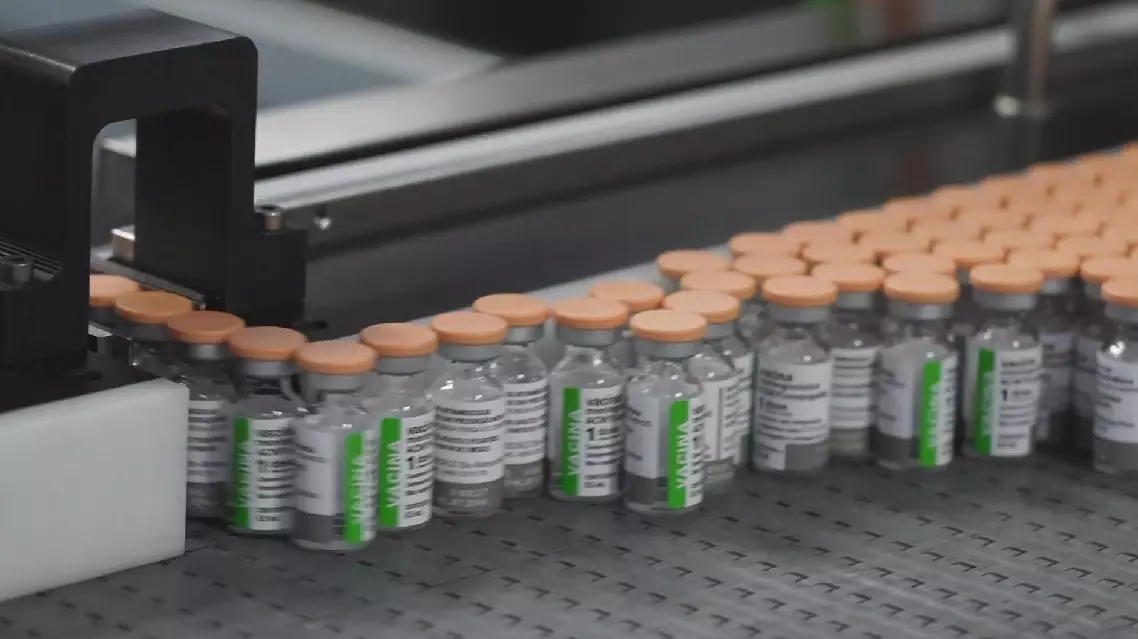
Brazil's pharmaceutical labs say alliance with China helps boost immunization programs