Indonesia's B50 biodiesel program, which mandates a 50 percent blend of palm oil-based biofuel with fossil diesel, will help reduce dependence on imported fuel but may also exacerbate palm oil supply shortages and drive up domestic cooking oil prices, according to an Indonesian economic expert.
As the world's largest producer and exporter of palm oil, Indonesia relies on it as both a key food ingredient and a core feedstock for biodiesel.
The B50 program, which will take effect on July 1, is expected to reduce fuel imports, increase domestic value-added production from palm oil, create jobs, and lower greenhouse gas emissions, supporting Indonesia's broader push toward energy independence and renewable energy adoption.
At the beginning of 2025, Indonesia implemented the B40 program, raising the biodiesel blend ratio in diesel fuel to 40 percent. Dipo Satria Ramli, a researcher at the Center for Economic Reform Indonesia, said he believes that with such a sharp increase in the blend ratio after just over a year, the market may not yet be ready.
"Transition from B40 to B50 is definitely driven by the high oil price, right? That additional 10 percent is actually a high number. And I think that's something that the market is not ready yet. There's not an additional production ready yet for domestic consumption, right? And because of that, obviously the price has increased locally on the cooking oil and some of the other products as well," Ramli said.
Industry expects the B50 program to further increase Indonesia's annual demand for palm oil used in biodiesel production. At the same time, with the country currently in a seasonal low-production period, market concerns over future supply tightness are rising.
"But the palm oil has its own risk rate. For example, it has its weather risk, the El Nino this year, it has productivity risks and so many other different kinds of risks," Ramli said.
The expert noted that if global oil prices stay high and palm oil output growth remains limited, food processors and the catering industry could face rising cost pressures, some of which will eventually be passed on to consumers. He added that balancing energy security with food prices will be a key challenge to Indonesia's policy makers going forward.
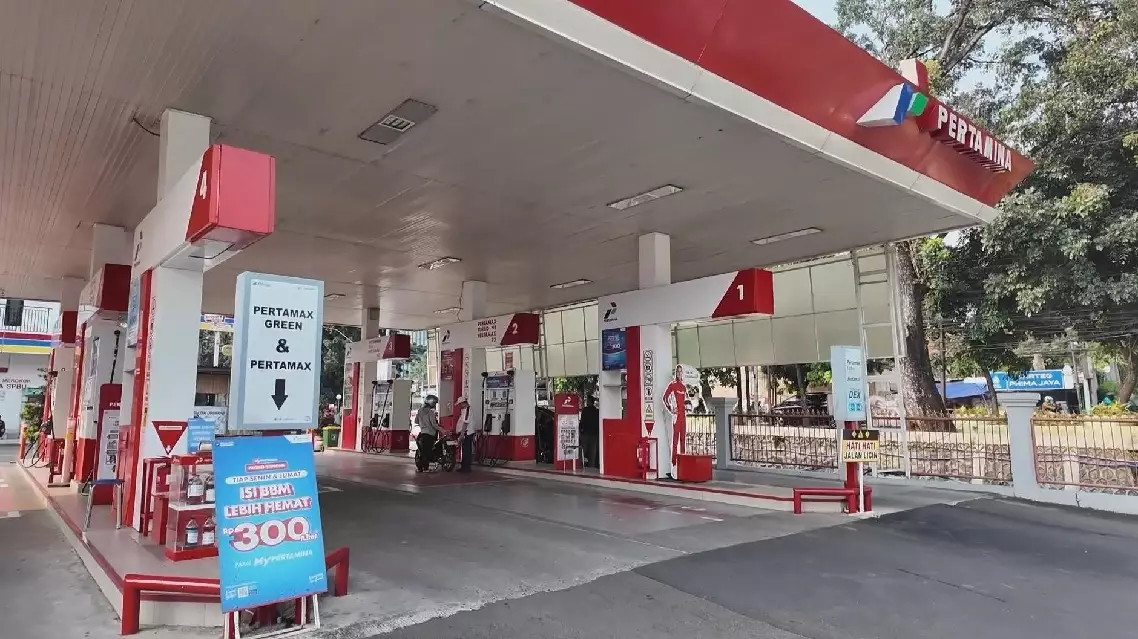
Indonesia's B50 biodiesel lowers fuel imports but raises cooking oil prices: expert
Global observers have welcomed the recent summit between Chinese President Xi Jinping and U.S. President Donald Trump, emphasizing that a stable, healthy relationship between the world's two largest economies is essential for global peace and development.
Xi concluded a three-day state visit to the United States on Friday, where he and Trump reaffirmed their commitment to a constructive, strategically stable relationship guided by fairness, reciprocity, and mutual respect.
Ko Ko, chair of the Myanmar Narrative Think Tank, expressed optimism that the two major powers can work together to foster global development and steer the international community toward a stable, prosperous, and peaceful future.
"The world today faces many destabilizing factors and conflicts. If China and the United States, as two major powers, join hands to promote world peace and development, they can help move the world toward greater stability, prosperity, and peace. The two countries should avoid conflict and pursue cooperation, especially in economic and trade fields, thereby contributing to global development," said Ko Ko.
"President Xi uses 'giant ship' to describe China-U.S. relations. I think it's a very appropriate metaphor as giant ship signifies stability and long-term vision, as well as a journey toward a broader future," said Omar Tahboub, editor-in-chief of Olives Green Times (OGT).
Experts also emphasized that as the world's two largest economies, China and the United States carry a collective responsibility to address pressing global challenges through sustained cooperation.
"In my view, I would argue that this strategic new vision, it's very important in the context of U.S.-China relations. And this is because the vision emphasizes the need for cooperation. In terms of cooperation, given the fact that both countries are the largest economies globally, both countries are the most influential countries globally. It is important for them to cooperate and it's also in the realization of the fact that despite their differences, there are areas of mutual interest," said Dr. Oluwaseun Tella, director of the Future of Diplomacy at the University of Johannesburg's Institute for the Future of Knowledge.
"There's that kind of understanding, it seems between the Chinese leadership and the American leadership that conflict between the two countries ought to be avoided. That there are benefits to cooperation; that there needs to be a positive atmosphere; that there has to be an enhancement of trust and so one can hope that both parties are working assiduously to address those very major issues," said Aurel Braun, professor of International Relations and Political Science of University of Toronto.
"When we talk about China and the US. These are obviously two world powers that do influence a lot of the economic shifts that happen country or worldwide. So, it's important that obviously there is cooperation [and] coordination," said Natalie Kaunda, an economist and development expert in Zambia.
Beyond economic and diplomatic frameworks, former Greek Foreign Minister Georgios Katrougalos emphasized the role of people-to-people exchanges in building lasting bilateral stability.
"I was very much impressed by the idea and proposal of President Xi that 100,000 young Americans would visit China. Exactly because if we want to build stable bilateral relations, there is now stable ground that people know other people, especially young ones," said Katrougalos.

Global observers welcome Xi-Trump summit, calling stable US-China ties essential for world peace