Skip to Content Facebook Feature Image

CAS Conducts Exercise to Enhance Emergency Response for Extreme Weather and Rescue Operations

HK

CAS Conducts Exercise to Enhance Emergency Response for Extreme Weather and Rescue Operations
HK

HK

CAS Conducts Exercise to Enhance Emergency Response for Extreme Weather and Rescue Operations

2026-06-07 16:15 Last Updated At:06-08 11:34

CAS conducts exercise to enhance response to extreme weather and rescue capabilities

The Civil Aid Service (CAS) today (June7) organised an exercise codenamed "Gemini" at Wan Tuk Creek on Lantau Island and the Penny's Bay Community Isolation Facility, mobilising more than 300 members. The aim is to strengthen the units' emergency response, mobilisation, communication and co-ordination capabilities in situations of extreme weather, emergency rescue or infectious disease incidents, and further improve its command and control as well as operational efficiency when handling incidents.

More Images
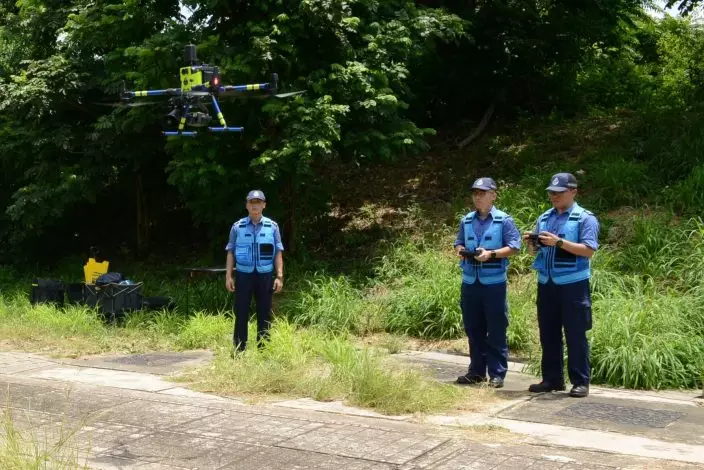
The Civil Aid Service (CAS) organised an exercise today (June 7) to enhance its response and rescue capabilities during extreme weather. Photo shows a CAS member operating a rescue drone. Source: HKSAR Government Press Releases

The Civil Aid Service (CAS) organised an exercise today (June 7) to enhance its response and rescue capabilities during extreme weather. Photo shows a CAS member operating a rescue drone. Source: HKSAR Government Press Releases

The Civil Aid Service (CAS) organised an exercise today (June 7) to enhance its response and rescue capabilities during extreme weather. Photo shows CAS members handling a sudden infectious disease incident. Source: HKSAR Government Press Releases
The Civil Aid Service (CAS) organised an exercise today (June 7) to enhance its response and rescue capabilities during extreme weather. Photo shows CAS members handling a sudden infectious disease incident. Source: HKSAR Government Press Releases

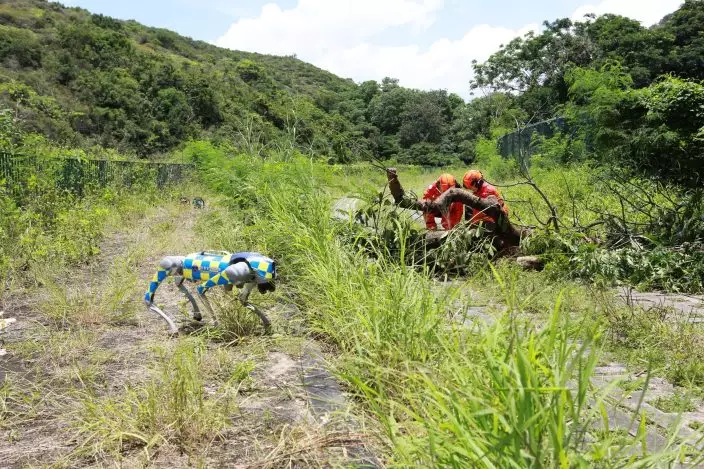
The Civil Aid Service organised an exercise today (June 7) to enhance its response and rescue capabilities during extreme weather. Photo shows a robotic dog operating during a rescue operation. Source: HKSAR Government Press Releases
The Civil Aid Service organised an exercise today (June 7) to enhance its response and rescue capabilities during extreme weather. Photo shows a robotic dog operating during a rescue operation. Source: HKSAR Government Press Releases

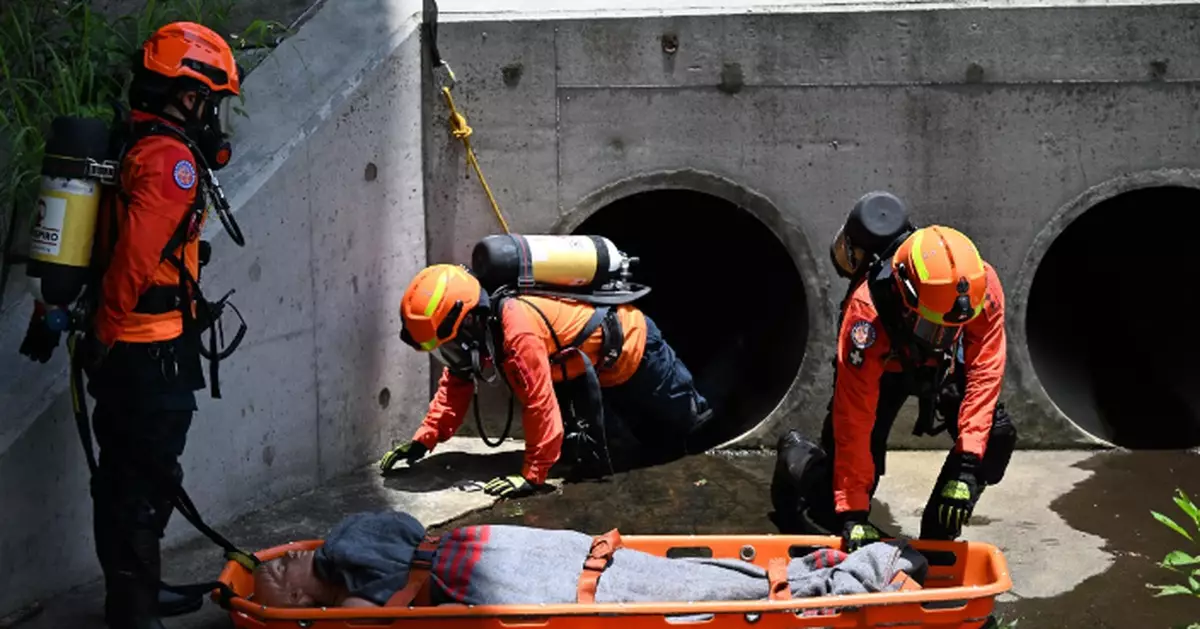
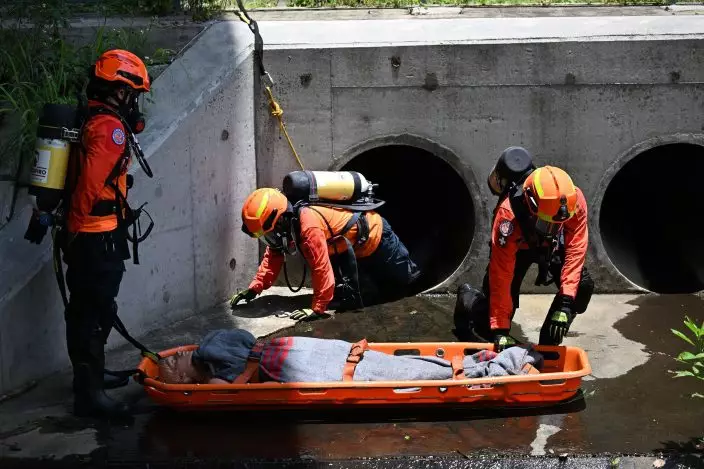
The Civil Aid Service (CAS) organised an exercise today (June 7) to enhance its response and rescue capabilities during extreme weather. Photo shows CAS members rescuing a victim using a self-contained breathing apparatus. Source: HKSAR Government Press Releases
The Civil Aid Service (CAS) organised an exercise today (June 7) to enhance its response and rescue capabilities during extreme weather. Photo shows CAS members rescuing a victim using a self-contained breathing apparatus. Source: HKSAR Government Press Releases

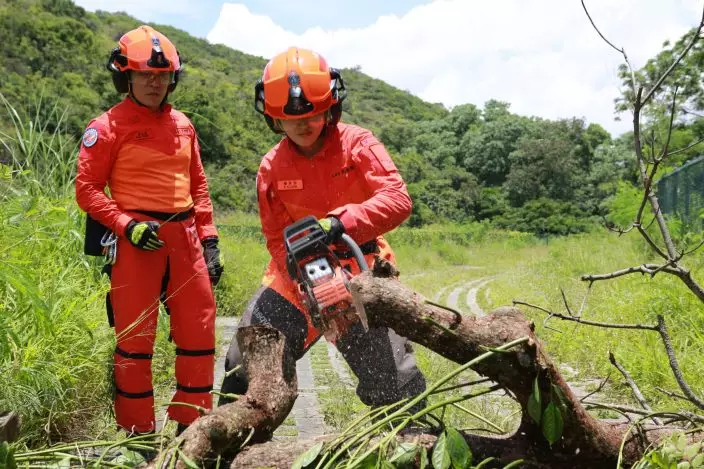
The Civil Aid Service (CAS) organised an exercise today (June 7) to enhance its response and rescue capabilities during extreme weather. Photo shows CAS members operating an electric chainsaw to clear fallen trees obstructing a main road. Source: HKSAR Government Press Releases
The Civil Aid Service (CAS) organised an exercise today (June 7) to enhance its response and rescue capabilities during extreme weather. Photo shows CAS members operating an electric chainsaw to clear fallen trees obstructing a main road. Source: HKSAR Government Press Releases

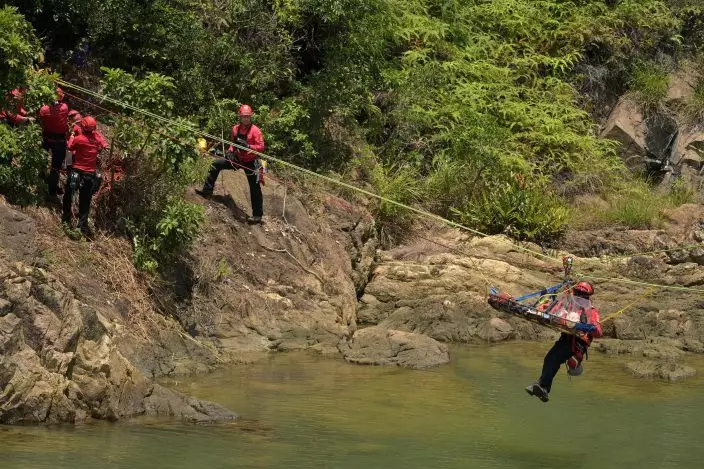
The Civil Aid Service (CAS) organised an exercise today (June 7) to enhance its response and rescue capabilities during extreme weather. Photo shows CAS members rescuing a victim trapped on a cliff. Source: HKSAR Government Press Releases
The Civil Aid Service (CAS) organised an exercise today (June 7) to enhance its response and rescue capabilities during extreme weather. Photo shows CAS members rescuing a victim trapped on a cliff. Source: HKSAR Government Press Releases

The Civil Aid Service (CAS) organised an exercise today (June 7) to enhance its response and rescue capabilities during extreme weather. Photo shows CAS members saving a victim trapped in a flood. Source: HKSAR Government Press Releases
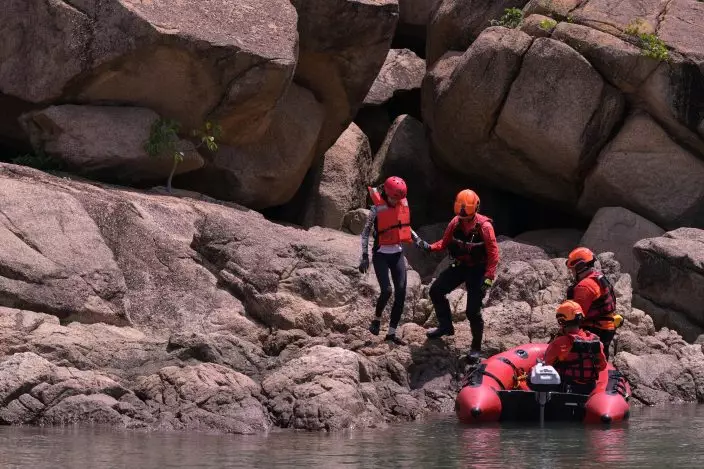
The Civil Aid Service (CAS) organised an exercise today (June 7) to enhance its response and rescue capabilities during extreme weather. Photo shows CAS members saving a victim trapped in a flood. Source: HKSAR Government Press Releases

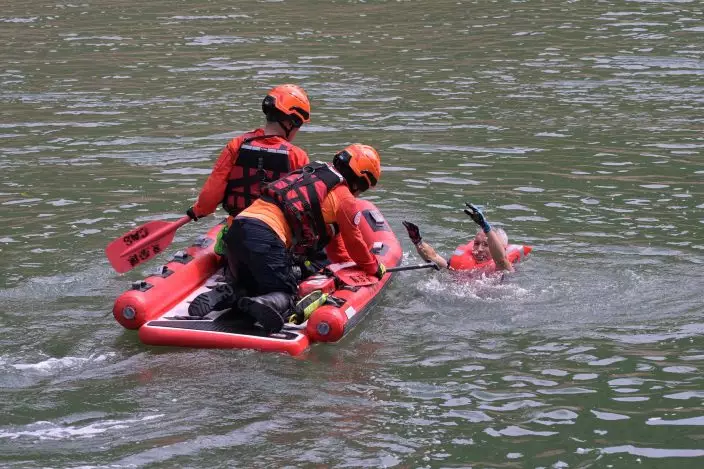
The Civil Aid Service (CAS) organised an exercise today (June 7) to enhance its response and rescue capabilities during extreme weather. Photo shows CAS members for the first time using an electric outboard inflatable rubber boat to rescue victims trapped in a flood. Source: HKSAR Government Press Releases

The Civil Aid Service (CAS) organised an exercise today (June 7) to enhance its response and rescue capabilities during extreme weather. Photo shows CAS members for the first time using an electric outboard inflatable rubber boat to rescue victims trapped in a flood. Source: HKSAR Government Press Releases

The exercise simulated a super typhoon affecting HongKong, with CAS officers and members from operational, administrative and support units ordered to assist rescue operations. Scenarios included typhoon and flood rescues, clearing fallen trees, transporting casualties, and infection control measures for sudden infectious disease incidents. These simulations test and evaluate the units' efficiency and effectiveness in command and control, rescue techniques, communications, handling casualties and logistical support.

In addition to simulating accidents that may occur during a typhoon, the exercise also featured multiple scenarios, such as mountain rescues, emergency rescues, rescuing residents trapped by flooding, fallen trees blocking roads and handling casualties, triage cases and evacuating disaster victims. During the exercise, CAS rescue teams swiftly set up casualty collection stations and utilised rescue technologies such as drones and robotic dogs, and for the first time, used an electric outboard inflatable rubber boat and self-contained breathing apparatus, ensuring rescue operations could be conducted effectively and quickly.

The CAS hopes that by simulating different disaster situations, it can effectively assess members' rescue skill levels and their adaptability to conduct emergency tasks. In 2025, the CAS was deployed 28 times due to typhoon and extreme weather, an increase over the nine deployments in 2024. In 2025, there were 1 366 participants, more than the 725 participants in 2024.

The CAS will continue to strengthen preparedness for extreme weather, emergency rescue and infectious disease incidents, aiming to safeguard the lives and property of citizens.

The Civil Aid Service (CAS) organised an exercise today (June 7) to enhance its response and rescue capabilities during extreme weather. Photo shows a CAS member operating a rescue drone. Source: HKSAR Government Press Releases

The Civil Aid Service (CAS) organised an exercise today (June 7) to enhance its response and rescue capabilities during extreme weather. Photo shows a CAS member operating a rescue drone. Source: HKSAR Government Press Releases

The Civil Aid Service (CAS) organised an exercise today (June 7) to enhance its response and rescue capabilities during extreme weather. Photo shows CAS members handling a sudden infectious disease incident. Source: HKSAR Government Press Releases

The Civil Aid Service (CAS) organised an exercise today (June 7) to enhance its response and rescue capabilities during extreme weather. Photo shows CAS members handling a sudden infectious disease incident. Source: HKSAR Government Press Releases

The Civil Aid Service organised an exercise today (June 7) to enhance its response and rescue capabilities during extreme weather. Photo shows a robotic dog operating during a rescue operation. Source: HKSAR Government Press Releases

The Civil Aid Service organised an exercise today (June 7) to enhance its response and rescue capabilities during extreme weather. Photo shows a robotic dog operating during a rescue operation. Source: HKSAR Government Press Releases

The Civil Aid Service (CAS) organised an exercise today (June 7) to enhance its response and rescue capabilities during extreme weather. Photo shows CAS members rescuing a victim using a self-contained breathing apparatus. Source: HKSAR Government Press Releases

The Civil Aid Service (CAS) organised an exercise today (June 7) to enhance its response and rescue capabilities during extreme weather. Photo shows CAS members rescuing a victim using a self-contained breathing apparatus. Source: HKSAR Government Press Releases

The Civil Aid Service (CAS) organised an exercise today (June 7) to enhance its response and rescue capabilities during extreme weather. Photo shows CAS members operating an electric chainsaw to clear fallen trees obstructing a main road. Source: HKSAR Government Press Releases

The Civil Aid Service (CAS) organised an exercise today (June 7) to enhance its response and rescue capabilities during extreme weather. Photo shows CAS members operating an electric chainsaw to clear fallen trees obstructing a main road. Source: HKSAR Government Press Releases

The Civil Aid Service (CAS) organised an exercise today (June 7) to enhance its response and rescue capabilities during extreme weather. Photo shows CAS members rescuing a victim trapped on a cliff. Source: HKSAR Government Press Releases

The Civil Aid Service (CAS) organised an exercise today (June 7) to enhance its response and rescue capabilities during extreme weather. Photo shows CAS members rescuing a victim trapped on a cliff. Source: HKSAR Government Press Releases

The Civil Aid Service (CAS) organised an exercise today (June 7) to enhance its response and rescue capabilities during extreme weather. Photo shows CAS members saving a victim trapped in a flood. Source: HKSAR Government Press Releases

The Civil Aid Service (CAS) organised an exercise today (June 7) to enhance its response and rescue capabilities during extreme weather. Photo shows CAS members saving a victim trapped in a flood. Source: HKSAR Government Press Releases

The Civil Aid Service (CAS) organised an exercise today (June 7) to enhance its response and rescue capabilities during extreme weather. Photo shows CAS members for the first time using an electric outboard inflatable rubber boat to rescue victims trapped in a flood. Source: HKSAR Government Press Releases

The Civil Aid Service (CAS) organised an exercise today (June 7) to enhance its response and rescue capabilities during extreme weather. Photo shows CAS members for the first time using an electric outboard inflatable rubber boat to rescue victims trapped in a flood. Source: HKSAR Government Press Releases

CHP appeals for heightened vigilance against melioidosis infection following adverse weather conditions

The Centre for Health Protection (CHP) of the Department of Health today (July 26) appealed to members of the public for heightened vigilance against melioidosis infection following adverse weather conditions and urged them to maintain personal and environmental hygiene. The CHP also specifically reminded high-risk groups, including the elderly and people with underlying diseases, to avoid contact with soil or muddy water after typhoons or storms with a view to lowering infection risk.

Melioidosis is a disease caused by the bacterium Burkholderia pseudomallei. Burkholderia pseudomallei is widespread in soil and muddy water, particularly common in moist clay soil. Humans can become infected through contact with contaminated soil and surface water (especially through skin abrasions/wounds), inhalation of contaminated dust/water droplets, and ingestion of contaminated water. Those with underlying diseases or immunosuppression have higher risks of contracting the disease.

According to overseas literature and local data, Burkholderia pseudomallei in the soil and muddy water may be exposed to the ground after typhoons or storms, and the bacteria spread more easily with strong winds and storms. As such, infection cases are more common after typhoons or storms.

In view of the recent disturbance caused by typhoons andconsecutive days of torrential rain, the CHP again reminded members of the public, in particular high-risk groups such as those with underlying diseases, to avoid contact with soil or muddy water as far as practicable to prevent melioidosis infection.

Melioidosis is endemic in Hong Kong, and human infection cases have been recorded in Hong Kong each year. In 2025, 21 melioidosis cases were recorded. In light of the cluster of melioidosis cases recorded in Sham Shui Po in 2022, the CHP and the Water Supplies Department have implemented a series of precautionary and monitoring measures, including the installation of high-efficiency particulate air filters at the ventilators of all fresh water service reservoirs in Hong Kong, enhancing residual chlorine levels in drinking water, continual monitoring of residual chlorine levels in fresh water service reservoirs and consumers' taps, as well as health education and surveillance of infection cases. No abnormalities were detected from all surveillance results so far, including those conducted after typhoons and heavy rain, while the drinking water quality monitoring results have consistently been in compliance with the Hong Kong Drinking Water Standards.

Person-to-person transmission andanimal-to-human transmission are rare but may occur through contact with the blood or body fluids of an infected person. Melioidosis may present with localised infection (such as cutaneous abscess), pneumonia, meningoencephalitis, sepsis, or chronic suppurative infection. Depending on the site of infection, common symptoms of melioidosis include fever, headache, localised pain or swelling, ulceration, chest pain, cough, haemoptysis, and swelling of regional lymph nodes. The CHP again appealed to members of the public to seek medical advice if they develop symptoms, in particular people with diabetes or other immunocompromised conditions, in order to receive appropriate medical diagnosis and treatment.

The CHP reminded members of the public to take the following preventive measures against infection:

  • Avoid contact with contaminated soil;
  • Wear appropriate protective clothing or footwear when participating in activities with possible contact with soil or water, e.g. usinggloves and wearing boots;
  • If exposure to contaminated water or soil is inevitable, high-risk individuals should wear a mask, gloves and boots;
  • Wash or shower after exposure to contaminated water or soil;
  • Always clean any wounds as soon as possible and cover any cuts or grazes with waterproof dressings;
  • Wash hands with liquid soap and water after handling soilor gardening;
  • Observe food hygiene and avoid drinking raw water; and
  • Travellers can contract the disease through outdoor water sports. Risk of infection can be minimised by avoiding exposure to water sources (such as rivers, ponds or lakes) that might be contaminated.

For more information on melioidosis, please visit the website of the CHPwww.chp.gov.hk/en/healthtopics/content/24/101110.html.

Source: AI-found images

Source: AI-found images

Recommended Articles