BRIDGEWATER, N.J. (AP) — President Donald Trump is dismissing the idea that launching the war with Iran this year betrayed his refrain of “No new wars” that he made repeatedly as he campaigned again for the White House.
Trump, in an interview that aired Sunday on NBC's “Meet the Press,” said he “didn't guarantee” there would be no wars if he were back in office.
"First of all, I didn’t guarantee no war. Why would I have built the strongest military in the world?" Trump said.
Trump also defended plans for a now-scrapped $1.8 billion fund that would have compensated allies of the Republican president and he repeated his baseless claims of mass fraud in California’s drawn-out vote count from Tuesday’s primary. He ended the interview abruptly when he became frustrated with pushback from NBC's Kristen Welker.
In his 2024 campaign, Trump repeatedly cast his Democratic opponents as warmongers and said he was a president who started “no new wars" and would bring an era of peace.
But Trump said in the NBC interview, taped Friday in Wisconsin, that as a candidate, “I didn’t promise anything.”
“I don’t like these endless wars. This is not an endless war. We’ve been doing this for three months,” he said of the war with Iran, which began Feb. 28.
Trump said he was “doing the world a service” and “doing our country a service” because he had to stop Iran from having a nuclear weapon. But elsewhere in the interview, Trump repeated a contradictory message where he said U.S. strikes last year “obliterated” Iranian nuclear sites.
He also defended his decision in his first term to withdraw from Democratic President Barack Obama's nuclear deal with Iran, an agreement he has heavily criticized, without negotiating the “better deal” he has promised to reach.
“It takes years to do these things,” Trump said.
California's notoriously prolonged vote count has been a magnet for election conspiracy theories, and Trump since Tuesday's election has claimed without evidence that Democrats are rigging the election. The Trump-appointed top federal prosecutor in Los Angeles said Friday that his office had opened “multiple election fraud investigations.”
Late-tallied Democratic-leaning mail ballots have eaten into the vote totals for Trump's preferred candidates for governor and Los Angeles mayor. While Trump has often said that changes to vote totals as late ballots are counted are a sign of fraud, they are merely a reflection of a slow vote-counting process.
Trump in the interview kept claiming that it was a sign of “cheating” and “a rigged election," and grew increasingly frustrated as Welker pressed him for evidence to support that.
“All I have to do is look. All I have to do is look,” Trump said.
“But that’s not evidence,” Welker responded.
“And I listen. And I listen to people. And let’s see what happens,” Trump replied.
Trump defended plans that his Department of Justice said it has now abandoned to create a $1.776 billion "Anti-Weaponization Fund” as part of a settlement to resolve Trump's lawsuit against the IRS over the leak of his tax returns.
Acting Attorney General Todd Blanche said Wednesday that the department was scrapping the plan. That announcement came after the plan was paused by a judge and after both Democrats and some Republicans said they were concerned about the fund's lack of oversight and the possibility of payouts being made to participants in the Jan. 6, 2021, riot at the Capitol.
Trump told NBC he thought the fund was “a great idea” and that he would be “disappointed” if it were not approved.
When asked if he thought people who attacked police officers on Jan. 6 should get a payout, Trump said, “I wouldn’t be inclined to say so, but I have to see it." He then began making unfounded and false claims about the riot and those who stormed the Capitol. Trump granted a sweeping pardon on his first day back in office in January 2025 to the more than 1,500 people prosecuted over Jan. 6.
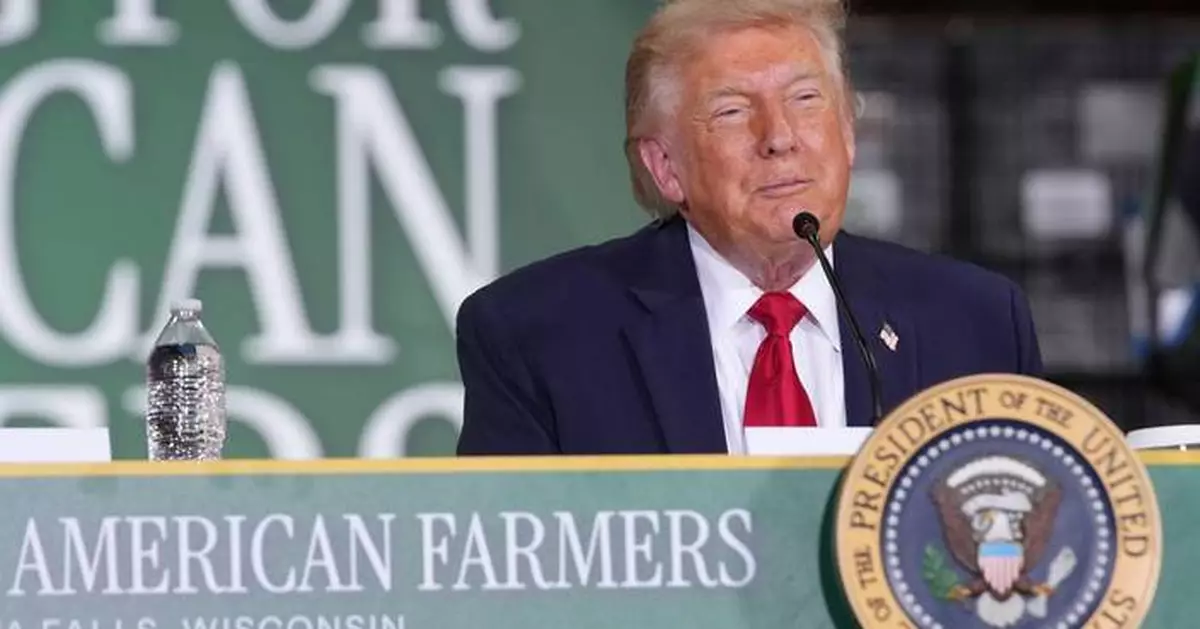
The NBC interview was conducted in Chippewa Falls, Wisconsin, before Trump was set to speak at a roundtable event with farmers. The interview was repeatedly interrupted as waves of heavy rain fell on the metal roof of the barn where the taping took place, making it difficult at times to hear.
At the end, Welker pressed Trump on the settlement fund and his claims about the California election. Trump raised his voice and began calling Welker and the media “crooked," attacking her credibility and complaining about what he called “the fake, dirty press.”
As Welker tried to switch subjects, Trump continued on and there was cross talk between the two. Trump ended the interview, saying said, “Let's call it quits." He took off his microphone, telling Welker, “Thank you, darling. Have a good time." He said he had given the interview enough time, stood up and walked away.
Welker said during the broadcast that she spoke to Trump on Saturday and he agreed the rain had caused complications and said he would do another interview in the future.
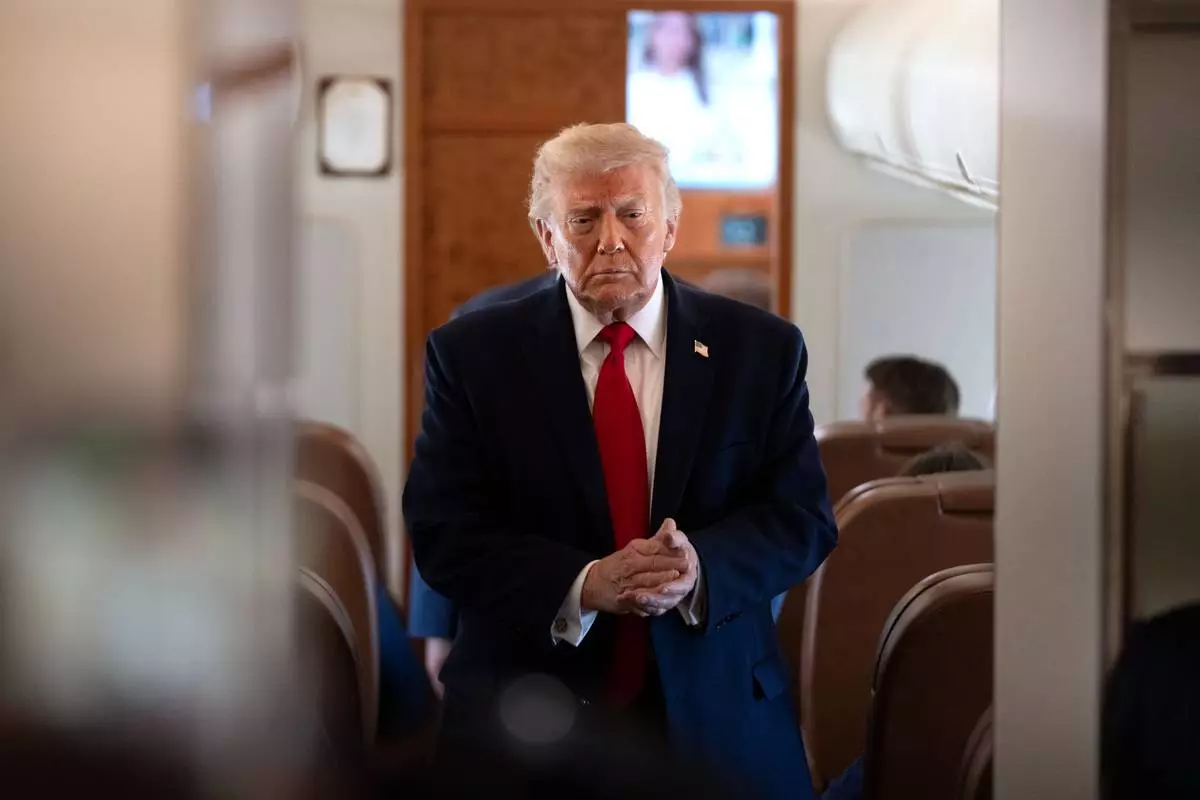
President Donald Trump arrives to speak to reporters aboard Air Force One en route from Joint Base Andrews, Md., to Eau Claire, Wis., Friday, June 5, 2026. (AP Photo/Mark Schiefelbein)
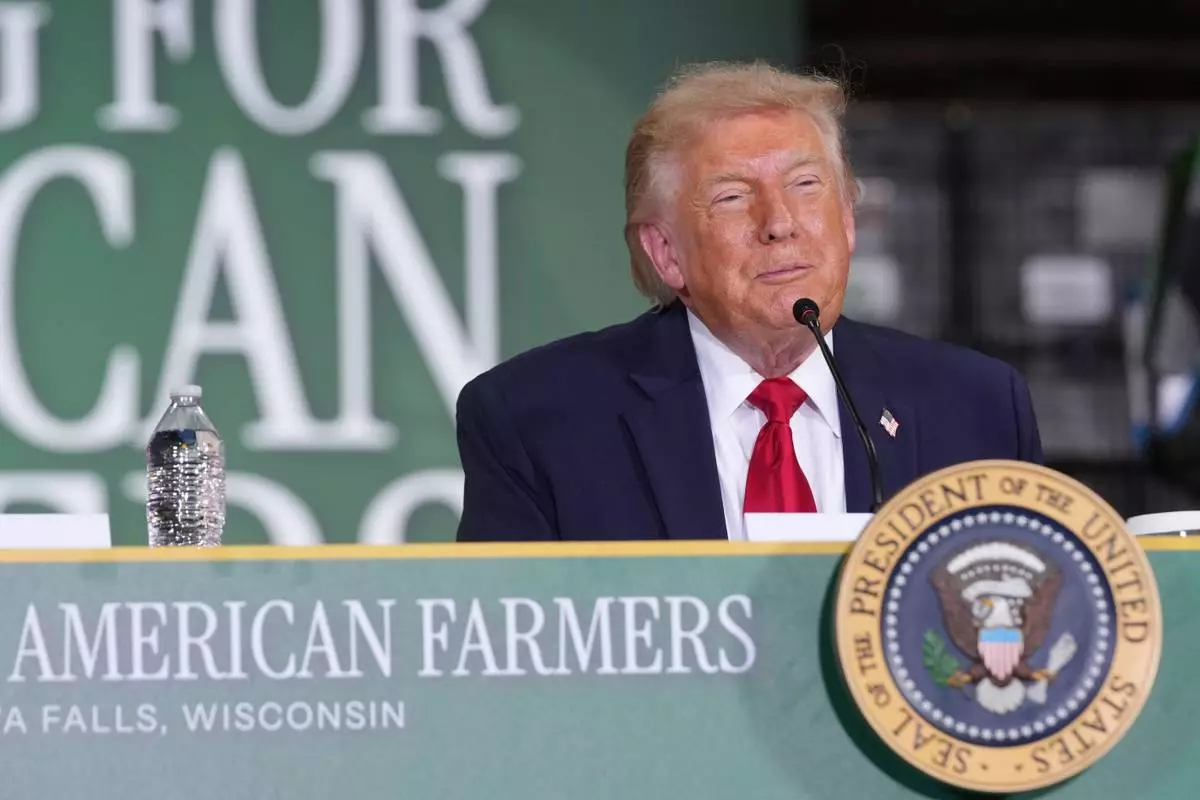
President Donald Trump speaks at Custer Farms in Chippewa Falls, Wis., Friday, June 5, 2026. (AP Photo/Mark Schiefelbein)
JERUSALEM (AP) — Israel said Sunday that Iran launched missiles at it in the first such bombardment since a fragile ceasefire took effect in early April, further complicating mediation efforts for a deal to end the war.
Iran’s state broadcaster confirmed the missile launches and cited the armed forces as saying that “if Israel responds to Iranian attacks or does not stop its attacks on Lebanon, Iranian attacks will continue.”
Israel’s military said it intercepted all missiles from Iran but warned “the defense is not hermetic,” adding that sirens sounded in several areas of the country. Multiple explosions were heard in northern Israel, but there was no immediate comment from the Iranian-backed Hezbollah, which often fires at the area.
There were no immediate reports of casualties or damage in Israel. The White House did not immediately respond to messages about the missile launches.
Tehran had warned of retaliation after Israel on Sunday struck Beirut’s southern suburbs without warning in defiance of Washington’s request days ago to stand down. Israel called it retaliation for Hezbollah firing at northern Israel earlier in the day.
Israel’s attack on Beirut came a few days after the Lebanese and Israeli governments agreed to a ceasefire in U.S.-hosted talks, though Hezbollah rejected the deal. The strike on a residential building killed two people and wounded 20, Lebanon’s health ministry said.
Iran had warned that an attack on Beirut would renew full-scale war across the Mideast, even as Pakistan tries to restart talks between Tehran and Washington. Iran wants a deal to include ending the war in Lebanon.
“U.S. forces across the Middle East remain vigilant and ready,” the U.S. Central Command posted on X shortly before the missile launches.
Associated Press journalists heard loud explosions in the sky over Damascus. State media in Syria attributed the booms to Israeli air defenses.
Israel’s strikes and ground invasion in Lebanon in pursuit of Hezbollah, and the militant group’s resistance to disarming, have complicated an overall deal to end the war in the Middle East. Iran says any deal must include an end to fighting in Lebanon.
The White House did not comment on Israel’s strike in Beirut. Israel on Monday had announced it would strike the southern suburbs of Lebanon’s capital, but urgent talks via Washington halted that on the condition that Hezbollah stop targeting Israeli border towns.
Hezbollah on Sunday night claimed responsibility for firing at Israel earlier in the day.
Hezbollah wants the direct talks between Lebanon and Israel to end and instead supports Iran’s stance that an overall ceasefire deal between Tehran and Washington include the situation in Lebanon.
Mediation efforts on that larger deal continued Sunday as Pakistan’s interior minister visited Iran to talk with officials and Egypt said its foreign minister and his Qatari counterpart discussed “proposed elements” of a potential agreement, with no details.
U.S. President Donald Trump did not comment on the war Sunday, but in an interview with NBC’s “Meet the Press” that aired after a Friday taping he said he would like to see a “more surgical attack on Hezbollah.” He also said he was “not demanding” that Lebanon be part of an overall ceasefire deal in the Iran war.
Meanwhile, Iran continued to assert its grip on the Strait of Hormuz and the U.S. continued its blockade of Iranian ports, with shipments of oil, natural gas and fertilizer affected and the global economy in pain.
Israeli Prime Minister Benjamin Netanyahu, who faces elections later this year, wants to press ahead with Israel’s offensive until he believes Hezbollah no longer poses a threat.
Pakistan’s interior minister, Mohsin Naqvi, was delivering a message to Iranian Supreme Leader Ayatollah Mojtaba Khamenei from Pakistan’s army chief Field Marshal Asim Munir, according to Iran’s state-run IRNA news agency. There were no details on the message's contents.
Khamenei has not been seen in public since he was named the Islamic Republic’s ruler after his father was killed on Feb. 28, when Israeli and U.S. strikes sparked the war.
Pakistani authorities have said Islamabad, with support from regional countries including Qatar, Turkey and Egypt, is working to help bridge differences between the United States and Iran.
In Cairo, the Egyptian and Qatari foreign ministers discussed “proposed elements” of a potential agreement between the U.S. and Iran, Egypt's foreign ministry said, without details.
Chehayeb reported from Beirut, Magdy from Cairo and Lidman from Tel Aviv, Israel. Associated Press writers Munir Ahmed in Islamabad, Matthew Lee in Washington, Abby Sewell in Beirut and Michelle L. Price in Bridgewater, New Jersey, contributed to this report.
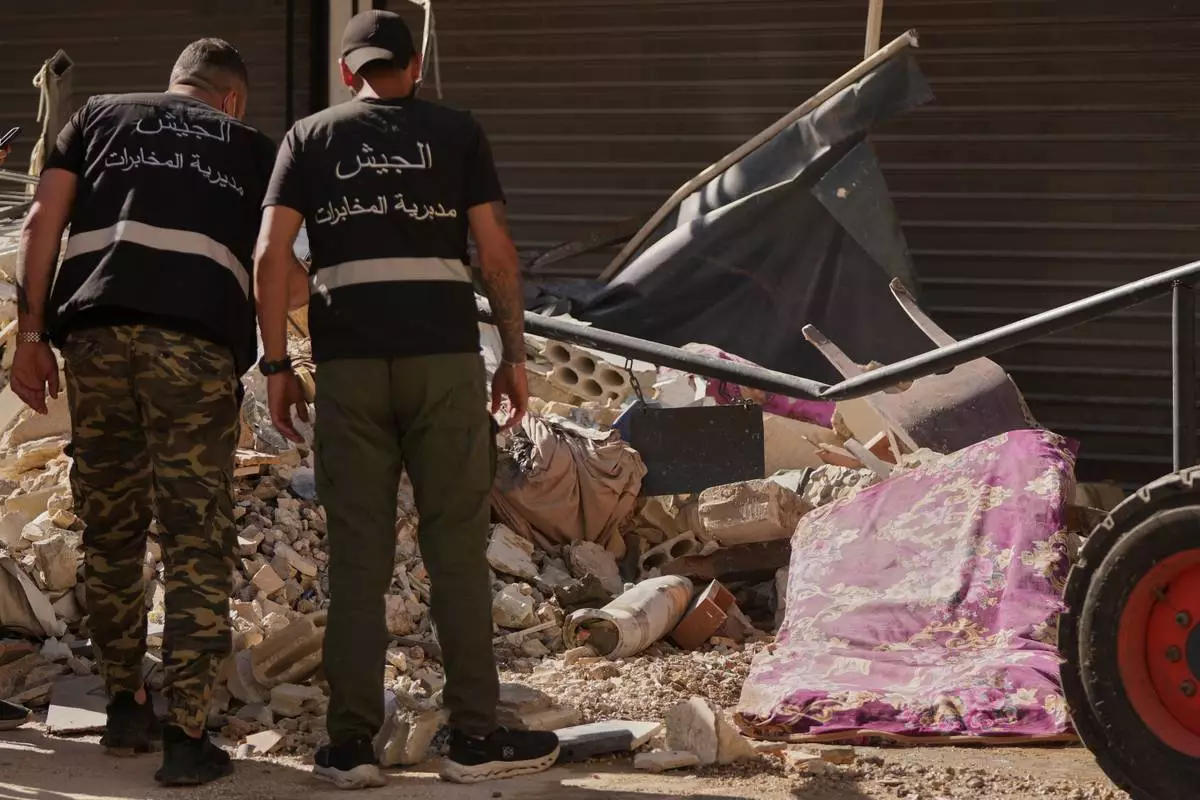
Lebanese intelligence officers look at an unexploded missile, centre, at the site where an Israeli airstrike hit a building in Dahiyeh, Beirut's southern suburb, Lebanon, Sunday, June 7, 2026. (AP Photo/Hassan Ammar)
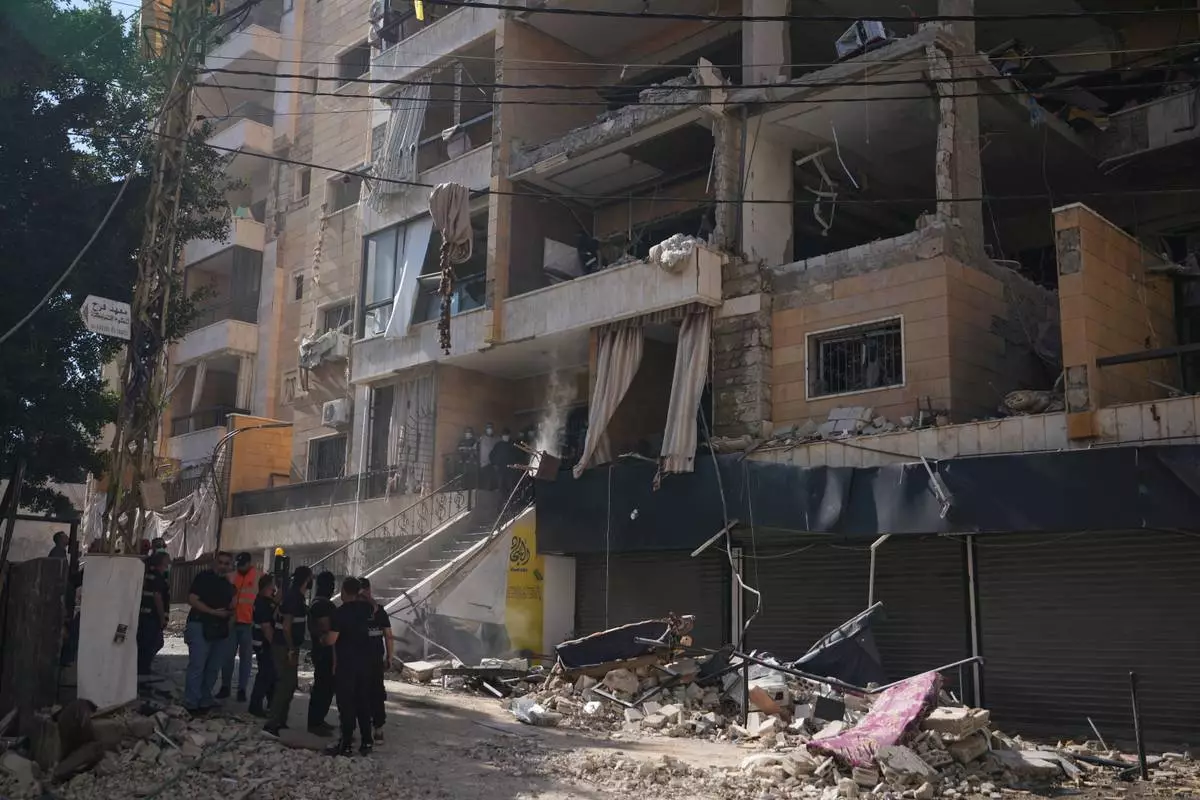
Lebanese security officers gather at the site where an Israeli airstrike hit a building in Dahiyeh, Beirut's southern suburb, Lebanon, Sunday, June 7, 2026. (AP Photo/Hassan Ammar)
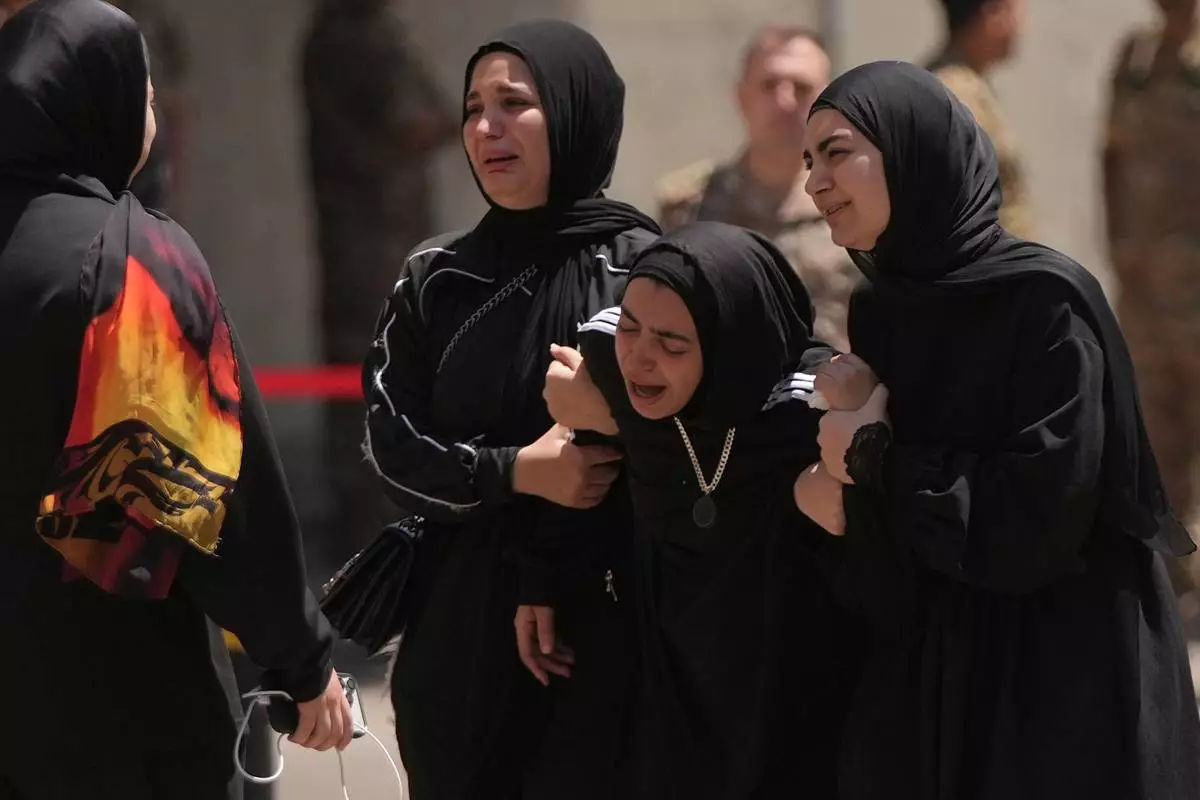
Relatives of the Lebanese soldier Hussein Nazzal, who was killed Saturday in south Lebanon along with a brigadier general and a captain in an Israeli airstrike, mourn during his funeral procession in Beirut, Sunday, June 7, 2026. (AP Photo/Hassan Ammar)
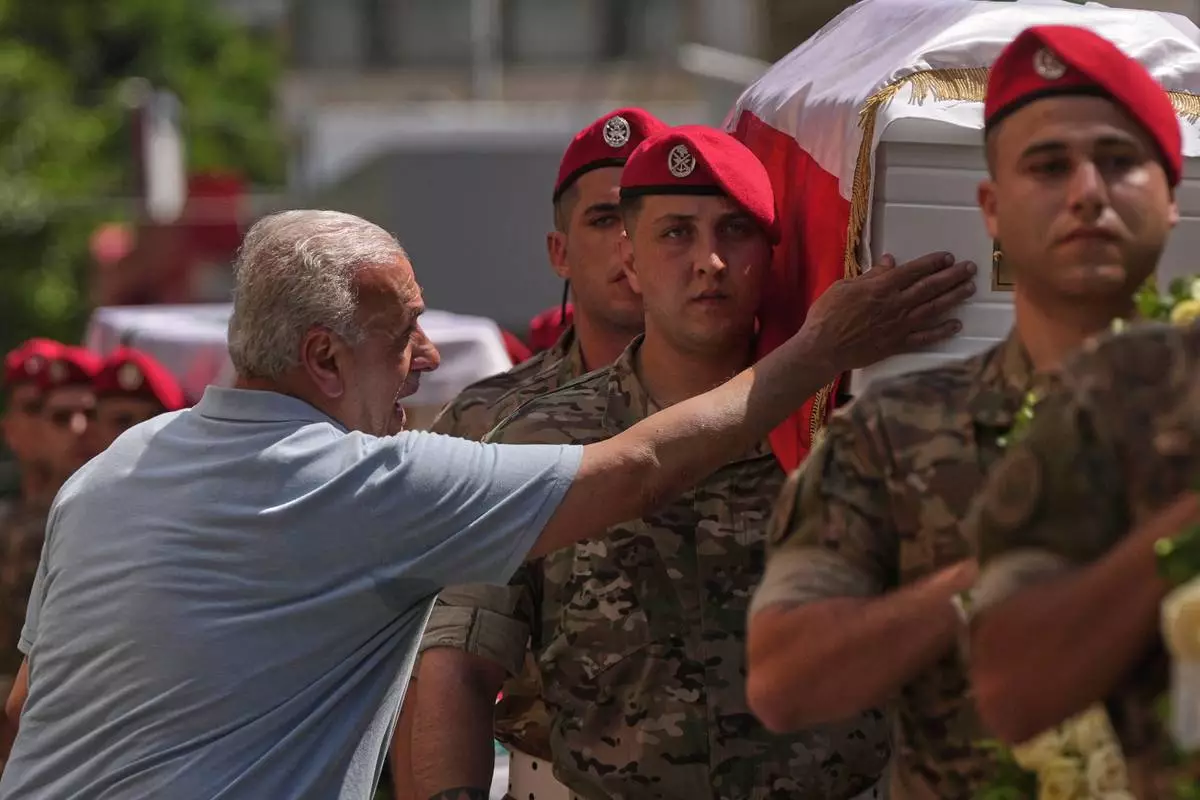
A mourner touches the coffin of the Lebanese army Brig. Gen. Wissam Sabra, who was killed Saturday in south Lebanon along with a captain and a soldier in an Israeli airstrike, during his funeral procession in Beirut, Sunday, June 7, 2026. (AP Photo/Hassan Ammar)
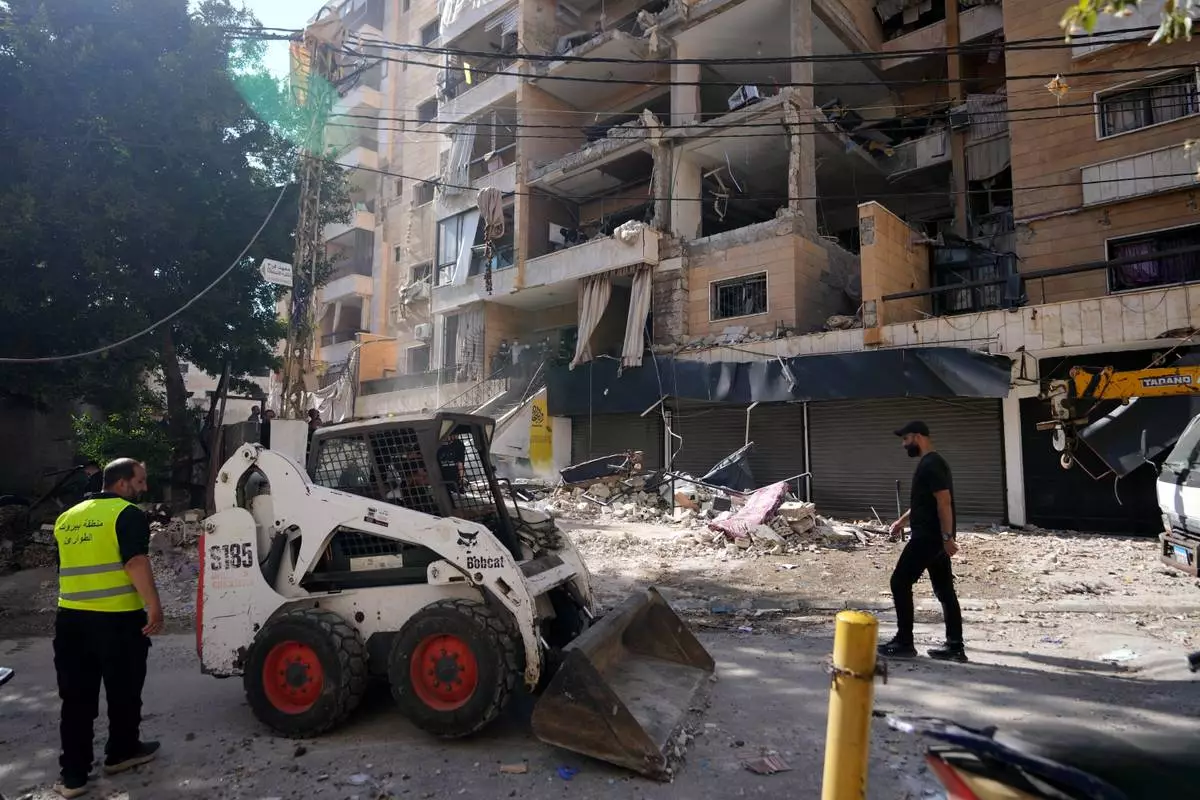
Municipality workers use a skid loader as they remove the rubble of destroyed apartments that where hit by an Israeli airstrike in Dahiyeh, Beirut's southern suburb, Lebanon, Sunday, June 7, 2026. (AP Photo/Hassan Ammar)
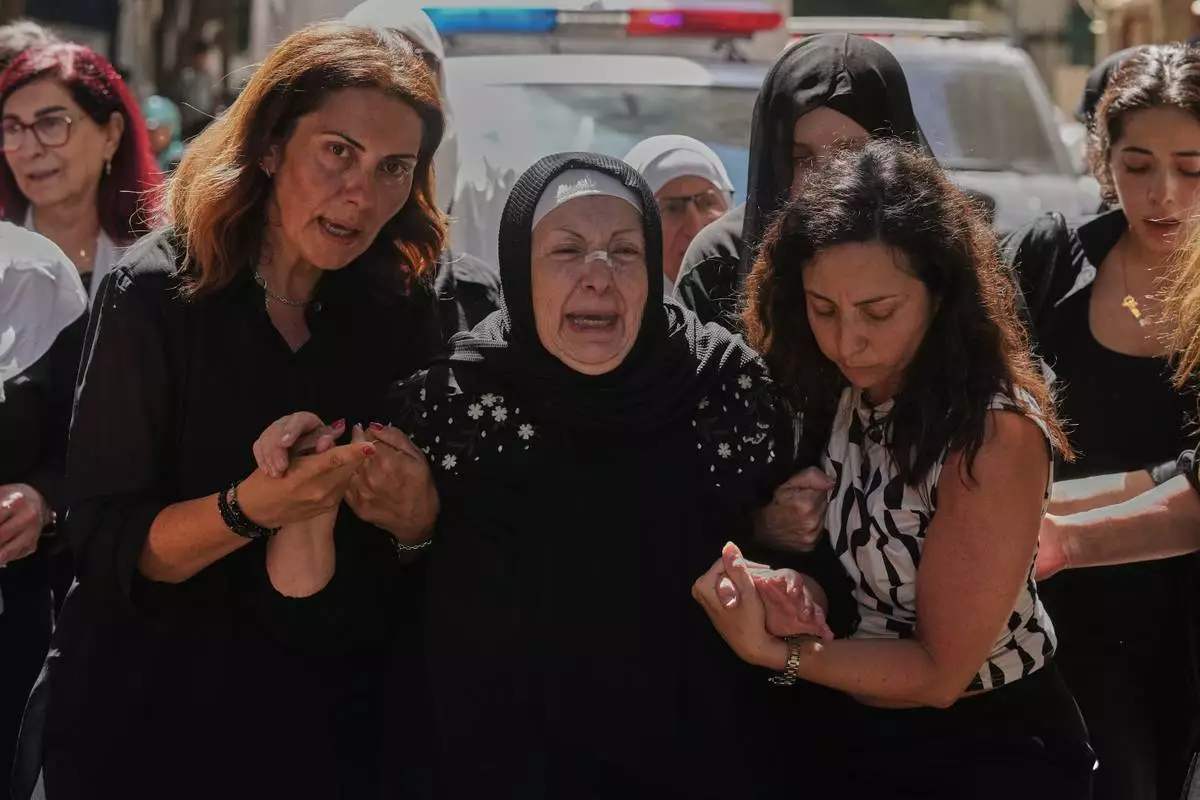
The mother, center, and the wife, left, of the Lebanese Brig. Gen. Wissam Sabra, who was killed Saturday in south Lebanon along with a captain and a soldier in an Israeli airstrike, mourn during his funeral procession in Beirut, Sunday, June 7, 2026. (AP Photo/Hassan Ammar)
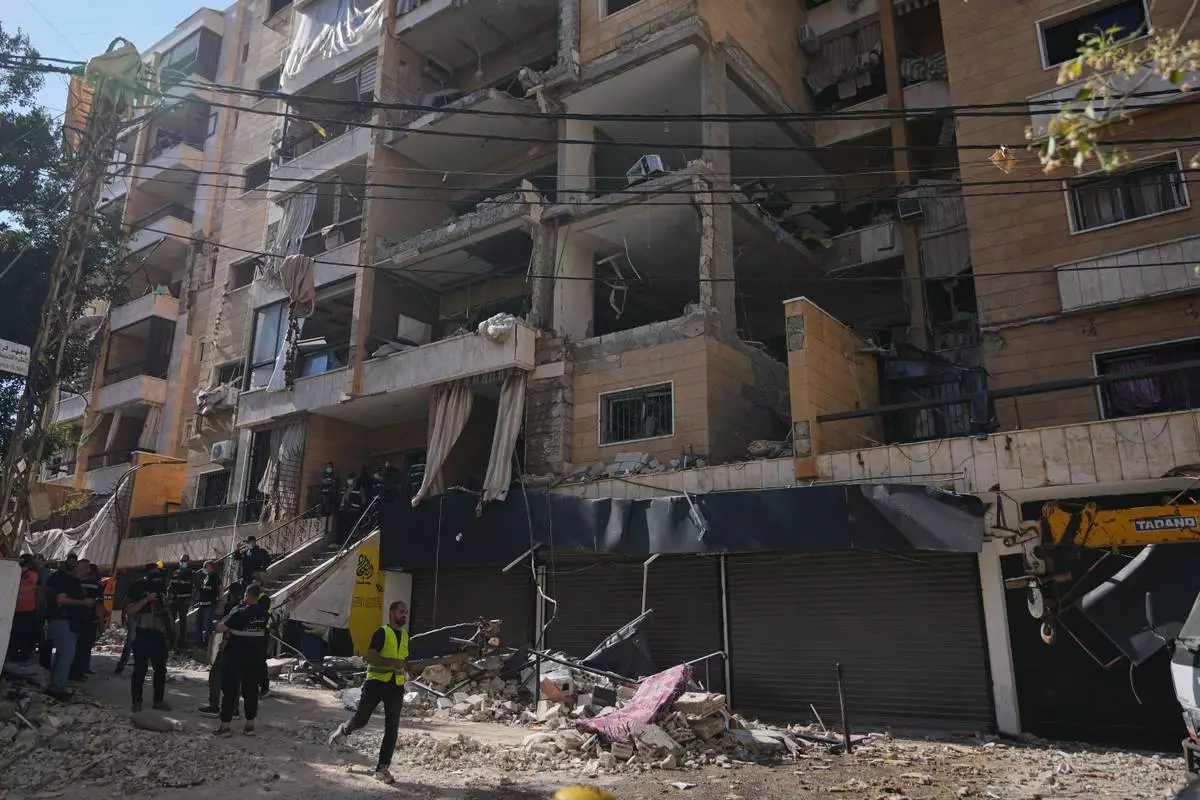
Lebanese security officers gather at the site where an Israeli airstrike hit a building in Dahiyeh, Beirut's southern suburb, Lebanon, Sunday, June 7, 2026. (AP Photo/Hassan Ammar)
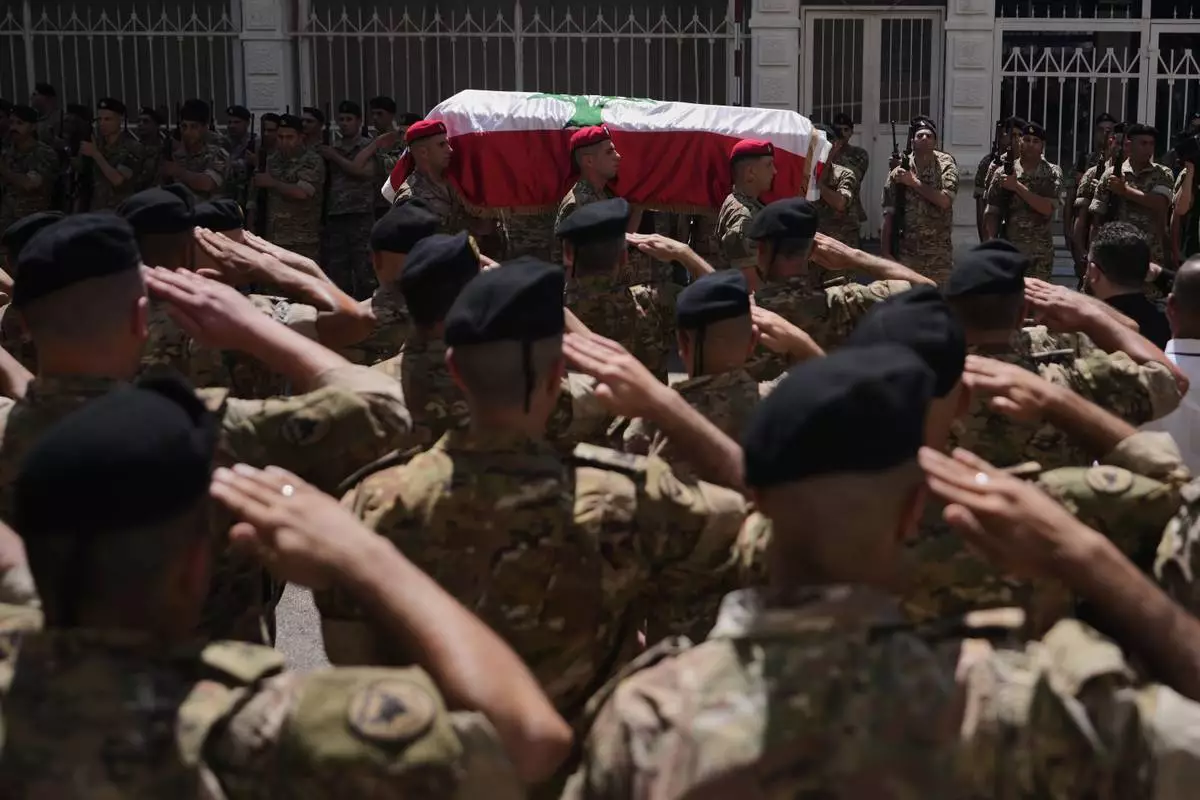
Lebanese army soldiers carry the coffin of Brig. Gen. Wissam Sabra, who was killed Saturday in south Lebanon along with a captain and a soldier in an Israeli airstrike, during his funeral procession in Beirut, Lebanon, Sunday, June 7, 2026. (AP Photo/Hassan Ammar)
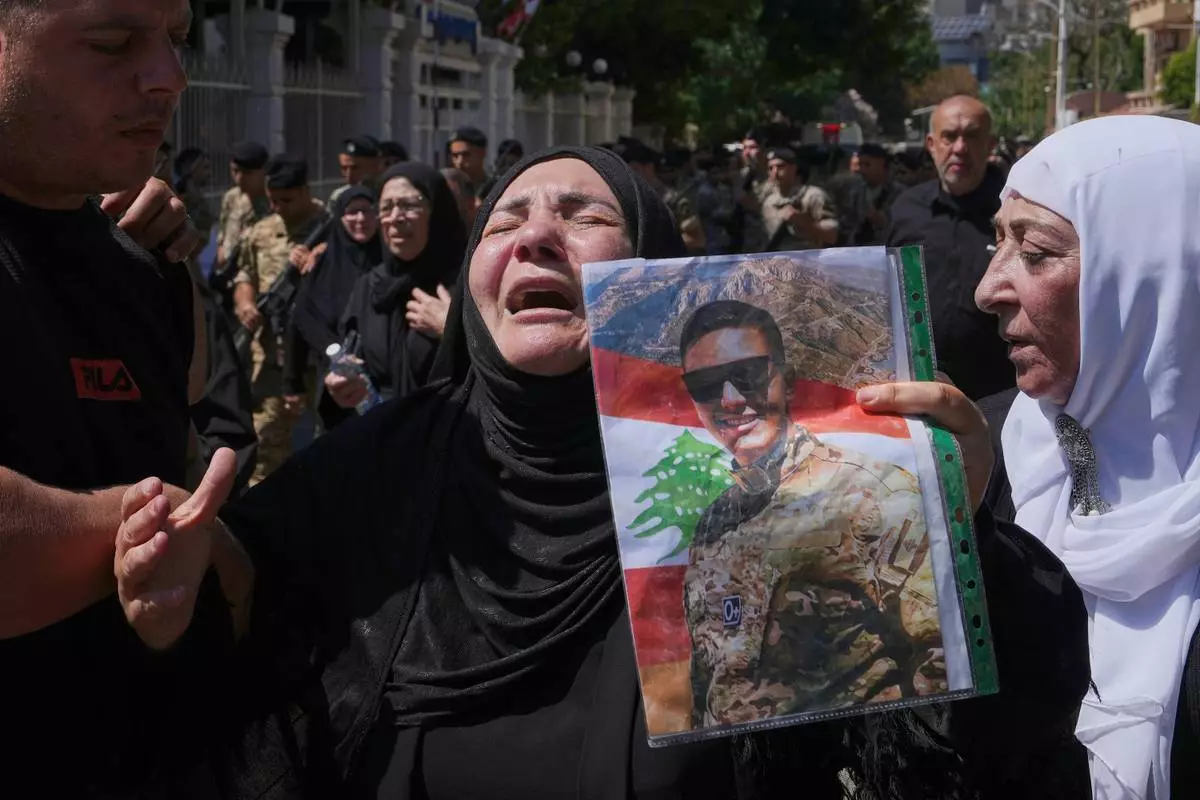
A relative of the Lebanese soldier Hassan Nazzal, who was killed Saturday in south Lebanon along with a brigadier general and a captain in an Israeli airstrike, mourns as she holds his portrait during his funeral procession in Beirut, Sunday, June 7, 2026. (AP Photo/Hassan Ammar)
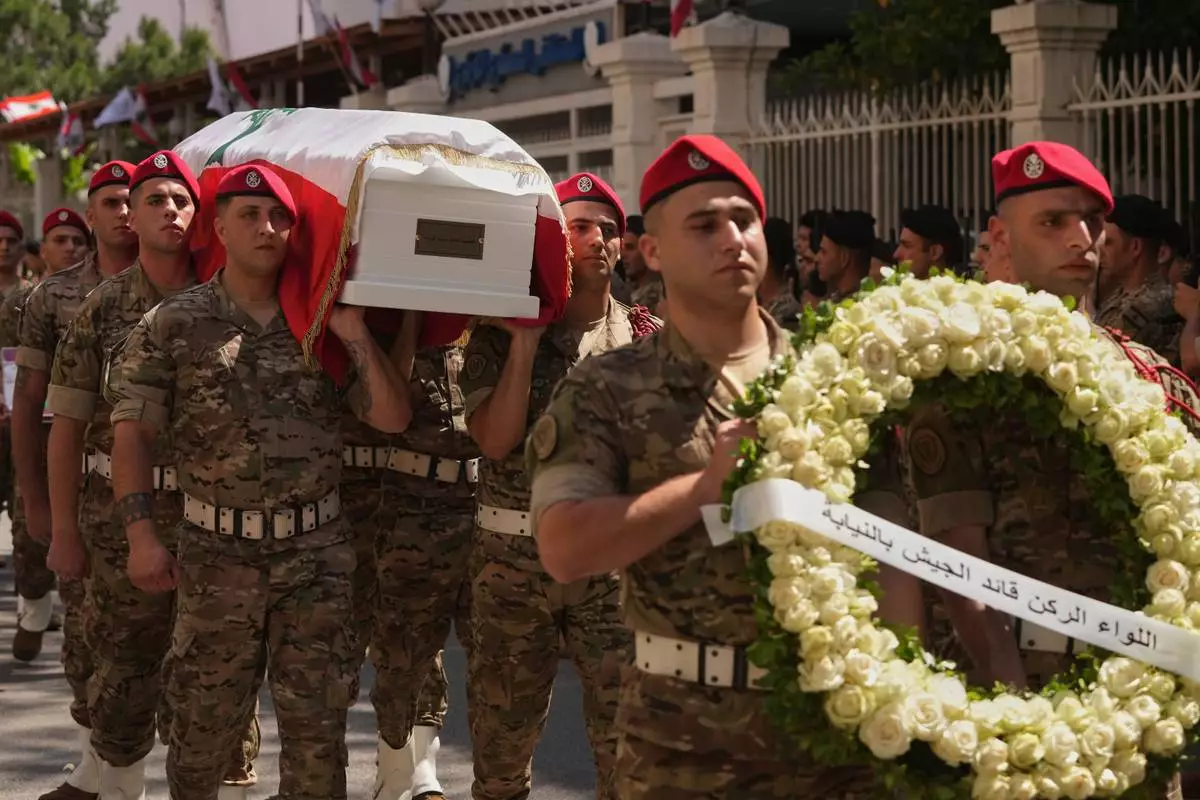
Army soldiers carry the coffin of Brig. Gen. Wissam Sabra, who was killed Saturday in south Lebanon along with a captain and a soldier in an Israeli airstrike, during his funeral procession in Beirut, Sunday, June 7, 2026. (AP Photo/Hassan Ammar)
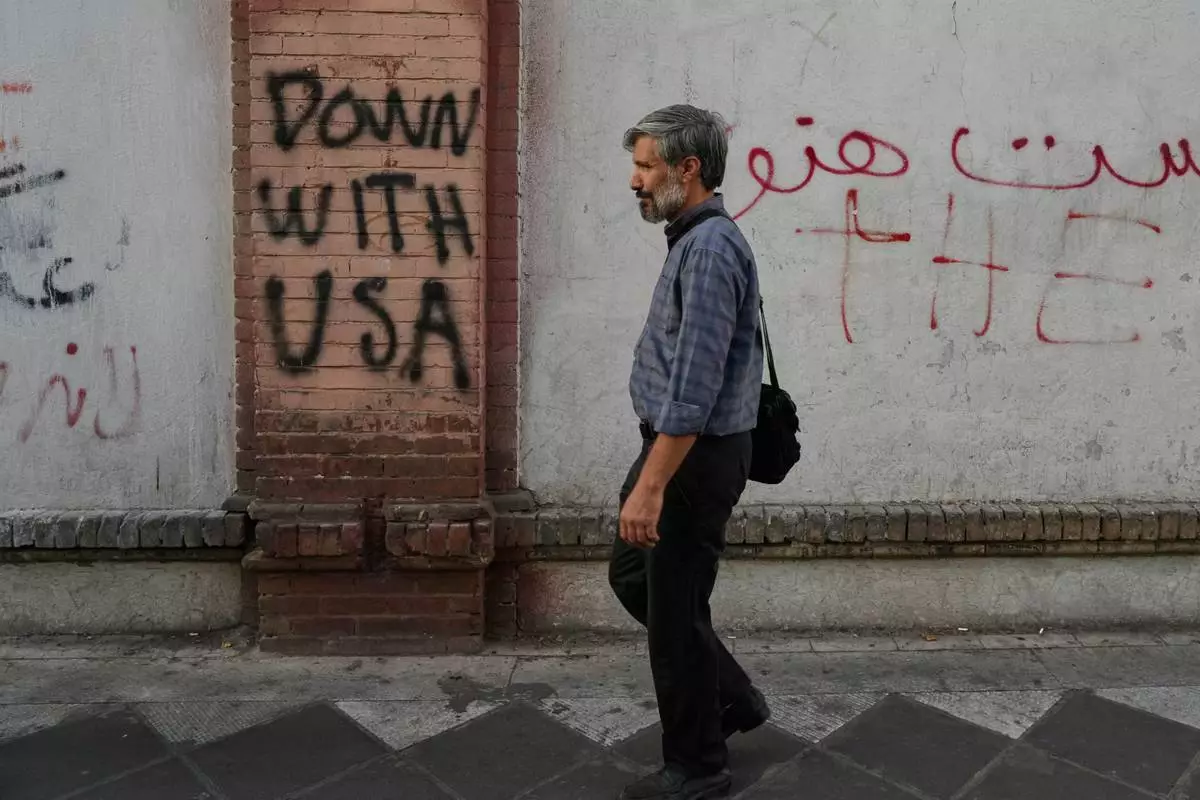
A man walks past anti-U.S. graffiti painted on the wall of the British Embassy in Tehran, Iran, Saturday, June 6, 2026. (AP Photo/Vahid Salemi)
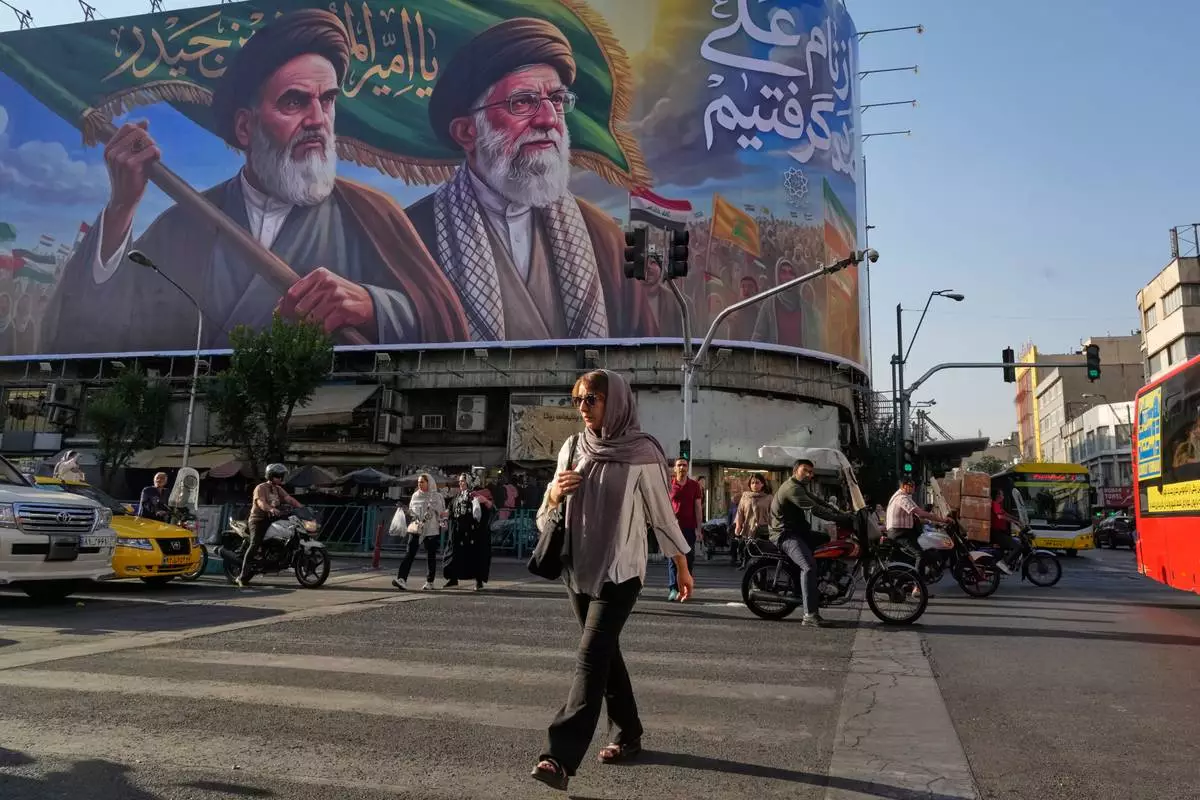
People walk under a banner showing portraits of the late revolutionary founder Ayatollah Khomeini, left, and the slain Supreme Leader Ayatollah Ali Khamenei, who was killed in U.S. and Israeli strikes on Feb. 28, in Tehran, Iran, Saturday, June 6, 2026. (AP Photo/Vahid Salemi)