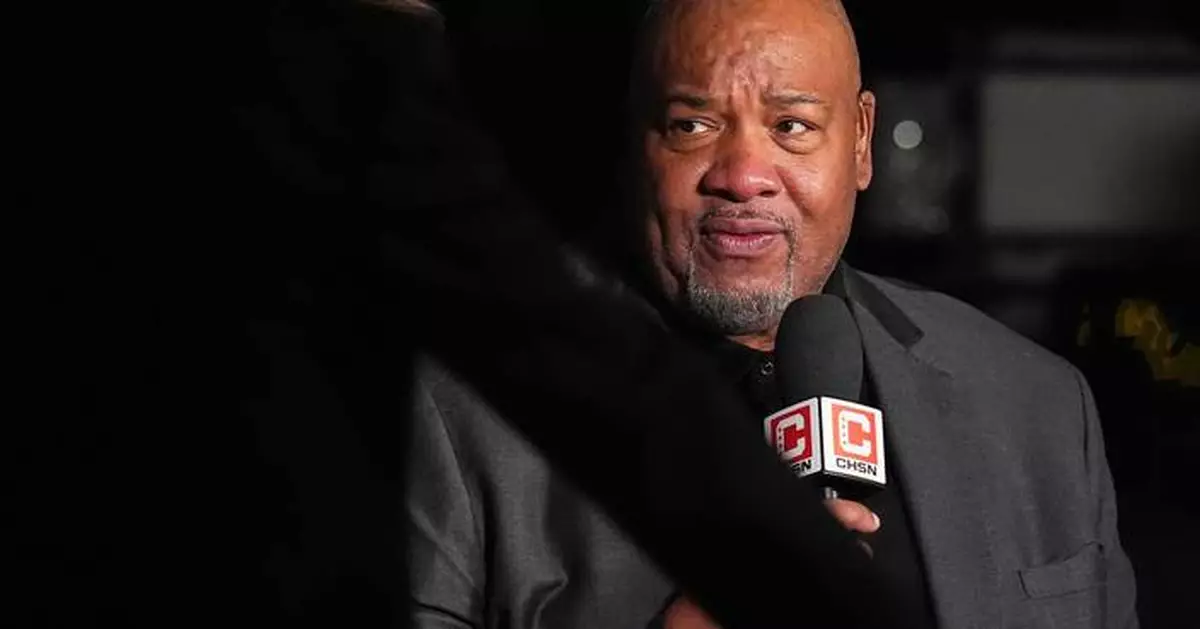
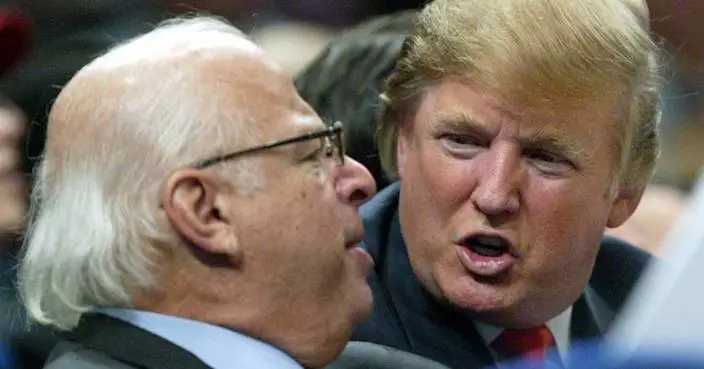
CHICAGO (AP) — Stacey King, who played on three consecutive NBA championship teams with the Chicago Bulls from 1991-93 before returning to the organization as an Emmy-winning, fan-favorite broadcaster, has died. He was 59.
The Bulls announced that King died Sunday and said they were notified by a family member. No other details were immediately available.
“Stacey King was a cherished member of the Bulls family and one of the truly unique personalities in our organization’s history,” Bulls chairman Jerry Reinsdorf said in a statement. “His connection to Chicago, the Bulls and our fans spanned more than three decades — first as a player and later as the unmistakable voice that helped bring Bulls basketball into the homes of generations of fans. We will miss him deeply and remember the joy, energy, humor, candor and passion he brought to our organization, our broadcasts and our fans every day. Our thoughts are with his family and loved ones.”
King began his NBA playing career with the Bulls, who selected the 6-foot-11 forward/center out of Oklahoma with the sixth overall pick in the 1989 draft. He averaged 6.6 points and 3.3 rebounds over his five seasons with the Bulls.
He played a total of eight seasons in the NBA during a career that also included stops in Minnesota, Miami, Boston and Dallas. King posted career averages of 6.4 points and 3.3 rebounds.
As a broadcaster, King endeared himself to a new generation of Bulls supporters. He spent more than two decades as a commentator on Bulls games.
“Stacey loved being a Bull,” Bulls president and CEO Michael Reinsdorf said in a statement. “You could feel it in everything he did — the way he played, the way he called games and the way he connected with our fans. He had a unique gift for bringing people together and making every game feel personal. He brought an energy and love for the game that came through in every broadcast, helping fans feel connected to our team. Whether it was through a broadcast, a conversation or a photo with a fan, Stacey made people feel seen and valued.
“We were fortunate to know him not only as a player and broadcaster, but as a friend. Stacey genuinely cared about people, and he made our organization better. We will miss him dearly, and his impact, memory and legacy will remain a part of the Chicago Bulls forever.”
Chicago Sports Network president and CEO Michael McCarthy called King “one of the most beloved figures in Chicago sports.”
“Stacey had a unique ability to connect generations of Bulls fans,” McCarthy said. “Whether through his basketball insight, his humor, or his unforgettable calls, he made every game more enjoyable and every broadcast better.”
King delighted fans with his memorable calls and nicknames. His enthusiasm was apparent every time the Bulls hit a big shot.
“We enjoy what we do,” King said last month on his “Gimme the Hot Sauce” podcast, a reference to a comment he'd frequently make after big plays. “It's a fun job. It never seems like work for me. Every night, I go to work, win, lose or draw, I'm having fun.”
AP NBA: https://apnews.com/hub/nba
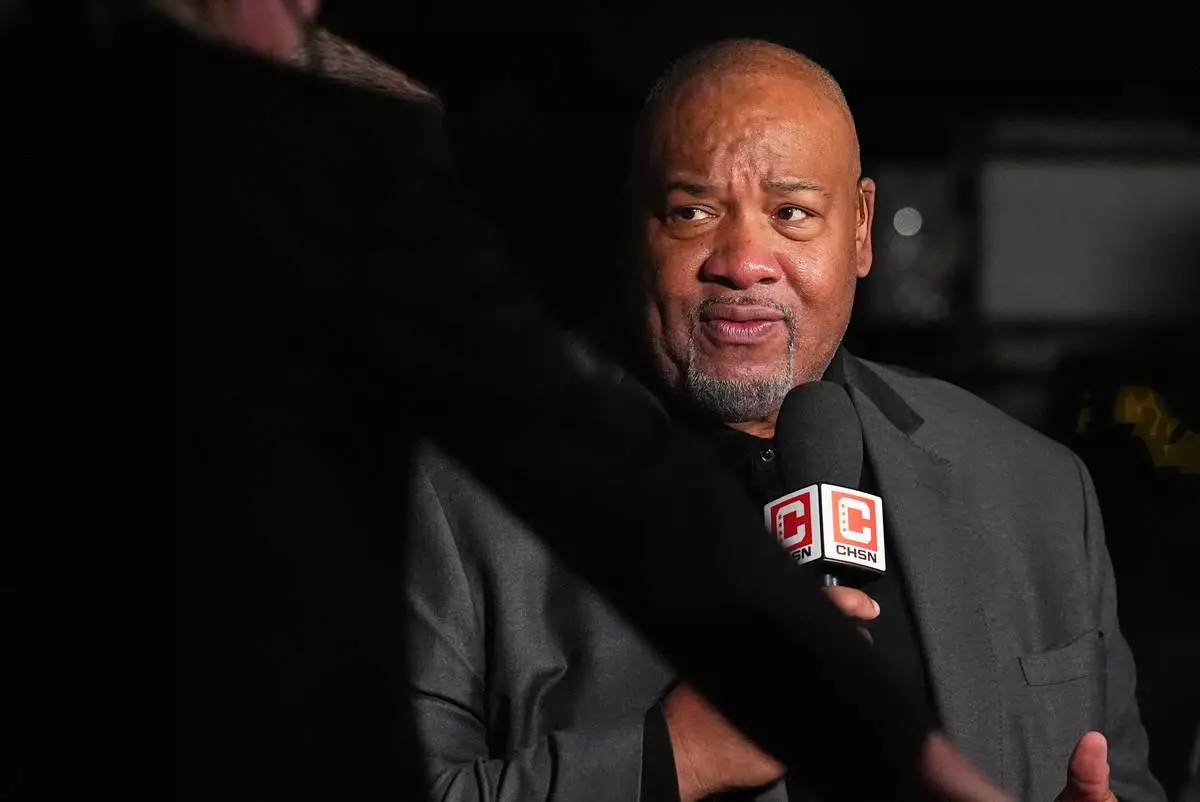
FILE - Chicago Bulls television announcer Stacey King attends the first half of an NBA basketball game, Nov. 17, 2025, in Denver. (AP Photo/David Zalubowski, File)
JERUSALEM (AP) — Iran launched missiles at Israel in the first such bombardment since a fragile ceasefire took effect in early April, raising the possibility of a return to heavy fighting and complicating mediation efforts to end the war.
Iran’s state broadcaster confirmed the launches, and Iran closed its western airspace to brace for a possible response. Tehran had warned of retaliation after Israel struck Beirut’s southern suburbs without warning earlier Sunday in defiance of Washington’s request days ago to stand down. Israel said the Iranian-backed Hezbollah fired at northern Israel earlier in the day.
"Should these acts of aggression be repeated, the responses will be broader in scope and will encompass all American and Zionist targets throughout the region,” Iran’s Revolutionary Guard said in a statement that referenced attacks in Lebanon and on Iran’s coast and vessels around the Strait of Hormuz.
Sirens sounded in several areas of Israel, sending millions running for shelter. Israel’s military said it intercepted the missiles, and multiple explosions were heard in the north. Less than an hour later, the military said people could leave areas reinforced against missile attacks.
“Iran has made a grave mistake,” Israel military spokesperson Brig. Gen. Effie Defrin said. The military's chief of staff, Lt. Gen. Eyal Zamir, said it will “strike the enemy with determination as soon as the order is given.”
But Israel’s public broadcaster, Kan, said U.S. President Donald Trump told it that he doesn’t think Israel needs to respond further. And Trump told the Financial Times: “I call all the shots. He (Netanyahu) doesn’t call the shots.”
Iran had warned that an attack on Beirut would renew full-scale war across the Mideast, even as Pakistan and other mediators try to restart talks between Tehran and Washington.
“U.S. forces across the Middle East remain vigilant and ready,” the U.S. Central Command posted on X shortly before the missile launches. The U.S. Embassy in Israel later directed employees and family members to shelter in place.
Israel’s attack on Beirut came a few days after the Lebanese and Israeli governments agreed to a ceasefire in U.S.-hosted talks, though Hezbollah rejected the deal. The strike on a residential building killed two people and wounded 20, Lebanon’s health ministry said.
“The army will continue to act in all of Lebanon," the Israel military spokesperson said.
Israel’s strikes and ground invasion in Lebanon in pursuit of Hezbollah, and the militant group’s resistance to disarming, have complicated an overall deal to end the war in the Middle East.
Iran says any deal must include an end to fighting in Lebanon.
Trump told a Fox News Channel reporter that he wanted the Iranians to stop firing missiles and return to the negotiating table. He also said that Israel’s strikes earlier Sunday were not coordinated with the U.S. and “I’m not happy about it.”
Israel on Monday had announced it would strike the southern suburbs of Lebanon’s capital, but urgent talks via Washington halted that on the condition that Hezbollah stop targeting Israeli border towns.
Hezbollah, which claimed responsibility for firing at Israel earlier Sunday, wants the direct talks between Lebanon and Israel to end. Instead, it supports Iran’s stance that an overall ceasefire deal between Tehran and Washington include the situation in Lebanon.
Israeli Prime Minister Benjamin Netanyahu, who seeks reelection later this year, is under heavy domestic pressure to respond to both Iran and the Hezbollah threat, which has paralyzed life for thousands of residents along Israel’s northern border.
But Trump has made clear he does not want to see the war resume.
Trump said earlier Sunday in an interview with NBC’s “Meet the Press” that he would like to see a “more surgical attack on Hezbollah.” He also said he was “not demanding” that Lebanon be part of an overall ceasefire deal in the Iran war.
Iran continues to assert its grip on the Strait of Hormuz and the U.S. continues its blockade of Iranian ports, with shipments of oil, natural gas and fertilizer affected and the global economy in pain.
Iran since the ceasefire took effect has launched missiles and drones at Gulf nations and said it was targeting the U.S. military presence. After its launches against Israel, Iraq’s Civil Aviation Authority announced that the country’s airspace would close for 72 hours and Syria’s aviation authority announced a 12-hour airspace closure.
All flights from Tehran’s main international airport were suspended, the civil aviation authority said, according to the official Mizan news agency.
Pakistan’s interior minister, Mohsin Naqvi, was in Tehran on Sunday delivering a message to Iranian Supreme Leader Ayatollah Mojtaba Khamenei from Pakistan’s army chief Field Marshal Asim Munir, according to Iran’s state-run IRNA news agency. There were no details on the message's contents.
Khamenei has not been seen in public since he was named the Islamic Republic’s ruler after his father was killed on Feb. 28 as Israeli and U.S. strikes sparked the war.
Pakistani authorities have said Islamabad, with support from regional countries including Qatar, Turkey and Egypt, is working to help bridge differences.
In Cairo, the Egyptian and Qatari foreign ministers discussed “proposed elements” of a potential agreement between the U.S. and Iran, the Egyptian foreign ministry said, without details.
And after Iran's missile launches at Israel, Iranian Foreign Minister Abbas Araghchi spoke with counterparts in France, Qatar, Saudi Arabia, Britain, Egypt and Turkey as well as Pakistan’s army chief, Iran's state TV said.
Chehayeb reported from Beirut, Magdy from Cairo, Lidman from Tel Aviv, Israel, and Anna from Lowville, New York. Associated Press writers Hassan Ammar in Lebanon, Munir Ahmed in Islamabad, Matthew Lee in Washington, Abby Sewell in Beirut, and Michelle L. Price in Bridgewater, New Jersey, contributed to this report.
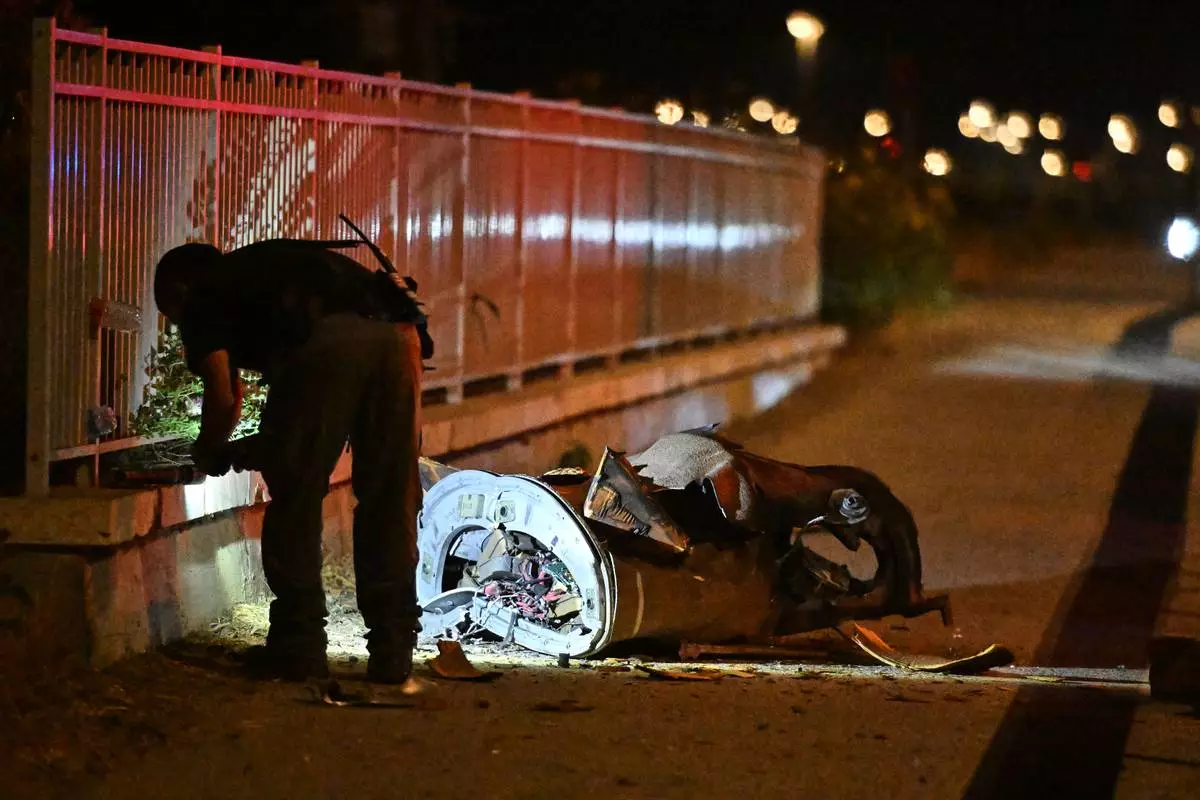
Israeli security forces examine a fragment of an intercepted Iranian missile in northern Israel, early Monday, June 8, 2026. (AP Photo/Rami Shlush)
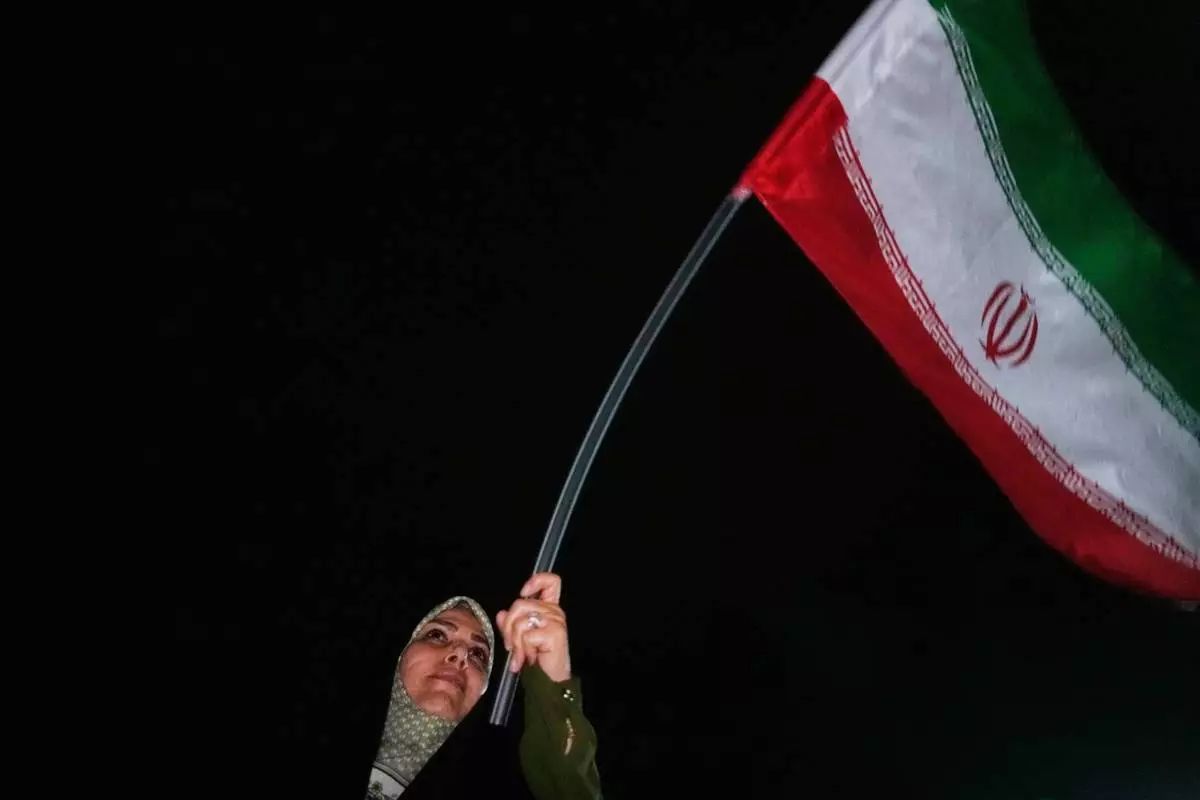
A demonstrator waves an Iranian flag in a pro-government gathering in Tehran, Iran, Sunday, June 7, 2026. (AP Photo/Vahid Salemi)
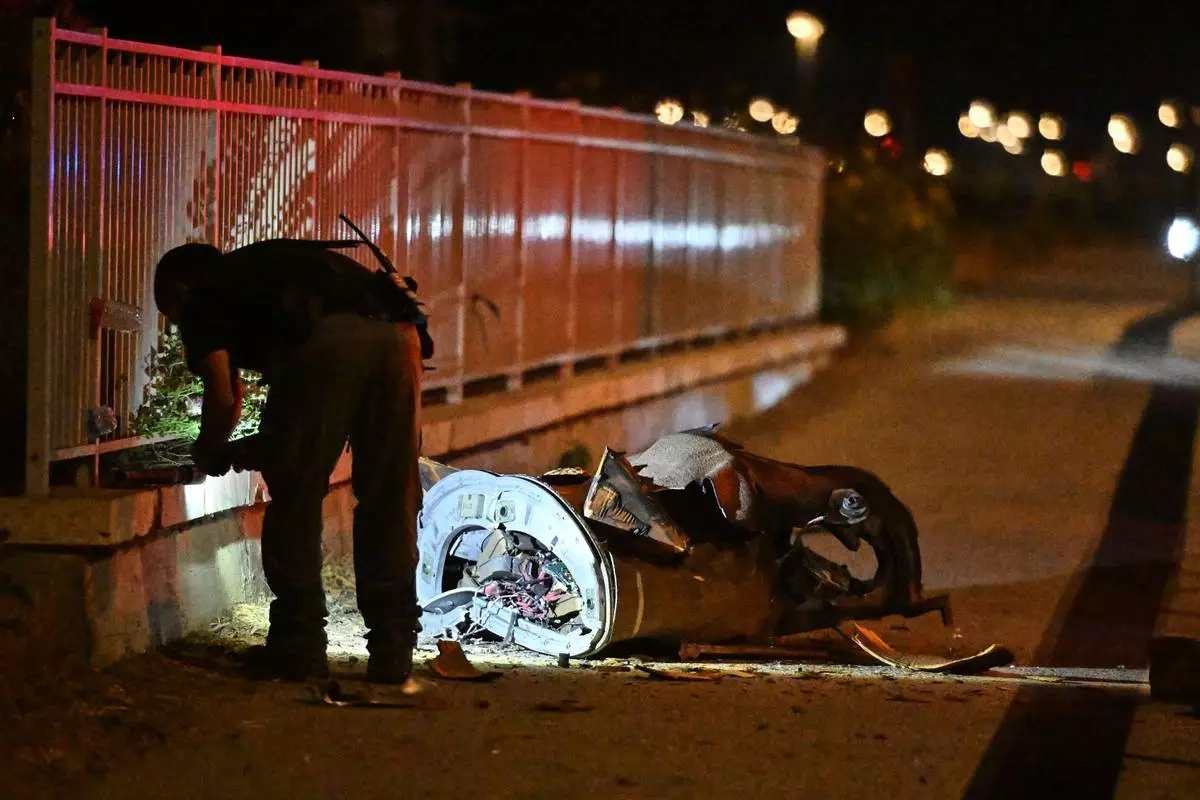
Israeli security forces examine a fragment of an intercepted Iranian missile in northern Israel, early Monday, June 8, 2026. (AP Photo/Rami Shlush)
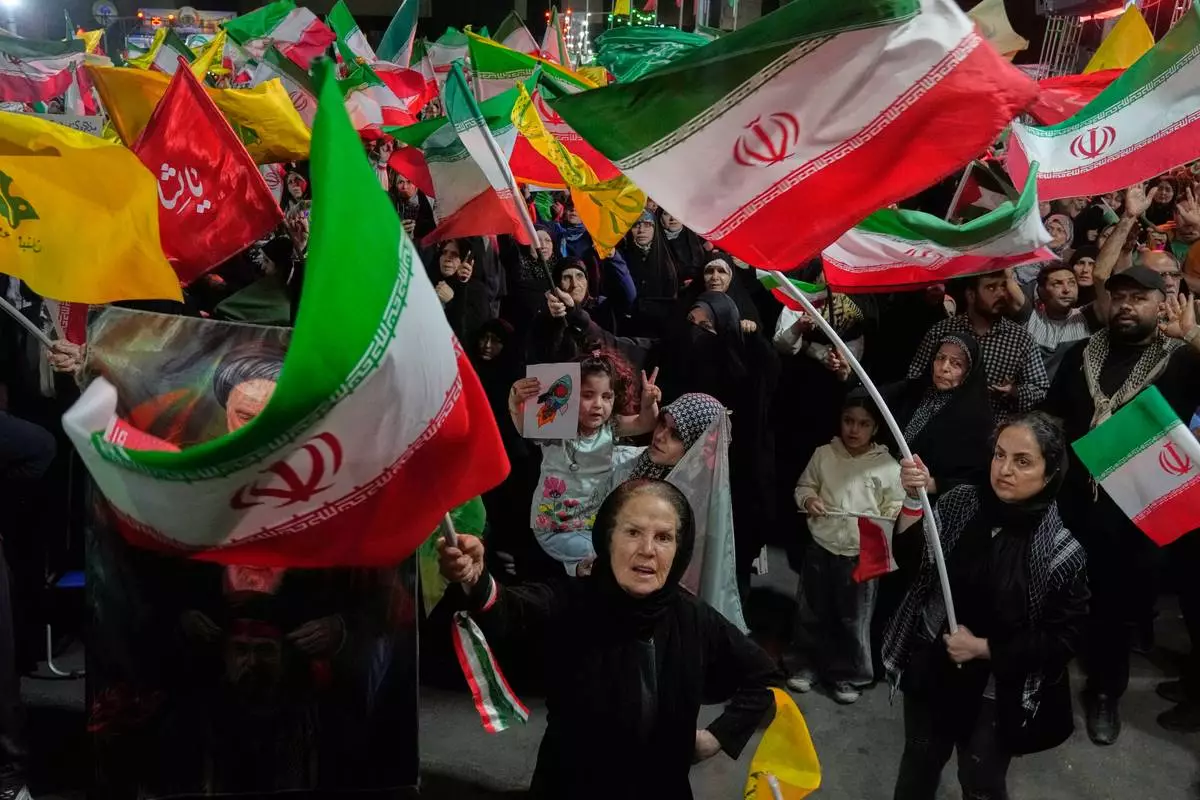
Pro-government Iranian demonstrators wave flags from Iran and Lebanon's Hezbollah in Tehran, Iran, Sunday, June 7, 2026. (AP Photo/Vahid Salemi)
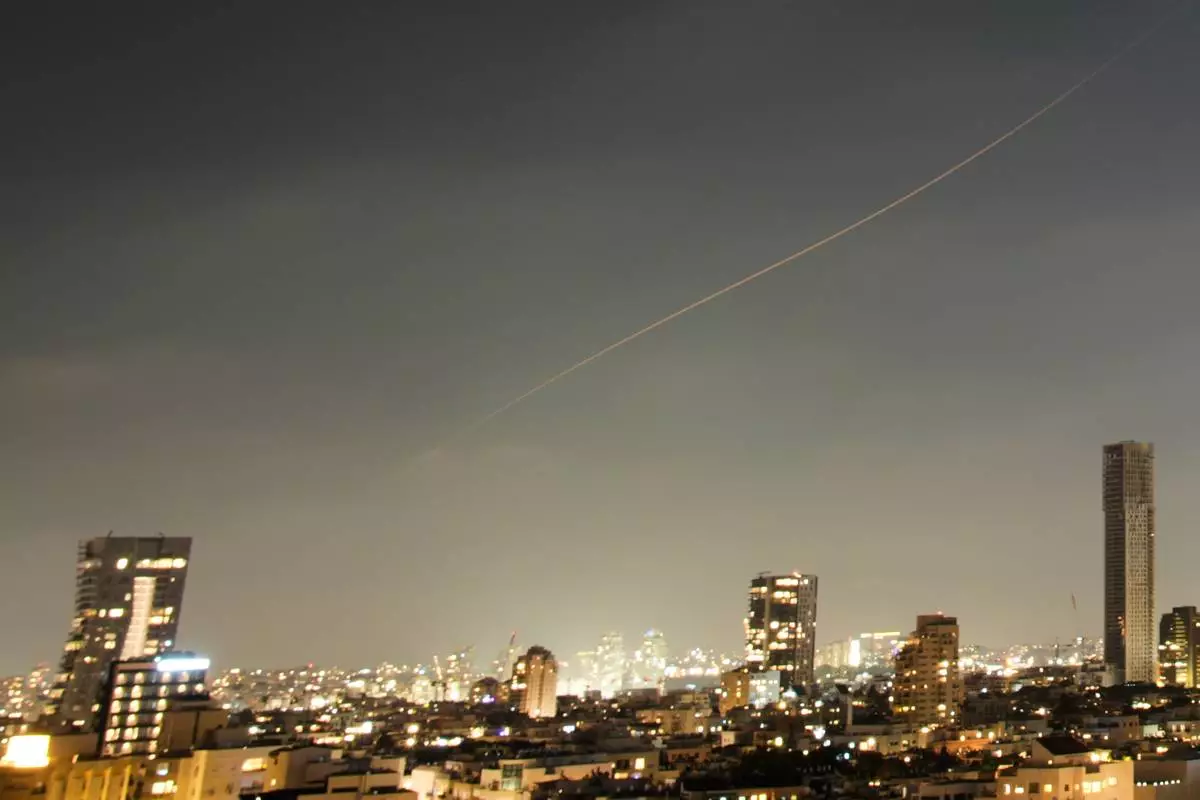
A projectile streaks through the sky over central Israel during an Iranian missile attack, Sunday, June 7, 2026. (AP Photo/Ohad Zwigenberg)
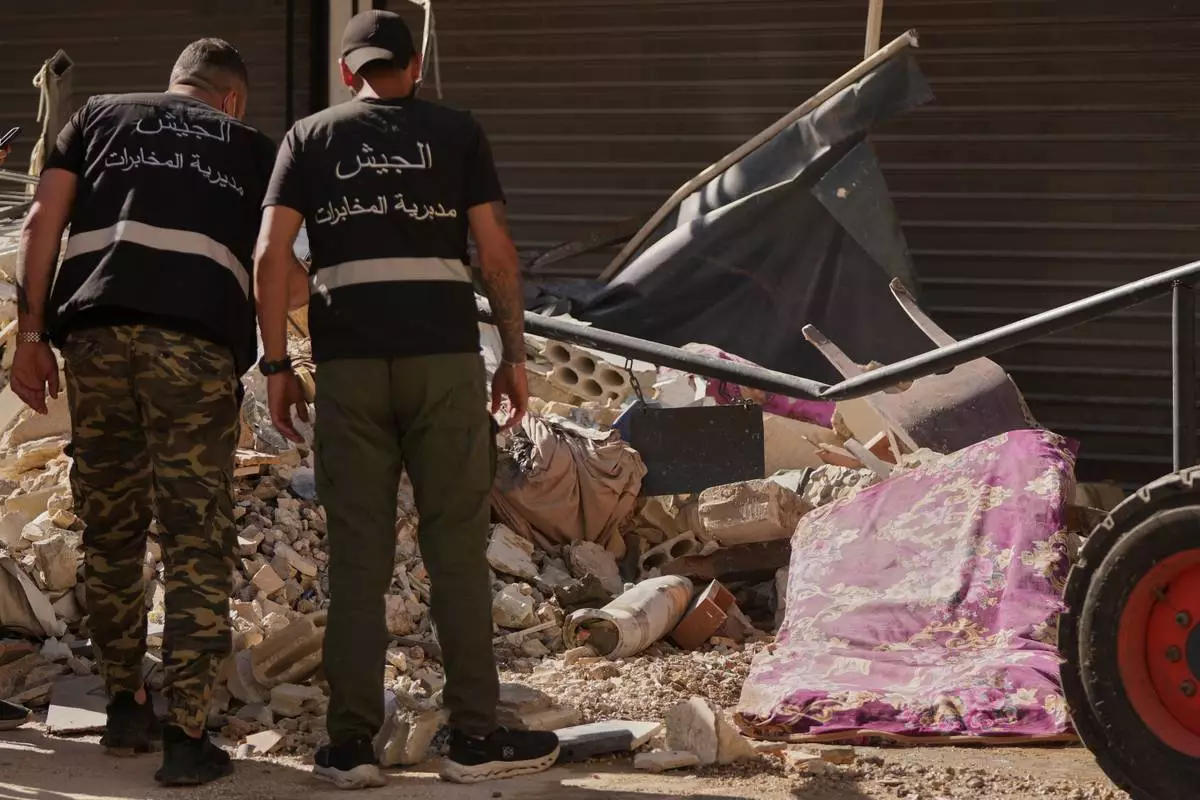
Lebanese intelligence officers look at an unexploded missile, centre, at the site where an Israeli airstrike hit a building in Dahiyeh, Beirut's southern suburb, Lebanon, Sunday, June 7, 2026. (AP Photo/Hassan Ammar)
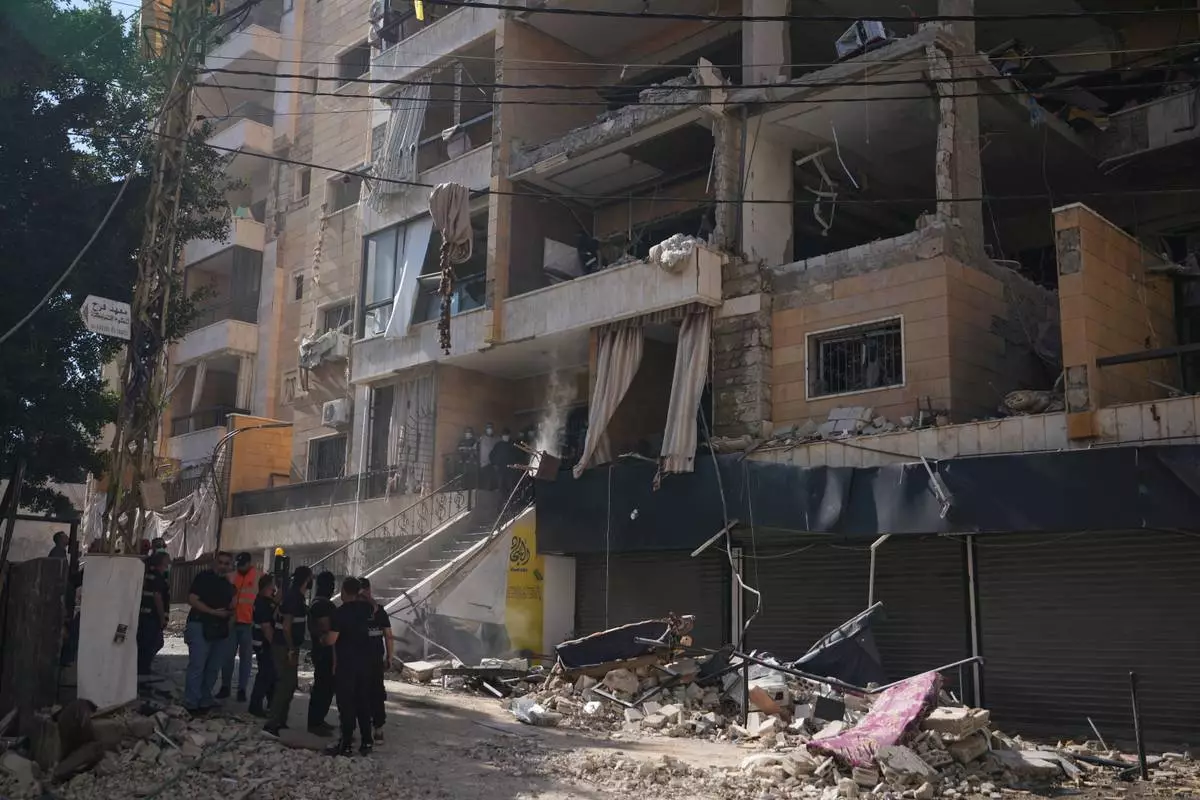
Lebanese security officers gather at the site where an Israeli airstrike hit a building in Dahiyeh, Beirut's southern suburb, Lebanon, Sunday, June 7, 2026. (AP Photo/Hassan Ammar)
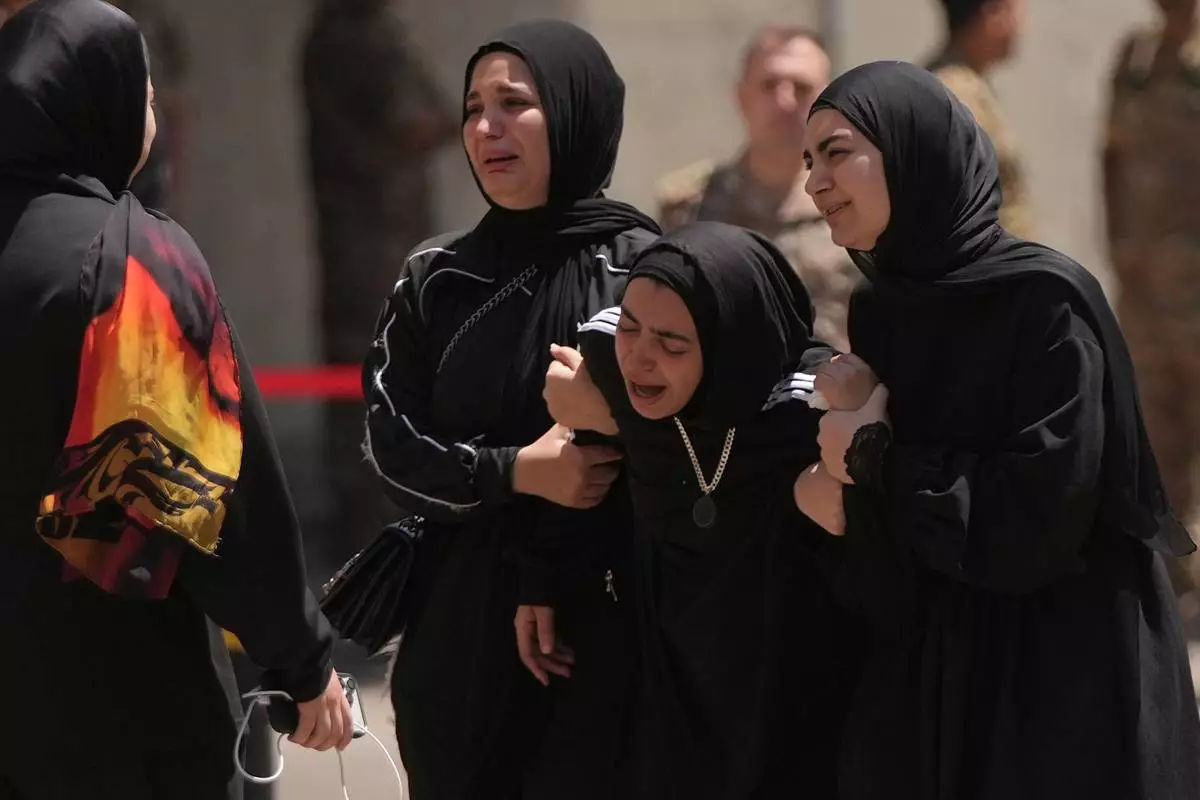
Relatives of the Lebanese soldier Hussein Nazzal, who was killed Saturday in south Lebanon along with a brigadier general and a captain in an Israeli airstrike, mourn during his funeral procession in Beirut, Sunday, June 7, 2026. (AP Photo/Hassan Ammar)
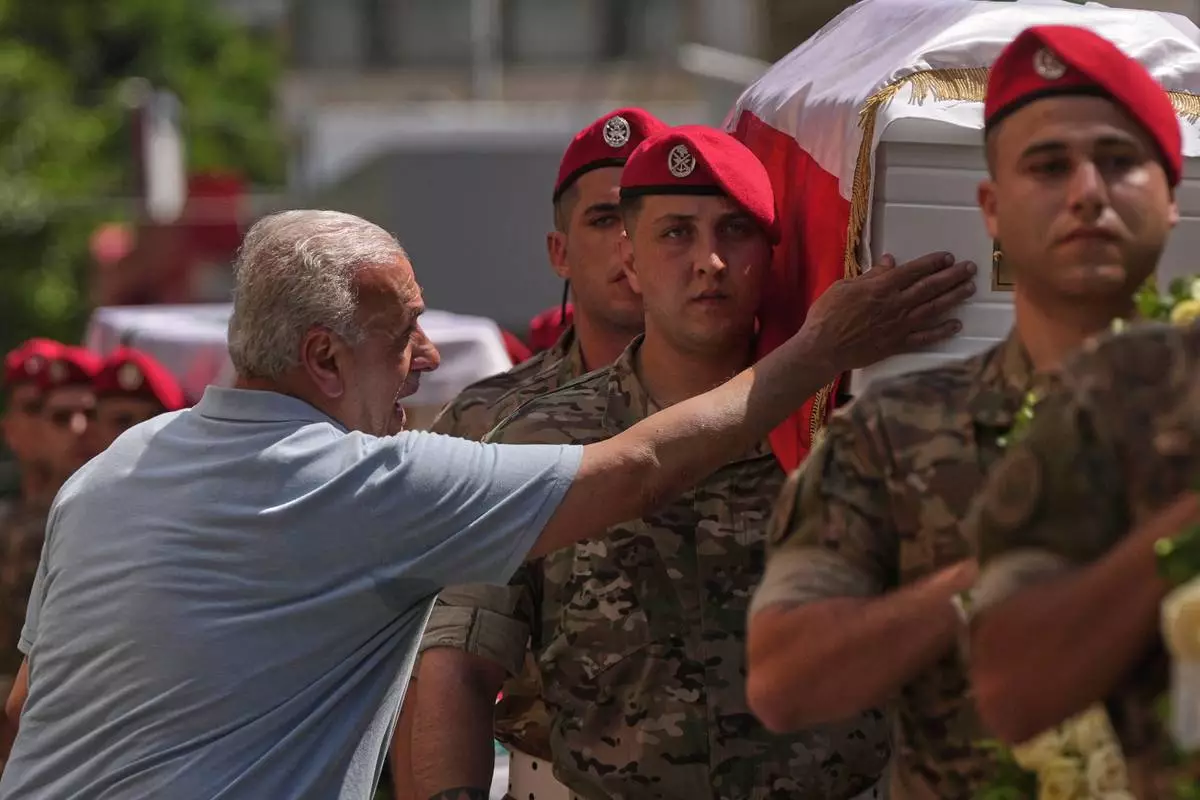
A mourner touches the coffin of the Lebanese army Brig. Gen. Wissam Sabra, who was killed Saturday in south Lebanon along with a captain and a soldier in an Israeli airstrike, during his funeral procession in Beirut, Sunday, June 7, 2026. (AP Photo/Hassan Ammar)
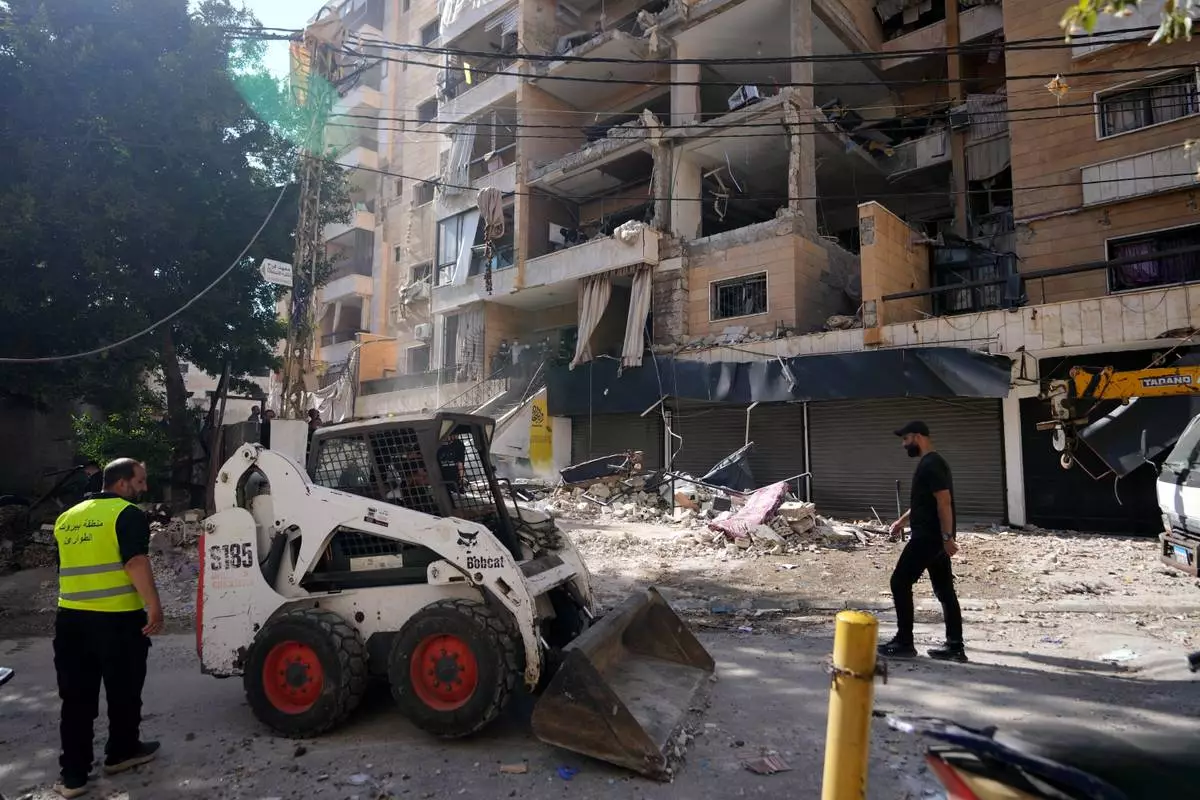
Municipality workers use a skid loader as they remove the rubble of destroyed apartments that where hit by an Israeli airstrike in Dahiyeh, Beirut's southern suburb, Lebanon, Sunday, June 7, 2026. (AP Photo/Hassan Ammar)
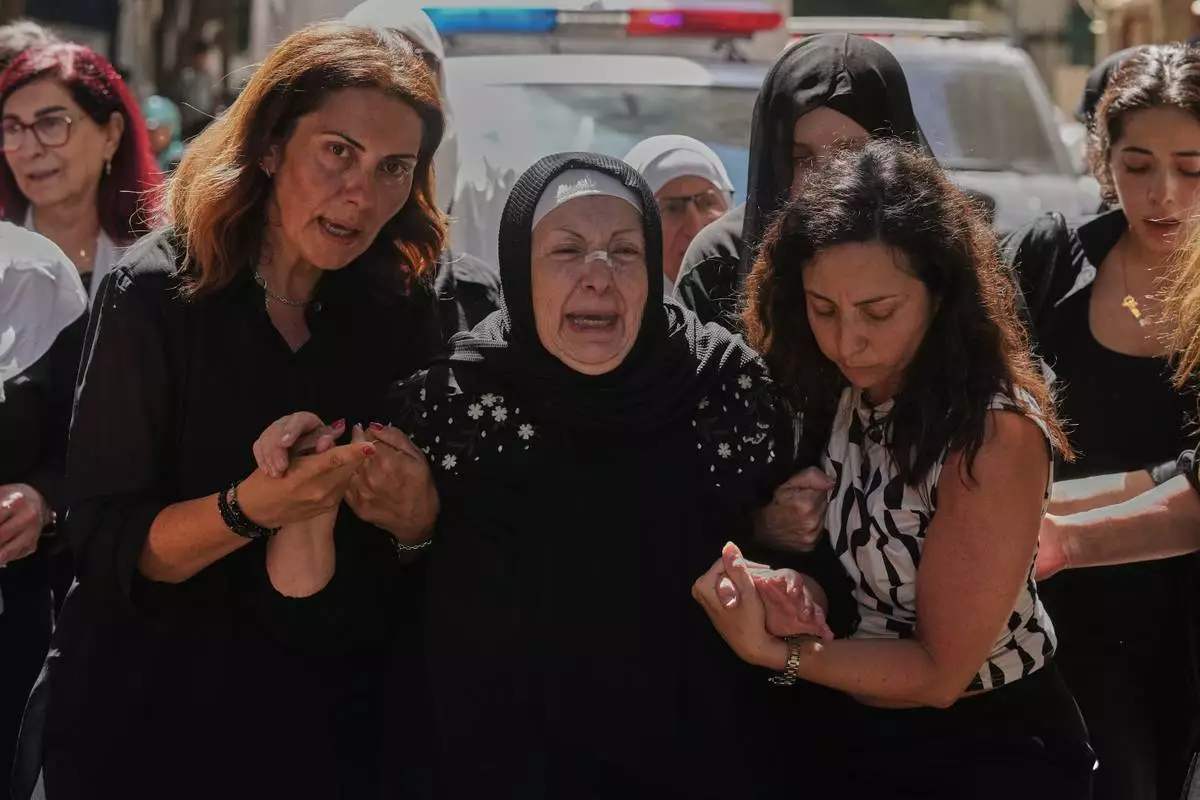
The mother, center, and the wife, left, of the Lebanese Brig. Gen. Wissam Sabra, who was killed Saturday in south Lebanon along with a captain and a soldier in an Israeli airstrike, mourn during his funeral procession in Beirut, Sunday, June 7, 2026. (AP Photo/Hassan Ammar)
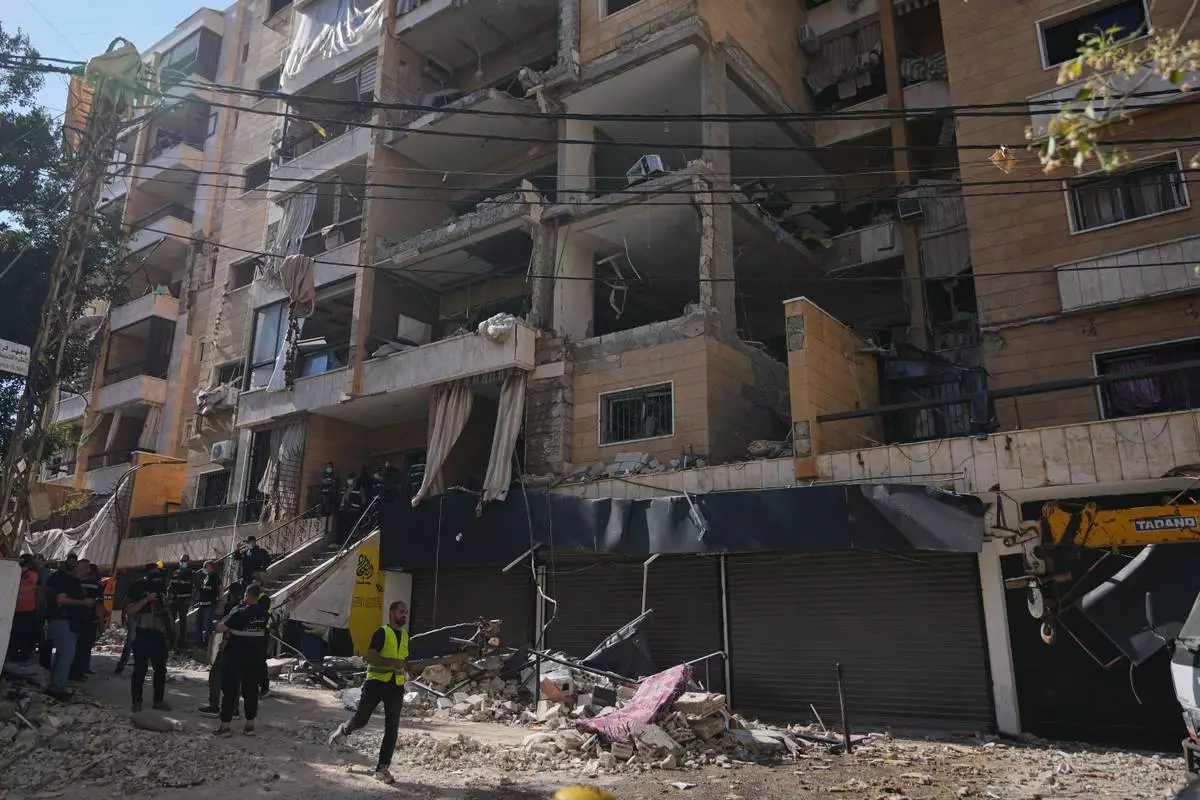
Lebanese security officers gather at the site where an Israeli airstrike hit a building in Dahiyeh, Beirut's southern suburb, Lebanon, Sunday, June 7, 2026. (AP Photo/Hassan Ammar)
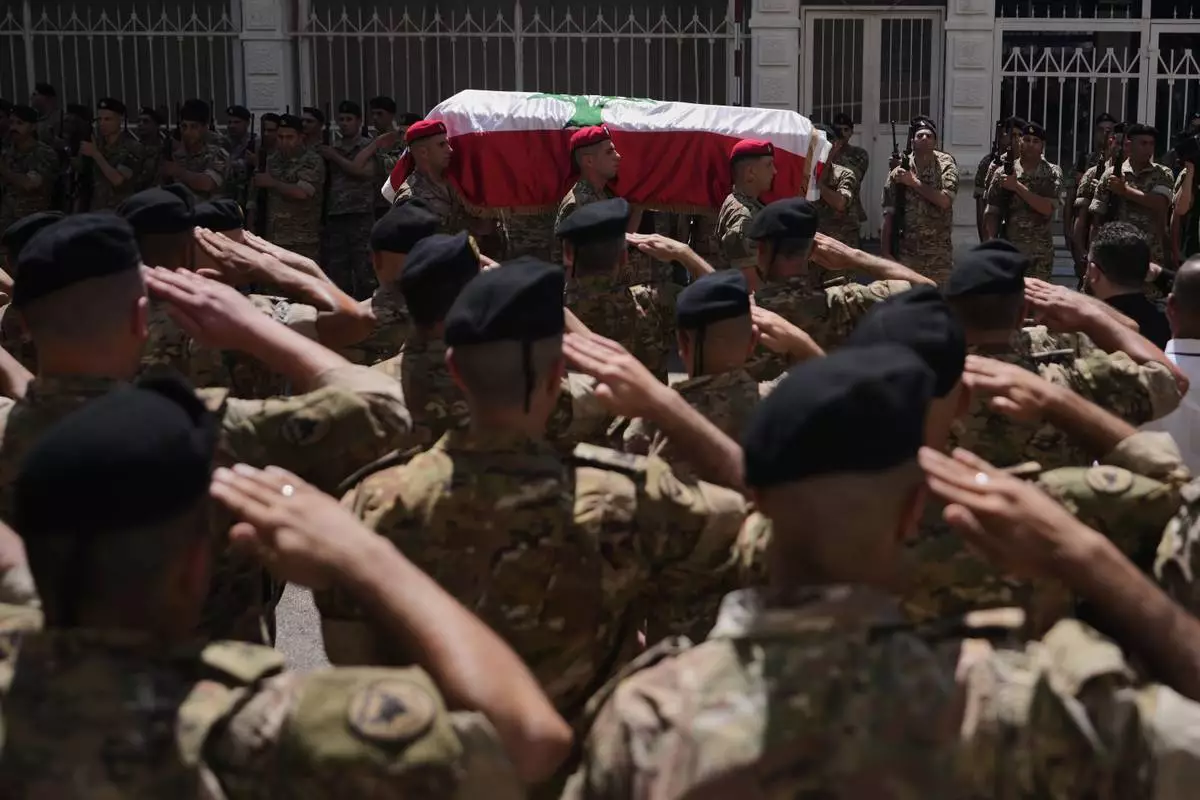
Lebanese army soldiers carry the coffin of Brig. Gen. Wissam Sabra, who was killed Saturday in south Lebanon along with a captain and a soldier in an Israeli airstrike, during his funeral procession in Beirut, Lebanon, Sunday, June 7, 2026. (AP Photo/Hassan Ammar)
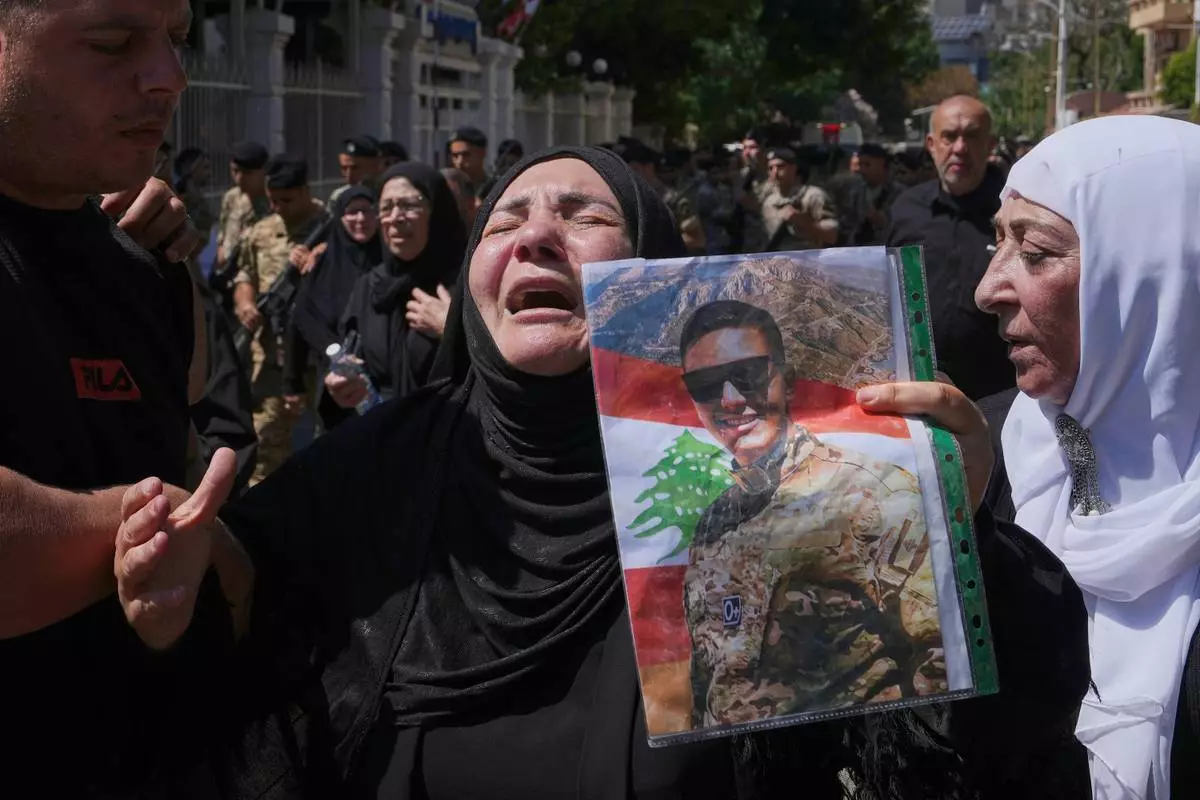
A relative of the Lebanese soldier Hassan Nazzal, who was killed Saturday in south Lebanon along with a brigadier general and a captain in an Israeli airstrike, mourns as she holds his portrait during his funeral procession in Beirut, Sunday, June 7, 2026. (AP Photo/Hassan Ammar)
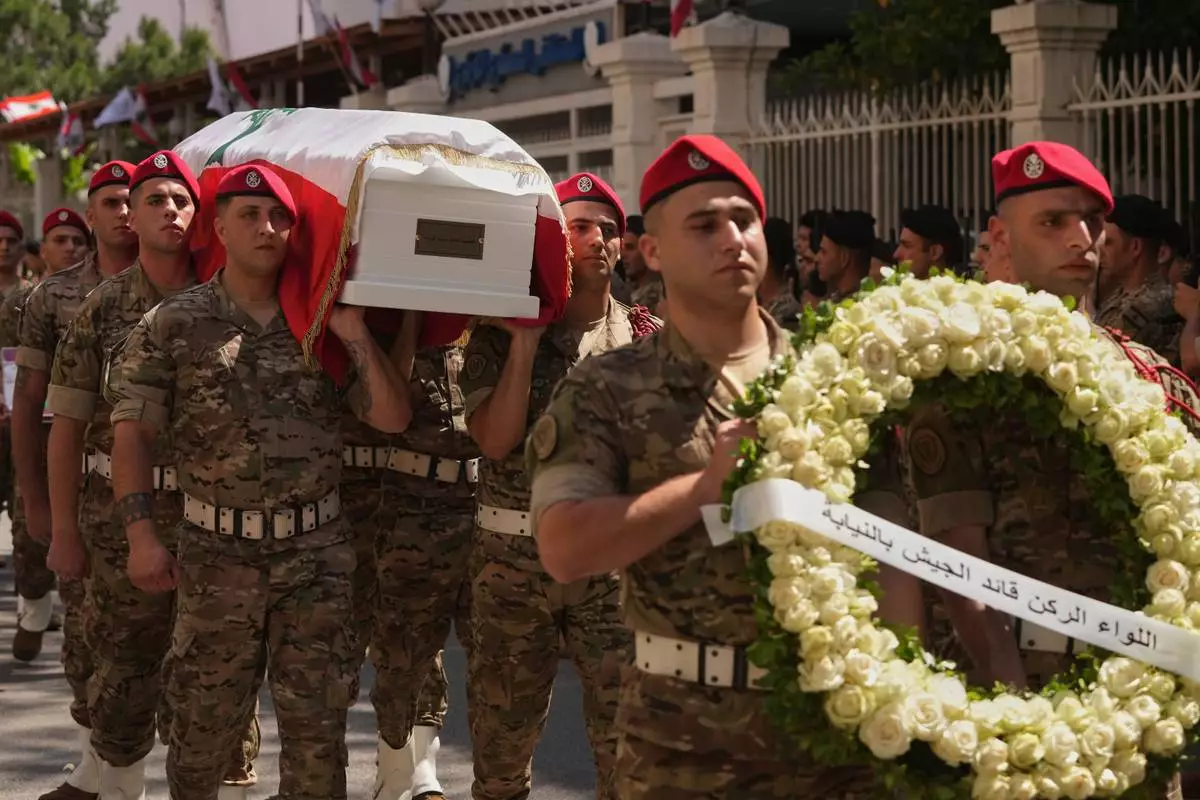
Army soldiers carry the coffin of Brig. Gen. Wissam Sabra, who was killed Saturday in south Lebanon along with a captain and a soldier in an Israeli airstrike, during his funeral procession in Beirut, Sunday, June 7, 2026. (AP Photo/Hassan Ammar)
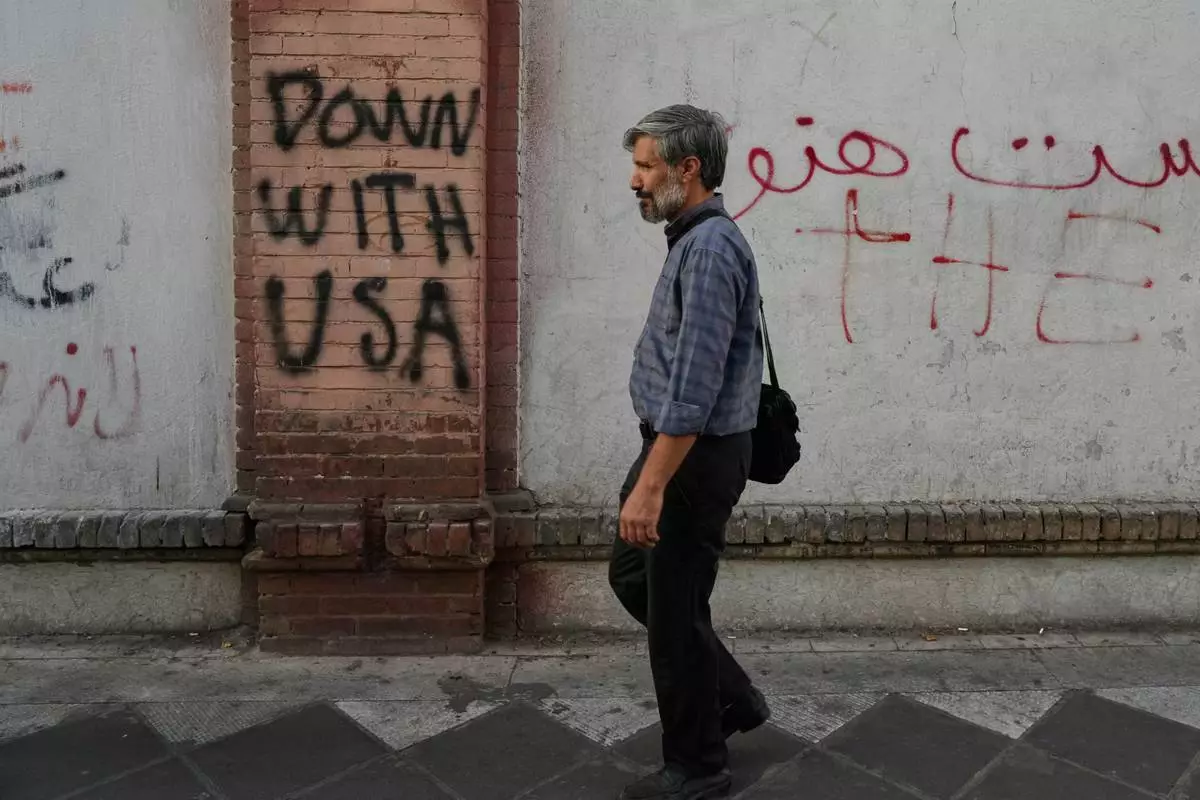
A man walks past anti-U.S. graffiti painted on the wall of the British Embassy in Tehran, Iran, Saturday, June 6, 2026. (AP Photo/Vahid Salemi)
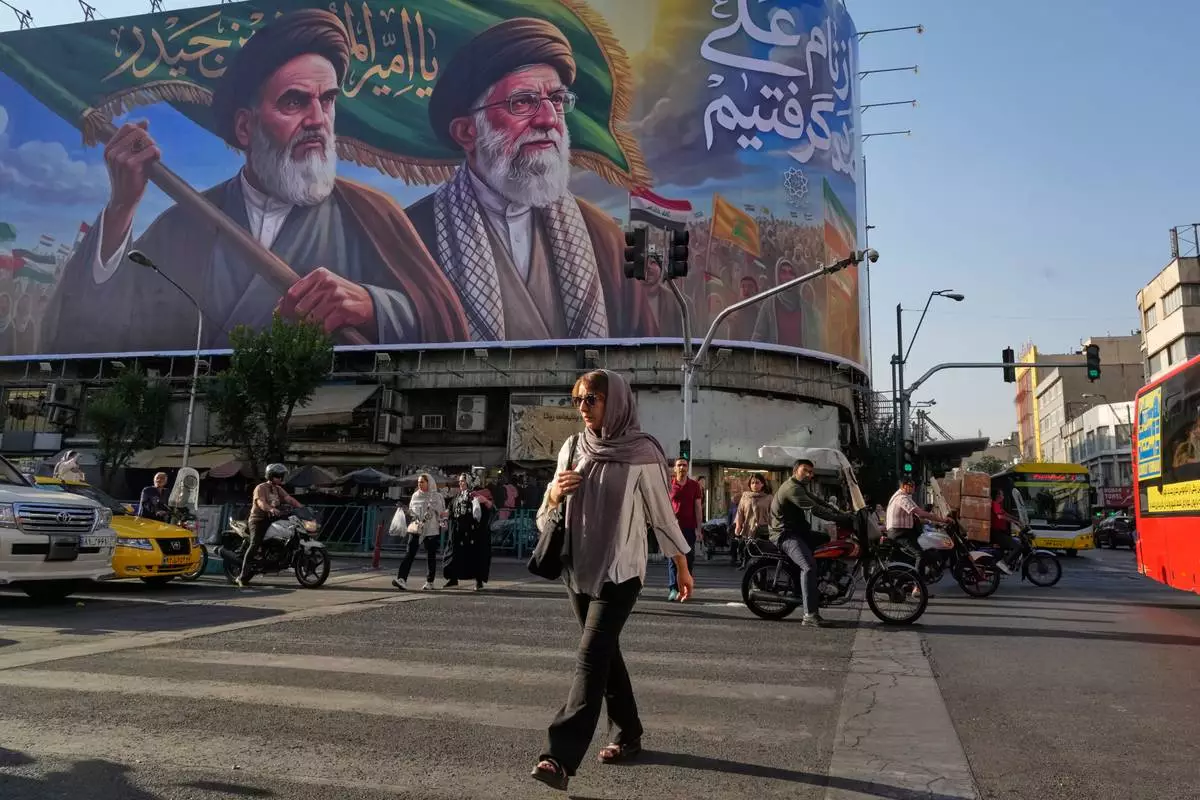
People walk under a banner showing portraits of the late revolutionary founder Ayatollah Khomeini, left, and the slain Supreme Leader Ayatollah Ali Khamenei, who was killed in U.S. and Israeli strikes on Feb. 28, in Tehran, Iran, Saturday, June 6, 2026. (AP Photo/Vahid Salemi)