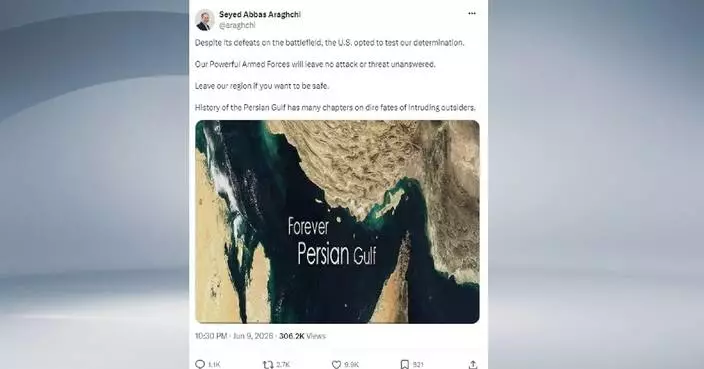
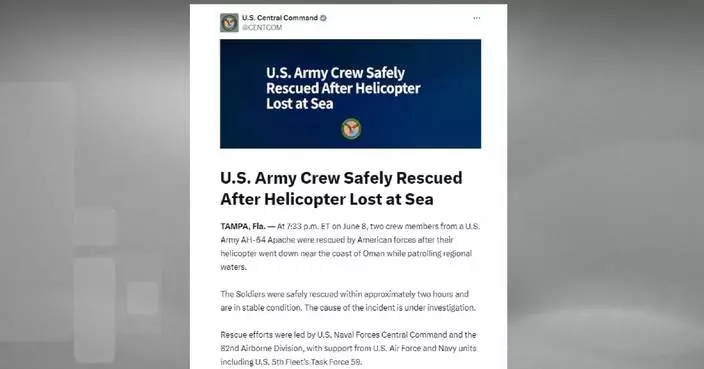
U.S. forces completed "self-defense strikes" against Iran in response to the downing of a U.S. Army Apache helicopter on Monday, the U.S. Central Command (CENTCOM) said Tuesday.
In a post on social media platform X, CENTCOM said that it "struck Iranian air defense, ground control stations, and surveillance radar sites near the Strait of Hormuz with precision munitions from U.S. Air Force and Navy fighter jets."
In an earlier post on X, CENTCOM said the strikes started at 17:00 U.S. Eastern Time (2100 GMT) at U.S. President Donald Trump's direction.
Trump said on Tuesday that it was "important" for the U.S. to respond to Iran's downing of the U.S. helicopter, and that the strikes "should be very strong, very powerful."
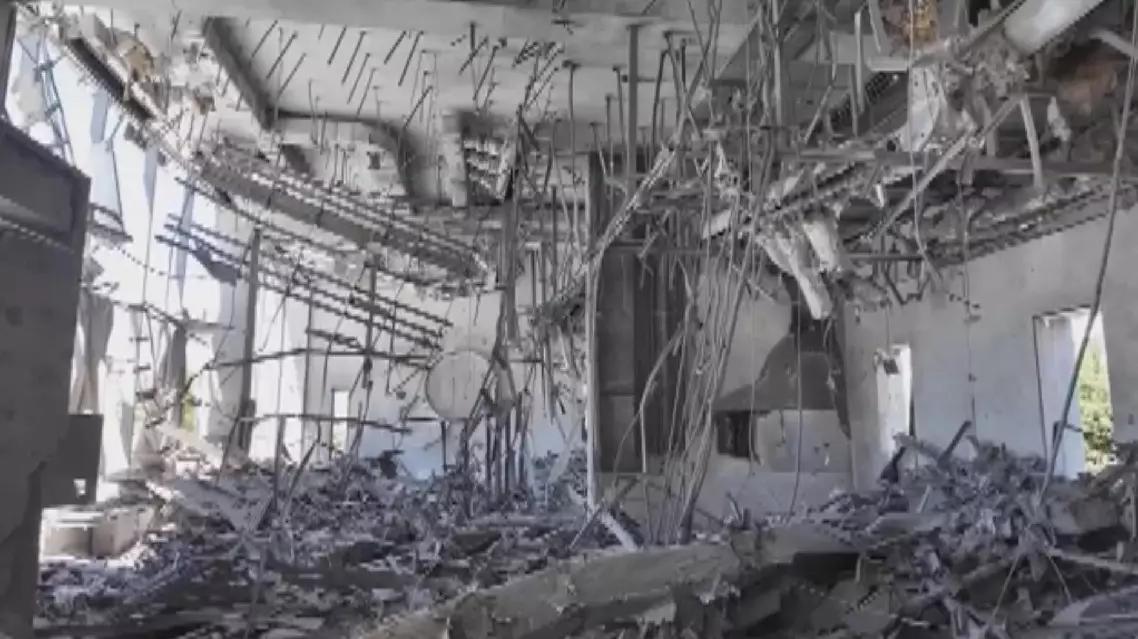
Following the U.S. announcement of launching strikes, Iranian media reported that several explosions were heard early Wednesday local time and that air defense systems were activated in the port city of Bandar Abbas, Qeshm Island, Sirik County and Jask County in southern Iran.
The semi-official Tasnim news agency reported that six explosions were heard in Sirik, Qeshm Island and the southern city of Minab, adding that areas in the three regions were attacked by U.S. fighter jets.
According to a report by The Times of Israel on Tuesday, Israeli Defense Forces (IDF) Chief of Staff Eyal Zamir said that the Israeli military has always maintained and will continue to maintain a state of readiness to resume combat operations against Iran at any time. Zamir said that all of Israel's defensive and offensive systems are on high alert, and that Israel intercepted relevant threats and carries out swift and powerful strikes against Iran. These actions were in preparation for even "more significant and severe blow" on Iran, he said.
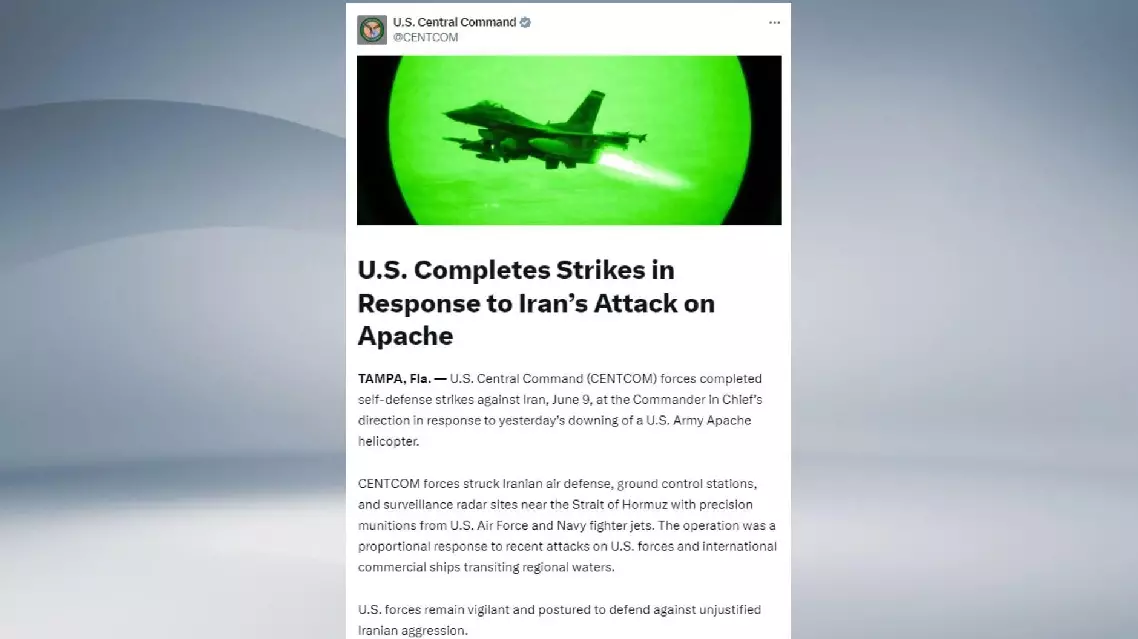
U.S. completes strikes in response to Iran's attack on Apache helicopter: Central Command