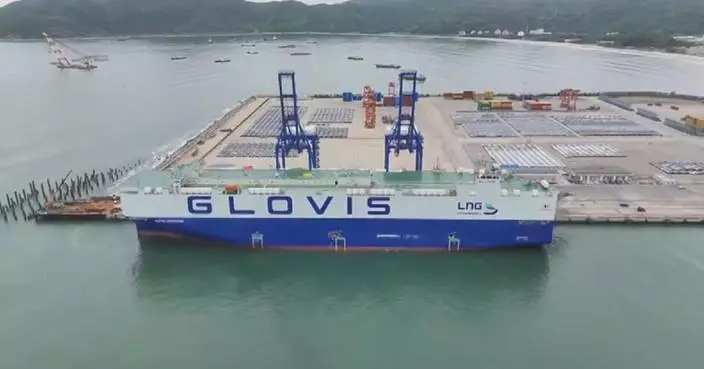
China's marine economy achieved innovation-driven and high-quality development in 2025, according to data released by the Ministry of Natural Resources on Tuesday.
The China marine economy development index, a key gauge of progress in the country's ocean economy, climbed 2.2 percent year on year to 128.8 in 2025, signaling a robust expansion in the marine sector.
The index is a comprehensive quantitative evaluation of the state of China's marine economic development over a given period. It covers key areas such as development scale and efficiency, structural optimization and upgrading, resource conservation and utilization, international business and trade, and livelihood security and improvement.
Data shows that the structure of marine industries was optimized last year, with improvements seen in technological innovation capabilities. The structural optimization and upgrading sub-index came in at 133.8 in 2025, up 2.2 percent year on year.
Last year, the capacity for developing and utilizing marine resources continued to improve, while the level of resource conservation and intensive use steadily increased. The marine resource conservation and utilization index stood at 125.9, up 1.9 percent from the previous year.
In 2025, the marine ecological environment continued to improve, while livelihood security was strengthened and living standards saw effective enhancement. The livelihood security and improvement index stood at 132.0, up 3.7 percent from the previous year.
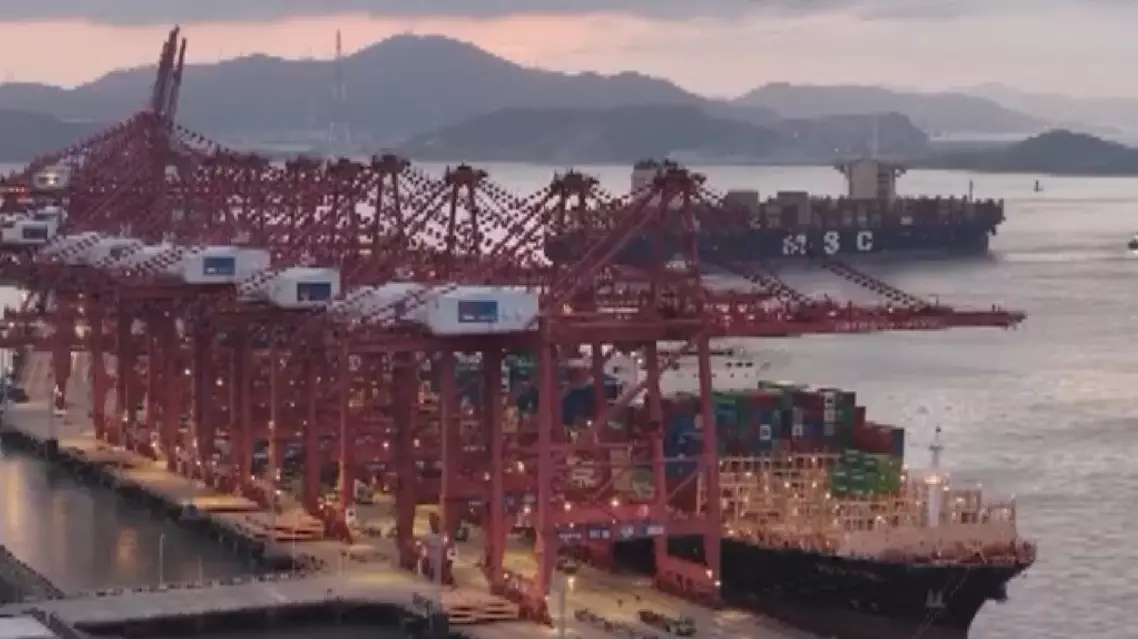
China's marine economy achieves innovation-driven, high-quality development in 2025
Mongolian President Ukhnaa Khurelsukh met with Wang Yi, a member of the Political Bureau of the Communist Party of China Central Committee and Chinese foreign minister, in Ulan Bator on Saturday.
During the meeting, Khurelsukh said the Mongolia-China relationship has become a model for inter-state relations in the region.
The two countries have consistently respected each other's independence, sovereignty and territorial integrity, while deepening mutually beneficial cooperation across various sectors, he said, noting that bilateral trade is expected to reach 20 billion U.S. dollars this year.
Describing China as Mongolia's good neighbor, Khurelsukh said that developing friendly relations with China is a top priority of Mongolia's foreign policy.
Khurelsukh said Mongolia is committed to the one-China principle, regarding Taiwan as an inalienable part of China's territory, and opposes any form of "Taiwan independence" activities. It also considers matters related to Hong Kong, Xizang and Xinjiang as China's internal affairs. Mongolia will not do anything that harms China's interests, regardless of its relations with other countries.
He also noted that Mongolia is willing to strengthen cooperation with China in regional and international affairs.
For his part, Wang said China has always put China-Mongolia relations at an important place in its neighborhood diplomacy, noting that China has both the will and the capability to be a neighbor that Mongolia can rely on, a trustworthy friend, and a partner in accelerating its development.
Wang reaffirmed China's respect for Mongolia's independence, sovereignty and territorial integrity, as well as the development path that Mongolia has chosen for itself.
He expressed readiness to work more closely with Mongolia to align development strategies, tap into the full potential of bilateral cooperation, advance existing collaboration in areas such as connectivity, energy and mineral resources, trade and investment, and create new growth drivers for cooperation in key minerals, green development, the digital economy, and other emerging fields.
During his three-day visit, Wang is also scheduled to meet with Mongolian Prime Minister Nyam-Osor Uchral and hold talks with Foreign Minister Batmunkh Battsetseg.
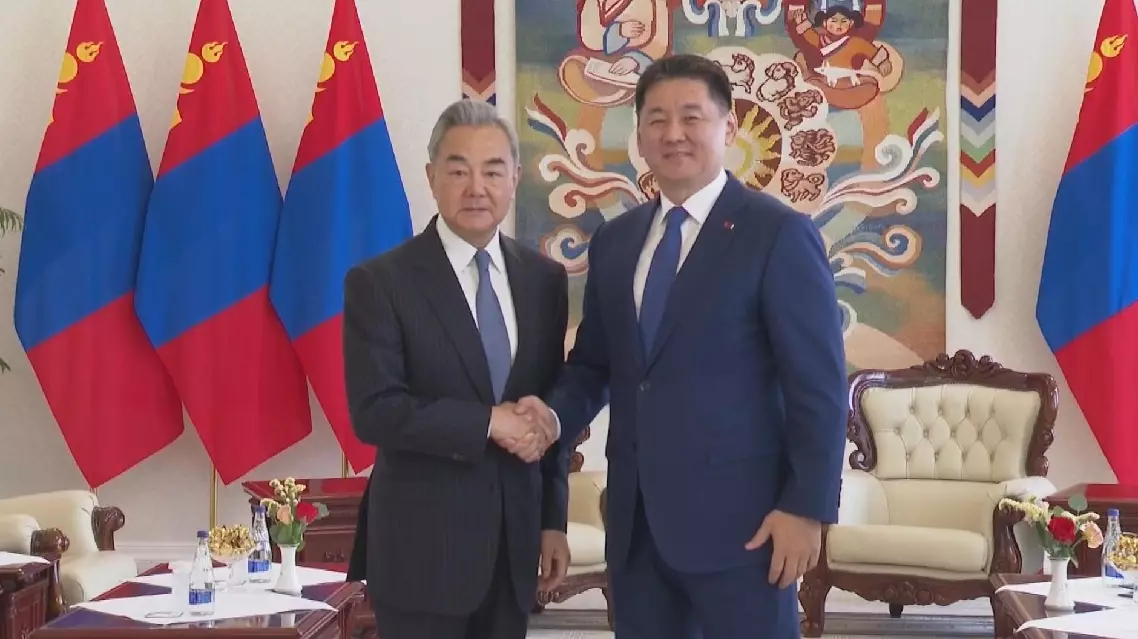
Mongolian president meets Chinese FM