A military inspection team with personnel from Kazakhstan, Kyrgyzstan, Russia, and Tajikistan conducted a border disarmament compliance inspection along the western part of the China-Kazakhstan border in northwest China's Xinjiang Uygur Autonomous Region from Tuesday to Thursday.
The inspection team, escorted by the Chinese side, entered Xinjiang's Horgos Port on Tuesday and conducted a disarmament compliance inspection at a regiment under the Xinjiang Military Area Command of the Chinese People's Liberation Army (PLA).
Officials from the regiment briefed the inspection team on its personnel, equipment and camp layout. Following the briefing, the team conducted on-site checks of multiple storage facilities and spoke highly of China's border disarmament compliance.
"During this border disarmament compliance inspection, China consistently upheld the principles of military transparency, mutual trust, and equality and security. We strictly fulfilled all obligations stipulated in the agreement, ensuring that the inspection process would be smooth and orderly, and would be successfully completed," said Gao Yadong, leader of the Chinese accompanying team.
Over the years, the five countries have carried out fruitful cooperation in security enforcement, border control and combating cross-border crimes. This cooperation has enhanced political mutual trust and military collaboration between them, creating a safe and stable external environment for their development. It has also become an important pillar in building a community with a shared future with neighboring countries.
A Chinese inspection team plans to enter Kazakhstan via the Horgos Port on June 15 to conduct a border disarmament compliance inspection at a border detachment in Kazakhstan's Chundzha region.
According to the Agreement on Confidence-Building in the Military Field Along the Border Areas signed in 1996 and the Agreement on the Mutual Reduction of Military Forces in the Border Areas signed in 1997 by China, Kazakhstan, Kyrgyzstan, Russia, and Tajikistan, the military inspection teams of China and the four neighboring countries conduct four rounds of eight compliance inspections annually on each other's military forces, technical equipment, and other assets within a 100-kilometer zone along the border.
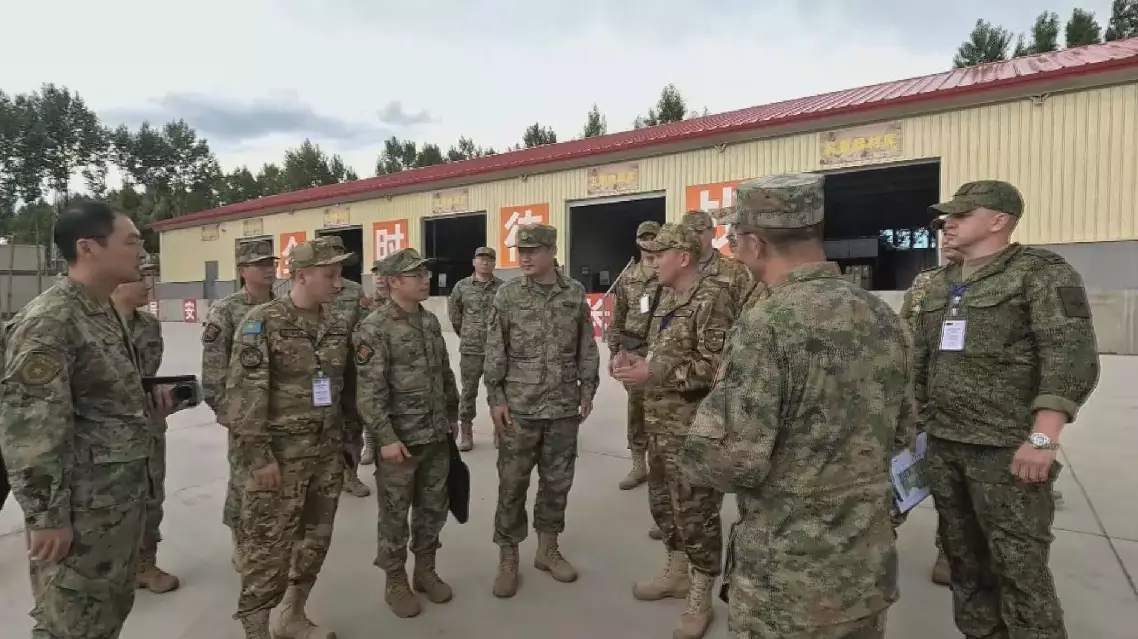
Multinational team conducts border disarmament compliance inspection in Xinjiang
China has made contributions to facilitating dividends of artificial intelligence (AI) available for emerging and developing economies, said AI strategist Joe Weinman.
In an exclusive interview with China Global Television Network (CGTN), Joe Weinman said AI is rapidly reshaping industries and daily life. China's export of AI computing tokens offers developing countries access to its advanced AI capabilities, he said.
"I think, if you just look at models of other technologies, you probably see exactly the path forward to do that. If you look at mobile telephony, as an example, you look at internet development, what you find is that a mix of individual national initiatives and funding arrangements, coupled with a degree of openness and sharing of the technology, probably coupled with the commercial interests, in other words, company self-interest, wanting to go ahead and pursuing untapped markets. They can access AI power, like I know China is very interested in exporting tokens as in basically a person, somewhere in a lesser developed country or an enterprise, or even a government in that lesser developed country, can access AI computing capabilities that are remote, perhaps in western China or perhaps in the Arctic or anywhere else," he said.
AI helps to break through barriers in different sectors, allowing individuals and enterprises across the world to equally enjoy incredible power, Weinman said.
"So the big advantage of AI -- if we think about AI as a beneficial force that can act to equalize economic benefits -- is that it's not heavy. It's not like moving a piano or like moving a nuclear power plant. Anyone with an internet connection can access AI power instantaneously. So what that means is, literally, I could be living barefoot in a remote village, and as long as I have some sort of internet connection, which doesn't even need to be wired. It could be like a satellite connection. I can access the same incredible power that the most advanced scientists sitting in a research lab in the biggest city in the world can," he said.
"So in a way, it's a great democratizing force. In a way, also, it's a challenge, because if you're a company, then you never know where some random, disruptive development and innovation is going to come from or some entirely new product concept, whether it be digital or physical," he continued.
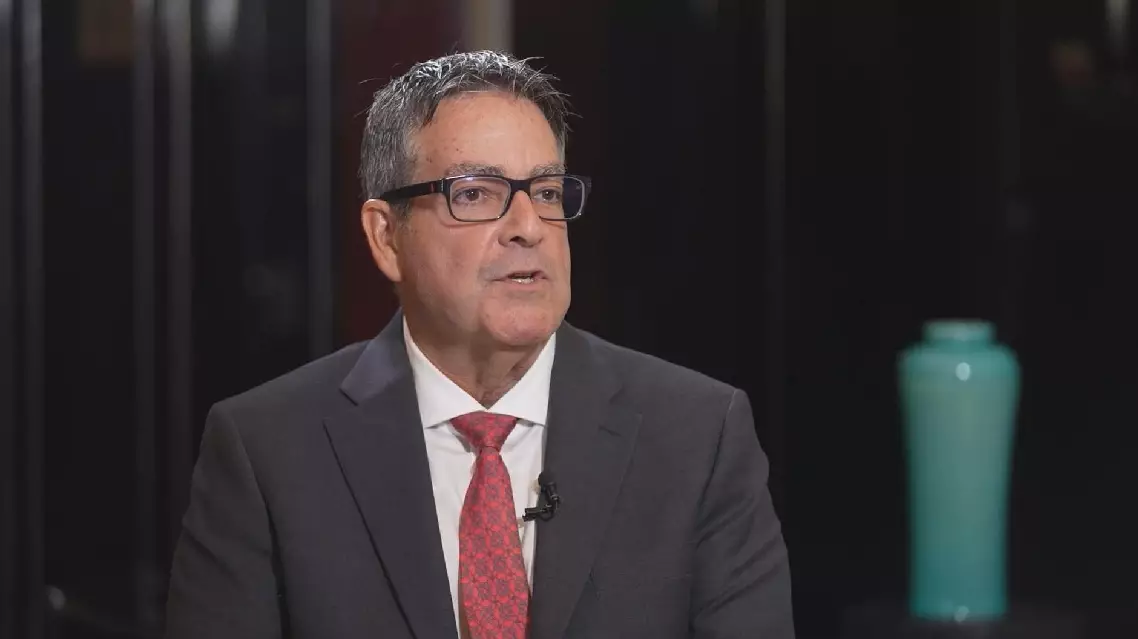
China facilitates AI dividends available for emerging, developing economies: AI strategist