Wuxi City in East China's Jiangsu Province has opened its first "6S" robot dealership, providing one-stop services for a wide range of humanoid robots in an effort to improve capabilities of local robotic industrial chains.
The dealership gathers products developed by eight leading companies and offers a complete service package that covers after-sales maintenance, skills training and industrial incubation.
While in conventional stores, customers can only see and experience the products and enjoy limited sales services.
"Regarding the industry, because a complete 6S service system serves enterprises, it helps enhance the capability of our local supply chain and also helps boost joint efforts to drive innovation in the development of the robotics sector," said Xu Yu, manager of the "6S" robot dealership.
Analyst said as application scenarios for robots continue to grow, robot retail outlets have evolved from merely showcasing and selling products into comprehensive platforms that offers a wide variety of services, including after-sales support, customized modification and rental trials.
They also pointed out the trend demonstrates that the robotic industrial chain is becoming increasingly mature.
"A robot joint consists of three core components: a reducer, a motor and a driver. All three parts can be sourced locally in Wuxi High-Tech Industrial Development Zone within two hours. This enables us to deliver technical support to customers at the fastest speed possible," said Chen Wankai, founder of Wuxi Quanzhibo Technology Company Limited.
The high-tech zone now homes more than 40 enterprises engaged in the embodied intelligence ecosystem.
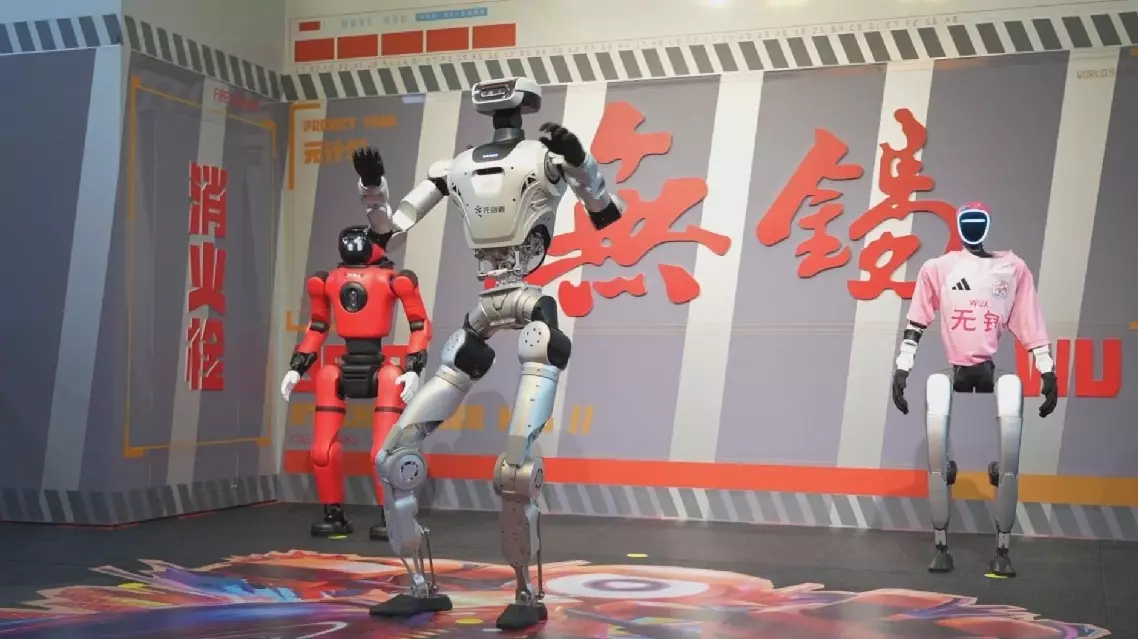
China's Jiangsu unveils "6S" robot dealership
Mongolian President Ukhnaa Khurelsukh met with Wang Yi, a member of the Political Bureau of the Communist Party of China Central Committee and Chinese foreign minister, in Ulan Bator on Saturday.
During the meeting, Khurelsukh said the Mongolia-China relationship has become a model for inter-state relations in the region.
The two countries have consistently respected each other's independence, sovereignty and territorial integrity, while deepening mutually beneficial cooperation across various sectors, he said, noting that bilateral trade is expected to reach 20 billion U.S. dollars this year.
Describing China as Mongolia's good neighbor, Khurelsukh said that developing friendly relations with China is a top priority of Mongolia's foreign policy.
Khurelsukh said Mongolia is committed to the one-China principle, regarding Taiwan as an inalienable part of China's territory, and opposes any form of "Taiwan independence" activities. It also considers matters related to Hong Kong, Xizang and Xinjiang as China's internal affairs. Mongolia will not do anything that harms China's interests, regardless of its relations with other countries.
He also noted that Mongolia is willing to strengthen cooperation with China in regional and international affairs.
For his part, Wang said China has always put China-Mongolia relations at an important place in its neighborhood diplomacy, noting that China has both the will and the capability to be a neighbor that Mongolia can rely on, a trustworthy friend, and a partner in accelerating its development.
Wang reaffirmed China's respect for Mongolia's independence, sovereignty and territorial integrity, as well as the development path that Mongolia has chosen for itself.
He expressed readiness to work more closely with Mongolia to align development strategies, tap into the full potential of bilateral cooperation, advance existing collaboration in areas such as connectivity, energy and mineral resources, trade and investment, and create new growth drivers for cooperation in key minerals, green development, the digital economy, and other emerging fields.
During his three-day visit, Wang is also scheduled to meet with Mongolian Prime Minister Nyam-Osor Uchral and hold talks with Foreign Minister Batmunkh Battsetseg.
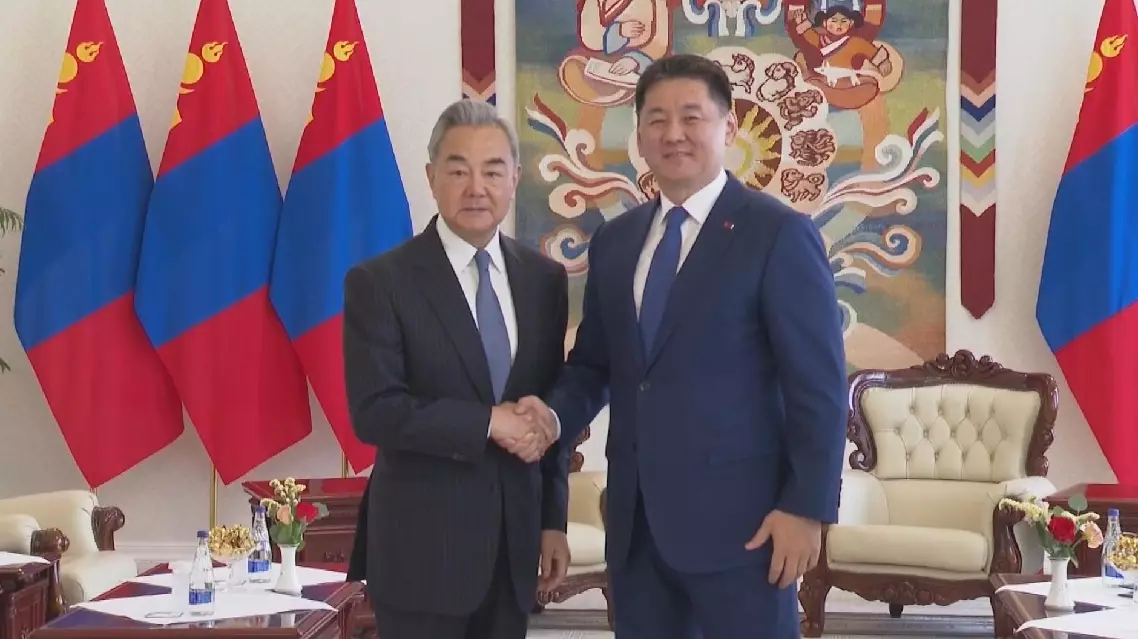
Mongolian president meets Chinese FM
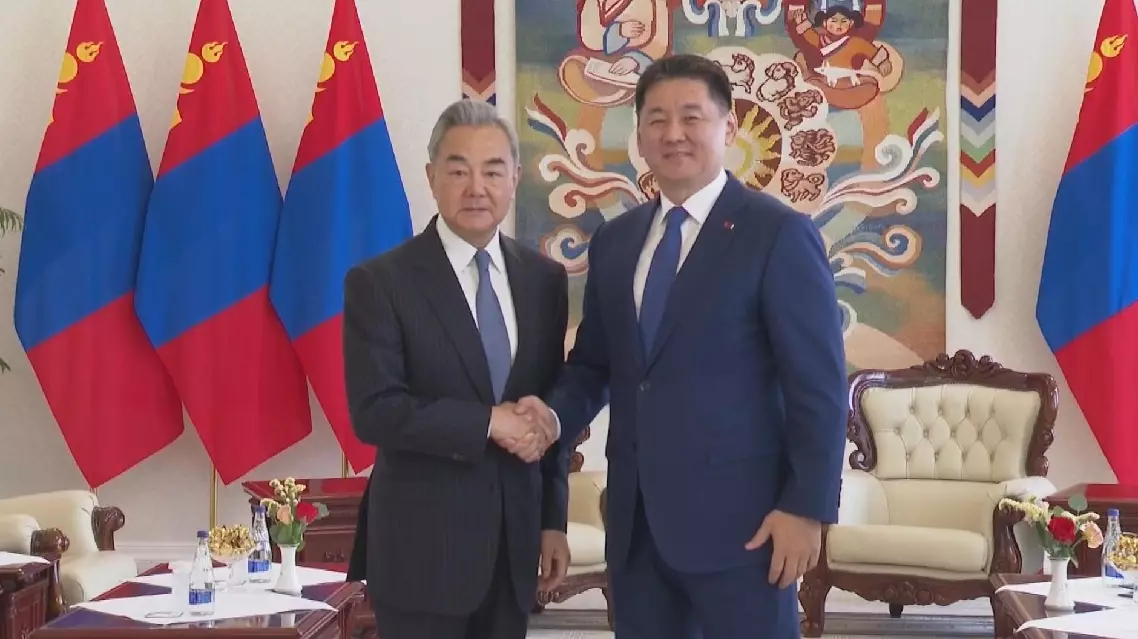
Mongolian president meets Chinese FM