KYIV, Ukraine (AP) — A series of long-range Ukrainian attacks hit targets deep inside Russia on Wednesday, part of Kyiv's efforts to raise the costs of the war for the Kremlin by striking energy facilities and military industries.
President Volodymyr Zelenskyy said Ukrainian forces struck several military and energy infrastructure sites, including a military factory that he said supplied components for Russian drones and missiles.
In a post on social media, Zelenskyy said Ukrainian FP-5 Flamingo long-range missiles had hit the facility in Cheboksary, located in the Chuvashiya region more than 900 kilometers (over 560 miles) from the front line.
Russia’s Defense Ministry said that air defenses downed 326 Ukrainian drones overnight.
Oleg Nikolayev, the head of Chuvashiya, confirmed that the missile attack but didn't give details. The Astra online news outlet reported that the Ukrainian strike hit the VNIIR-Progress plant that produces antennas for drones.
Zelenskyy also said Ukrainian forces struck a refinery in Russia’s Samara region, where Gov. Vyacheslav Fedorishchev said that several industrial plants were damaged by drone strikes and three people were injured.
Fedorishchev didn’t name the facilities that were damaged, but Astra carried images of a large fire at the Samara refinery.
Zelenskyy added that Ukraine’s Security Service (SBU) had also targeted two oil infrastructure facilities in Russia’s Vladimir region, about 700 kilometers from the front line.
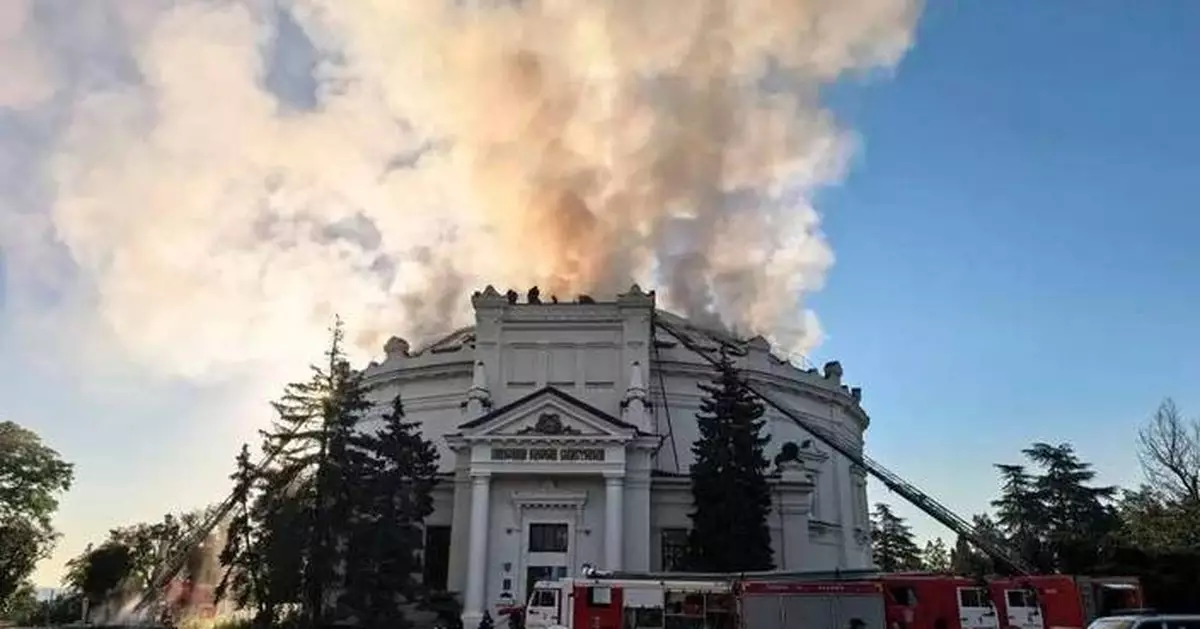
In Russia-occupied Crimea, a Ukrainian drone hit the building housing a huge panorama painting depicting the defense of the city during 19th century Crimean War. Mikhail Razvozhayev, the Kremlin-appointed head of Sevastopol, said the painting by artist Franz Rubo was effectively destroyed.
As the more than 1,000-kilometer front line in the four-year war has remained largely static as swarms of drones hinder advances, both sides have increasingly relied on long-range strikes.
The increasingly deep and audacious Ukrainian strikes have cast a challenge to Russia's President Vladimir Putin, defying his claim that Moscow was winning the war now in its fifth year.
Last week, Putin vowed to strengthen Russia's air defenses after Ukrainian attacks set ablaze an oil terminal in St. Petersburg and also hit a nearby naval base, casting a cloud on his showcase economic forum in his hometown.
The attacks on St. Petersburg came as another embarrassment for the Russian leader, weeks after he pruned back an annual Victory Day parade in Moscow because of fears of Ukrainian drone attacks.
Ukraine’s Air Force says air defenses downed 181 of 207 Russian drones.
A barrage of 26 drones struck Kharkiv early Wednesday, injuring at least four people, according to regional administration head Oleh Syniehubov. He said one person was killed and 15 others were injured in the region over the past 24 hours.
In Zaporizhzhia and its region, 10 people were injured overnight in a series of Russian aerial attacks, according to regional head Ivan Fedorov.
In Odesa, a mother and two children, aged 8 and 10, required medical attention after Russian drones damaged two residential buildings, according to regional administration head Oleh Kiper.
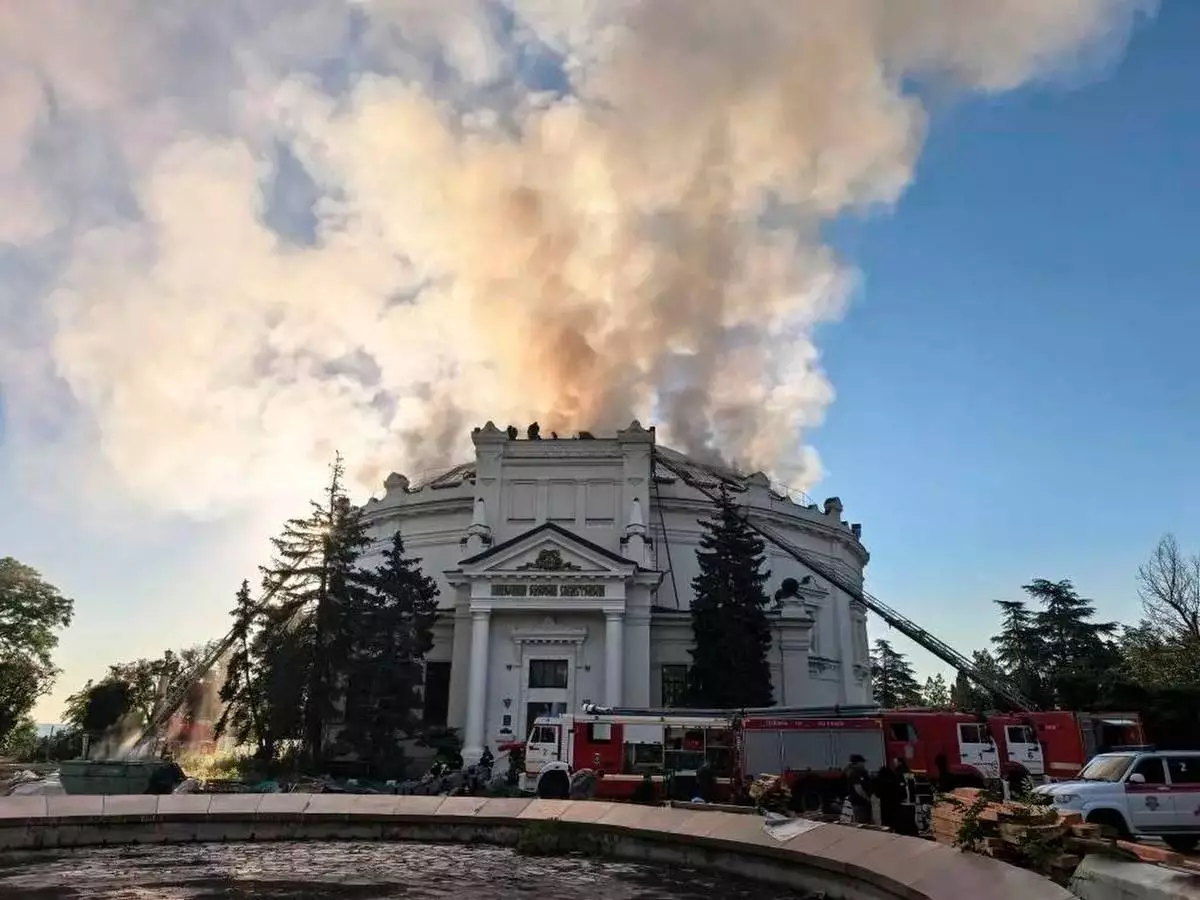
In this photo provided by Sevastopol mayor Mikhail Razvozhaev telegram channel on Wednesday, June 10, 2026, Firefighters put out a fire after a Ukrainian drone attack hit the building of "Defense of Sevastopol 1854–1855" Panorama in Sevastopol, Crimea. (Sevastopol mayor Mikhail Razvozhaev telegram channel via AP)
DUBAI, United Arab Emirates (AP) — The United States launched airstrikes early Wednesday against Iran after blaming Tehran for the crash of an American attack helicopter, and Iran fired back at countries in the region — another escalation that threatened to derail efforts to end the war.
Bahrain, Kuwait and Jordan — all of which host U.S. troops — came under Iranian fire. It was the second time this week that back-and-forth strikes have tested the ceasefire after Iran and Israel targeted each other on Monday, and it again raised the question of how much pressure the deal can take before it cracks.
While U.S. President Donald Trump has insisted that negotiations with Iran to end the war are making progress, he has repeatedly vacillated between expressing such optimism and warning that he was ready to return to all-out war. Iran, meanwhile, has proved resilient despite having faced weeks of heavy bombing, betting that its ability to effectively close the Strait of Hormuz — a crucial passageway for the world’s oil and natural gas — gives it a strong bargaining chip.
Both countries seem to be looking for a way to end the conflict — if they can manage to sell it as a win at home. But Israeli Prime Minister Benjamin Netanyahu appears intent on pursuing much more difficult goals: the collapse of Iran’s theocratic government, the elimination of its nuclear program, and the destruction of the Iranian-allied Hezbollah militant group in Lebanon. That will make compromise much harder.
Since the U.S. and Israel started the war with attacks on Iran on Feb. 28, the conflict has shaken the global economy, driven up energy prices around the world, and made many basics, including food, more expensive. Brent crude oil, the international standard, was at more than $91 a barrel on Wednesday, up more than 25% since the start of the war.
In the latest strikes, U.S. fighter jets targeted “air defense, ground control stations, and surveillance radar sites,” the military’s Central Command said. Iran acknowledged strikes around Bandar Abbas and Qeshm Island, but gave no details on the damage.
“The operation was a proportional response to recent attacks on U.S. forces and international commercial ships transiting regional waters,” Central Command said.
Iran’s top diplomat vowed that there would be a response, and Tehran later claimed attacks in Kuwait, Bahrain and Jordan.
Jordan said it shot down five incoming missiles, which Iran said targeted the Muwaffaq Salti Air Base. The base has hosted American F-35 fighter jets and other aircraft.
Jordan’s state-run Petra news agency carried a military statement saying there were no injuries and that explosives experts examined the debris from the interceptions.
Bahrain and Kuwait said they intercepted incoming fire, without elaborating.
Iranian Foreign Minister Abbas Araghchi condemned the American attacks as a violation of Iranian sovereignty in calls with his counterparts from Turkey and Saudi Arabia “and emphasized the inherent right of self-defense, including reciprocal action,” according to a post on his office's Telegram channel.
The exchanges of fire came a day after a U.S. Army attack helicopter crashed near the Strait of Hormuz after colliding with an Iranian drone, according to a U.S. official, who spoke on condition of anonymity to discuss an ongoing investigation. It wasn’t clear whether the collision was intentional.
A drone boat rescued both of the helicopter’s aviators, and Trump said they were uninjured.
Guards aboard a cargo ship off the coast of Yemen in the Gulf of Aden exchanged fire with gunmen in a small boat and repelled their attack, the British military’s United Kingdom Maritime Trade Operations center said.
No group immediately claimed responsibility. Yemen’s Iran-backed Houthi rebels have said they will resume their attacks against Israel-affiliated ships in the Red Sea. Somali pirates have also become more active in the region.
The UKMTO later reported a fire in the engine room of a tanker in the Gulf of Oman, near the Strait of Hormuz, saying one person had been hurt and two others aboard were missing. It wasn’t immediately clear what caused the fire.
Before he accused Iran of downing the U.S. helicopter, Trump expressed renewed optimism over negotiations with Iran, but didn’t say why there was reason for hope.
Mediators, led predominantly by Pakistan, have been trying for weeks to get a deal across the line. While Trump, wary of high gas prices and upcoming congressional elections in November, seems to be looking for a quick win, he is also making demands that will be tough for Iran to swallow.
The U.S. wants to see Iran give up its stockpile of highly enriched uranium. While Iran insists its nuclear program is peaceful, that uranium is a short, technical step from weapons-grade levels.
Iran is refusing to give up the uranium and demanding relief from sanctions. It also wants the release of frozen assets even before a final agreement is in place, something rejected by Trump.
It's not clear how those differences can be bridged — and Trump has repeatedly threatened to walk away from the talks. On his Truth Social platform overnight he seemed to be warning again that he was ready to return to all-out war, posting a clip from the American TV series “The West Wing” with actor Martin Sheen as president bellowing: “We don’t come back with a proportional response, we come back with total disaster!”
Meanwhile, Iran has continued to insist that any deal to end the war must also end fighting between its ally Hezbollah and Israel. Instead, Israel has intensified its military campaign against the militant group.
Israel's military said on Wednesday it launched multiple strikes in southern Lebanon over the past day, targeting Hezbollah infrastructure.
Associated Press writers David Rising in Bangkok; Michelle L. Price in New York; Will Weissert in Washington; Bassem Mroue in Beirut; and Munir Ahmed in Islamabad contributed to this report.

People take shelter as air raid sirens warn of incoming Iranian missiles in Ramat Gan, Israel, Monday, June 8, 2026. (AP Photo/Oded Balilty)
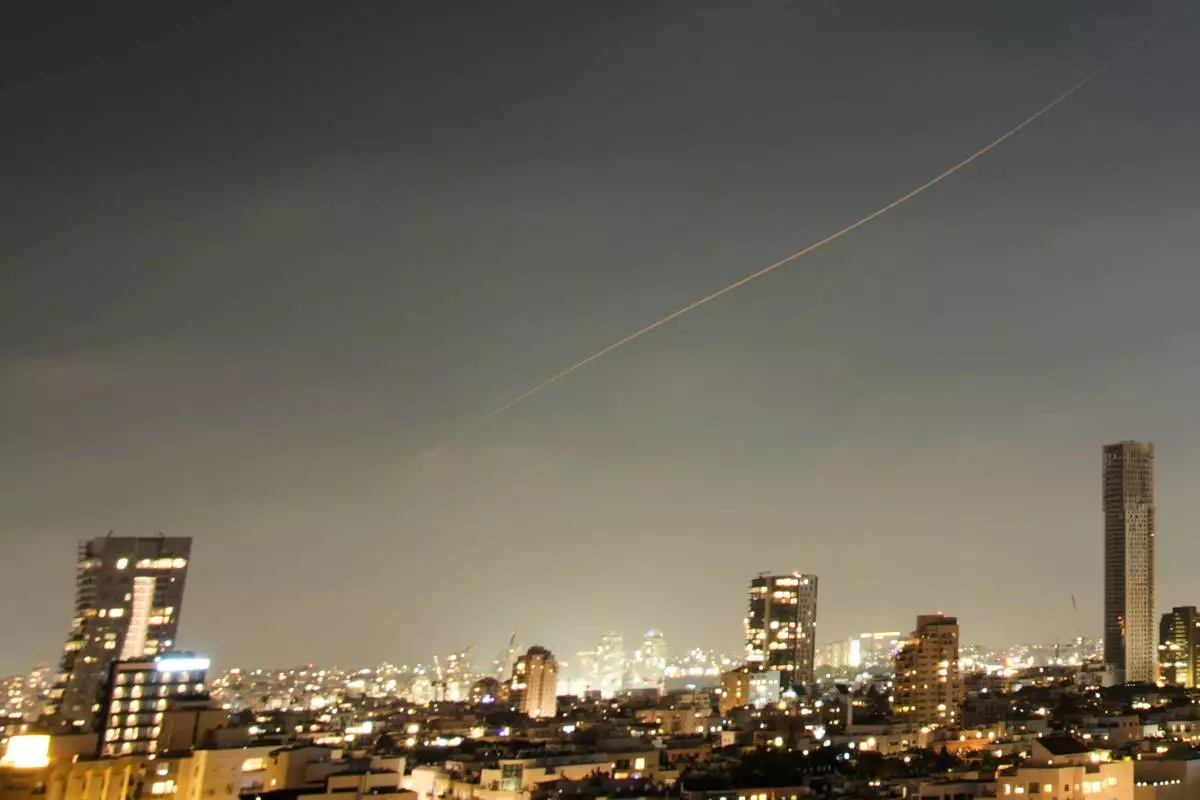
A projectile streaks through the sky over central Israel during an Iranian missile attack, Sunday, June 7, 2026. (AP Photo/Ohad Zwigenberg)
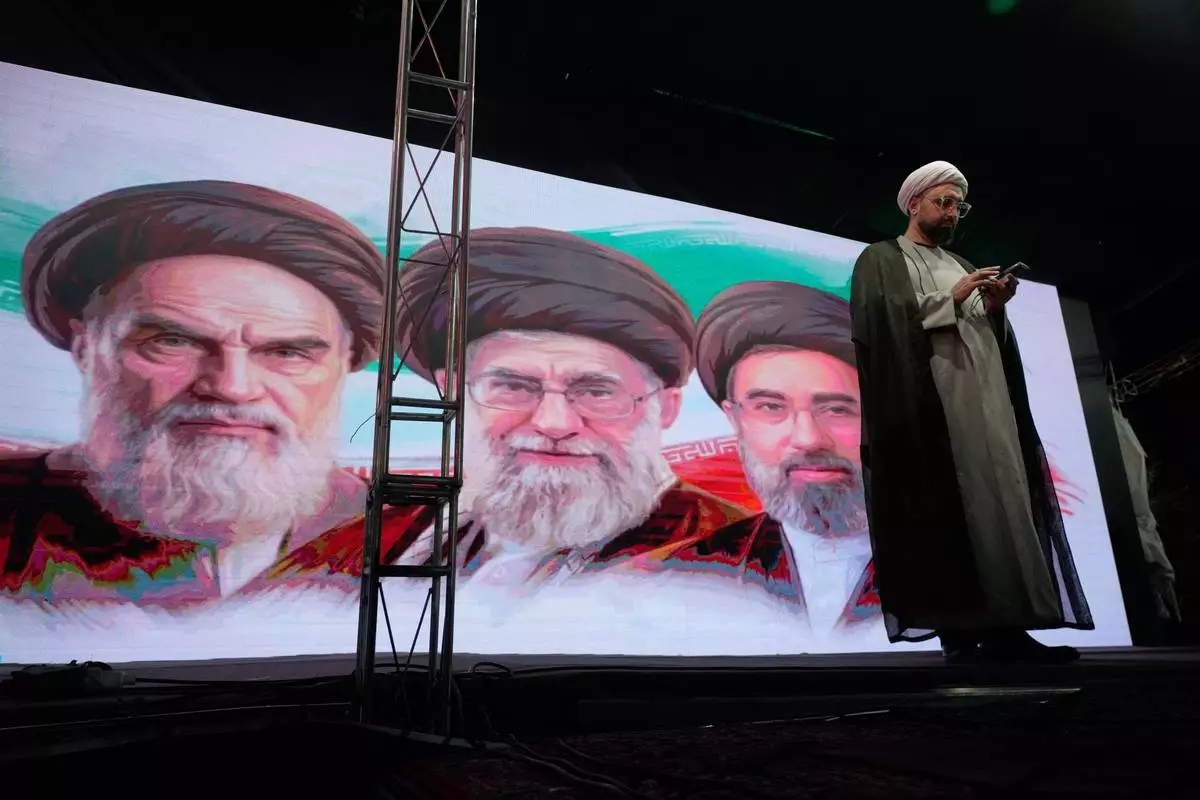
A cleric checks his cell phone on stage in front of a screen displaying portraits of the late Iranian revolutionary founder Ayatollah Khomeini, left, late Supreme Leader Ayatollah Ali Khamenei, center, and Supreme Leader Ayatollah Mojtaba Khamenei, during a pro-government gathering in Tehran, Iran, Sunday, June 7, 2026. (AP Photo/Vahid Salemi)
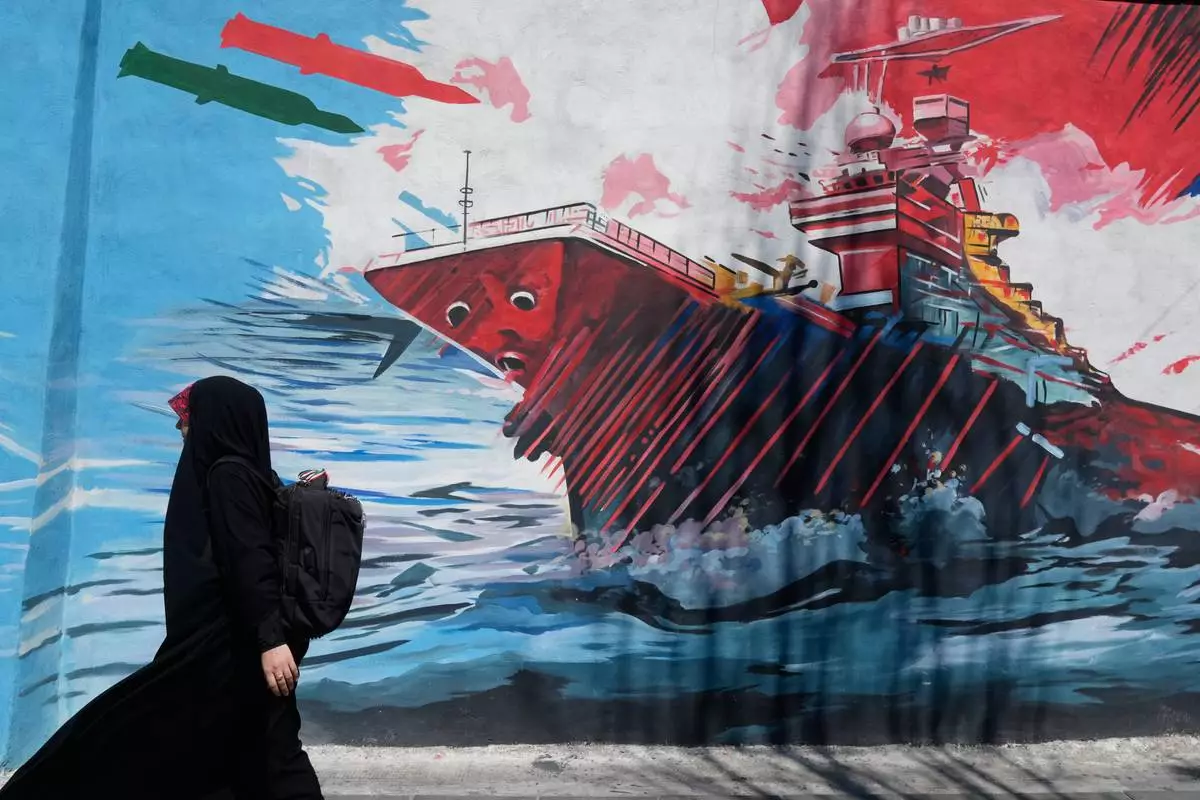
A woman walks past a mural depicting a U.S. aircraft carrier under missile attack in downtown Tehran, Iran, Monday, June 8, 2026. (AP Photo/Vahid Salemi)