Skip to Content Facebook Feature Image

Israel is tightening its grip on east Jerusalem with evictions and demolitions

News

Israel is tightening its grip on east Jerusalem with evictions and demolitions
News

News

Israel is tightening its grip on east Jerusalem with evictions and demolitions

2026-06-10 16:48 Last Updated At:16:50

JERUSALEM (AP) — Fakhri Abu Diab fought for decades to save his home. But when Israeli authorities arrived with bulldozers two years ago, he was powerless to stop them.

He and his wife now live among shards of memory: a bicycle where his bedroom stood; the garden where he planted tomatoes as a boy; a portrait of his late mother painted on a wall, based on a photograph lost in the demolition. Their mobile home, set up amid the rubble, is also marked for removal.

More Images
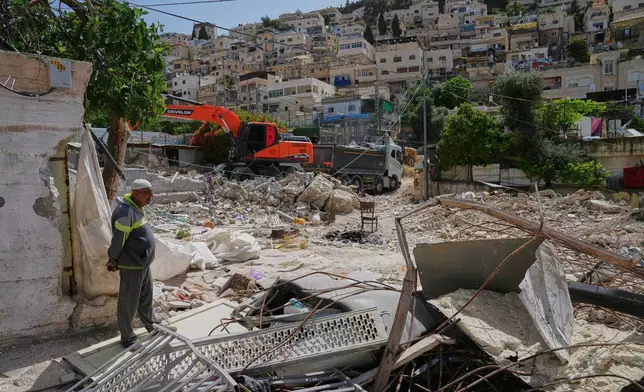
A Palestinian man looks on as an excavator clears the rubble of homes demolished by Israeli authorities in the Silwan neighborhood of east Jerusalem, May 19, 2026. (AP Photo/Mahmoud Illean)
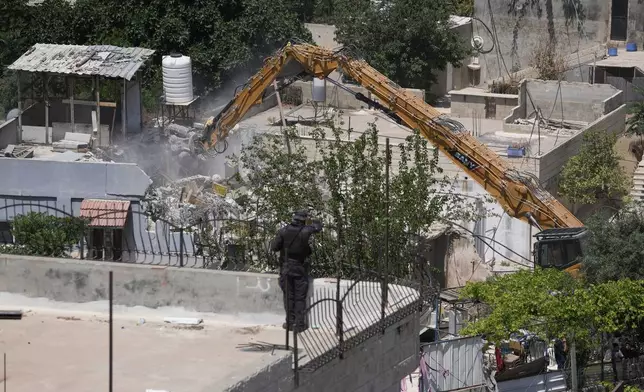
A Palestinian man looks on as an excavator clears the rubble of homes demolished by Israeli authorities in the Silwan neighborhood of east Jerusalem, May 19, 2026. (AP Photo/Mahmoud Illean)

Israeli authorities demolish a Palestinian home in the Silwan neighborhood of east Jerusalem, May 25, 2026. (AP Photo/Mahmoud Illean)
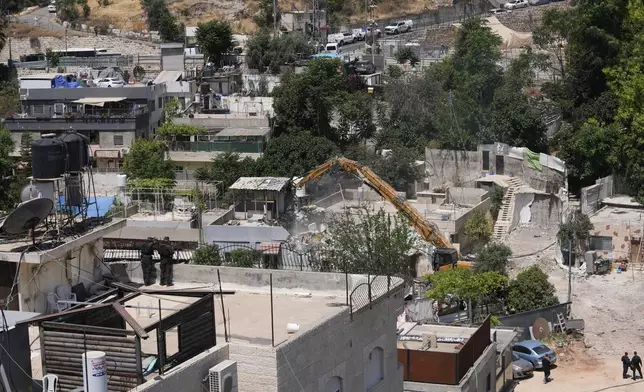
Israeli authorities demolish a Palestinian home in the Silwan neighborhood of east Jerusalem, May 25, 2026. (AP Photo/Mahmoud Illean)
Israeli authorities demolish a Palestinian home in the Silwan neighborhood of east Jerusalem, May 25, 2026. (AP Photo/Mahmoud Illean)

Israeli authorities demolish a Palestinian home in the Silwan neighborhood of east Jerusalem, May 25, 2026. (AP Photo/Mahmoud Illean)

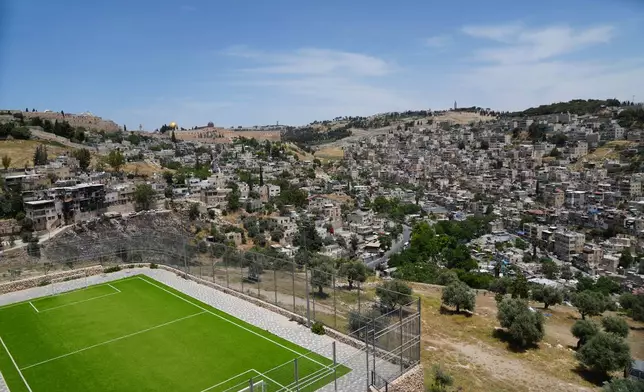
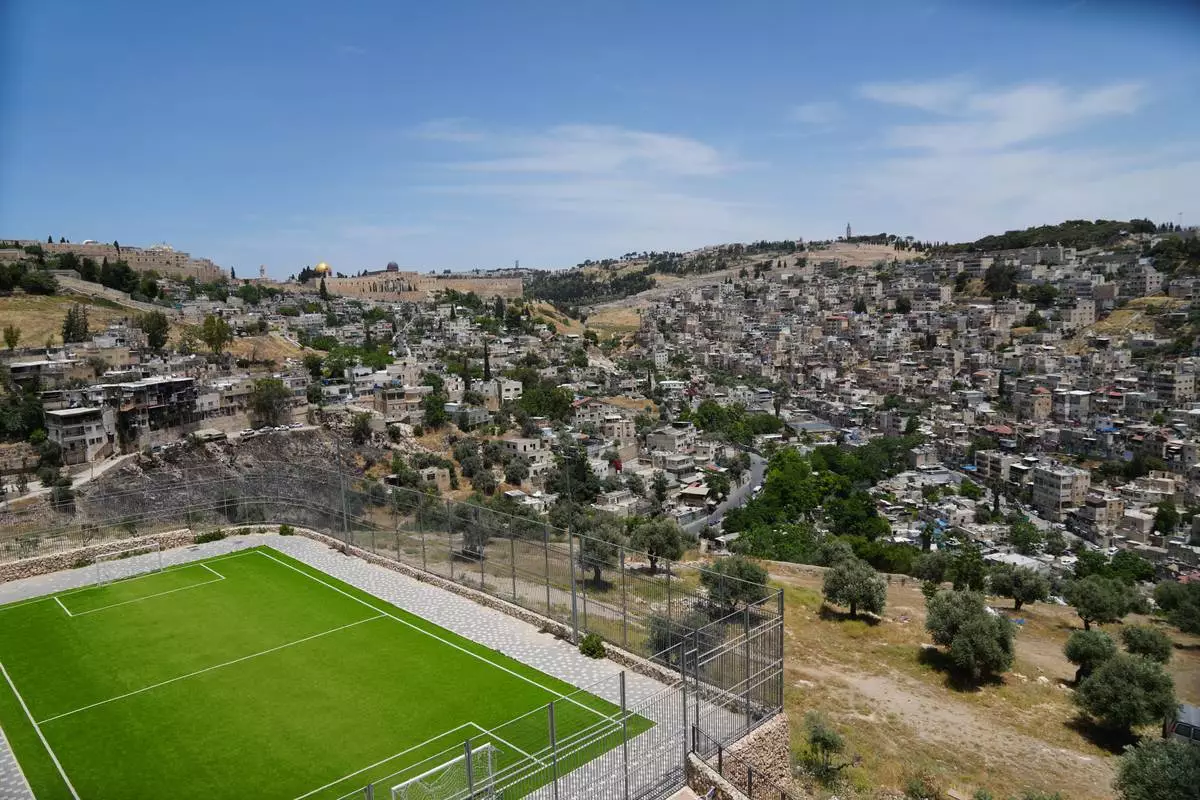
A view of the Silwan neighborhood of east Jerusalem, May 19, 2026. (AP Photo/Mahmoud Illean)
A view of the Silwan neighborhood of east Jerusalem, May 19, 2026. (AP Photo/Mahmoud Illean)

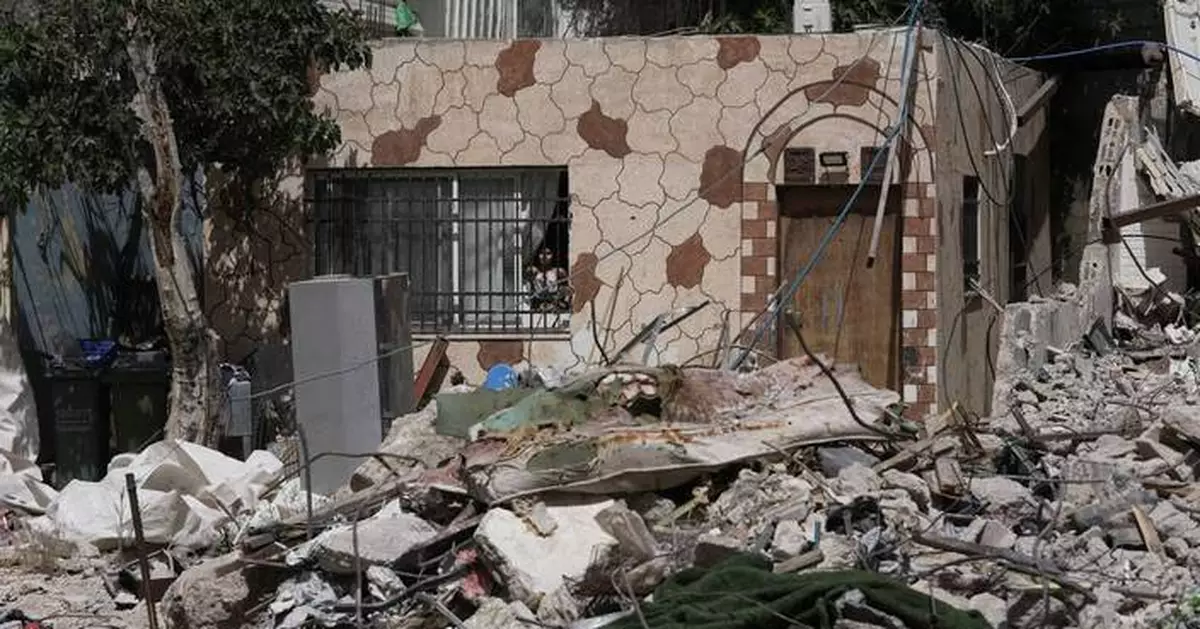
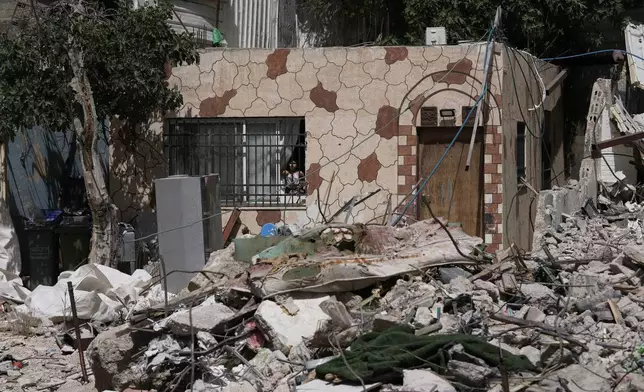
A Palestinian girl looks out a window at the rubble of a home demolished by Israeli authorities in the Silwan neighborhood of east Jerusalem, May 19, 2026. (AP Photo/Mahmoud Illean)

A Palestinian girl looks out a window at the rubble of a home demolished by Israeli authorities in the Silwan neighborhood of east Jerusalem, May 19, 2026. (AP Photo/Mahmoud Illean)

They are “trying to erase my memories, my childhood, my history,” he said, wiping away tears.

For decades, Israel has worked to expand the Jewish presence in annexed east Jerusalem — the heart of the Israeli-Palestinian conflict and home to major Jewish, Christian and Muslim sites. Settlers have exploited discriminatory policies and archaeological claims to evict Palestinians far from the region's war zones.

Activists say those efforts have gone into overdrive in recent years, as Israel is no longer constrained by U.S. pressure and attention has shifted to Gaza, Lebanon and Iran.

Over 260 homes and other structures were demolished in 2025, a 70% increase from three years earlier, with some neighborhoods seeing the most evictions in decades, according to Ir Amim, an Israeli anti-settlement group that closely tracks such policies. There have been at least 116 demolitions so far this year, it said.

It’s “an intensity and scope that we have never seen,” said Aviv Tatarsky, a researcher at Ir Amim. “Israel can decide, yes, this neighborhood, we want to erase it … No one is going to stop us.”

Israel captured east Jerusalem, along with the West Bank and Gaza, in the 1967 Mideast war. The Palestinians want all three territories for their future state, and the U.N. and much of the international community consider them to be illegally occupied.

Israel considers all of Jerusalem to be its unified capital and says residents are treated equally by law.

Palestinians in annexed east Jerusalem are eligible for Israeli citizenship, but unlike Jews, they must apply for it — a long, uncertain process. Most choose not to because it would recognize Israel’s claims to the city. That leaves them with few ways to challenge housing policy, largely set by Israel’s Parliament.

Rights activists say that in addition to supporting the development of major Jewish settlements — which many Israelis view as ordinary neighborhoods — authorities have severely limited the growth of Palestinian neighborhoods, making it virtually impossible to obtain housing permits.

Last year, nearly 9,000 permits were approved for Jerusalem’s Jewish residents and fewer than 700 for Palestinians, according to Bimkom, an Israeli rights group. Palestinians make up some 40% of Jerusalem's population and are concentrated in the east.

Israeli officials say the discrepancy exists because Palestinians rarely apply for permits. Many Palestinians say it’s futile.

When Palestinians build without permits, they face the threat of demolition. Settler groups meanwhile exploit an array of laws to purchase or take over Palestinian properties.

Previous U.S. administrations have pressed Israel to slow or suspend settlement projects, viewing them as an obstacle to resolving the conflict. U.S. President Donald Trump broke with that tradition in his first term, recognizing Jerusalem as Israel's capital.

The U.S. State Department said in a statement that it's up to Israeli authorities to set policy in Jerusalem, and that it expects them to respect due process and the rule of law.

Abu Diab's neighborhood, al-Bustan, extends through a valley just outside the Old City, with the dome of the Al-Aqsa Mosque visible above the towering walls. Named for the orchards that once grew there, the neighborhood is now a crowded jumble of low concrete blocks and demolition sites.

It's part of the larger district of Silwan, home to some 20,000 Palestinians and coveted by settlers because it is near major religious and archaeological sites. The mosque is the third holiest in Islam, and the hilltop where it stands is the holiest site for Jews, who refer to it as the Temple Mount because it was where the two Jewish temples stood in antiquity.

The Jerusalem municipality said the homes in al-Bustan are being demolished because they were built without permits in areas not zoned for housing. A park and public parking lot will be established there for the benefit of all residents, it said in a statement.

The municipality said it put forward plans for alternative housing in the neighborhood but that residents did not show “serious intentions” to reach an agreement.

Abu Diab has been battling demolition orders in court since 2004. Part of his home was built before 1967, but his growing family expanded it without permits because it was impossible to get them, he said.

In February 2024, police gave him and his wife minutes to pack before demolishing their home. Since then, they have lived in the mobile home, their suitcases packed.

They are among some 1,500 Palestinians in al-Bustan whose homes could be demolished at any time.

A short distance away, in the congested Batan al-Hawah neighborhood, settlers are moving in as Palestinians are evicted.

Zuhair al-Rajabi and dozens of his extended family were ordered out in January, when Israel's Supreme Court ruled against them after more than a decade of legal action.

Thumbing through papers in his living room, he pulled out a document from 1966 saying the property is his. He says he has to leave by July but has nowhere to go, as rents are high in Jerusalem. “The problem, in short, is that they don’t want us here,” he said.

March marked the highest rate of state-led evictions in the neighborhood in decades, with 15 families forced out and hundreds more people at risk, according to B'Tselem, an Israeli rights group.

Israeli laws allow settlers to reclaim properties that were owned by other Jews before the 1948 war surrounding Israel's creation. Palestinians who fled or were driven from their homes in what is now Israel during that conflict are barred from returning. Authorities have also transferred state-held land to settler groups.

The Batan al-Hawah evictions show “the cooperation between settler organizations and state institutions, based on discriminatory laws, toward a shared goal — the Judaization of east Jerusalem and the replacement of Palestinian residents with Israeli settlers,” said Yair Dvir, a spokesperson for B’Tselem.

The Israeli judiciary, in a statement, said courts rule on the merits of each case based on the circumstances, applicable law and established precedent, and denied colluding with private organizations.

Daniel Luria, the executive director of Ateret Cohanim, one of the main settler organizations in east Jerusalem, said it was working to correct a “monumental historical injustice” by helping Jews to return to what had been a Yemenite and Sephardic Jewish neighborhood up until the early 20th century, when he says they were expelled by Arabs and then again by the British.

Since 2004, around 50 Jewish families have moved into the neighborhood and more are eager to join them, he said. “There's never going to be a Palestinian state,” he added.

An Israeli flag waves above the home where Khalil Basbous was evicted in January. The 68-year-old moved into a relative's house around the corner but walks past his former home every day.

“It’s mine,” he said, wiping tears from his face and softly touching an olive tree he had planted by the door. “I have no doubt that I will return.”
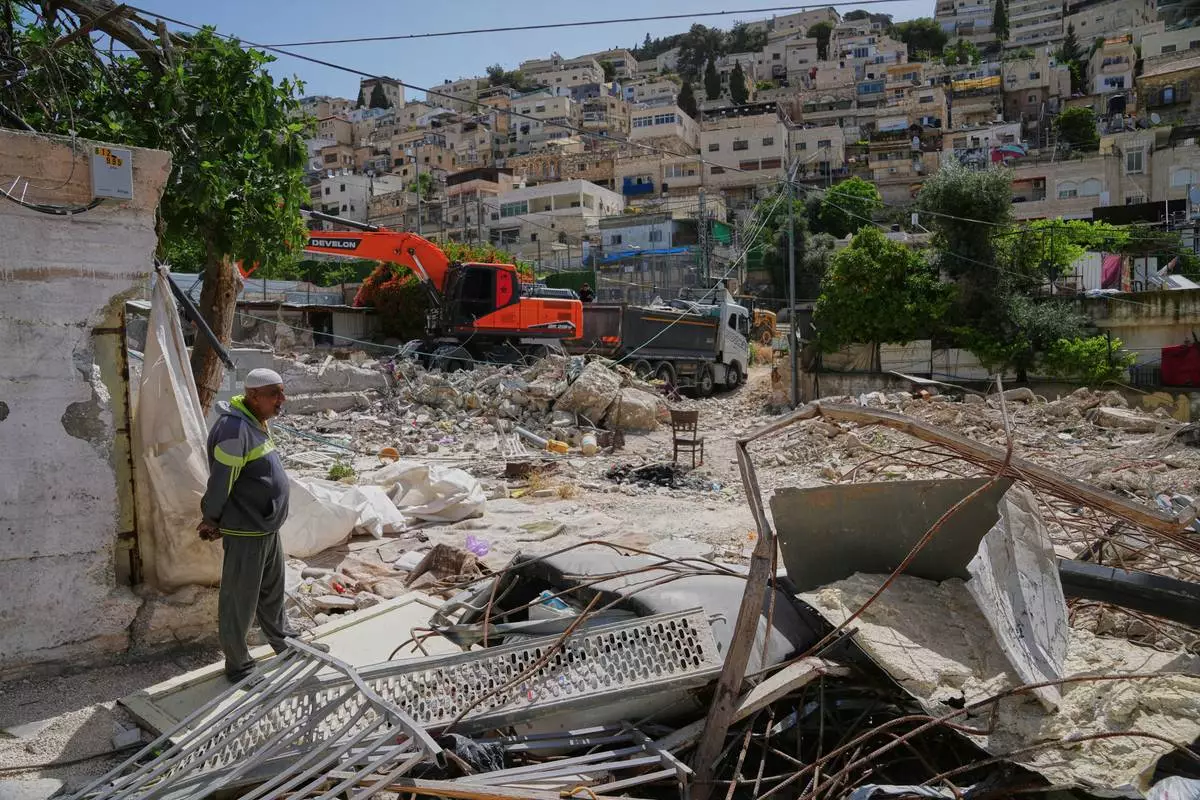
A Palestinian man looks on as an excavator clears the rubble of homes demolished by Israeli authorities in the Silwan neighborhood of east Jerusalem, May 19, 2026. (AP Photo/Mahmoud Illean)
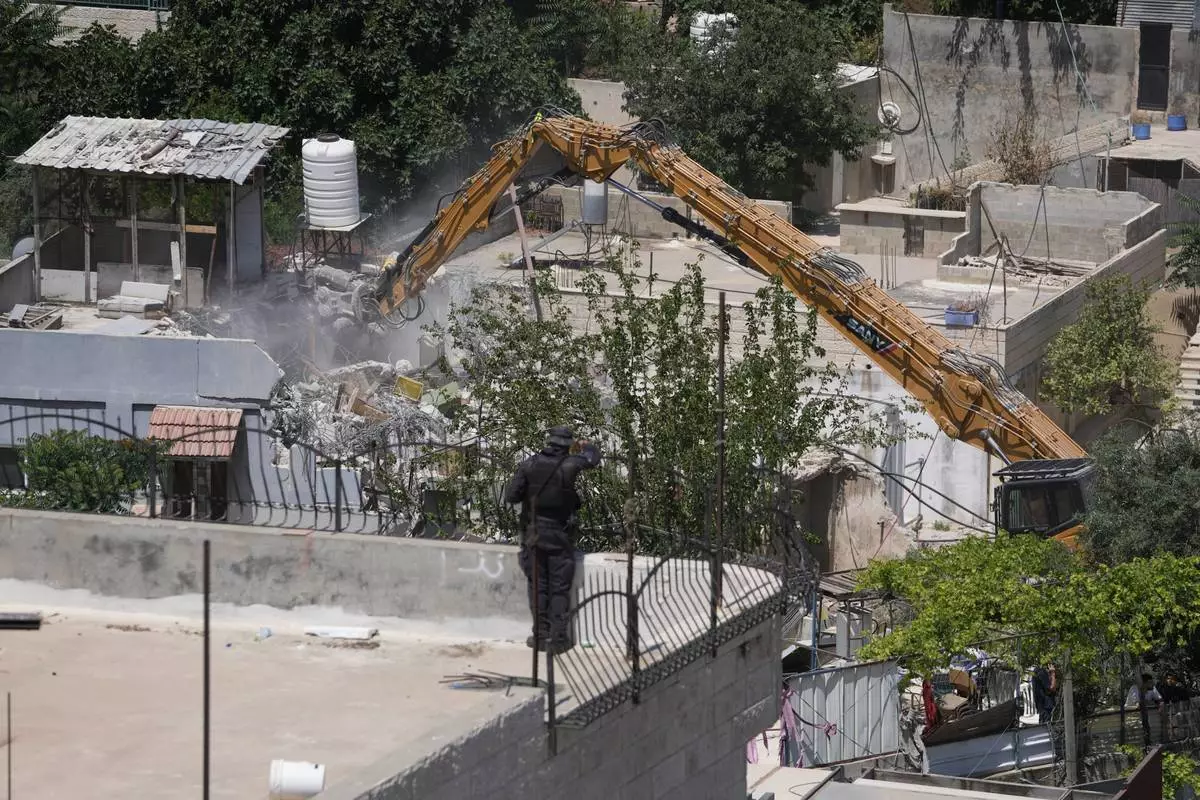
A Palestinian man looks on as an excavator clears the rubble of homes demolished by Israeli authorities in the Silwan neighborhood of east Jerusalem, May 19, 2026. (AP Photo/Mahmoud Illean)

Israeli authorities demolish a Palestinian home in the Silwan neighborhood of east Jerusalem, May 25, 2026. (AP Photo/Mahmoud Illean)
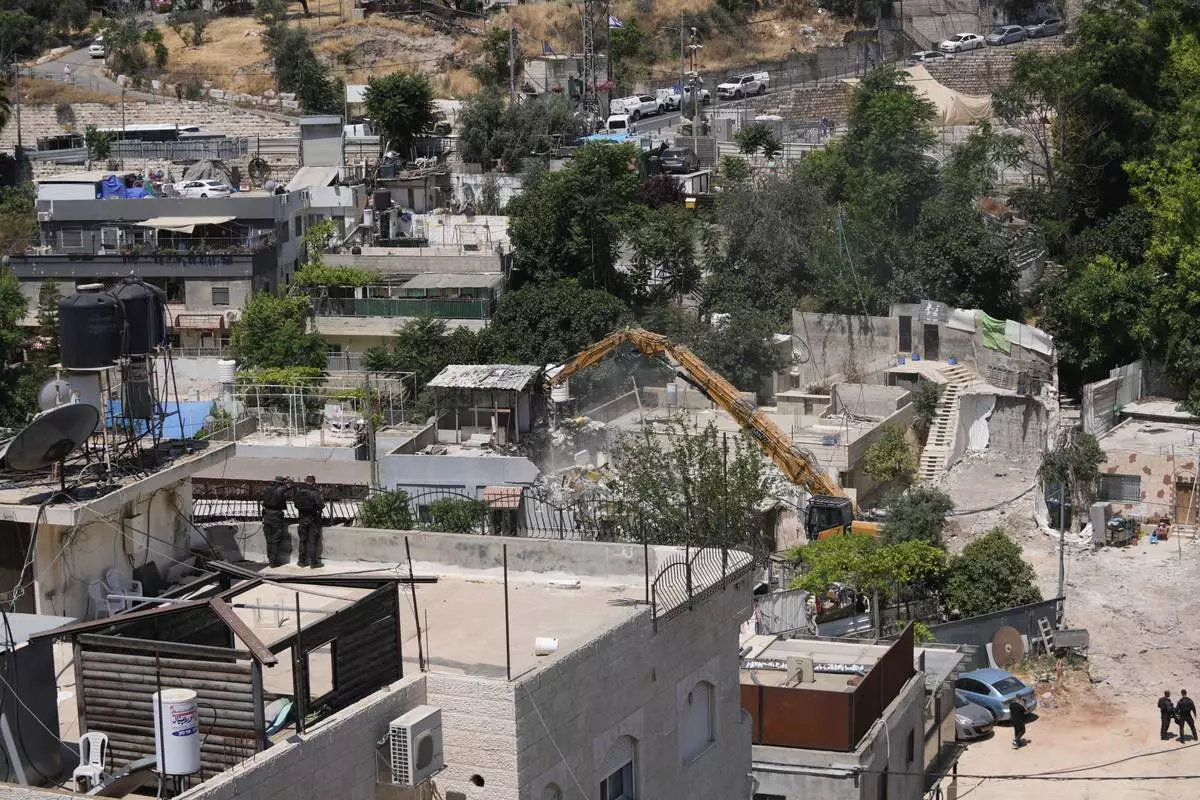
Israeli authorities demolish a Palestinian home in the Silwan neighborhood of east Jerusalem, May 25, 2026. (AP Photo/Mahmoud Illean)
Israeli authorities demolish a Palestinian home in the Silwan neighborhood of east Jerusalem, May 25, 2026. (AP Photo/Mahmoud Illean)

Israeli authorities demolish a Palestinian home in the Silwan neighborhood of east Jerusalem, May 25, 2026. (AP Photo/Mahmoud Illean)

A view of the Silwan neighborhood of east Jerusalem, May 19, 2026. (AP Photo/Mahmoud Illean)
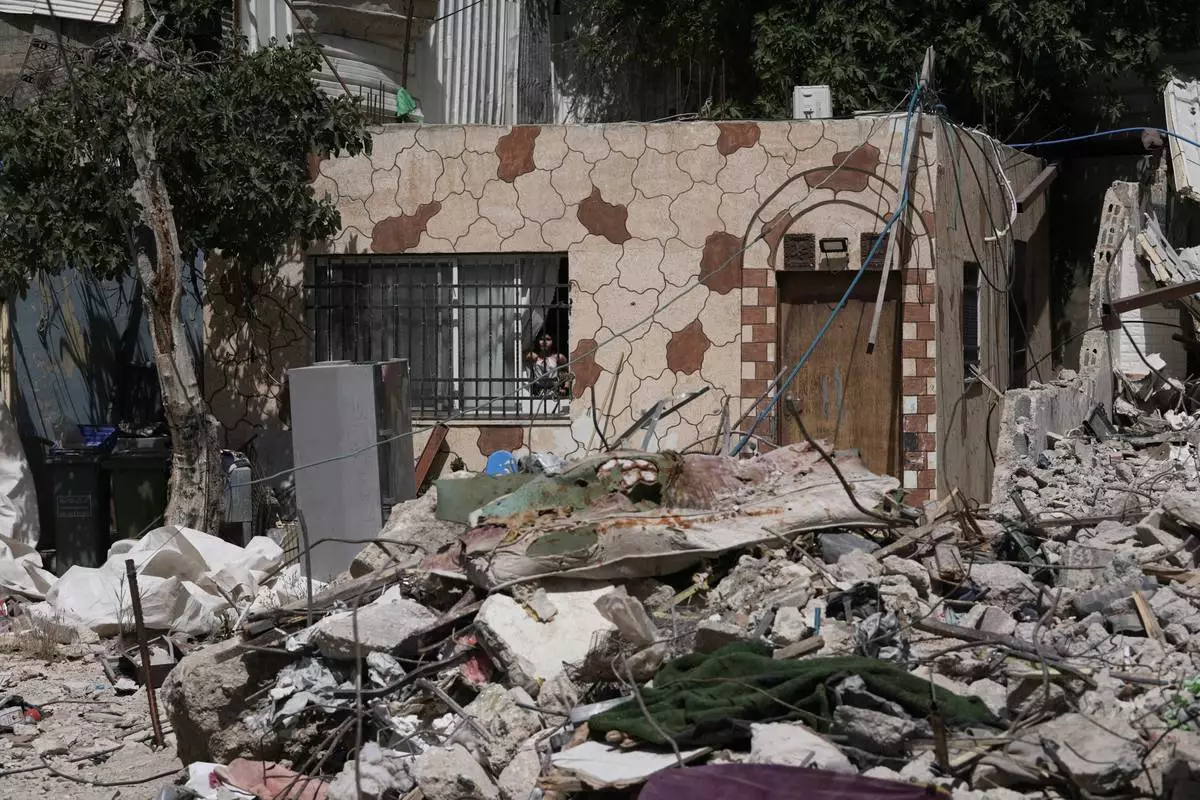
A view of the Silwan neighborhood of east Jerusalem, May 19, 2026. (AP Photo/Mahmoud Illean)

A Palestinian girl looks out a window at the rubble of a home demolished by Israeli authorities in the Silwan neighborhood of east Jerusalem, May 19, 2026. (AP Photo/Mahmoud Illean)


A Palestinian girl looks out a window at the rubble of a home demolished by Israeli authorities in the Silwan neighborhood of east Jerusalem, May 19, 2026. (AP Photo/Mahmoud Illean)
DUBAI, United Arab Emirates (AP) — The United States launched airstrikes early Wednesday against Iran after blaming Tehran for the crash of an American attack helicopter, and Iran fired back at countries in the region — another escalation that threatened to derail efforts to end the war.

Hours after Bahrain, Kuwait and Jordan came under Iranian fire, U.S. President Donald Trump posted on his his Truth Social platform that Iran was taking “too long to negotiate a deal” and that “now they will have to pay the price.”

It wasn’t clear what exactly that would mean, but the back-and-forth strikes Wednesday again raised the question of how much pressure the deal can take before it cracks. The exchange of fire was the second time this week that such strikes have tested the ceasefire after Iran and Israel targeted each other on Monday.

Trump has repeatedly vacillated between expressing optimism over the talks and warning that he was ready to return to all-out war. Iran, meanwhile, has proved resilient despite having faced weeks of heavy bombing, betting that its ability to effectively close the Strait of Hormuz — a crucial passageway for the world’s oil and natural gas — gives it a strong bargaining chip.

Both countries seem to be looking for a way to end the conflict — if they can manage to sell it as a win at home. But Israeli Prime Minister Benjamin Netanyahu appears intent on pursuing much more difficult goals: the collapse of Iran’s theocratic government, the elimination of its nuclear program, and the destruction of the Iranian-allied Hezbollah militant group in Lebanon. That will make compromise much harder.

Netanyahu posted on X around the same time as Trump, again insisting that Iran could never have a nuclear weapon and defending Israel’s decisions to attack the Islamic Republic in the past.

Since the U.S. and Israel started the war with attacks on Iran on Feb. 28, the conflict has shaken the global economy, driven up energy prices around the world, and made many basics, including food, more expensive. Brent crude oil, the international standard, was at more than $91 a barrel on Wednesday, up more than 25% since the start of the war.

In the latest strikes, U.S. fighter jets targeted “air defense, ground control stations, and surveillance radar sites,” the military’s Central Command said. Iran acknowledged strikes around Bandar Abbas and Qeshm Island, but gave no details on the damage.

“The operation was a proportional response to recent attacks on U.S. forces and international commercial ships transiting regional waters,” Central Command said.

Iran’s top diplomat vowed that there would be a response, and Tehran later claimed attacks in Kuwait, Bahrain and Jordan.

Jordan said it shot down five incoming missiles, which Iran said targeted the Muwaffaq Salti Air Base. The base has hosted American F-35 fighter jets and other aircraft.

Jordan’s state-run Petra news agency carried a military statement saying there were no injuries and that explosives experts examined the debris from the interceptions.

Bahrain and Kuwait said they intercepted incoming fire, without elaborating.

Iranian Foreign Minister Abbas Araghchi condemned the American attacks as a violation of Iranian sovereignty in calls with his counterparts from Turkey and Saudi Arabia “and emphasized the inherent right of self-defense, including reciprocal action,” according to a post on his office's Telegram channel.

Foreign Ministry spokesperson Esmail Baghaei said in televised comments Wednesday that in light of the new attacks, Iran would review its stance on negotiations to end the war.

The exchanges of fire came a day after a U.S. Army attack helicopter crashed near the Strait of Hormuz after colliding with an Iranian drone, according to a U.S. official, who spoke on condition of anonymity to discuss an ongoing investigation. It wasn’t clear whether the collision was intentional.

A drone boat rescued both of the helicopter’s aviators, and Trump said they were uninjured.

Guards aboard a cargo ship off the coast of Yemen in the Gulf of Aden exchanged fire with gunmen in a small boat and repelled their attack, the British military’s United Kingdom Maritime Trade Operations center said.

No group immediately claimed responsibility. Yemen’s Iran-backed Houthi rebels have said they will resume their attacks against Israel-affiliated ships in the Red Sea. Somali pirates have also become more active in the region.

The UKMTO later reported a fire in the engine room of a tanker in the Gulf of Oman, near the Strait of Hormuz, saying one person had been hurt and two others aboard were missing. It wasn’t immediately clear what caused the fire.

Before he accused Iran of downing the U.S. helicopter, Trump expressed renewed optimism over negotiations with Iran, but didn’t say why there was reason for hope.

While Trump, wary of high gas prices and upcoming congressional elections in November, seems to be looking for a quick win, he is also making demands that will be tough for Iran to swallow.

The U.S. wants to see Iran give up its stockpile of highly enriched uranium. While Iran insists its nuclear program is peaceful, that uranium is a short, technical step from weapons-grade levels.

Iran is refusing to give up the uranium and demanding relief from sanctions. It also wants the release of frozen assets even before a final agreement is in place, something rejected by Trump.

It's not clear how those differences can be bridged — and Trump has repeatedly threatened to walk away from the talks. On his Truth Social platform overnight he seemed to be warning again that he was ready to return to all-out war, posting a clip from the American TV series “The West Wing” with actor Martin Sheen as president bellowing: “We don’t come back with a proportional response, we come back with total disaster!”

Meanwhile, Iran has continued to insist that any deal to end the war must also end fighting between its ally Hezbollah and Israel. Instead, Israel has intensified its military campaign against the militant group.

Israel's military said on Wednesday it launched multiple strikes in southern Lebanon over the past day, targeting Hezbollah infrastructure.

An airstrike on a village east of Tyre killed at least six people, Lebanon's state-run National News Agency reported.

Associated Press writers David Rising in Bangkok; Bassem Mroue in Beirut; Michelle L. Price in New York; and Will Weissert in Washington contributed to this report.

People take shelter as air raid sirens warn of incoming Iranian missiles in Ramat Gan, Israel, Monday, June 8, 2026. (AP Photo/Oded Balilty)

People take shelter as air raid sirens warn of incoming Iranian missiles in Ramat Gan, Israel, Monday, June 8, 2026. (AP Photo/Oded Balilty)

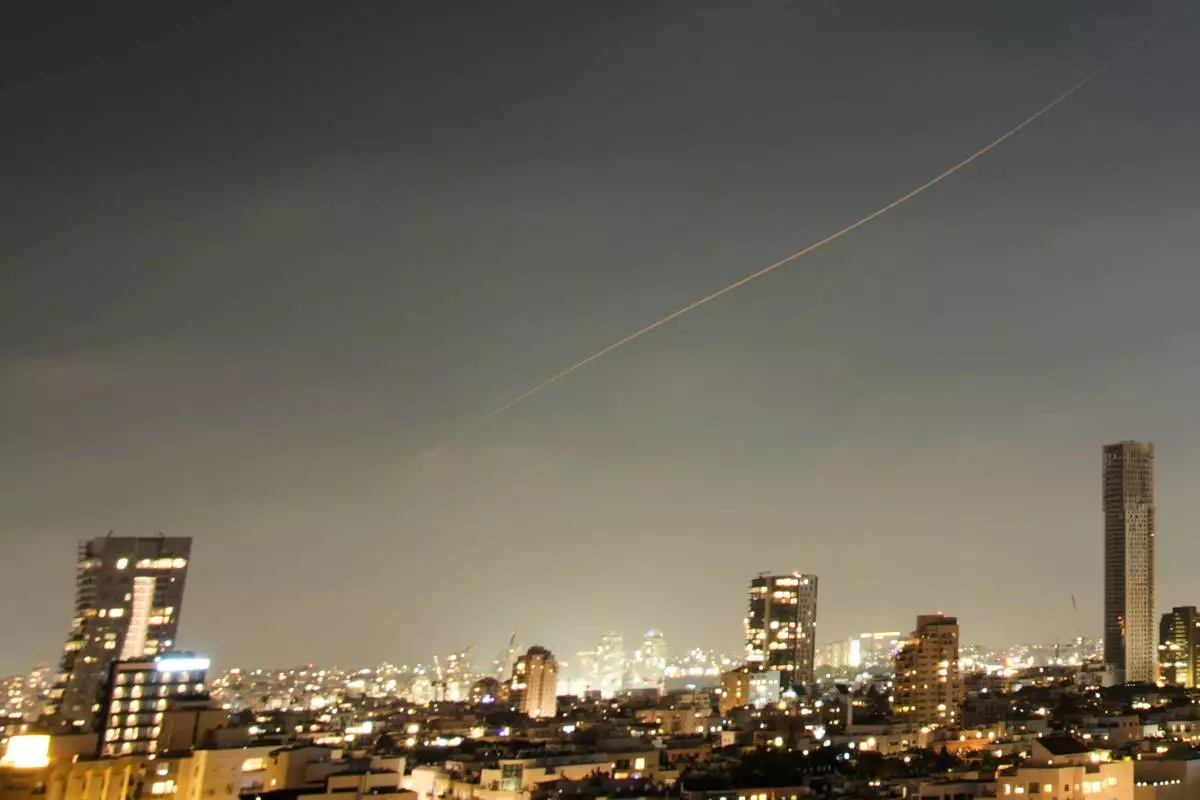
A projectile streaks through the sky over central Israel during an Iranian missile attack, Sunday, June 7, 2026. (AP Photo/Ohad Zwigenberg)

A projectile streaks through the sky over central Israel during an Iranian missile attack, Sunday, June 7, 2026. (AP Photo/Ohad Zwigenberg)

A cleric checks his cell phone on stage in front of a screen displaying portraits of the late Iranian revolutionary founder Ayatollah Khomeini, left, late Supreme Leader Ayatollah Ali Khamenei, center, and Supreme Leader Ayatollah Mojtaba Khamenei, during a pro-government gathering in Tehran, Iran, Sunday, June 7, 2026. (AP Photo/Vahid Salemi)

A cleric checks his cell phone on stage in front of a screen displaying portraits of the late Iranian revolutionary founder Ayatollah Khomeini, left, late Supreme Leader Ayatollah Ali Khamenei, center, and Supreme Leader Ayatollah Mojtaba Khamenei, during a pro-government gathering in Tehran, Iran, Sunday, June 7, 2026. (AP Photo/Vahid Salemi)

A woman walks past a mural depicting a U.S. aircraft carrier under missile attack in downtown Tehran, Iran, Monday, June 8, 2026. (AP Photo/Vahid Salemi)

A woman walks past a mural depicting a U.S. aircraft carrier under missile attack in downtown Tehran, Iran, Monday, June 8, 2026. (AP Photo/Vahid Salemi)

Recommended Articles