Skip to Content Facebook Feature Image

Ouster BlueCity Unveils 500-Foot Advanced Detection with REV8 Native Color Lidar, Defining a New Era for Intelligent Transportation Systems

Business

Ouster BlueCity Unveils 500-Foot Advanced Detection with REV8 Native Color Lidar, Defining a New Era for Intelligent Transportation Systems
Business

Business

Ouster BlueCity Unveils 500-Foot Advanced Detection with REV8 Native Color Lidar, Defining a New Era for Intelligent Transportation Systems

2026-06-10 19:03 Last Updated At:19:30

SAN FRANCISCO--(BUSINESS WIRE)--Jun 10, 2026--

Ouster, Inc. (Nasdaq: OUST) (“Ouster” or the “Company”), a leader in sensing and perception for Physical AI, announced today the release of Ouster BlueCity powered by its new Rev8 digital lidar.

This press release features multimedia. View the full release here: https://www.businesswire.com/news/home/20260610630915/en/

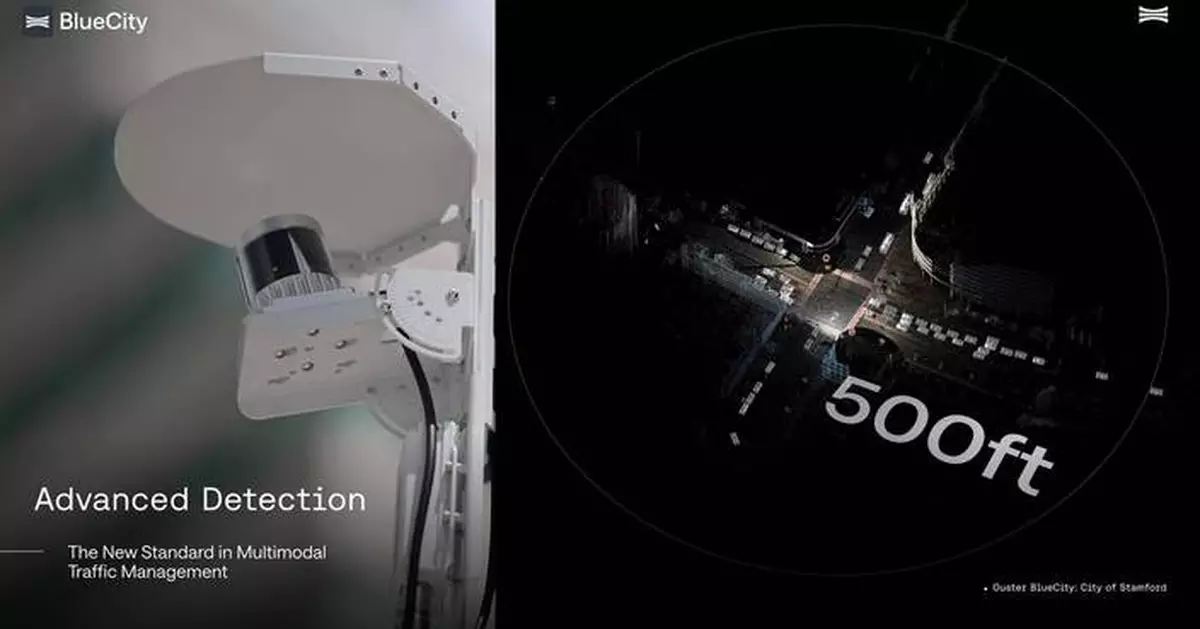
Ouster BlueCity is a complete traffic management solution combining 3D lidar with proprietary AI detection for intersection and highway multimodal actuation, alerts, and analytics. It is already the industry’s most widely deployed lidar-based traffic management solution, with over 700 contracted site deployments including the three largest deployments in the United States to date.

Ouster BlueCity with Rev8: The New Standard in Advanced Multimodal Detection

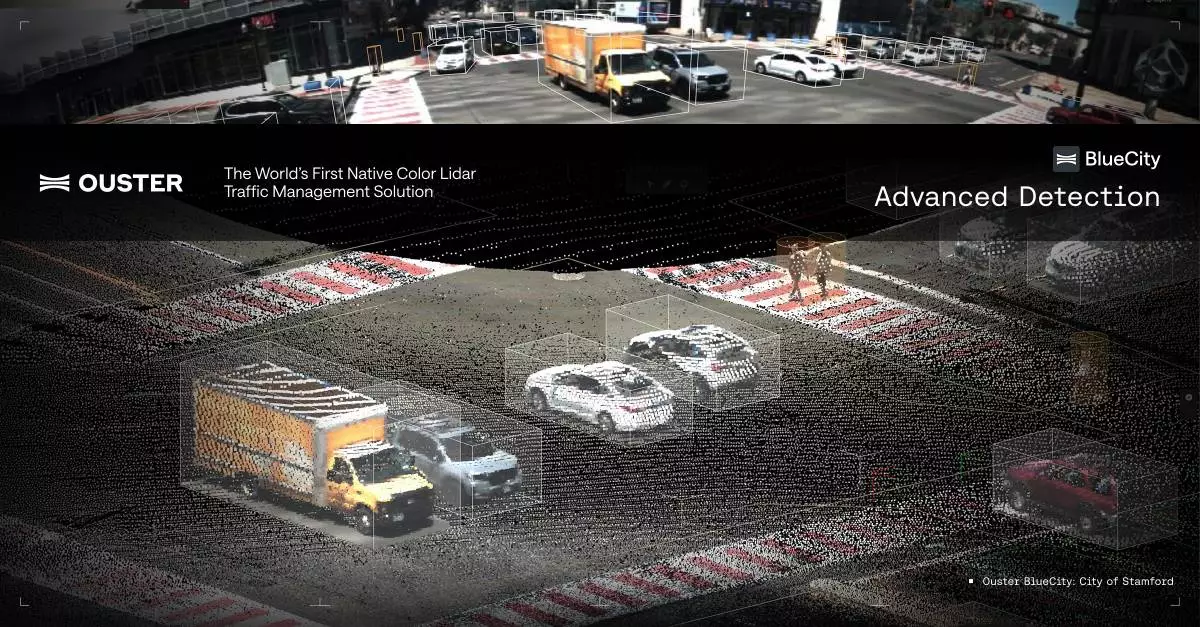
With the integration of Rev8, Ouster BlueCity introduces the world’s first native color lidar detection system, simultaneously capturing both color and 3D depth information without the need for complex calibration. This breakthrough capability provides unmatched situational awareness, including precise, high-fidelity digital traffic twins, simplified zone set-up, and more intuitive event analysis through improved color visualization. Importantly, the solution is designed for system-level privacy features at the edge while retaining the rich benefits of color data.

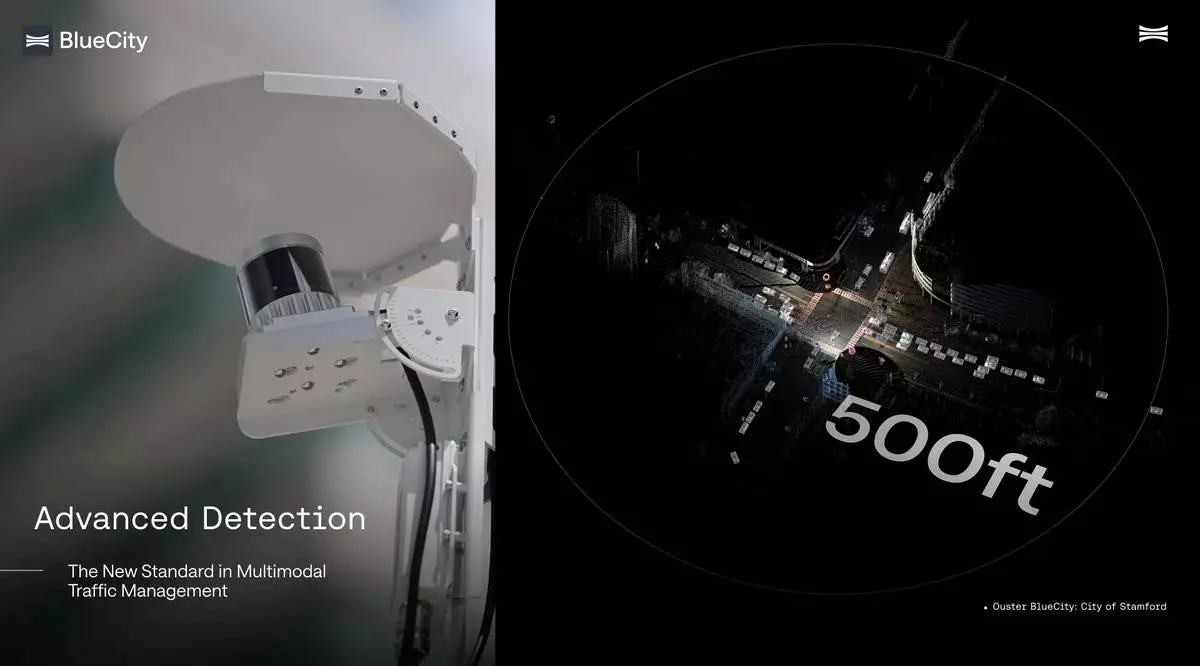
Delivering up to double the range and resolution of the previous generation, Ouster BlueCity with Rev8 also enables the advanced, long-range detection required for comprehensive, corridor-level traffic management. These added capabilities allow transportation departments to confidently reduce their sensor footprint and overall costs, while benefiting from advanced detection, tracking and classification, and more rugged and reliable hardware. With a planned 10-year production life for Rev8, Ouster BlueCity ensures long-term program stability for public infrastructure projects.

Field-Proven: Stamford, Connecticut Leads First Deployment

The City of Stamford, Connecticut was the first to install Ouster BlueCity with Rev8 native color, enabling advanced, 360° corridor-level detection to optimize traffic flow, reduce vehicle idle times, and minimize gridlock spillback. Using precise geolocation detection, the solution will also enable data-led decision making and faster interventions for complex safety events such as near-misses, speeding, and outside-of-crosswalk events. This deployment follows successful installations of the Ouster BlueCity solution earlier this year by the Connecticut Department of Transportation and Ouster’s distributor, New England Traffic Solutions.

"Ouster BlueCity with Rev8 lidar sensors allows us to take a massive leap forward in our transportation infrastructure. By capturing native color alongside longer multimodal detection range, our traffic teams gain unprecedented situational awareness to protect vulnerable road users and optimize signal timing along our busiest corridors – all while maintaining privacy for our residents,” said Stephen Frycz, Transportation Manager, City of Stamford, CT. “We’re excited to be the first in the nation to deploy this cutting-edge technology.”

Ouster BlueCity Rev8 Solution Highlights

To learn more, visit: www.ouster.com/bluecity.

About Ouster

Ouster (Nasdaq: OUST) is a leader in sensing and perception for Physical AI across industrial, robotics, automotive, and smart infrastructure. With a unified platform of high-performance digital lidar, cameras, AI compute, sensor fusion and perception software, and AI models, Ouster delivers solutions that improve quality of life in the physical world. Headquartered in San Francisco, CA, Ouster has a global presence serving thousands of customers with offices in the Americas, Europe, and Asia-Pacific. For more information about our products, visit www.ouster.com, contact our sales team, or connect with us on X or LinkedIn.

Forward-Looking Statements

This press release contains forward-looking statements within the meaning of the Private Securities Litigation Reform Act of 1995. The Company intends such forward-looking statements to be covered by the safe harbor provisions for forward-looking statements contained in Section 27A of the Securities Act of 1933, as amended and Section 21E of the Securities Exchange Act of 1934, as amended. Such statements are based upon current plans, estimates and expectations of management that are subject to various risks and uncertainties that could cause actual results to differ materially from such statements. The inclusion of forward-looking statements should not be regarded as a representation that such plans, estimates and expectations will be achieved. Words such as “offer,” “expect,” “will”, “may,” “anticipate,” “intend,” “reflect,” “should,” “plan,” “can,” “could,” “estimate,” “possible,” “potential,” “pursue,” “demonstrate,” and the negative of these terms and similar expressions are intended to identify forward-looking statements, though not all forward-looking statements use these words or expressions. All statements, other than historical facts, including statements regarding the capabilities and applications of Ouster’s products, including with respect to the opportunity to reduce traffic congestion, optimize traffic flow, and improve transportation safety using Ouster BlueCity with Rev8 lidar sensors; uses for Physical AI; future growth and opportunities; and competitive position constitute forward-looking statements. All forward-looking statements are subject to risks and uncertainties that may cause actual results to differ materially from those that we expected, including, but not limited to, the possibility of cancellation or postponement of contracts or unsuccessful implementations; risks related to the adoption of Ouster’s products, product quality and liability risks; Ouster’s ability to respond to evolving regulations and standards; and other important risk factors discussed in the Company’s Annual Report on Form 10-K for the year ended December 31, 2025, and as may be further updated from time to time in the Company’s Quarterly Reports on Form 10-Q and other filings with the SEC. Readers are urged to consider these factors carefully and in the totality of the circumstances when evaluating these forward-looking statements, and not to place undue reliance on any of them. Any such forward-looking statements represent management’s reasonable estimates and beliefs as of the date of this press release. While Ouster may elect to update such forward-looking statements at some point in the future, it disclaims any obligation to do so, other than as may be required by law, even if subsequent events cause its views to change.
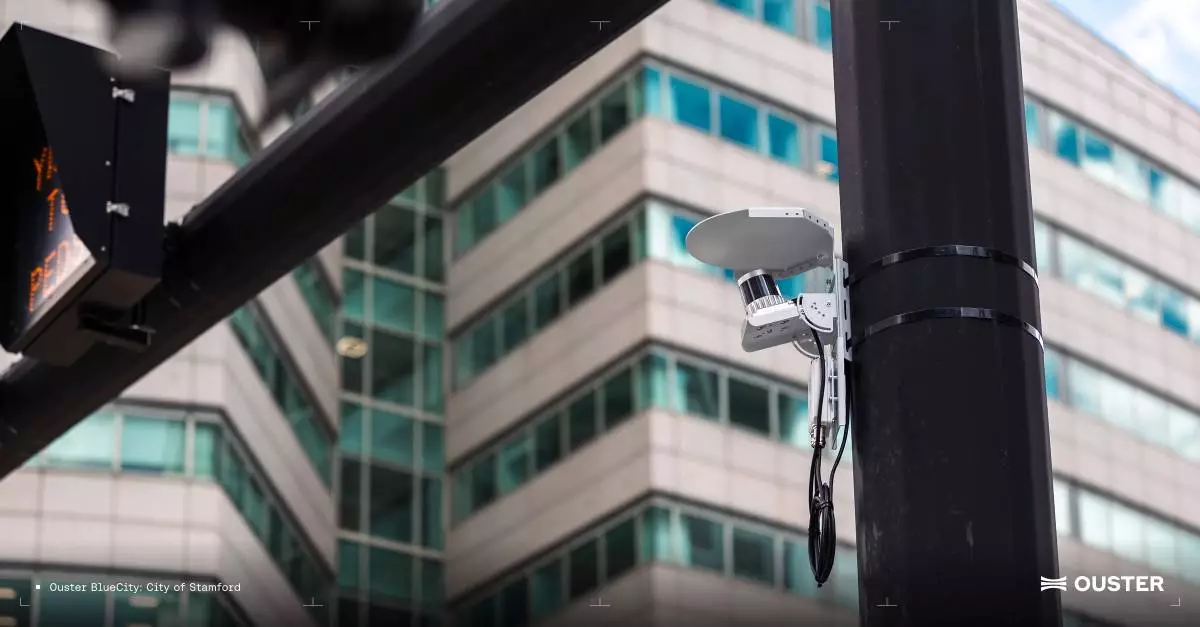
Ouster BlueCity with Rev8 native color lidar deployed in Stamford, Connecticut.
Ouster BlueCity with Rev8 native color lidar deployed in Stamford, Connecticut.

Ouster BlueCity with Rev8, the world's first native color lidar traffic management solution, deployed in Stamford, CT.
Ouster BlueCity with Rev8, the world's first native color lidar traffic management solution, deployed in Stamford, CT.

Ouster BlueCity with Rev8 for 500ft advanced detection, deployed in Stamford, CT.

Ouster BlueCity with Rev8 for 500ft advanced detection, deployed in Stamford, CT.

DUBAI, United Arab Emirates (AP) — The United States launched airstrikes early Wednesday against Iran after blaming Tehran for the crash of an American attack helicopter, and Iran fired back at countries in the region — another escalation that threatened to derail efforts to end the war.

Hours after Bahrain, Kuwait and Jordan came under Iranian fire, U.S. President Donald Trump posted on his his Truth Social platform that Iran was taking “too long to negotiate a deal” and that “now they will have to pay the price.”

It wasn’t clear what exactly that would mean, but the back-and-forth strikes Wednesday again raised the question of how much pressure the deal can take before it cracks. The exchange of fire was the second time this week that such strikes have tested the ceasefire after Iran and Israel targeted each other on Monday.

Trump has repeatedly vacillated between expressing optimism over the talks and warning that he was ready to return to all-out war. Iran, meanwhile, has proved resilient despite having faced weeks of heavy bombing, betting that its ability to effectively close the Strait of Hormuz — a crucial passageway for the world’s oil and natural gas — gives it a strong bargaining chip.

Both countries seem to be looking for a way to end the conflict — if they can manage to sell it as a win at home. But Israeli Prime Minister Benjamin Netanyahu appears intent on pursuing much more difficult goals: the collapse of Iran’s theocratic government, the elimination of its nuclear program, and the destruction of the Iranian-allied Hezbollah militant group in Lebanon. That will make compromise much harder.

Since the U.S. and Israel started the war with attacks on Iran on Feb. 28, the conflict has shaken the global economy, driven up energy prices around the world, and made many basics, including food, more expensive. Brent crude oil, the international standard, was at more than $91 a barrel on Wednesday, up more than 25% since the start of the war.

In the latest strikes, U.S. fighter jets targeted “air defense, ground control stations, and surveillance radar sites,” the military’s Central Command said. Iran acknowledged strikes around Bandar Abbas and Qeshm Island, but gave no details on the damage.

“The operation was a proportional response to recent attacks on U.S. forces and international commercial ships transiting regional waters,” Central Command said.

Iran’s top diplomat vowed that there would be a response, and Tehran later claimed attacks in Kuwait, Bahrain and Jordan.

Jordan said it shot down five incoming missiles, which Iran said targeted the Muwaffaq Salti Air Base. The base has hosted American F-35 fighter jets and other aircraft.

Jordan’s state-run Petra news agency carried a military statement saying there were no injuries and that explosives experts examined the debris from the interceptions.

Bahrain and Kuwait said they intercepted incoming fire, without elaborating.

Iranian Foreign Minister Abbas Araghchi condemned the American attacks as a violation of Iranian sovereignty in calls with his counterparts from Turkey and Saudi Arabia “and emphasized the inherent right of self-defense, including reciprocal action,” according to a post on his office's Telegram channel.

Foreign Ministry spokesperson Esmail Baghaei said in televised comments Wednesday that in light of the new attacks, Iran would review its stance on negotiations to end the war.

The exchanges of fire came a day after a U.S. Army attack helicopter crashed near the Strait of Hormuz after colliding with an Iranian drone, according to a U.S. official, who spoke on condition of anonymity to discuss an ongoing investigation. It wasn’t clear whether the collision was intentional.

A drone boat rescued both of the helicopter’s aviators, and Trump said they were uninjured.

Guards aboard a cargo ship off the coast of Yemen in the Gulf of Aden exchanged fire with gunmen in a small boat and repelled their attack, the British military’s United Kingdom Maritime Trade Operations center said.

No group immediately claimed responsibility. Yemen’s Iran-backed Houthi rebels have said they will resume their attacks against Israel-affiliated ships in the Red Sea. Somali pirates have also become more active in the region.

The UKMTO later reported a fire in the engine room of a tanker in the Gulf of Oman, near the Strait of Hormuz, saying one person had been hurt and two others aboard were missing. It wasn’t immediately clear what caused the fire.

Before he accused Iran of downing the U.S. helicopter, Trump expressed renewed optimism over negotiations with Iran, but didn’t say why there was reason for hope.

While Trump, wary of high gas prices and upcoming congressional elections in November, seems to be looking for a quick win, he is also making demands that will be tough for Iran to swallow.

The U.S. wants to see Iran give up its stockpile of highly enriched uranium. While Iran insists its nuclear program is peaceful, that uranium is a short, technical step from weapons-grade levels.

Iran is refusing to give up the uranium and demanding relief from sanctions. It also wants the release of frozen assets even before a final agreement is in place, something rejected by Trump.

It's not clear how those differences can be bridged — and Trump has repeatedly threatened to walk away from the talks. On his Truth Social platform overnight he seemed to be warning again that he was ready to return to all-out war, posting a clip from the American TV series “The West Wing” with actor Martin Sheen as president bellowing: “We don’t come back with a proportional response, we come back with total disaster!”

Meanwhile, Iran has continued to insist that any deal to end the war must also end fighting between its ally Hezbollah and Israel. Instead, Israel has intensified its military campaign against the militant group.

Israel's military said on Wednesday it launched multiple strikes in southern Lebanon over the past day, targeting Hezbollah infrastructure.

An airstrike on a village east of Tyre killed at least six people, Lebanon's state-run National News Agency reported.

Associated Press writers David Rising in Bangkok; Bassem Mroue in Beirut; Michelle L. Price in New York; and Will Weissert in Washington contributed to this report.

People take shelter as air raid sirens warn of incoming Iranian missiles in Ramat Gan, Israel, Monday, June 8, 2026. (AP Photo/Oded Balilty)

People take shelter as air raid sirens warn of incoming Iranian missiles in Ramat Gan, Israel, Monday, June 8, 2026. (AP Photo/Oded Balilty)

A projectile streaks through the sky over central Israel during an Iranian missile attack, Sunday, June 7, 2026. (AP Photo/Ohad Zwigenberg)

A projectile streaks through the sky over central Israel during an Iranian missile attack, Sunday, June 7, 2026. (AP Photo/Ohad Zwigenberg)

A cleric checks his cell phone on stage in front of a screen displaying portraits of the late Iranian revolutionary founder Ayatollah Khomeini, left, late Supreme Leader Ayatollah Ali Khamenei, center, and Supreme Leader Ayatollah Mojtaba Khamenei, during a pro-government gathering in Tehran, Iran, Sunday, June 7, 2026. (AP Photo/Vahid Salemi)

A cleric checks his cell phone on stage in front of a screen displaying portraits of the late Iranian revolutionary founder Ayatollah Khomeini, left, late Supreme Leader Ayatollah Ali Khamenei, center, and Supreme Leader Ayatollah Mojtaba Khamenei, during a pro-government gathering in Tehran, Iran, Sunday, June 7, 2026. (AP Photo/Vahid Salemi)

A woman walks past a mural depicting a U.S. aircraft carrier under missile attack in downtown Tehran, Iran, Monday, June 8, 2026. (AP Photo/Vahid Salemi)

A woman walks past a mural depicting a U.S. aircraft carrier under missile attack in downtown Tehran, Iran, Monday, June 8, 2026. (AP Photo/Vahid Salemi)

Recommended Articles