China's commitment to developing bilateral ties with the Democratic People's Republic of Korea (DPRK) is conducive to regional stability, a Chinese expert said on Tuesday.
Xi Jinping, general secretary of the Communist Party of China (CPC) Central Committee and Chinese president, paid a state visit to the DPRK from Monday to Tuesday.
During talks with Kim Jong Un, general secretary of the Workers' Party of Korea and president of the State Affairs of the DPRK on Monday, Xi stressed that regardless of how the international landscape evolves, China's three commitments to the DPRK will remain unchanged.
He stated that the CPC and Chinese government's firm stance on highly valuing China-DPRK traditional friendship will not change, the firm support for General Secretary Kim in leading the DPRK's socialist cause will not change, and the firm commitment to safeguarding the shared interests of the two countries and preserving a favorable strategic environment will not change.
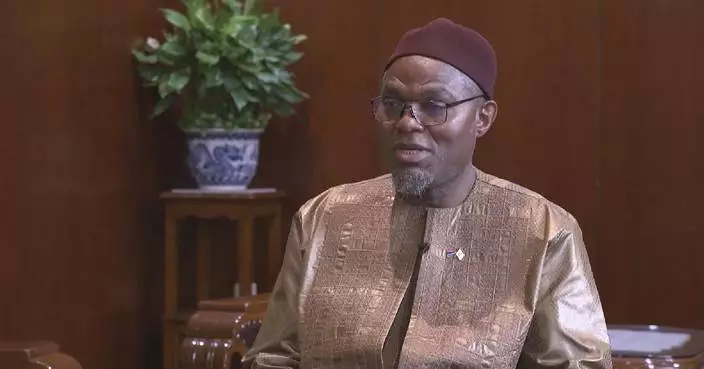
Li Jun, director of the Institute of Asia-Pacific and African Studies at the Party School of the CPC Central Committee, explained the political vision behind the commitments during an interview with China Global Television Network (CGTN).
"As General Secretary Xi Jinping has emphasized, the traditional friendship between China and the DPRK is a valuable common asset shared by both sides. The essence of the three unshakable commitments lies in stability and certainty. They help prevent Northeast Asia from sliding into a new Cold War or falling into bloc confrontation, thereby laying a solid foundation and providing a strong guarantee for lasting peace and stability in the region," Li said. "General Secretary Xi put forward three unshakable commitments regarding China-DPRK relations in 2018 and China's firm supports to the DPRK in three aspects in 2019. The newly proposed three commitments can be seen as both an inheritance and a development of those earlier propositions. They are consistent in spirit and form an integrated continuum, while also pointing the way forward for the future development of China-DPRK relations. These commitments clearly convey China's firm resolve to safeguard regional peace and stability and prevent conflict and turmoil in the region. They help build mutual trust and create space for cooperation in advancing the political settlement process of the Korean Peninsula issue," Li added.
Xi also called for upholding fairness and justice as a guiding principle to enrich the substance of strategic coordination. Xi said that, in response to the major question of where humanity is headed, he has proposed the vision of building a community with a shared future for humanity and the four global initiatives, which aim to steer global governance toward greater fairness and justice and have won broad support and positive responses from the international community, including the DPRK.
Noting that Asia is the common home where regional countries, including China and the DPRK, live and thrive, Xi said that the two countries should strengthen strategic coordination, firmly safeguard their respective sovereignty, security and development interests, and jointly uphold regional peace and development.
"This fully reflects the transformation and upgrading of China-DPRK relations. As socialist countries led by communist parties, China and the DPRK share common ideals, convictions, and development goals. This provides a strong foundation for the two countries to develop a distinctive form of cooperation in regional and global governance. Moreover, the continued development of China-DPRK relations contributes to upholding the international system with the United Nations at its core, safeguarding the post-war international order, and advancing an equal and orderly multipolar world," said Li.
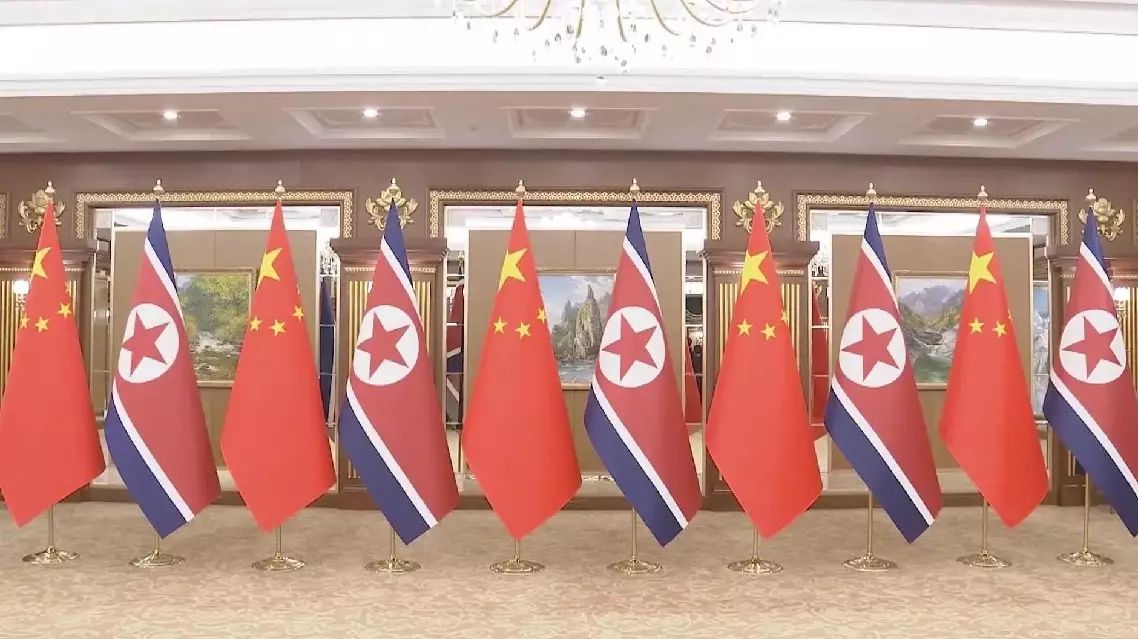
China's commitment to bilateral ties with DPRK conducive to regional stability: expert