INDIANAPOLIS (AP) — Offseason ankle surgery has kept receiver Alec Pierce out for all of the Indianapolis Colts' offseason workouts.
It may limit his activity — or keep him off the field — for the start of training camp, too.
Pierce told reporters Wednesday that doctors expected it would take his left ankle four to six months to fully recover from a late May procedure, which was done shortly after he signed a four-year, $114 million contract to remain in Indianapolis.
“We talked with the doctors, and I think we determined surgery was the smartest play for the long term,” he said. “They kind of were saying I was going to have to do it at some point, and then when I asked him what the time frame was, they said like four to six months. It was late March, so then I was like, 'OK, four months gets me basically to camp, kind of somewhere in there I should be back.”
Pierce said he played with the injury since late in the 2024 season and it bothered him all of last year, though he felt more discomfort over the final month of 2025. Following the season, he tried a platelet-rich plasma injection, which uses a person's own blood to accelerate healing, to see if it would help and then spent two or three weeks in a walking boot.
When it didn't work after two months, Pierce opted for surgery.
“We were seeing how that shot reacted, and it seemed like that kind of helped heal it, but I don't think it did as much as we wanted it to," Pierce said. “Even then, I'm walking. I'm saying, ‘I don’t think this is working.' They're telling me like, ‘You’ve got to wait, like this is a thing that takes time to heal.”
Yet the injury didn’t seem to hinder his productivity on the field. The former University of Cincinnati standout averaged 22.3 yards per reception in 2024 and 21.3 yards in 2025, posting the league's top numbers among all qualifiers.
If Pierce isn't ready at the start of camp, the Colts would be without their new No. 1 receiver, and their starting quarterback, Daniel Jones, also could be limited. Jones is still rehabbing from a torn right Achilles tendon that ended his 2025 season in early December and though he's been doing position group work and 7-on-7 drills the last two weeks, he still isn't cleared for 11-on-11.
Jones and the Colts remain hopeful he will be ready to take that next step in his recovery when players report to camp next month in a suburb on the northwest side of Indianapolis. The former New York Giants starter also opted to return to Indy, accepting a two-year deal worth up to $100 million after his one-year contract expired in March.
“He’s on track right now, so I think that’s a big part of it,” coach Shane Steichen said when asked about Jones on Tuesday, the first day of the team's three-day mandatory minicamp. "But again, I mean if he’s full go and ready to go, we’re not going to hold back anything.”
Jones and Pierce developed quite the connection last season.
Pierce caught 33 passes of the 59 passes Jones threw his way, finishing with 689 yards and two touchdown catches in the 10 games they played together before Jones' season-ending injury. Pierce finished the year with 47 receptions and 1,003 yards, both career bests, and six TDs.
His performance and steady improvement over his first four NFL seasons led the Colts to trade Michael Pittman Jr. to the Pittsburgh Steelers, clearing the way for Pierce to take over this season as the No. 1 receiver.
All Pierce has to do now is get healthy.
“We want the (return) date to be as early as possible,” Pierce said. “But I have to kind of let my body guide it and see how you feel. The more you overdo it, the more sore you get can kind of sometimes be counterproductive. So I'm learning when to push through the pain and soreness and when to back off.”
AP NFL: https://apnews.com/hub/NFL

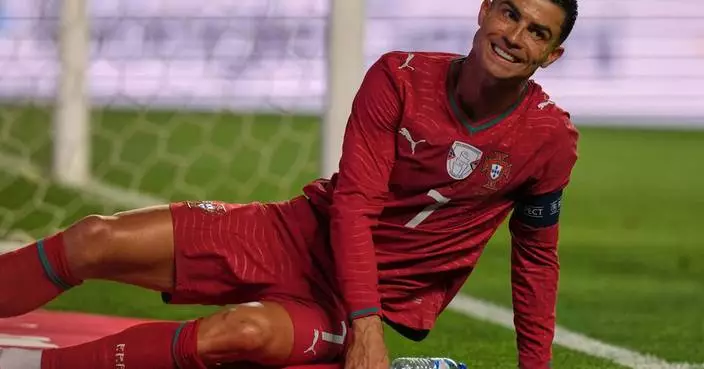
FILE - Indianapolis Colts wide receiver Alec Pierce (14) runs after catching a pass during the first half of an NFL football game against the Jacksonville Jaguars, Dec. 7, 2025, in Jacksonville, Fla. (AP Photo/Phelan M. Ebenhack, File)
DUBAI, United Arab Emirates (AP) — The U.S. military said Wednesday it has begun another round of strikes against Iran after President Donald Trump said more were coming. The escalating attacks threatened to derail efforts to end the war, with Trump warning that Tehran would “pay the price” for stalled negotiations.
U.S. Central Command said in a social media post that the military is striking “multiple targets in Iran” and that it’s being done “in response to Iran’s unwarranted and continued aggression.”
The second day of American strikes came hours after Bahrain, Kuwait and Jordan — all of which host U.S. troops — came under Iranian fire. It was the third time this week that back-and-forth strikes have tested a two-month ceasefire. They also came a day after the U.S. struck Iran following the crash of an Army helicopter near the Strait of Hormuz that Trump blamed on the Islamic Republic.
Trump urged Iran to sign a deal to end the war.
Earlier Wednesday, the U.S. military said it had fired on an oil tanker attempting to transport oil from Iran in violation of its blockade on Iranian ports.
Trump's comments underlined his whipsaw approach to the war; earlier this week he suggested a deal to end the conflict could be reached in a matter of days.
Iran has proved resilient despite weeks of heavy bombing. It is betting that its ability to effectively close the Strait of Hormuz — a crucial passageway for oil and natural gas — gives it a strong bargaining chip.
Iran’s United Nations envoy said the U.S. should refrain from threats of force if it wants a deal.
“Iran has never negotiated under threats and pressure and will never submit to pressure or question,” Ambassador Amir Saeid Iravani told the U.N. Security Council on Wednesday.
Still, both countries seem to be looking for a way to end the conflict — if they can manage to sell it as a win at home.
Israeli Prime Minister Benjamin Netanyahu appears intent on pursuing goals that make compromise harder: the collapse of Iran’s theocratic government, the elimination of its nuclear program, and the destruction of the Iranian-allied Hezbollah militant group in Lebanon. On Monday, Iran and Israel targeted each other.
Since the U.S. and Israel started the war with Feb. 28 attacks on Iran, the conflict has shaken the global economy, driven up energy prices worldwide, and made food and other basics more expensive.
The international benchmark for crude oil traded above $93 a barrel on Wednesday, up more than 25% since the start of the war.
Trump said Wednesday the U.S. military has since last month undertaken a “secret mission” to sneak oil shipments past Iran’s forces in the Strait of Hormuz. He said ships were slipping through at night, aided by the destruction of Iranian radar equipment.
Trump said as a result more than 100 million barrels of oil have evaded Iran’s chokehold on the strait. There was no immediate confirmation of that figure, which roughly equals five days of oil shipments through the waterway before the war began.
The military’s role was not immediately clear. Capt. Tim Hawkins, a Central Command spokesman, said U.S. forces “communicate and coordinate” with commercial ships in the area, but gave no details on military support being offered.
The U.S. military said Wednesday an American aircraft fired “precision munitions” into the engine room of the Palau-flagged vessel M/T Settebello as it attempted to breach the naval blockade with a shipment of Iranian oil. It was the eighth merchant vessel disabled by U.S. forces in waters off Iran.
India’s foreign ministry said three Indian sailors were missing after the Settebello was struck, while 21 others were rescued. Its statement did not mention the U.S. military or the blockade.
Hawkins of U.S. Central Command said American forces warned the crew before firing on the ship.
The U.S. military said strikes earlier Wednesday targeted “air defense, ground control stations, and surveillance radar sites."
Iran said U.S. strikes hit two water reservoirs in the southern city of Sirik, temporarily cutting off water to thousands of people. U.S. Central Command had no immediate comment.
Tehran later claimed attacks in Kuwait, Bahrain and Jordan.
Jordan said it shot down five incoming missiles, which Iran said targeted an air base hosting American military aircraft.
Bahrain and Kuwait said they intercepted incoming fire.
Iranian Foreign Minister Abbas Araghchi condemned the American attacks as a violation of Iranian sovereignty. Foreign Ministry spokesperson Esmail Baghaei said in televised comments that, following the new attacks, Iran would review its stance on negotiations to end the war.
Efforts to mediate a deal continued. Following consultations with the U.S., a delegation from Qatar arrived in Tehran for talks on Wednesday, according to an official with knowledge of the visit who requested anonymity due to the sensitivity of the talks.
The exchanges of fire came a day after a U.S. Army attack helicopter crashed near the Strait of Hormuz. The helicopter collided with an Iranian drone, according to a U.S. official speaking on condition of anonymity to discuss an ongoing investigation. It wasn’t clear whether the collision was intentional.
A drone boat rescued the helicopter’s two crew. Trump said they were uninjured.
Wary of high gas prices in the run-up to congressional elections in November, Trump seems to be looking for a quick win. But he is also making demands that will be tough for Iran to swallow.
The U.S. wants to see Iran give up its stockpile of highly enriched uranium. While Iran insists its nuclear program is peaceful, that uranium is a short technical step from weapons-grade levels.
Iran is refusing to give up the uranium and demanding relief from sanctions. It also wants the release of frozen assets even before a final agreement is in place, something Trump rejected.
It's not clear how those differences can be bridged. In a Truth Social post Wednesday, Trump said Iran was taking “too long to negotiate a deal" and "now they will have to pay the price!!!”
Iran has insisted that any deal to end the war must also end fighting between its ally Hezbollah and Israel. Israel has instead intensified its military campaign against the Lebanon-based militant group.
An airstrike on a village east of Tyre killed at least six people, Lebanon's state-run National News Agency reported. It said two others were killed by an Israeli drone strike on a car in the southern city of Sidon.
Price reported from Washington. Associated Press writers Konstantin Toropin and Will Weissert in Washington; Natalie Melzer in Nahariya, Israel; David Rising in Bangkok; Bassem Mroue in Beirut; Michelle L. Price in New York; Russ Bynum in Savannah, Georgia, and Hannah Schoenbaum in Salt Lake City contributed to this report.
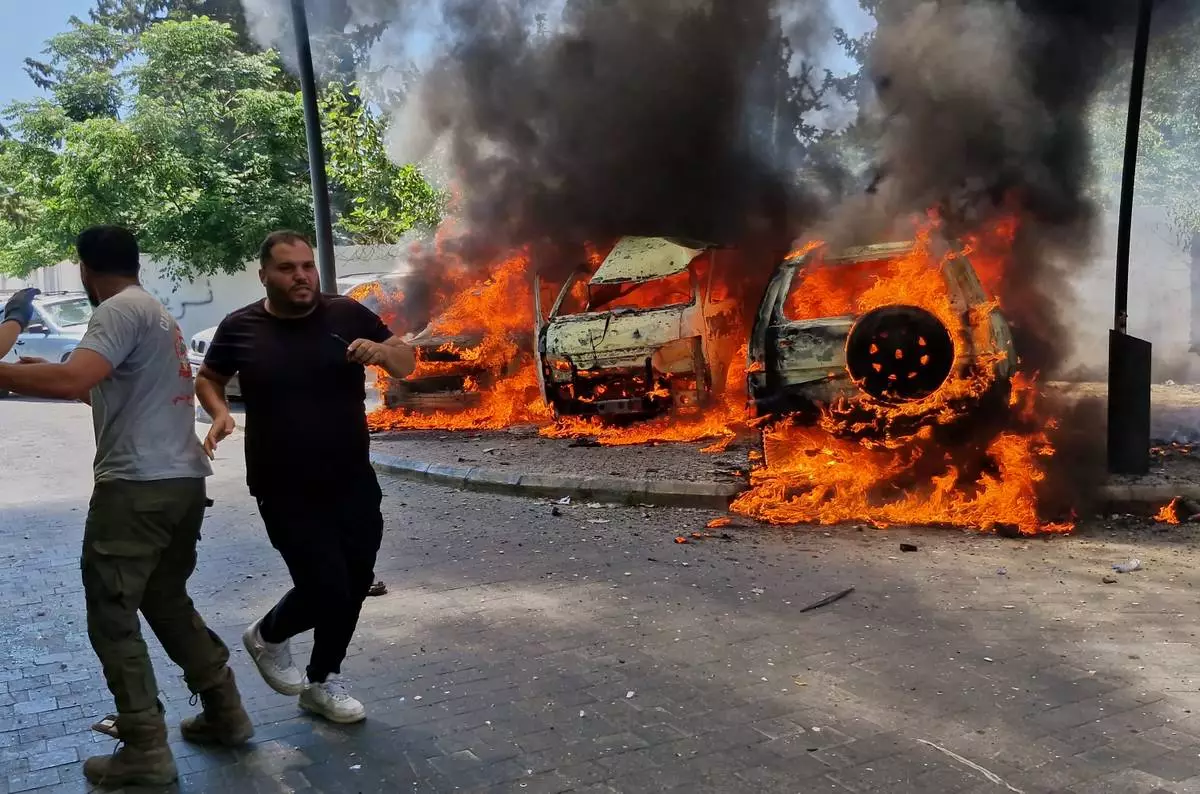
A man runs past burning cars following an Israeli airstrike in the southern port city of Sidon, Lebanon, Wednesday, June 10, 2026. (AP Photo/Mohammed Zaatari)

People take shelter as air raid sirens warn of incoming Iranian missiles in Ramat Gan, Israel, Monday, June 8, 2026. (AP Photo/Oded Balilty)

A projectile streaks through the sky over central Israel during an Iranian missile attack, Sunday, June 7, 2026. (AP Photo/Ohad Zwigenberg)
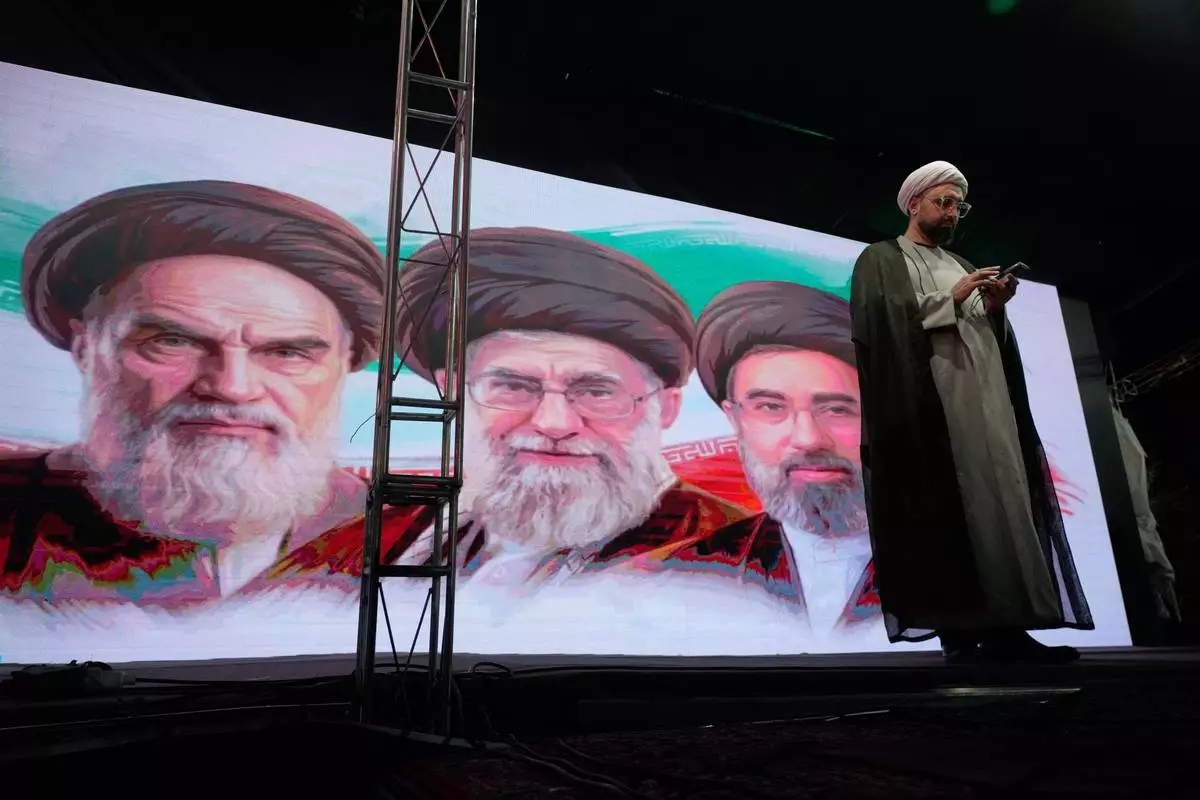
A cleric checks his cell phone on stage in front of a screen displaying portraits of the late Iranian revolutionary founder Ayatollah Khomeini, left, late Supreme Leader Ayatollah Ali Khamenei, center, and Supreme Leader Ayatollah Mojtaba Khamenei, during a pro-government gathering in Tehran, Iran, Sunday, June 7, 2026. (AP Photo/Vahid Salemi)
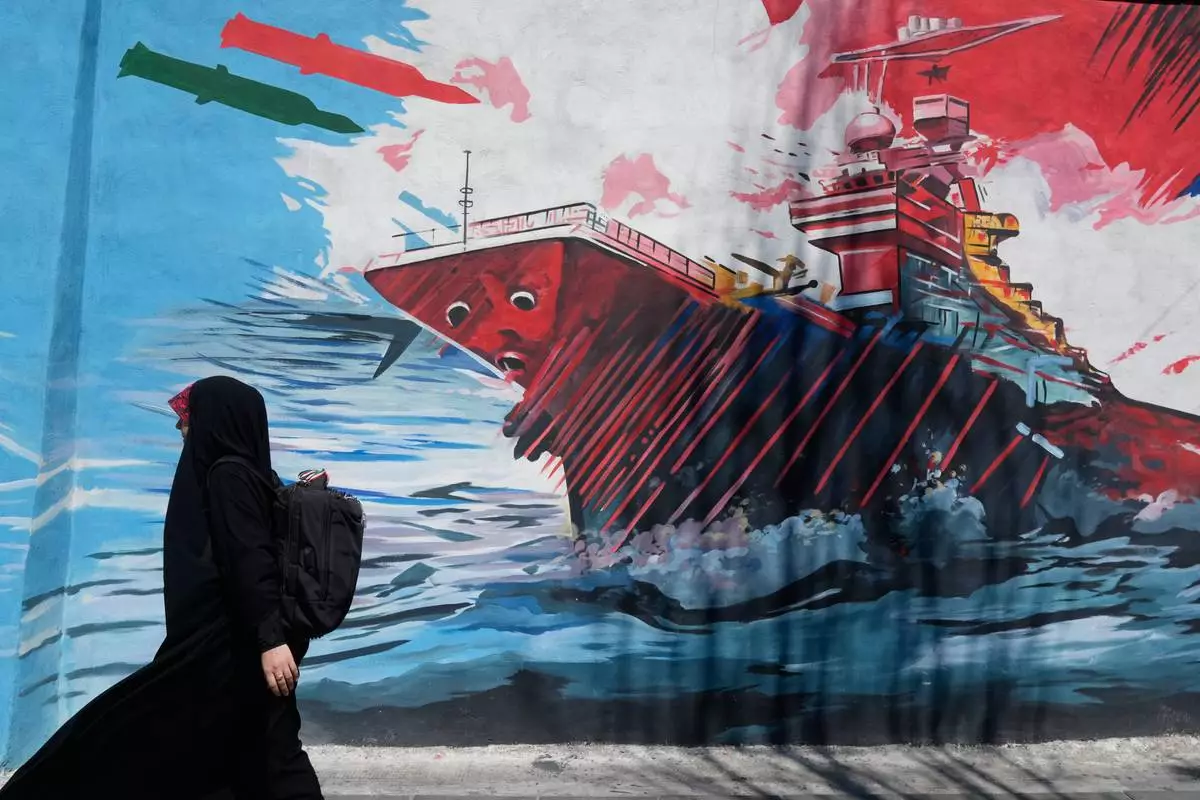
A woman walks past a mural depicting a U.S. aircraft carrier under missile attack in downtown Tehran, Iran, Monday, June 8, 2026. (AP Photo/Vahid Salemi)