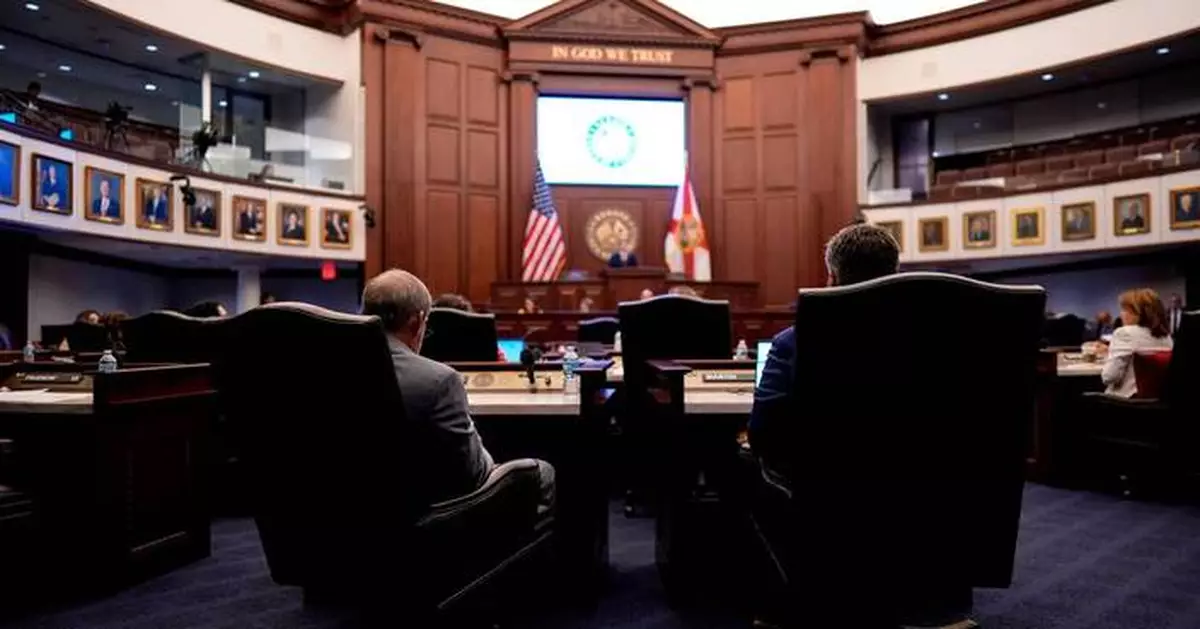
The Florida Supreme Court on Wednesday allowed new U.S. House districts drawn by Republicans to be used in the midterm elections, marking another victory for the GOP in a nationwide redistricting effort aimed at helping the party retain its slim House majority.
Attorneys for voters who sued had argued that the new congressional districts violate a state constitutional prohibition on partisan gerrymandering, and that the court should order the state to continue using the same districts as in the previous election. The Supreme Court, in a 6-1 decision, denied their request for a temporary injunction without ruling on the merits of the case. The judges said they lacked jurisdiction to intervene while the lawsuit gradually plays out in the lower courts.
Republicans already hold 20 of Florida’s 28 U.S. House seats. The new voting districts signed into law by Republican Gov. Ron DeSantis after a swift two-day special legislative session could improve the GOP’s chances to win four additional seats this year.
The court's decision provides some certainty for prospective congressional candidates, who face a Friday deadline to qualify for the state's Aug. 18 primaries.
Republican Attorney General James Uthmeier, who defended the new districts in court, declared “complete and total victory” in a social media post.
Opponents expressed outrage while vowing to continue the court fight, even though it may stretch into the 2028 election cycle.
“The Florida Supreme Court's failure to stop this brazen partisan power grab is not only an assault on democracy, but an abdication of its duty to the people of Florida,” said Genesis Robinson, executive director of Equal Ground, a community organizing group that sued.
The new districts are “a pretty clear partisan gerrymander,” said Amy Keith, executive director of Common Cause Florida. “We’re going to do everything we can to prevent this map from impacting further, future elections.”
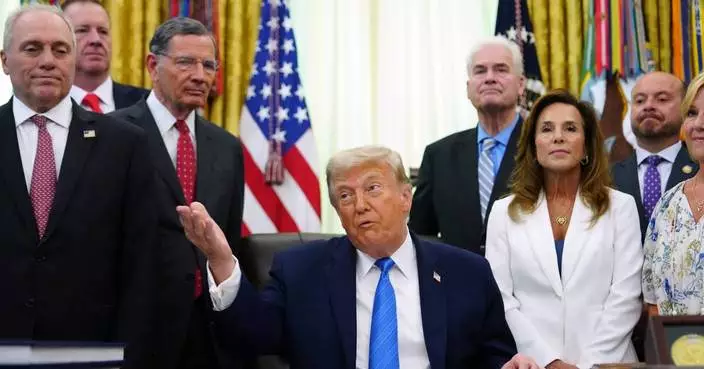
Voting districts typically are redrawn after a census near the beginning of each decade. Florida is one of several Republican-led states that have undertaken mid-decade redistricting as part of President Donald Trump’s plan to try to hold on to a slim House majority in November by reshaping district boundaries to the GOP’s advantage.
Florida’s legislature approved the new House map on April 29 — the same day the U.S. Supreme Court weakened federal Voting Rights Act protections for minorities while striking down a majority-Black congressional district in Louisiana. Since then, several Southern states have taken steps to try to eliminate minority districts that have elected Democrats.
DeSantis had called lawmakers into a special session before the high court’s ruling, but he had anticipated the eventual outcome. DeSantis’ office asserted that no racial data was used for the map he presented to the Legislature. The new map, among other things, redraws a southeastern Florida district that DeSantis’ office said was created to help elect a Black representative in an attempt to comply with the federal Voting Rights Act.
In addition to barring partisan gerrymandering, a constitutional amendment approved by Florida voters in 2010 also prohibits districts from being drawn to deny or diminish the ability of racial or language minorities to elect the representatives of their choice. It further requires districts to be compact and, where feasible, use existing political and geographic boundaries.
In a memo to lawmakers, DeSantis’ General Counsel David Axelman asserted that the racial redistricting provision of Florida’s Fair Districts Amendment violates the U.S. Constitution. If one element is invalid, Axelman wrote, then the entire 2010 amendment is void, including provisions barring partisan gerrymandering.
Attorneys representing state officials made similar arguments to the Florida Supreme Court, after a lower court judge last month declined to issue a preliminary injunction against the new map. They also argued it was too late in the election season to revert to the previous maps.
In a filing with the Florida Supreme Court, attorneys representing state officials said the new map was “cause for celebration” during America’s 250th anniversary. “Perhaps for the first time in Florida’s history, the State has a truly colorblind map; a map that refuses to assault the dignity of men and women by color-coding them,” their court filing said.
Attorneys who sued on behalf of voters argued the new districts were crafted with political favoritism. They argued in documents filed with the state Supreme Court that the new congressional districts are “among the most extreme partisan gerrymanders enacted in any state over the past half-century.”
Under the new House map, 82% of voters in districts represented by Republicans remain in the same districts as under the previous map, said attorney Chris Shenton, who represented Common Cause and other groups challenging the map. Just 41% of voters in districts represented by Democrats are kept in their same districts, he said.
The Supreme Court's majority issued only a brief written opinion, but two of its members elaborated about the importance of the case. In a concurring opinion, Justice Adam Tanenbaum said the judicial system follows a deliberative process, and “there is no need for special treatment in this case.”
In a dissent, Justice Jorge Labarga expressed frustration that an appellate court hadn't sent the case straight to the Supreme Court. He said the state constitution “anticipates that some matters may be so urgent as to require an expedited path to this Court.”
“Surely, the upcoming 2026 congressional elections affecting the representation of millions of Floridians meet that threshold,” Labarga wrote.
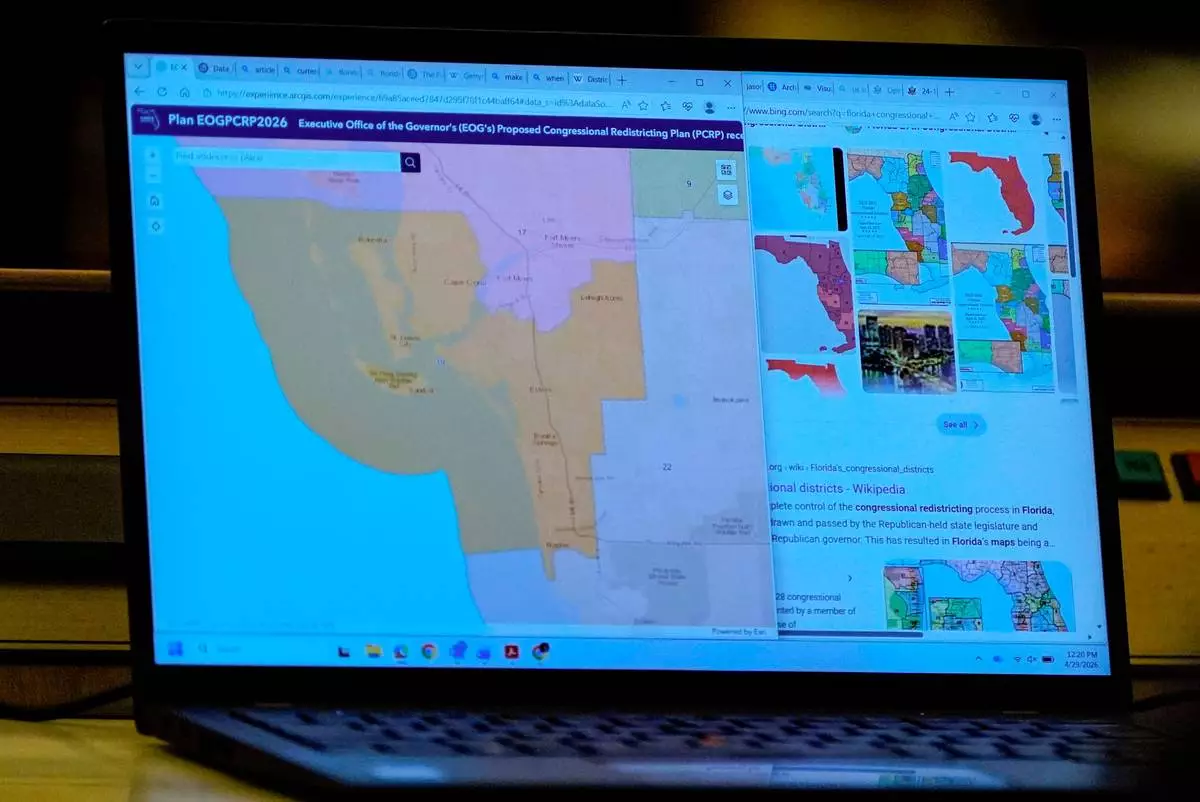
FILE - A state Senator's laptop displays a proposed Congressional Redistricting Plan during debate on SB 8-D, a redistricting bill, during a special session of the Florida Legislature, April 29, 2026, in Tallahassee, Fla. (AP Photo/Mike Stewart, File)
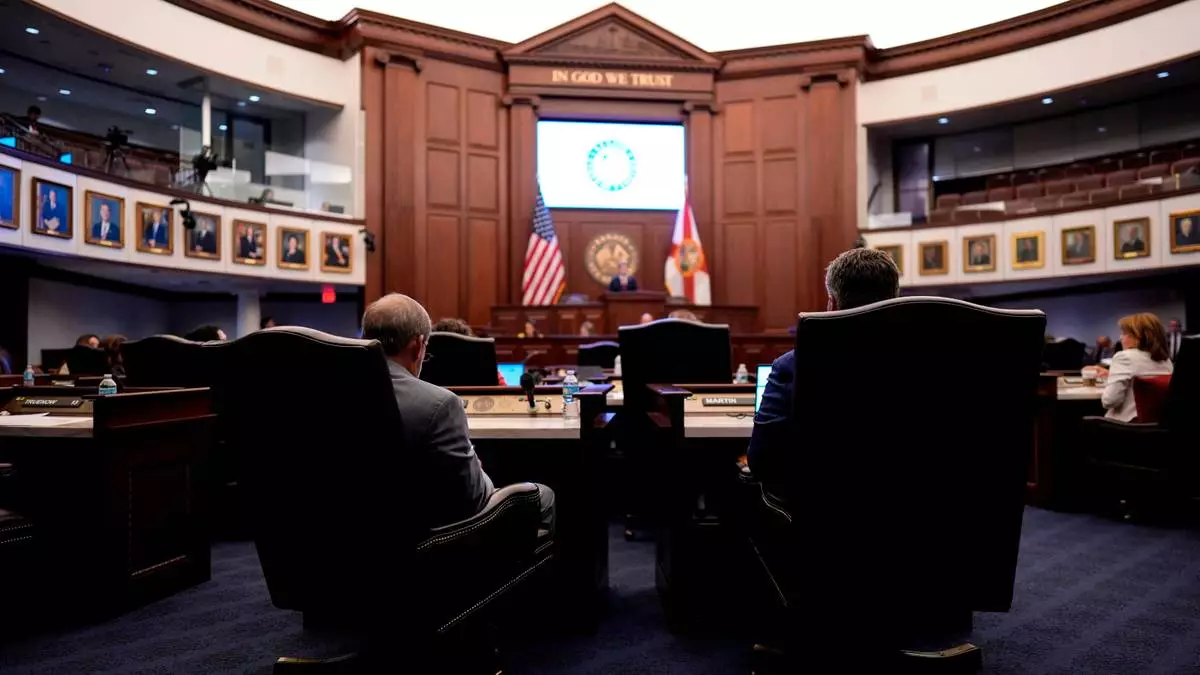
FILE - State Senators listen to debate on SB 8-D, a redistricting bill, during a special session of the Florida Legislature, April 29, 2026, in Tallahassee, Fla. (AP Photo/Mike Stewart, File)
DUBAI, United Arab Emirates (AP) — The U.S. military said Wednesday it began another round of strikes against Iran, threatening to derail efforts to end the war after President Donald Trump warned that Tehran would “pay the price” for stalled negotiations.
U.S. Central Command said in a social media post that the military was striking “multiple targets in Iran,” attacks that were “in response to Iran’s unwarranted and continued aggression.”
The second day of American strikes came hours after Bahrain, Kuwait and Jordan — all of which host U.S. troops — came under Iranian fire. It was the third time this week that back-and-forth strikes have tested a two-month ceasefire. They also came a day after the U.S. struck Iran following the crash of an Army helicopter near the Strait of Hormuz that Trump blamed on the Islamic Republic.
Trump has urged Iran to sign a deal to end the war and suggested earlier this week that an agreement could be reached in a matter of days.
Iranian media reported that explosions were heard in Bandar Abbas, Sirik and Minab in the south of the country.
Iran has proved resilient despite weeks of heavy bombing. It is betting that its ability to effectively close the Strait of Hormuz — a crucial passageway for oil and natural gas — gives it a strong bargaining chip.
Iran’s United Nations envoy said the U.S. should refrain from threats of force if it wants a deal.
“Iran has never negotiated under threats and pressure and will never submit to pressure or question,” Ambassador Amir Saeid Iravani told the U.N. Security Council on Wednesday.
Still, both countries seem to be looking for a way to end the conflict — if they can manage to sell it as a win at home.
Israeli Prime Minister Benjamin Netanyahu appears intent on pursuing goals that make compromise harder: the collapse of Iran’s theocratic government, the elimination of its nuclear program, and the destruction of the Iranian-allied Hezbollah militant group in Lebanon. On Monday, Iran and Israel targeted each other.
Since the U.S. and Israel started the war with Feb. 28 attacks on Iran, the conflict has shaken the global economy, driven up energy prices worldwide, and made food and other basics more expensive.
The international benchmark for crude oil traded above $93 a barrel on Wednesday, up more than 25% since the start of the war.
Trump said Wednesday the U.S. military has since last month undertaken a “secret mission” to sneak oil shipments past Iran’s forces in the Strait of Hormuz. He said ships were slipping through at night, aided by the destruction of Iranian radar equipment.
Trump said as a result more than 100 million barrels of oil have evaded Iran’s chokehold on the strait. There was no immediate confirmation of that figure, which roughly equals five days of oil shipments through the waterway before the war began.
The military’s role was not immediately clear. Capt. Tim Hawkins, a Central Command spokesman, said U.S. forces “communicate and coordinate” with commercial ships in the area, but gave no details on military support being offered.
Earlier Wednesday, the U.S. military said an American aircraft fired “precision munitions” into the engine room of the Palau-flagged vessel M/T Settebello as it attempted to breach the naval blockade with a shipment of Iranian oil. It was the eighth merchant vessel disabled by U.S. forces in waters off Iran.
India’s foreign ministry said three Indian sailors were missing after the Settebello was struck, while 21 others were rescued. Its statement did not mention the U.S. military or the blockade.
Hawkins of U.S. Central Command said American forces warned the crew before firing on the ship.
The U.S. military said strikes earlier Wednesday targeted “air defense, ground control stations, and surveillance radar sites."
Iran said U.S. strikes hit two water reservoirs in the southern city of Sirik, temporarily cutting off water to thousands of people. U.S. Central Command had no immediate comment.
Tehran later claimed attacks in Kuwait, Bahrain and Jordan.
Jordan said it shot down five incoming missiles, which Iran said targeted an air base hosting American military aircraft.
Bahrain and Kuwait said they intercepted incoming fire.
Iranian Foreign Minister Abbas Araghchi condemned the American attacks as a violation of Iranian sovereignty. Foreign Ministry spokesperson Esmail Baghaei said in televised comments that, following the new attacks, Iran would review its stance on negotiations to end the war.
Efforts to mediate a deal continued. Following consultations with the U.S., a delegation from Qatar arrived in Tehran for talks on Wednesday, according to an official with knowledge of the visit who requested anonymity due to the sensitivity of the talks.
The exchanges of fire came a day after a U.S. Army attack helicopter crashed near the Strait of Hormuz. The helicopter collided with an Iranian drone, according to a U.S. official speaking on condition of anonymity to discuss an ongoing investigation. It wasn’t clear whether the collision was intentional.
A drone boat rescued the helicopter’s two crew. Trump said they were uninjured.
Wary of high gas prices in the run-up to congressional elections in November, Trump seems to be looking for a quick win. But he is also making demands that will be tough for Iran to swallow.
The U.S. wants to see Iran give up its stockpile of highly enriched uranium. While Iran insists its nuclear program is peaceful, that uranium is a short technical step from weapons-grade levels.
Iran is refusing to give up the uranium and demanding relief from sanctions. It also wants the release of frozen assets even before a final agreement is in place, something Trump rejected.
It's not clear how those differences can be bridged. In a Truth Social post Wednesday, Trump said Iran was taking “too long to negotiate a deal" and "now they will have to pay the price!!!”
Iran has insisted that any deal to end the war must also end fighting between its ally Hezbollah and Israel. Israel has instead intensified its military campaign against the Lebanon-based militant group.
An airstrike on a village east of Tyre killed at least six people, Lebanon's state-run National News Agency reported. It said two others were killed by an Israeli drone strike on a car in the southern city of Sidon.
Price reported from Washington. Associated Press writers Konstantin Toropin and Will Weissert in Washington; Edith M. Lederer at the United Nations; Natalie Melzer in Nahariya, Israel; David Rising in Bangkok; Bassem Mroue in Beirut; Michelle L. Price in New York; Russ Bynum in Savannah, Georgia, and Hannah Schoenbaum in Salt Lake City contributed to this report.

A man runs past burning cars following an Israeli airstrike in the southern port city of Sidon, Lebanon, Wednesday, June 10, 2026. (AP Photo/Mohammed Zaatari)

People take shelter as air raid sirens warn of incoming Iranian missiles in Ramat Gan, Israel, Monday, June 8, 2026. (AP Photo/Oded Balilty)

A projectile streaks through the sky over central Israel during an Iranian missile attack, Sunday, June 7, 2026. (AP Photo/Ohad Zwigenberg)

A cleric checks his cell phone on stage in front of a screen displaying portraits of the late Iranian revolutionary founder Ayatollah Khomeini, left, late Supreme Leader Ayatollah Ali Khamenei, center, and Supreme Leader Ayatollah Mojtaba Khamenei, during a pro-government gathering in Tehran, Iran, Sunday, June 7, 2026. (AP Photo/Vahid Salemi)

A woman walks past a mural depicting a U.S. aircraft carrier under missile attack in downtown Tehran, Iran, Monday, June 8, 2026. (AP Photo/Vahid Salemi)