MONTGOMERY, Ala. (AP) — Alabama is waging a last-minute legal fight to execute a man with nitrogen gas on Thursday night, asking the U.S. Supreme Court to set aside a judge's finding that the method violates the Constitution’s ban on cruel and unusual punishment.
Jeffery Lee, 49, is scheduled to be executed at 6 p.m. Thursday. However, a federal judge on Tuesday ruled that nitrogen executions are unconstitutional and blocked the state from using the method to put Lee to death. The state filed an appeal Thursday asking the Supreme Court to set aside the ruling and allow the execution.
“If that ruling stands, it would be unprecedented in American history. Not only does it portend the first-ever permanent ban on a legislatively enacted method, but it would expand the concept of cruelty well beyond the bounds of the Eighth Amendment,” lawyers with the Alabama attorney general's office wrote. The Supreme Court has never ruled that a state's execution method violates the Constitution.
The case has put a spotlight on the nitrogen execution method and the sharp disagreements over its use.
The execution method involves strapping a respirator to the person’s face and replacing breathable air with pure nitrogen gas, causing death from a lack of oxygen. Nitrogen has been used in eight executions in the United States — seven in Alabama and one in Louisiana. Lee was scheduled to be the ninth person put the death by nitrogen.
U.S. District Judge Emily Marks ruled Tuesday, after an appeals court reversed her initial finding that the method was constitutional, that Lee had shown by a “preponderance of the evidence that the protocol constitutes cruel and unusual punishment in violation of the Eighth Amendment.” The 11th U.S. Circuit Court of Appeals, in a 2-1 decision Wednesday night, rejected Alabama's request to stay the ruling. The court earlier said the three minutes that it could take for an inmate to lose awareness is an “intolerable” time frame, “given the suffering that would likely take place under Alabama’s nitrogen hypoxia protocol.”
During the previous Alabama nitrogen executions, the inmates shook, pulled at the restraints and exhibited labored breathing. During the state’s last execution by nitrogen gas, 30 minutes elapsed between Anthony Boyd exhibiting signs of being impacted by the gas and state officials closing the curtain to the viewing room to signal the execution was complete.
The state has maintained that the method is constitutional and causes no more suffering than other execution methods.
Lee’s attorneys said Alabama is attempting to move forward with an execution method that courts have found unconstitutional. His supporters have urged Alabama Gov. Kay Ivey to commute his sentence to life imprisonment, which is the sentence that jurors at his trial had recommended.
“Alabama Attorney General Steve Marshall wants to execute Jeffery Lee under a death sentence the jury rejected using a nitrogen gas method that two federal courts have ruled unconstitutional. This execution is simply too flawed to move forward,” Lee’s lawyers said in a Wednesday statement.
“We remain hopeful that Governor Ivey will intervene,” they added.
A jury convicted Lee of two counts of capital murder for killing Jimmy Ellis and Elaine Thompson while robbing a pawnshop on Dec. 12, 1998. Prosecutors said Lee entered Jimmy’s Pawnshop with a sawed-off shotgun and shot Ellis, the owner of the store, and Thompson, a store employee.
A jury voted 7-5 that Lee should receive a sentence of life imprisonment. However, a judge overrode that recommendation and sentenced Lee to death. Alabama in 2017 ended the practice of judicial override and no longer allows a judge to disregard a jury’s sentencing decision in death penalty cases.
Marks did not block the state from using its other authorized execution methods, lethal injection and the electric chair. However, it is unclear if the state could swiftly change the method.
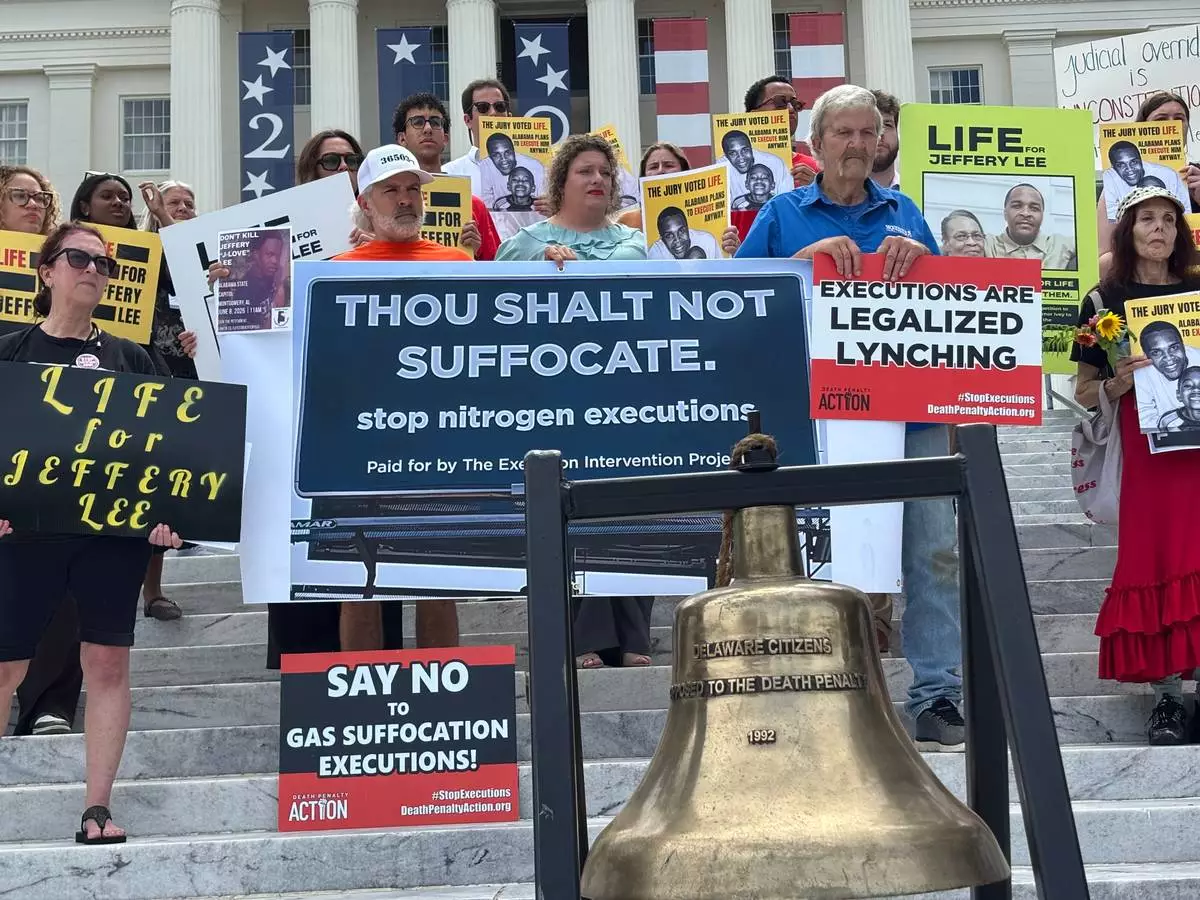
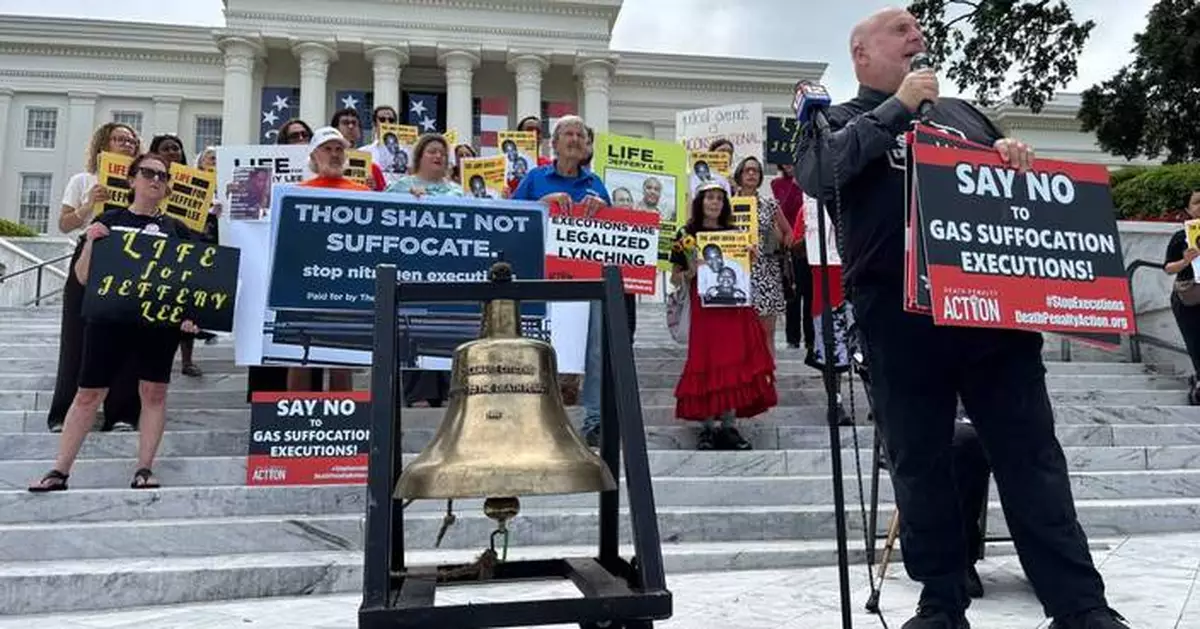
Protesters gather outside the Capitol in Montgomery, Ala., on Monday, June 8, 2026, to oppose an upcoming execution in Alabama. (AP Photo/Kim Chandler)

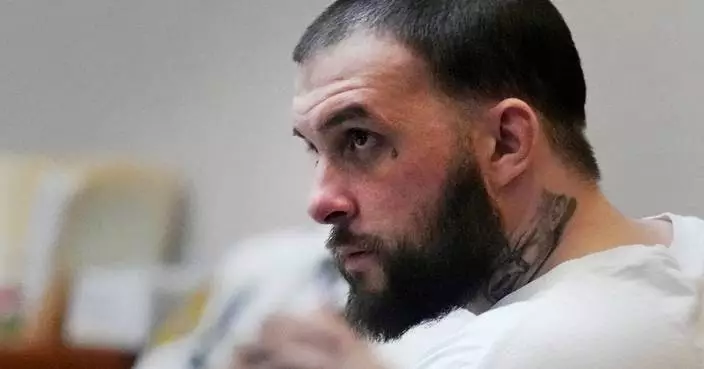
This undated photo from the Alabama Department of Corrections shows Jeffery Lee, who was sentenced to death for killing two people during a 1998 robbery at a pawn shop. (Alabama Department of Corrections via AP)
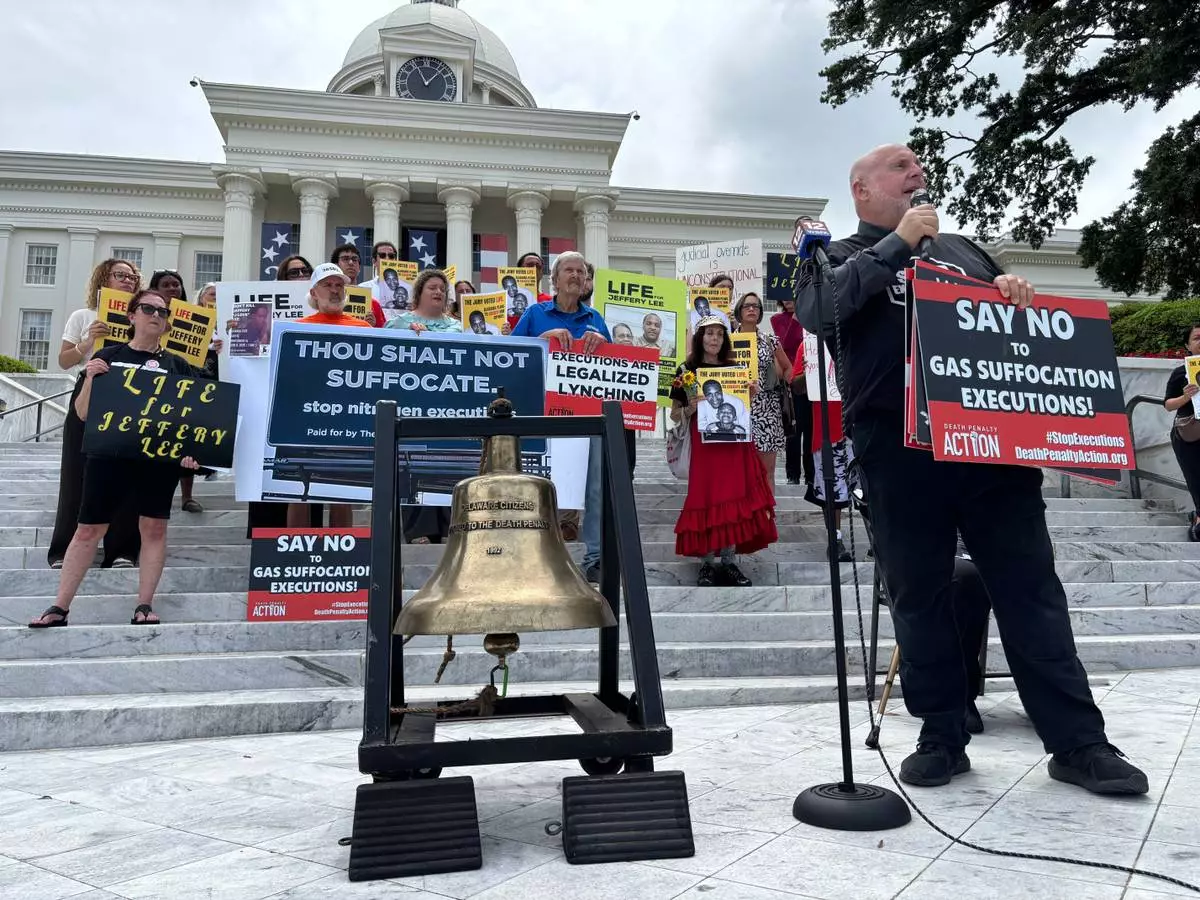
Abraham Bonowitz, of the group Death Penalty Action, leads a demonstration outside the Capitol in Montgomery, Ala., on Monday, June 8, 2026, to oppose an upcoming execution in Alabama. (AP Photo/Kim Chandler)
Several hundred thousand homes and businesses were without power Thursday after severe storms swept through the Midwest — damaging buildings and structures across a wide swath and causing more than a thousand flight delays and cancellations. One person died after being struck by a tree in Iowa, police said.
The National Weather Service said it received more than a dozen reports of tornadoes Wednesday across northern Missouri, Iowa, Kansas and Illinois. Trees and utility wires were reported down across the region.
In Des Moines, Iowa, a 54-year-old man died at a homeless encampment in a park after being hit by a tree that “broke apart and fell during strong storms,” police said in a statement. The man was found critically injured Thursday morning and died at the scene, authorities said. There were no immediate reports of other deaths or injuries from the storms.
Severe weather was expected to continue in the region on Thursday, while the Northeast and mid-Atlantic were bracing for high heat and humidity as well as a slight risk of strong storms through Friday, according to the weather service.
Residents of Springfield, Illinois, believe a tornado touched down in their area late Wednesday. Two buildings at the Animal Protective League animal shelter in Springfield were heavily damaged, but none of the nearly 150 cats and 28 dogs housed there were injured, said Deana Corbin, the group's executive director.
“It pretty much wiped out our shelter facility, took the roofs off both of our buildings,” Corbin said. “It’s a miracle. We were so blessed to not have any injuries of either people or animals.”
The community pitched in to take in all the cats and dogs temporarily, including a local animal control center, veterinarians and residents, she said.
Damage also was reported at Abraham Lincoln Capital Airport in Springfield.
Weather service meteorologist Frank Pereira said the frontal system that produced the storms, including high winds and hail, was moving eastward Thursday, fueled by cool air from Canada clashing with warm, humid air from the South.
“Going forward, we’re expecting another area of severe weather to develop across portions of the central Plains, Midwest, particularly from Iowa, northern Missouri, northeastward through the Great Lakes,” Pereira said. “Again, it’s all tied into a pretty well-defined frontal system.”
Tornado warnings were issued in Iowa north of Des Moines on Thursday morning as strong storms hit the area. The weather service also posted tornado watches for parts of northern Missouri, eastern Iowa and northwestern Illinois.
Potentially dangerous heat and high humidity also was forecast Thursday and Friday for a swath of the East Coast from the mid-Atlantic to the Northeast, where daily high record temperatures could be broken in numerous places, the weather service said. Temperatures in the mid-90s Fahrenheit (mid-30s Celsius) were expected, but with the humidity it could feel like 100 degrees Fahrenheit (38 degrees Celsius) or more, the service said.
Philadelphia declared a heat health emergency for Thursday and Friday, activating cooling centers, home visits by field teams, outreach to people experiencing homelessness and other services. New York City officials were also urging residents to take precautions, including drinking plenty of water and finding a cool place to stay if they do not have air conditioning.
Wednesday storms moved into the Chicago area in the afternoon, downing trees and damaging some buildings.
The two major Chicago airports, Chicago O’Hare International Airport and Chicago Midway International Airport, temporarily put all flights on hold Wednesday evening due to thunderstorms. A similar ground stop was issued at John F. Kennedy International Airport in New York due to thunderstorms.
By Wednesday evening, more than 1,000 flights going into and out of Chicago had been delayed or canceled, according to FlightAware, a flight tracking website.
Air traffic appeared to return to normal Thursday morning, with only 25 flight cancellations nationwide, although there were 300 delays, FlightAware reported. Delays jumped to more than 500 by early afternoon. The Federal Aviation Administration said it expected thunderstorms to cause more flight delays Thursday.
Strong winds blew part of the roof off an apartment building in the Chicago area, forcing residents to leave, according to NBC 5 Chicago. Elsewhere, barns collapsed in Wisconsin and buildings were crushed in rural northern Missouri, photos and video online showed.
More than 250,000 customers had no electricity in the Midwest on Thursday afternoon, down from about 390,000 earlier in the morning. There were nearly 168,000 outages in Illinois, down from 226,000 earlier the morning. A large number of outages in Cook County, including Chicago, had been fixed. Another 56,000 homes and businesses were without power in Michigan, according to poweroutage.us.
Commonwealth Edison Company, which provides electric service across northern Illinois, said the storms had downed poles and wires.
“We know how difficult and frustrating it is to be without power, and we truly appreciate your patience,” the company said in a post on X early Thursday morning. “Right now, more than 100 crews are working around the clock to safely and efficiently restore service after this unique storm brought widespread damage and challenging conditions across our service area.”
The storms soaked Rate Field in Chicago before Wednesday night’s game between the White Sox and the Atlanta Braves.
The story has been updated to correct the name of the White Sox stadium to Rate Field, from Guaranteed Rate Field.
Associated Press reporters Hannah Fingerhut in Des Moines, Iowa, and Hallie Golden in Seattle contributed.
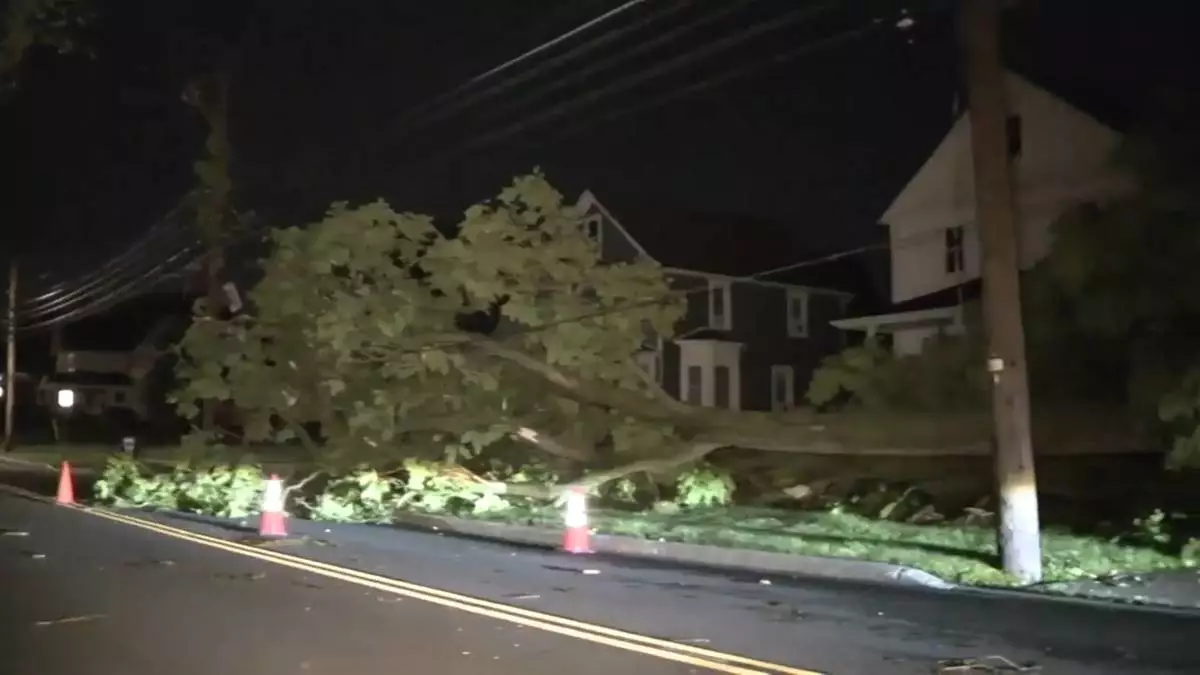
This frame grab from video shows a downed tree after storms struck Amherst, Ohio, west of Cleveland on Wednesday, June 10, 2026. (AP Photo/Courtesy WEWS/NEWS5) TELEVISION OUT
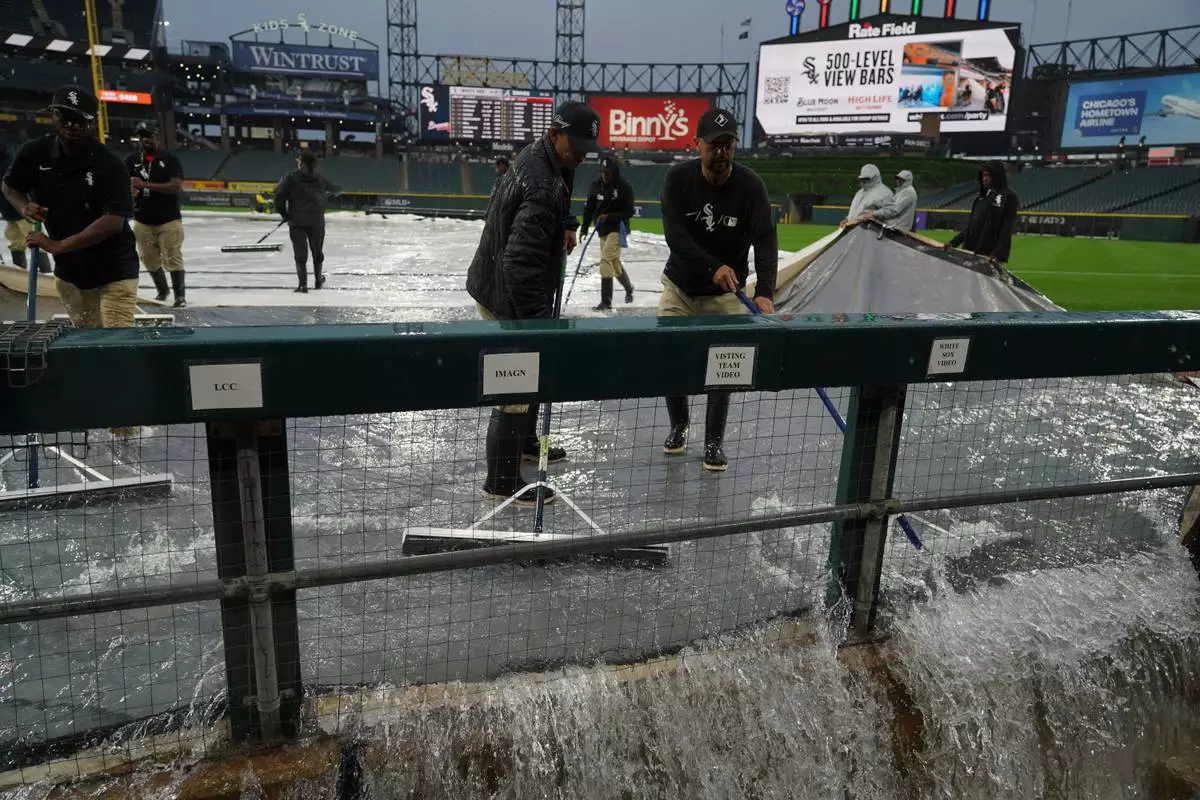
Grounds crew remove water from the field after severe thunderstorms came through the Chicago area before a baseball game between the Chicago White Sox and the Atlanta Braves, Wednesday, June 10, 2026, in Chicago. (AP Photo/David Banks)
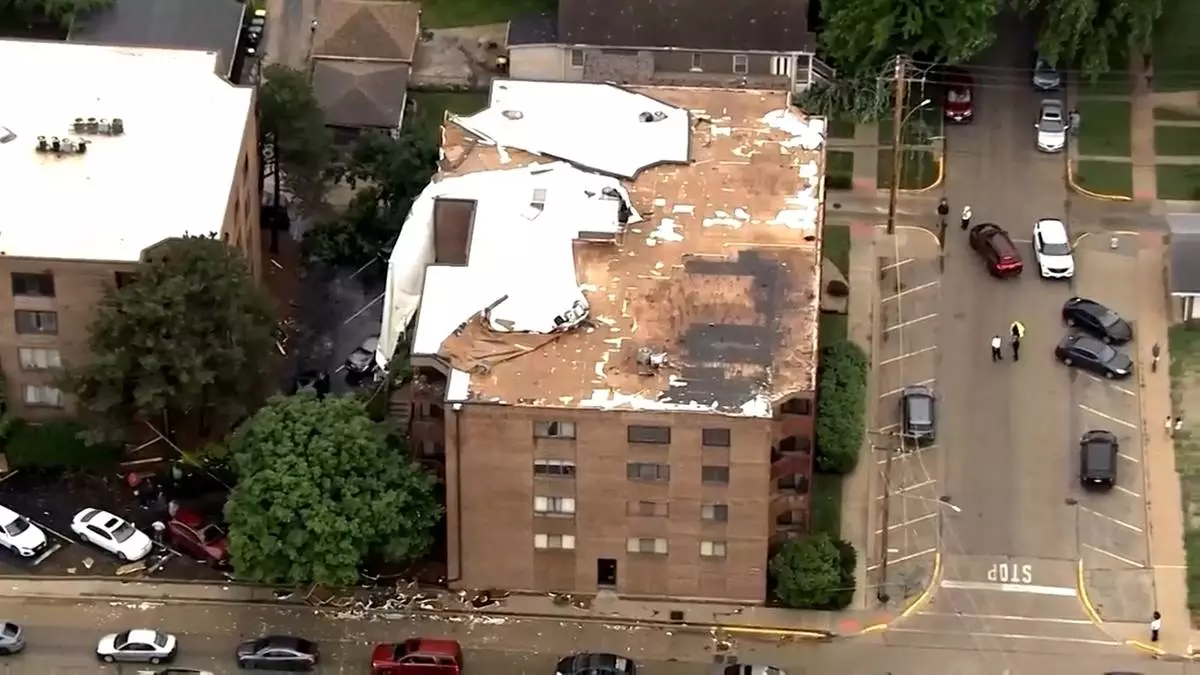
This frame grab from aerial video shows a building in Stickney, Illinois, after its roof was damaged by the severe storms that struck the Chicago area on Wednesday, June 10, 2026. (AP Photo/Courtesy WMAQ-TV in Chicago) TELEVISION OUT