A Chinese envoy on Wednesday put forward four propositions for the political solutions to restore peace in the Middle East.
At a UN Security Council meeting, Fu Cong, China's permanent representative to the United Nations, said that the current Middle East situation is still very tense, which has harmed many countries' common interests. He then called on concerned parties to resolve disputes via dialogue and consultation by purposing four propositions.
First, adhering to political settlement and using peaceful means to resolve disputes.
He said that parties involved in the current Iran situation should stay calm and restrained to achieve lasting ceasefire as early as possible. In terms of the conflict between Israel and Lebanon, he emphasized that Lebanon's sovereignty, security and territorial integrity need to be respected, with Israel fully withdrawing from Lebanon.
Second, upholding fairness and justice to maintain regional stability through international rule of law.
The international community needs to promote the realization of a lasting ceasefire in Gaza, improve its humanitarian situation, advance the two-State solution and support the establishment of an independent State of Palestine at an early date, the Chinese envoy highlighted.
Third, adhering to independence and self-reliance, to build common security through unity and cooperation.
China supports the Syrian-led and Syrian-owned principle to resolve the Syria issue and calls for efforts toward an inclusive political transition, Fu said. He also encouraged all parties in Yemen to restart peace process and achieve reconciliation as soon as possible.
Fourth, adopting both short-term and long-term solutions to promote long-term stability through development and revitalization.
Security is the prerequisite for development, and development is the guarantee of security. The international community should deepen mutually beneficial cooperation with Middle Eastern countries, help them carry out post-conflict reconstruction, support humanitarian agencies in carrying out relief operations, and facilitate economic recovery while improving people's livelihoods, Fu said.
"The international community should uphold fairness, work together to promote peace and restore stability to the Middle East at an early date, so that security and tranquility can be brought back to the people and the world," Fu noted.
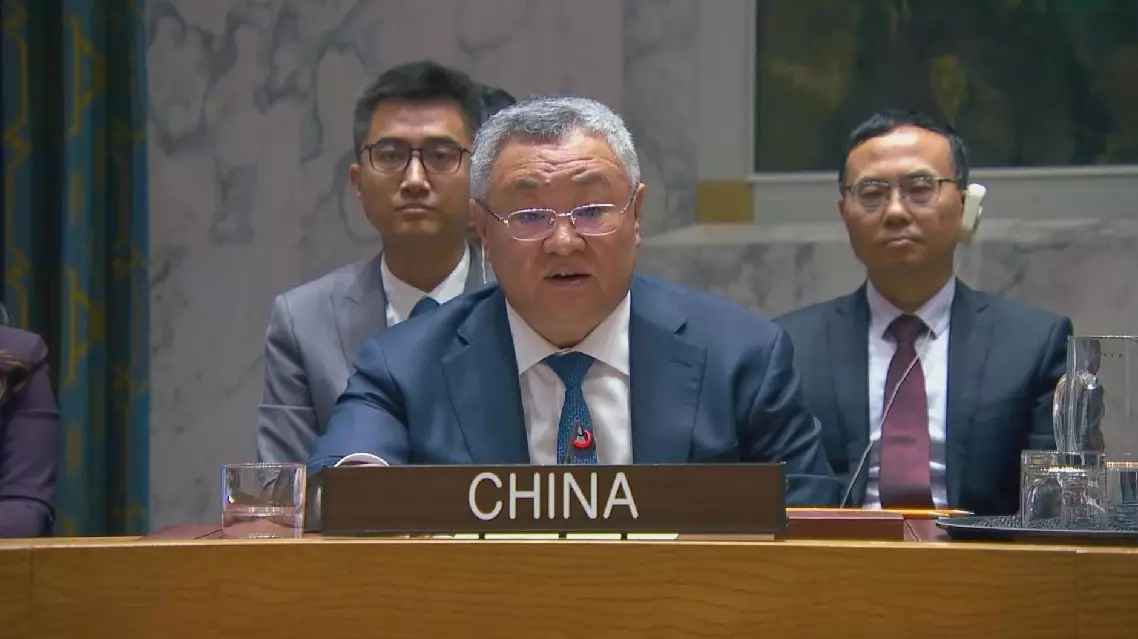
Chinese envoy calls for political settlement to restore peace in Middle East
China is expected to add around 300 gigawatts of new wind and solar power capacity in 2026, with renewables continuing to drive the country’s green and low-carbon energy transition, according to the China Renewable Energy Development Report released on Friday.
The report shows that China’s newly installed renewable power generation capacity reached another record high in 2025, accounting for more than 60 percent of global additions.
The country’s total installed renewable energy capacity surpassed 2,337 gigawatts in 2025, while renewables accounted for 82.7 percent of newly installed power capacity, according to the report.
Newly installed distributed solar photovoltaic capacity exceeded 100 gigawatts for the second straight year, accompanied by marked improvements in regional power grid absorption and clean energy utilization.
China's electricity generation from renewable sources reached about 4,000 terawatt-hours. Both wind and photovoltaic power generation crossed the 1,000 terawatt-hours threshold, each contributing more than 10 percent to the country's total power output.
"In 2025, wind and solar power installations achieved leapfrog growth, with the cumulative installed capacity of wind and solar power historically surpassing that of thermal power, further accelerating the pace of power structure transformation. New business forms such as zero-carbon industrial parks, green power direct supply, wind-solar hydrogen production, and photovoltaic-based desert control accelerated their popularization, as clean energy gradually permeated various sectors of the economy and society," said Yi Yuechun, general manager of the China Renewable Energy Engineering Institute.
This year, China's new energy sector will continue following the core path that combines onshore and offshore development, centralized and distributed projects, multiple energy sources working together, and integrated growth. The country will accelerate the construction of renewable energy bases in deserts, the Gobi and other arid areas, while coordinating ecological governance. Offshore wind power projects will also be pushed forward in an orderly manner.
In addition to the expected growth in wind and solar power, China is planning to add more than 50 gigawatts of new grid-connected energy storage capacity in 2026.
"During the 15th Five-Year Plan period (2026-2030), China will prioritize the commencement of a series of deep-sea offshore wind power projects, steadily advance major hydropower projects, actively and orderly develop pumped storage hydropower, and accelerate the planning and construction of integrated wind-solar-hydro power bases along major river basins. The green electricity market will continue to be cultivated and expanded. By 2035, the share of non-fossil energy in China's total primary energy consumption is targeted to reach more than 30 percent, with the combined installed capacity of wind and solar power striving to reach 3,600 gigawatts," said Liu Deshun, chief engineer of the National Energy Administration.
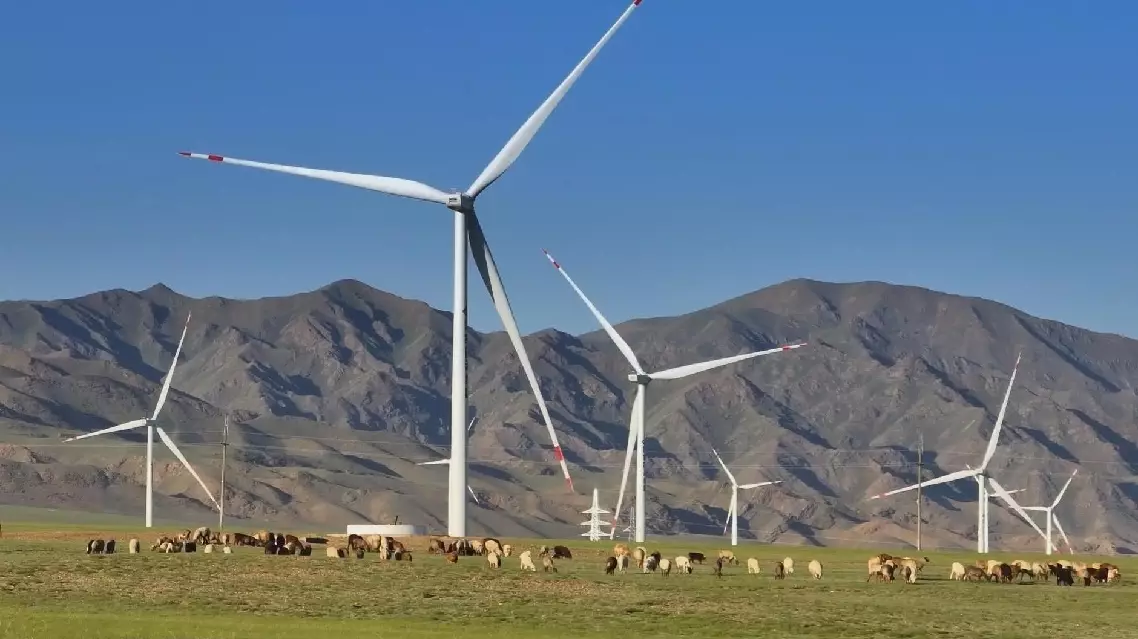
China to add 300 GW of wind, solar power capacity in 2026: report