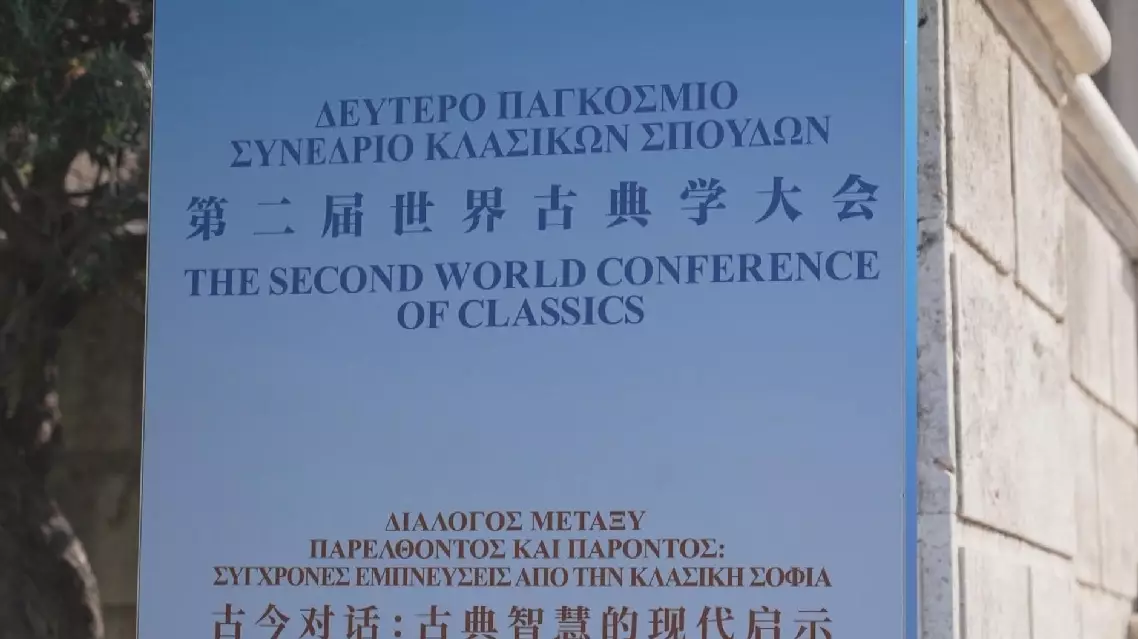
The Second World Conference of Classics concluded in Athens, Greece, on Wednesday, with participants calling for deeper dialogue among civilizations and highlighting the enduring significance of classical wisdom in addressing contemporary global challenges.
The two-day conference brought together more than 200 scholars, researchers and cultural representatives from Asia, Europe, Africa and North America.
This year's gathering highlighted the contemporary relevance of classical civilizations, exploring how ideas drawn from ancient traditions can offer insights into governance, ethics, social development and international relations amid evolving global challenges.
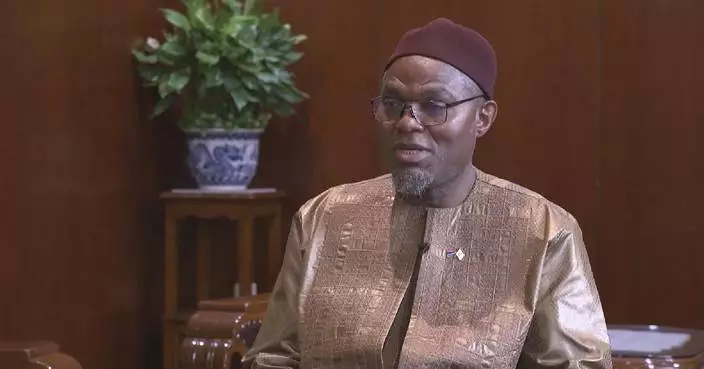
"The significance is to bring together scholars really from around the world, but especially from Greece and China, to look at classics of those two respective civilizations in an effort to really recover the wisdom of the ancients," Timothy Burns, a professor of political science at Baylor University in the United States, said in an interview with China Media Group (CMG).
Commitment to Greece-China exchanges in this area was realized with the launch of a Global Visiting Scholar Program by the Chinese School of Classical Studies at Athens. Announced during the conference, the program aims to promote long-term academic exchange and collaborative research in classical and cross-civilizational studies.
Beyond the two countries, however, participants stressed that the push to preserve ancient wisdom must be a worldwide effort.
"It's very important to maintain and to defend the memory of the past, and classics are exemplary models for the past, for the memory of people and different civilizations," said Giorgio Piras, a professor of classical philology at the Sapienza University of Rome in Italy.
In a speech at the conference, Greek Culture Minister Lina Mendoni highlighted that interest in classical studies is growing at academic institutions around the world, as their power to inform cross-civilizational exchanges becomes evident.
"The studies on great ancient civilizations are not only about their successors, but the entire international community and even all humanity, because the humankind is still drawing knowledge, inspiration, and direction from the classics to this day," Mendoni said.
A major outcome of the conference was the adoption of a joint initiative titled "Illuminating Humanity's Future with Classical Wisdom." The document says classical civilizations continue to offer valuable intellectual resources for understanding human societies and contemporary global developments.
The initiative calls for strengthening moral values through engagement with classical traditions, promoting social cohesion and mutual support, encouraging fairness and mutual respect in international relations, and ensuring that technological development remains grounded in human-centered values.
Launched in 2024, the World Conference of Classics is jointly organized by the Chinese Academy of Social Sciences, China's Ministry of Education, China's Ministry of Culture and Tourism, the Academy of Athens, and Greece's Ministry of Culture.
World Conference of Classics in Athens calls for deeper dialogue among civilizations