LONDON (AP) — A savage knife attack on a Northern Ireland street set off two nights of fiery riots stoked by anti-migrant rhetoric.
The suspect, a 30-year-old Sudanese man who had claimed asylum in the United Kingdom, has been charged with attempted murder, threatening to kill a second person and carrying a knife.
Click to Gallery
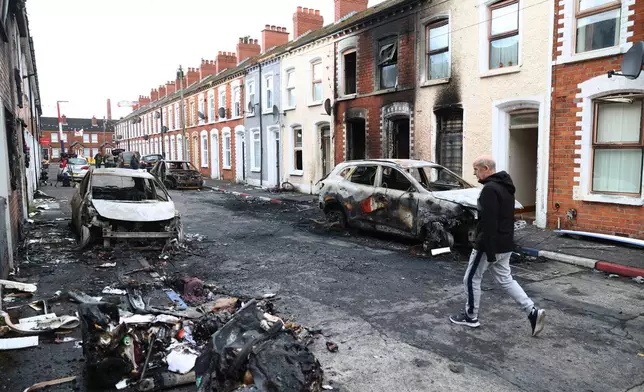
A man walks down a street after rioting broke out late Tuesday, in east Belfast, Northern Ireland, Wednesday, June 10, 2026, following a stabbing incident. (AP Photo/Peter Morrison)
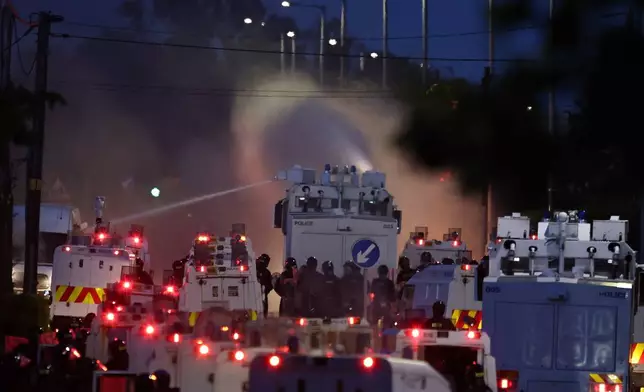
Police fire a water cannon towards rioters after they set fire to wheelie bins and removed a garden fence to use as a shield against the water cannon in Newtownabbey, Belfast, Northern Ireland, Wednesday June 10, 2026. (PA via AP)
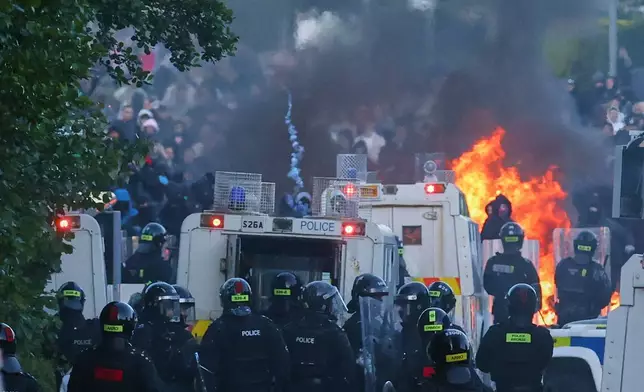
Police attempt to disperse protesters near Newtownabbey, in Belfast, Northern Ireland, Wednesday, June 10, 2026, following a stabbing incident on Monday night. (AP Photo/Peter Morrison)
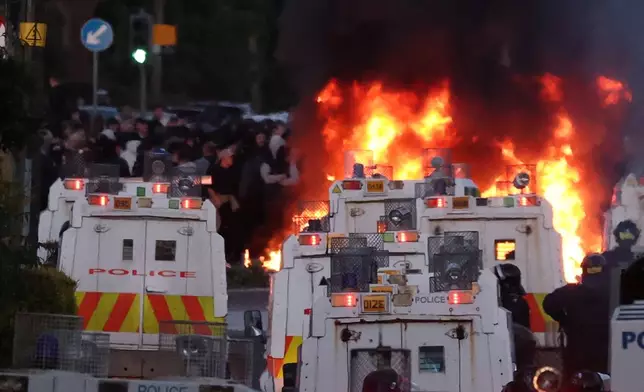
Police attempt to disperse protesters as a fire burns near Newtownabbey, in Belfast, Northern Ireland, Wednesday, June 10, 2026, following a stabbing incident on Monday night. (PA via AP)
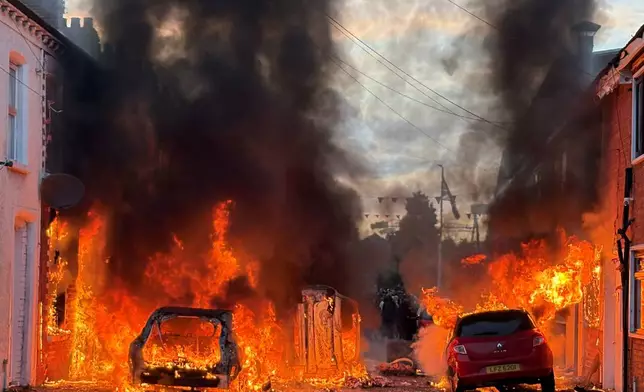
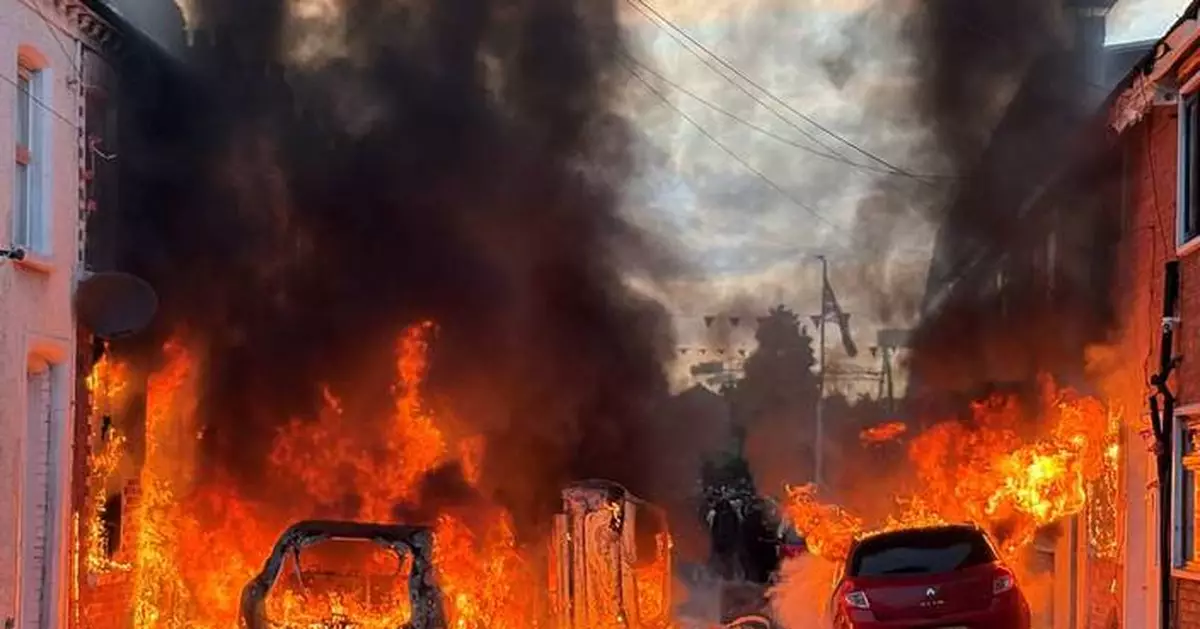
Vehicles set on fire by protesters burn on Lendrick Street in east Belfast, Northern Ireland, on Tuesday, June 9, 2026, after the arrest of a Sudanese man accused of stabbing a man in the northern part of the city. (PA via AP)
Protests over the attack flared into violence in Belfast and several other areas. Masked men set fire to several homes they believed to house immigrants, torched a bus and pelted police with rocks and other objects.
The government said more than two dozen people lost their homes and 12 police officers were injured in what Northern Ireland Secretary Hilary Benn on Thursday called “racist thuggery.”
Here are some things to know about the attack and its aftermath:
Hadi Alodid used a kitchen knife to blind Stephen Ogilvie in the left eye and carved deep wounds on his head, face and back, police said. Graphic footage of the stabbing, and the response of passersby who subdued the attacker, spread quickly on social media.
As Alodid was being treated for a hand wound, he threatened to kill a radiologist.
“I’ve killed someone, I don’t know if they are dead,” Alodid told medical staff, according to a detective who spoke in court.
Police have not revealed a motive for the attack but said it's not believed to be terrorism.
Alodid did not enter a plea during a court appearance Wednesday and was ordered held until his next hearing.
Officials aghast at the crime urged protesters to maintain order and civility, but groups dressed in black hoods and masks threw bricks, rocks and stones at police, set fire to trash bins, and burned vehicles and homes.
“When the attack happened on Monday night, we knew this would be coming,” Twasul Mohammed, a Sudanese refugee who helped families forced from their homes Tuesday, told the BBC. “Everyone is terrified, we are keeping our kids at home."
Violence flared again Wednesday, though on a smaller scale. Police blasted water cannons at protesters outside Belfast who hurled bricks and hunks of stone at them that they had torn from garden walls and patios.
Politicians from both parts of Northern Ireland’s power-sharing government condemned the violence.
The violence was reminiscent of riots that swept England and parts of Northern Ireland two years ago after a teen killed three girls and seriously wounded 10 other people in a stabbing rampage at a dance class near Liverpool.
The Belfast violence broke out a week after protesters clashed with police in the southern England city of Southampton over the sentencing of a man for the fatal stabbing of a university student.
All three crimes featured Black or Asian suspects and victims who were white.
The families of the victims all called for peace in the wake of the attacks and said they didn't want violence waged on behalf of their loved ones.
Other factors were also at play in whipping up anger.
In the case of the girls killed in Southport in 2024, the suspect was wrongly identified on social media as a Muslim asylum seeker. Even after police said he was a British citizen born in Wales (later revealed to be raised by Christian parents from Rwanda), protests were mostly aimed at migrants and Muslims.
Outrage over the Southampton stabbing focused on the fact that police who arrived at what had been reported as a racist assault mistook the victim, Henry Nowak, for the perpetrator. They initially dismissed Nowak's pleas that he had been stabbed and couldn't breathe and handcuffed him as he was dying.
Vickrum Digwa, who was carrying a ceremonial knife worn by Sikhs but used a longer dagger to stab Nowak, lied to police when he said Nowak attacked him, Judge William Mousley said in sentencing him to life in prison.
Nigel Farage, leader of the anti-immigration Reform UK party, said Nowak's killing was an example of so-called two-tier policing — a popular far-right talking point that suggests ethnic minorities are better treated than white people.
Government officials and police have denied such a bias exists and many experts say policing in Britain favors white people. A report three years ago found the Metropolitan Police, the largest force in the U.K., was riven with institutional racism.
Reaction to the stabbings reflects a broader rise in anti-immigrant sentiment in parts of the U.K. and Europe, fueled by political debate over asylum seekers, small-boat crossings and pressure on public services and heightened by often extreme online debate.
Protesters have been called to action on social media by U.K. far-right activists, including Stephen Yaxley-Lennon, also known as Tommy Robinson, and rallied by influential international figures including tech mogul Elon Musk.
Musk tweeted more than 100 times about British politics with a strong focus on Nowak's killing around the time of Digwa's trial and offered to bankroll a private prosecution of the local police force.
U.S. Vice President JD Vance, in a post on X, blamed Nowak's killing on “the mass invasion of migrants, many of whom despise the West and the people who love it.”
Prime Minister Sir Keir Starmer snapped back at Musk and Vance, criticizing people “trying to interfere in our democracy and seeking to stir up division on our streets.”
Mark Rowley, the head of London's Metropolitan Police, said online misinformation and disinformation is “right at the center of the challenges for us with public disorder."
Some political figures pointed to the largely open border between Northern Ireland, which is part of the U.K., and the Republic of Ireland, where the suspect arrived in Dublin from Paris before heading north.
The border is a sensitive political issue. Allowing the free flow of people is a major pillar of the peace process that largely ended decades of violence known as “The Troubles.” The conflict involving Irish Republican and British Loyalist militants and U.K. security forces left almost 3,600 people dead before a 1998 peace accord.
Associated Press writer Jill Lawless in London contributed to this report.
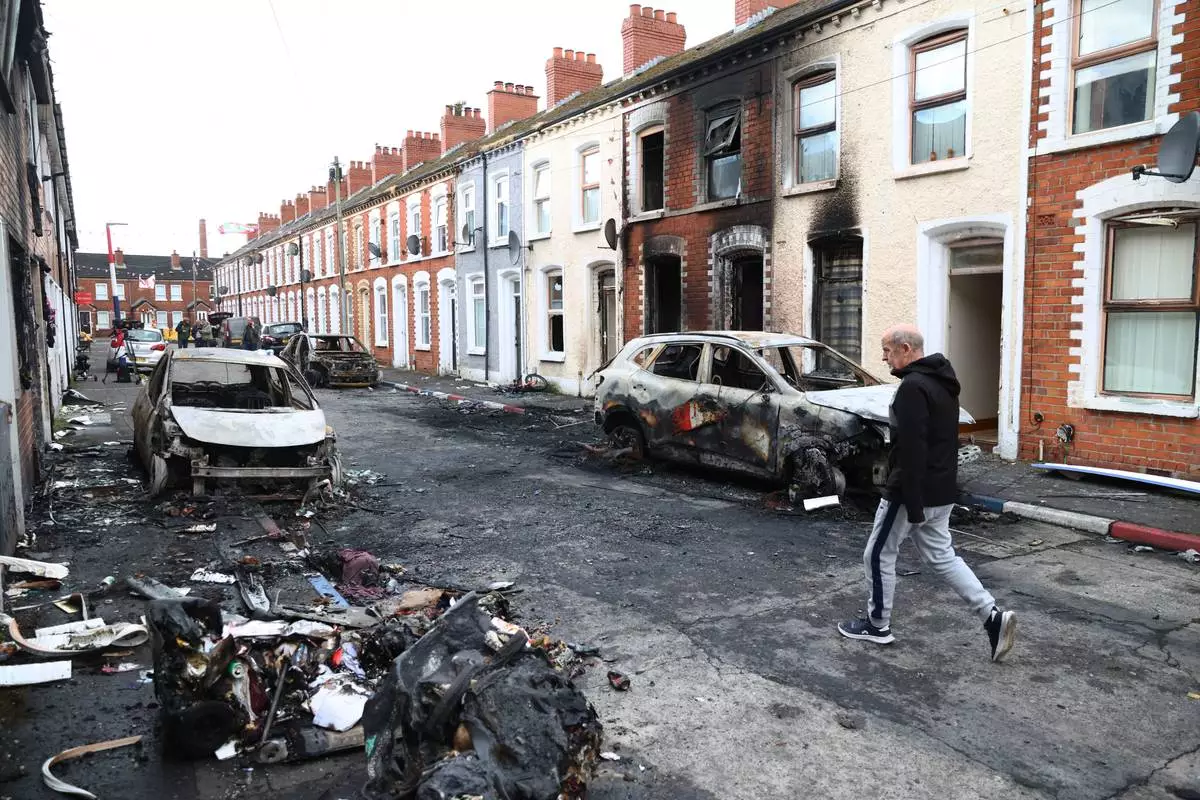
A man walks down a street after rioting broke out late Tuesday, in east Belfast, Northern Ireland, Wednesday, June 10, 2026, following a stabbing incident. (AP Photo/Peter Morrison)
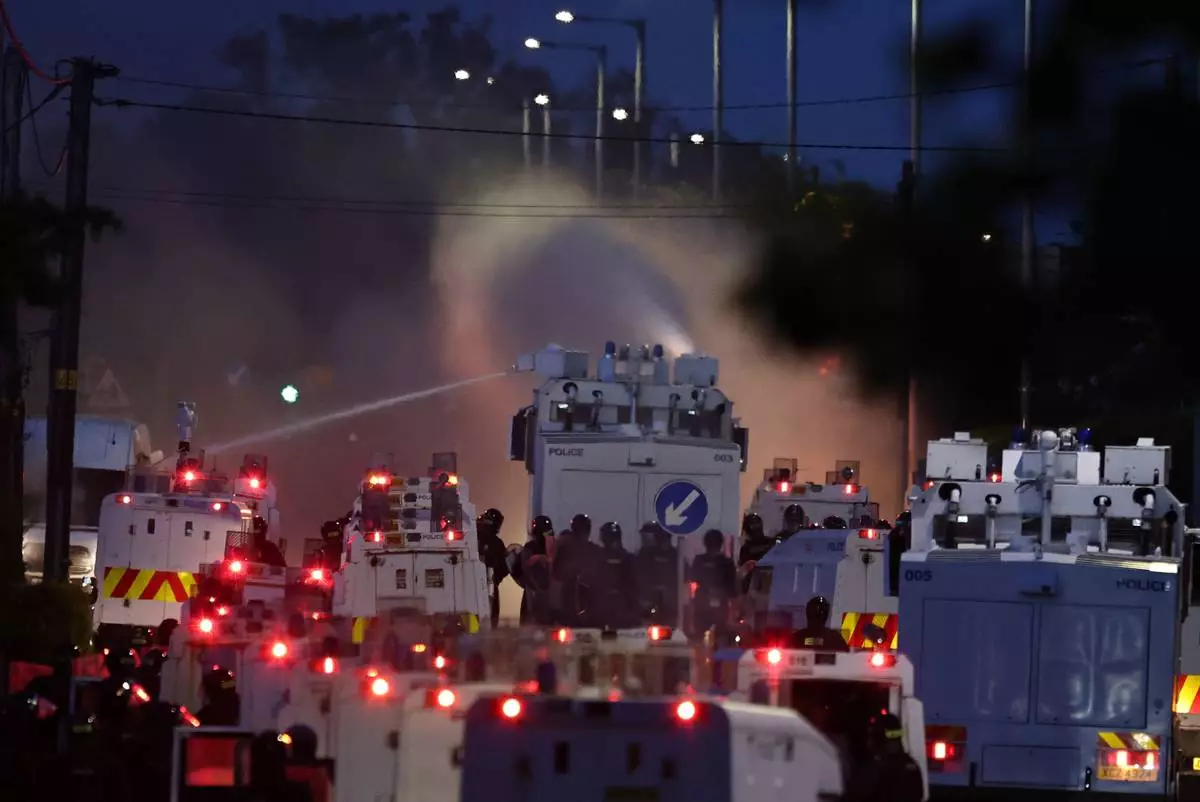
Police fire a water cannon towards rioters after they set fire to wheelie bins and removed a garden fence to use as a shield against the water cannon in Newtownabbey, Belfast, Northern Ireland, Wednesday June 10, 2026. (PA via AP)
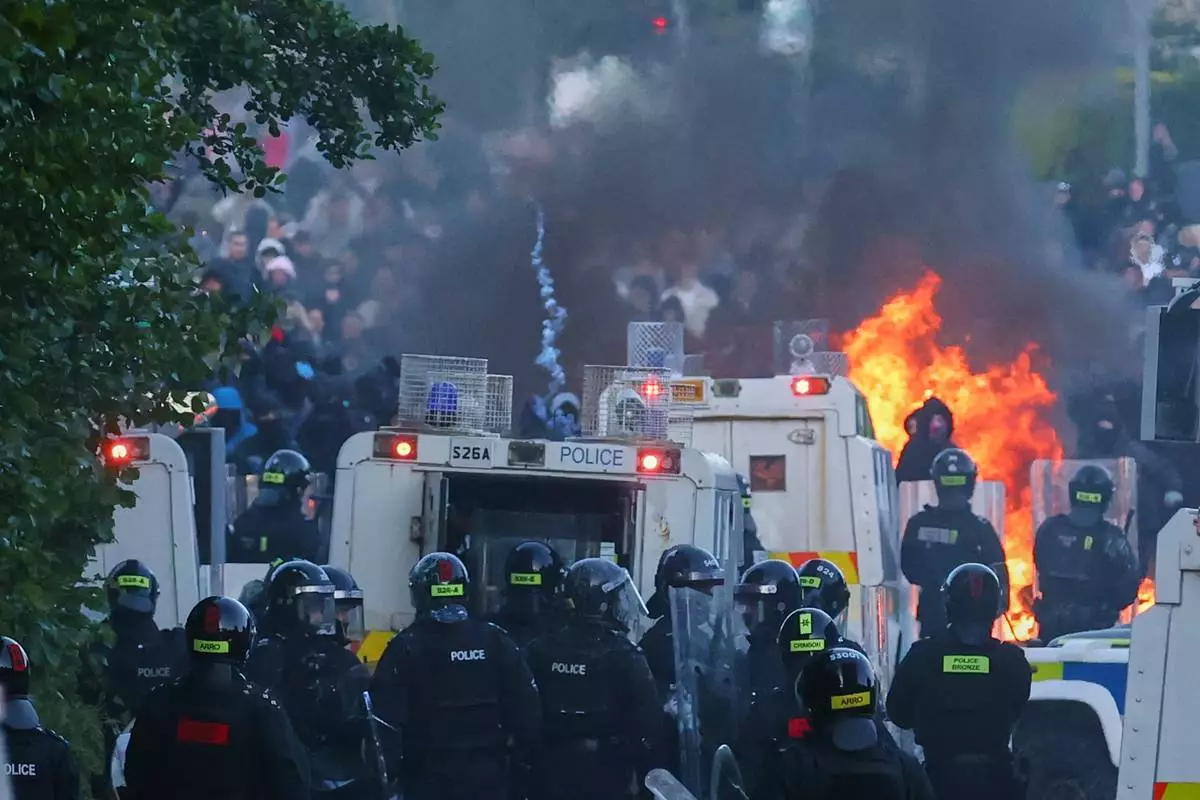
Police attempt to disperse protesters near Newtownabbey, in Belfast, Northern Ireland, Wednesday, June 10, 2026, following a stabbing incident on Monday night. (AP Photo/Peter Morrison)
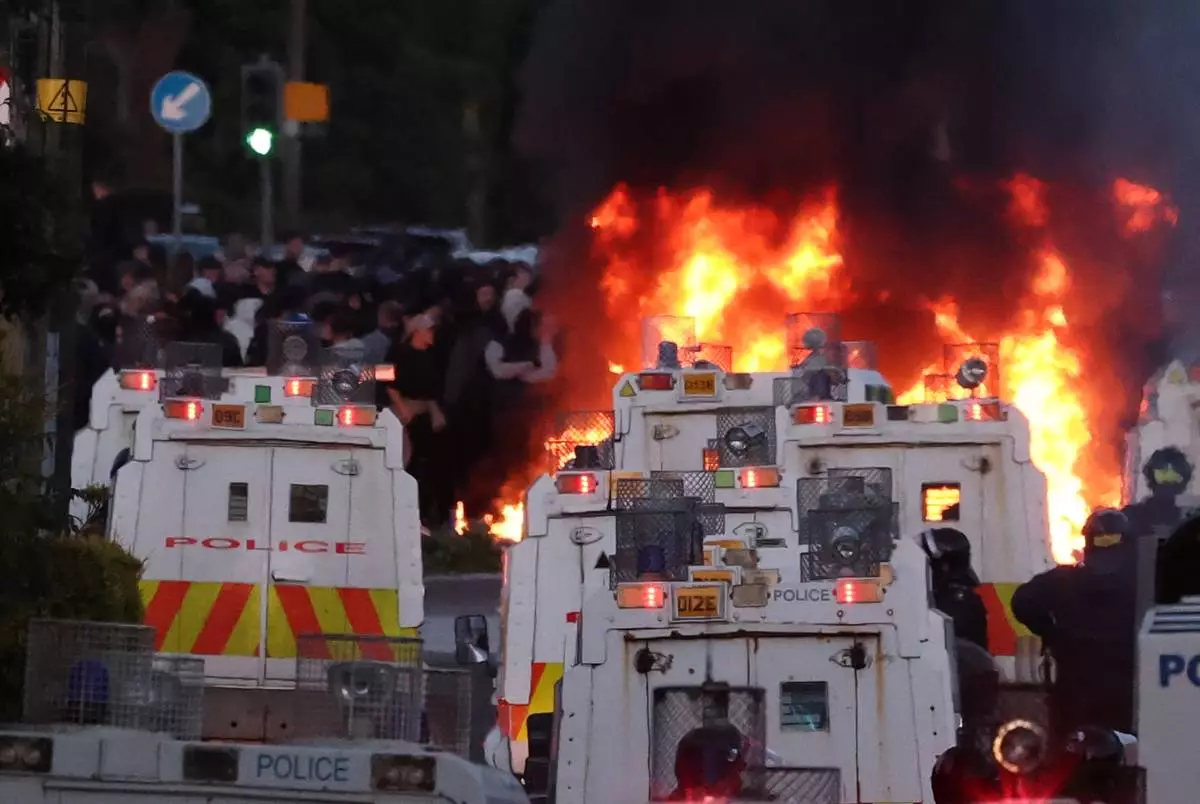
Police attempt to disperse protesters as a fire burns near Newtownabbey, in Belfast, Northern Ireland, Wednesday, June 10, 2026, following a stabbing incident on Monday night. (PA via AP)
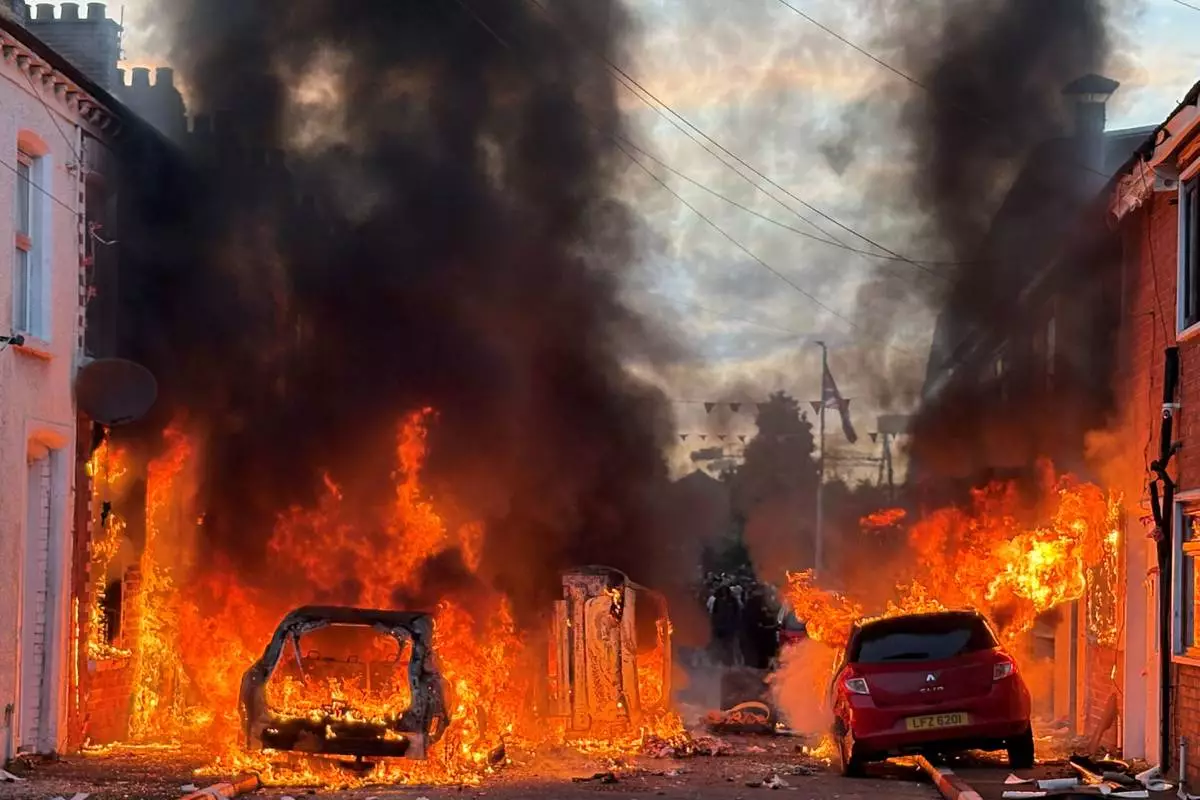
Vehicles set on fire by protesters burn on Lendrick Street in east Belfast, Northern Ireland, on Tuesday, June 9, 2026, after the arrest of a Sudanese man accused of stabbing a man in the northern part of the city. (PA via AP)