Iran's Kharg Island, home to a terminal through which the country exports most of its oil, has emerged as a focus of the war launched in late February by the United States and Israel.
Strikes on oil infrastructure on Kharg — or a ground invasion — would severely curb Iran's oil exports, a key source of revenue for the Islamic Republic. An assault would also mark a major escalation that could provoke even heavier retaliatory attacks on Gulf Arab infrastructure and further drive up oil prices. The skyrocketing cost of fuel is already threatening the world economy.
U.S. President Donald Trump said strikes in mid-March “obliterated” Kharg’s military assets but did not target the island’s oil infrastructure. He warned that if Iran continued disrupting traffic through the Strait of Hormuz, he would reconsider the decision to spare energy targets on the island.
Then on Thursday, Trump said in a social media post that the U.S. would “assume total control” of Iran’s oil and gas industries, including the Kharg Island terminal, in the “not too distant future.”
Trump later said he called off new military strikes on Iran, just hours after saying the U.S. would hit Iran “VERY HARD TONIGHT.” He suggested that progress had been made in talks to extend the fragile ceasefire.
The president made the threats as escalating attacks between the countries pushed the Middle East closer to the resumption of full-scale war. His latest remarks emerged at a time when efforts to negotiate an end to the war appear to be stuck.
The island is on the other side of the Persian Gulf from U.S. bases in Kuwait and Saudi Arabia. A U.S. occupation of it would put American troops in a stationary position just 33 kilometers (21 miles) off Iran's coast. That's well within range of Iranian drones and missiles, if the Islamic Republic is willing to inflict damage on its own territory.
The small coral island is especially important because Iran’s coastline is mostly too shallow for tanker ships to dock. The U.S. has imposed a naval blockade on Iranian ports, which has impeded Iran's efforts to export oil, mainly to China, through the Strait of Hormuz, even as Iranian attacks have closed the vital waterway to most traffic.
The destruction or loss of the island would deny the government a major revenue source, but it would also remove even more oil from world markets at a time of soaring prices. The destruction of the terminal would further damage Iran’s already weakened economy and undermine any efforts at postwar reconstruction.
Iran has continued to exert control over the strait, through which a fifth of the world's traded oil passed before the war. Meanwhile, the U.S. has sent thousands of soldiers and Marines to the region.
Kharg Island has storage tanks and housing for thousands of workers. Gazelles roam freely near the refineries and depots. It also is home to a medieval Portuguese fortress and the ruins of one of the oldest Christian monasteries in the Persian Gulf.

A person sits on shallow water as cargo and commercial vessels are anchored in the Strait of Hormuz off Bandar Abbas, Iran, Monday, June 8, 2026. (Amirhosein Khorgooi/ISNA via AP)

A person stands on shallow water as cargo and commercial vessels are anchored in the Strait of Hormuz off Bandar Abbas, Iran, Monday, June 8, 2026. (Amirhosein Khorgooi/ISNA via AP)
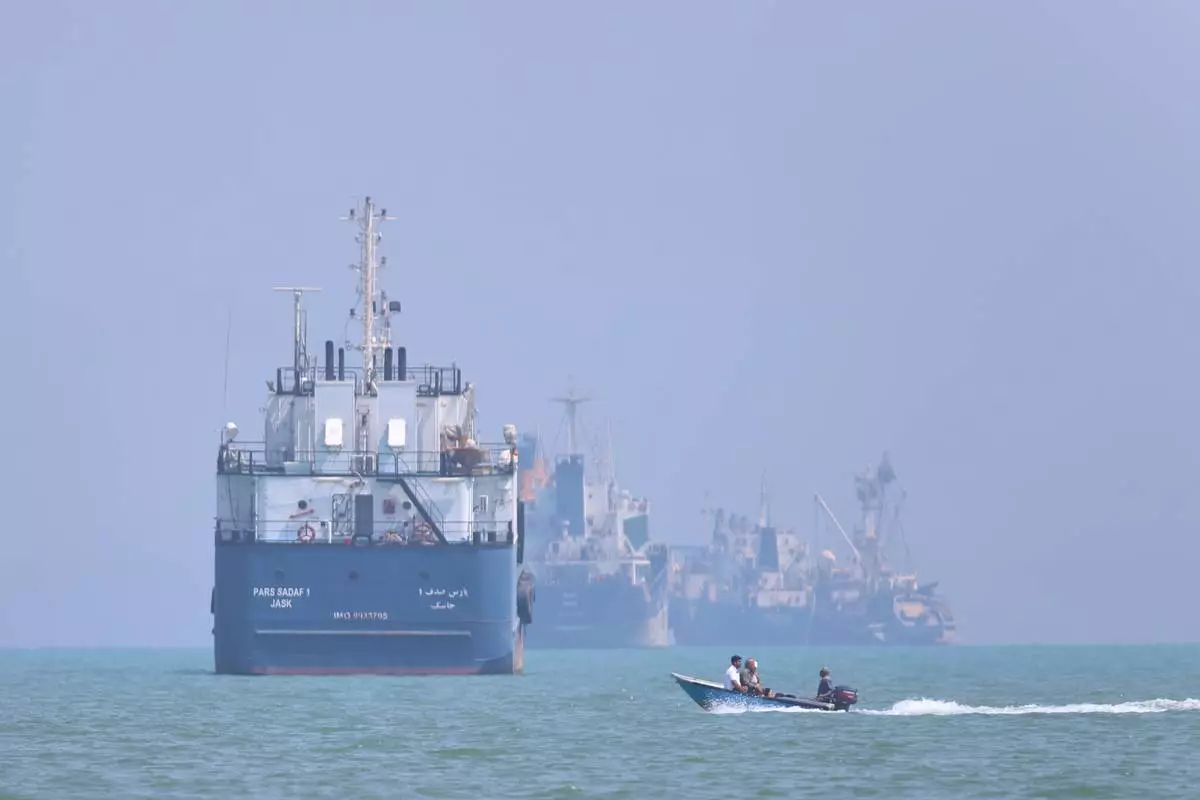
A small motorboat passes anchored vessels in the Strait of Hormuz off Bandar Abbas, Iran, Thursday, June 11, 2026.(Amirhosein Khorgooi/ISNA via AP)
NEW YORK (AP) — U.S. stocks rallied to their best day in two months, and oil prices fell Thursday after President Donald Trump called off his threat to bomb Iran in the evening. That raised hopes for a potential deal that could get the global flow of oil going again.
The S&P 500 jumped 1.8%, coming off a back-to-back drop that had yanked it back to where it was in early May. The Dow Jones Industrial Average leaped 929 points, or 1.9%, and the Nasdaq composite rallied 2.5%.
Stocks immediately veered higher in midday trading after Trump said on his social media network that “discussions with the Islamic Republic of Iran have been brought to the highest level of Iranian leadership and approved” and that the time and place of a signing will “be announced shortly.”
A deal to end the war with Iran could reopen the Strait of Hormuz and allow oil tankers to carry crude again from the Persian Gulf to customers worldwide. The price for a barrel of benchmark U.S. crude sank 2.6% to $87.71. Brent crude, the international standard, fell 2.9% to $90.38, though it’s still above its roughly $70 price from before the war.
Worries had been high because the United States and Iran launched attacks over the past several days threatening a more than monthlong tenuous ceasefire.
High oil prices caused by the Iran war have sent inflation painfully upward, and a report on Thursday showed that prices at the U.S. wholesale level increased by more in May than economists expected. The effect is worldwide, and the European Central Bank on Thursday became the first major central bank to raise interest rates in response.
Higher rates can keep a lid on inflation. But they also slow economies and undercut prices for all kinds of investments, including stocks and cryptocurrencies. They hit investments seen as the most expensive in particular, and some critics are calling the artificial-intelligence industry a bubble where investment inflated too far.
Big swings for AI stocks have been yanking the U.S. stock market up and down over the last week, as they went from roaring to records to suddenly turning lower. The big concern is whether such stocks shot too high, too fast because of AI mania, and their careening moves have sometimes reversed direction by the hour.
AI stocks had already been rolling back up their roller coaster early Thursday, before Trump made his announcement on Iran.
Marvell Technology climbed 11.1%. It’s coming off a manic stretch where it plunged 16.7%, soared 9.6% and then fell more than 5% for two straight days. Just before that, it had a one-day surge of 32.5% that was its best in history when Nvidia CEO Jensen Huang suggested it could be “the next trillion-dollar company.” It was worth a bit more than $190 billion at the time.
Companies involved in the making of chips, meanwhile, jumped to some of the market’s biggest gains. Lam Research leaped 12.7%, and KLA climbed 12.9%.
They helped offset an 8.5% drop for Oracle. It reported a stronger profit for the latest quarter than analysts expected, but it also said it expects to raise $40 billion in cash this fiscal year through borrowing and sales of its stock. That comes after it raised $48 billion last fiscal year to help pay for AI investments.
Other companies’ stocks have also been punished recently for announcing heavy spending on AI, as the question remains whether such investments will produce the profits and productivity that AI proponents are promising.
All told, the S&P 500 jumped 127.31 points to 7,394.30. The Dow Jones Industrial Average rose 929.97 to 50,848.75, and the Nasdaq composite rallied 640.16 to 25,809.66.
In the bond market, Treasury yields eased sharply as falling oil prices meant less upward pressure on inflation. The yield on the 10-year Treasury dropped to 4.45% from 4.55% late Wednesday, which is a significant move for the bond market.
A sustained drop in oil prices could allow the Federal Reserve to keep its main interest rate on hold this year, instead of hiking it as many traders suspected it may have to because of high inflation and a solid U.S. job market. Following Trump’s announcement, traders ratcheted back their bets for a possible increase to the federal funds rate this year, according to data from CME Group.
The Fed could even resume its cuts to interest rates under its new chair, Kevin Warsh, if inflation pressures subside enough. Trump appointed Warsh, and Trump has been loudly calling for lower interest rates.
Stocks of smaller companies can feel the biggest benefit from easier interest rates because many need to borrow money to grow, and the Russell 2000 index of the smallest U.S. stocks jumped a market-leading 3%.
In stock markets abroad, indexes rose modestly in Europe following a mixed finish in Asia.
London’s FTSE 100 rose 0.5%, and Hong Kong’s Hang Seng fell 0.7% for two of the world’s bigger moves.
AP Business Writers Matt Ott and Elaine Kurtenbach contributed to this report.

A trio of traders work on the floor of the New York Stock Exchange, Wednesday, June 3, 2026. (AP Photo/Richard Drew)
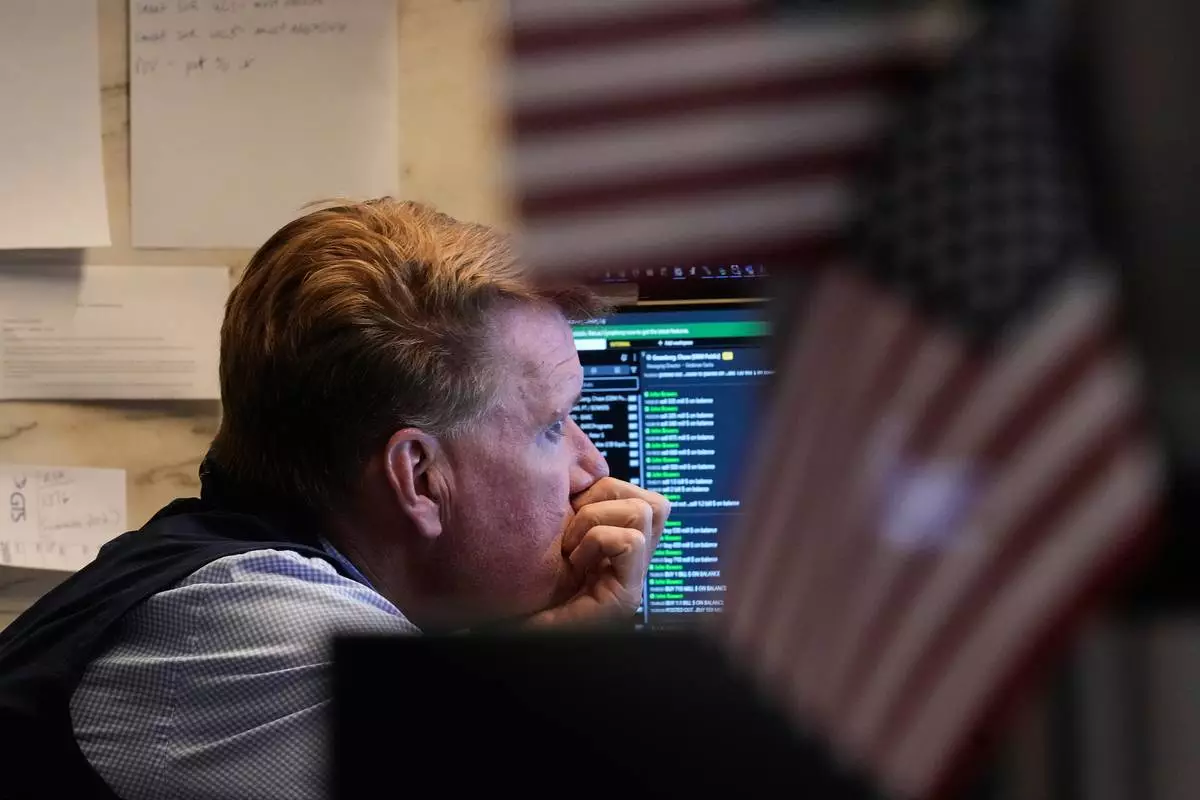
Trader John Bowers works on the floor of the New York Stock Exchange, Wednesday, June 3, 2026. (AP Photo/Richard Drew)
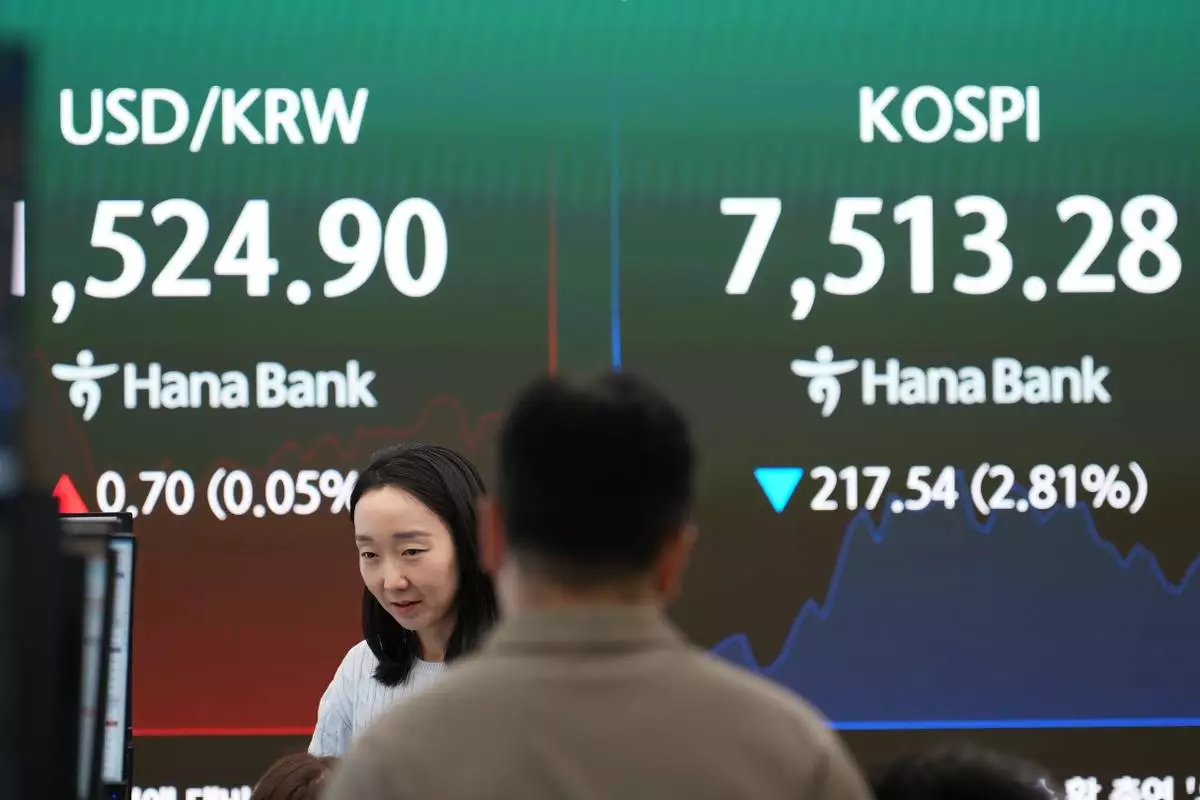
Dealers talk near a screen showing the Korea Composite Stock Price Index (KOSPI) and a foreign exchange rate between the U.S. dollar and the South Korean won at a dealing room of Hana Bank in Seoul, South Korea, Thursday, June 11, 2026. (AP Photo/Lee Jin-man)

Dealers talk on the phones at a dealing room of Hana Bank in Seoul, South Korea, Thursday, June 11, 2026. (AP Photo/Lee Jin-man)
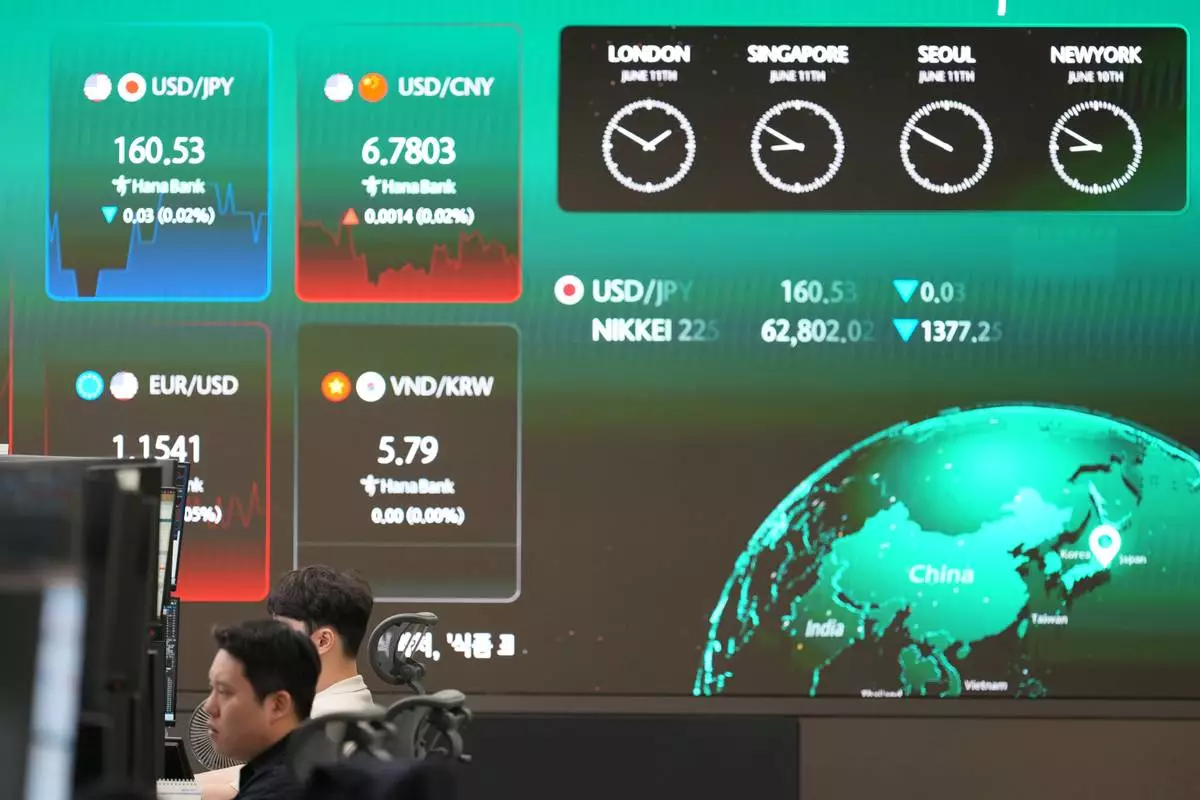
A screen shows foreign exchange rates at a dealing room of Hana Bank in Seoul, South Korea, Thursday, June 11, 2026. (AP Photo/Lee Jin-man)