SAN JUAN, Puerto Rico (AP) — The U.S. government on Thursday announced sanctions against Cuba’s state-owned oil and gas company in a move some experts say will only deepen the island's crises and hit vulnerable Cubans the hardest.
U.S. Secretary of State Marco Rubio asserted that key assets of the company, known as Cupet, were “unlawfully expropriated from American owners years ago.”
He also accused Cuba’s government of weaponizing energy.
“While the Cuban people have suffered fuel shortages and blackouts because of decades of under-investment in critical infrastructure, Cuba’s Communist leaders have diverted energy resources to line their own pockets,” Rubio said in a statement.
He further noted, without providing evidence, that Cuban officials “resell countless barrels of scarce energy on the secondary market, hoarding energy supplies for its military, intelligence and repressive forces, and rationing energy as a tool of social control.”
Bruno Rodríguez, Cuba's foreign affairs minister, pushed back against Rubio's comments in a post on X.
“The US Secretary of State, driven by ambitions of conquest, presidential aspirations, and the vindictive sentiments of the elitist clique that propelled his political career, is now further tightening the economic and energy blockade against Cuba,” he wrote. “To justify this, he doesn’t resort to excuses prepared by his State Department, but rather to the usual vulgar lies, the most aggressive, ignorant, and rabid rhetoric among Cuba’s enemies.”
Cuba's government has previously said that sanctions punish all Cubans and are aimed at strangling the economy to destabilize both the government and its people.
Cupet’s fuel sales to the public are almost nonexistent and are currently rationed.
William LeoGrande, an expert on Cuba at the American University in the United States, said the latest U.S. measure seems like an effort to block any major oil shipments.
“It appears that they’re all in on strangling the Cuban economy," he said. “Their policy is a contradiction. They claim they don’t want to create a humanitarian crisis, although that’s exactly what they’re doing.”
Ricardo Herrero, a Cuban economist based in the U.S. and executive director of the Cuba Study Group, a nonpartisan organization based in Washington, D.C., said he was “genuinely vexed” by the move.
“How are private importers supposed to store diesel and get it into vehicles without using CUPET facilities?,” he wrote on X. “This undermines what, until this morning, had been a humanitarian priority for the US. Either something much bigger is afoot, or we’ve entered the 'indiscriminate cruelty' phase of this policy.”
It's unclear whether Cupet has any assets in the U.S., although it's unlikely, LeoGrande said.
He said he could understand the logic of the measure to decentralize the government and strengthen and empower the private sector by enabling it to sell gasoline to state enterprises, or force those enterprises to move toward privatization so they could be oil recipients.
“Now, the Cubans are not going to privatize Cupet in the hope that might work and that somehow the U.S. might allow oil to go through in that way,” LeoGrande said.
He noted that most private businesses in Cuba are small and don't have the infrastructure to land an oil tanker, unload the product and distribute it.
“They’re running a huge risk of triggering mass migration,” he said of the U.S. government.
Thursday's announcement comes almost a week after the U.S. government sanctioned Cuban President Miguel Díaz-Canel and other officials, as well as several institutions.
Rubio said in a statement that all property or interests of Cupet located in the U.S. or in possession or control of U.S. people are blocked.
“ President Trump wants a new future for the Cuban people with greater economic and political freedom and opportunity,” Rubio wrote on X. “Until then, we will continue to target the Communist regime’s ability to leverage its energy trade to further its corrupt agenda and violently repress the Cuban people.”
Cuba is already struggling under a decades-old embargo and a lack of petroleum as the U.S. keeps pushing for a change in its economic and political model.
Power outages — already common given the economic and energetic crisis gripping the island for the past five years — have only intensified since U.S. President Donald Trump threatened tariffs in late January on any country that sells or provides oil to Cuba.
Both countries have acknowledged that they’ve held talks, but the scope of them is unknown.
Meanwhile, Trump has been threatening military action in Cuba ever since the U.S. military invaded Venezuela and arrested former President Nicolás Maduro.
Last Thursday, Trump said Cuba has “sort of collapsed” and said “we’re going to handle that as soon as we’ve finished” military operations in Iran.
Follow AP’s coverage of Latin America and the Caribbean at https://apnews.com/hub/latin-america
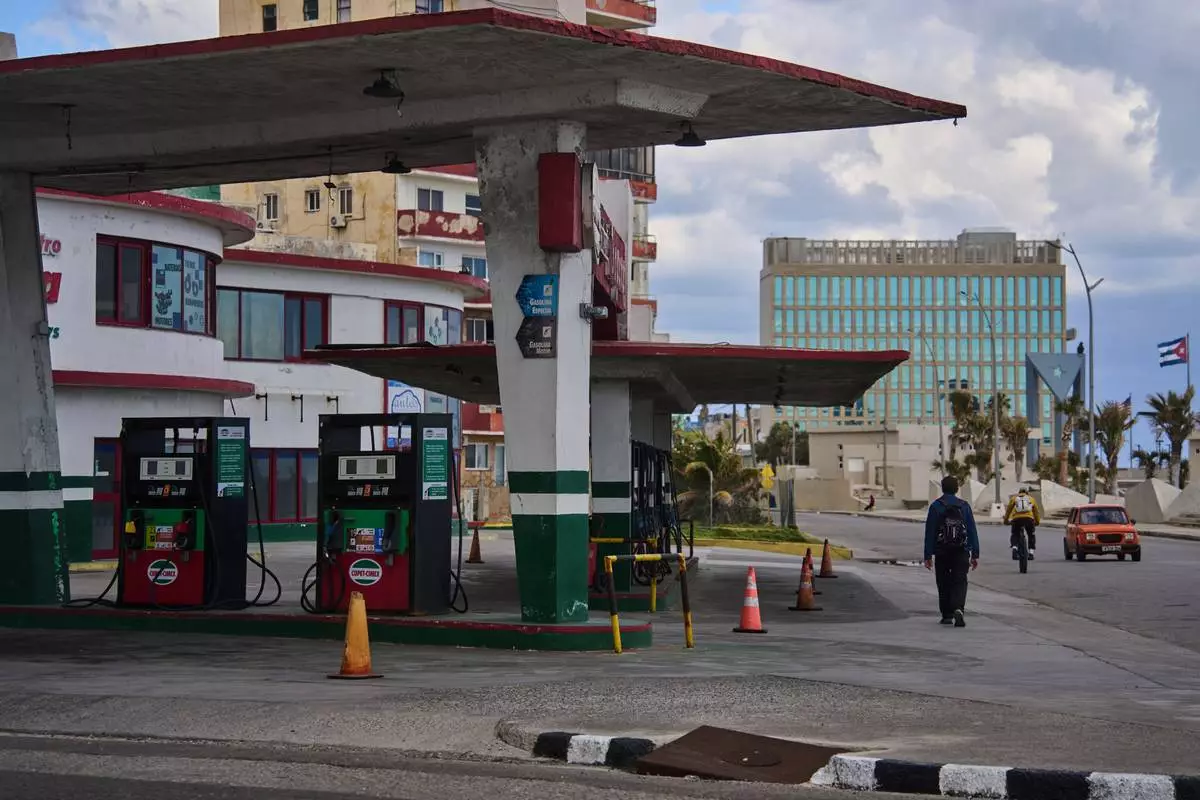
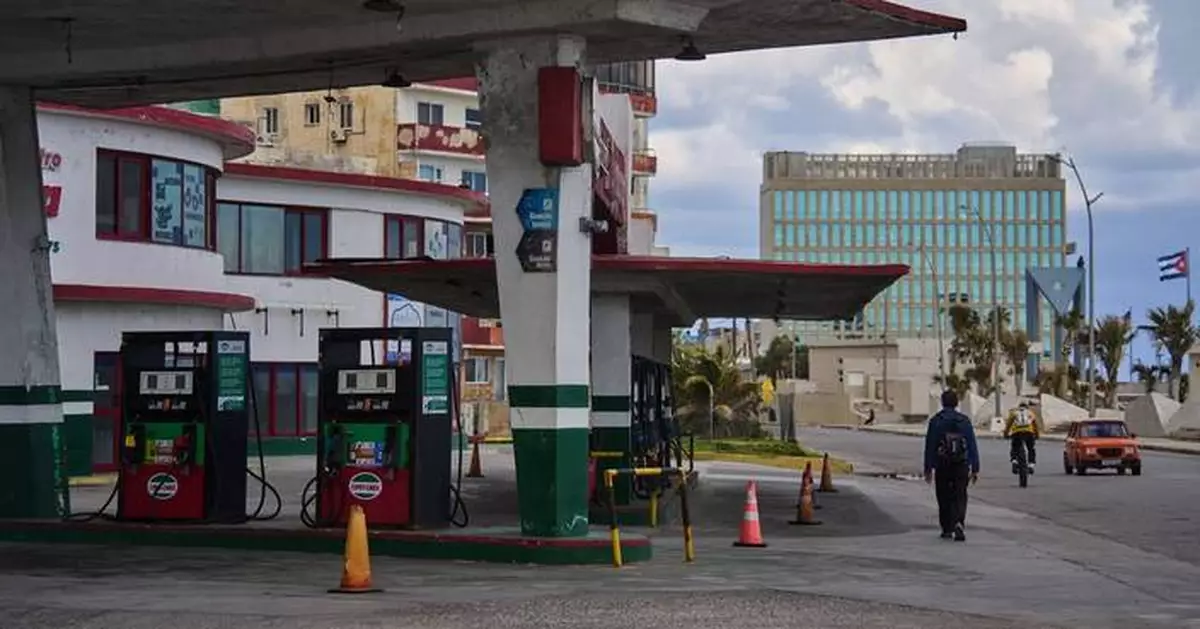
FILE - A man walks past a gas station that has run out of fuel, located near the U.S Embassy, pictured in the background, in Havana, Cuba, Feb. 7, 2026. (AP Photo/Ramon Espinosa, File)
ATMORE, Ala. (AP) — The U.S. Supreme Court declined to let Alabama proceed with a nitrogen gas execution Thursday after a lower court ruled that the method is unconstitutional.
The justices decided not to lift an injunction blocking the state from carrying out the nation’s ninth execution by nitrogen gas. The decision spared death row inmate Jeffery Lee, 49, from being put to death by nitrogen that night.
A spokesperson for the Alabama Department of Corrections said the execution was off for the evening and the state would not try another method.
The high court voted 6-3 and did not explain its reasoning. Three of the conservative justices — Clarence Thomas, Samuel Alito, and Neil Gorsuch — said they would grant Alabama’s request to lift the injunction and let the execution go forward.
“While I am disappointed the Supreme Court did not allow the state to proceed with Lee’s chosen method of execution, I remain committed to ensuring that justice is ultimately served for his victims,” Gov. Kay Ivey said.
The ruling capped an extraordinary legal back-and-forth over the humaneness of the execution method.
Lee filed a lawsuit challenging Alabama’s protocol as a violation of the constitutional ban on cruel and unusual punishment, and U.S. District Judge Emily Marks ruled the method constitutional in May.
But a three-judge panel from the 11th U.S. Circuit Court of Appeals reversed her decision Monday, saying the three minutes it could take for an inmate to lose awareness is an “intolerable” time frame “given the suffering that would likely take place under Alabama’s nitrogen hypoxia protocol.”
Marks reevaluated the case and ruled again Tuesday saying Lee had shown “that the protocol constitutes cruel and unusual punishment in violation of the Eighth Amendment.” The state appealed to the Supreme Court.
“If that ruling stands, it would be unprecedented in American history. Not only does it portend the first-ever permanent ban on a legislatively enacted method, but it would expand the concept of cruelty well beyond the bounds of the Eighth Amendment,” lawyers with the Alabama Attorney General’s Office wrote.
Lee’s lawyers asked the high court to keep the execution on hold, saying in a response that Alabama was asking it to intervene at the eleventh hour “to allow an execution that has been found unconstitutional to proceed.”
Prison officials said Lee did not request a final meal Thursday but had potato chips, Skittles, water and a Sprite in the hours ahead of his possible execution.
Marks did not block the state from executing Lee with one of the other approved methods, the electric chair or lethal injection. It is unclear how quickly the state could switch, however.
Alabama began using nitrogen gas to carry out some executions in 2024. The method involves strapping a respirator to a person’s face and replacing breathable air with pure nitrogen gas, causing death from lack of oxygen.
Nitrogen has been used in eight executions in the United States — seven times in Alabama and once in Louisiana. Lee was scheduled to be the ninth.
During the previous Alabama nitrogen executions, the inmates shook, pulled at the restraints and exhibited labored breathing. During the state’s last execution by nitrogen gas, 30 minutes elapsed between Anthony Boyd exhibiting signs of being impacted by the gas and state officials closing the curtain to the viewing room to signal the execution was complete.
The state has maintained that the method is constitutional and causes no more suffering than other execution methods.
Lee, who is currently housed at William C. Holman Correctional Facility in Atmore, was convicted of two counts of capital murder for killing Jimmy Ellis and Elaine Thompson while robbing a pawnshop on Dec. 12, 1998.
Prosecutors said Lee entered Jimmy’s Pawnshop with a sawed-off shotgun and shot Ellis, the owner, and Thompson, an employee.
A jury voted 7-5 to give Lee a sentence of life imprisonment. However a judge overrode that and sentenced him to death.
Alabama ended the practice of judicial override in 2017 and no longer allows a judge to disregard a jury’s sentencing decision in death penalty cases.
Bestselling author John Grisham called on Gov. Kay Ivey to honor the jury's decision and commute Lee's sentence to life without parole.
“The practice of a judge overriding a jury was declared unconstitutional and so indefensible that Alabama itself abolished it in 2017,” Grisham said in a statement. “Jeffery Lee’s jury made its decision, the Alabama Legislature later agreed that juries, not judges, should decide life or death sentences.”

This undated photo provided by the Alabama Department of Corrections on Thursday, June 11, 2026, shows Jeffery Lee, who was sentenced to death for killing two people during a 1998 robbery at a pawn shop. (Alabama Department of Corrections via AP)
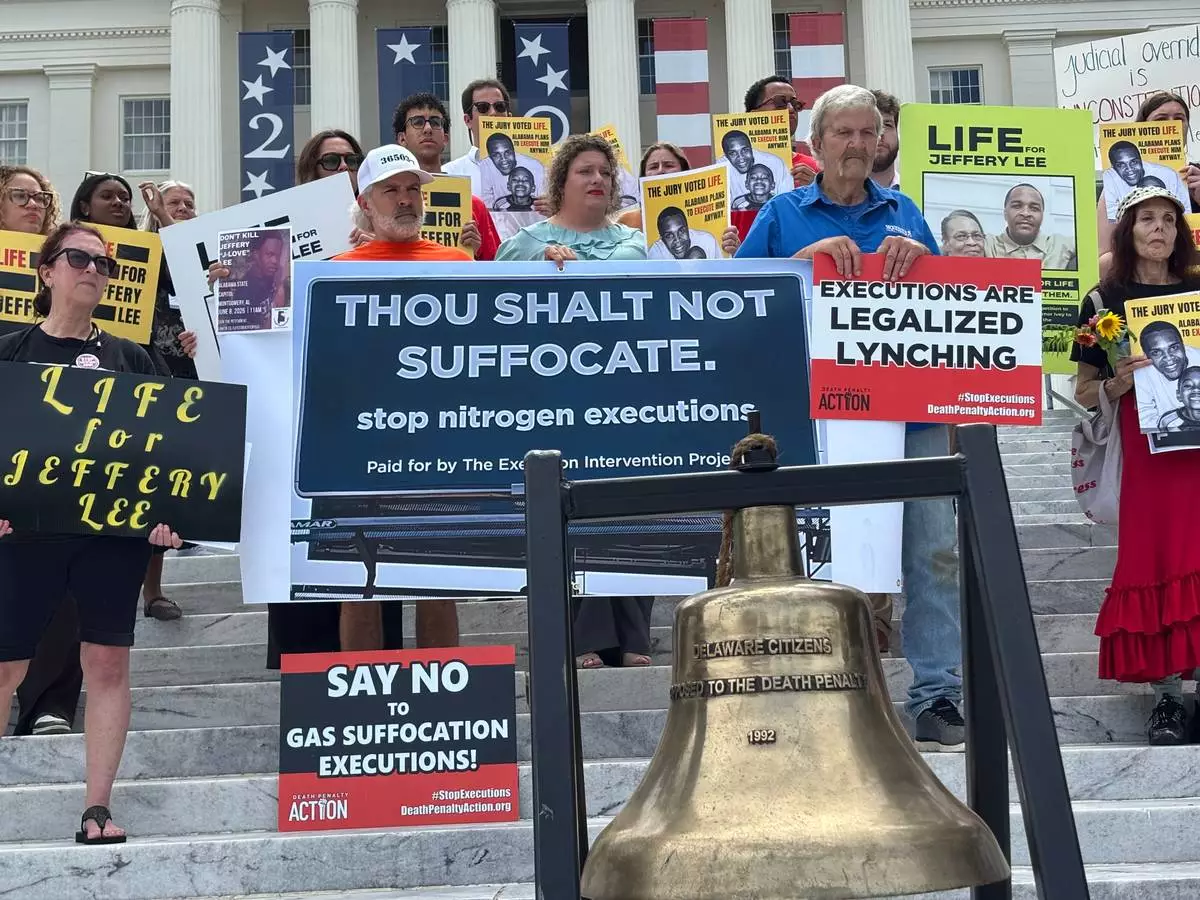
Protesters gather outside the Capitol in Montgomery, Ala., on Monday, June 8, 2026, to oppose an upcoming execution in Alabama. (AP Photo/Kim Chandler)
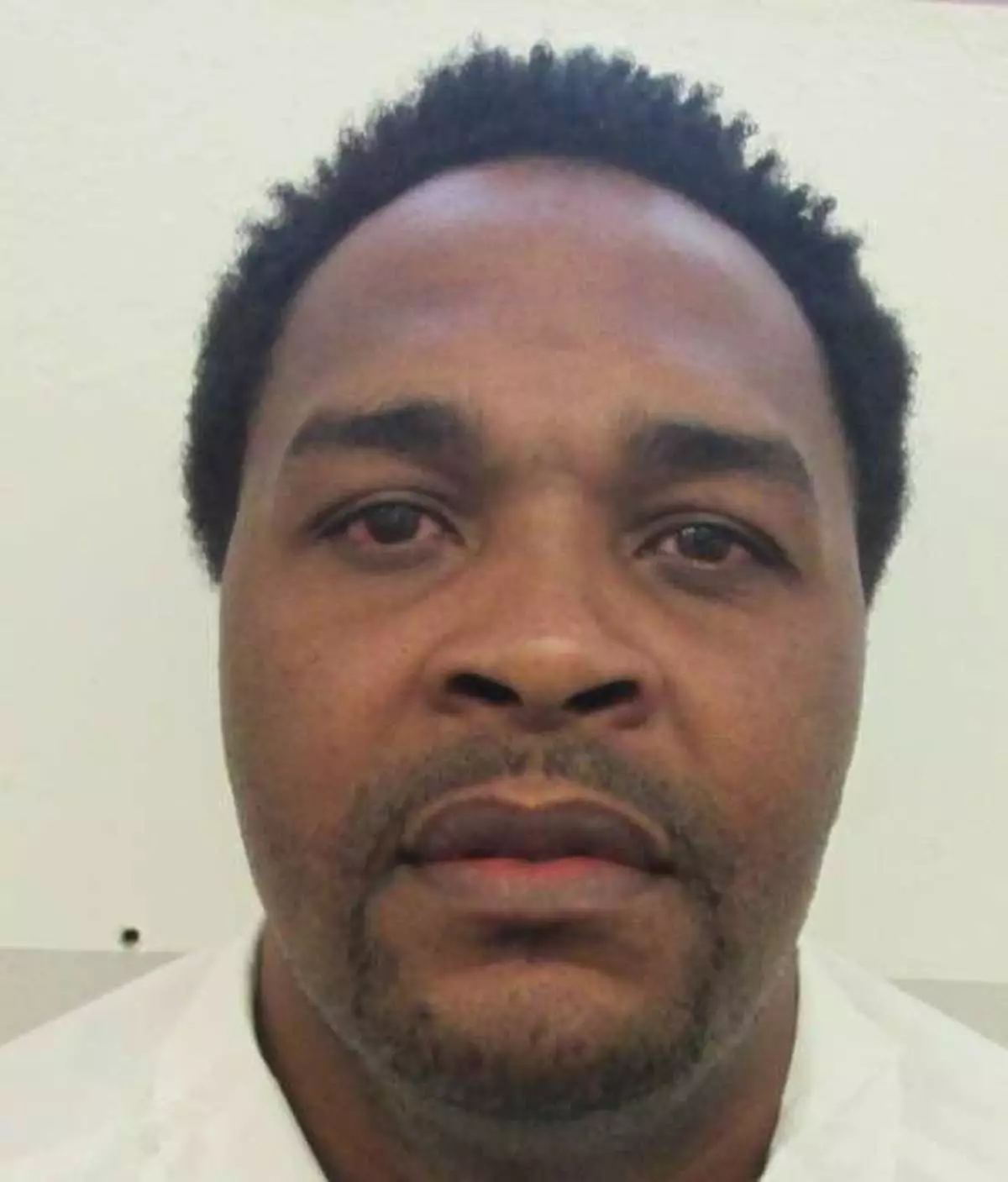
This undated photo from the Alabama Department of Corrections shows Jeffery Lee, who was sentenced to death for killing two people during a 1998 robbery at a pawn shop. (Alabama Department of Corrections via AP)
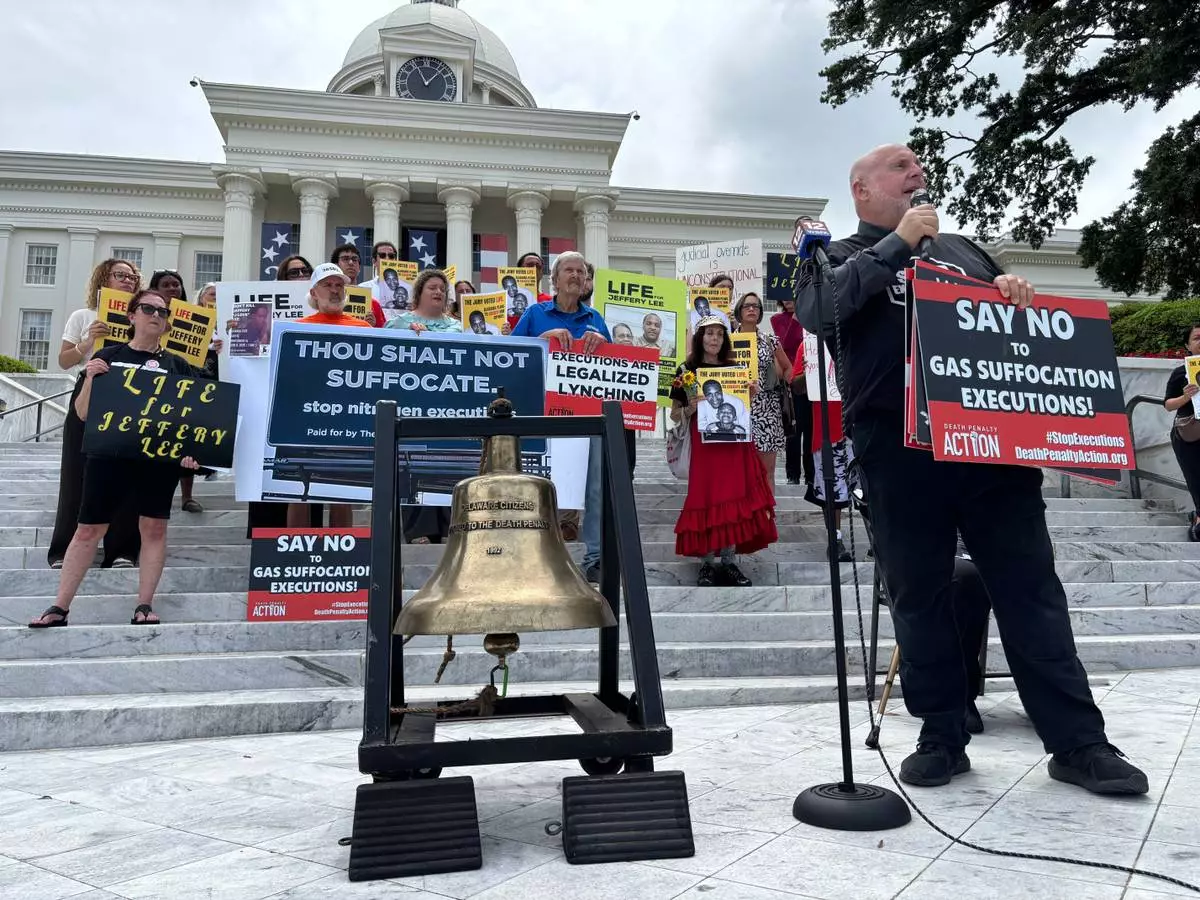
Abraham Bonowitz, of the group Death Penalty Action, leads a demonstration outside the Capitol in Montgomery, Ala., on Monday, June 8, 2026, to oppose an upcoming execution in Alabama. (AP Photo/Kim Chandler)