Skip to Content Facebook Feature Image

Political blame game follows as screwworm parasite threatens cattle in Texas

News

Political blame game follows as screwworm parasite threatens cattle in Texas
News

News

Political blame game follows as screwworm parasite threatens cattle in Texas

2026-06-12 06:41 Last Updated At:06:51

U.S. Agriculture Secretary Brooke Rollins watched sterile flies being released to fight the New World screwworm on Thursday and visited the Texas ranch where one of the first cases of the pest was detected. The screwworm could devastate the nation’s cattle industry.

Later, she repeated her assertion that former President Joe Biden’s administration is responsible for the parasite’s return to the U.S. six decades after it was eradicated. Democratic leaders say cuts to the nation’s agriculture agency under President Donald Trump are to blame.

More Images
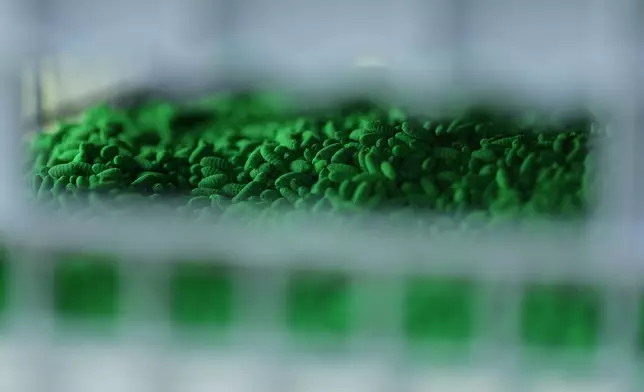
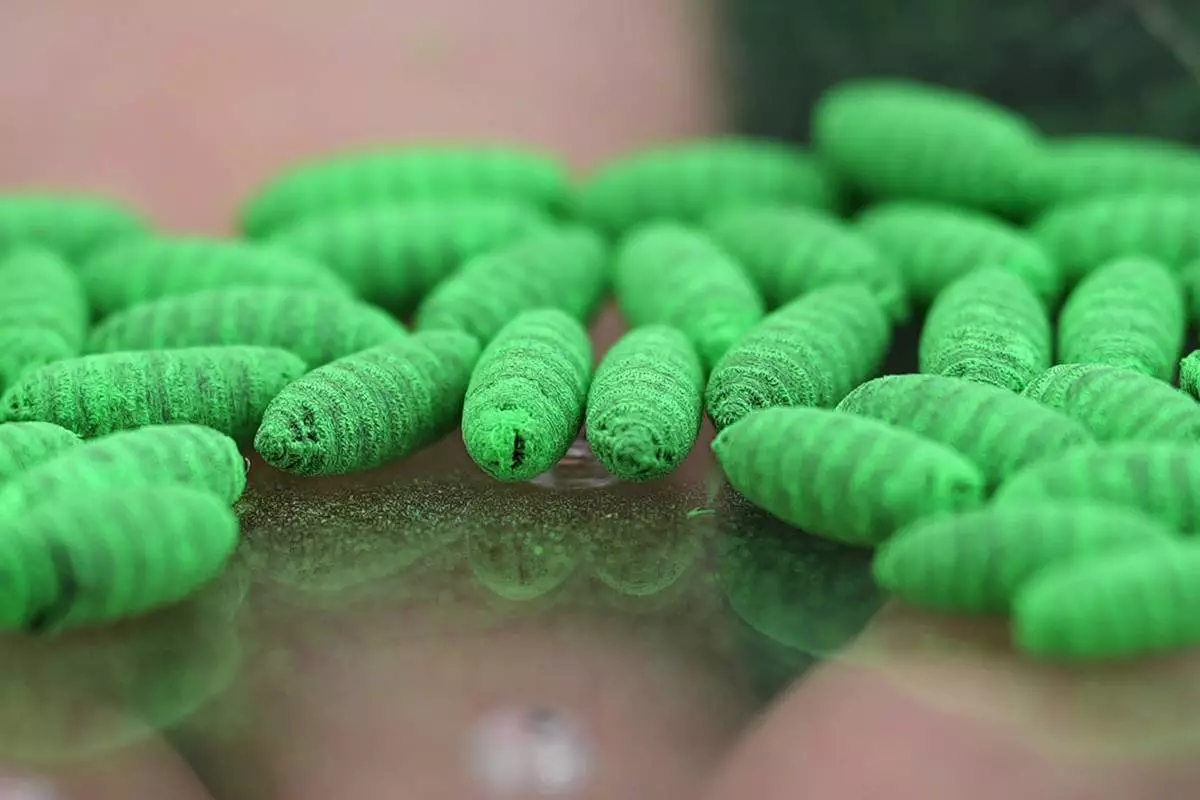
Thousands of dyed fly pupae are seen in a sterile fly dispersal station placed by the U.S. Department of Agriculture to combat the spread of the New World screwworm fly on grounds of a ranch near La Pryor, Texas, Thursday, June 11, 2026. (AP Photo/Eric Gay)
Thousands of dyed fly pupae are seen in a sterile fly dispersal station placed by the U.S. Department of Agriculture to combat the spread of the New World screwworm fly on grounds of a ranch near La Pryor, Texas, Thursday, June 11, 2026. (AP Photo/Eric Gay)
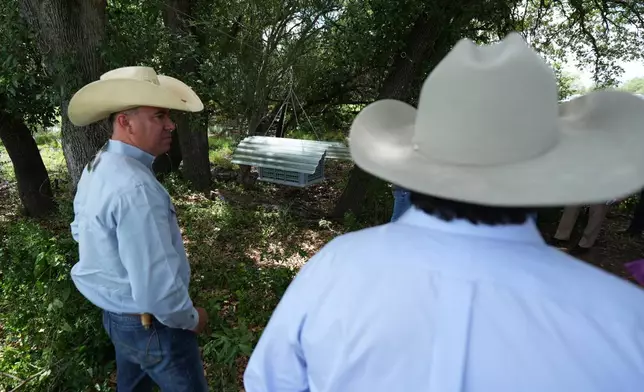
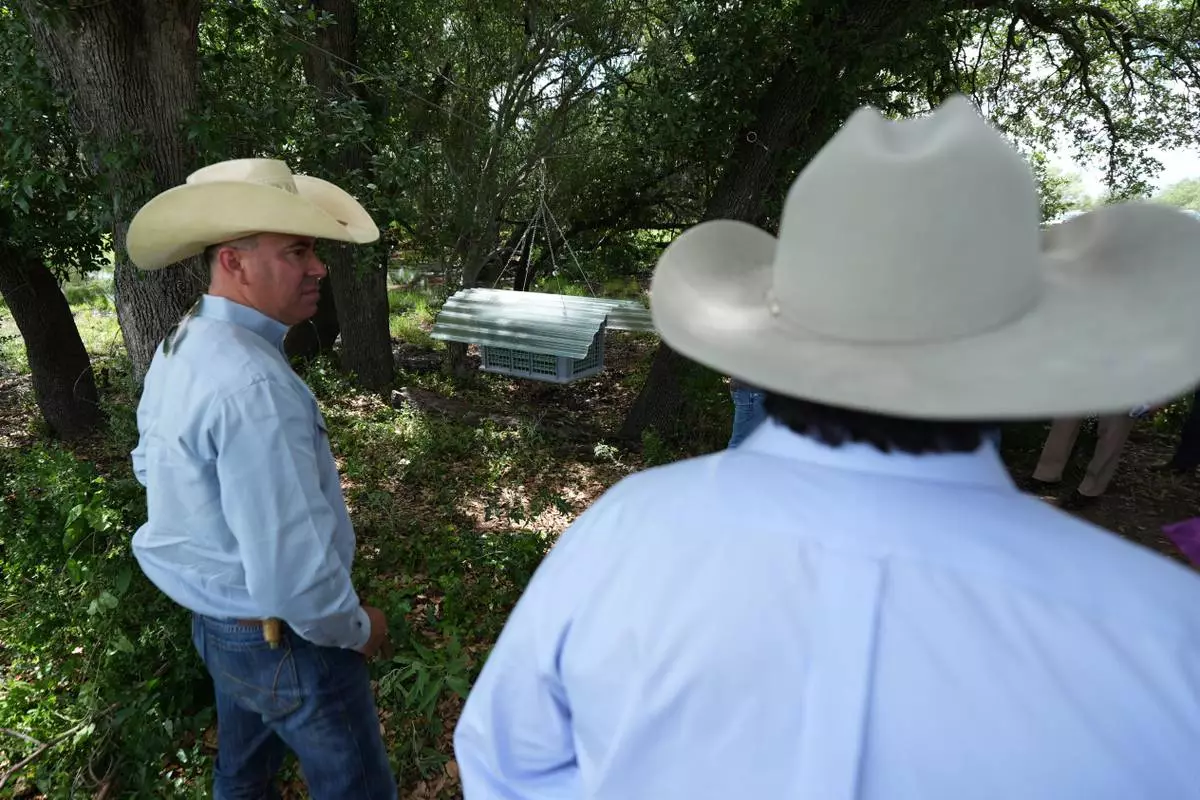
Rangers and land owners view a sterile fly dispersal station placed by the U.S. Department of Agriculture to combat the spread of the New World screwworm fly on grounds of a ranch near La Pryor, Texas, Thursday, June 11, 2026. (AP Photo/Eric Gay)

Rangers and land owners view a sterile fly dispersal station placed by the U.S. Department of Agriculture to combat the spread of the New World screwworm fly on grounds of a ranch near La Pryor, Texas, Thursday, June 11, 2026. (AP Photo/Eric Gay)
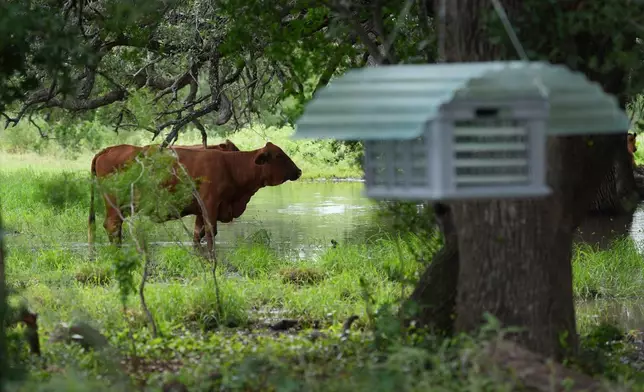
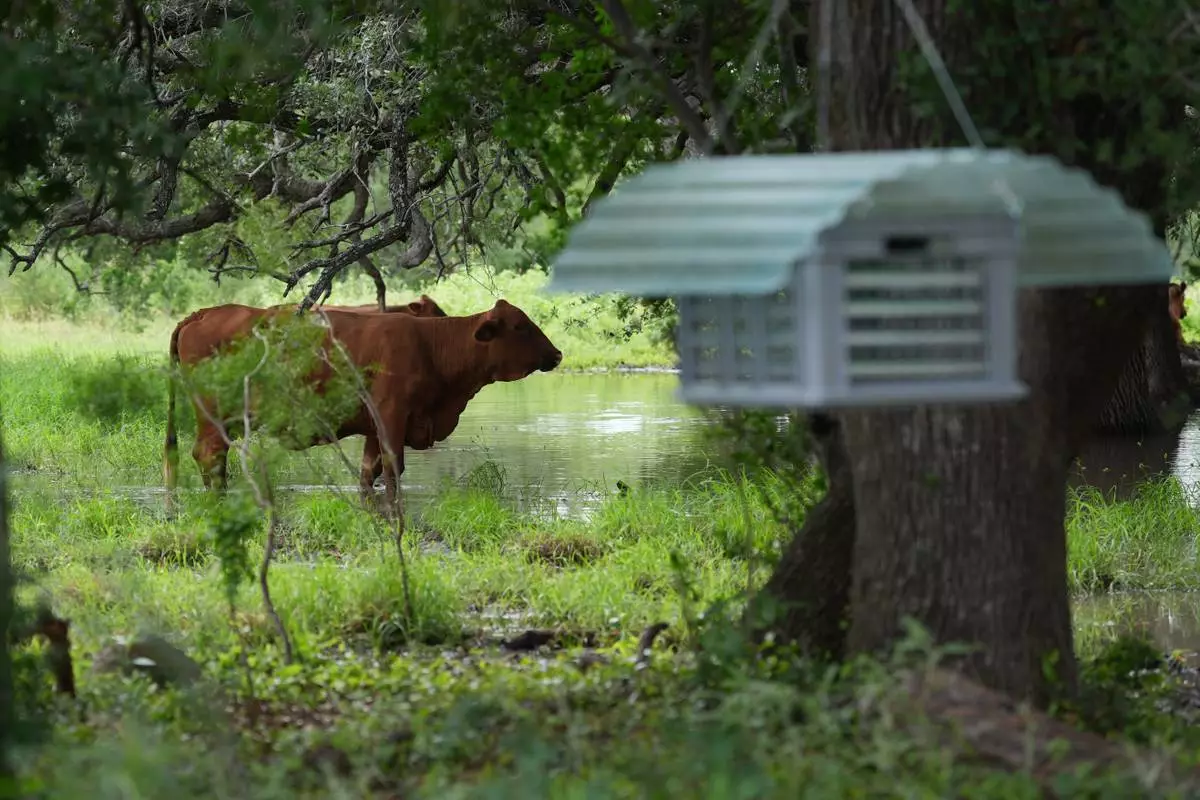
Cattle graze near a sterile fly dispersal station placed by the U.S. Department of Agriculture to combat the spread of the New World screwworm fly on grounds of a ranch near La Pryor, Texas, Thursday, June 11, 2026. (AP Photo/Eric Gay)

Cattle graze near a sterile fly dispersal station placed by the U.S. Department of Agriculture to combat the spread of the New World screwworm fly on grounds of a ranch near La Pryor, Texas, Thursday, June 11, 2026. (AP Photo/Eric Gay)

U.S. Agriculture Secretary Brooke Rollins talks about a sterile fly dispersal station placed by the U.S. Department of Agriculture to combat the spread of the New World screwworm fly on grounds of a ranch near La Pryor, Texas, Thursday, June 11, 2026. (AP Photo/Eric Gay)

U.S. Agriculture Secretary Brooke Rollins talks about a sterile fly dispersal station placed by the U.S. Department of Agriculture to combat the spread of the New World screwworm fly on grounds of a ranch near La Pryor, Texas, Thursday, June 11, 2026. (AP Photo/Eric Gay)

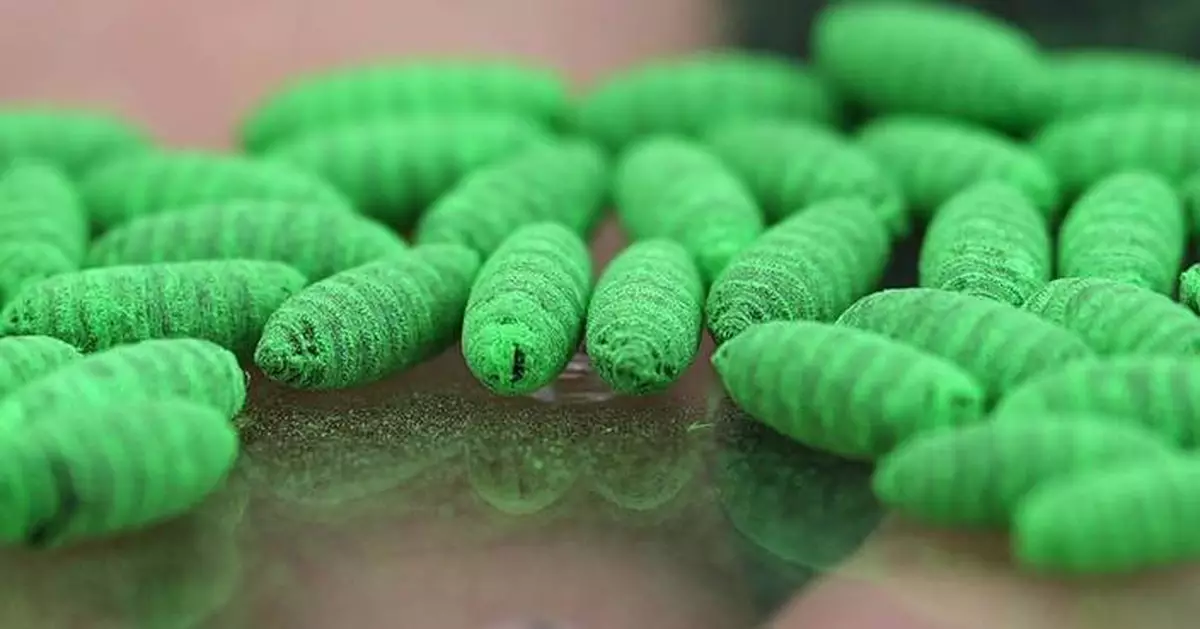
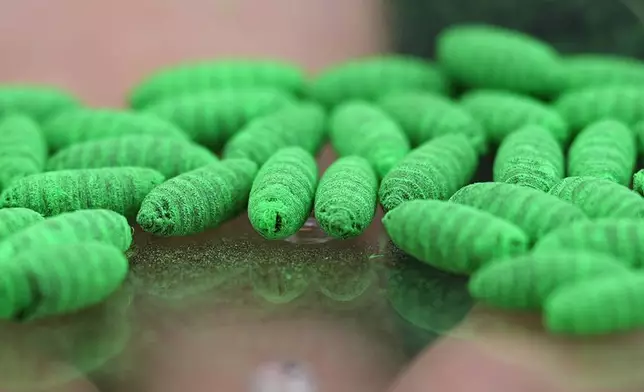
Dyed fly pupae are seen as a sterile fly dispersal station is placed by the U.S. Department of Agriculture to combat the spread of the New World screwworm fly on grounds of a ranch near La Pryor, Texas, Thursday, June 11, 2026. (AP Photo/Eric Gay)

Dyed fly pupae are seen as a sterile fly dispersal station is placed by the U.S. Department of Agriculture to combat the spread of the New World screwworm fly on grounds of a ranch near La Pryor, Texas, Thursday, June 11, 2026. (AP Photo/Eric Gay)

Screwworms are on their way to becoming a billion-dollar international problem, but can be contained if ranchers are vigilant, watch their herds and other wildlife, and quickly treat any infestations, Rollins said. She pointed to the calf where screwworms were found six days earlier in a wound where its umbilical cord had been attached.

“He couldn’t be happier. He’s bouncing around the pasture," Rollins said.

Screwworms are flies that lay their eggs in the wounds of warm-blooded animals and feed on living flesh rather than dead tissues. Scientists say releasing sterile flies to mate with females is the most effective way to control the population, a strategy that has worked for decades. A warming planet is complicating efforts by giving screwworms, which thrive in hot, humid weather, more places to spread.

The U.S. Department of Agriculture is preparing an all-out assault on the screwworm, which had been contained in the narrow isthmus of Panama for decades.

No matter the cause, driving screwworms back south and keeping them out of the U.S. will be expensive. The USDA estimated it would spend over $1 billion on efforts to save cattle herds and other livestock.

About $750 million will go toward building and operating a plant capable of producing up to 300 million sterile flies a week. The technique has been used for decades, as female screwworms mate just once, and if they choose a sterile mate, their eggs don’t hatch, and the fly population dwindles.

The goal is to protect the U.S. cattle industry. Experts think the parasite shouldn't cause an immediate increase in near-record-high beef prices as long as it doesn't turn into an outbreak and large groups of cattle die. Screwworms don't affect food safety.

The parasite has already disrupted the Mexican beef industry. The U.S. closed its southern ports to Mexican livestock last summer.

Mexico has had more than 28,000 cases of screwworms since the flies returned two years ago, mostly confined to its southern states. The Mexican government stopped the importation of almost all live animals from the U.S. after screwworms were discovered here.

The U.S. had been almost entirely rid of screwworms for 60 years, with scientists in North and Central America eventually driving it down to the containment zone in Panama. But in 2023, the flies emerged and began heading back north.

Experts say screwworms are here to stay at least for this summer. Seven cases have already been detected in Texas and New Mexico. A 12-mile (20-kilometer) quarantine zone goes up around every place a case is found.

As they work toward a solution, scientists say they aren't sure exactly what led to screwworms leaving the area in Panama where they were boxed in.

“I don't have the answer to that one, and I don’t know if anyone does. It doesn’t help us to speculate,” said Jonathan Cammack, a professor of livestock entomology and parasitology at Oklahoma State University.

The key now is to ramp up the sterile fly program and get international cooperation to get the pests back down to Panama, he said.

Climate change is also helping drive the spread of screwworms, said Lee Haines, an associate research professor of biological sciences at the University of Notre Dame.

"The fly is a creature of warmth as its entire life cycle, from egg to adult, can complete in as little as three weeks under tropical conditions," Haines said.

Even Canada has temporarily stopped importing cattle, horses or other livestock from Texas. The parasites prefer humid areas where temperatures are at least 77 F (25 C), and those days are increasing further north.

As Rollins moves quickly to implement a billion-dollar response to the screwworm outbreak, she has also blamed the Biden administration, noting that it was in office as the parasite began moving north again.

She said without showing any evidence the flies were with animals that followed immigrants north as well as hitching rides with cattle and other animals being sold by Mexican cartels outside of regular markets.

“People moving north to America, bringing their livestock with them, the Mexican cartels with the illicit cattle traffic, we knew it was coming,” Rollins told the U.S. Senate Agriculture Committee on Wednesday.

Nearly a dozen Democratic U.S. senators sent a letter to Rollins this week questioning whether job losses at the USDA have hurt food inspections and livestock safety programs.

Nearly 20% of the counties in the U.S. that started 2025 with at least one employee from the federal Animal Plant and Health Inspection Service ended the year with none, the letter said.

Rollins said she has moved over 100 USDA employees into the screwworm response. She said it has been one of her top priorities since Trump picked her to lead the USDA.

But Democratic U.S. Rep. Ted Lieu of California said blaming Biden is shortsighted and again shows the Trump administration creates problems through reckless spending cuts.

“The life cycle of a screwworm is about 14 to 54 days, depending on temperature and humidity. The Trump administration has been in office for over 500 days,” Lieu said earlier this week. “This is on the Trump administration. They need to own up to it, and they need to apologize.”
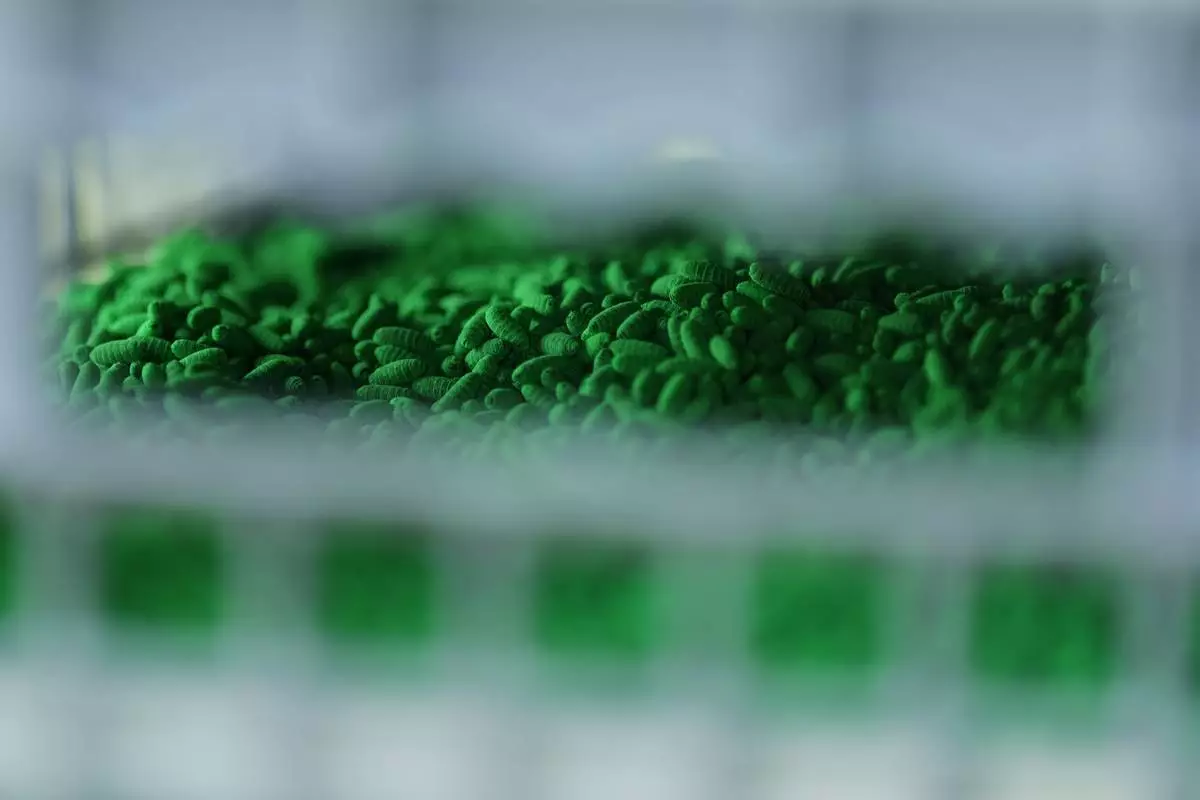
Thousands of dyed fly pupae are seen in a sterile fly dispersal station placed by the U.S. Department of Agriculture to combat the spread of the New World screwworm fly on grounds of a ranch near La Pryor, Texas, Thursday, June 11, 2026. (AP Photo/Eric Gay)
Thousands of dyed fly pupae are seen in a sterile fly dispersal station placed by the U.S. Department of Agriculture to combat the spread of the New World screwworm fly on grounds of a ranch near La Pryor, Texas, Thursday, June 11, 2026. (AP Photo/Eric Gay)
Rangers and land owners view a sterile fly dispersal station placed by the U.S. Department of Agriculture to combat the spread of the New World screwworm fly on grounds of a ranch near La Pryor, Texas, Thursday, June 11, 2026. (AP Photo/Eric Gay)

Rangers and land owners view a sterile fly dispersal station placed by the U.S. Department of Agriculture to combat the spread of the New World screwworm fly on grounds of a ranch near La Pryor, Texas, Thursday, June 11, 2026. (AP Photo/Eric Gay)
Cattle graze near a sterile fly dispersal station placed by the U.S. Department of Agriculture to combat the spread of the New World screwworm fly on grounds of a ranch near La Pryor, Texas, Thursday, June 11, 2026. (AP Photo/Eric Gay)

Cattle graze near a sterile fly dispersal station placed by the U.S. Department of Agriculture to combat the spread of the New World screwworm fly on grounds of a ranch near La Pryor, Texas, Thursday, June 11, 2026. (AP Photo/Eric Gay)
U.S. Agriculture Secretary Brooke Rollins talks about a sterile fly dispersal station placed by the U.S. Department of Agriculture to combat the spread of the New World screwworm fly on grounds of a ranch near La Pryor, Texas, Thursday, June 11, 2026. (AP Photo/Eric Gay)
U.S. Agriculture Secretary Brooke Rollins talks about a sterile fly dispersal station placed by the U.S. Department of Agriculture to combat the spread of the New World screwworm fly on grounds of a ranch near La Pryor, Texas, Thursday, June 11, 2026. (AP Photo/Eric Gay)

Dyed fly pupae are seen as a sterile fly dispersal station is placed by the U.S. Department of Agriculture to combat the spread of the New World screwworm fly on grounds of a ranch near La Pryor, Texas, Thursday, June 11, 2026. (AP Photo/Eric Gay)

Dyed fly pupae are seen as a sterile fly dispersal station is placed by the U.S. Department of Agriculture to combat the spread of the New World screwworm fly on grounds of a ranch near La Pryor, Texas, Thursday, June 11, 2026. (AP Photo/Eric Gay)
At least three tornadoes touched down in communities outside Chicago, leveling homes and ripping down trees and power poles, while storms grounded flights and knocked out power for hundreds of thousands across the Midwest and Northeast.

As the large funnel cloud swept through Merrillville, a town about 33 miles (53 kilometers) southeast of Chicago, the city's police department warned residents to “TAKE COVER IMMEDIATELY.” Meanwhile, the nearby manufacturing and farm city of Streator set up a family reunification center for displaced residents in its city hall as officials took stock of the major damage.

Tornado warnings were also in place in Chicago and in parts of Indiana and Michigan, according to the National Weather Service.

Severe storms had swept through the Midwest Wednesday, knocking out power, damaging buildings and canceling flights.

In Des Moines, Iowa, a 54-year-old man died at a homeless encampment in a park Wednesday after being hit by a tree that “broke apart and fell during strong storms,” police said in a statement. The man was found critically injured Thursday morning and died at the scene, authorities said. There were no immediate reports of other deaths or injuries from the storms.

Strong storms delayed or halted flights at airports in some cities, including Chicago, Philadelphia and New York on Thursday. Parts of the Northeast and mid-Atlantic also strained under high heat and humidity.

Shane Tipton, of Unionville, Missouri, drove home from his factory job Wednesday afternoon unaware that severe weather was on the way, said his daughter, Kylie Rouse. As he stepped out of his truck, he saw a twister bearing down — and hurried into his mobile home to evacuate his 87-year-old dad, Jimmie Tipton.

They made it back to the truck, drove just far enough away and watched as the tornado obliterated the home. Shattered cabinets, furniture and appliances littered the ground. Clothes hung in trees. They believe they lost one of their hunting dogs, who has been missing since it struck.

“Everything's destroyed,” Rouse told The Associated Press in a phone interview Thursday. “It was scattered clear for miles. If my grandpa would have been in there, there's no way that he would be alive.”

They returned to the scene Thursday to hunt through the debris for Jimmie Tipton's prescriptions. Rouse has started an online fundraiser through GoFundMe to help them recover.

Residents of Springfield, Illinois, believe a tornado touched down in their area late Wednesday. Two buildings at the Animal Protective League shelter in Springfield were heavily damaged, but none of the nearly 150 cats and 28 dogs housed there were injured, said Deana Corbin, the group's executive director.

“It pretty much wiped out our shelter facility, took the roofs off both of our buildings,” Corbin said. “It’s a miracle. We were so blessed to not have any injuries of either people or animals.”

The community pitched in to take in all the cats and dogs temporarily, including a local animal control center, veterinarians and residents, she said.

Damage also was reported at Abraham Lincoln Capital Airport in Springfield.

Weather service meteorologist Frank Pereira said the system that produced the storms, including high winds and hail, was moving eastward Thursday, fueled by cool air from Canada clashing with warm, humid air from the South.

Potentially dangerous heat and high humidity arrived Thursday and was expected to continue Friday for a swath of the East Coast from the mid-Atlantic to the Northeast, where daily high record temperatures could be broken in numerous places, the weather service said. Temperatures in the mid-90s Fahrenheit (mid-30s Celsius) were expected, but with the humidity it could feel like 100 degrees Fahrenheit (38 degrees Celsius) or more, the service said.

Philadelphia declared a heat health emergency for Thursday and Friday, activating cooling centers, home visits by field teams, outreach to people experiencing homelessness and other services. New York City officials were also urging residents to take precautions, including drinking plenty of water and finding a cool place to stay if they do not have air conditioning.

At various points Wednesday and Thursday, ground stops were issued at Chicago's O’Hare International and Midway International airports, and at John F. Kennedy International Airport in New York.

More than 1,000 flights going into and out of Chicago had been delayed or canceled, according to FlightAware, a flight tracking website.

Commonwealth Edison Company, which provides electric service across northern Illinois, said the storms had downed poles and wires. On X, it wrote that it expected “80% restoration by Saturday, June 13 at 11 PM.”

Associated Press reporters Hannah Fingerhut in Des Moines, Iowa, and Hallie Golden and Gene Johnson in Seattle contributed.

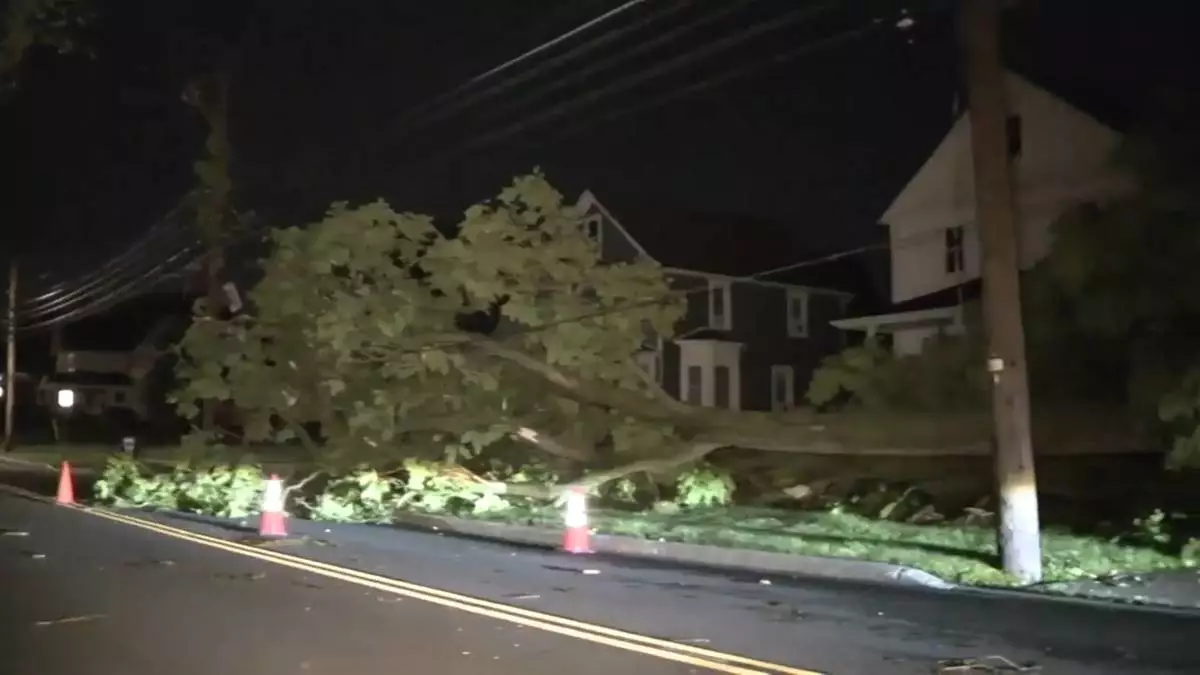
This frame grab from video shows a downed tree after storms struck Amherst, Ohio, west of Cleveland on Wednesday, June 10, 2026. (AP Photo/Courtesy WEWS/NEWS5) TELEVISION OUT

This frame grab from video shows a downed tree after storms struck Amherst, Ohio, west of Cleveland on Wednesday, June 10, 2026. (AP Photo/Courtesy WEWS/NEWS5) TELEVISION OUT

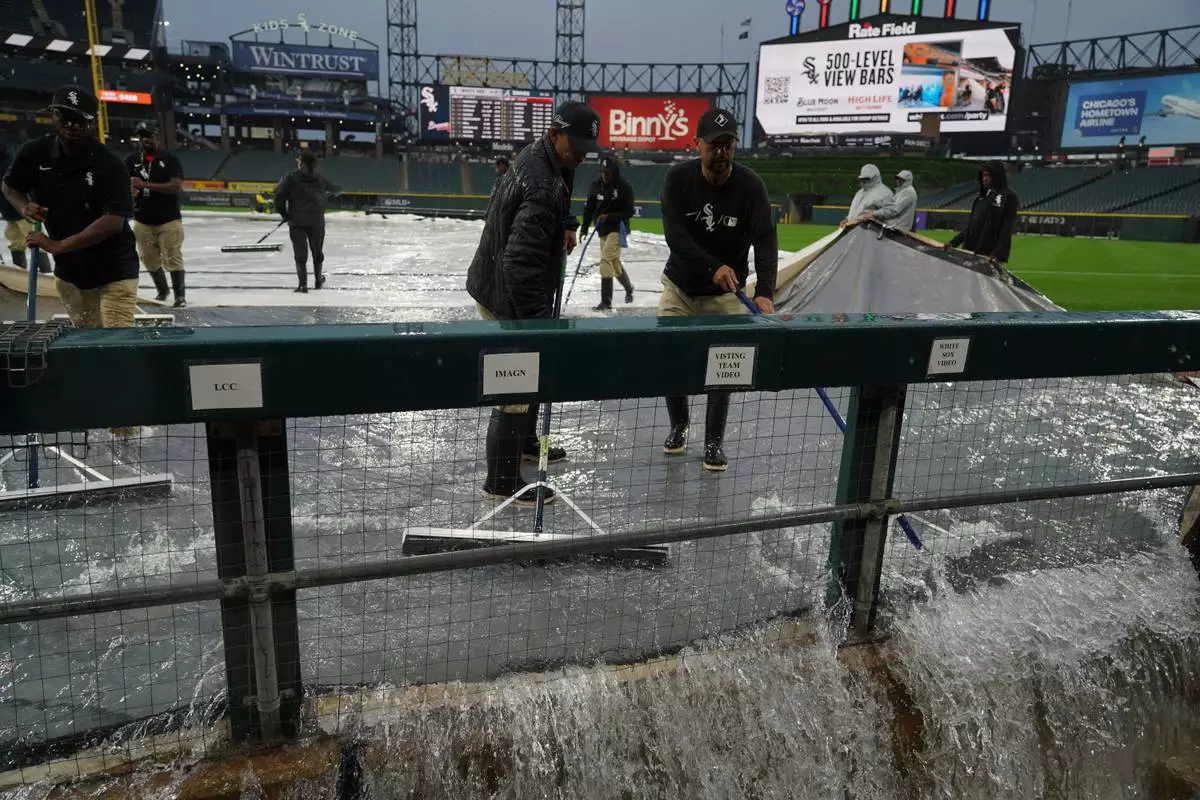
Grounds crew remove water from the field after severe thunderstorms came through the Chicago area before a baseball game between the Chicago White Sox and the Atlanta Braves, Wednesday, June 10, 2026, in Chicago. (AP Photo/David Banks)

Grounds crew remove water from the field after severe thunderstorms came through the Chicago area before a baseball game between the Chicago White Sox and the Atlanta Braves, Wednesday, June 10, 2026, in Chicago. (AP Photo/David Banks)

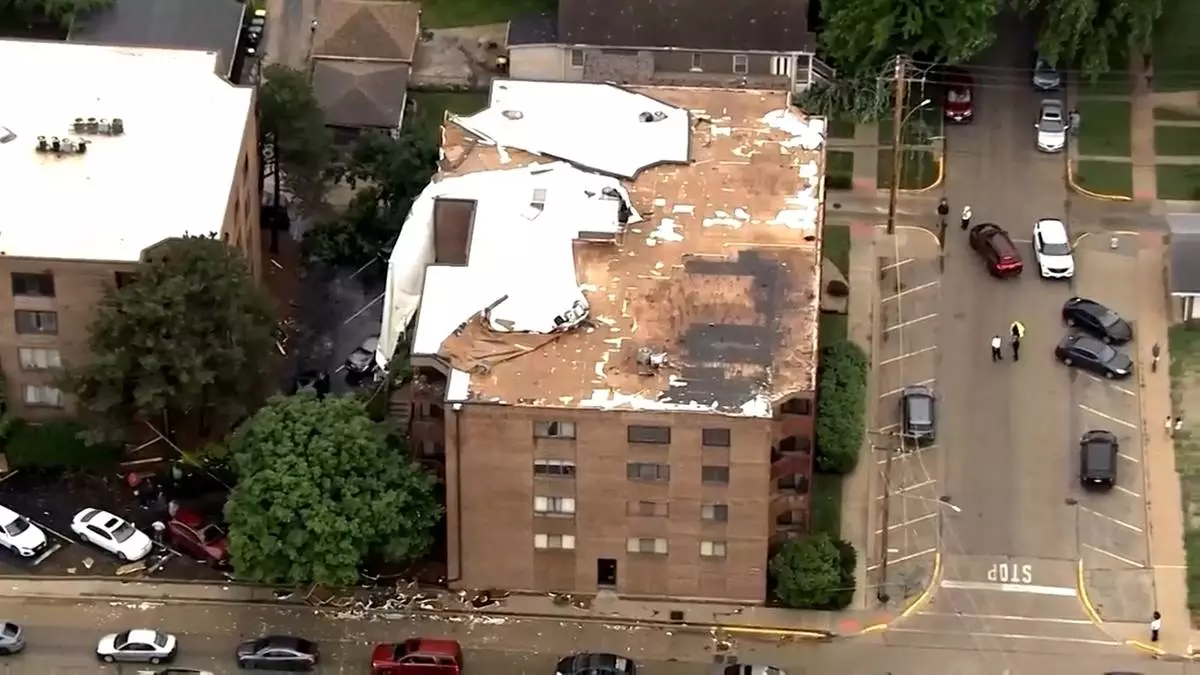
This frame grab from aerial video shows a building in Stickney, Illinois, after its roof was damaged by the severe storms that struck the Chicago area on Wednesday, June 10, 2026. (AP Photo/Courtesy WMAQ-TV in Chicago) TELEVISION OUT

This frame grab from aerial video shows a building in Stickney, Illinois, after its roof was damaged by the severe storms that struck the Chicago area on Wednesday, June 10, 2026. (AP Photo/Courtesy WMAQ-TV in Chicago) TELEVISION OUT

Recommended Articles