The smart transformation of Tianjin Port in northern China's Tianjin Municipality has freed dockworkers from harsh and hazardous work at heights, demonstrating how technological progress underpins the advancement of human rights.
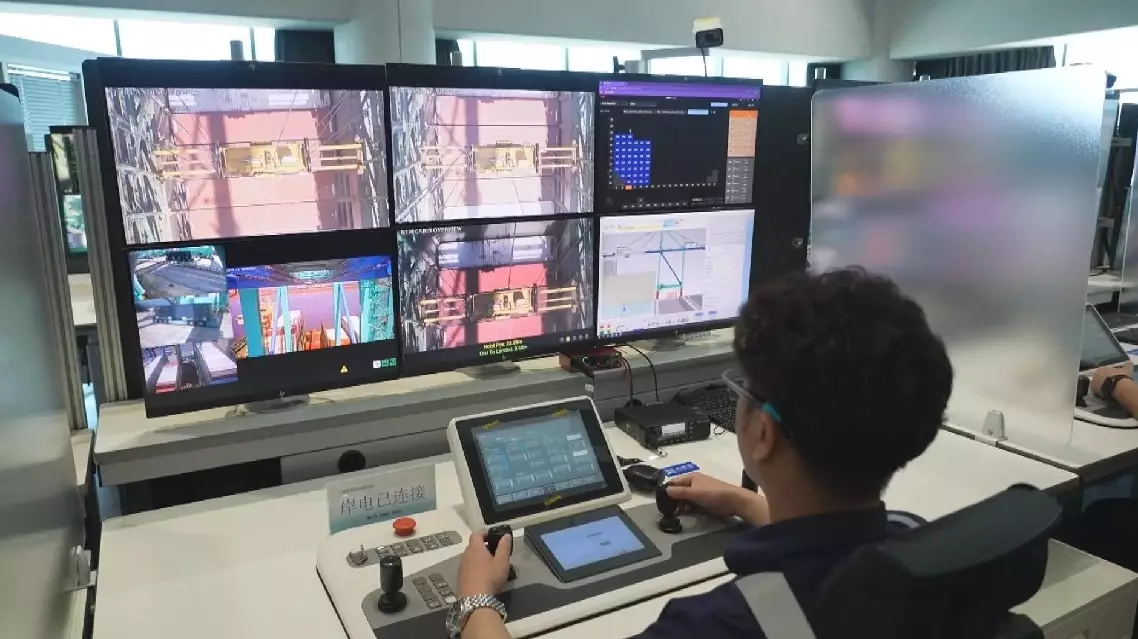
At the world's first smart zero-carbon terminal at Tianjin Port, crane operators handle cargo remotely from several hundred meters away while autonomous vehicles move containers across the yard.
The 5G dedicated industrial network, the BeiDou Navigation Satellite System, and artificial intelligence (AI) technologies have enabled dockworkers at Tianjin Port to become a new generation of skilled operators, assuming remote operating roles rather than being confined in traditional crane cabs.
"Traditional ship-to-shore crane drivers had to work inside a narrow, open-air cab 40 to 50 meters above the ground, enduring the scorching heat in summer and biting cold in winter. Their work was both highly demanding and dangerous. After using the remote operation, our workplace has been shifted to an indoor remote control center. Now I handle the crane via monitors and joysticks, which means no more working at height and no more exposure to those harsh conditions. Our work environment has been improved fundamentally," said Li Yanyu, a staff member at the operations center of Tianjin Port Labor Services Development Company.
The advancement in digitalization and intelligent operations is reshaping the skills profile of port workers. Freed from repetitive, mechanically exhausting labor, they have gained access to safer, technology-driven roles and meaningful new pathways for professional growth.
"If you are enabled by the automation and the throughput is improved, that means the economy is improved, you have more income that you can employ more other people in other areas. I think that is something that is good for everyone," said Gambian Vice President Muhammad B.S. Jallow who was in a international delegation visiting Tianjin this week.
"Definitely, if this technological advancements are used to improve the working conditions of the workers here and to better their life standards and the way they work here, it definitely is a huge advancement in the promotion and protection of our human rights," said Daylen Valido Escalona, a Cuban expert on human rights.
China has emerged as the world's largest ship-owning nation, boasting the most valuable fleet of bulk carriers and container ships globally. According to the Chinese Ministry of Transport, China has built 30 automated container terminals, representing 27 percent of the world's total, and 30 automated dry bulk terminals.
Tianjin Port's smart operations end dockworkers' harsh working conditions