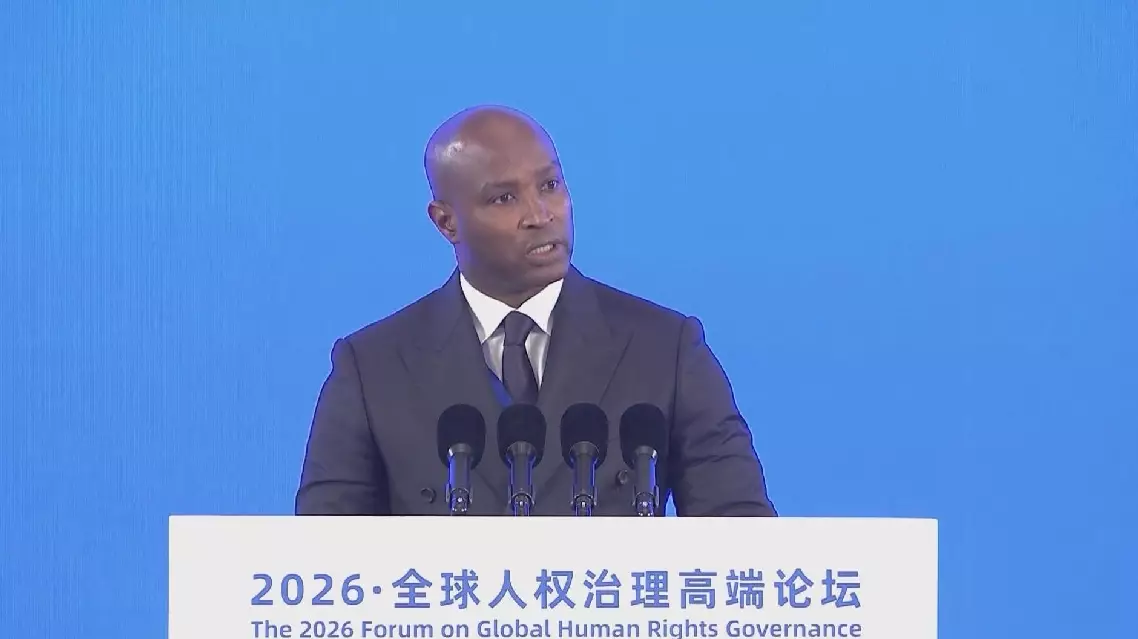
The Republic of Guinea-Bissau remains committed to exercising the right to development, placing human dignity at the heart of development, said Joao Bernardo Vieira, the country's minister of justice and human rights, in Beijing on Thursday.
Addressing the opening ceremony of the 2026 Forum on Global Human Rights Governance in the Chinese capital, the minister said that although marked progress has been made worldwide in improving people’s livelihoods, severe challenges still remain.
"The international community has made significant progress over the past decades. Millions of people have been lifted out of poverty. Access to education has expanded. And technological advancements have created new opportunities for social and economic transformation. However, profound inequality persists. Many nations continue to face challenges related to poverty, climate vulnerability, limited access to financing, technological gaps and global economic disparities. These obstacles injure the full enjoyment of human rights by millions of people," said the minister.
Vieira emphasized that Guinea-Bissau has always prioritized the development of human rights.
"The Republic of Guinea-Bissau firmly believes that the right to development must remain at the heart of global human rights discussions. Human rights and development are mutually reinforcing. Sustainable development creates the conditions necessary for the enjoyment of rights, while respect for human rights strengthens peace, stability and prosperity. In our country, we are committed to strengthening democratic institutions, improving access to justice, promoting the rule of law, and advancing policies that place human dignity at the center of national development efforts. At the international level, we advocate for stronger partnerships based on mutual respect, solidarity and shared responsibility," he said.
The forum, co-hosted by China's State Council Information Office and Ministry of Foreign Affairs, runs through Friday.
More than 400 invited guests from nearly 100 countries, as well as international and regional organizations, including the United Nations (UN), are attending the event.
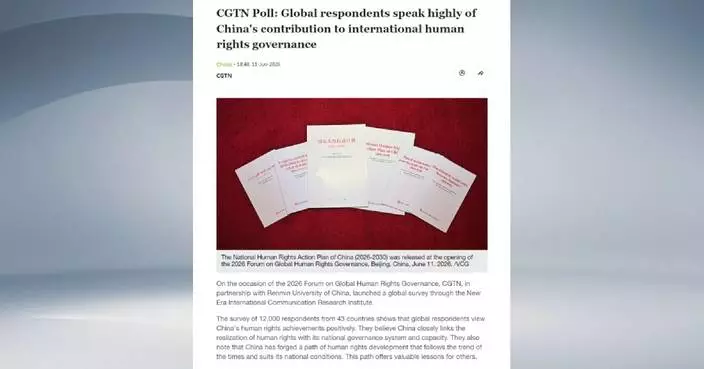
The National Human Rights Action Plan of China (2026-2030) was released at Thursday's opening ceremony, outlining China's work to protect human rights in the next five years.
Guinea-Bissau committed to exercising people's right to development: minister
Legions of security officers and police have been mobilized for the 2026 FIFA World Cup to safeguard fans, players, and venues, as the tournament faces unprecedented security challenges.
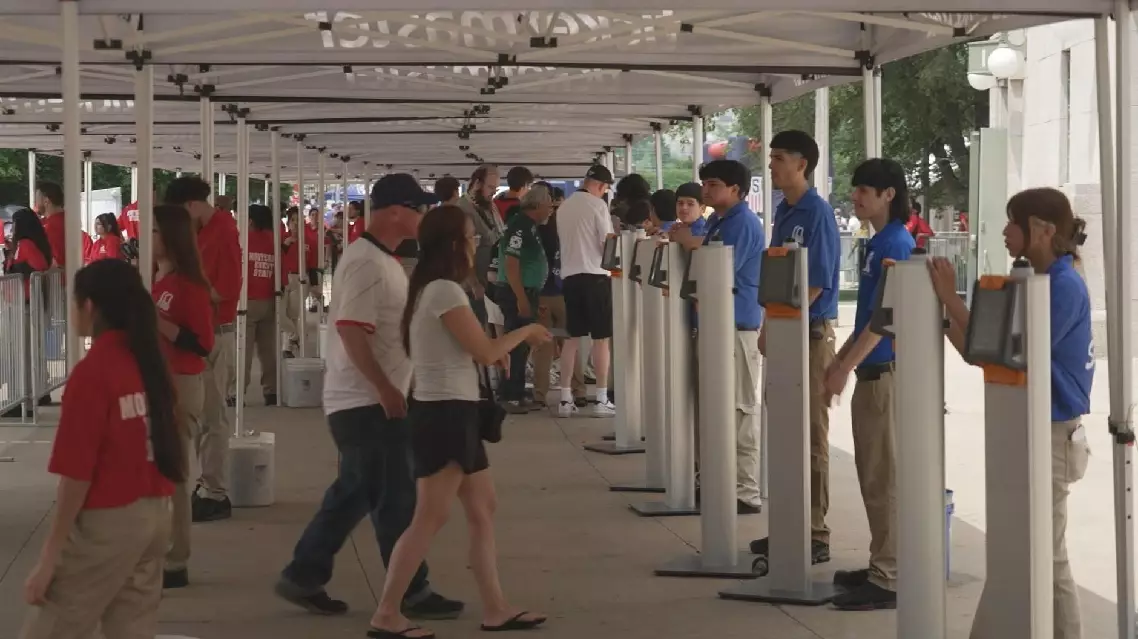
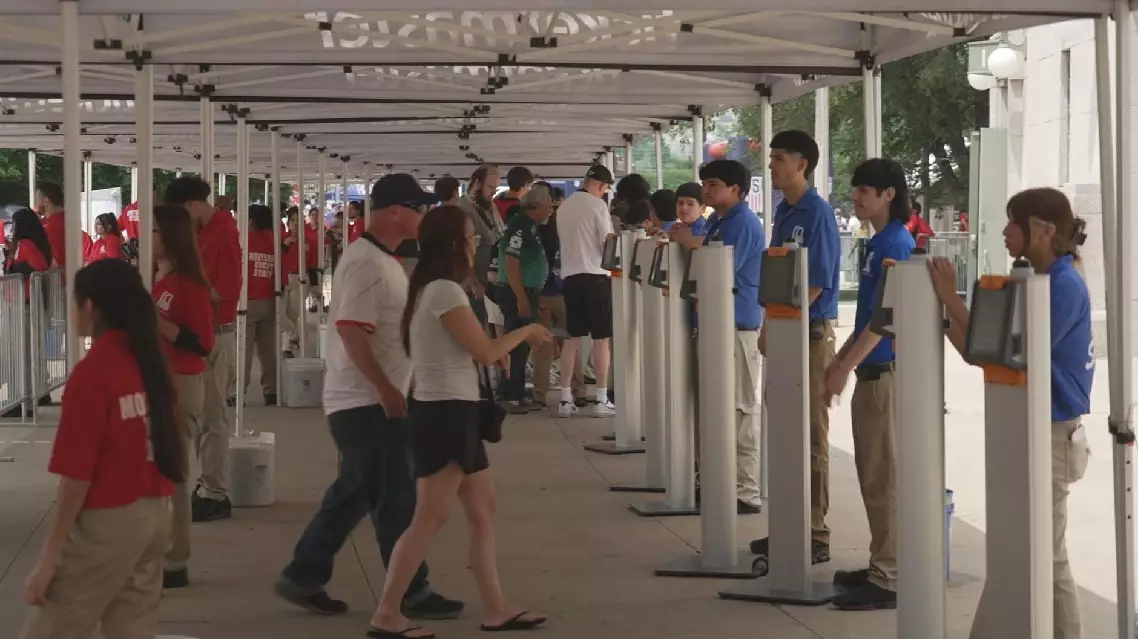
On the day of a send-off match in Chicago, a heavy police presence greeted football fans as the United States faced Germany. Heavy municipal vehicles provided a ring of protection for spectators outside the stadium, and all spectators underwent security checks upon entry.
One of the key concerns is that this tournament takes place against the backdrop of the U.S. war with Iran. Richard Kolko, a retired FBI special agent and member of the U.S. security team at four Olympic Games, said the situation has undoubtedly exacerbated people's concerns.
"Security at these games is critical, and people are worried about every potential threat out there. There are agencies and organizations that are seeking out any threats that may be bubbling up from around the world, either online, using sources, and of course, it's a very difficult time in the world right now, so that kind of elevates the concern," Kolko said.
Mexico, which is co-hosting the tournament, recently demonstrated its security readiness with a training exercise. The country is deploying 100,000 security officers and has also tightened security at high-profile tourism sites following a shooting at the country's Teotihuacan archeological zone in April that left one Canadian tourist dead.
There are also concerns around gun violence in the United States.
A mass shooting last weekend in Kansas City, Missouri, one of the World Cup host cities, was the 171st mass shooting this year, defined by Gun Violence Archive as an event in which four or more people are killed or injured.
Anti-drone technology will be used around World Cup stadiums, as the U.S. Department of Homeland Security recently stated that drones remain its biggest concern.
The 2026 FIFA World Cup provides an unprecedented security challenge. Taking in 16 host cities across three countries, this is the most spread-out World Cup ever.
According to Kolko, each of these cities will not only need to protect the game venues, but also the businesses and public places that will see increased traffic due to the event.
"Guarding the stadium, that's truly the easiest part. They could do that with the guards, gates, and guns, and including that air cover that will be necessary. It's those soft targets outside the stadium. When you think about the parking lots, or the places people are going around the games, the restaurants. Those are much harder to secure. But law enforcement has to be ready for anything," Kolko said.
The security operation at this World Cup is expected to cost more than one billion U.S. dollars and will involve a multitude of federal agencies, state and local police departments and private security companies.
Security overdrive for 2026 FIFA World Cup to address multiple challenges
Security overdrive for 2026 FIFA World Cup to address multiple challenges