The Al-Sajana market in Khartoum, capital city of Sudan is considered one of the first markets to resume operations, despite life remaining at a standstill in a number of other markets due to destruction.
The market, which specializes in selling building materials and electrical supplies, is suffering from stagnation due to the sharp rise in prices, particularly after the war in the Gulf, which has disrupted import movements—especially from China, the largest source country for Sudanese importers.
Commercial activity appears normal at the Al-Sajana building materials market in Khartoum, but the high prices and scarcity of some goods have created a state of recession, as most of the city's residents have lost their sources of income due to the war.
"Market prices are extremely high. The ordinary citizen cannot afford to buy his necessities from the market," said a local resident named Baha al-Din al-Tahir.
"Prices have increased. They are costly. The increase for every item is close to double its price," said Mohamed Bakhit, another resident.
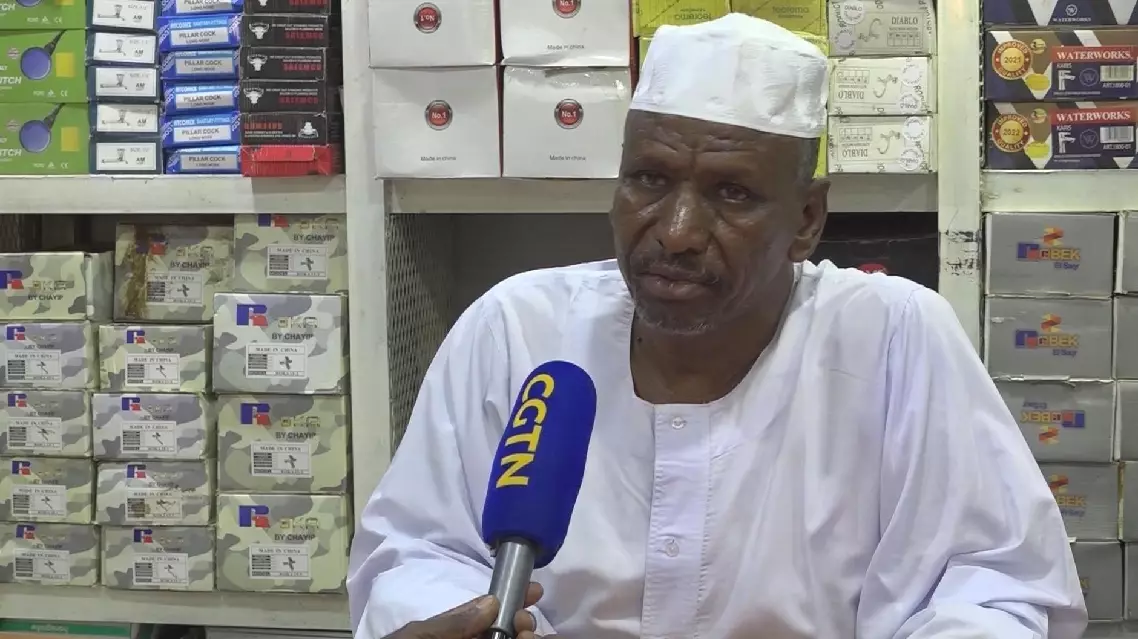
For their part, traders and importers said that the war in the Gulf region has completely disrupted trade calculations, as the Sudanese market relies primarily on Chinese imports. The most prominent Chinese exports to Sudan include machinery of various types, electrical equipment, vehicles, iron and steel, in addition to tires.
"The biggest problem is the closure of the Strait of Hormuz, which has caused a shortage in the flow of goods. Many goods are not available to us, and even when they are available, their prices are high, because if we want to import, it now takes longer with higher costs," said Abdullah Malah, an importer of electrical tools.
The rehabilitation of what the war destroyed in Sudan, particularly housing, depends on price relief in the markets and the normal flow of goods.
According to official data, the total bilateral trade volume between China and Sudan reached approximately 1.39 billion U.S. dollars in 2024.
The real estate sector in Sudan is considered the most affected by the rising prices of building materials and electrical tools due to what is happening in the Gulf region.
Concerns about Gulf developments affecting Sudan's building materials markets