A once-barren wasteland in north China’s Tianjin Municipality has been transformed into a thriving eco-city, showing how environmental progress directly supports people's well-being, their right to a healthy life, and their pursuit of a greener, more livable future.
A safe and sustainable environment is central to a wide range of human rights. In recent years, China has secured continued improvement in its eco-environmental quality, supporting people's pursuit of a greener, more livable life.
The China-Singapore Tianjin Eco-City is a good example of China's achievements in this course. The thriving place was once a desolate wasteland, marked by salt pans, polluted waterways and saline-alkali soil. In 2008, a landmark partnership between China and Singapore set out to transform this landscape through the China-Singapore Tianjin Eco-City project. Located in Tianjin's Binhai New Area, it is now home to more than 210,000 residents and 40 urban parks, standing as a model of sustainable urban development.
Fu Peng, deputy director of the construction bureau of the eco-city, has witnessed the eco-city's transformation firsthand and how it has contributed to its development over the past decade.
"When we started, the area behind me was a 40-year-old industrial wastewater reservoir. The smell was so strong that people could hardly get close to it. We developed different treatment methods for different grades of sludge. The most heavily contaminated material was purified and reused as landscaping substrate, while less polluted sludge was processed and used as fill material for roadbeds," Fu said.
Today, that same site is a sparkling man-made lake surrounded by parks and recreational facilities, a place where residents come to unwind and enjoy nature.
Creating a beautiful city was never the ultimate goal. The larger vision is to weave sustainability into everyday life, making it not just a project, but a way of living.
Across the eco-city, low-carbon design is woven into the urban landscape. Solar panels on residential buildings help provide hot water, while even some outdoor fitness equipment is powered by renewable energy. Waste sorting is comprehensive and highly detailed. Meanwhile, sustainability in the eco-city extends beyond infrastructure.
"Last year, we organized a Zero-Waste Creativity Contest, encouraging residents to give old items a second life. We also invite people to participate in community improvement projects. Going green isn't just about the facilities you build, it's about cultivating awareness and making sustainable living part of everyday habits," said Yang Hua, deputy director of the social affairs department of the eco-city.
The eco-city's remarkable transformation has drawn the attention of officials, scholars and urban planners from around the world. For many, this living experiment offers a broader vision of development in China, one that is greener, smarter and more people-centered.
In Tianjin, a group of 18 international visitors from other countries including Gambia, Cote d'Ivoire, Cuba and Laos saw human rights not as an abstract idea, but as something people can feel in their daily lives.
"I see the eco-city as a model. By improving people's living conditions and enhancing their well-being, it helps promote and protect human rights," said Christian Arnaud Adjelou, president of the National Human Rights Council of Cote d'Ivoire.
"'Beautiful China' is a remarkable undertaking. Many countries have aspired to achieve something similar, but few have succeeded on such a scale. Traveling across China, I've seen concrete and visible efforts to improve the environment and create a better quality of life for people," said Robert Fitzthum, an Austrian Author.
In addition to the eco-city, the visitors also came to other sites including the Tianjin Museum, the Ancient Cultural Street and Tianjin Port, as well as robot enterprises, to gain a comprehensive understanding about the city's development from different aspects.
From smart ports to green communities, development in Tianjin is measured by how it improves work, life and the environment. For many visitors, the understanding came from what they saw and felt in the city where development is closely connected with people's daily lives.
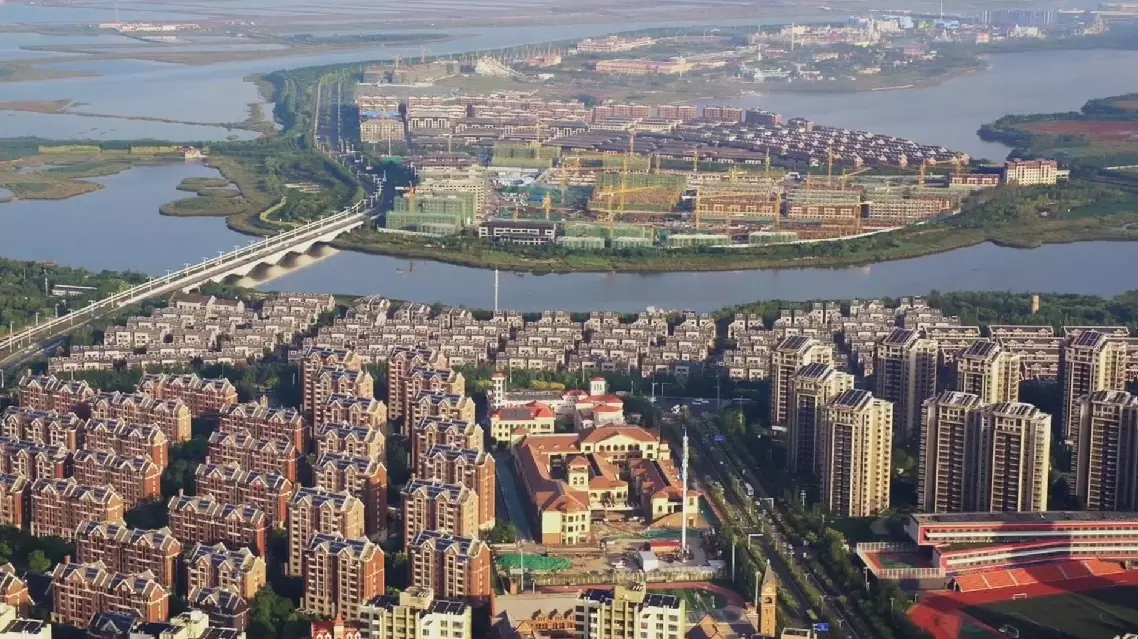
Chinese city pursues sustainable development to support people's well-being