The 2026 "Chinese Bridge" Chinese Proficiency Competition awarded winners of Bahrain Region at the University of Bahrain in Manama on Thursday, confirming the growing enthusiasm among Bahraini youth for learning Chinese language and culture.
The award ceremony featured a vibrant cultural show, including dragon and lion dances, tai chi, tea ceremony, calligraphy, painting, guzheng music, Chinese songs, and traditional Chinese-style dancing.
The performances vividly demonstrated the passion of Bahraini young people for Chinese studies, while also highlighting the interest in Chinese culture on Bahraini campuses.
During the ceremony, winning student representatives from the primary, secondary, and university categories shared their competition experiences and exchange visit achievements through video clips and on-stage speeches, expressing their determination to continue their Chinese studies and their aspiration to experience China's traditional culture and modern development in person.
"I started learning Chinese eight months ago. I am a student. Although sometimes I am very busy, I will work hard. I really like Chinese festivals. They are very interesting. My dream is to study in China. I feel happy in learning Chinese," said Sarah Mansoor A. Ahmed, whose Chinese name is Xinyi, and who is a winner of the secondary school category in the Bahrain division of the "Chinese Bridge" competition.
Notably, this year's champions from all three categories—primary, secondary, and university—have confirmed they will represent Bahrain at the global stage of the "Chinese Bridge" competition in China.
This marks the first time Bahrain has sent contestants from all three categories to participate in the global phase of the competition in one year.
"China is a really important partner of the Kingdom of Bahrain. They are important and diplomatic terms, they are important in economic and political terms. And so it's really important that we develop the language skills so that our graduates here in Bahrain can work and collaborate with partners in China. And of course, apart from the language skills as well, this is also about cultural understanding," said Lucy Bailey, Dean of the Bahrain Teachers College at the University of Bahrain.
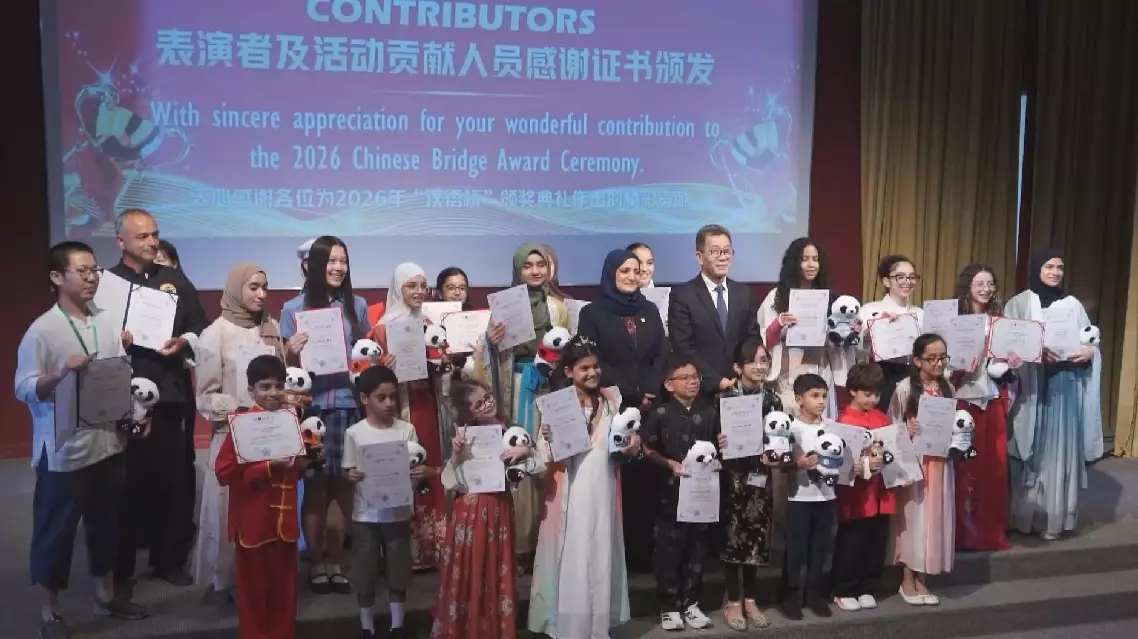
Chinese Proficiency Competition awards winners of Bahrain region
In the vast grasslands of north China’s Inner Mongolia Autonomous Region, herder families often live kilometers apart, and trips to town can be few and far between. But for Judge Bai Yongsheng, justice cannot be delayed by distance.
Bai has been working at the Zhalute Banner People's Court in the autonomous region's Tongliao City. Ever since he studied in law school, he has dreamed of this job.
"My image of judges was of wearing a judicial robe, holding a gavel, appearing solemn in the courtroom," said Bai.
But reality is somewhat different. His mornings begin in a cramped office sorting through thick case folders before embarking on marathon road journeys across a jurisdiction spanning over 8,000 square kilometers, larger than some countries.
A recent two-day journey the judge took revealed the extraordinary lengths required to deliver justice in the grasslands. After driving two and a half hours to reach the general vicinity of a case, Bai and his team faced the final challenge, the last several kilometers on foot across open steppe which deny any vehicle access.
Finally, in the open steppe with no courthouse in sight, court convened. The case that required such extraordinary effort -- a dispute over 10,000 yuan (about 1,478 U.S. dollars), with a litigation fee of just 25 yuan (about 3.7 U.S. dollars).
While the monetary values may seem modest, the human stakes are significant. Leaving these remote locations can prove as challenging as arriving, though local herders always help find a way out.
In the later stages of the two-day trip, even more minor cases were followed. Simple cases, but never easy. Each required patience and a unique approach, calmly explaining the law, educating herders about their responsibilities, and guiding disputants toward mutual understanding.
"Rome wasn't built in a day. Often, if small issues are ignored, they can turn into big problems. We always emphasize: minor issues are resolved within the village, while even major affairs are addressed directly in the town," said Bai.
Slowly, arguments give way to understanding, while disputes give way to handshakes. And at the end of the day, he shares his secret to handling cases seemingly so smoothly.
"The key is not to see yourself as a judge. Once you understand that, everything in this relationship becomes much easier to handle," said Bai.
What he has not mentioned is the physical cost: every handshake represents hours of travel, crossing rivers and mountains, sometimes even on horseback. In his 8,000-square-kilometer patch of steppe, Bai handles hundreds of cases every year. Each one leaves footprints pressed deep into the grass.
Bai said, after years on these endless roads, he has truly understood what he did not learn in law school.
"The courtroom can be anywhere. What matters is letting people feel fairness, justice and the human warmth of the law," Bai said.
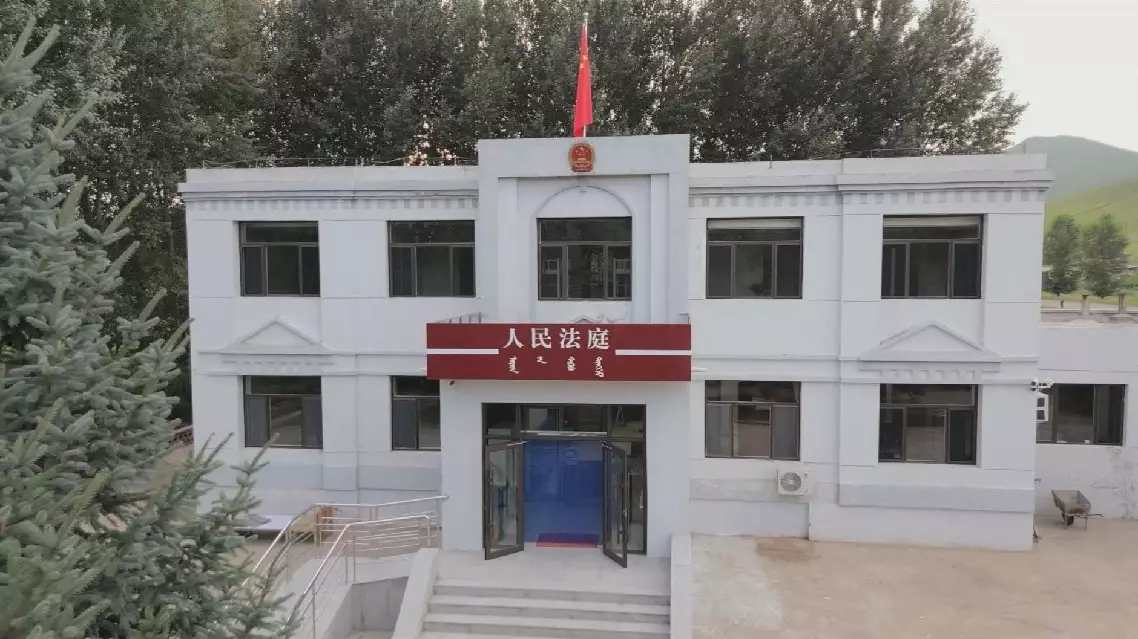
Grassroots judge travels across grassland to deliver justice