The European Union's (EU) Migration and Asylum Pact took effect on Friday after a two-year transition period, marking one of the bloc's most significant efforts to address the growing tension between migration pressures and governance capacity.
The pact, adopted by the Council of the European Union in May 2024, seeks to address the long-term failures and divisions within the EU's migration governance system since the 2015 migration crisis and to manage divisions among member states through a solidarity mechanism.
The 2015 migration crisis, following the war in Syria and instability in Afghanistan and Iraq, saw over one million refugees and migrants enter Europe. This influx overwhelmed border and asylum systems, triggered emergencies, and deepened political divisions within the EU.
The new pact strengthens control over migration flows at the EU's external borders through expanded data collection. It also allows "return hubs" to be built in third countries.
During the height of Europe's migration crisis, the dominant policy emphasis was on humanitarian protection and reception. Today, the focus has increasingly shifted toward border management and return procedures.
EU migration pact takes effect
EU migration pact takes effect
The number of confirmed Ebola cases in the Democratic Republic of the Congo (DRC) has risen to 837, including 196 deaths, as health authorities and international partners warn that the outbreak is expanding.
According to the latest figures released by the DRC health ministry, the case fatality rate stood at 23.4 percent. A total of 49 patients have recovered, while 376 patients remain in quarantine.
The outbreak, caused by the Bundibugyo Ebola virus, for which there is no proven treatment or vaccine, remains concentrated in major hotspot zones, particularly Bunia, Mongbwalu and Rwampara in Ituri province.
According to a report published Tuesday by the World Health Organization (WHO), response operations have been further complicated amid widening geographic distribution across Ituri and North Kivu provinces.
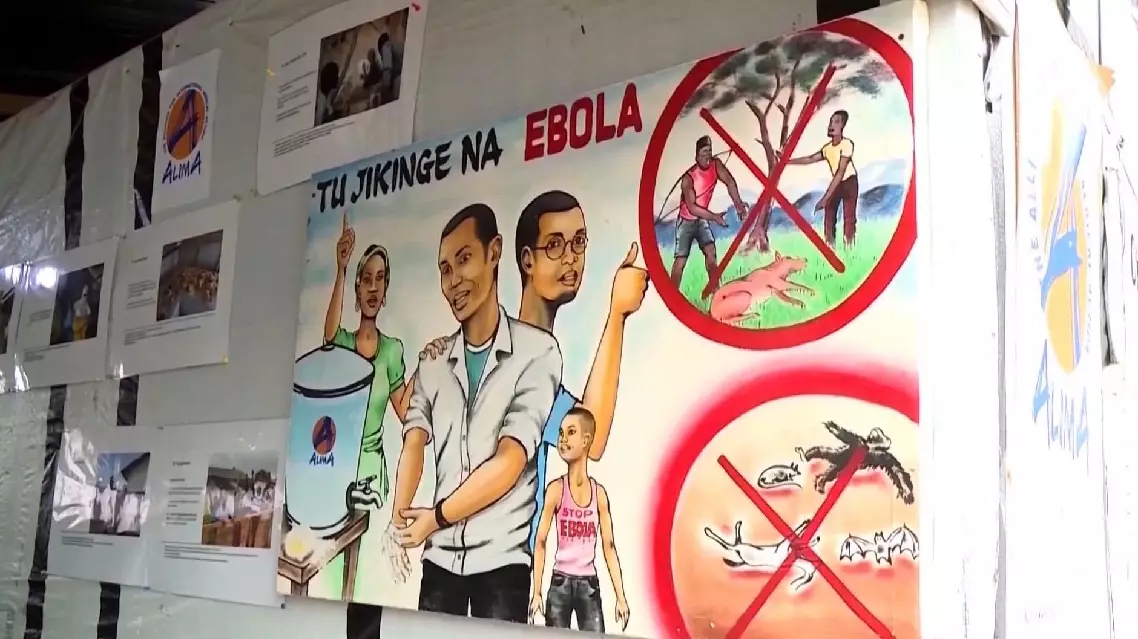
The report also drew attention to challenges including persistent transmission in urban and mining-linked settings, suboptimal contact follow-up rates in some provinces, ongoing insecurity in affected areas, and community resistance to response efforts.
WHO spokesman Tarik Jasarevic has warned of blind spots despite the expansion of testing facilities, saying there may be transmission chains that are not being detected.
Bruno Michon, operations manager for the Ebola outbreak at the International Federation of the Red Cross and Red Crescent Societies (IFRC), told a press conference in Geneva via videolink on Tuesday that the Ebola outbreak in eastern DR Congo has not yet reached its peak, warning it could continue for up to a year.
Speaking from Bunia, the epicentre of the crisis, Michon said that IFRC teams helping with community engagement and safe and dignified burials of Ebola victims have faced verbal abuse, threats and attacks in recent days, noting trust is central in fighting the outbreak.
"Without trust, we cannot detect cases early. We cannot ensure safe and dignified burials. We cannot even protect families and we cannot stop the transmission," he said.
Jean Kaseya, Director-General of Africa's Centers for Disease Control and Prevention (CDC), warned on Tuesday that the ongoing Ebola outbreak could be the worst ever if its expansion is not stopped very soon.
The Africa CDC and the WHO plan to raise 518 million U.S. dollars to tackle the Ebola outbreak, but less than 100 million has so far been received.
Kaseya warned that the total funding needs would surge to billions of U.S. dollars if the initial plan did not get sufficient support.
The DRC declared the latest Ebola outbreak on May 15. The affected areas are located in the country's conflict-hit east, where armed violence, displacement and weak health infrastructure have posed persistent challenges to the response.
DR Congo Ebola cases rise to 837 as response faces insecurity, community resistance