Decades of progress made in AIDS treatment is facing the risk of reversing due to external funding cuts, deteriorating human rights conditions and insufficient investments in prevention, said a UN official on Friday.
At a press conference, Angeli Achrekar, deputy executive director of the Joint United Nations Program on HIV/AIDS (UNAIDS), briefed the media on a new UNAIDS report on HIV from 2025.
According to the report, global HIV-related deaths dropped by 56 percent from 2010, with new infections reducing by 43 percent, the lowest levels for the past three decades. However, there are still nearly 9 million people around the world who are not on treatment.
In the meantime, due to external funding cuts, deterioration of human rights conditions, and insufficient investment in prevention and community services, the goal to end AIDS as a public health threat before 2030 is under grave threat, said the report.
"But with the long-standing HIV pandemic where the world has made remarkable progress, we're seeing the perfect storm growing. This storm threatens to reverse years of gains in the AIDS response," said Achrekar.
She then stressed that for low-income countries which rely on external help, the significant cut of funding has led to devastating consequences.
"As people are living longer and longer with HIV because they've been on life-saving treatment. There is complacency that we're seeing across countries -- people are not seeing that death and despair that we once saw 30 years ago. But that hides the truth that there are gaps that still exist in the HIV response, like with children that are not being reached, like with young women, as I noted, like with key populations in different countries where we're seeing spikes that are happening in the HIV response," Achrekar noted.
On June 22-23, the United Nations General Assembly will hold a high-level meeting on HIV/AIDS, where a new UN Political Declaration on HIV and AIDS will be adopted. The declaration includes reaching 40 million people with antiretroviral therapy, and making sure 20 million people have access to medicine to prevent HIV by 2030.
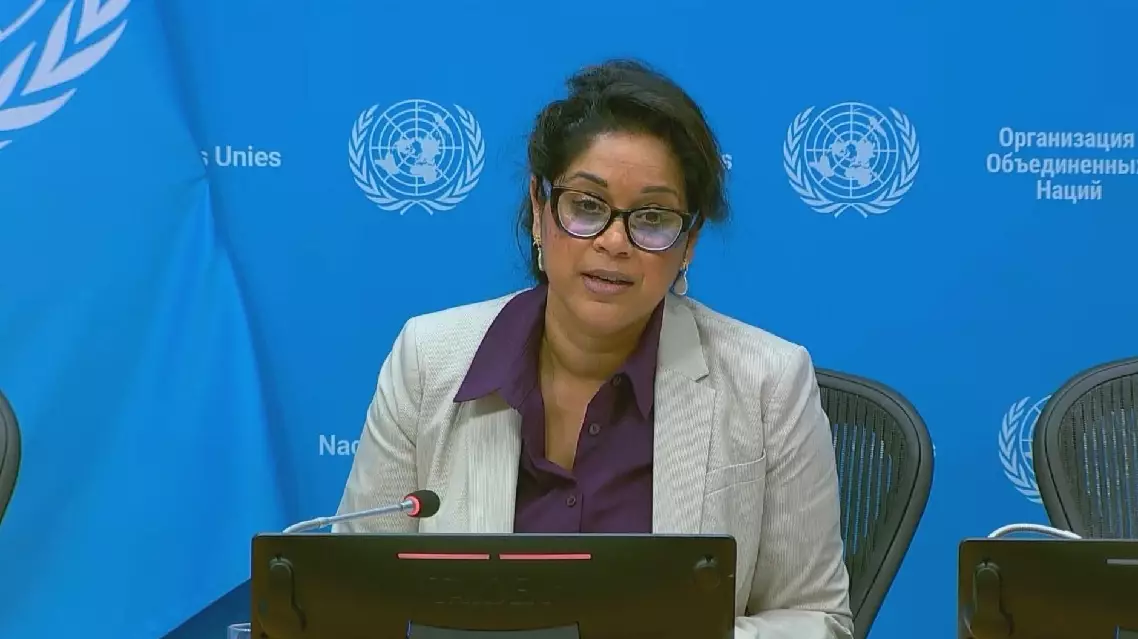
UN official warns reverse of progress in AIDS treatment
A UN expert warned that the world is facing more frequent extreme weather events while calling for concrete actions from the international community.
Simone Sandholz, head of the Urban Futures and Sustainability Transformation Program at the United Nations University - Institute for Environment and Human Security (UNU-EHS), said in an interview with China Central Television (CCTV) on Saturday that rising global temperatures have resulted in more frequent extreme weather events, including heatwaves.
"Heat waves, for instance, are one of the climate extremes that we are facing more frequently and also more severely, including even here in Germany, which usually has been a bit more at the cooler side, if I may say so. And that's, of course, because our atmosphere is heating up and that results in this heat which is exacerbated then also by city environments and how we build up our places, for instance," she said.
Sandholz said that climate change is no longer a distant risk but an unfolding reality. She said its impacts have extended beyond the environment and could trigger future conflicts.
"The future climate extremes may also trigger more of these conflicts, for instance, heat or other flood extreme events or whatever other events may impact on the water availability of the future, that may deplete, it may also impact on land resources and food resources, so having less of that may trigger more conflicts," she said.
Sandholz said no country can escape the impacts of climate change, expressing hope that the international community can shelve differences and act swiftly.
Sandholz's remarks came as more than 7,000 government delegates and other stakeholders gathered in Bonn, Germany, for the UN June Climate Meetings.
Known as the 64th session of the Subsidiary Bodies under the United Nations Framework Convention on Climate Change (UNFCCC), or SB64, the annual June meetings are expected to advance technical and political work ahead of the 31st United Nations Climate Change Conference (COP31), scheduled to take place in November in Antalya, Türkiye.
Running from June 8 to June 18, the Bonn meetings also discuss advancing implementation of outcomes from the first global stocktake at COP28, developing a just transition mechanism, and climate finance.
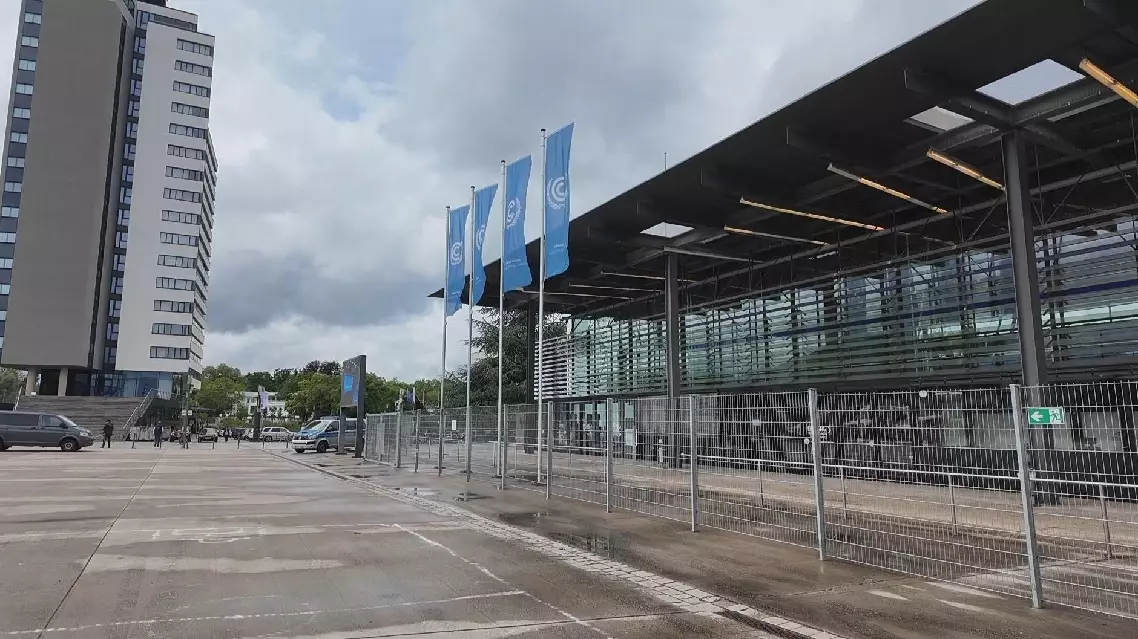
UN expert warns of more frequent extreme weather events, urges international action