Two young actors in "Dear You", a film tracing the emotional bonds between overseas Chinese and their Chaoshan families through qiaopi letters -- letters sent home with remittances -- said the characters’ resilience and optimism give the film lasting emotional power.
Li Sitong, who plays Xie Nanzhi, and Wang Yantong, who plays Zheng Musheng, reflected on the emotional strength they drew from their roles in an interview with China Media Group (CMG) on the sidelines of the acclaimed film’s official premiere in the Hong Kong Special Administrative Region (HKSAR) on Friday.
The buzzed-about film is slated for release in cinemas across Hong Kong on Thursday.
The low-budget film, featuring a largely unknown cast, centers on the tradition of "qiaopi," letters and remittances sent home by earlier generations of overseas Chinese in the 19th and 20th centuries. These letters serve as the emotional thread linking the film's central characters.
In the story, Zheng Musheng leaves Guangdong's Chaoshan region during wartime and later works in Thailand, hoping to return home one day. His wife, Ye Shurou, stays at their home in south China, raising their children alone.
After Zheng dies overseas, Xie Nanzhi, a Thailand-based woman of Chaoshan descent who had befriended him, hides the truth and continues sending letters and money to Ye in his name for nearly two decades.
Separated by the sea and having never met in person, the two women become quietly connected through years of letters and unwavering care.
Asked how they drew on the little-known history of qiaopi to convey the film’s themes of family bonds and patriotism, the two actors said the stories of overseas Chinese and the letters they sent home gave them a deeper understanding of perseverance, longing and emotional strength.
"This history makes us more aware of the hardships of that era and of our predecessors. It will attract more young people to learn about their stories and the strength they carried. My character's resilience from beginning to end deeply touched me," Li said.
In one of the film's most painful threads, Zheng Musheng spends his life doing grueling labor abroad -- mining, pedaling tricycles and working aboard cargo ships -- while sending nearly everything he earns back home.
"For me, it is Musheng's fighting spirit and his optimistic attitude toward life that moved me. The mindset of facing life with optimism that I drew from the role has also influenced my own life. It has been a real source of encouragement for me," said Wang.
In south China's Guangdong Province, the Chaoshan region is known for its distinctive cuisine, teahouse culture and deep ties to overseas Chinese communities. For generations, people from Chaoshan left for Southeast Asia and beyond, fleeing war, poverty and natural disasters in search of better fortunes. Between 1864 and 1911, nearly three million people departed the region, according to local customs records.
The qiaopi they sent contained tender reminders to care for aging parents, worries over children's education, and words of longing between husbands and wives separated by oceans.
"At first, I only knew very little about 'going to Southeast Asia' and 'qiaopi,' just bits from textbooks or some pieces of relevant information. But after taking on this role and reading the script, I realized how much emotion lies behind these stories. At the end of the film, when real qiaopi letters were shown, I was deeply moved," said Wang.
During the period of "going to Southeast Asia," Hong Kong played a crucial role, not only as a key transit hub for these Chinese workers heading overseas, but also as a center for the circulation of qiaopi letters and remittances that connected overseas Chinese with their families back home.
"I know Hong Kong was often a transit hub for qiaopi during that history. So I think our moviegoers here are especially eager to see the stories in our film. I hope they will enjoy it," said Li.
In 1979, qiaopi services were placed under the unified management of the Bank of China. In 2013, UNESCO added the Qiaopi archives to its Memory of the World Register.
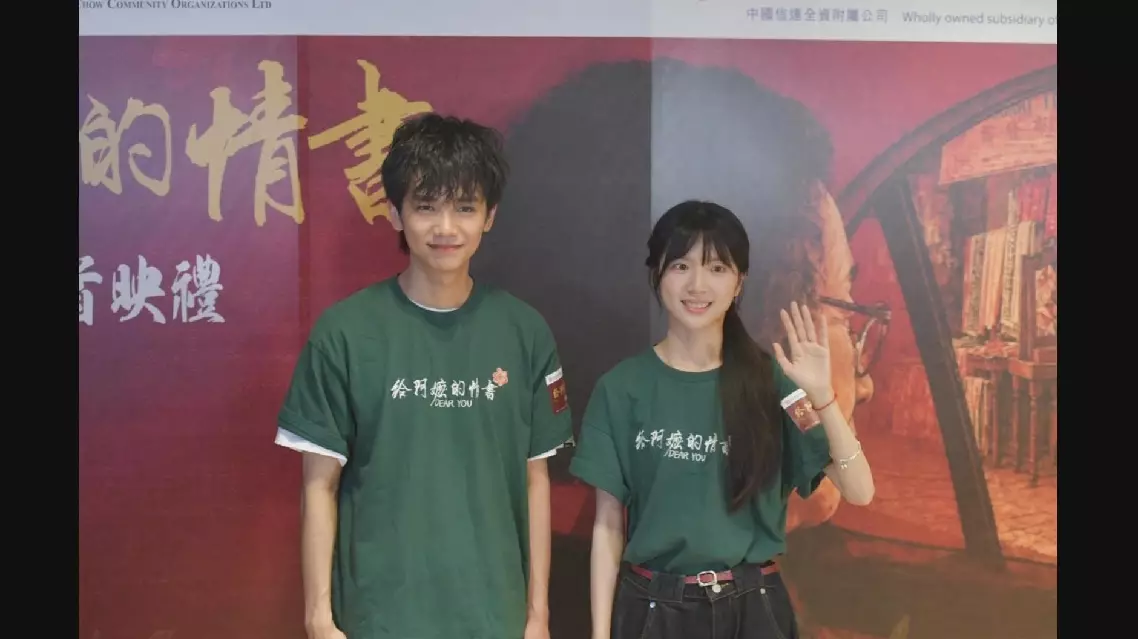
"Dear You" actors reflect on resilience, optimism rooted in qiaopi history