Skip to Content Facebook Feature Image

'Safety island' provides flood refuge for milu deer at China's Dongting Lake

China

China

China

'Safety island' provides flood refuge for milu deer at China's Dongting Lake

2026-06-14 17:09 Last Updated At:18:47

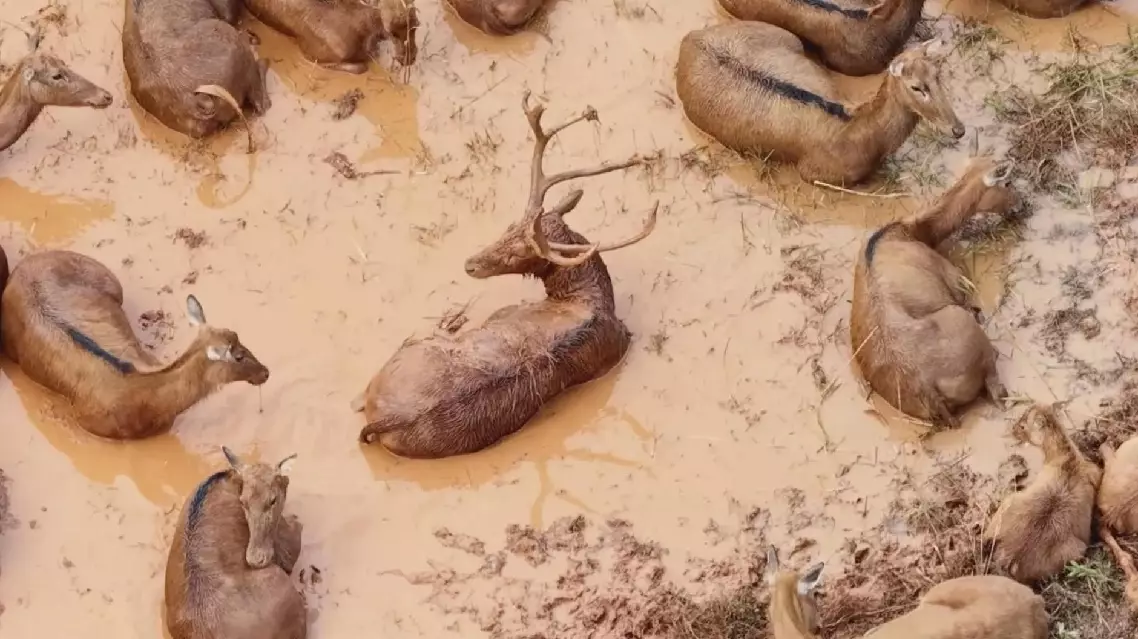
The "safety island," an elevated flood-refuge platform along milu deer's migration routes built by nature reserves of East and South Dongting Lake in Yueyang County, central China's Hunan Province, has provided a secure shelter for the animal to safely navigate during the flood season.

Standing higher than the surrounding wetlands, the island ensures that when floods arrive, milu deer do not have to swim long distances across the lake to find dry land. Instead, they can quickly move to nearby higher ground to reduce the risk of drowning, particularly for young fawns.

The island also helps prevent milu deer from straying into nearby towns and villages situated on higher terrain, where they could damage crops and trigger human-wildlife conflict.

Covering 12 hectares, the safety island features a double-rectangle layout with two ponds at its center. Around these ponds, reserve staff have planted ryegrass, reeds and other aquatic vegetation favored by milu deer. There are also taller plants that can provide shade for milu deer during summer.

To prevent milu deer from depleting food supplies before floodwaters recede, reserve staff conduct regular feeding operations. Staff from Yueyang County forestry, fisheries and reserve departments regularly visit the island to deliver food for the deer.

According to the staff, once the deer arrive, workers will make daily food deliveries after using drones to identify areas with the lower concentrations of deer on the island. Without disturbing the animals, they will quietly transport supplies. They said one ton of food will be delivered each time.

In 2024, shortly after the safety island was completed and vegetation had just begun to grow, Dongting Lake exceeded warning levels and flooded the deer's habitat. More than 180 milu deer swam to the island seeking refuge, stayed for half a month and quickly consumed all available vegetation.

Staff workers made daily feeding visits during this period. All milu deer on the island safely weathered the floodwaters, returning to their natural habitats as surrounding water levels receded.

Six such safety islands have been built across the Dongting Lake wetlands, which have created secure habitats for milu deer and other wildlife during flood periods.
'Safety island' provides flood refuge for milu deer at China's Dongting Lake

'Safety island' provides flood refuge for milu deer at China's Dongting Lake

By leveraging the Shanghai Science and Technology Film City, Shanghai is forging a full-chain AI film ecosystem that covers computing power, data, models, and application scenarios, thus driving the integrated development of "film plus technology."

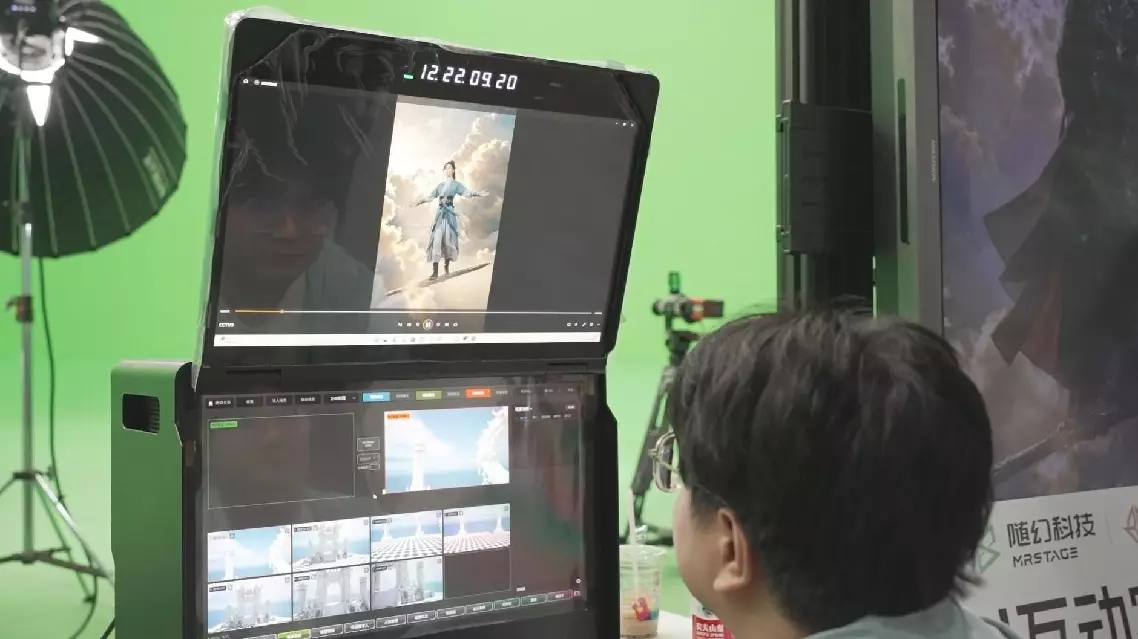
At a workshop during this year's Shanghai International Film Festival (SIFF), staff showed how a green screen and virtual studio can create a video of someone flying on a sword in only 10 minutes, a process that once took hours or even days.

"Our new AI workflow can bypass the tedious process of creating 3D assets. We only need a simple white model to position the actor within the scene. Then, AI takes care of everything, including integration of lights and shadows, computer-generated visual effects, and traditional manual production, dramatically improving efficiency," said Wang Yi, marketing director of a Shanghai-based virtual production technology company.

Technological innovation, continuous upgrades, and the pursuit of quality have become industry standards for filmmakers and television producers.

"What we're working on now is using a full AI workflow to adapt a classic black-and-white movie into a short drama series of 60 episodes, each about two to three minutes long. With the rapid improvement of large language model capabilities, on the production side, we can complete a short drama project of over 100 minutes in just about two months," said Yu Xin, a person in charge of a company based at the Shanghai Science and Technology Film City AI Creation Ecosystem Center.

Located in Songjiang District, the Shanghai Science and Technology Film City houses over 8,000 film and TV enterprises, forming a full-chain AI ecosystem that covers computing power, data, models, and application scenarios.

"The AI Creation Ecosystem Center has attracted more than 50 companies over the past year and secured over 50 million yuan in commercial commissions. Moving forward, we will provide support not only in terms of computing power and funding but also through talent-related policies," said Zhao Huiying, director of the Songjiang District Culture and Tourism Bureau.

Shanghai drives 'film plus technology' with AI ecosystem

Shanghai drives 'film plus technology' with AI ecosystem

Recommended Articles