Skip to Content Facebook Feature Image

Trump's track record of insults and awkward moments with the G7 leaders he's meeting in France

News

Trump's track record of insults and awkward moments with the G7 leaders he's meeting in France
News

News

Trump's track record of insults and awkward moments with the G7 leaders he's meeting in France

2026-06-15 14:10 Last Updated At:14:20

WASHINGTON (AP) — President Donald Trump is heading to France on Monday to meet with an ideologically diverse group of world leaders who have at least one thing in common: All have either found themselves the target of Trump's ire, or have been forced to negotiate awkward moments with the U.S. leader.

Several of the G7 leaders have faced Trump's wrath for questioning his war of choice with Iran. Trump has beefed with some over tariffs. And the leaders of Japan and Germany have endured sitting through clumsy asides by Trump about dark moments in their countries' histories.

More Images
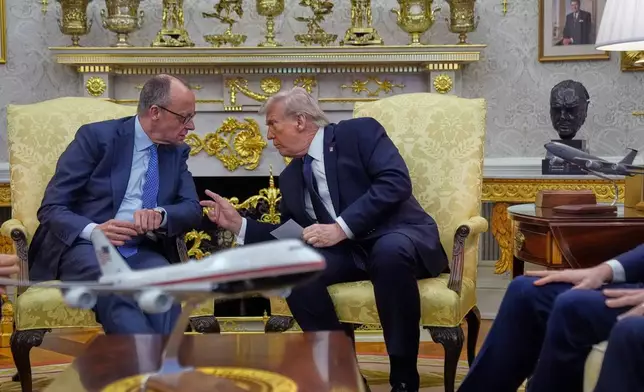
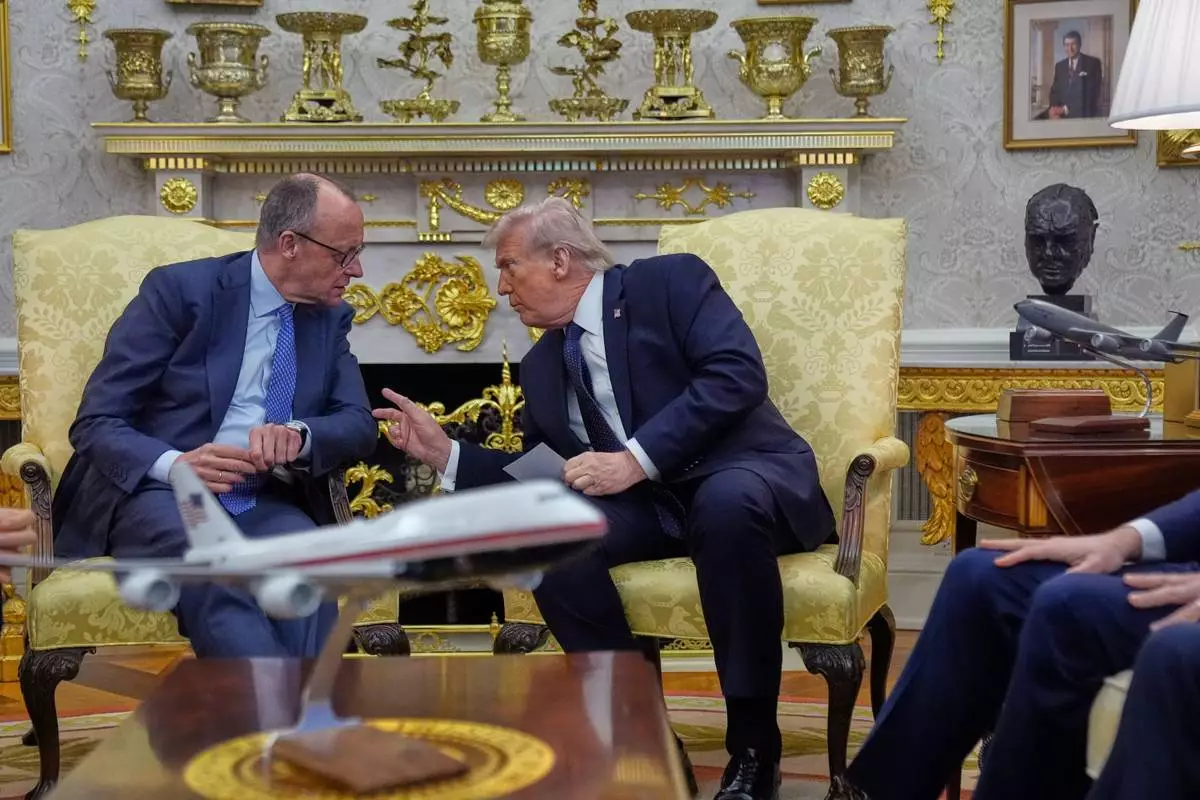
FILE - President Donald Trump meets with German Chancellor Friedrich Merz in the Oval Office at the White House, March 3, 2026, in Washington. (AP Photo/Mark Schiefelbein, File)
FILE - President Donald Trump meets with German Chancellor Friedrich Merz in the Oval Office at the White House, March 3, 2026, in Washington. (AP Photo/Mark Schiefelbein, File)

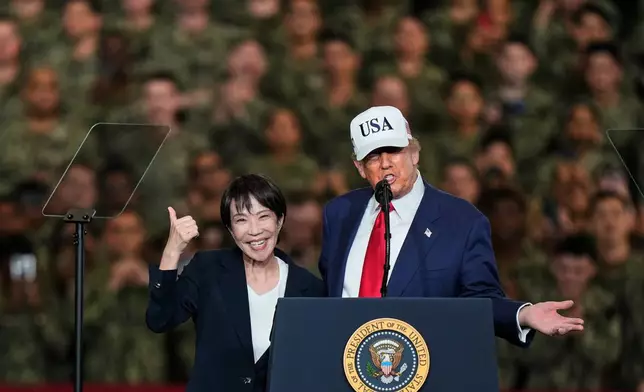
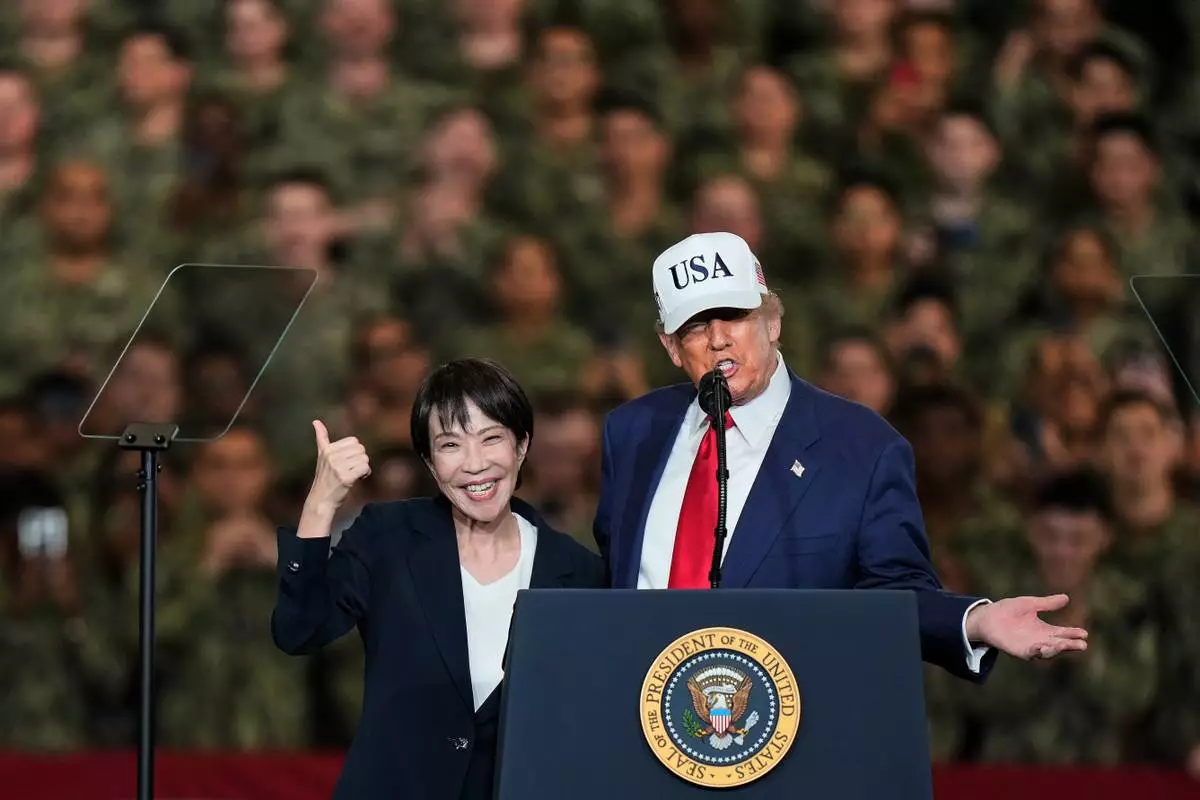
FILE - Japanese Prime Minister Sanae Takaichi gestures as U.S. President Donald Trump delivers his speech during their visit to the aircraft carrier USS George Washington at the U.S. Navy's Yokosuka base in Yokosuka, south of Tokyo, Oct. 28, 2025. (AP Photo/Eugene Hoshiko, File)
FILE - Japanese Prime Minister Sanae Takaichi gestures as U.S. President Donald Trump delivers his speech during their visit to the aircraft carrier USS George Washington at the U.S. Navy's Yokosuka base in Yokosuka, south of Tokyo, Oct. 28, 2025. (AP Photo/Eugene Hoshiko, File)

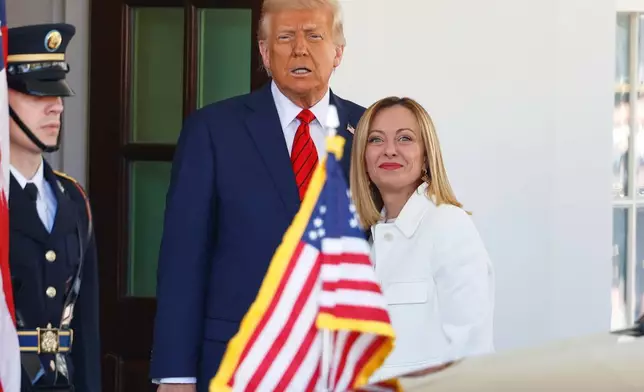
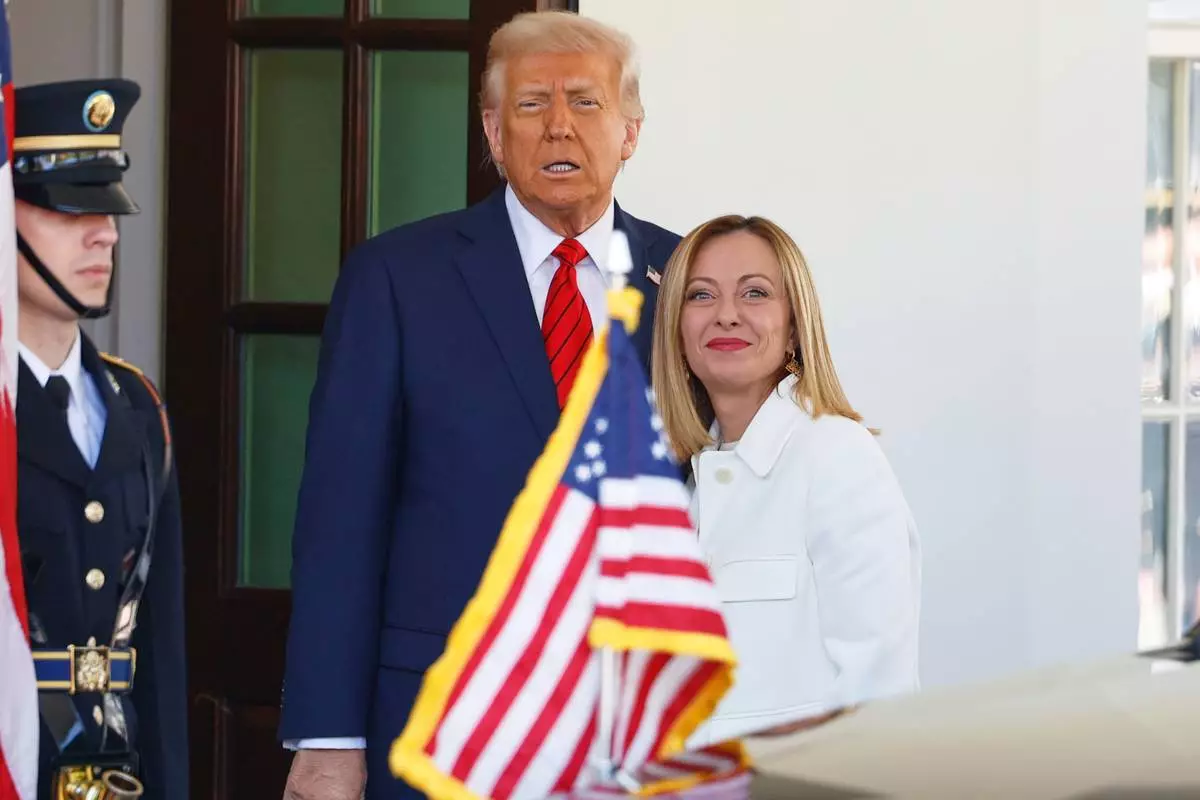
FILE - President Donald Trump, center, greets Italy's Prime Minister Giorgia Meloni, right, upon her arrival at the White House, April 17, 2025, in Washington. (AP Photo/Tom Brenner, File)

FILE - President Donald Trump, center, greets Italy's Prime Minister Giorgia Meloni, right, upon her arrival at the White House, April 17, 2025, in Washington. (AP Photo/Tom Brenner, File)

FILE - U.S. President Donald Trump, left, and British Prime Minister Keir Starmer look at each other as they shake hands during a press conference at Chequers near Aylesbury, England, Sept. 18, 2025. Leon Neal/Pool Photo via AP, File)
FILE - U.S. President Donald Trump, left, and British Prime Minister Keir Starmer look at each other as they shake hands during a press conference at Chequers near Aylesbury, England, Sept. 18, 2025. Leon Neal/Pool Photo via AP, File)

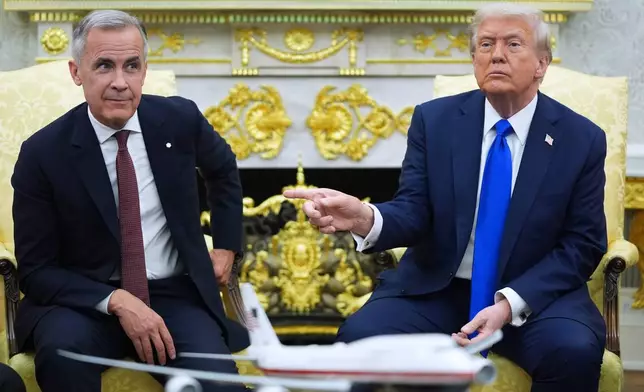
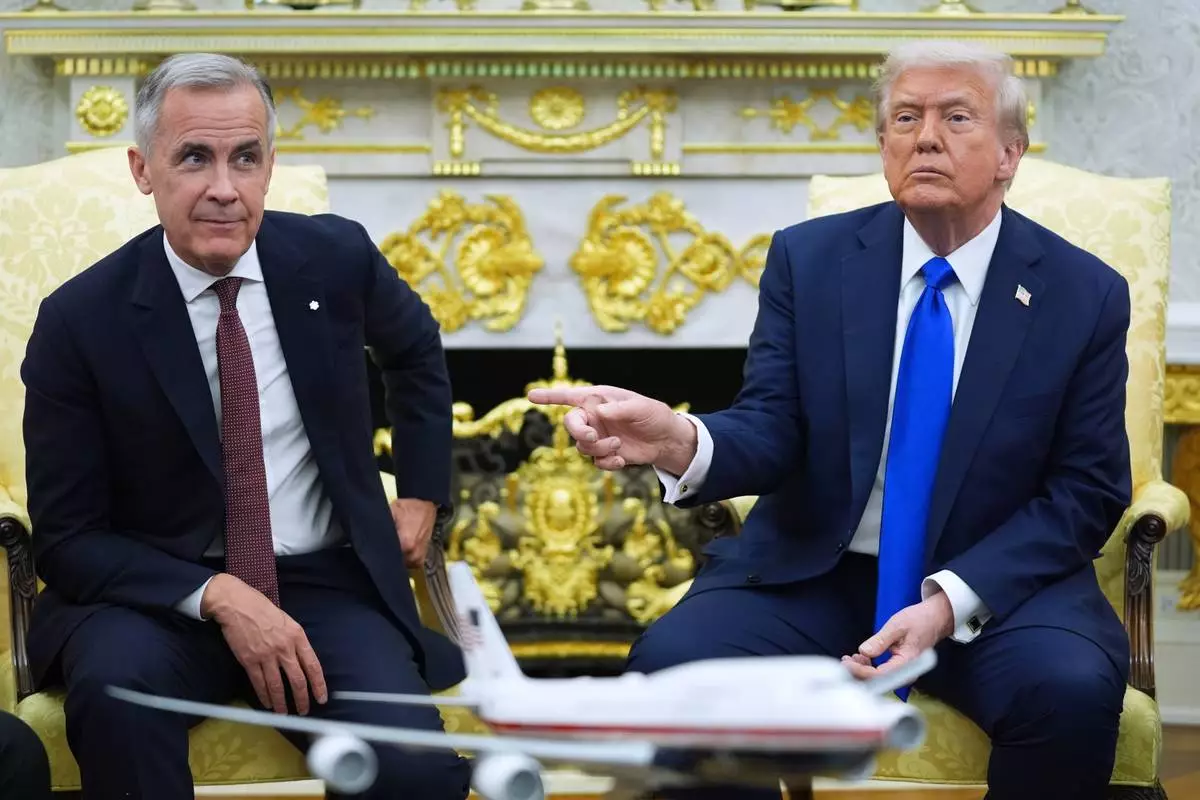
FILE - President Donald Trump and Canadian Prime Minister Mark Carney meet in the Oval Office of the White House, Oct. 7, 2025, in Washington. (AP Photo/Evan Vucci, File)

FILE - President Donald Trump and Canadian Prime Minister Mark Carney meet in the Oval Office of the White House, Oct. 7, 2025, in Washington. (AP Photo/Evan Vucci, File)

During three days of talks in the bucolic French Alps, the leaders are expected to discuss the newly minted agreement aimed at ending the Iran war, Chinese trade policy, and Russia's war in Ukraine. It's also a chance to take measure of their relationship with Trump at a moment when the U.S. leader seems more determined than ever to go it alone on matters of global consequence.

The dynamics of the summit are not unlike a family holiday gathering where “there's an uncle you don't quite like,” said Max Bergmann, an analyst at the Center for Strategic and International Studies.

“And no one wants to have a confrontation, even if things get quite passive-aggressive at times,” Bergmann said. “But, you know, there’s always the possibility that things might snap, and it might get rather dramatic.”

Here's a look at some of the notable moments of public friction and uncomfortable exchanges between Trump and his fellow G7 leaders.

Trump's criticism of British Prime Minister Keir Starmer has focused on the United Kingdom's reluctance to assist U.S. military strikes on Iran, British immigration policies, and the country's renewable energy strategies.

But his most cutting jab at Starmer came after the Labour Party leader initially declined to allow U.S. military jets to use a British base in the Indian Ocean for the bombardment of Iran. “This is not Winston Churchill that we’re dealing with,” Trump said of Starmer, comparing him unfavorably to Britain's revered World War II-era prime minister.

Trump in the first days of the Iran war tore into the prime minister after the U.K. placed the aircraft carrier HMS Prince of Wales on advanced readiness status to potentially deploy to the Middle East.

“We don’t need people that join Wars after we’ve already won!” Trump said on social media.

Trump has fumed about trade imbalances with Canada, frequently opines about annexing Canada and making it the “51st state," and has taken to referring to Prime Minister Mark Carney as “governor.”

His sharpest rhetoric toward the leader of America's northern neighbor came after Carney at the World Economic Forum in Davos, Switzerland, condemned coercion by great powers on smaller countries without mentioning Trump’s name.

“Canada lives because of the United States,” Trump said in his own remarks at Davos. “Remember that, Mark, the next time you make your statements.”

Carney has tried to remain even-keeled over Trump's jabs. The prime minister told reporters earlier this month that Trump was an “exceptionally active user of social media” and that he was not going to respond to everything he posts.

During an Easter lunch at the White House in April, Trump criticized France and other NATO countries' resistance to assisting the U.S.-Israel war against Iran.

In the midst of the aside, Trump referred to viral video footage from last year which captured Macron's wife, Brigitte, appearing to push the French president's face away as they were getting off a plane during a visit to Vietnam.

Trump told the audience that Brigitte treats Macron “extremely badly” and said that the French president was "still recovering from the right to the jaw.”

Macron afterward told reporters that the couple had been simply joking around and said Trump's comments were "neither elegant nor appropriate.”

Trump regularly regales audiences with his prowess as a dealmaker by recounting conversations he's had with Macron about trade irritants, mimicking Macron's responses in an exaggerated accent. In Trump's retelling, Macron always quickly capitulates.

Until recently, Italian Prime Minister Giorgia Meloni had been held in high regard by Trump.

In October, Trump was effusive in his praise of the conservative premier when world leaders gathered in Egypt for a summit to discuss post-war Gaza, calling her “a very successful, very successful politician” and “beautiful.”

But Trump has since changed his tune as Italy declined to assist the United States in the war against Iran and after the premier chastised Trump for feuding with Pope Leo XIV about the conflict.

“Do people like her? I can’t believe it,” Trump said of Meloni, to Milan newspaper Corriere della Sera. He added: “I thought she had courage. I was wrong.”

Trump hasn't offered any direct criticism of Japan's Sanae Takaichi since she took office in October.

But some of his commentary during Takaichi's first White House visit left the prime minister in an awkward position.

When asked by a Japanese reporter why he didn’t tell allies in Europe and Asia before the U.S. attacked Iran, Trump casually invoked Pearl Harbor to defend his decision.

“Who knows better about surprise than Japan?” Trump said with Takaichi by his side. “Why didn’t you tell me about Pearl Harbor, OK?”

Trump’s remark surprised many people in Japan, who had grown accustomed to American presidents avoiding harsh discussion of Japan's surprise strike on the U.S. Pacific Fleet in Hawaii that pushed the U.S. into World War II. His predecessors have instead focused on deepening ties with Japan, which became an ally after the war.

Takaichi, a hard-line conservative, received a mix of praise and criticism at home for not reacting to the comments by Trump, letting them pass with a glance at her ministers seated nearby.

German Chancellor Friedrich Merz set off Trump in April when he posited the U.S. was “being humiliated” by Iran and criticized the U.S. for going into the war without any strategy, saying that also made it harder to end the conflict.

Trump hit back on social media the following day, saying Merz “should spend more time on ending the war with Russia/Ukraine” and “fixing his broken Country, especially Immigration and Energy.”

Days later, the Pentagon announced it would pull some 5,000 U.S. troops out of Germany and Trump hinted he'd look to cut the U.S. military presence “a lot further.”

Trump also had an awkward exchange with Merz when the chancellor visited the White House last year on the eve of the solemn anniversary of D-Day, the start of Allied operations which led to the liberation of Western Europe, the defeat of Nazi Germany and end of World War II.

Merz noted the anniversary while making the case that the U.S. was once again in a position to help end a conflict with enormous stakes for Europe — Russia’s war against Ukraine — when Trump interjected that D-Day was “not a pleasant day for you.”

The chancellor reminded Trump that the day also marked the beginning of “the liberation of my country from Nazi dictatorship.”

Trump acknowledged that Merz had a point.

Associated Press writer John Leicester in Paris contributed to this report.
FILE - President Donald Trump meets with German Chancellor Friedrich Merz in the Oval Office at the White House, March 3, 2026, in Washington. (AP Photo/Mark Schiefelbein, File)
FILE - President Donald Trump meets with German Chancellor Friedrich Merz in the Oval Office at the White House, March 3, 2026, in Washington. (AP Photo/Mark Schiefelbein, File)

FILE - Japanese Prime Minister Sanae Takaichi gestures as U.S. President Donald Trump delivers his speech during their visit to the aircraft carrier USS George Washington at the U.S. Navy's Yokosuka base in Yokosuka, south of Tokyo, Oct. 28, 2025. (AP Photo/Eugene Hoshiko, File)
FILE - Japanese Prime Minister Sanae Takaichi gestures as U.S. President Donald Trump delivers his speech during their visit to the aircraft carrier USS George Washington at the U.S. Navy's Yokosuka base in Yokosuka, south of Tokyo, Oct. 28, 2025. (AP Photo/Eugene Hoshiko, File)

FILE - President Donald Trump, center, greets Italy's Prime Minister Giorgia Meloni, right, upon her arrival at the White House, April 17, 2025, in Washington. (AP Photo/Tom Brenner, File)

FILE - President Donald Trump, center, greets Italy's Prime Minister Giorgia Meloni, right, upon her arrival at the White House, April 17, 2025, in Washington. (AP Photo/Tom Brenner, File)

FILE - U.S. President Donald Trump, left, and British Prime Minister Keir Starmer look at each other as they shake hands during a press conference at Chequers near Aylesbury, England, Sept. 18, 2025. Leon Neal/Pool Photo via AP, File)
FILE - U.S. President Donald Trump, left, and British Prime Minister Keir Starmer look at each other as they shake hands during a press conference at Chequers near Aylesbury, England, Sept. 18, 2025. Leon Neal/Pool Photo via AP, File)

FILE - President Donald Trump and Canadian Prime Minister Mark Carney meet in the Oval Office of the White House, Oct. 7, 2025, in Washington. (AP Photo/Evan Vucci, File)

FILE - President Donald Trump and Canadian Prime Minister Mark Carney meet in the Oval Office of the White House, Oct. 7, 2025, in Washington. (AP Photo/Evan Vucci, File)
WASHINGTON (AP) — The Federal Reserve kept its key rate unchanged Wednesday yet almost half the central bank’s policymakers said they could support a rate hike later this year.

The unexpectedly aggressive tilt toward higher rates would disappoint President Trump and suggests heightened concerns about persistent inflation among Fed officials.

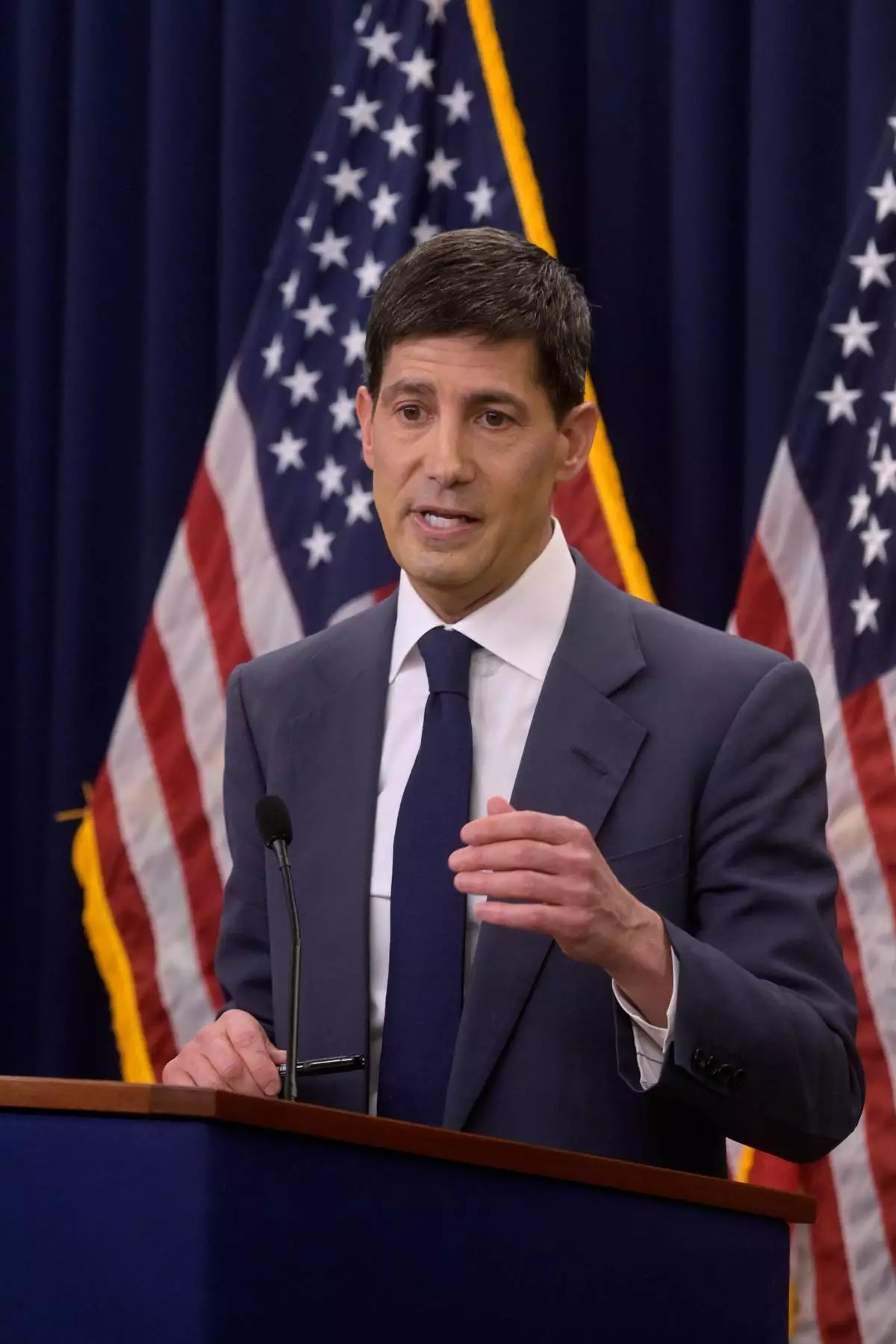
In an unusually short statement after their two-day meeting, the officials dropped language that had suggested their next move would be to cut the key rate. The brief statement reflects the influence of new chair Kevin Warsh, who was appointed by Trump. Warsh has previously criticized the Fed for commenting too broadly on the economy.

Still, Warsh's 18 colleagues on the Fed’s rate-setting committee sent a clear message in a set of quarterly projections released Wednesday: Nine signaled they supported higher rates this year, with six of those supporting two or more quarter-point increases.

It’s a sharp change from March, when no policymakers penciled in a hike and the committee as a whole forecast one cut in 2026. The change is an acknowledgement that inflation is at its highest level in three years and many officials have said in recent speeches that if inflation doesn’t decline, higher rates may be necessary in the coming months.

Warsh, in his first news conference as chair, also underscored the Fed's determination to bring inflation down to the central bank's 2% target, suggesting he will take a hawkish approach as chair. “Hawks” typically support higher rates to quell inflation, while “doves” often support lower rates to boost hiring.

“We’ve missed (on inflation) for five years and we’re going to fix that,” he said. “When we deliver on our price stability objectives, which we will, the American people will feel as though the hardships that they’ve been living through ... are in the rear view mirror.”

Warsh had supported rate cuts last year while under consideration to be Trump's pick as Fed chair to replace Jerome Powell. Since returning to the White House last year, Trump repeatedly attacked Powell for not cutting rates more deeply.

Warsh did not hint whether he was leaning toward hiking rates, but economists saw his message at the press conference as hawkish.

“The risk that they might need to raise rates has clearly risen given what we got today,” Matthew Luzzetti, chief U.S. economist at Deutsche Bank, said.

Financial markets agreed. Stock prices fell sharply after the Fed issued its statement and Warsh spoke. Bond yields rose.

Trump, for his part, appeared to accept the Fed's decision.

“We have a very good guy over there now so I’m guided by what he wants to do,” Trump said in France, where he attended a meeting of leaders from the world's seven largest economies.

All told, another eight officials signaled they would support keeping the rate unchanged, and one penciled in a cut. Warsh did not submit a forecast for how the Fed might change its key rate.

In another shift, the Fed's post-meeting statement contained no hints about its next moves, or what economists refer to as “forward guidance.” Previous Fed chairs, starting with Ben Bernanke, saw such guidance as a benefit to the Fed, because it prodded financial markets to move rates either higher or lower, depending on what the Fed preferred.

Warsh told reporters at a press conference that guidance was not “well suited to the current policy conjuncture." He has previously criticized forward guidance, as well as the quarterly projections, for potentially locking the Fed into a specific rate path.

Warsh also said he is forming five task forces to examine such areas as how the Fed communicates, the sources of data it uses in making policy decisions, and the frameworks it uses to evaluate inflation, all with the goal of making sure the Fed is “clear-eyed and focused on the future.”

Diane Swonk, chief economist at accounting firm KPMG, said the use of the task forces indicates Warsh is not looking to impose changes on the rest of the Fed, but instead is seeking consensus.

“He wants buy in,” she said. "He’s not trying to change it by command.”

If the Iran war is resolved, gas prices will likely continue to decline and inflation may cool in the coming months. But prices of many goods and services — such as clothes, dental care, and child care — were rising before the Iran war, and inflation has been above the Fed’s 2% target for five years, suggesting that there may still be inflationary pressures in the economy.

Warsh also faces a sharply different economic environment than when he appeared to campaign for the job of Fed chair last year. Back then, he was outspoken in favor of lower interest rates, as Trump has demanded. He pointed to the development of AI as a technology that could vastly expand the economy's ability to produce goods and services cheaply, which would over time bring down inflation.

Even then, many economists were skeptical of his claim. At least in the short run, analysts note that soaring investment in semiconductors and computing equipment is contributing to higher inflation.

Indeed, since the Iran war began Feb. 28, inflation has accelerated to a three-year high of 4.2%, lifted mostly by costlier gas stemming from the Iran war. The Fed typically fights higher inflation by raising its key interest rate to cool spending and growth.

Trump has announced a peace agreement that could bring the three-month conflict to an end, but it's not clear if peace will hold. And even if oil flows freely out of the Middle East again, it could take months for prices of gas, groceries, and items such as airline fares, to cool.

At the same time, hiring has picked up in recent months, removing a key rationale for cutting rates. In January, the Fed forecast that it would reduce rates twice this year, as part of its quarterly economic projections. A big reason for those potential cuts is that employers were shedding jobs and policymakers worried that the unemployment rate would rise. The central bank typically cuts its key rate to spur economic growth and hiring.

But earlier this month a government report showed that hiring jumped in May, when employers added 172,000 jobs, the third straight month of solid job gains.

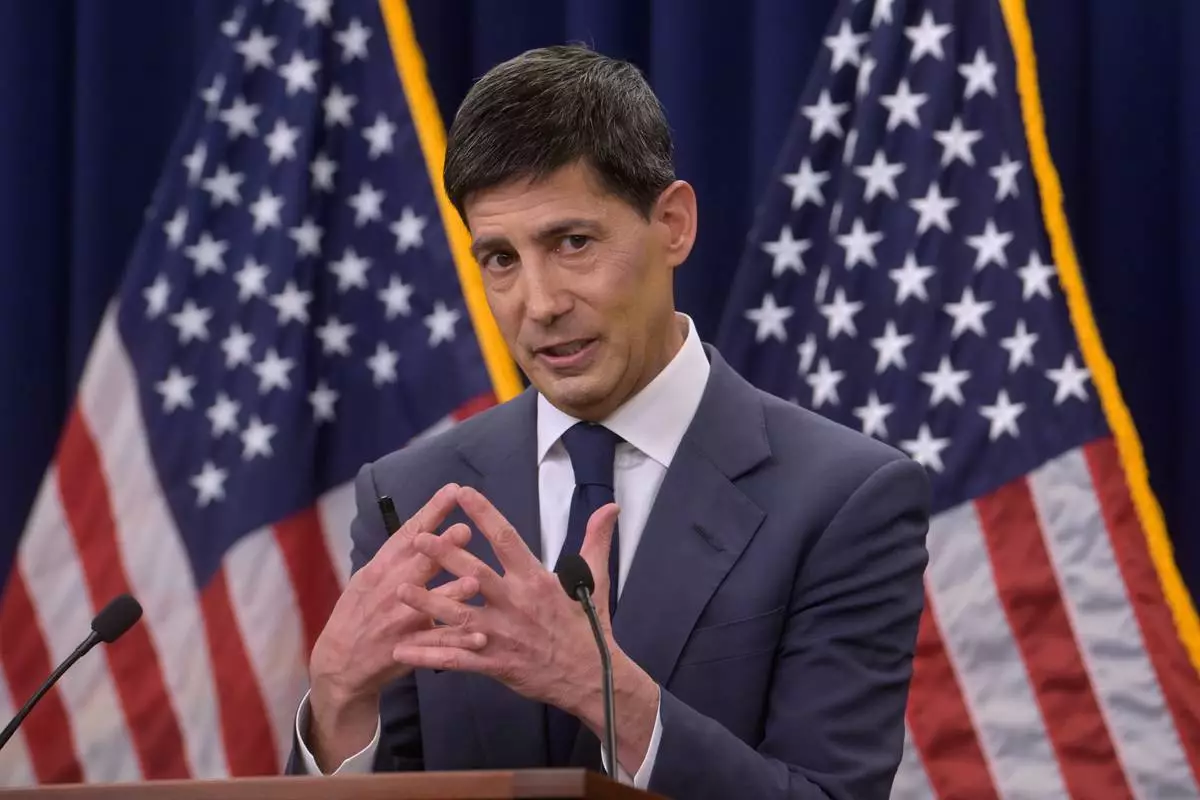
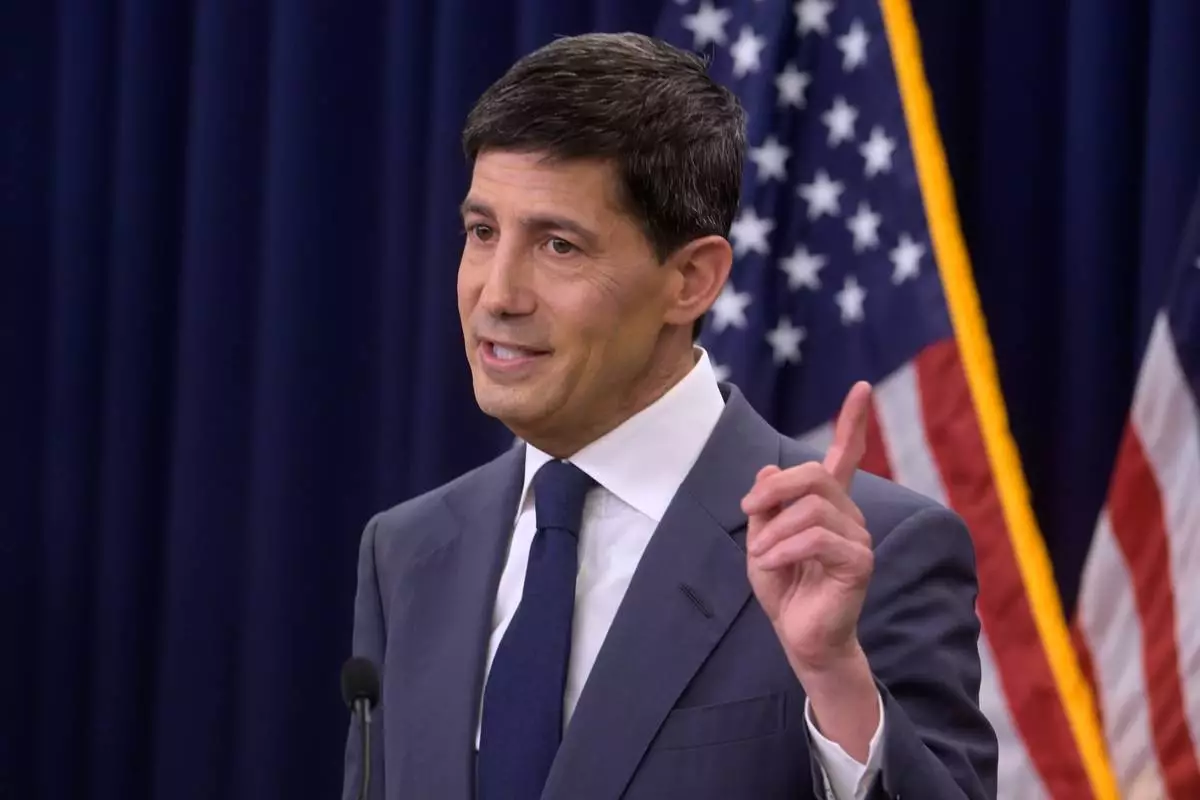
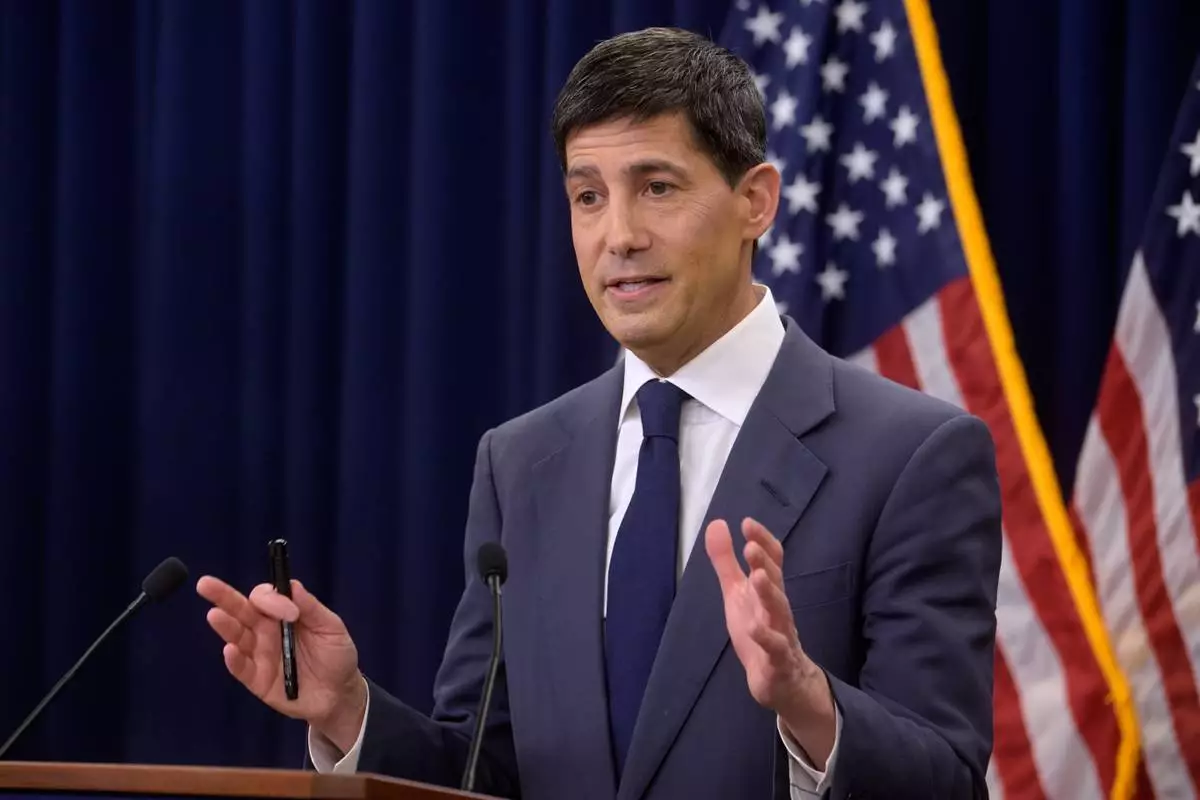
Federal Reserve Chairman Kevin Warsh speaks during a news conference following the Federal Open Market Committee meeting, Wednesday, June 17, 2025, in Washington. (AP Photo/Rod Lamkey, Jr.)

Federal Reserve Chairman Kevin Warsh speaks during a news conference following the Federal Open Market Committee meeting, Wednesday, June 17, 2025, in Washington. (AP Photo/Rod Lamkey, Jr.)

Federal Reserve Chairman Kevin Warsh speaks during a news conference following the Federal Open Market Committee meeting, Wednesday, June 17, 2025, in Washington. (AP Photo/Rod Lamkey, Jr.)

Federal Reserve Chairman Kevin Warsh speaks during a news conference following the Federal Open Market Committee meeting, Wednesday, June 17, 2025, in Washington. (AP Photo/Rod Lamkey, Jr.)

Federal Reserve Chairman Kevin Warsh speaks during a news conference following the Federal Open Market Committee meeting, Wednesday, June 17, 2025, in Washington. (AP Photo/Rod Lamkey, Jr.)

Federal Reserve Chairman Kevin Warsh speaks during a news conference following the Federal Open Market Committee meeting, Wednesday, June 17, 2025, in Washington. (AP Photo/Rod Lamkey, Jr.)

Federal Reserve Chairman Kevin Warsh speaks during a news conference following the Federal Open Market Committee meeting, Wednesday, June 17, 2025, in Washington. (AP Photo/Rod Lamkey, Jr.)

Federal Reserve Chairman Kevin Warsh speaks during a news conference following the Federal Open Market Committee meeting, Wednesday, June 17, 2025, in Washington. (AP Photo/Rod Lamkey, Jr.)

Recommended Articles