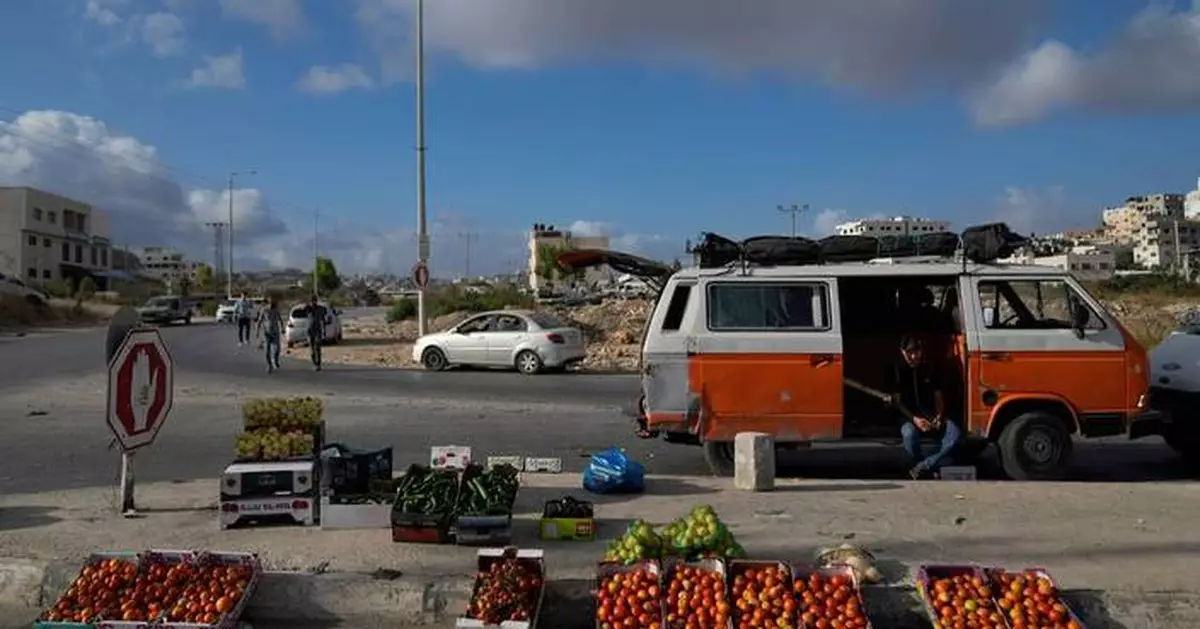
RAMALLAH, West Bank (AP) — The economy in the West Bank is teetering toward collapse as Israel maintains a web of restrictions that limit opportunities for Palestinians living under long-term military occupation, according to a new report from a leading conflict tracker.
The International Crisis Group says that Israeli measures restricting movement, withholding revenue and taking land are not only crippling the Palestinian economy but also fueling deep instability.
“The economic conditions necessary for any Palestinian future other than permanent subjugation are being dismantled,” it says.
The report, based on interviews with Palestinian business leaders, mayors and government officials, details the financial crisis afflicting companies, households and the internationally backed Palestinian Authority, which administers cities and towns in the West Bank.
It says Israeli policies suggest a concerted effort to “advance Israel’s own declared goal of extending its control and preventing a Palestinian state from emerging.”
Throughout decades of military occupation, the Palestinian economy has been hobbled by checkpoints and military gates that curtail movement of people and goods. Households and businesses have relied heavily on jobs and imports tied to Israel, and faced restrictions on land and trade. The roughly 3.4 million Palestinians living in the West Bank today face roughly 30% unemployment and have seen their economy contract substantially since the start of the Israel-Hamas war.
After Hamas’ Oct. 7, 2023, attack, Israel revoked work permits for most of the nearly 200,000 Palestinians who had worked there previously. Officials cited security but in effect, it deprived the Palestinian economy of nearly $400 million a month, or almost one-fourth of its overall economic output.
Many businesses today are struggling to pay workers, contractors and suppliers, with private companies seeing an estimated 50% decline in business since before the war, “reflecting tightened movement controls, disrupted supply chains and heightened uncertainty,” the report says.
“Palestinian society survives, but in a state of grinding immiseration. Absent remedies, the result will likely be a loss of hope and a growing risk of instability and greater violence,” it says.
As the occupied West Bank's largest employer and service provider, Palestinian Authority is at the heart of the crisis. Government agencies have borrowed heavily to stay afloat as public sector workers go unpaid and infrastructure like roads and water lines crumble. The inability to fund to public services is keeping patients out of hospitals and kids out of school.
Most of the PA's money comes from taxes collected on goods entering the West Bank through Israeli ports, because Palestinians do not control their own borders. But under hard-line ministers in Israeli Prime Minister Benjamin Netanyahu’s government, Israel has withheld billions of dollars in owed tax revenue and unilaterally imposed deductions on the funds. No transfers have been made since May 2025.
Joost Hiltermann, International Crisis Group’s special adviser for the Middle East and North Africa, said the world’s focus on more than two years of war in Gaza had drawn attention away from the West Bank, but that changes taking place now could have arguably wider consequences for Palestinians’ future aspirations.
Hiltermann, who wrote the report, said Israeli officials, who exert considerable control over many of the policies in question, did not agree to be interviewed. But he noted disagreements within Netanyahu’s government, with settler leaders and security officials often clashing on how to manage the Palestinian economy.
“The security establishment doesn’t want the Palestinian Authority or economy to collapse because they would have to assume the burden of governing the territory in full after essentially destroying it,” he said.
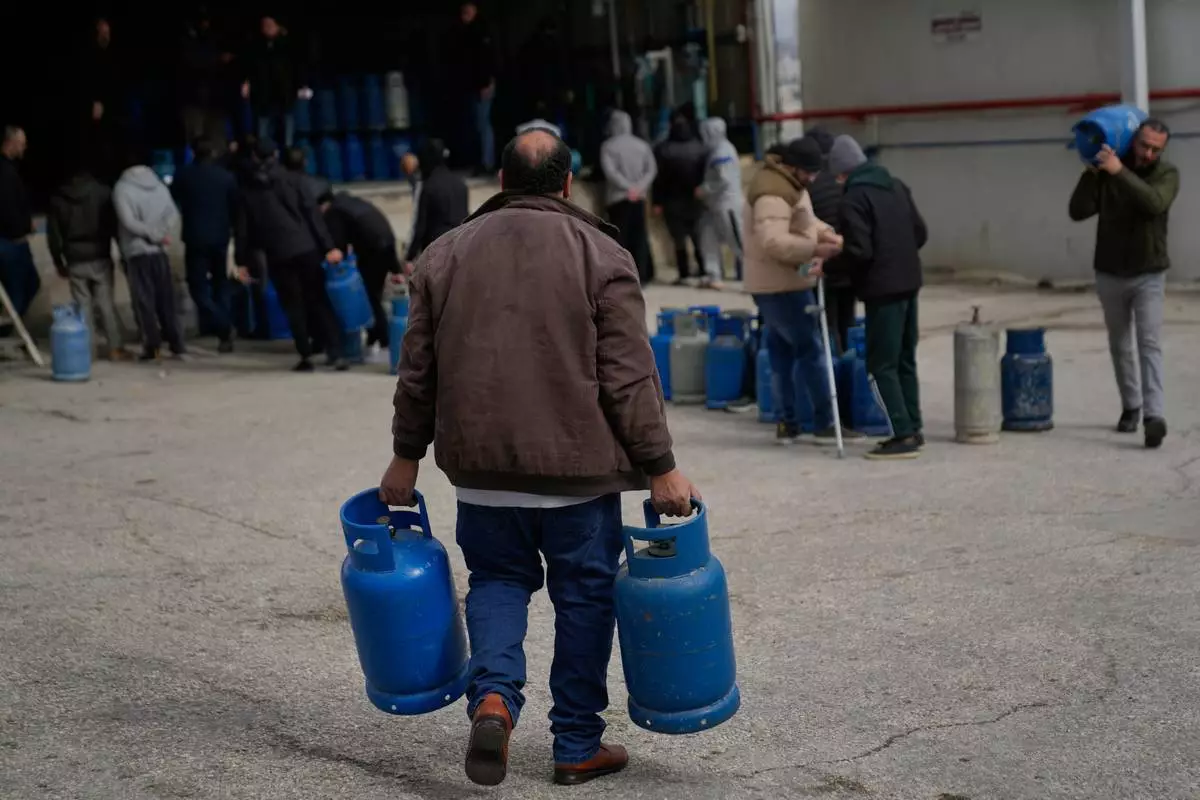
FILE - A Palestinian man carries his empty cooking gas cylinders, while he arrives at the main LPG station, as the occupied West Bank suffers a cooking gas shortage due to the decline of deliveries from the Israeli suppliers during the past three weeks, in the city of Beitunia, Friday, Jan. 23, 2026. (AP Photo/Nasser Nasser, File)

FILE - Residents of the now evacuated Palestinian refugee camp of Tulkarem return to collect belongings before the destruction of their homes as Israeli forces prepare to carry out the demolition of 116 homes across the two refugee camps of the Israeli occupied West Bank city of Tulkarem, Friday, May 2, 2025. (AP Photo/Nasser Nasser, File)
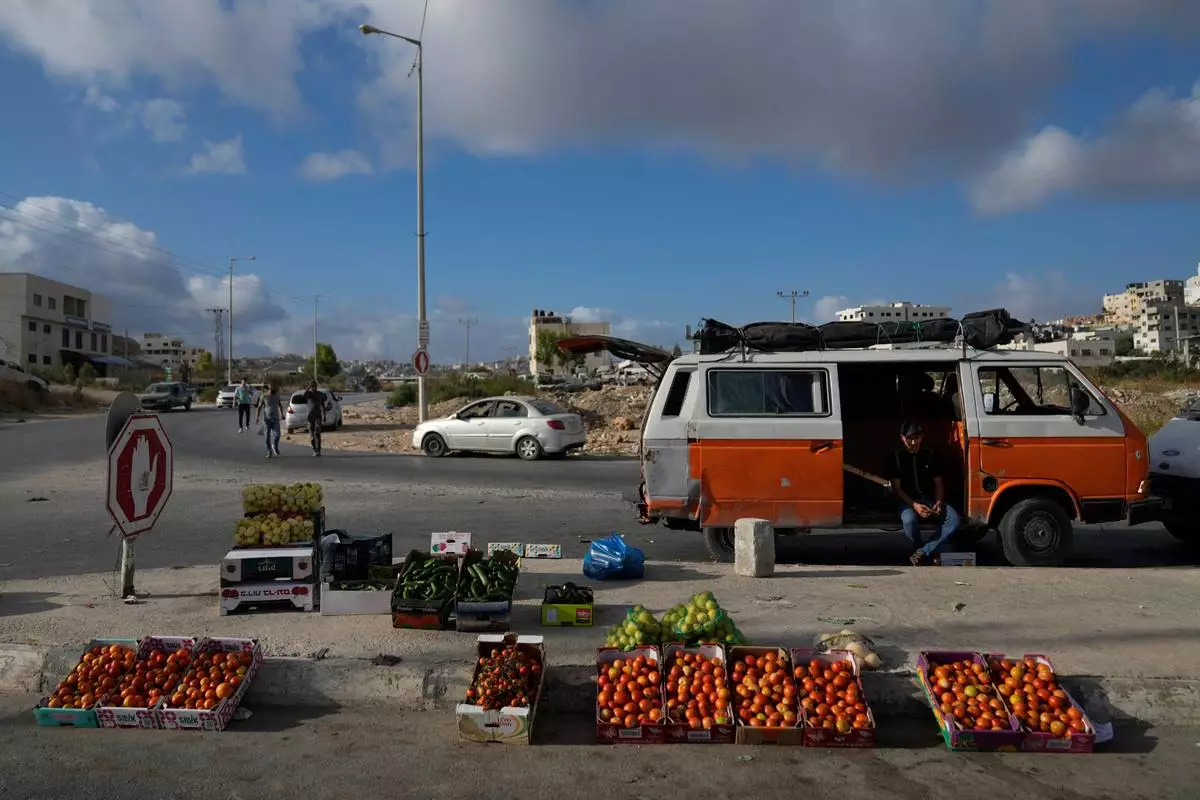
FILE - A Palestinian street vendor waits for customers while he displays vegetables for sale in the weekly market at the eastern outskirts of the West Bank city of Nablus Monday, Sept. 16, 2024. (AP Photo/Nasser Nasser, File)
NEW YORK (AP) — Stock markets are rallying worldwide Monday, and oil prices are easing after the United States and Iran reached a tentative deal to extend their ceasefire and reopen the Strait of Hormuz to get the global flow of crude going again.
The S&P 500 rose 1.5% on hopes that this time, the announcement of an Iran-U.S. agreement will mean a long-term fix to a conflict that has sent inflation painfully upward for the entire world. The Dow Jones Industrial Average was up 611 points, or 1.2%, as of 10 a.m. Eastern time, and the Nasdaq composite was 2.4% higher.
Stocks got a lift after the price for a barrel of Brent crude oil fell 4.9% to $83.04, back to where it was in early March. While that’s still higher than its price of roughly $70 from before the war more than three months ago, it’s lower than the $100 plus it cost just a few weeks ago. The hope is that lower oil prices will take pressure off households and businesses, which have had to pay higher prices for everything from food to fuel to fertilizer because of the war with Iran.
Iran confirmed the agreement but signaled its implementation would not start until it’s signed, which Pakistan said would happen Friday in Switzerland. Broader negotiations on issues like Iran’s nuclear program are expected to continue over the next 60 days. That leaves opportunity for hiccups that could derail the agreement. And even if the deal does reopen the Strait of Hormuz, it will take months for the energy industry to get back to full speed.
For now, though, relief swept through financial markets worldwide.
On Wall Street, stocks of companies with big fuel bills were instant winners. United Airlines flew 4.2% higher, American Airlines climbed 3.9% and cruise operator Carnival rose 5.4%.
Stocks of companies enmeshed in the artificial-intelligence industry also jumped. These stocks have yo-yoed sharply in recent weeks, going from roaring to records to suddenly turning lower. The big concern is whether such stocks shot too high, too fast because of AI mania, and their careening moves have sometimes reversed direction by the hour.
Micron Technology rallied 7.7%, and Advanced Micro Devices rose 7.3%. Nvidia’s climb of 1.8% was the strongest force pushing the S&P 500 upward because the AI chip company is Wall Street’s most valuable company, giving it more weight on the index than any other.
SpaceX, Elon Musk’s rocket company that also owns the AI company xAI, rose 7.9% in its second day of trading on Wall Street. Its successful debut on the Nasdaq suggested plenty of demand still exists among investors for AI. The market has given SpaceX a total value of more than $2.1 trillion, making it bigger than Exxon Mobil, Bank of America and Coca-Cola combined.
In the bond market, Treasury yields eased on hopes that lower oil prices will remove pressure on central banks worldwide to raise interest rates.
The yield on the 10-year Treasury eased to 4.45% from 4.48% late Friday.
Europe’s central bank last week became the first major one in the world to raise interest rates to combat high inflation. High interest rates can keep a lid on inflation, but they also slow economies and undercut prices for all kinds of investments, including stocks and cryptocurrencies. They hit investments seen as the most expensive in particular, and some critics are calling the AI industry a bubble where investment inflated too far.
The Fed will announce its latest decision on interest rates later this week, which will be the first under its new chair, Kevin Warsh. President Donald Trump nominated Warsh to the position, and Trump has been loudly calling for lower interest rates.
But traders see it as a near certainty that the Fed will leave its main interest rate steady after its two-day meeting ends Wednesday. Traders had been raising bets that the Fed may actually have to raise interest rates this year because of how high inflation has gotten and how solid the U.S. job market remains.
But the tentative deal between the United States and Iran means traders are now betting on only a 54% chance of a hike this year, down from 71% a week ago, according to data from CME Group.
Elsewhere on Wall Street, Roku fell 2.4% after the company announced that Fox Corp. is buying the streaming pioneer in a cash-and-stock deal valued at approximately $22 billion.
Roku's stock had already soared 20% Friday, when early media reports emerged about a deal, which will give Fox access to the Roku channel, first-party data and more than 100 million global streaming households. Fox's stock fell 18.6%.
In stock markets abroad, indexes climbed in Asia and Europe. Japan’s Nikkei 225 jumped 5% for one of the world’s biggest gains and finished at a record.
“This is great news,” said Takashi Hiroki, chief strategist at Monex. “Buying by foreign investors is leading the market with expectations of easing tensions around the situation in the Middle East.”
South Korea’s Kospi surged even more, 5.2%, thanks in part to continued rallies for AI winners like Samsung Electronics.
AP Business Writers Matt Ott and Elaine Kurtenbach and Senior Producer Mayuko Ono contributed to this report.
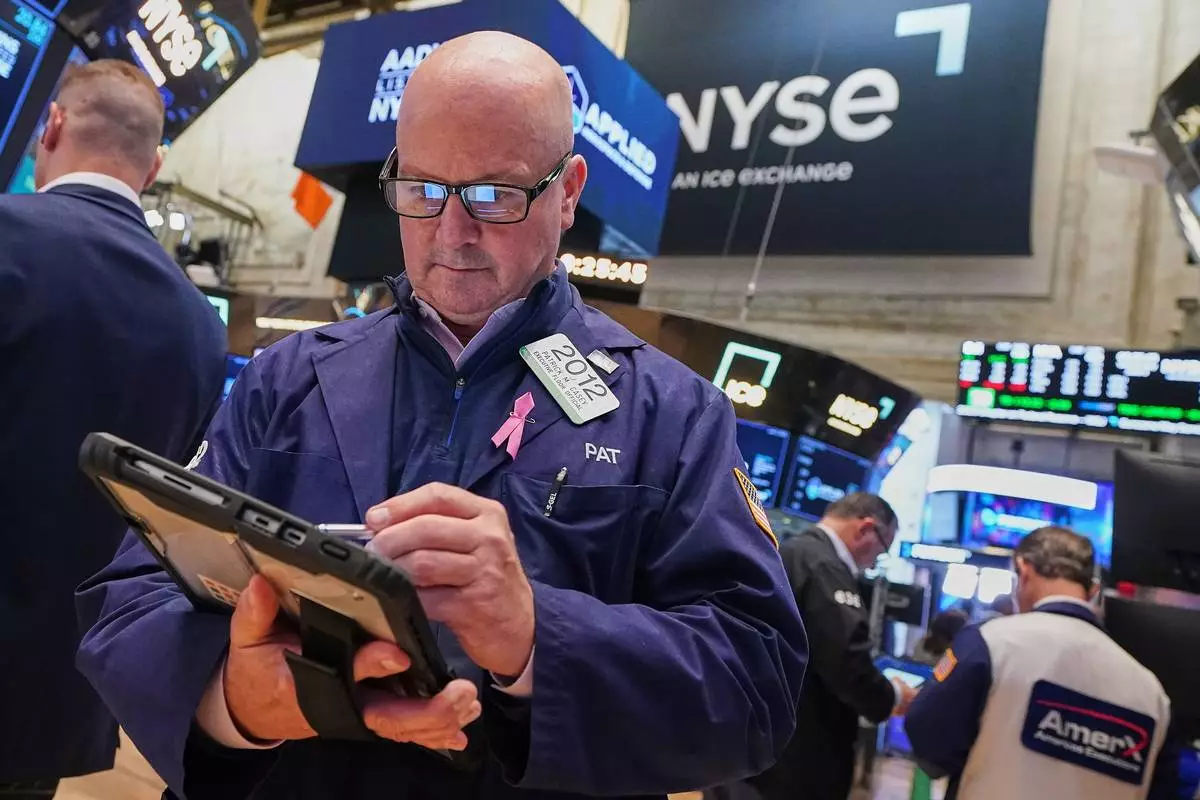
Trader Patrick Casey works on the floor of the New York Stock Exchange, Wednesday, June 3, 2026. (AP Photo/Richard Drew)
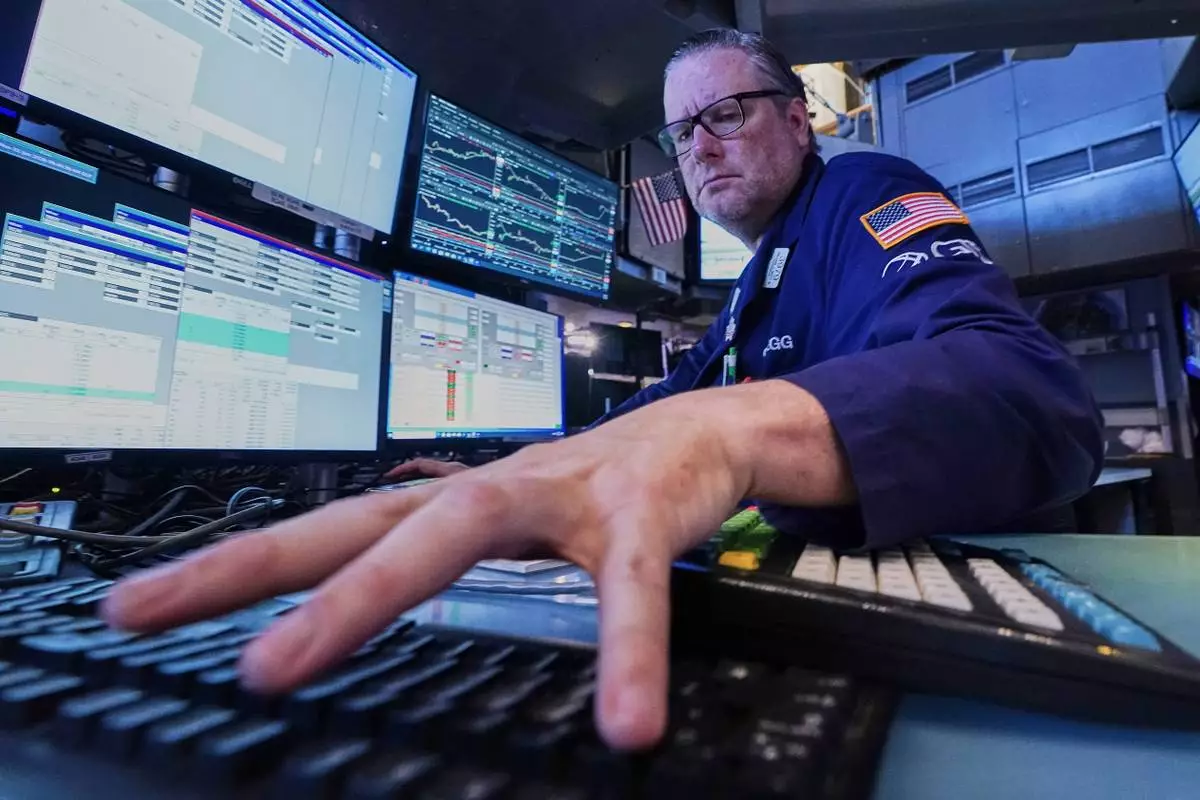
Specialist Gregg Maloney works at his post on the floor of the New York Stock Exchange, Monday, June 1, 2026. (AP Photo/Richard Drew)

Currency traders watch monitors at the foreign exchange dealing room of the Hana Bank headquarters in Seoul, South Korea, Friday, June 12, 2026. (AP Photo/Ahn Young-joon)

A dealer walks past a screen showing the Korea Composite Stock Price Index (KOSPI) at a dealing room of Hana Bank in Seoul, South Korea, Thursday, June 11, 2026. (AP Photo/Lee Jin-man)