PLANO, Texas--(BUSINESS WIRE)--Jun 15, 2026--
As the global appetite for chicken grows, KFC is answering the call by challenging the sameness across quick-service chicken with a clear focus: delivering the most craveable food and more dynamic restaurant experiences designed around how consumers want to eat today.
This press release features multimedia. View the full release here: https://www.businesswire.com/news/home/20260615623588/en/
KFC is expanding the ways consumers can enjoy its iconic fried chicken, with new boneless offerings, bold sauces and exciting beverages.
“In an increasingly crowded category, we have a clear opportunity to set the standard for modern chicken in QSR,” said Scott Mezvinsky, CEO, KFC Global. “This next chapter brings new energy and expression to what makes us iconic, while doubling down on our chicken and reimagining how fans experience KFC around the world.”
The brand that made chicken famous is introducing new ways to enjoy its original flavor through an expansion of boneless menu items built for dipping, dunking and solo snacking, along with unexpected sauces that unlock customization and flavor discovery.
At the same time, KFC is evolving its beverage experiences to deliver everyday moments of indulgence, alongside more dynamic, modern restaurants designed to meet customers wherever they are throughout the day.
What’s New:
Together, these fresh ways to experience KFC position the brand to be enjoyed for sips, snacks or meals — unlocking flavor exploration, personalization and craveability while giving fans more ways to customize flavors, mix and match combinations and make the menu their own.
Across the coming weeks in the UK and Ireland, KFC will roll out new Tenders and nine new, bold sauces alongside refreshed branding across the market’s communications and digital touchpoints, giving fans more freedom to mix, match and personalize meals around their cravings, moods and moments. In the coming weeks, the global rollout is expected to expand across Australia and the U.S., with additional markets following through 2026.
The experience will feel different in KFC’s restaurants, beginning this summer. The brand is set to open a new generation of spaces designed for hospitality, not just efficiency – with environments that feel more dynamic and adapt throughout the day to meet different occasions. These next-gen restaurants are designed to elevate the dining experience and bring KFC’s signature hospitality to life, taking shape across key markets through distinct new formats.
The first expressions of these newly designed spaces include:
This vision will continue to evolve globally as new builds and restaurant remodels embrace the next era of restaurant design.
To bring this shift to life consistently around the world, KFC is also sharpening how it shows up visually. The brand is evolving its most distinctive assets to feel more relevant, more expressive, and more in tune with modern culture, while staying true to itself and grounded in the Colonel and its iconic “Finger Lickin’ Good” ethos. At the center is the bucket – KFC’s most recognizable asset – refreshed with new energy alongside a subtle evolution of the Colonel himself, ensuring the brand’s legacy remains front and center. Together, the updated branding comes to life across packaging, digital platforms, advertising and restaurant environments.
About KFC
KFC is a global chicken restaurant brand with a rich, decades-long history of success and innovation. It all started with one entrepreneurial-minded cook, Colonel Harland Sanders, who created the Original Recipe more than 90 years ago, with a list of 11 secret herbs and spices. Today, KFC honors its legacy and maintains its formula for success, bringing flavor and originality through world-famous fried chicken: in more than 34,000 restaurants in over 150 countries. The KFC of today is shaping the next generation of chicken from signature fried chicken to an expanding lineup of sandwiches, tenders, beverages, served up through modern restaurant experiences. KFC is a subsidiary of Yum! Brands, Inc. (NYSE: YUM).

KFC’s next-generation restaurant concepts are designed to create more modern, dynamic and hospitality-driven experiences for guests around the world.
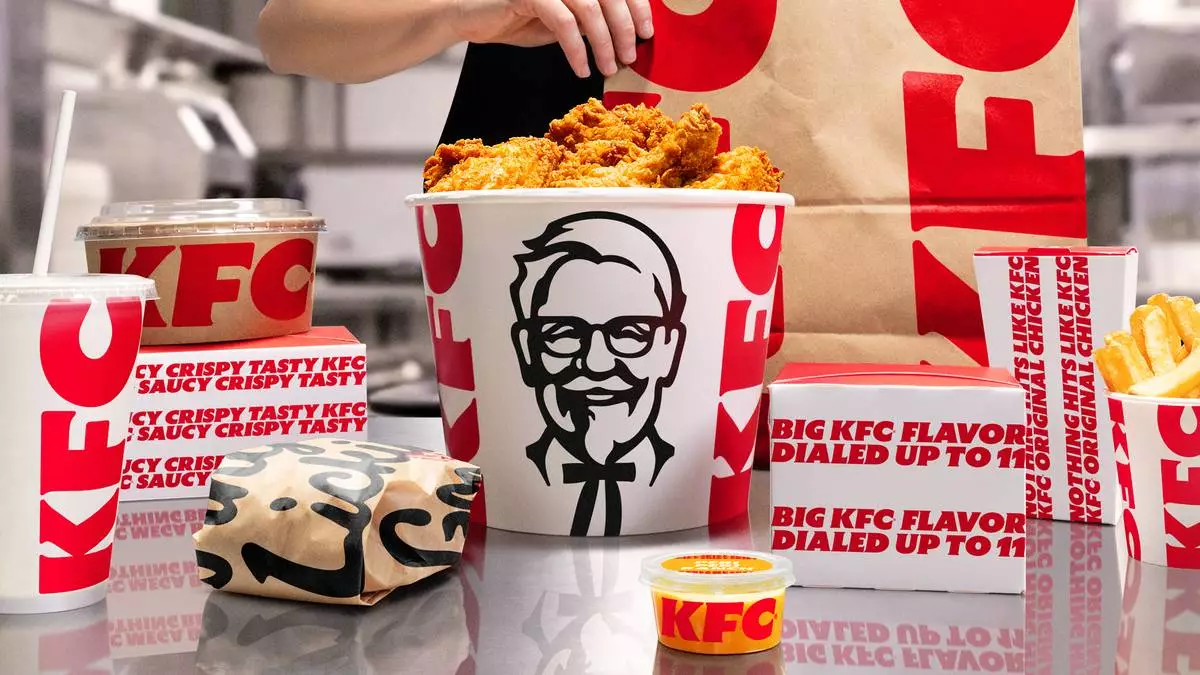
KFC’s updated visual identity extends across packaging – turning bags, cups, boxes and its iconic bucket into bold branded touchpoints.
NEW YORK (AP) — Stock markets are rallying worldwide Monday, and oil prices are easing after the United States and Iran reached a tentative deal to extend their ceasefire and reopen the Strait of Hormuz to get the global flow of crude going again.
The S&P 500 rose 1.5% on hopes that this time, the announcement of an Iran-U.S. agreement will mean a long-term fix to a conflict that has sent inflation painfully upward for the entire world. The Dow Jones Industrial Average was up 611 points, or 1.2%, as of 10 a.m. Eastern time, and the Nasdaq composite was 2.4% higher.
Stocks got a lift after the price for a barrel of Brent crude oil fell 4.9% to $83.04, back to where it was in early March. While that’s still higher than its price of roughly $70 from before the war more than three months ago, it’s lower than the $100 plus it cost just a few weeks ago. The hope is that lower oil prices will take pressure off households and businesses, which have had to pay higher prices for everything from food to fuel to fertilizer because of the war with Iran.
Iran confirmed the agreement but signaled its implementation would not start until it’s signed, which Pakistan said would happen Friday in Switzerland. Broader negotiations on issues like Iran’s nuclear program are expected to continue over the next 60 days. That leaves opportunity for hiccups that could derail the agreement. And even if the deal does reopen the Strait of Hormuz, it will take months for the energy industry to get back to full speed.
For now, though, relief swept through financial markets worldwide.
On Wall Street, stocks of companies with big fuel bills were instant winners. United Airlines flew 4.2% higher, American Airlines climbed 3.9% and cruise operator Carnival rose 5.4%.
Stocks of companies enmeshed in the artificial-intelligence industry also jumped. These stocks have yo-yoed sharply in recent weeks, going from roaring to records to suddenly turning lower. The big concern is whether such stocks shot too high, too fast because of AI mania, and their careening moves have sometimes reversed direction by the hour.
Micron Technology rallied 7.7%, and Advanced Micro Devices rose 7.3%. Nvidia’s climb of 1.8% was the strongest force pushing the S&P 500 upward because the AI chip company is Wall Street’s most valuable company, giving it more weight on the index than any other.
SpaceX, Elon Musk’s rocket company that also owns the AI company xAI, rose 7.9% in its second day of trading on Wall Street. Its successful debut on the Nasdaq suggested plenty of demand still exists among investors for AI. The market has given SpaceX a total value of more than $2.1 trillion, making it bigger than Exxon Mobil, Bank of America and Coca-Cola combined.
In the bond market, Treasury yields eased on hopes that lower oil prices will remove pressure on central banks worldwide to raise interest rates.
The yield on the 10-year Treasury eased to 4.45% from 4.48% late Friday.
Europe’s central bank last week became the first major one in the world to raise interest rates to combat high inflation. High interest rates can keep a lid on inflation, but they also slow economies and undercut prices for all kinds of investments, including stocks and cryptocurrencies. They hit investments seen as the most expensive in particular, and some critics are calling the AI industry a bubble where investment inflated too far.
The Fed will announce its latest decision on interest rates later this week, which will be the first under its new chair, Kevin Warsh. President Donald Trump nominated Warsh to the position, and Trump has been loudly calling for lower interest rates.
But traders see it as a near certainty that the Fed will leave its main interest rate steady after its two-day meeting ends Wednesday. Traders had been raising bets that the Fed may actually have to raise interest rates this year because of how high inflation has gotten and how solid the U.S. job market remains.
But the tentative deal between the United States and Iran means traders are now betting on only a 54% chance of a hike this year, down from 71% a week ago, according to data from CME Group.
Elsewhere on Wall Street, Roku fell 2.4% after the company announced that Fox Corp. is buying the streaming pioneer in a cash-and-stock deal valued at approximately $22 billion.
Roku's stock had already soared 20% Friday, when early media reports emerged about a deal, which will give Fox access to the Roku channel, first-party data and more than 100 million global streaming households. Fox's stock fell 18.6%.
In stock markets abroad, indexes climbed in Asia and Europe. Japan’s Nikkei 225 jumped 5% for one of the world’s biggest gains and finished at a record.
“This is great news,” said Takashi Hiroki, chief strategist at Monex. “Buying by foreign investors is leading the market with expectations of easing tensions around the situation in the Middle East.”
South Korea’s Kospi surged even more, 5.2%, thanks in part to continued rallies for AI winners like Samsung Electronics.
AP Business Writers Matt Ott and Elaine Kurtenbach and Senior Producer Mayuko Ono contributed to this report.
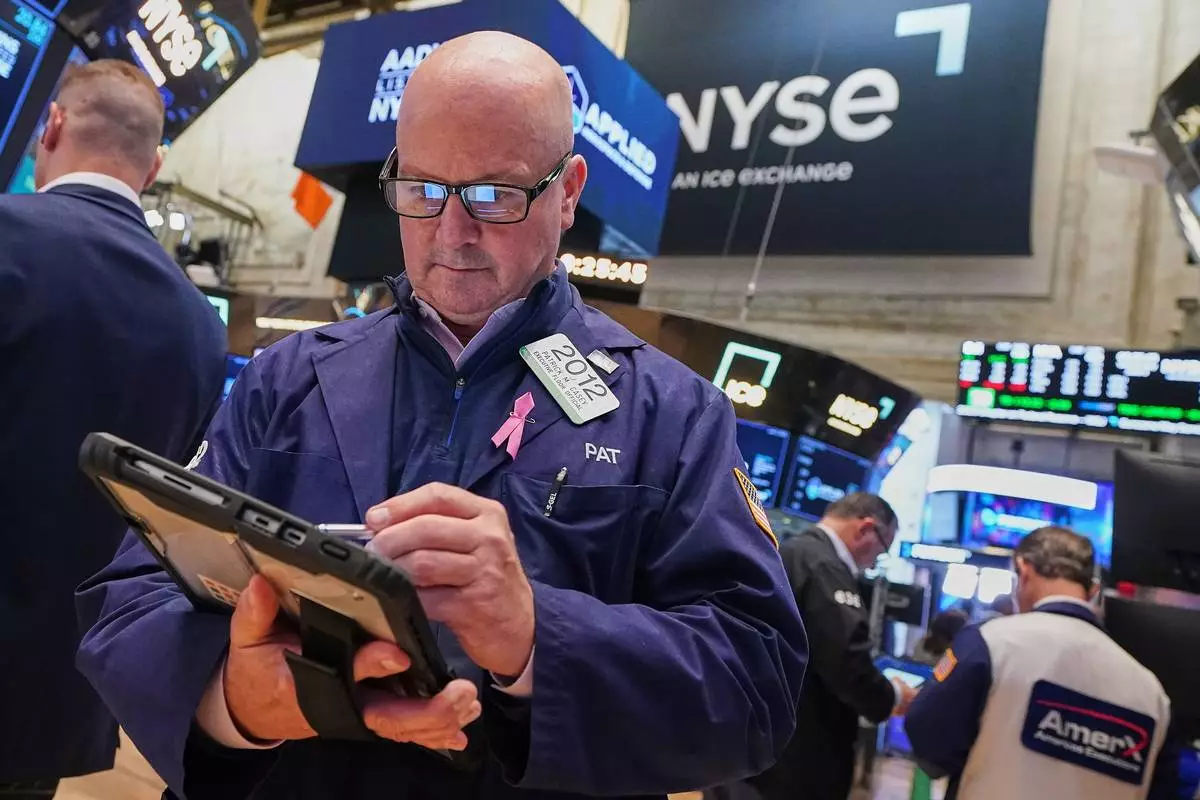
Trader Patrick Casey works on the floor of the New York Stock Exchange, Wednesday, June 3, 2026. (AP Photo/Richard Drew)
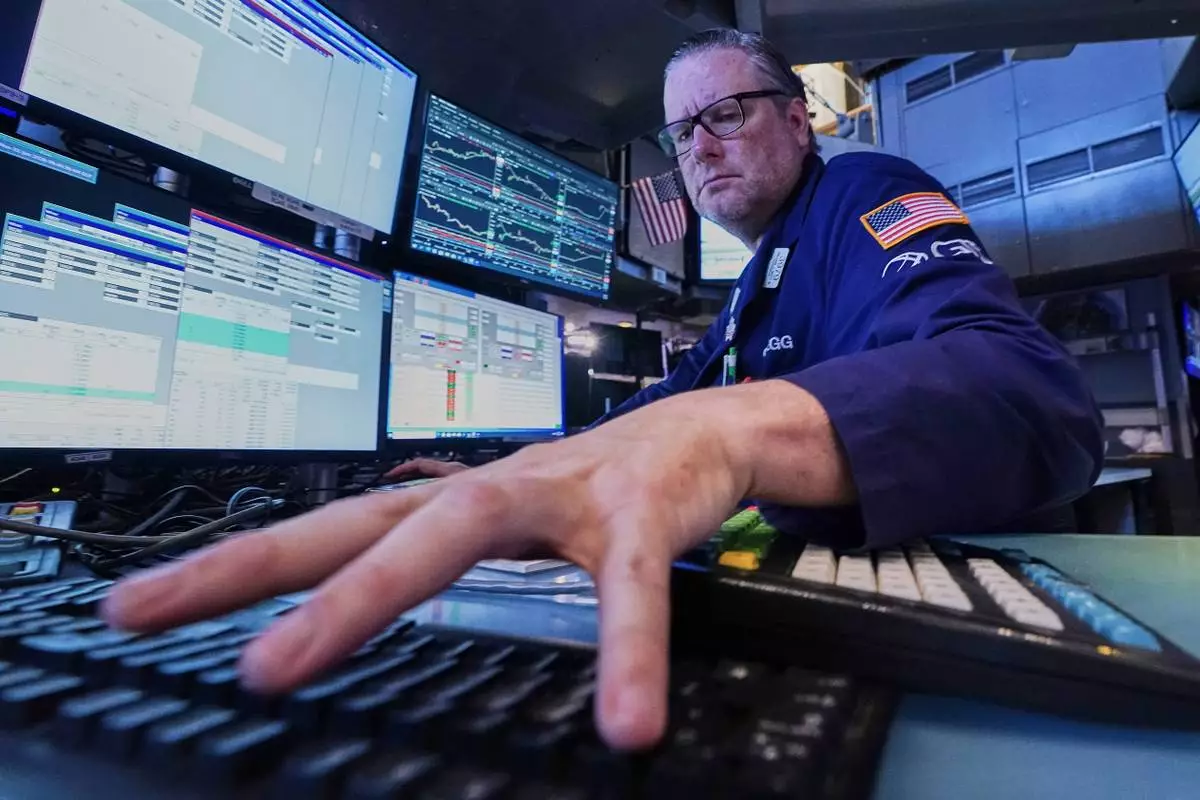
Specialist Gregg Maloney works at his post on the floor of the New York Stock Exchange, Monday, June 1, 2026. (AP Photo/Richard Drew)

Currency traders watch monitors at the foreign exchange dealing room of the Hana Bank headquarters in Seoul, South Korea, Friday, June 12, 2026. (AP Photo/Ahn Young-joon)

A dealer walks past a screen showing the Korea Composite Stock Price Index (KOSPI) at a dealing room of Hana Bank in Seoul, South Korea, Thursday, June 11, 2026. (AP Photo/Lee Jin-man)