Chinese stocks rose Monday, buoyed by the U.S.-Iran memorandum of understanding (MoU), said Timothy Pope, market analyst for China Global Television Network (CGTN).
"The announcements by both the US and Iran that they've agreed a framework MoU for ending the war really put the markets in probably one of the most optimistic places they've been in for the last couple of months, especially since it comes off the back of these successful SpaceX IPO last week," said Pope.
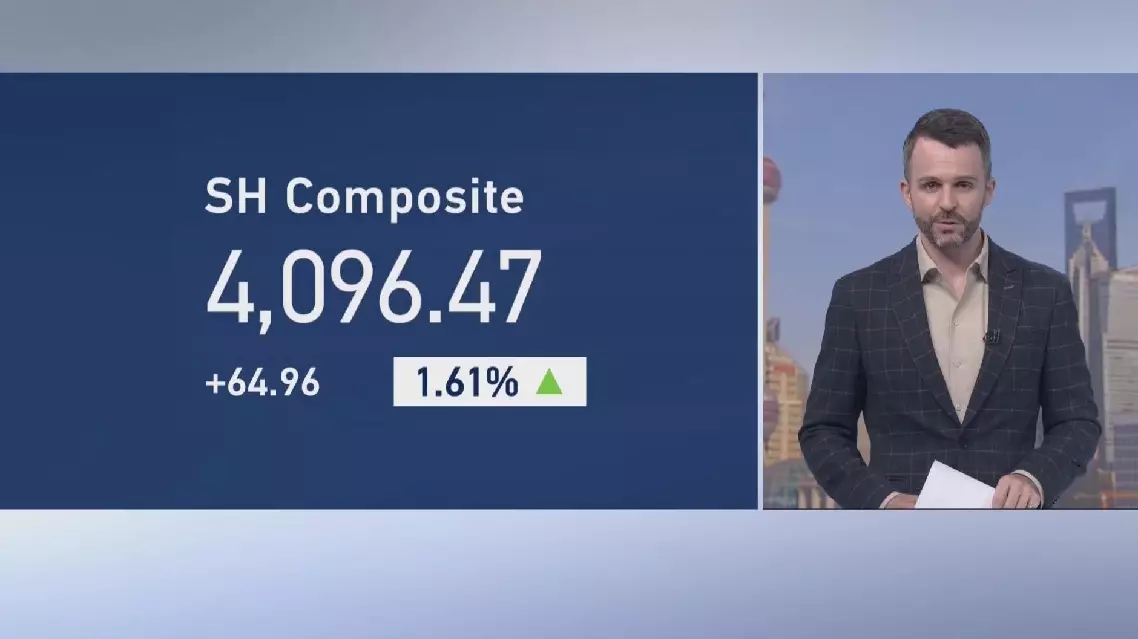
The benchmark Shanghai Composite Index up 1.61 percent to 4,096.47 points. The Shenzhen Component Index closed 3.79 percent higher at 15,531.11 points.
Meanwhile, the ChiNext Index, tracking China's Nasdaq-style board of growth enterprises, gained 5.30 percent to close at 4,033.53 points. The STAR Composite Index, which reflects the performance of stocks on China's sci-tech innovation board, closed 4.89 percent higher at 2,128.58 points.
"The news of Middle East deal to be signed probably in Switzerland probably on Friday, increased the risk appetite for the Chinese mainland investors. The Shanghai Composite's early gains were actually a bit tentative, but it closed 1.6 percent higher, just a shade below 4100 points. The Shenzhen Components surged 3.8 percent by the close of trade and the China export added 5.3 percent. This was largely thanks to strong gains for tech stocks - chip companies and those in the AI sector in particular. There's some sentiment spillover, of course, from the SpaceX IPO last week and also this step towards a proper peace deal has probably been seen as a green light, I think, for investors. A sub-index tracking AI stocks was up 5.7 percent in Shanghai and the sector bellwether Cambricon added 7.6 percent," he said.
Pope noted that falling fuel sales blunted the rally in Chinese stocks.
"But there's possibly a reason why the gains on the Chinese mainland might have been a bit more muted than they were on the other regional markets today and that's because the fuel situation here is less critical than in a lot of other countries, and according to recent data it has changed a lot even in the last couple of months. Reuters has reported that petrol - gasoline - sales at Sinopec pumps was down 8 percent in April, with diesel sales down 6 percent. That's pretty significant just for one month. It has been falling anyway but those falls were at a much accelerated pace. And Goldman Sachs says that demand for petroleum and associated products fell 20 percent in China that same month. This points to China having adapted very, very quickly to rising oil prices and just the idea of scarcity in the future. But that does of course also remove some of the impetus towards a significant relief rally on the mainland markets today," said the analyst.
US-Iran MoU drives Chinese stocks higher: analyst