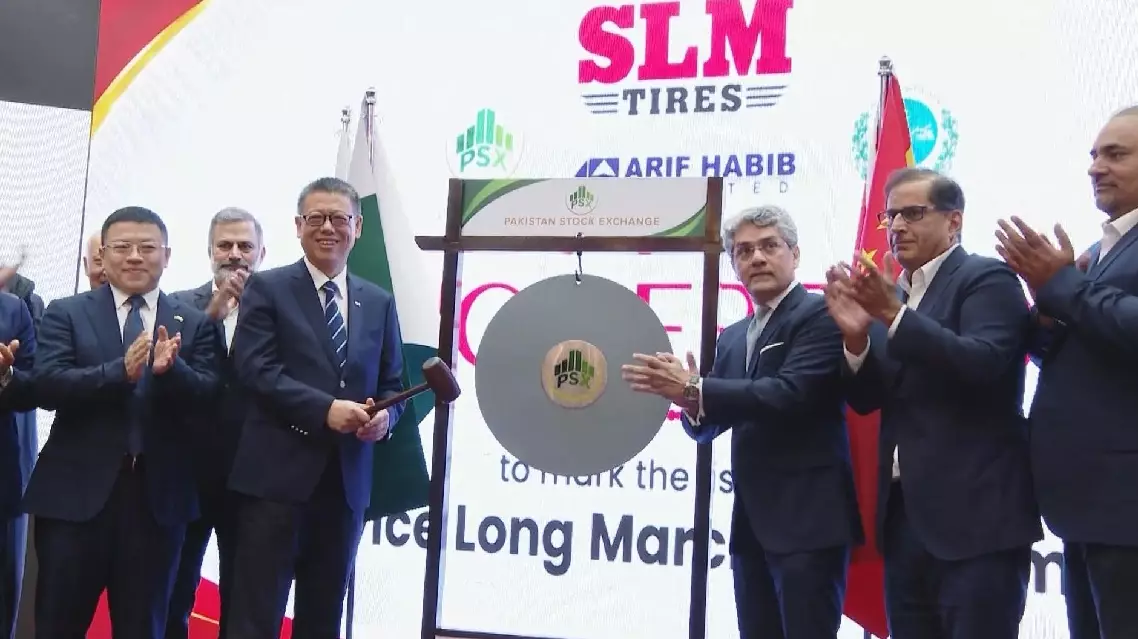
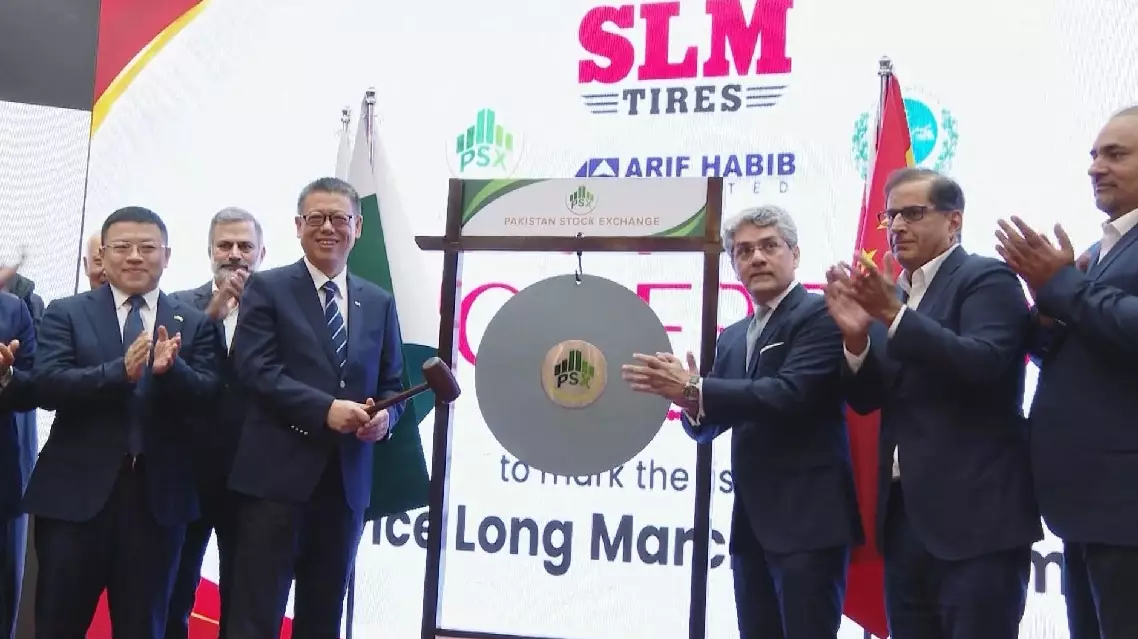
A joint Sino-Pakistani tire manufacturer debuted on the Pakistan Stock Exchange (PSX) on Monday, in what market participants called the first listing by a Chinese-invested company on the bourse and a milestone in China-Pakistan industrial and financial integration.
The company, Service Long March Tyres (SLM), is a joint venture between Pakistan's Servis Group and China's Chaoyang Long March Tyre Co., with Chinese shareholders holding about 43 percent of the company before the listing.
SLM is Pakistan's largest maker of all-steel radial tires, with a domestic market share above 55 percent. It is also a key exporter, with products reaching markets including the United States and Brazil.
With this listing, the Chinese-backed company has shattered multiple records on Pakistan's capital market. It raised about 28 million U.S. dollars through its initial public offering. The offering was oversubscribed 16.7 times and fully subscribed in just five seconds -- setting new benchmarks for both the highest subscription amount and the fastest subscription time in the history of the PSX.
Industry insiders from both China and Pakistan see this as a milestone indicating that the China-Pakistan Economic Corridor (CPEC) has entered a new stage driven by both industrial investment and capital market cooperation.
"This is a milestone for China-Pakistan economic cooperation. The company has come full circle -- from bringing in technology and localizing production capacity to eventually integrating into the capital market. Now, a manufacturing company like this can tap into local Pakistani financing to expand its own production," said You Hang, deputy general manager of China Financial Futures Exchange and Chinese director of the PSX.
"This is in the last two decades the highest fundraise. So it really helps build momentum for the Pakistan Stock Exchange. So, it really adds momentum also to companies who are in a similar bandwagon, meaning JVs (joint ventures) with China in Pakistan," said Farrukh Sabzwari, general manager of the PSX.
First Chinese-funded firm lists on Pakistan bourse, marking milestone
First Chinese-funded firm lists on Pakistan bourse, marking milestone
Palestinians in Gaza face a worsening water crisis, with most households unable to secure the UN‑recommended minimum of six liters per person per day for drinking and cooking.
Worse still, only three percent of Gaza's primary water source, the coastal aquifer, is fit for human consumption.
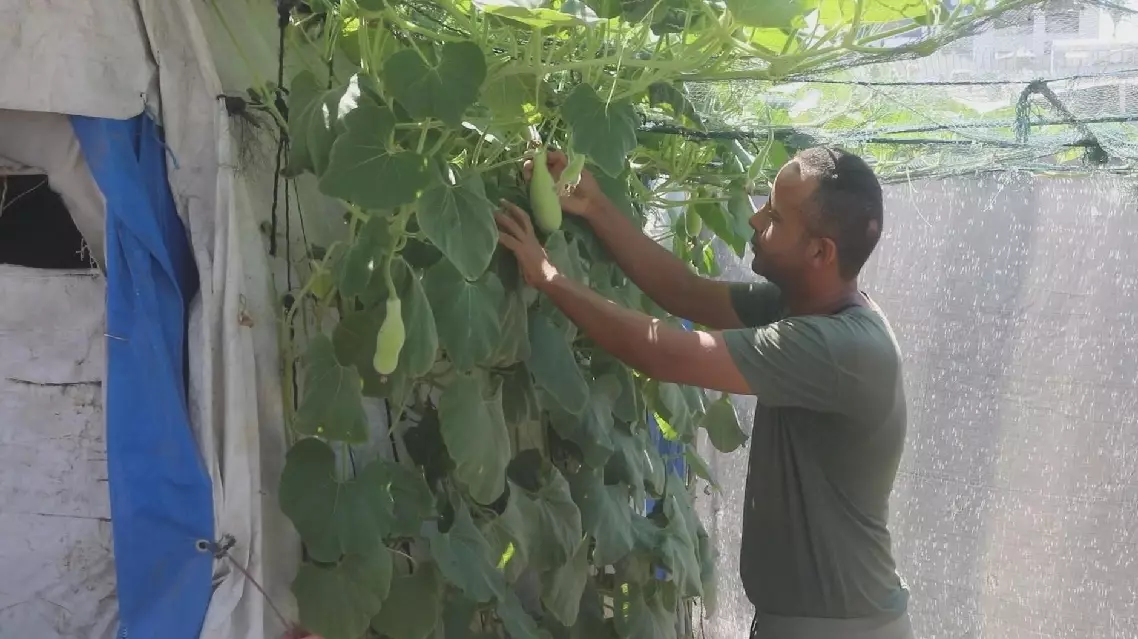
Next to his tent in a displacement camp west of Gaza City, Mohammad Zayed draws water from a well he dug by hand.
After months of struggling to secure a dependable water supply, the displaced Palestinian decided to take matters into his own hands, creating a source of water for his family amid increasingly difficult conditions.
Armed with little more than basic tools and determination, Mohammad succeeded in reaching groundwater beside his tent.
Today, the well provides water for his family's daily needs and supports a small vegetable garden he planted nearby, helping supplement food for his children.
"We were suffering from a severe water shortage, so I went back to the methods our ancestors used 100 years ago. I dug a four-meter-deep well near the seashore, and thankfully we found usable water for our daily needs," said Zayed.
Across Gaza, access to water is becoming increasingly difficult. According to the UN-led Global WASH Cluster, large parts of the territory's water infrastructure have been damaged by the war, leaving an estimated 80 percent of the population reliant on trucked water for their daily needs.
During water distributions, dozens of Palestinians queue each day to fill whatever containers they can find. The United Nations Children's Fund (UNICEF) says access to safe water remains a daily challenge for 1.1 million children in Gaza, as the territory's water systems continue to come under severe strain.
"These water containers aren't suitable for use by either adults or children, but we can't afford replacements. Many children become sick because water is stored in dirty containers that aren't safe for drinking," said Ibtisam al-Danas, a displaced Palestinian.
According to UNICEF, most families across Gaza face chronic water insecurity, with many struggling to access even the minimum quantities required for drinking, cooking, and other essential daily needs.
"We also suffer from the quality of water. Most of the water that we provide to people is saline and not suitable for drinking. Now we are in summer and people need more water. The water sources are now about 30 percent of the needed quantities of water before October 2023," said Yahya al-Sarraj, mayor of Gaza City.
For the hundreds of thousands of displaced Palestinians living in tent camps, securing water remains one of the most pressing challenges of daily life. With deliveries often irregular and insufficient, many families spend much of their day searching for clean water, turning a necessity into a constant struggle for survival.
Displaced families in Gaza face worsening water crisis