SANTA ROSA BEACH, Fla.--(BUSINESS WIRE)--Jun 16, 2026--
As Scenic Highway 30A continues its emergence as one of America’s premier luxury coastal destinations, industry leaders are increasingly comparing the region’s trajectory to that of Palm Beach. Fueled by record luxury home sales, significant wealth migration, and a growing concentration of second-home owners, 30A has evolved into a market where homeowners expect not only exceptional real estate, but also sophisticated property stewardship and concierge-level support.
This press release features multimedia. View the full release here: https://www.businesswire.com/news/home/20260616071245/en/
To meet those evolving expectations, Dune Vacation Rentals today announced the launch of Dune Estate Services, a comprehensive estate management division designed to protect, maintain, and enhance luxury homes throughout 30A and Florida’s Emerald Coast. Estate Services introduces a distinct tier within Dune’s portfolio, reserved for a select group of high-value properties. These homes are defined by exceptional quality, scale, and performance; typically valued above $25 million or generating rental revenue in excess of a million dollars per annum.
For more than a decade, Dune Vacation Rentals has served luxury homeowners through vacation rental management, private home management, renovation and project oversight, concierge services, and real estate support. The launch of Dune Estate Services formally brings these capabilities together under a dedicated platform focused on year-round estate stewardship.
“Over the last decade, we’ve watched 30A evolve into what many are now calling the Palm Beach of the North,” said Bob Dickhaus, Founder and Managing Partner of Dune Vacation Rentals. “The luxury homes being built and sold here rival those in Palm Beach, Naples, Aspen, and the Hamptons. Yet many owners spend only a few weeks or months each year at their property. They need a trusted local partner who can protect their investment, oversee every detail, and ensure their home is always guest-ready, family-ready, and market-ready.”
The launch comes as Northwest Florida continues attracting affluent buyers from Nashville, Atlanta, Dallas, Houston, Chicago, New York, and Southern California. Many homeowners are purchasing properties not only as vacation residences, but as legacy assets requiring professional oversight and long-term preservation.
According to local luxury real estate leaders, the sophistication of today’s 30A homeowner has created demand for a new level of estate management services.
“Today’s luxury buyer isn’t simply purchasing a beach house—they’re acquiring a significant lifestyle and financial investment,” said Brad Dahler, Global Real Estate Advisor with Scenic Sotheby’s International Realty. “As 30A continues to attract discerning homeowners from across the country, the expectation for professional estate oversight has become increasingly important. Owners want confidence that their homes are being proactively cared for when they aren’t here, and services like those offered by Dune Estate Services help meet that growing need.”
The demand extends beyond property management to the overall luxury ownership experience.
“Affluent homeowners expect the same level of service they receive from the world’s finest hotels, private clubs, and luxury destinations,” said Shanna Dickerson, Founder and CEO of Blue Sky Luxury Travels. “The most successful luxury markets are supported by professionals who make ownership effortless. Estate services have become an essential part of that ecosystem, allowing owners to enjoy their homes while knowing every detail is being handled by trusted experts.”
Unlike traditional vacation rental companies, Dune Estate Services leverages the company’s established infrastructure across luxury vacation rentals, maintenance operations, homeowner services, concierge support, renovation management, and local vendor relationships. This integrated approach provides homeowners with a single point of accountability for every aspect of their property.
Services include:
For homeowners who choose to generate rental income, Dune’s estate management platform works seamlessly alongside its luxury vacation rental operation, which serves approximately 150 high-end homes throughout WaterColor, Seaside, WaterSound, Rosemary Beach, and surrounding 30A communities. The company’s partnership-focused approach is designed to maximize owner returns, preserve property values, and deliver exceptional guest experiences.
“Luxury homeowners along 30A deserve a level of service that matches the caliber of the property itself,” added Dickhaus. “Whether an owner is here two weeks a year or six months a year, our mission is to provide complete confidence that their home is being cared for as if it were our own. That’s what true estate management means, and that’s why we created Dune Estate Services.”
For more information about Dune Estate Services, visit www.dunerec.com.
About Dune Vacation Rentals
Founded in 2013, Dune Vacation Rentals is one of 30A’s leading luxury vacation rental and homeowner services companies. Serving approximately 150 luxury properties across WaterColor, Seaside, WaterSound, Rosemary Beach, and surrounding Emerald Coast communities, Dune provides vacation rental management, private home management, renovations and project management, concierge and in-home services, real estate support, and estate management solutions for luxury homeowners. Dune’s philosophy is built on partnership, helping owners maximize returns, protect property values, and enjoy an exceptional ownership experience.

Dune Vacation Rentals
NASHVILLE, Tenn. (AP) — Christa Pike was in critical condition Thursday and receiving “lifesaving care” at a hospital, her lawyers said, a day after a failed attempt to execute her pushed Tennessee’s governor to halt further executions this year and order an independent review.
Pike, who was sentenced to death for a 1995 murder, was taken to a hospital Wednesday night after surviving a double dose of the drug Tennessee uses to execute prisoners.
“We don’t have a sense of her prognosis or much update on her health at the moment," attorney Randy Spivey said during a news conference. "But we know she is alive right now.”
The failed execution, which one death penalty expert described as unprecedented, led Republican Gov. Bill Lee to order a review, calling what happened “deeply disturbing” and indefinitely postponing Pike’s execution and another one that had been scheduled for this year. It also reignited the debate over the state’s execution procedures, including its single-drug lethal injections.
Spivey called the process cruel and torturous, saying he was “haunted” by watching and hearing Pike talking, singing and then snoring loudly during her more than 90 minutes in the death chamber. Her attorneys also said it was unclear if she might have suffered brain damage from being deprived of oxygen.
May Martinez, whose daughter was murdered by Pike and her boyfriend and who traveled to Nashville to watch the execution, was also upset.
“I didn’t get justice for my daughter,” Martinez told The Associated Press on Thursday.
“I watched the whole thing. She was awake. She was laughing. She was moving her head, moving her feet. She was trying to sit up," Martinez said. "Didn’t work the first time they gave her a shot. It didn’t work the second time.”
It was not immediately clear what went wrong. Pike’s attorneys said there were a number of possibilities.
The execution team worked for an hour to administer the lethal drugs, said Spivey, who counted at least seven needles in her left arm.
During the struggle to locate a vein, Pike even suggested where they might find one, he said.
“Please try here, please try here,” Spivey recalled her saying. “She told them over and over, please try higher on my shoulder.”
At one point, Pike asked prison officials if her arm was supposed to feel that way, though it’s unclear if it was after the first dose entered her body because officials don’t share that information.
Neither the initial nor backup dose of pentobarbital worked. Pike was still snoring when the execution chamber’s microphone was cut off more than an hour into the attempt.
Another of Pike's attorneys, Steve Ferrell, said she feared there would be complications because of a lifelong blood disorder that made it tough to get needles into her veins. “Throughout her life, she’s explained to us that she had trouble having blood drawn,” he said.
It was quite possible, Ferrell said, that the IV line didn't enter her vein properly and that the drug was filling her arm instead of entering her bloodstream.
Pike's lawyers now want her death sentence to be commuted. Now age 50, she was sentenced to death for a murder she committed at 18. She would have been the first woman executed in Tennessee in more than 200 years.
An appeals court had stopped her execution an hour before it was scheduled to begin Wednesday morning, but the U.S. Supreme Court overturned that stay hours later.
It was the second time this year that Tennessee was unable to complete an execution. In the other case, officials couldn't find a suitable vein for an IV line so the drugs weren't administered.
Lee said it appeared prison staff followed procedure.
Pentobarbital, the barbiturate Tennessee uses for executions, has been used to carry out death sentences in multiple states and by the federal government. But there have been concerns raised about the potential for “unnecessary pain and suffering.”
Dr. Ervin Yen, an Oklahoma City anesthesiologist who has no link to Pike's execution but who has witnessed others, said it’s possible that if the prison staff was using a small vein, there could have been some burning, as mentioned by Pike’s attorneys.
“It just depends on the vein that you’re injecting it in and how fast you are injecting,” Yen said.
Tennessee in 2024 switched from a three-drug series for lethal injections to a single drug, pentobarbital. That came about two years after the state abruptly halted the execution of Oscar Smith and acknowledged it had failed to ensure its lethal injection drugs had been tested properly.
Robin M. Maher, executive director of the Death Penalty Information Center, said what Pike experienced is “singular and unparalleled” in that she survived long enough to be moved to a hospital.
Seven others have survived medical problems due to an execution team's failure to access a vein to administer lethal injection drugs, but no one has stayed alive after receiving the drugs used in executions, she said.
Executions in the U.S. have fallen sharply since the beginning of this century, but the number nearly doubled last year behind a record increase in Florida.
Pike would have been the 30th person executed in the U.S. this year.
Strapped to a gurney in the execution chamber, Pike described herself as at peace and said "I’m ready to be free. ... This is a happy day.”
But she remained awake, and at one point complained about a feeling in her arm.
An hour after officials first raised the curtains, witnesses reported that a second dose of pentobarbital was administered. Pike could still be heard snoring behind a closed curtain until the microphone was cut off almost 30 minutes later.
Her lawyers filed an emergency motion with the Tennessee Supreme Court seeking to immediately halt and stay the execution, saying she was in “unnecessary agony” and the procedure violated her right to be executed free of cruel and unusual punishment.
Pike and her boyfriend were convicted of the fatal stabbing of 19-year-old Colleen Slemmer, a classmate. The killing stoked fears of Satan worship because of a pentagram carved on Slemmer’s body.
She didn't dispute that she helped kill Slemmer, but supporters argued that her mental illness and allegations of severe sexual abuse should be considered. She was diagnosed with bipolar disorder and post-traumatic stress disorder after the killing.
“It took me numerous years to even realize the gravity of what I’d done,” she once said.
This story was updated to correct the spelling of Randy Spivey's last name.
Associated Press writers Jeffrey Collins in Columbia, South Carolina, Ed White in Detroit, Russ Bynum in Savannah, Georgia, Hallie Golden in Seattle, Hannah Schoenbaum in Salt Lake City and John Seewer in Toledo, Ohio, contributed.

Media witnesses leave Riverbend Maximum Security Institution after the execution of Christa Pike was halted Wednesday, Sept. 30, 2026, in Nashville, Tenn. (AP Photo/George Walker IV)

Associated Press reporter Kimberly Chandler recounts the moments before the execution of Christa Pike was halted at Riverbend Maximum Security Institution, Wednesday, Sept. 30, 2026, in Nashville, Tenn. (AP Photo/George Walker IV)
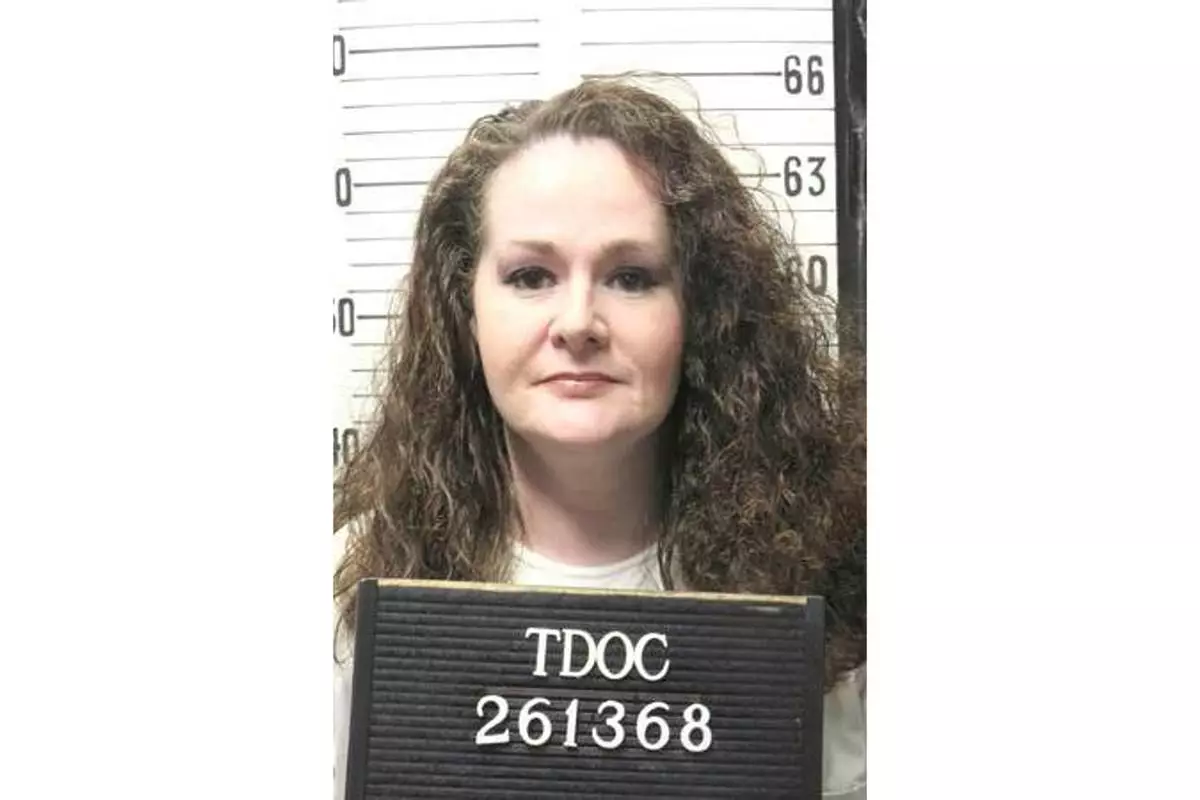
This photo provided by the Tennessee Department of Correction shows Christa Pike on Jan. 12, 2023. (TDOC via AP)

Emergency vehicles arrive at Riverbend Maximum Security Institution after the execution of Christa Pike was halted Wednesday, Sept. 30, 2026, in Nashville, Tenn. (AP Photo/George Walker IV)

Emergency vehicles arrive at Riverbend Maximum Security Institution after the execution of Christa Pike was halted Wednesday, Sept. 30, 2026, in Nashville, Tenn. (AP Photo/George Walker IV)

Media witnesses recount the moments before the execution of Christa Pike was halted Wednesday, Sept. 30, 2026, in Nashville, Tenn. (AP Photo/George Walker IV)