NEW YORK (AP) — Infant mortality in the U.S. dropped to a new all-time low in 2025, according to preliminary government data.
There were slightly fewer than 5.4 infant deaths per 1,000 live births in 2025, according to the Centers for Disease Control and Prevention.
While that appears to be a small decline from about 5.5 in 2024 and 5.6 in the two years preceding, researchers say it is statistically meaningful and translates to hundreds of fewer infant deaths per year.
It's difficult to pinpoint what's driving the recent developments, but “this is an encouraging data point, and we hope that this trend will continue,” said Dr. Michael Warren, chief medical and health officer for the March of Dimes.
Infant mortality is the measure of how many babies die before reaching their first birthday. Because the number of babies born in the U.S. varies year to year, researchers calculate rates to compare infant mortality over time.
The overall numbers, too, have been going down. U.S. infant deaths fell to about 19,350 last year, according to provisional CDC data that may rise a little as additional analysis is completed. The final tally is still expected to be down from about 20,050 in 2024 and about 20,160 in 2023, according to the agency.
The U.S. rate has inched down over the decades — it was at 7.5 per 1,000 three decades ago — thanks to medical advances and public health efforts.
But it has remained worse than other high-income countries, which experts have attributed to poverty, inadequate prenatal care and other problems. A study published last year found the U.S. infant mortality rate in 2022 — when the rate rose — was nearly twice as high as what was seen in several other high-income democratic nations, including Italy, Japan, Spain and Sweden.
That was the year of the first statistically significant jump in the U.S. rate in about two decades. Experts attributed that rise to a rebound in RSV and flu infections.
In 2023, U.S. health officials began recommending two new measures to prevent the toll on infants: one was a lab-made antibody shot for infants that helps the immune system fight off the virus, and the other was giving an RSV vaccine to women between 32 weeks and 36 weeks of pregnancy. A March of Dimes expert last year said the effort likely contributed to the improvement in 2024.
Meanwhile, a decline in sudden infant death syndrome could be connected to an increase in education around safe sleeping for infants, Warren said in a statement.
The CDC posted the 2025 provisional data in late May. On Tuesday, the agency released a more in-depth analysis of 2024 infant mortality data, offering details not yet available for 2025. Among that report's highlights:
— Death rates declined both for the youngest infants, less than 28 days old, and for older infants. Those declines continued last year, the 2025 provisional data indicate.
— In 2024, infant mortality continued to differ by race, sometimes dramatically. Death rates for infants born to Black women were more than twice as high as those for the infants of Hispanic, white and Asian American women.
— Researchers noted a decline in the mortality rate for infants born at full term, at 39 to 40 weeks. But rates did not change significantly for other gestational age groups.
— Mississippi had the highest infant mortality rate, at 9.65 deaths per 1,000 births, and New Hampshire had the lowest, at just under 3 per 1,000.
“These differences are reflective of a variety of reasons related to access to care, community factors, and policies that improve health and outcomes,” Warren said.
The Associated Press Health and Science Department receives support from the Howard Hughes Medical Institute’s Department of Science Education and the Robert Wood Johnson Foundation. The AP is solely responsible for all content.
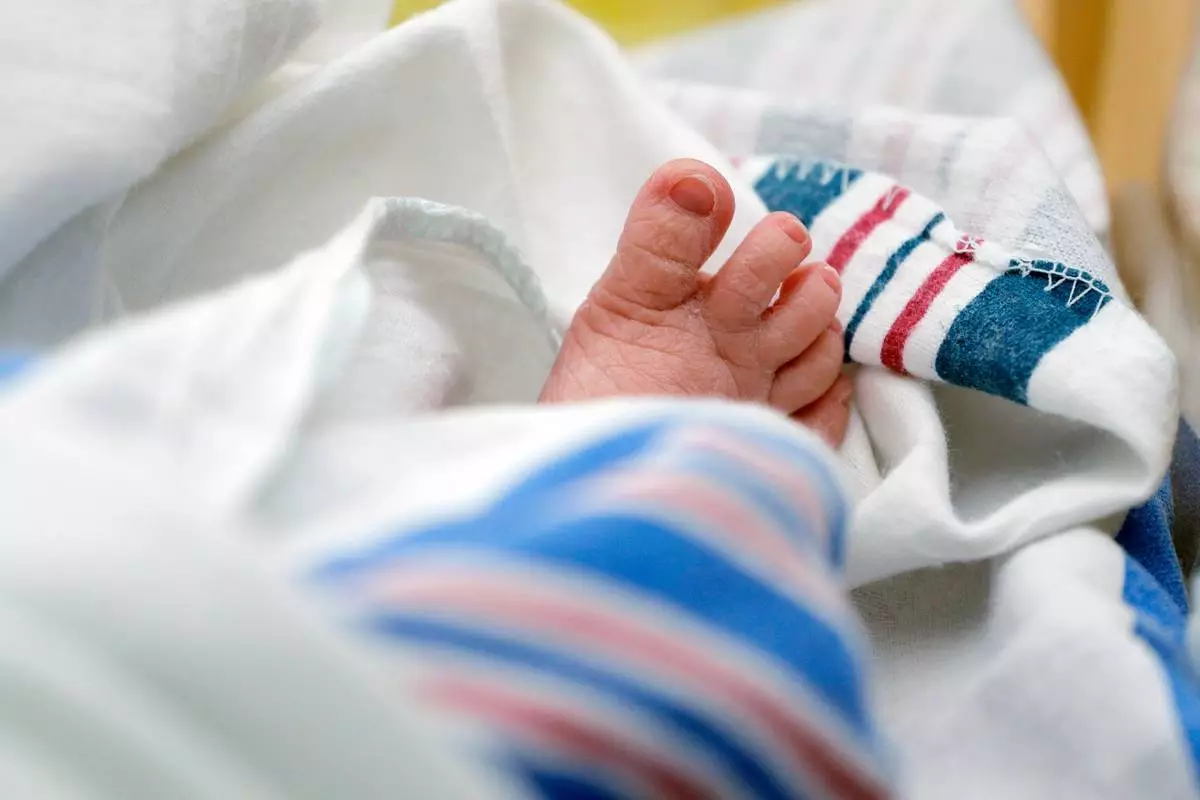
FILE - The toes of a baby peek out of a blanket at a hospital in McAllen, Texas, July, 29, 2020. (AP Photo/Eric Gay, File)
CASABLANCA, Morocco (AP) — Their red jerseys stood out against the green pitch. Most were teenage girls. Some had fled war. Others had never played in an organized soccer league or set foot in a major stadium before.
Yet when they took the field at Larbi Zaouli Stadium in Casablanca, Morocco, they marked Sudan’s first appearance in international women’s soccer since a civil war erupted in a country where women’s participation in sports has long been controversial.
“My goal is to lift up soccer in my country,” Nura Mohamed, the 17-year-old team captain, told The Associated Press.
“It’s a beautiful, unique feeling because, at the end of the day, I just love playing.”
Sudan’s under-17 women’s national team traveled to Morocco last week for qualifying matches on the road to the 2028 Los Angeles Olympics. The inexperienced squad suffered heavy defeats against Comoros, conceding 30 goals in two matches. Many of the players broke down in tears after the final whistle in front of a dozen cheering fans.
They faced an older, fitter, and more experienced opponent. Unable to assemble a senior women’s squad in time, Sudan’s soccer federation entered a younger team to avoid forfeiting its place in the qualifiers. They only started training weeks ago.
“The difference between us and the others is huge. We cannot yet compete at the highest level," Burhan Tia, a veteran Sudanese soccer coach who oversees all of Sudan’s women’s national teams, said after the first match, a 17–0 defeat.
“Comoros has many players competing in Europe, our team is mainly made up of schoolgirls."
Sudan’s women’s soccer collapsed when civil war erupted in 2023. For federation officials, debuting this young squad in Casablanca after years of conflict marks an important step in keeping women's soccer alive in Sudan.
“Some traveled long distances just to attend training. Many are separated from their families, yet they continue to work hard and pursue their dream," Manal Ali Bushra, a businesswoman who heads the women’s soccer committee, told the AP.
To support that vision, Ali Bushra said the federation is working on infrastructure projects, including a planned sports city and the renovation of key stadiums in safer parts of the country. She declined to answer questions about the women’s program budget and funds.
Tia knew the magnitude of the challenge when he accepted the job of rebuilding a shattered team.
“First, I had to find girls who played soccer. Then, once I found girls who played, I had to make sure they were the right age,” he said. “Then I needed to convince their parents to let them miss classes for training.”
With the league suspended, his scouting trips took him to schools across Sudan and to neighboring Egypt, where many families had fled the war. He recruited 10 players from teams and academies in Cairo, with the rest drawn from Sudanese cities.
Tia would have liked to recruit from conflict-hit areas like Darfur or Kordofan, a region known for producing Sudan’s top athletes. But many girls had lost their identification documents, making it impossible to verify their ages under international regulations. The war has also shattered transportation, turning journeys between cities that once took hours into perilous trips lasting days.
On the field, the players’ lack of experience was evident. Several struggled with basic positioning, failing to hold the offside line or maintain tactical discipline. Throughout the matches, they repeatedly looked to the sidelines for instructions from the coach and his assistant.
The United Nations has described the war in Sudan as the world’s worst humanitarian crisis. It began in 2023 when a power struggle between the military and the paramilitary Rapid Support Forces erupted into fighting marked by mass killings, rape and ethnic violence. More than 40,000 people have been killed, according to U.N. figures, and over 14 million have been displaced, with famine and disease spreading across parts of the country.
The war halted every sports activity, including the women’s soccer league, which was officially established after the 2019 progressive revolution that ousted President Omar al-Bashir. His three-decade Islamist rule was marked by Public Order Laws that rights groups said restricted women’s freedoms. Even after the revolution, prominent Sudanese preacher Abdulhay Yousif said the establishment of a women’s football league was aimed at undermining religion.
“The idea of women running, jumping, sweating, and even something as simple as their bodies being visible in motion, was seen by Bashir’s Islamist regime as producing fitna, which in a Sudanese context was understood as sexual or moral chaos,” Liv Tønnessen, a political scientist researching gender politics in Sudan, told the AP.
“So when women step onto a soccer pitch, they are directly confronting that entire logic. They are not just present in a male-dominated sports arena, they are moving freely in it, on their own terms,” Tønnessen, a former guest researcher in a women-only university in Sudan, added.
Beyond institutional hurdles, players also faced a wave of sexist abuse online. On the national team’s social media accounts, many commenters mocked them for big defeats. Others posted the phrase “go back to the kitchen,” in multiple languages.
While Gen. Abdel Fattah al-Burhan’s military government has allowed international soccer trips for teenage girls, the U.N. has documented sexual and gender-based violence by the Sudanese Armed Forces, which he commands.
Tønnessen sees the state backing as a calculated effort by the military to project legitimacy. By sponsoring the team, she said, the army attempts to signal that the state is functioning normally and to align itself with the spirit of the 2019 revolution.
Hala Al-Karib, a prominent Sudanese women’s rights activist, dismissed critics who say the team is being used to portray a more progressive image on women’s rights.
“The main challenge for me is a reform of the federation,” she told the AP, citing a lack of investment in and support for women’s soccer in Sudan.
Back on the field in Casablanca, the politics, war and debate faded away, leaving only a group of teenagers chasing a ball.
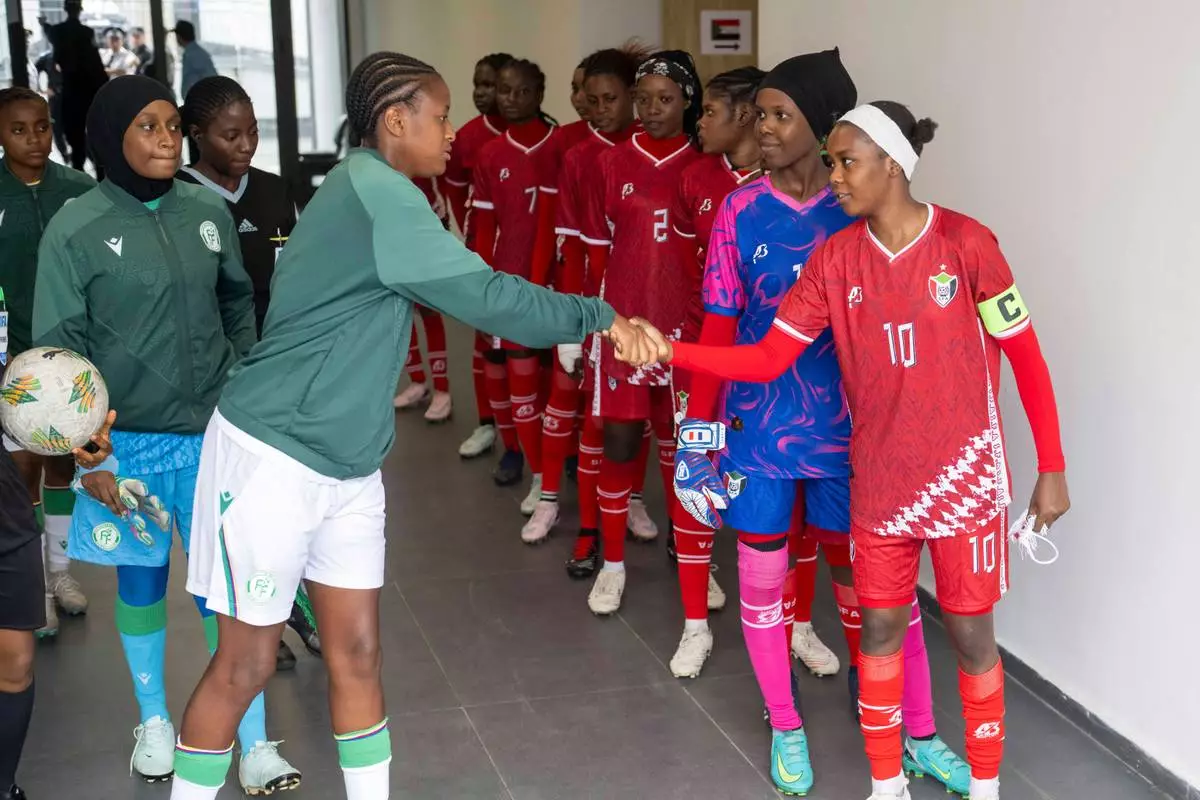
Sudan's U-17 women's national team, left, shakes hand with Comorros women's national team, ahead of their soccer match during qualifiers for the 2028 Los Angeles Summer Olympics, in Casablanca, Morocco, Monday, June 8, 2026. (AP Photo)
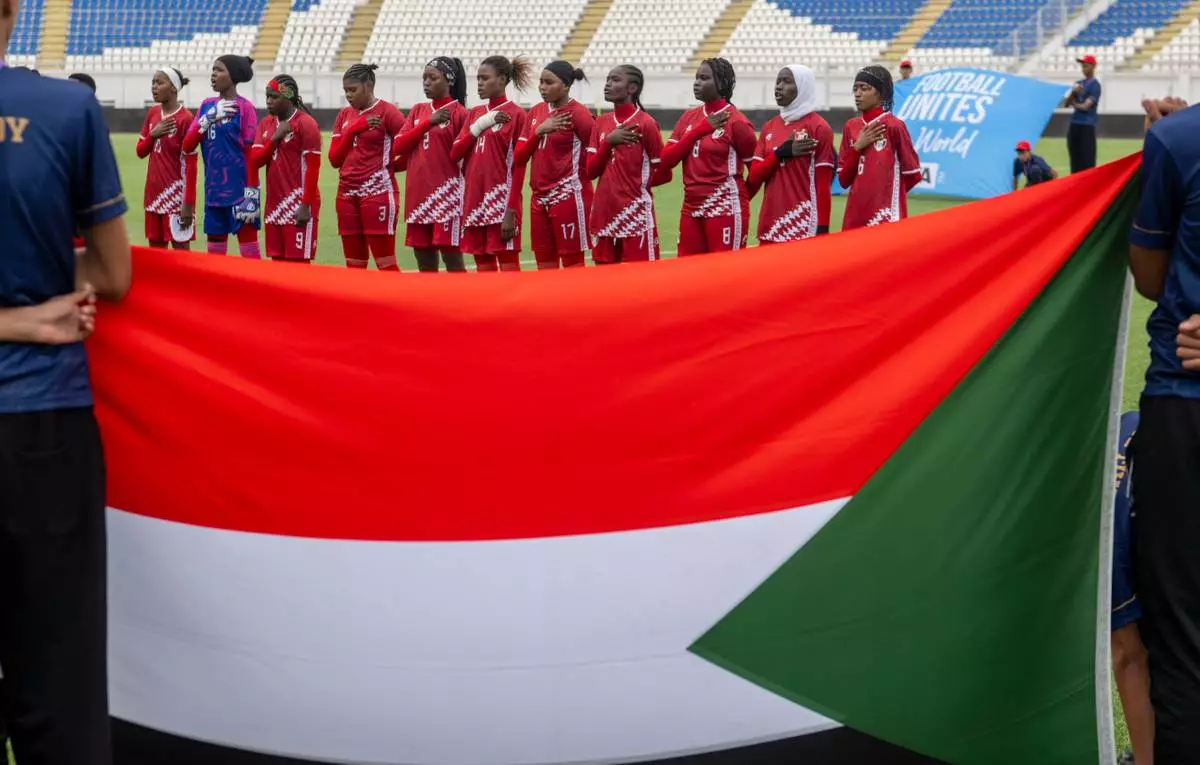
Sudan's U-17 women's national team players sing the national anthem before a soccer match against Comoros, during qualifiers for the 2028 Los Angeles Summer Olympics, in Casablanca, Morocco, Monday, June 8, 2026. (AP Photo)
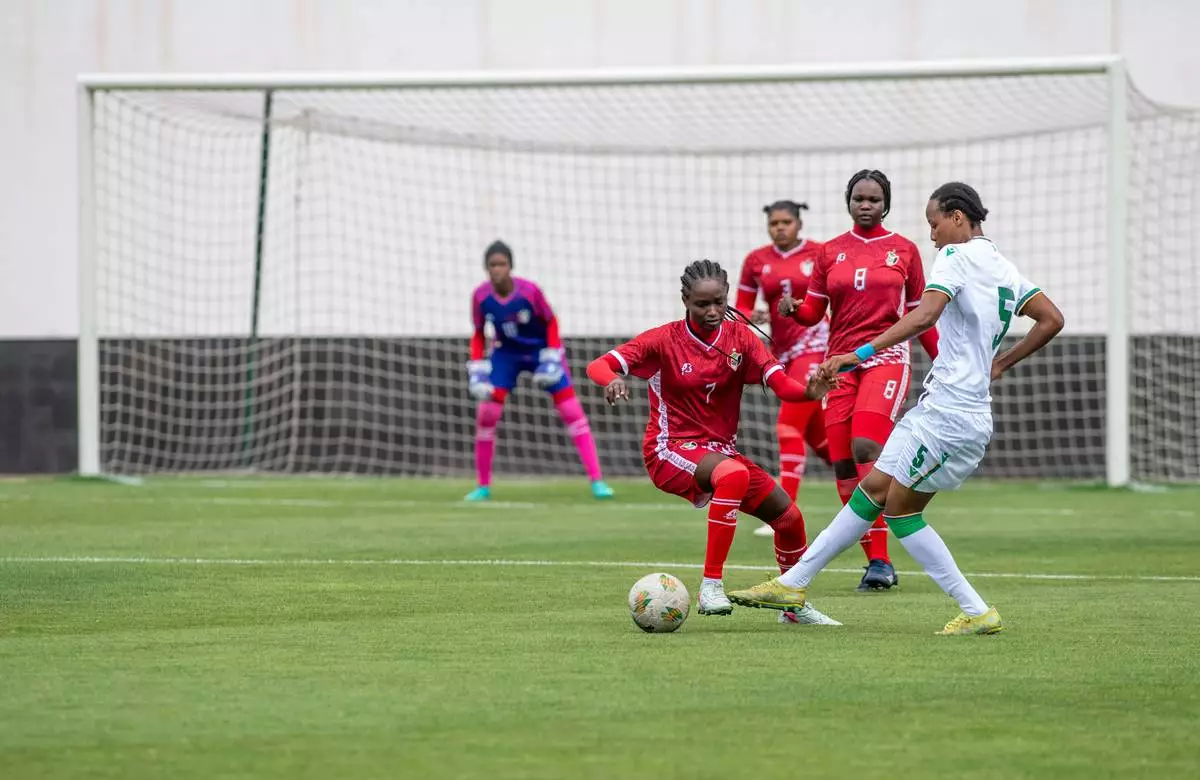
Sudan's U-17 women's national team, in red, plays a soccer match against Comoros, during qualifiers for the 2028 Los Angeles Summer Olympics, in Casablanca, Morocco, Monday, June 8, 2026. (AP Photo)
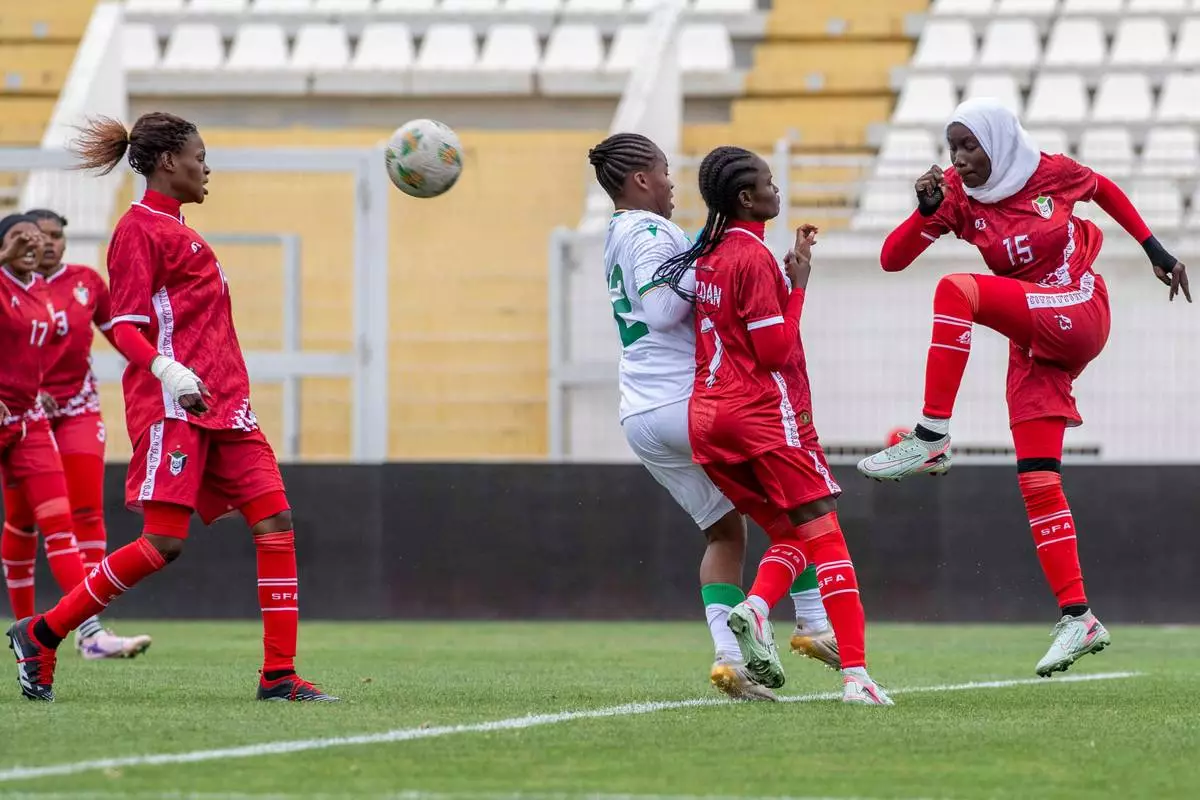
Sudan's U-17 women's national team players, in red, defend the ball during a soccer match against Comoros, during qualifiers for the 2028 Los Angeles Summer Olympics, in Casablanca, Morocco, Monday, June 8, 2026. (AP Photo)
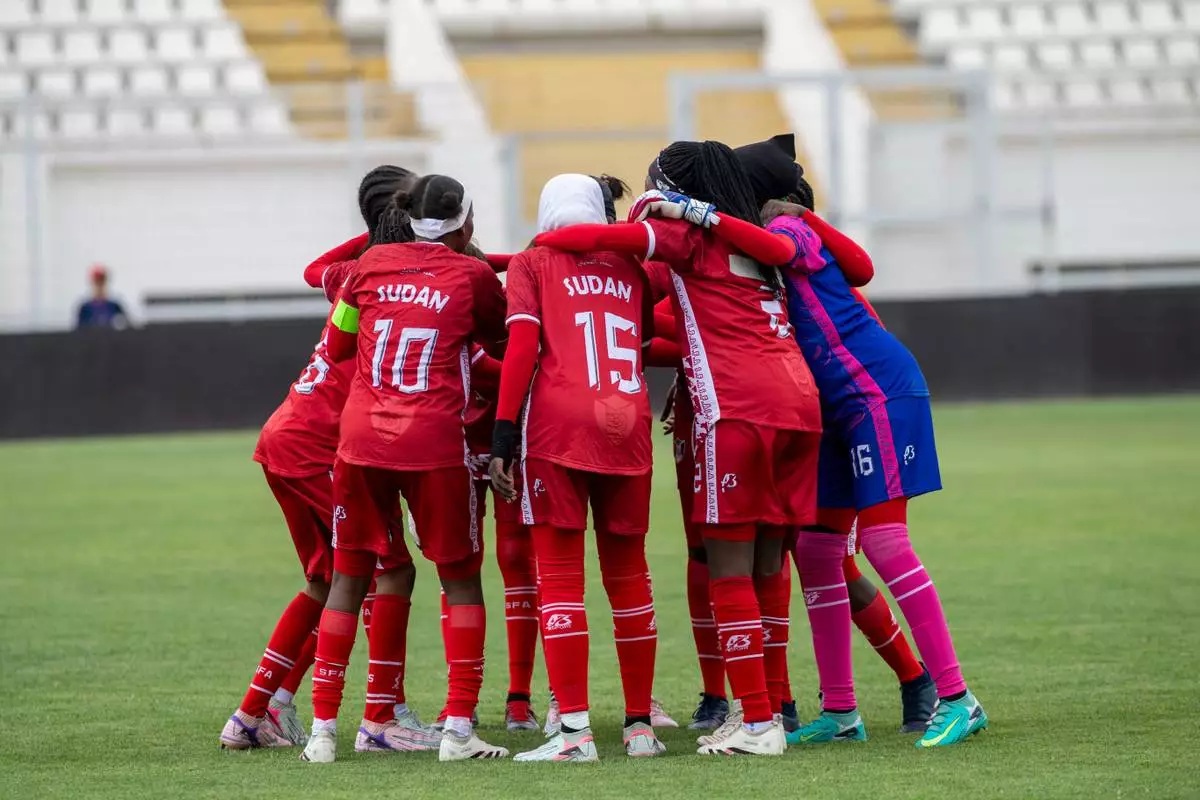
Sudan's U-17 women's national team warms up before a soccer match against Comoros, during qualifiers for the 2028 Los Angeles Summer Olympics, in Casablanca, Morocco, Monday, June 8, 2026. (AP Photo)