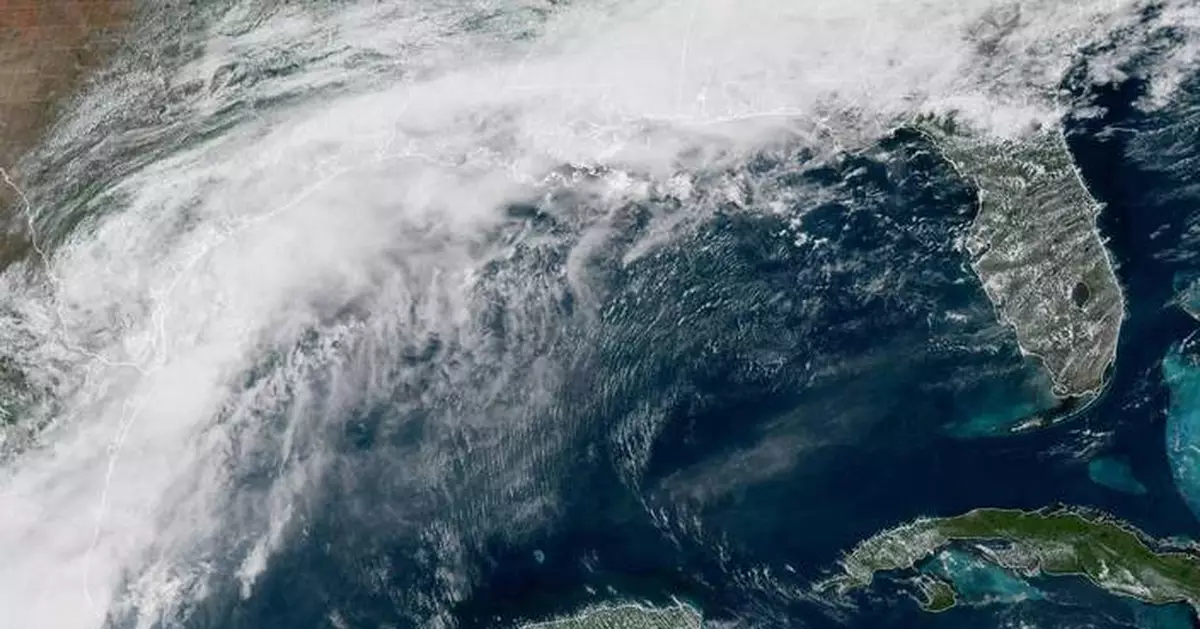
MIAMI (AP) — A cluster of storms along the Gulf Coast could become the first named tropical storm of the 2026 Atlantic hurricane season, the National Hurricane Center said.
The storms threatened to bring heavy downpours that could lead to dangerous floods across southern states including Texas and Louisiana. The system was centered Tuesday afternoon about 55 miles (85 kilometers) south-southwest of Corpus Christi, Texas, according to a hurricane center advisory.
National Hurricane Center director Michael Brennan said meteorologists are expecting the system to strengthen, possibly into a tropical storm by early Wednesday. But coastal areas could experience tropical storm conditions this week, even if the system doesn’t officially get a name, Brennan said.
“The main hazard with these types of systems is largely the flooding from the heavy rainfall,” Brennan said. “And we could see potentially life-threatening flash and urban flooding across the Texas coast eastward into central Mississippi through Thursday. Prolonged rainfall may extend the flood threat into the weekend.”
Tornadoes were possible from the upper Texas coast across southern Louisiana, Mississippi, Alabama and the Florida Panhandle, forecasters said.
The storm's maximum sustained winds were around 30 mph (45 kph) Tuesday, just shy of the 39 mph (63 kph) needed to be named a tropical storm. The system had a 70% chance of forming into a tropical cyclone over the next two days, the hurricane center said.
Houston, where a World Cup match between Portugal and the Democratic Republic of the Congo is scheduled for Wednesday, has been under a flood warning since Monday. The stadium is covered, and no plans have been announced to move or reschedule the match.
By Thursday, the storms could drop 4 to 8 inches (10 to 20 centimeters) of rain, with isolated totals of a foot (30 centimeters) in coastal areas.
A tropical storm watch was already in effect from Sargent, Texas, to Morgan City, Louisiana. Rough surf could cause rip currents along the Gulf for the next couple of days.
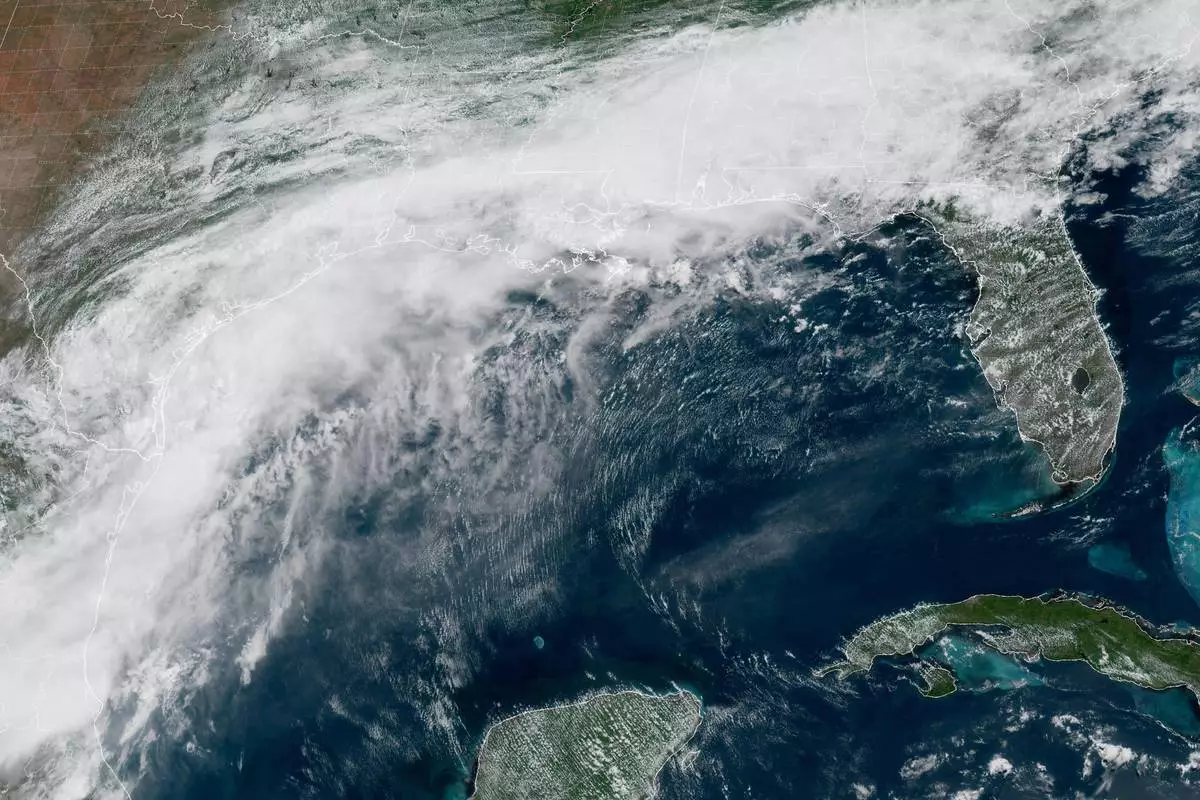
This GOES-19 GeoColor satellite image provided by NOAA, shows a storm system forming along the Gulf coast of Texas, on Tuesday, June 16, 2026. (NOAA via AP)
Contractors running Immigration and Customs Enforcement facilities can rely more heavily on artificial intelligence tools to communicate with detainees while continuing to pay people they hold $1 per day for “voluntary work,” under relaxed detention standards released Monday.
ICE said the standards, which apply to for-profit contractors and jails that hold detainees, were revised with input from partners to “reduce the burden on our detention operators.” Experts said the changes would help contractors limit legal liability, reduce costs and get more operational flexibility while doing little, if anything, to improve conditions for roughly 60,000 people currently detained.
“100% it’s going to result in deterioration of already problematic conditions of detention,” said Michelle Brane, a former Department of Homeland Security ombudsman who oversaw immigration detention practices during part of the Biden administration. “It’s consistent with their general practice, which is to eliminate accountability and oversight. They are not concerned with people’s basic rights or safety of detainees.”
The revisions come as ICE detention facilities are reporting deaths in unprecedented numbers and face accusations of medical neglect, inadequate food and other inhumane conditions. They come as ICE is flush with cash, receiving more than half of the $70 billion immigration enforcement spending bill signed by President Donald Trump last week.
Dr. Sanjay Basu, a public health researcher who has studied ICE custody deaths, said the changes include “genuine improvements” to suicide prevention standards and mental health care. But he said the overall trajectory is “toward weaker standards governing a growing share of the detained population.”
ICE said the changes streamline its rules and move toward more relaxed standards used by the U.S. Marshals Service to hold pretrial federal inmates in jails. The agency said it considered input from operators “alongside operational, legal and policy requirements when making a final decision."
Dr. Homer Venters, an expert on correctional health care, said the changes could curtail access to language assistance by eliminating mandates that required in-person and telephone interpretation and translation services.
The revised standard says facilities can use artificial intelligence tools such as machine-learning-based translation or generative AI for “noncritical communication” or “informal interactions with detainees.” That communication could include giving and receiving information to or from detainees during intake, having conversations with detainees in housing units and responding to a detainee’s grievance or other concerns, it says.
Venters called the changes alarming because grievances often include “very urgent or even emergent information such as when a patient has been denied lifesaving care.” He said the rule also leaves unclear whether health assessments, crucial to flagging medical and mental health conditions, could be conducted through AI.
ICE said the standards ensure contractors provide interpretation and translation services “at no cost to the detainees.”
Several experts said they were concerned by a change that bars facility operators from refusing to admit any detainee ICE sends them.
The change means facilities may not be able to immediately refer severely ill or disabled detainees whom they cannot accommodate to hospitals or other settings for care — but it could reduce their liability for subsequent deaths. A related rule change requires facilities to request that ICE transfer detainees they cannot serve elsewhere, but that might not happen for several days after they are admitted.
New language making clear that detainees who participate in voluntary work programs are not employees and therefore not entitled to wages and benefits “is a favor” to ICE’s for-profit contractors, said Dora Schriro, former director of ICE’s Office of Detention Policy and Planning during the Obama administration.
For years, advocates for detainees have argued in lawsuits that these programs, in which detainees have received a minimum stipend of $1 per work day, amount to forced labor. The lawsuits have sought millions of dollars in unpaid wages from ICE contractors like GeoGroup and CoreCivic, and now they could face tougher odds of success by strengthening their legal defenses, Schriro said.
Another change bars facilities from paying above the longtime $1-per-day minimum stipend, which was allowed under the previous standard and an argument that had been used against contractors in court, said Carmen Iguina Gonzalez, an immigration detention expert at the American Civil Liberties Union. She said the work can include cleaning dormitories, cutting hair and other tasks that keep facilities running.
Claire Trickler-McNulty, a former DHS and ICE official who is an expert on detention standards, said ICE could use its increased budget to improve conditions instead of “lowering standards across the board.” She recalled that under prior administrations, she pushed ICE facilities to add soccer fields and other recreation and visitation improvements with leftover money.
“Their goal is to make it easier for the jail operators,” she said. “No longer are they trying to make sure the focus is on the detainees and their care and the experience in custody.”
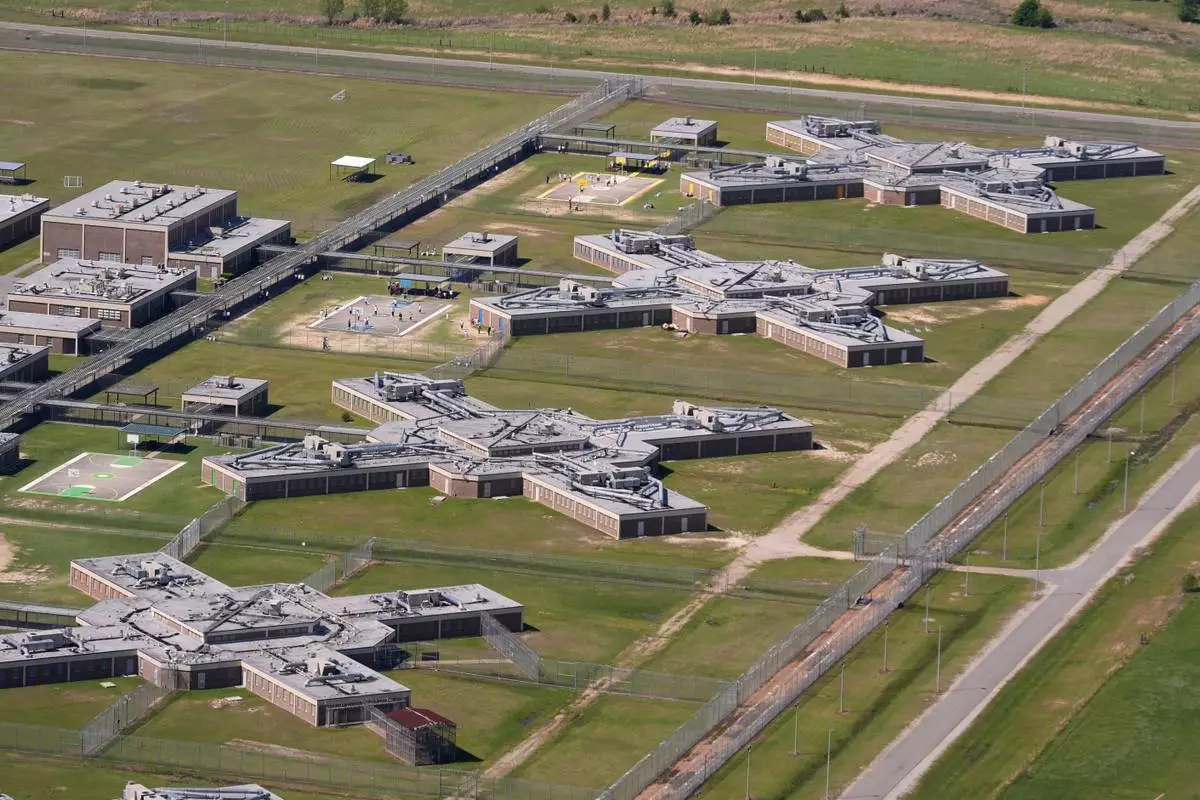
FILE - The Winn Correctional Center, an ICE detention facility, is seen in this aerial photo in Winnfield, La., April 9, 2025. (AP Photo/Gerald Herbert, File)