DAKAR, Senegal (AP) — Congo's opposition on Tuesday condemned the adoption of a bill that could open the door to a third term for President Félix Tshisekedi, denouncing what they say is a power grab.
The bill, adopted by the Senate on Monday, would enable a referendum on a new constitution under which Tshisekedi’s previous terms wouldn't count against him — effectively resetting the clock. It has already passed the National Assembly and now awaits the president’s signature.
Tshisekedi, 62, has been in office since 2019. He has said that he would seek a third term, if voters approved of it in a referendum. But no date has been set for one.
Congo's constitution explicitly bars any revision of presidential term limits. The bill works around that provision by allowing the president to amend the constitution in the event of a “major dysfunction” paralyzing state institutions.
The central African country is plagued by multiple crises, including an Ebola outbreak and an escalation of the decades-long conflict with the Rwanda-backed M23 rebels, one of more than 100 armed groups vying for control in the eastern provinces.
Congo's next presidential election is set to take place in 2028. Tshisekedi said last month that Congo won't be able to organize and hold elections unless the conflict is resolved and stability returns.
Both the Senate and National Assembly votes took place without opposition lawmakers, who walked out weeks ago in protest against the bill.
Senate President Jean-Michel Sama Lukondé hailed the vote, saying it gives the Congolese people a framework to “exercise their sovereignty” through a referendum.
Congo’s main opposition parties, which have been divided in recent years, joined forces in May under the banner of C64, or Coalition Article 64, to oppose the bill, describing it as an attempt by Tshisekedi to remain in power.
“Tshisekedi has betrayed his oath to respect the constitution and is therefore worthless,” leading opposition figure Martin Fayulu said Tuesday during a news conference held by the coalition.
He announced a march on July 8 to the presidential palace, demanding Tshisekedi’s resignation.
The vote comes days after violent clashes erupted at a protest against the bill in Congo's capital, Kinshasa, in which several people were injured, including opposition leaders Martin Fayulu, Jean-Marc Kabund and Delly Sesanga.
Saleh Mwanamilongo reported from Bonn, Germany.
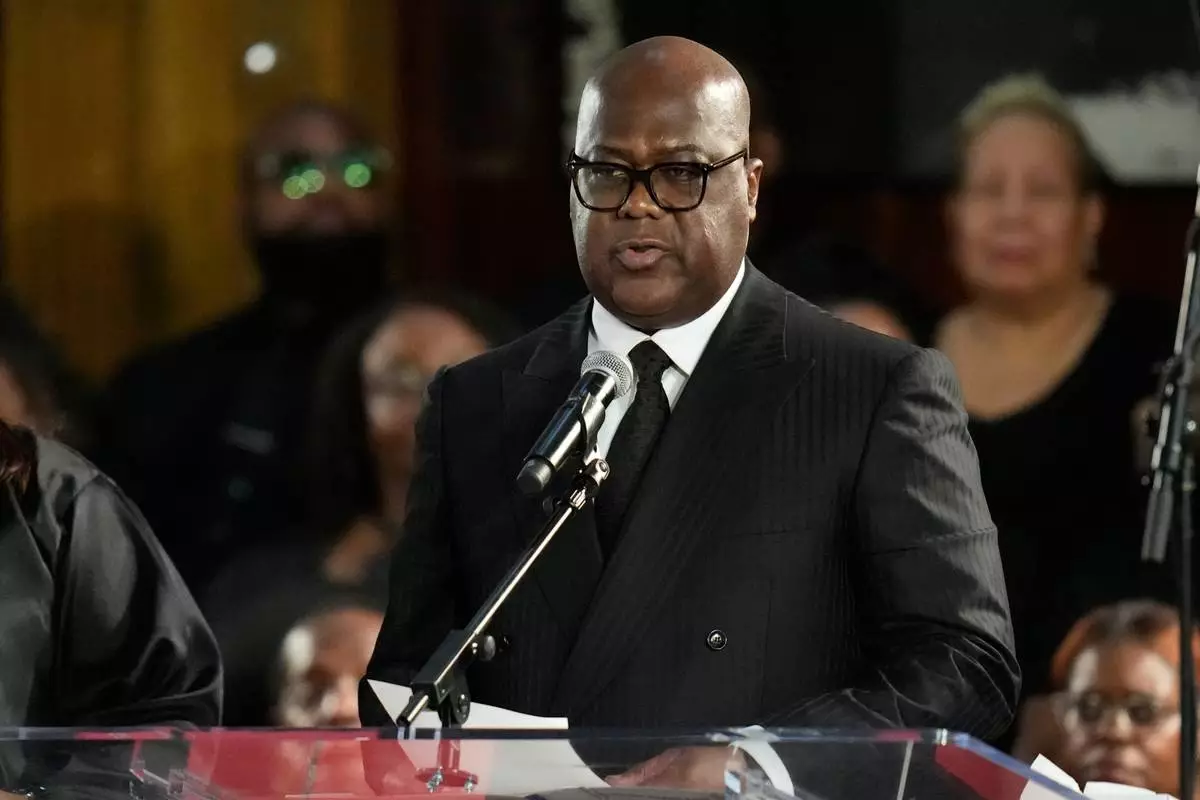
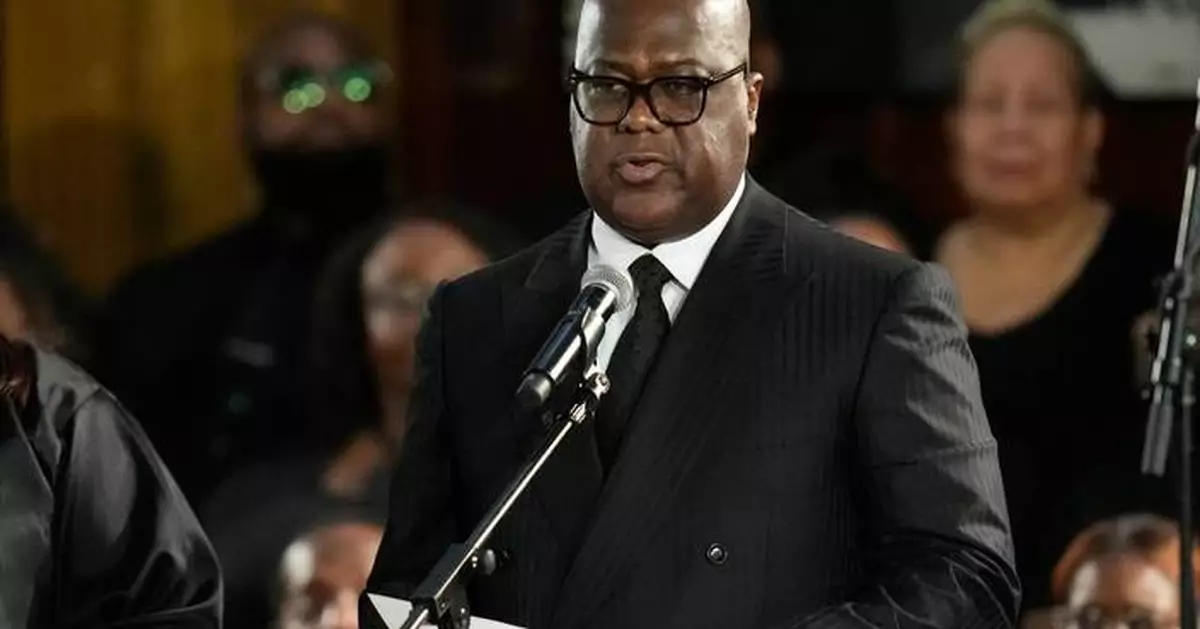
FILE - Democratic Republic of Congo President Felix-Antoine Tshisekedi Tshilombo speaks during the Homegoing Celebration of Life for the Rev. Jesse Jackson, March 7, 2026, at Rainbow PUSH Coalition headquarters in Chicago. (AP Photo/Erin Hooley, File)
CASABLANCA, Morocco (AP) — Their red jerseys stood out against the green pitch. Most were teenage girls. Some had fled war. Others had never played in an organized soccer league or set foot in a major stadium before.
Yet when they took the field at Larbi Zaouli Stadium in Casablanca, Morocco, they marked Sudan’s first appearance in international women’s soccer since a civil war erupted in a country where women’s participation in sports has long been controversial.
“My goal is to lift up soccer in my country,” Nura Mohamed, the 17-year-old team captain, told The Associated Press.
“It’s a beautiful, unique feeling because, at the end of the day, I just love playing.”
Sudan’s under-17 women’s national team traveled to Morocco last week for qualifying matches on the road to the 2028 Los Angeles Olympics. The inexperienced squad suffered heavy defeats against Comoros, conceding 30 goals in two matches. Many of the players broke down in tears after the final whistle in front of a dozen cheering fans.
They faced an older, fitter, and more experienced opponent. Unable to assemble a senior women’s squad in time, Sudan’s soccer federation entered a younger team to avoid forfeiting its place in the qualifiers. They only started training weeks ago.
“The difference between us and the others is huge. We cannot yet compete at the highest level," Burhan Tia, a veteran Sudanese soccer coach who oversees all of Sudan’s women’s national teams, said after the first match, a 17–0 defeat.
“Comoros has many players competing in Europe, our team is mainly made up of schoolgirls."
Sudan’s women’s soccer collapsed when civil war erupted in 2023. For federation officials, debuting this young squad in Casablanca after years of conflict marks an important step in keeping women's soccer alive in Sudan.
“Some traveled long distances just to attend training. Many are separated from their families, yet they continue to work hard and pursue their dream," Manal Ali Bushra, a businesswoman who heads the women’s soccer committee, told the AP.
To support that vision, Ali Bushra said the federation is working on infrastructure projects, including a planned sports city and the renovation of key stadiums in safer parts of the country. She declined to answer questions about the women’s program budget and funds.
Tia knew the magnitude of the challenge when he accepted the job of rebuilding a shattered team.
“First, I had to find girls who played soccer. Then, once I found girls who played, I had to make sure they were the right age,” he said. “Then I needed to convince their parents to let them miss classes for training.”
With the league suspended, his scouting trips took him to schools across Sudan and to neighboring Egypt, where many families had fled the war. He recruited 10 players from teams and academies in Cairo, with the rest drawn from Sudanese cities.
Tia would have liked to recruit from conflict-hit areas like Darfur or Kordofan, a region known for producing Sudan’s top athletes. But many girls had lost their identification documents, making it impossible to verify their ages under international regulations. The war has also shattered transportation, turning journeys between cities that once took hours into perilous trips lasting days.
On the field, the players’ lack of experience was evident. Several struggled with basic positioning, failing to hold the offside line or maintain tactical discipline. Throughout the matches, they repeatedly looked to the sidelines for instructions from the coach and his assistant.
The United Nations has described the war in Sudan as the world’s worst humanitarian crisis. It began in 2023 when a power struggle between the military and the paramilitary Rapid Support Forces erupted into fighting marked by mass killings, rape and ethnic violence. More than 40,000 people have been killed, according to U.N. figures, and over 14 million have been displaced, with famine and disease spreading across parts of the country.
The war halted every sports activity, including the women’s soccer league, which was officially established after the 2019 progressive revolution that ousted President Omar al-Bashir. His three-decade Islamist rule was marked by Public Order Laws that rights groups said restricted women’s freedoms. Even after the revolution, prominent Sudanese preacher Abdulhay Yousif said the establishment of a women’s football league was aimed at undermining religion.
“The idea of women running, jumping, sweating, and even something as simple as their bodies being visible in motion, was seen by Bashir’s Islamist regime as producing fitna, which in a Sudanese context was understood as sexual or moral chaos,” Liv Tønnessen, a political scientist researching gender politics in Sudan, told the AP.
“So when women step onto a soccer pitch, they are directly confronting that entire logic. They are not just present in a male-dominated sports arena, they are moving freely in it, on their own terms,” Tønnessen, a former guest researcher in a women-only university in Sudan, added.
Beyond institutional hurdles, players also faced a wave of sexist abuse online. On the national team’s social media accounts, many commenters mocked them for big defeats. Others posted the phrase “go back to the kitchen,” in multiple languages.
While Gen. Abdel Fattah al-Burhan’s military government has allowed international soccer trips for teenage girls, the U.N. has documented sexual and gender-based violence by the Sudanese Armed Forces, which he commands.
Tønnessen sees the state backing as a calculated effort by the military to project legitimacy. By sponsoring the team, she said, the army attempts to signal that the state is functioning normally and to align itself with the spirit of the 2019 revolution.
Hala Al-Karib, a prominent Sudanese women’s rights activist, dismissed critics who say the team is being used to portray a more progressive image on women’s rights.
“The main challenge for me is a reform of the federation,” she told the AP, citing a lack of investment in and support for women’s soccer in Sudan.
Back on the field in Casablanca, the politics, war and debate faded away, leaving only a group of teenagers chasing a ball.
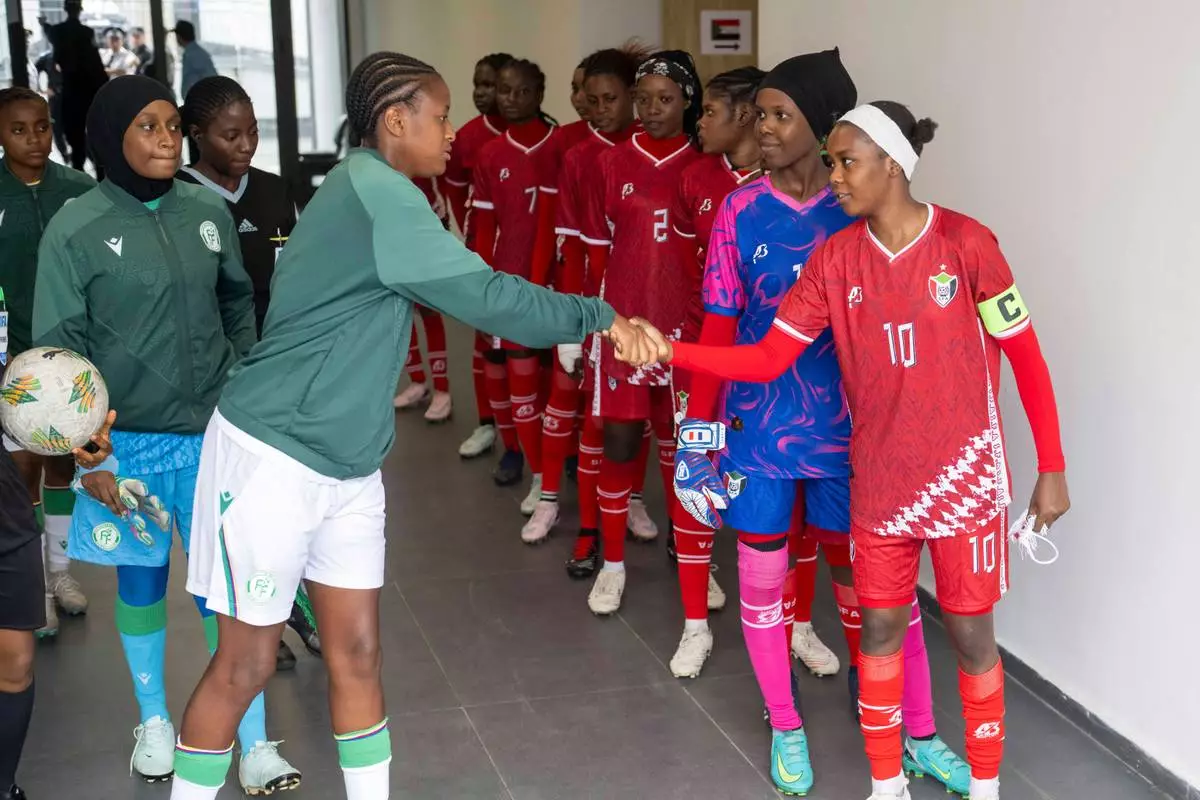
Sudan's U-17 women's national team, left, shakes hand with Comorros women's national team, ahead of their soccer match during qualifiers for the 2028 Los Angeles Summer Olympics, in Casablanca, Morocco, Monday, June 8, 2026. (AP Photo)
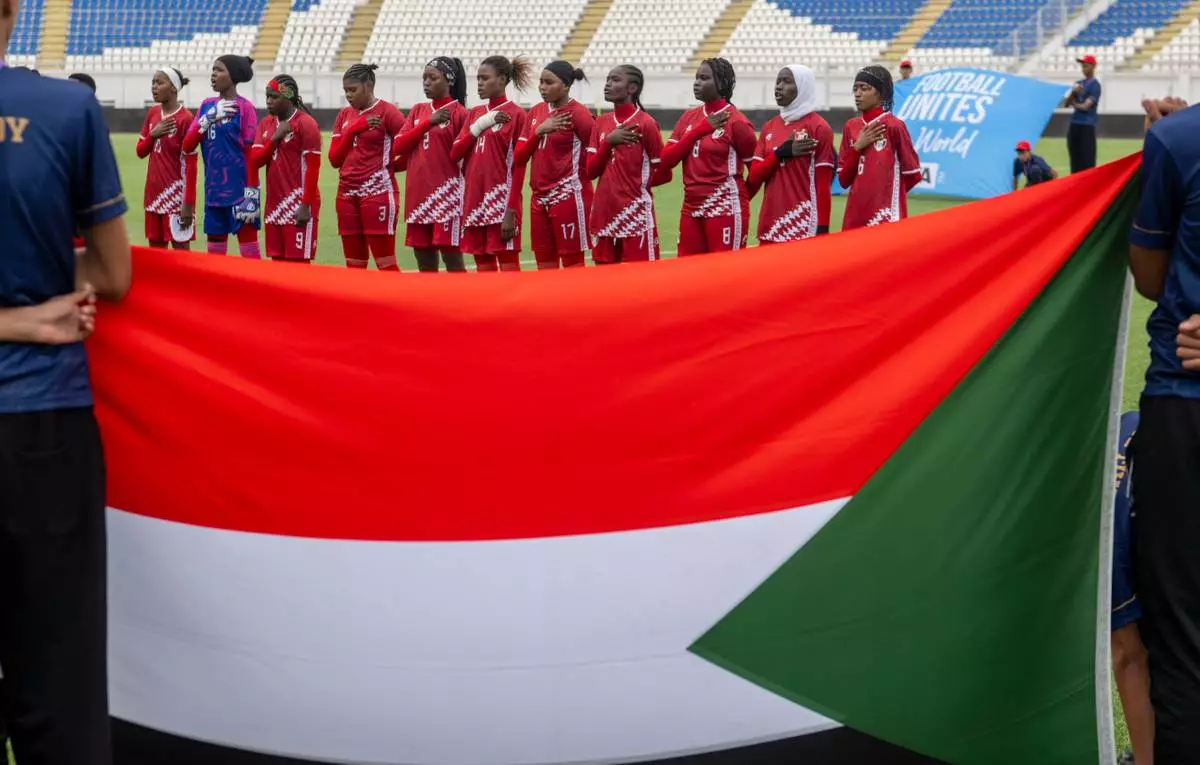
Sudan's U-17 women's national team players sing the national anthem before a soccer match against Comoros, during qualifiers for the 2028 Los Angeles Summer Olympics, in Casablanca, Morocco, Monday, June 8, 2026. (AP Photo)
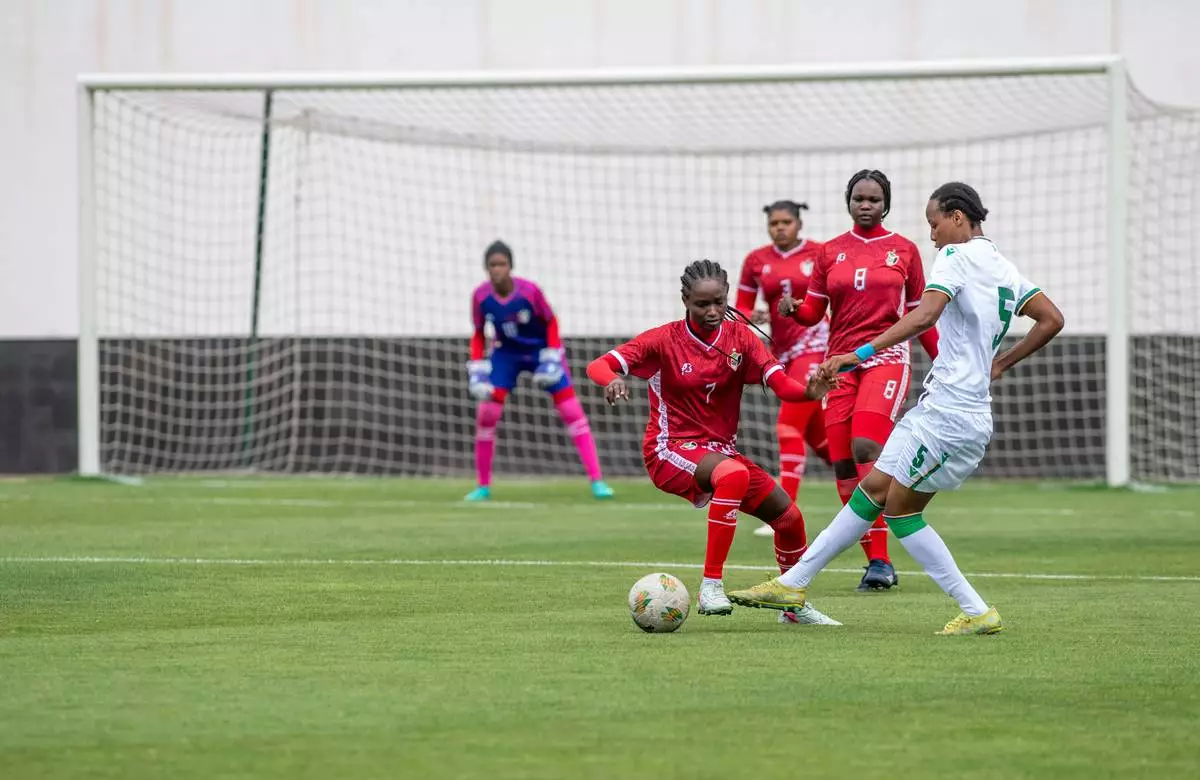
Sudan's U-17 women's national team, in red, plays a soccer match against Comoros, during qualifiers for the 2028 Los Angeles Summer Olympics, in Casablanca, Morocco, Monday, June 8, 2026. (AP Photo)
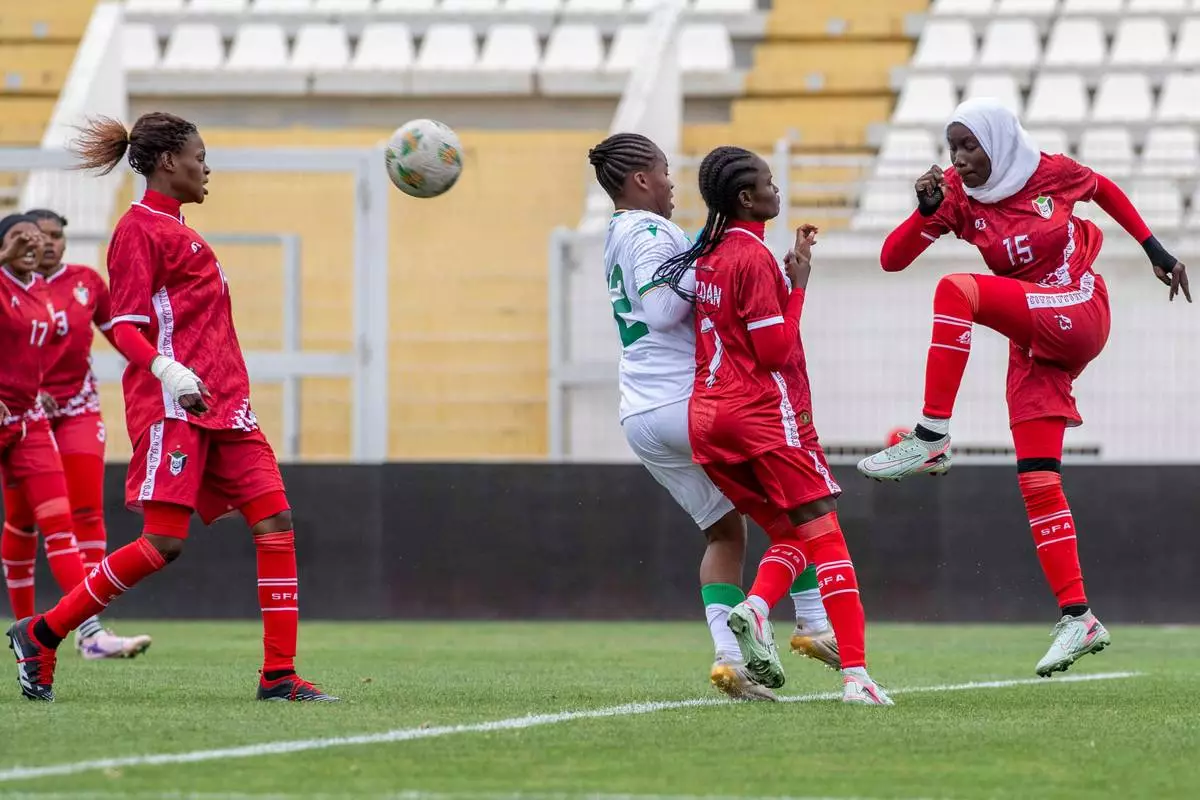
Sudan's U-17 women's national team players, in red, defend the ball during a soccer match against Comoros, during qualifiers for the 2028 Los Angeles Summer Olympics, in Casablanca, Morocco, Monday, June 8, 2026. (AP Photo)
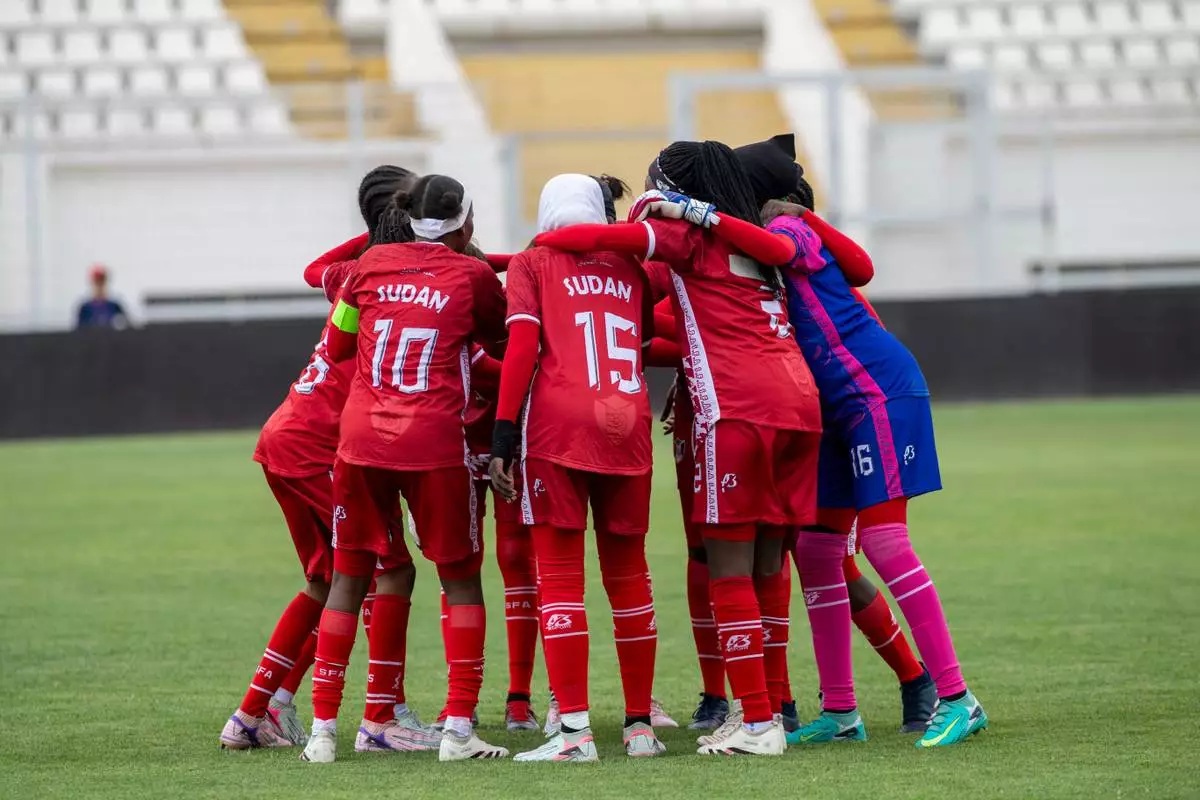
Sudan's U-17 women's national team warms up before a soccer match against Comoros, during qualifiers for the 2028 Los Angeles Summer Olympics, in Casablanca, Morocco, Monday, June 8, 2026. (AP Photo)